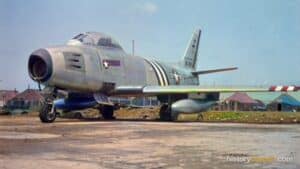
The Significance of the Korean War was enormous because the conflict helped shape the early Cold War and left a divided Korean Peninsula that still affects world politics today. Fought from June 25th, 1950, to July 27th, 1953, the Korean War began when communist North Korea invaded capitalist South Korea, and it quickly became an international conflict involving the United Nations, the United States, China and the Soviet Union. As such, historians consider the Korean War to be a significant aspect of the overall Cold War.
 FactsthatCrunch
Why is the Korean War often called the Forgotten War?
The Korean War is often called the Forgotten War because it was overshadowed in American public memory by World War II, which had ended just five years earlier, and later by the Vietnam War. While approximately 36,500 Americans died in the war and the war reshaped Cold War policy across Asia, it received far less lasting attention in books, films, and national memorials than those other conflicts. The war also ended without a clear victory, since the armistice left Korea divided near the same line where the fighting had begun, which made it harder for the public to feel the sacrifice had produced a definitive result.
Significance to the Cold War
One major reason for the significance of the Korean War is that it was the first major armed conflict of the Cold War. After World War II, tensions between the United States and the Soviet Union had been growing, but the Korean War turned that rivalry into open fighting through allied states and proxy forces. More specifically, North Korea received support from the Soviet Union and later China, while South Korea was backed by the United Nations, with the United States leading most of the military effort. This made the Korean War one of the clearest early examples of the Cold War becoming a military struggle rather than only a political one. As such, historians refer to the Korean War as a ‘proxy war‘ for the Cold War. A proxy warA conflict where major powers support opposing sides in a smaller war instead of fighting each other directly. is a conflict wherein major powers (United States and the Soviet Union) avoid direct fighting with each other. Instead, they support opposing sides (proxies) in smaller wars.
The war also showed that the Cold War would not stay limited to Europe. Before 1950, many leaders in the United States focused heavily on Europe as the main area of competition with Soviet communism. However, the fighting in Korea proved that East Asia would also be a major region in the global struggle between communism and capitalism. As such, the significance of the Korean War can be seen in how it expanded Cold War tensions into Asia in a permanent and dangerous way. For instance, historians consider the Korean War to be an example of American containmentThe American policy of resisting the spread of communism wherever it appeared around the world., since they were trying to prevent the spread of communism in Asia. This is also related to the Truman Doctrine, which was based on the idea that the United States should attempt to stop the spread of communism wherever it emerges.
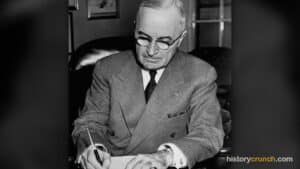
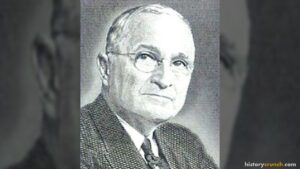
FactsthatCrunchThe attack upon Korea makes it plain beyond all doubt that communism has passed beyond the use of subversion to conquer independent nations and will now use armed invasion and war. It has defied the orders of the Security Council of the United Nations issued to preserve international peace and security.
What does Truman's statement reveal about how the Truman Doctrine's commitment to stopping communist expansion was being applied in Asia by 1950?
Korean War and the Division of Korea
Another major part of the significance of the Korean War was that it solidified the division of Korea. After World War II, Korea had been divided at the 38th parallel, but that division was initially supposed to be temporary. Regardless, the Korean War made that split much more permanent. When the armisticeAn agreement to stop fighting that is not a full peace treaty, leaving the conflict officially unresolved. was signed on July 27th, 1953, the fighting stopped, but no final peace treaty was ever agreed to. This meant that North Korea and South Korea remained separate states, and the peninsula stayed one of the most tense borders in the world.
The armistice created a Military Demarcation LineThe official boundary line created by the 1953 armistice that separates North and South Korea. and a Demilitarized ZoneA buffer strip of land along the Korean border where military forces are forbidden or heavily restricted., often called the DMZ, across Korea. In fact, the Korean Peninsula technically remains in a state of war because the armistice was only a ceasefire and not a full peace settlement. This is significant because the basic political result of the Korean War still shapes international relations in East Asia today. For instance, Korea is still divided near the 38th parallel.
Korean War and the United Nations
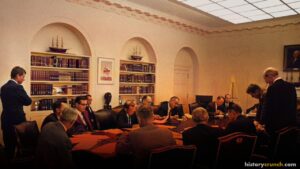
The significance of the Korean War was also tied to the role of the United Nations. When North Korea invaded South Korea, the United Nations Security Council condemned the attack and supported military action to defend the South. This led to the creation of a United Nations Command under United States leadership. Therefore, the Korean War became one of the first major tests of whether the United Nations could act collectively against aggression.
This was important because the Korean War showed that the United Nations could play a real military role in international crises, at least under certain conditions. Several countries sent troops or medical support under the United Nations flag, although the United States remained the central military power in the coalition. The war did not create a perfect system of collective securityThe idea that many nations acting together through an organization can stop aggression against any one of them., but it did show that international organizations could influence military events during the Cold War. For that reason, the significance of the Korean War includes its place in the history of global diplomacy and international intervention.
FactsthatCrunchKorean War and United States Foreign Policy
The significance of the Korean War was especially important for the United States because it reshaped American foreign policy. United States leaders entered the war largely because they wanted to stop the spread of communism. This reflected the policy of containment, which argued that communist expansion had to be resisted wherever possible. In Korea, that idea was tested in a direct military conflict, and the result was a much stronger American commitment to confronting communism around the world.
The war also helped establish a long-term United States military and political presence in East Asia. After the conflict, the United States strengthened its commitments to South Korea and Japan. In fact, official United States policy history notes that the war helped create alliances and security arrangements in the region that lasted for decades. This is important because the Korean War helped move the United States toward a more permanent global role during the Cold War, especially in Asia.
As well, the Korean War influenced how the United States thought about future wars. It became an early example of a limited warFighting aimed at restricted goals rather than the total defeat or destruction of the enemy., which meant fighting for restricted goals rather than seeking total destruction of the enemy. President Harry S. Truman rejected General Douglas MacArthur’s more aggressive ideas about expanding the war into China, partly because he wanted to avoid a much larger conflict and the possibility of a wider war with the Soviet Union. This showed that nuclear-age warfare would often be shaped by restraint as much as by military power.
FactsthatCrunchHuman Cost and Long-Term Legacy
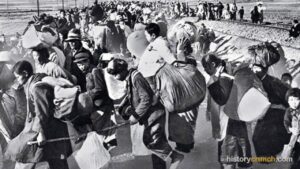
The significance of the Korean War was not only political and military. The war caused enormous destruction across Korea and led to the deaths of millions of soldiers and civilians. Major cities such as Seoul, South Korea, changed hands multiple times and suffered terrible damage. Families were divided, communities were destroyed, and the scars of the war remained for generations. This is significant because the human cost explains why the Korean War still holds such a powerful place in Korean history and memory.
The long-term legacy of the war can still be seen in world affairs today. North Korea developed into a heavily militarized communist state, while South Korea eventually became a major democratic and economic power. The border between them remains heavily defended, and tensions on the peninsula still affect relations among the United States, China, Japan, Russia, and both Korean states. Therefore, the significance of the Korean War goes far beyond the early 1950s. It helped create one of the most lasting flashpoints of the modern world.
FactsthatCrunch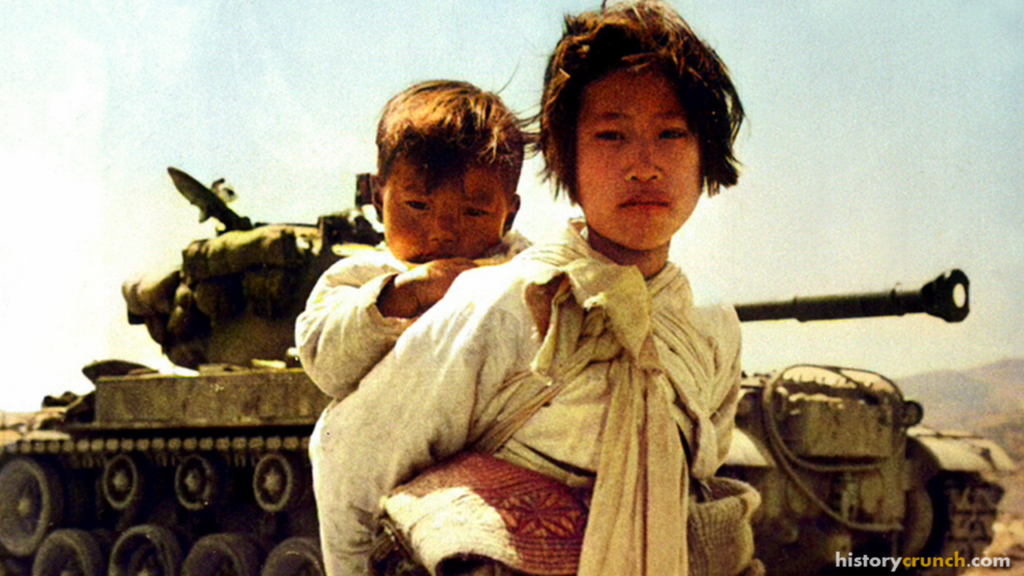 Black & whiteColor
Key Vocabulary
Proxy war
Containment
Armistice
Demilitarized Zone
Limited war
Collective security
Military Demarcation Line
Frequently Asked Questions
When was the Korean War fought?
The Korean War was fought from June 25th, 1950, to July 27th, 1953. It began when communist North Korea invaded capitalist South Korea. The fighting drew in the United Nations, the United States, China, and the Soviet Union.
Why is the Korean War called a proxy war?
The Korean War was a proxy war because major powers backed opposing sides instead of fighting each other directly. The Soviet Union and China supported North Korea, while the United States led United Nations forces for the South. This let the United States and the Soviet Union clash without meeting on the battlefield themselves.
Did the Korean War ever officially end?
No, the Korean War never officially ended with a peace treaty. The armistice signed on July 27th, 1953, was only a ceasefire that stopped the fighting. Because of this, the Korean Peninsula technically remains in a state of war today. The agreement also created the Demilitarized Zone, or DMZ, between the two Koreas.
How did the Korean War affect United States foreign policy?
The Korean War pushed the United States toward a stronger, more permanent role in world affairs. It put the policy of containment to a direct military test in Asia. After the war, the United States built lasting alliances with South Korea and Japan. It also became an early example of a limited war fought for restricted goals.
What was the human cost of the Korean War?
The Korean War killed millions of soldiers and civilians and caused huge destruction across Korea. Major cities such as Seoul changed hands several times and suffered terrible damage. Families were split apart and whole communities were ruined. The pain of these losses still shapes how Koreans remember the war.
Why did Truman clash with General MacArthur?
President Harry S. Truman rejected General Douglas MacArthur’s plan to expand the war into China. Truman wanted to avoid a much larger conflict and a possible war with the Soviet Union. This choice showed that warfare in the nuclear age would often be guided by restraint. It kept the Korean War a limited war rather than a total one.
Cite This Article
To cite this article as a source, use one of the formats below.
MLA: Millar, B. “Significance of the Korean War: A Detailed Summary.” HistoryCrunch, 18 September 2026, https://historycrunch.com/significance-of-the-korean-war/.
APA: Millar, B. (2026). Significance of the Korean War: A Detailed Summary. HistoryCrunch. https://historycrunch.com/significance-of-the-korean-war/
Chicago: Millar, B. “Significance of the Korean War: A Detailed Summary.” HistoryCrunch. September 18, 2026. https://historycrunch.com/significance-of-the-korean-war/
Sources
- Max Hastings, The Korean War.
- Wilson Center Digital Archive
- Truman Presidential Library