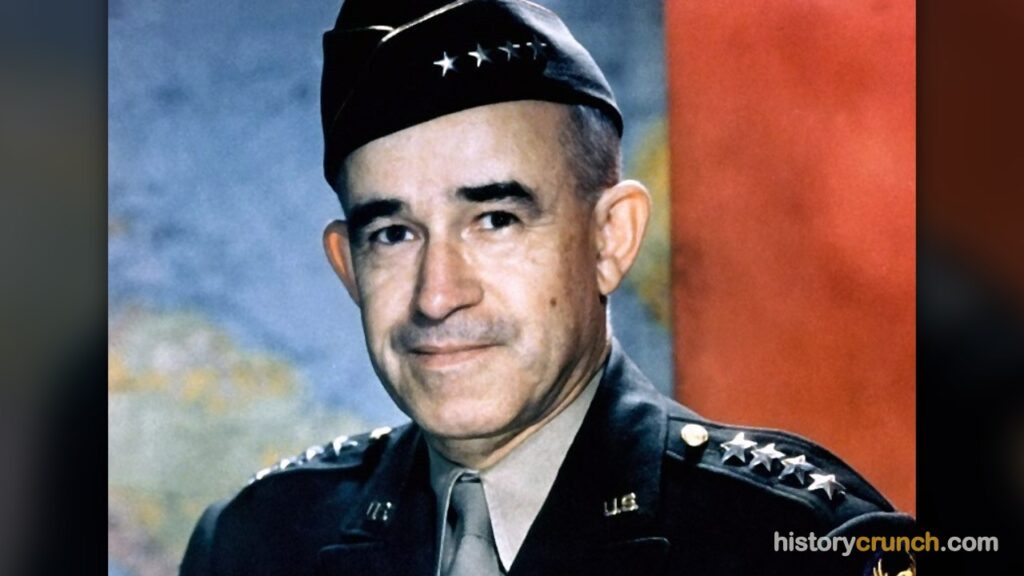
Omar Bradley is remembered as one of the most important American military commanders of the twentieth century and the last officer in United States history to earn the rank of five-star general. He rose from a poor childhood in rural Missouri to command the largest American fighting force ever placed under a single leader during World War II, and he later served as the first Chairman of the Joint Chiefs of Staff. Known widely as the “GI’s General” for the care he showed toward ordinary soldiers, Bradley played a central role in the D-Day landings in Normandy and the campaign that freed France and pushed into Nazi Germany.
A five-star general, formally titled General of the Army, holds the highest peacetime rank in the United States Army. The title has been given to only a small number of officers in American history, and Bradley was the last person ever promoted to it. His long career stretched across two world wars and the Korean War, giving him one of the longest records of military service of any American officer.
Early Life and Background
Omar Nelson Bradley was born on February 12th, 1893, near the small town of Clark in Randolph County, Missouri. His father, John Bradley, was a schoolteacher who sometimes walked several miles each day to reach the schools where he taught. His mother, Sarah, worked as a seamstress, and the family lived with very little money.
Bradley’s early years were shaped by hardship. When he was just fourteen years old, his father died of pneumonia, a loss that deeply affected the young boy. After the death, Bradley and his mother moved to the town of Moberly, Missouri, where she later remarried and where Bradley finished high school.
After graduating, Bradley took a job as a laborer with the Wabash Railroad, saving his wages so that he could afford to attend the University of Missouri. His plans changed, however, when a Sunday school teacher urged him to apply instead to the United States Military Academy at West Point. Bradley took the entrance exams, earned a place, and entered the academy in 1911. In fact, this decision set him on the path that would define the rest of his life.
Rise Through the Army
Bradley graduated from West Point in 1915 as part of a class that would become famous for producing many future generals, including Dwight D. Eisenhower. The class was later nicknamed “the class the stars fell on” because so many of its members rose to the rank of general. Bradley entered the Army as an infantry officer just as the world was moving toward the First World War.
Although he hoped to serve in combat during World War I, Bradley spent the war on assignments in the United States and did not see action overseas. In the years that followed, he steadily built his reputation as a careful and skilled teacher and officer. More specifically, he served as an instructor at West Point and later at the Infantry School at Fort Benning, Georgia, where he worked under George C. Marshall, an officer who would soon lead the entire Army.
Marshall was impressed by Bradley’s calm judgment and quiet confidence, and this connection helped Bradley advance quickly once the United States entered World War II. By the early years of the war, Bradley had been given command of infantry divisions and was preparing troops for the fighting that lay ahead. In reality, his steady rise came not from bold showmanship but from a reputation for reliability and good sense.
Major Achievements in World War II
Bradley’s first major combat command came in North Africa in early 1943. There he helped turn around struggling American forces and played a key role in the campaign that ended with the surrender of large numbers of German and Italian troops in Tunisia. His success in North Africa marked him as one of the most capable American field commanders of the war.
Following North Africa, Bradley took part in the Allied invasion of Sicily in the summer of 1943, serving under the flamboyant General George S. Patton. The two men had very different personalities. Patton was loud, dramatic, and aggressive, while Bradley was quiet, modest, and focused on the well-being of his soldiers. This difference in style would follow both men through the rest of the war.
Bradley’s most famous role came during the Normandy Invasion, also known as D-Day, which began on June 6th, 1944. As stated above, this was part of the larger Allied plan codenamed Operation Overlord, a massive attack meant to open a new front in western Europe and begin the liberation of France from Nazi control. The overall operation was placed under the command of General Eisenhower.
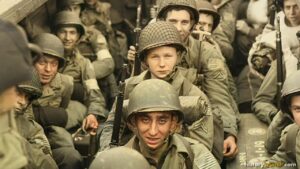
During the D-Day landings, Bradley commanded the American ground forces that came ashore on the beaches code-named Utah and Omaha. The fighting at Omaha Beach was especially brutal, and American troops there suffered heavy casualties before they were able to break through the German defenses. The Normandy Invasion is remembered as the largest amphibious invasion in human history, with roughly 160,000 Allied troops taking part in the D-Day attacks. You can read more about the operation in the HistoryCrunch article on the Normandy Invasion (D-Day).
After the landings, Bradley was placed in command of the Twelfth Army Group, which grew into the largest body of American soldiers ever led by a single commander. For instance, at its peak the force included more than one million troops. Under his leadership, Allied armies broke out of Normandy, helped liberate France, and drove eastward into Germany itself.
One of the toughest challenges Bradley faced came in the winter of 1944, when German forces launched a surprise counterattack in the Battle of the Bulge. Bradley’s forces helped absorb and eventually turn back the German offensive, which proved to be Germany’s last major gamble in the west. By the spring of 1945, his armies had pushed deep into Germany, and the Nazi war effort collapsed soon after.
Later Life and Postwar Career
After Germany surrendered in May of 1945, Bradley returned to the United States to take on new duties. President Harry S. Truman chose him to lead the Veterans Administration, the agency responsible for caring for former soldiers. Bradley reorganized the agency and greatly improved its medical care, drawing on the same concern for ordinary soldiers that had earned him his famous nickname.
In 1948, Bradley became Chief of Staff of the Army, and the following year he was chosen as the first Chairman of the Joint Chiefs of Staff. This position made him the top military adviser to the president and the highest-ranking officer in the American armed forces. In 1950, while serving in this role, he was promoted to General of the Army, the five-star rank that made him the last American officer ever to hold that honor.
As Chairman during the Korean War, Bradley helped guide American strategy during a dangerous and uncertain period of the Cold War. He supported the idea of a limited war in Korea rather than a wider conflict that might have drawn in the Soviet Union or China. In reality, his cautious approach reflected his belief that the United States needed to focus its strength carefully rather than spread it thin.
Bradley retired from active military service in 1953 after nearly forty years in uniform. In his later years he worked in private business, including a long role with a watch company, and he served as a consultant on a famous film about General Patton. He remained a respected public figure until his death on April 8th, 1981, at the age of 88. He was buried at Arlington National Cemetery.
Significance of Omar Bradley
Omar Bradley is significant because he helped lead the Allies to victory in Europe during World War II while commanding more American soldiers than any general before or since. His steady leadership during the Normandy Invasion and the drive into Germany made him one of the most important figures in the defeat of Nazi Germany. Without his careful command, the difficult breakout from Normandy might have unfolded very differently.
Beyond the battlefield, Bradley shaped the modern American military as the first Chairman of the Joint Chiefs of Staff. In that role he helped organize how the different branches of the armed forces worked together, a system that still guides American defense today. His work reorganizing the Veterans Administration also improved the lives of millions of former soldiers.
Finally, Bradley is remembered for the character he brought to leadership. As the “GI’s General,” he showed that a commander could be both effective and deeply humble, earning respect through concern for his troops rather than through dramatic displays. In this way, his legacy stands as an example of quiet, thoughtful leadership during one of the most difficult periods in modern history.
Frequently Asked Questions
Who was Omar Bradley?
Omar Bradley was an American five-star general who commanded United States ground forces during the D-Day invasion and the campaign to defeat Nazi Germany in World War II. He was born in Missouri in 1893 and graduated from West Point in 1915. He later became the first Chairman of the Joint Chiefs of Staff, making him one of the most influential military leaders in American history.
Why was Omar Bradley called the GI’s General?
Omar Bradley was called the “GI’s General” because he showed unusual care and concern for the ordinary enlisted soldiers under his command. The term “GI” was a common nickname for American soldiers during World War II. Bradley often visited troops on the front lines and worked to protect their welfare, which made him popular among both officers and enlisted men.
What did Omar Bradley do on D-Day?
On D-Day, Omar Bradley commanded the American ground forces that landed at Utah and Omaha beaches in Normandy. He directed the troops from a warship offshore during the earliest and most dangerous hours of the assault. His leadership was crucial to breaking through the fierce German defenses, especially at the deadly Omaha Beach.
How was Omar Bradley different from George Patton?
Omar Bradley and George Patton had very different personalities and leadership styles despite fighting on the same side. Patton was loud, aggressive, and famous for his dramatic speeches, while Bradley was quiet, modest, and focused on careful planning. At different points in the war, each man served above the other, which sometimes created tension between them.
Was Omar Bradley the last five-star general?
Yes, Omar Bradley was the last American officer ever promoted to the rank of General of the Army, which carries five stars. He received the promotion in 1950 while serving as Chairman of the Joint Chiefs of Staff. No officer in the United States military has been given the five-star rank since that time.
Cite This Article
To cite this article as a source, use one of the formats below.
MLA: Millar, B. “Omar Bradley: A Detailed Biography.” HistoryCrunch, 14 August 2026, https://historycrunch.com/omar-bradley/.
APA: Millar, B. (2026). Omar Bradley: A Detailed Biography. HistoryCrunch. https://historycrunch.com/omar-bradley/
Chicago: Millar, B. “Omar Bradley: A Detailed Biography.” HistoryCrunch. August 14, 2026. https://historycrunch.com/omar-bradley/
Sources
- J.M. Roberts & Odd Arne Westad, The Penguin History of the World.
- Jerry Bentley & Herbert Ziegler, Traditions & Encounters: A Global Perspective on the Past.