Medieval towns and cities were an important and growing part of life during the Middle Ages, serving as centers of trade, craftsmanship, and community for the people who lived and worked in them. While most people in Europe lived in the countryside during the early part of the Middle Ages, towns grew significantly in size and importance during the High Middle Ages, particularly from the 11th century onward.
What Were the Middle Ages?
The Middle Ages, also known as the Medieval Period, lasted for approximately 1000 years from the 5th century to the 15th century. Due to its timeframe, the Middle Ages in Europe is divided into three smaller periods referred to as the Early, High, and Late Middle Ages. During the Early Middle Ages, most people in Europe lived in scattered communities in the countryside, and towns were relatively small and unimportant compared to what they had been during the time of the Roman Empire. With that said, beginning in the High Middle Ages at around the 11th century, towns began to grow rapidly across Europe as trade revived and populations increased. As such, medieval towns and cities became an increasingly important feature of life in the Middle Ages and played a major role in the development of European society.
Why Did Medieval Towns Grow?
There were several main reasons why medieval towns grew during the Middle Ages. For example, one of the most important reasons was the improvement of agriculture during the High Middle Ages. Farmers across Europe began adopting better farming methods, including crop rotationA farming method where different crops are planted in a field each season to keep the soil productive., and cleared new land for farming. As a result, food production increased significantly, which meant that not everyone had to farm in order to feed themselves. This created a surplusAn extra amount left over after everyone’s basic needs have been met. of labor that could move to towns and take up other jobs such as craftsmanship and trade.
As well, the revival of trade was a major factor in the growth of medieval towns. Seaport towns such as Venice and Genoa in Italy grew into important trading centers for goods arriving from the Middle East and Asia. Within Europe, merchants traveled by river to transport goods, and many towns grew up along these waterways or at important crossroads and trade routes. For instance, the Crusades also played a role in the growth of medieval towns, as the movement of thousands of crusaders across Europe created demand for goods and services along the routes to the Holy Land, which helped towns and markets along those routes to grow and prosper. In general, as trade increased, more people moved to towns in search of work and opportunity, which caused towns to grow larger and more complex over time.
 FactsthatCrunch
Follow the chain from top to bottom. Tap any step to read what happened.
What Did Medieval Towns Look Like?
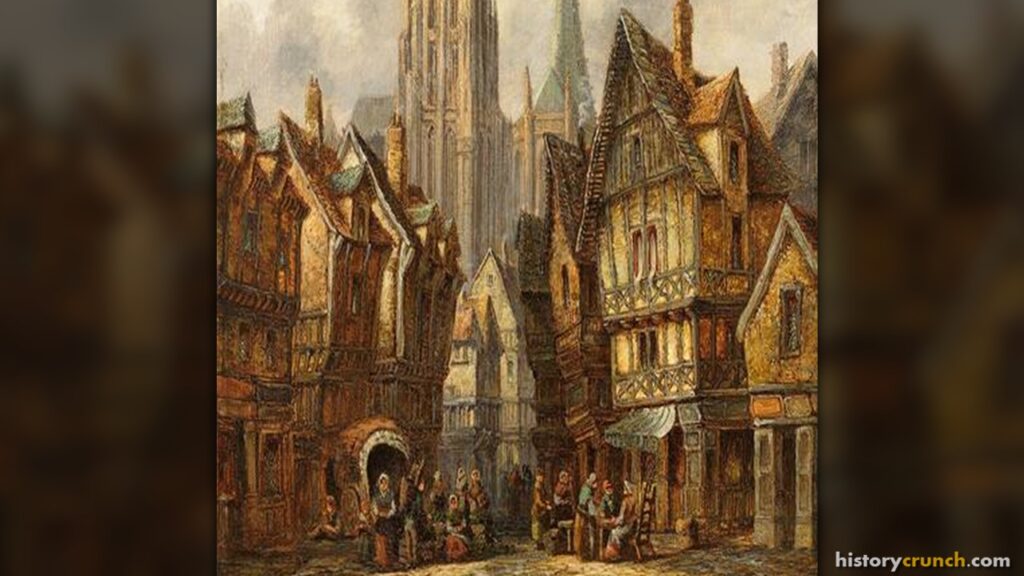
Medieval towns had a distinctive appearance that set them apart from the rural countryside around them. In reality, most medieval towns were quite small by modern standards, but they were nevertheless busy and crowded places. Almost all medieval towns were surrounded by thick defensive walls made of stone, which protected the people inside from attack. Visitors entered the town through gates in the walls, and the gates were also used to collect taxes on goods being brought in to be sold.
Inside the walls, homes and shops lined narrow, unpaved streets. The upper floors of buildings often jutted out over the street below, which blocked sunlight from reaching the ground level and made the streets feel even more cramped. In the center of the town there was usually a market square and a church or cathedral, which served as the most important gathering place for the community. Most towns also had a guildhallA building in a medieval town used by guilds and local government for meetings and administration., which was a building used by the town’s guildsOrganizations of craftsmen or merchants that regulated their trade, protected members, and maintained the quality of goods. and local government for meetings and administration. Life in medieval towns could be difficult, as the streets were often dirty and the close living conditions made disease spread easily. For instance, fire was also a constant danger since most buildings were made of wood and packed closely together.
FactsthatCrunchIn medieval towns, stone wall gates served as the main entry points where guards checked travelers and collected taxes on goods before they could be sold inside.
Medieval Towns and Trade
Trade was the foundation of medieval town life. Most towns held regular markets where local people could buy and sell everyday goods such as food, clothing, and household items. As well, larger towns held great merchant fairs several times a year, which attracted merchants from many different countries and offered goods from all across Europe, the Middle East, and beyond. For example, the great fairs of Champagne in France were among the most famous trading events of the Middle Ages and drew merchants from as far away as Italy and the Islamic world.
As trade grew during the High Middle Ages, merchants became increasingly powerful and wealthy members of medieval society. In fact, in many towns the wealthiest merchants came to dominate local government and sat on town councils or held the position of mayor. This was a significant change from the feudal world of the countryside, where power was held by nobles and lords. The growth of trade and the wealth it created helped to gradually weaken the feudal system and contributed to the development of a new merchant class in European society.
FactsthatCrunchWhat were the great fairs of Champagne?
They were huge merchant fairs held several times a year in the Champagne region of France. Merchants came from as far away as Italy and the Islamic world to buy and sell goods from across Europe, the Middle East and beyond. As trade grew, the richest merchants in many towns came to run local government as councillors or mayors.
Guilds in Medieval Towns
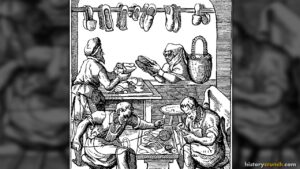
One of the most important features of medieval town life was the system of guilds. Guilds were organizations of craftsmen or merchants that worked together to regulate their trade, protect their members, and maintain the quality of goods produced or sold in the town. There were two main types of guilds in medieval towns: merchant guilds and craft guilds. Merchant guilds brought together the traders and merchants of a town and regulated prices, weights, and business practices. Craft guilds, on the other hand, were organized by specific trades such as weavers, bakers, blacksmiths, and shoemakers, and they regulated the quality and hours of work for their members.
Guilds flourished in Europe from roughly the 11th to the 15th centuries and became an enormously important part of medieval economic and social life. For example, guilds looked after the welfare of their members and their families, providing help to those who were sick or unable to work. As well, guilds built schools, roads, and churches in their towns and supported community events. To become a member of a guild, a young person first had to become an apprenticeA young person who lived and worked with a master craftsman for about seven years to learn a trade without pay., usually starting at around twelve years of age. An apprentice lived and worked with a master craftsman, learning the trade over a period of approximately seven years without receiving pay. At the end of the apprenticeship, the apprentice had to produce a piece of work known as a masterpieceA piece of work an apprentice had to produce at the end of training to prove their skill to a guild. to demonstrate their skill to the guild. If the guild approved the work, the apprentice could become a master craftsman and eventually set up their own shop.
FactsthatCrunchMedieval towns had two main kinds of guilds: merchant guilds and craft guilds.
Significance of Medieval Towns and Cities
Medieval towns and cities played a vital role in the history of the Middle Ages and helped shape the development of modern European society. The growth of towns provided ordinary people with opportunities that were not available to them in the feudal countryside. As stated above, people who moved to a town could find work, earn money, and in time improve their position in society in ways that were almost impossible for peasants tied to the land under the feudal system. In fact, it was a common practice that if a serf could escape to a town and live there for a year and a day without being caught, they were considered to be free and could not be forced to return to their lord’s manor.
Furthermore, the growth of towns and trade gradually weakened the feudal system by creating a new merchant class and reducing the dominance of the old nobility over economic life. The wealth generated by trade in medieval towns eventually helped to fund the cultural developments of the Renaissance and the Age of Exploration. In general, medieval towns were much more than just places where people bought and sold goods. They were the places where new ideas, new freedoms, and new kinds of society began to take shape during the Middle Ages.
FactsthatCrunchUnder a medieval custom, a serf who lived in a town for a year and a day without being recaptured was considered free and could not be forced back to the lord's manor. That same passage of time that freed one person also, across many serfs and many towns, drained the feudal countryside of bound labor and helped break the nobility's hold on economic life.
As towns grew from the 11th century onward, the merchant wealth they produced created a new class of people whose power came from trade, not from land or noble rank.
Explore Middle Ages · 476 – 1500 CE
Keep exploring Middle Ages with these History Crunch resources.
Key Vocabulary
Crop rotation
Surplus
Guildhall
Guilds
Apprentice
Masterpiece
Serf
Frequently Asked Questions
When did medieval towns begin to grow?
Medieval towns began to grow rapidly in the High Middle Ages, around the 11th century. During the Early Middle Ages, most people lived in small countryside communities, and towns were small. Better farming and a revival of trade allowed towns to grow larger and more important over time.
Why did medieval towns grow?
Medieval towns grew mainly because of better farming and the revival of trade. Improved methods like crop rotation produced more food, so fewer people were needed to farm. This freed workers to move to towns for jobs in craftsmanship and trade, while growing trade routes drew even more people in.
What did a medieval town look like?
Most medieval towns were small, crowded, and surrounded by thick stone walls for protection. Visitors entered through gates, where taxes were collected on goods. Narrow, unpaved streets were lined with homes and shops, and the town center usually held a market square, a church, and a guildhall.
What were guilds in medieval towns?
Guilds were organizations of craftsmen or merchants that worked together to control their trade and protect members. Merchant guilds set prices and business rules, while craft guilds covered specific trades like baking or weaving. Guilds also helped sick members and built schools, roads, and churches in their towns.
How did someone become a master craftsman?
A young person first became an apprentice, usually starting around twelve years of age. The apprentice lived and worked with a master for about seven years without pay. At the end, they had to make a special piece called a masterpiece, and if the guild approved it, they could become a master.
How did towns weaken the feudal system?
Towns gave ordinary people chances to find work and earn money outside the feudal countryside. A serf who escaped to a town and lived there a year and a day without being caught was considered free. The wealth created by trade also built a new merchant class that reduced the power of the old nobility.
Cite This Article
To cite this article as a source, use one of the formats below.
MLA: Millar, B. “Medieval Towns and Cities: A Detailed Summary.” HistoryCrunch, 16 October 2026, https://historycrunch.com/medieval-towns-and-cities/.
APA: Millar, B. (2026). Medieval Towns and Cities: A Detailed Summary. HistoryCrunch. https://historycrunch.com/medieval-towns-and-cities/
Chicago: Millar, B. “Medieval Towns and Cities: A Detailed Summary.” HistoryCrunch. October 16, 2026. https://historycrunch.com/medieval-towns-and-cities/
Sources
- Fordham Medieval Sourcebook
- Chris Wickham, Medieval Europe.