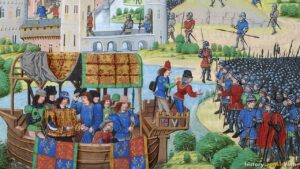
Art in the Middle Ages was an important part of medieval European society and culture. Unlike art in the modern world, which is often created for personal expression or aesthetic enjoyment, art in the Middle Ages was produced primarily for religious purposes and was closely connected to the Catholic Church. The art of the medieval period took many different forms, including: painting, sculpture, architecture, stained glass, illuminatedDecorated with gold or silver leaf and elaborate illustrations so pages appear to glow in candlelight. manuscripts and tapestries. In general, art in the Middle Ages was defined by its religious themes, its symbolic style and its close relationship with the major institutions of medieval society.
 FactsthatCrunch
Which definition fits each medieval art form or term?
What Was Art Like in the Middle Ages?
Art in the Middle Ages refers to the artistic works and traditions that were produced in Europe during the medieval period, which lasted from approximately the 5th century to the 15th century. Following the fall of the Western Roman Empire in 476 CE, the artistic traditions of the ancient world changed significantly as the Catholic Church became the dominant force in European cultural life. Throughout the Middle Ages, the Church was the most important patronA person or institution that pays for and commissions works of art from artists. of the arts, meaning that it funded and commissioned the vast majority of artistic works produced during the period. As such, the purpose, style and subject matter of art in the Middle Ages were shaped almost entirely by the religious values and teachings of the Catholic Church.
Religious Art in the Middle Ages
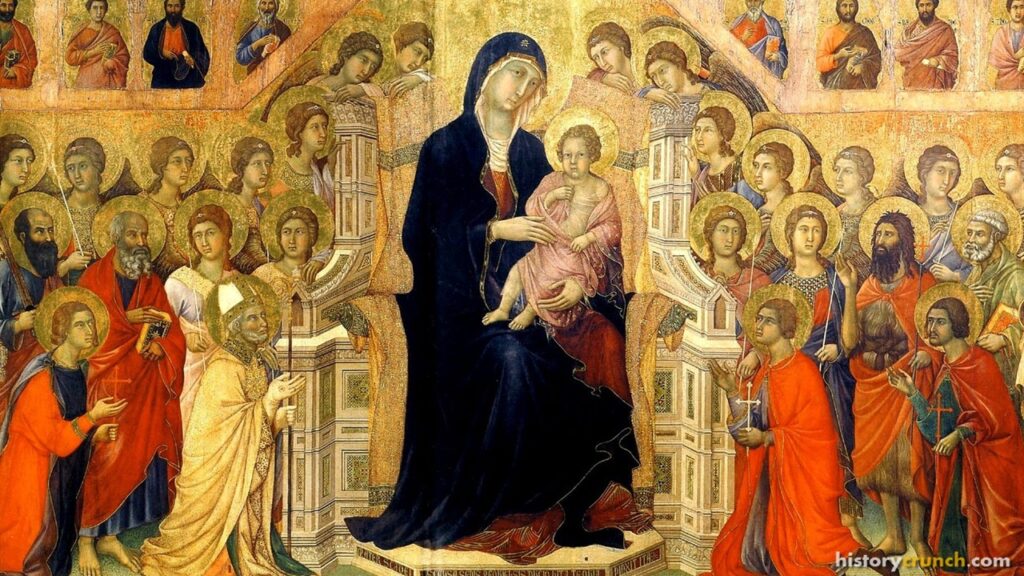
The most important form of art in the Middle Ages was religious art. Since the Catholic Church was the dominant institution in medieval European society, the vast majority of artistic works produced during the period depicted religious subjects and were intended to communicate the teachings of the Church to a largely illiterate population. For instance, paintings and sculptures in churches depicted scenes from the Bible, the life of Jesus Christ and the stories of the saints. These images served an important educational purpose, allowing people who could not read to learn about and connect with the stories and teachings of the Christian faith.
Religious art in the Middle Ages was generally produced in a highly stylized manner, meaning that it did not attempt to depict people and the world in a realistic way. Instead, figures in medieval religious art were often shown in a flat, two-dimensional style, with little attention to realistic proportions or perspective. For example, important religious figures such as Jesus Christ or the Virgin Mary were often depicted much larger than the other figures in a painting to convey their spiritual importance. This symbolic approach to art was a deliberate choice that reflected the values of the Middle Ages, in which spiritual meaning was considered far more important than realistic representation. As such, the religious art of the Middle Ages was fundamentally different in style and purpose from the art that would emerge during the Renaissance.
FactsthatCrunchWhy were holy figures shown larger than ordinary people in medieval religious art?
Illuminated Manuscripts
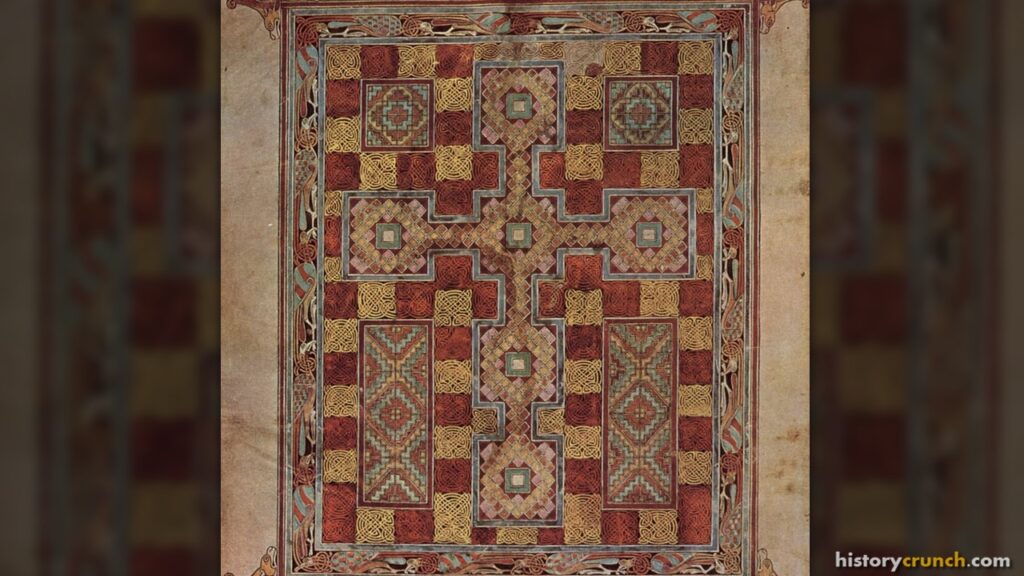
One of the most significant art forms of the Middle Ages was the illuminated manuscript. Illuminated manuscripts were handwritten books decorated with elaborate illustrations, ornamental borders and decorative lettering, often featuring gold or silver leaf that caused the pages to appear to glow or shimmer in candlelight. The term illuminated comes from the Latin word for light, which refers to this shining quality of the decorations. Illuminated manuscripts were produced primarily by monks working in monasteries, who devoted enormous amounts of time and skill to their creation.
The most common subjects of illuminated manuscripts were religious texts, including the Bible, prayer books and the lives of the saints. However, illuminated manuscripts were also produced for other purposes, including recording historical events, laws and scientific knowledge. Some of the most famous illuminated manuscripts from the Middle Ages include the Book of Kells, an elaborately decorated copy of the four Gospels produced by Irish monks around 800 CE, and the Lindisfarne Gospels, produced by monks in northern England around 715 CE. As such, illuminated manuscripts represent one of the highest artistic achievements of the Middle Ages and are important historical documents as well as works of art.
Architecture in the Middle Ages
Architecture was one of the most significant and lasting art forms of the Middle Ages. The medieval period saw the construction of some of the most iconic buildings in European history, including great cathedrals, monasteries, castles and manor houses. Two major styles of architecture dominated the Middle Ages: RomanesqueA style of medieval building using thick stone walls, rounded arches, and small windows common from the 10th to 12th centuries. and Gothic.
Romanesque architecture was the dominant style of building in Europe during the Early and High Middle Ages, from approximately the 10th to the 12th centuries. Romanesque buildings were characterized by their thick stone walls, rounded arches and small windows. For instance, many of the great monasteries and churches built during this period featured heavy stone construction that gave them a solid and fortress-like appearance. The thick walls and small windows of Romanesque buildings were partly a practical response to the military instability of the Early Middle Ages, when buildings needed to be defensible as well as functional.
Gothic architecture emerged in the 12th century and became the dominant style of church building during the High and Late Middle Ages. Gothic architecture was characterized by its tall pointed arches, large stained glass windows and elaborate stone carvings. The development of new building techniques, such as the flying buttressAn external stone arch that supports a tall wall from outside, allowing thinner walls and larger windows., allowed Gothic architects to build much taller and more slender structures than had been possible with Romanesque architecture. As such, Gothic cathedrals were able to feature enormous windows filled with colorful stained glass that flooded the interior with light. Some of the most famous examples of Gothic architecture include Notre-Dame Cathedral in Paris and Chartres Cathedral in France, both of which remain standing today and continue to be celebrated as masterpieces of medieval art and architecture.
FactsthatCrunchThe flying buttress, an external stone arch built outside a Gothic cathedral wall, transferred the weight of the roof away from the wall itself, which meant the wall no longer needed to be thick to hold the building up. That single structural shift freed the wall to be filled with large stained glass windows instead of solid stone.
Romanesque builders kept walls thick and windows small because the wall carried the full weight of the roof; without the flying buttress, opening up a wall meant risking the collapse of the structure above it.
Stained Glass in the Middle Ages
Stained glass was one of the most important and distinctive art forms of the Middle Ages, particularly in connection with Gothic architecture. Stained glass windows were created by joining together pieces of colored glass with strips of lead to form elaborate pictorial scenes or decorative patterns. These windows were installed in the great cathedrals and churches of medieval Europe and served both an artistic and a religious purpose. For instance, the colored light that filtered through stained glass windows was seen as a symbol of the divine light of God, and the images depicted in the windows told stories from the Bible and the lives of the saints to the congregation below.
Creating stained glass windows in the Middle Ages was an extremely skilled and labor intensive process. Craftsmen known as glaziersSkilled craftsmen who made stained glass windows by cutting colored glass and joining pieces with strips of lead. first had to produce sheets of colored glass by mixing metallic oxides into molten glass. The glass was then cut into the required shapes and painted with additional details before being joined together with lead strips and installed in the window frame. Some of the most famous stained glass windows from the Middle Ages can still be seen today in cathedrals across France, England and Germany, where they remain remarkable examples of medieval artistic achievement.
FactsthatCrunchHow did medieval building design shift from thick fortress walls to walls of glass?
Tap a point to read its detail.
Tapestries in the Middle Ages
Tapestries were another important art form of the Middle Ages. A tapestry is a large textile work, woven by hand on a loom, that depicts scenes or patterns in colored thread. Tapestries were produced throughout the Middle Ages and served both decorative and practical purposes. For instance, large tapestries were hung on the walls of castles and manor houses, where they helped to insulate cold stone walls while also displaying the wealth and status of the noble household. Tapestries also depicted important historical and religious scenes, making them both decorative objects and historical records.
One of the most famous tapestries from the Middle Ages is the Bayeux Tapestry, which was produced in the 11th century and depicts the events of the Norman Conquest of England in 1066 CE. The Bayeux Tapestry is nearly 70 meters long and contains over 50 scenes depicting the lead-up to and events of the Battle of Hastings. As such, it is one of the most important historical documents of the Middle Ages as well as one of its most celebrated works of art. Other famous medieval tapestries include the Unicorn Tapestries, a series of seven tapestries produced in the Late Middle Ages that depict the hunting of a unicorn and are considered among the finest examples of medieval textile art.
Art in the Middle Ages and the Renaissance
Art in the Middle Ages had a profound impact on the development of art during the Renaissance. The Renaissance, which began in the city-states of the Italian peninsula in the 14th century, saw a major shift in artistic style and purpose that was in many ways a direct response to the art of the Middle Ages. For instance, Renaissance artists moved away from the flat, symbolic style of medieval religious art and instead sought to depict people and the world in a realistic and lifelike manner. Techniques such as linear perspectiveA technique that creates the illusion of depth and distance in a flat painting., which created the illusion of depth in a painting, and sfumatoA painting technique using subtle blending of paint to create realistic shadows and smooth transitions between tones., which used subtle blending of paint to create realistic shadows and transitions, were developed by Renaissance artists such as Leonardo da Vinci and Michelangelo as part of this larger shift in artistic approach.
With that said, the art of the Middle Ages provided an important foundation for the Renaissance. The skills, techniques and traditions developed by medieval craftsmen in areas such as architecture, stained glass and manuscript illumination helped create a rich artistic culture in Europe that Renaissance artists could build upon and react against. As such, understanding art in the Middle Ages is important for understanding the broader history of European art and the developments that led to the Renaissance.
FactsthatCrunchMedieval art used size and symbol to teach Church doctrine to people who could not read. Renaissance artists, starting in the Italian city-states in the 14th century, moved away from that symbolic style and focused on showing people and the world as they truly appeared.
Significance of Art in the Middle Ages
In conclusion, art in the Middle Ages was a vital and rich part of medieval European culture. From illuminated manuscripts and stained glass windows to Gothic cathedrals and elaborate tapestries, the art of the Middle Ages reflected the deeply religious values of medieval society and produced some of the most extraordinary works of art and architecture in human history. As such, understanding art in the Middle Ages is important for gaining a complete picture of medieval European society and for understanding the artistic developments that followed during the Renaissance and beyond.
FactsthatCrunch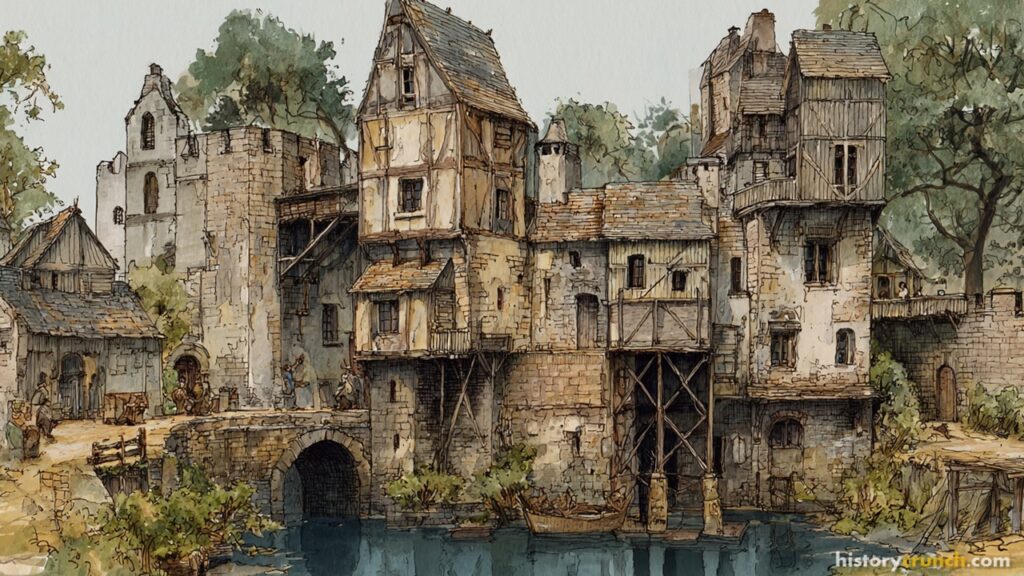 Evidence Photo
Explore Middle Ages · 476 – 1500 CE
Keep exploring Middle Ages with these History Crunch resources.
Key Vocabulary
Patron
Illuminated
Romanesque
Flying buttress
Glaziers
Sfumato
Linear perspective
Frequently Asked Questions
What was the main purpose of art in the Middle Ages?
Most art in the Middle Ages was made to serve religious purposes for the Catholic Church. Since many people could not read, paintings and carvings taught Bible stories to ordinary churchgoers. The Church funded and ordered most works, so it shaped their subjects and style.
Why does medieval art look flat and unrealistic?
Medieval art looks flat because artists valued spiritual meaning more than realistic appearance. Figures were often shown in a two-dimensional style with little attention to correct size or perspective. Important people like Jesus or the Virgin Mary were drawn larger to show their holiness.
What is the difference between Romanesque and Gothic architecture?
Romanesque buildings had thick stone walls, rounded arches and small windows, which made them look like fortresses. Gothic buildings, which came later, used pointed arches and flying buttresses to rise taller and thinner. These new methods allowed huge stained glass windows to fill churches with colored light.
What is an illuminated manuscript?
An illuminated manuscript is a handwritten book decorated with detailed pictures, borders and fancy lettering. Many used gold or silver leaf that seemed to glow in candlelight, which gave them their name. Monks made them in monasteries, often copying the Bible, prayer books and the lives of saints.
How long is the Bayeux Tapestry and what does it show?
The Bayeux Tapestry is nearly 230 feet (70 m) long and shows the Norman Conquest of England in 1066 CE. It contains more than 50 scenes that lead up to and include the Battle of Hastings. This makes it both a famous work of art and an important historical record.
How did medieval art influence the Renaissance?
Medieval art gave Renaissance artists a foundation of skills to build upon and react against. Renaissance painters rejected the flat, symbolic style and instead aimed for realistic, lifelike images. They developed tools like linear perspective and sfumato to create depth and natural shadows.
Cite This Article
To cite this article as a source, use one of the formats below.
MLA: Woida, K.L. “Art in the Middle Ages: A Detailed Summary.” HistoryCrunch, 17 October 2026, https://historycrunch.com/art-in-the-middle-ages/.
APA: Woida, K. L. (2026). Art in the Middle Ages: A Detailed Summary. HistoryCrunch. https://historycrunch.com/art-in-the-middle-ages/
Chicago: Woida, K.L. “Art in the Middle Ages: A Detailed Summary.” HistoryCrunch. October 17, 2026. https://historycrunch.com/art-in-the-middle-ages/
Sources
- Jacques Le Goff, Medieval Civilization 400-1500.
- Chris Wickham, Medieval Europe.
- The Met (Heilbrunn Timeline): medieval art
- Barbara Rosenwein, A Short History of the Middle Ages.