Food and farming were central to life in the Middle Ages. The vast majority of people in medieval Europe lived and worked on the land, and the production of food was the most important economic activity of the time. The food that people ate and the farming methods they used were closely connected to the social structure of feudalism and the Manor System, which organized agricultural life throughout the Middle Ages. In general, the diet and farming practices of people in the Middle Ages varied depending on their social class, the region they lived in and the time of year.
What Was Farming Like in the Middle Ages?
Farming was the foundation of the medieval economy and the main source of food and income for the majority of people in Europe during the Middle Ages, which lasted from approximately the 5th century to the 15th century. Under the feudal system, peasants and serfs worked the land of their local lord in exchange for protection and the right to live on the manor. The Manor SystemThe way medieval communities organized farming life, tying peasants to the land of a local lord. organized the agricultural life of medieval communities and tied peasants to the land on which they worked. As such, farming in the Middle Ages was not simply an economic activity but was deeply connected to the social and political structures of medieval European society.
 FactsthatCrunch
Farming in medieval Europe was more than an economic activity. It was the foundation of the social and political order itself.
The Open Field System
One of the most important features of farming in the Middle Ages was the open field systemA way of organizing farmland where large fields were split into narrow strips shared among peasant families.. The open field system was the most common method of organizing agricultural land in medieval Europe, particularly in England, France and Germany. Under this system, the farmland surrounding a village was divided into large open fields, which were further divided into long narrow strips. Each peasant family was assigned a number of these strips spread across the different fields, rather than a single block of land. This arrangement meant that the quality of the land was shared more evenly among the peasants of the village.
The open field system also involved a practice known as crop rotationA method of alternating which crops grow in each field section from year to year to keep soil fertile.. Crop rotation was the method of dividing the fields into sections and alternating the crops grown in each section from year to year. For instance, one field might be planted with a winter crop such as wheat or rye, another with a spring crop such as oats or barley, and a third left fallowLand left unplanted for a season so the soil can regain its nutrients., meaning it was left unplanted for a season to allow the soil to recover its nutrients. This practice helped maintain the fertility of the soil and reduce the risk of a total crop failure. As such, the open field system and crop rotation were important features of farming in the Middle Ages that helped sustain the agricultural economy throughout the period.
FactsthatCrunchHow did the three-field crop rotation system work in the Middle Ages?
Farming Tools and Animals
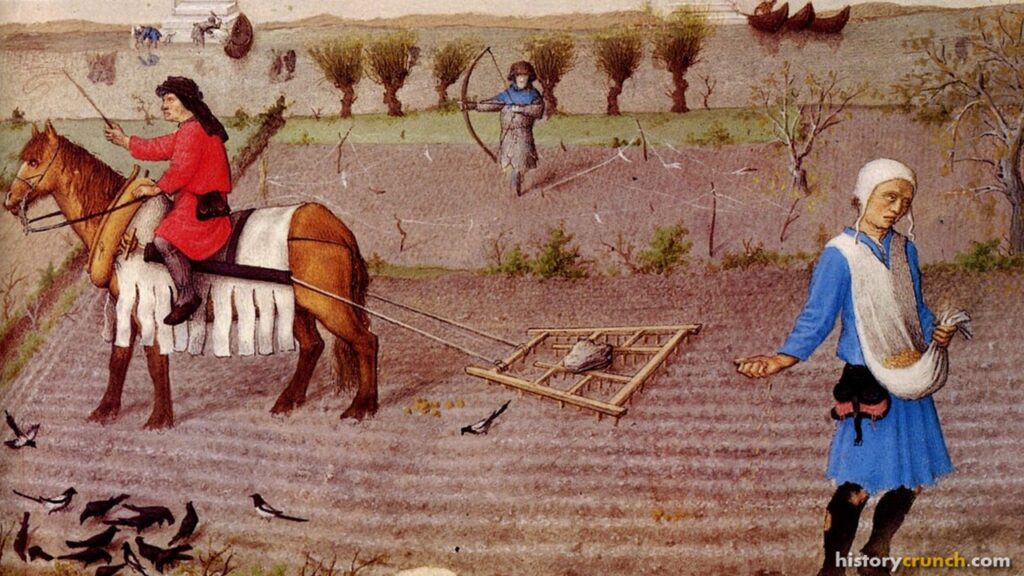
Farming in the Middle Ages relied on a relatively simple set of tools and animals. The most important farming tool of the period was the heavy plow, which was used to break up and turn the soil in preparation for planting. The heavy plow was a significant improvement over earlier plowing tools and was particularly effective in the heavy clay soils common in northern Europe. It was typically pulled by a team of oxen, which were the most common draft animals used in farming in the Middle Ages. Horses were also used for plowing in some regions, though they were more expensive to keep than oxen and required different feed.
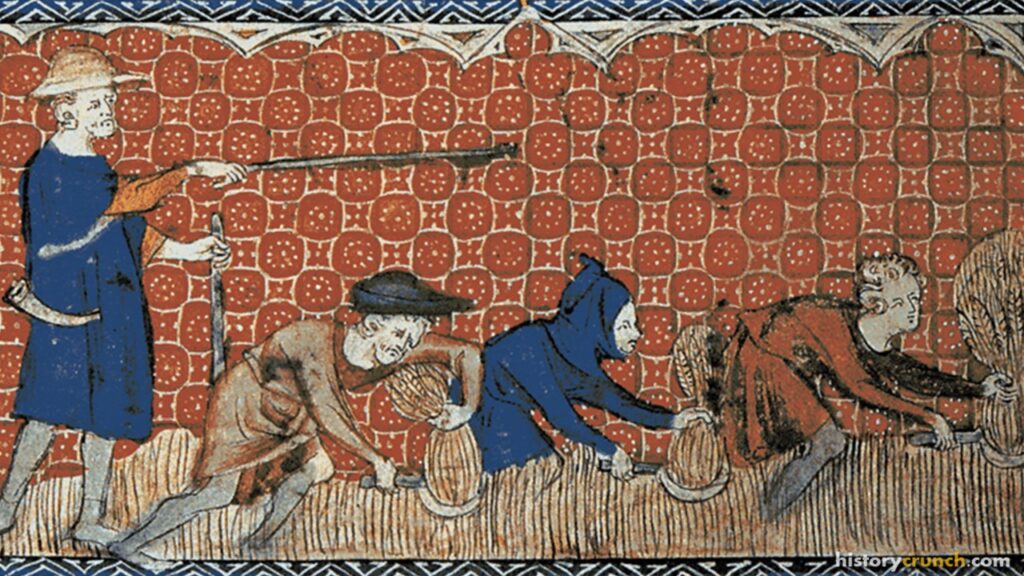
Other important farming tools included: scythes and sickles for harvesting grain, hoes and rakes for tending crops, and flails for threshing grain after harvest. Most of these tools were made by local blacksmiths and were relatively simple in design. Farming in the Middle Ages was extremely labor intensive and required the participation of the entire family, including women and children. For instance, during the harvest season, all members of a peasant family would work long hours in the fields to bring in the crops before the weather turned. As such, the rhythm of life in the Middle Ages was closely tied to the agricultural calendar and the demands of farming.
FactsthatCrunchHow did the heavy plow change farming in northern Europe compared to earlier plowing tools?
Food for Peasants in the Middle Ages
The diet of peasants in the Middle Ages was simple, limited and heavily dependent on the crops grown locally. Bread was the most important food for most people in medieval Europe and was made from grains such as wheat, rye, barley and oats. For most peasants, bread made from rye or barley was more common than wheat bread, as wheat was more expensive and often reserved for the nobility. PottageA thick soup or stew made by boiling vegetables, grains, and meat scraps over a fire. was another staple of the peasant diet. Pottage was a thick soup or stew made by boiling vegetables, grains and whatever scraps of meat were available in a pot over a fire. It was cheap, filling and could be made from a wide variety of ingredients depending on what was available.
Vegetables such as onions, leeks, cabbage, peas and beans were also an important part of the peasant diet and were grown in small gardens attached to the peasant’s home. Meat was a luxury for most peasants in the Middle Ages and was eaten only occasionally. For instance, peasants might keep a small number of chickens or pigs, which provided eggs and occasional meat. However, hunting was generally restricted to the nobility, meaning that peasants had limited access to game such as deer or wild boar. Fish was an important source of protein for people living near rivers, lakes or the sea. As well, the Catholic Church required Christians to abstain from eating meat on Fridays and during certain religious periods such as Lent, which further shaped the diet of people in the Middle Ages.
FactsthatCrunchTrue or False: Meat was a luxury that most medieval peasants ate only occasionally, not a daily food.
Food for Nobles in the Middle Ages
The diet of the nobility in the Middle Ages was very different from that of peasants. Nobles had access to a much wider variety of foods and could afford expensive imported goods such as spices, sugar and exotic fruits. Meat was a central part of the noble diet and was eaten in large quantities at feasts and banquets. For instance, nobles commonly ate: beef, pork, venison, rabbit and a wide variety of birds including chickens, geese and swans. Hunting was an important activity for the nobility, both as a source of food and as a form of entertainment, and game such as deer and wild boar were prized additions to the noble table.
Spices were highly valued in the Middle Ages and were used extensively in noble cooking. Spices such as pepper, cinnamon, ginger and cloves were imported from Asia along the Silk Road and were extremely expensive. As such, the use of spices in food was a symbol of wealth and status in the Middle Ages. Nobles also consumed large amounts of wine and ale, with wine being particularly associated with the upper classes. Feasts and banquets were important social events in noble households and could involve many courses of food accompanied by entertainment such as music, storytelling and acrobatics. As such, food in the Middle Ages was not just a matter of survival but was also closely connected to social status and identity.
FactsthatCrunchWhy could only nobles afford to cook with spices in the Middle Ages?
Spices such as pepper, cinnamon, ginger and cloves came all the way from Asia along the Silk Road, which made them extremely expensive. Nobles used them generously in their cooking, while peasants ate a much plainer diet built around bread, pottage and vegetables.
Farming and the Seasons
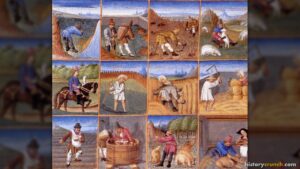
The lives of farmers in the Middle Ages were closely tied to the changing of the seasons. Each season brought its own set of farming tasks that had to be completed in order to ensure the survival of the community through the following year. In spring, peasants plowed and planted their fields with crops such as oats, barley and vegetables. Summer was a time of ongoing maintenance, including weeding the fields and caring for livestock. The harvest season in late summer and autumn was the busiest and most important time of the agricultural year. During harvest, all members of the community worked together to bring in the crops as quickly as possible before bad weather could damage them.
Winter was a quieter time on the farm but was by no means a period of rest. Peasants used the winter months to carry out tasks such as repairing tools, mending fences and preparing the land for the following year. As well, animals that could not be fed through the winter were slaughtered in the autumn, and their meat was preserved by salting or smoking for use during the colder months. The threat of a failed harvest or a harsh winter was a constant concern for peasants in the Middle Ages, as a shortage of food could mean starvation for the community. As such, the rhythm of farming and the changing of the seasons defined the lives of the majority of people in the Middle Ages.
Significance of Food and Farming in the Middle Ages
In conclusion, food and farming were central to life in the Middle Ages and shaped the social, economic and cultural life of medieval European society in profound ways. The agricultural system of the Middle Ages, organized around feudalismA political and social system where peasants worked a lord’s land in exchange for protection and the right to live there., the Manor System and the open field system, sustained the majority of the population and provided the economic foundation upon which medieval civilization was built. As such, understanding food and farming in the Middle Ages is important for gaining a complete picture of what daily life was like during this significant period in the history of Europe.
FactsthatCrunchAcross the Middle Ages, from approximately the 5th century to the 15th century CE, the agricultural system built around feudalism, the Manor System, and the open field system sustained the majority of the European population and provided the economic foundation on which medieval civilization was built.
Subsistence farming with no organized system for sharing land or managing soil fertility
A structured agricultural economy tied to lords, manors, and crop rotation that supported all of medieval society
Explore Middle Ages · 476 – 1500 CE
Keep exploring Middle Ages with these History Crunch resources.
Key Vocabulary
Feudalism
Manor System
Open field system
Fallow
Crop rotation
Pottage
Threshing
Frequently Asked Questions
What was the open field system in the Middle Ages?
The open field system was the most common way of organizing farmland in medieval Europe. The land around a village was split into large open fields, which were then divided into long narrow strips. Each peasant family farmed several strips spread across the fields, so good and poor land was shared fairly.
What did peasants eat in the Middle Ages?
Peasants ate a simple diet based mostly on bread and pottage. Their bread was usually made from rye or barley, since wheat was costly and often saved for nobles. Pottage was a thick stew of vegetables, grains, and any scraps of meat, and vegetables like onions, peas, and beans were also common.
Why did farmers leave fields fallow?
Farmers left a field fallow, or unplanted, for a season so the soil could recover its nutrients. This was part of crop rotation, where different fields grew winter crops, spring crops, or rested each year. The practice kept the soil fertile and lowered the risk of a total crop failure.
How was noble food different from peasant food?
Nobles ate a far wider variety of food than peasants, including large amounts of meat. They enjoyed beef, pork, venison, and many birds, along with expensive spices imported from Asia. These spices, such as pepper and cinnamon, were a symbol of wealth and status in the Middle Ages.
What farming tools were used in the Middle Ages?
The most important tool was the heavy plow, which broke up and turned the soil before planting. It worked well in the thick clay soils of northern Europe and was usually pulled by a team of oxen. Farmers also used scythes and sickles for cutting grain, hoes and rakes for crops, and flails for threshing.
How did the seasons affect farming in the Middle Ages?
Each season brought different tasks that farmers had to finish to feed the community. Spring was for plowing and planting, summer for weeding and tending animals, and autumn for the busy harvest. In winter, peasants repaired tools and fences and preserved meat by salting or smoking it.
Cite This Article
To cite this article as a source, use one of the formats below.
MLA: Millar, B. “Food and Farming in the Middle Ages: A Detailed Summary.” HistoryCrunch, 16 October 2026, https://historycrunch.com/food-and-farming-in-the-middle-ages/.
APA: Millar, B. (2026). Food and Farming in the Middle Ages: A Detailed Summary. HistoryCrunch. https://historycrunch.com/food-and-farming-in-the-middle-ages/
Chicago: Millar, B. “Food and Farming in the Middle Ages: A Detailed Summary.” HistoryCrunch. October 16, 2026. https://historycrunch.com/food-and-farming-in-the-middle-ages/
Sources
- Chris Wickham, Medieval Europe.
- Jacques Le Goff, Medieval Civilization 400-1500.