The Battle of Hastings was fought on October 14th, 1066, near the town of Hastings on the southeastern coast of England. It pitted the Norman army of William, Duke of Normandy, against the Anglo-Saxon army of King Harold II of England. The battle lasted from morning until evening and ended in a decisive Norman victory when Harold was killed. William marched on London, received the city’s submission, and was crowned King of England on Christmas Day of 1066. The battle ended approximately 500 years of Anglo-Saxon rule in England and began the Norman Conquest, one of the most transformative events in the history of the British Isles.
What Was the Middle Ages?
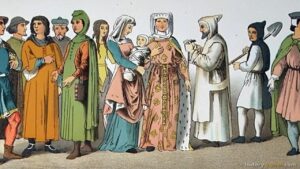
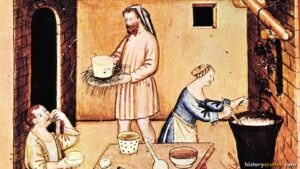
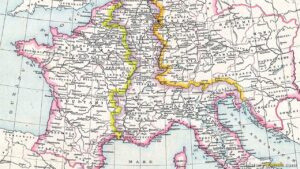
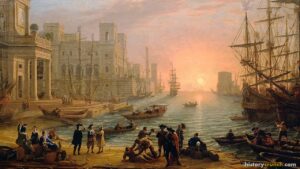
The Middle Ages was a period in European history that lasted roughly from the fall of the Western Roman Empire in the 5th century to the beginning of the Renaissance in the 15th century. It was a time of feudal government, powerful kings and nobles, the dominance of the Catholic Church, and frequent conflict over land and power. The Battle of Hastings took place in the middle of this period and had a profound impact on the political and cultural development of England throughout the rest of the medieval era.
Battle of Hastings – Background
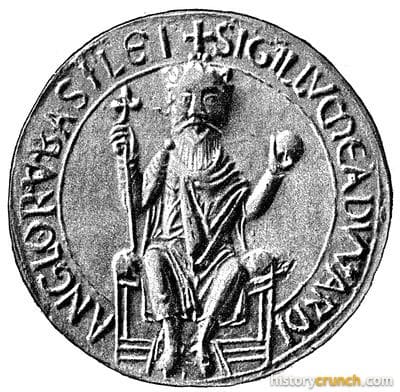
The Battle of Hastings grew directly out of a crisis over who would rule England after the death of King Edward the Confessor. Edward had been king of England since 1042 and was a deeply religious man known for his piety. He had no children and therefore no clear heir to the throne. This created a dangerous situation as his health declined in late 1065, since several powerful men believed they had a legitimate claim to succeed him.
The most important of these claimants were Harold Godwinson, the Earl of Wessex and the most powerful noble in England, and William, Duke of Normandy, a distant cousin of Edward who claimed that Edward had promised him the throne. Edward had spent years in exile in Normandy during his youth and had strong Norman connections. According to Norman accounts, Edward had promised William the throne in 1051, and Harold had later sworn an oath to support William’s claim. Harold denied that his oath was binding, and when Edward died on January 5th, 1066, Harold was elected king by the WitenagemotThe council of Anglo-Saxon nobles that had the power to elect the king of England., the council of Anglo-Saxon nobles, and crowned the very next day.
A third claimant also entered the picture. Harald Hardrada, the King of Norway, asserted his own right to the English throne based on a treaty between his predecessor and an earlier English king. Harold Godwinson therefore faced two separate invasion threats in 1066, one from the north and one from the south.
 FactsthatCrunch
Edward ruled England for over two decades and was known for his deep religious devotion, earning him the title 'the Confessor' from the Catholic Church. He died without an heir in January 1066, and the dispute over who would succeed him directly caused the Norman Conquest of England.
Battle of Hastings – The Battle of Stamford Bridge
In September of 1066, Harald Hardrada of Norway invaded northern England with a fleet of approximately 300 ships, joined by Harold Godwinson’s own brother Tostig, who had been exiled from England and sought revenge. Harold marched his army north with remarkable speed, covering nearly 200 miles in less than a week. On September 25th, 1066, his forces met Hardrada’s army at Stamford Bridge in Yorkshire and won a decisive victory. Harald Hardrada and Tostig were both killed, and the Norwegian threat was eliminated.
The victory was impressive but came at a serious cost. Harold’s army had suffered significant casualties and was exhausted from the hard march north and the intense fighting at Stamford Bridge. Just three days after the battle, Harold received news that William had landed on the south coast of England. He now faced the enormous challenge of marching his tired and depleted army back south to confront a fresh and well-prepared Norman invasion force.
FactsthatCrunchIn late September 1066, King Harold II of England had just crushed the Norwegian invasion at Stamford Bridge in Yorkshire, killing Harald Hardrada and his own brother Tostig. His army was exhausted and badly depleted from the hard march north and the fierce fighting, and had not yet rested when news arrived that William of Normandy had landed on the southern coast. Harold now faced the enormous challenge of marching his tired and battered army back south across nearly 200 miles to meet a fresh, well-prepared Norman force, and he had to decide how to do it.
Battle of Hastings – William’s Invasion and the Armies
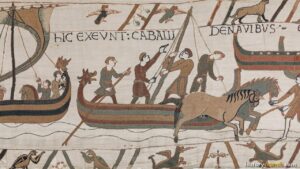
William had been preparing his invasion fleet and army throughout the summer of 1066. He gathered an army of approximately 7,000 men drawn from Normandy and other parts of France, including knights on horseback, heavy infantry, and archers. He secured the support of Pope Alexander II, who gave his blessing to the invasion, which gave William’s cause a religious legitimacy that strengthened his position considerably. On September 28th, 1066, his fleet landed at Pevensey on the southeastern coast of England. He then moved his forces to nearby Hastings and organized his position there, deliberately ravaging the local countryside to provoke Harold into coming south quickly.
Harold responded to William’s challenge with characteristic speed but perhaps excessive haste. He gathered his forces in London and marched south to confront the Normans before his army had fully recovered from the campaign in the north or been reinforced with fresh troops. He arrived in the area south of Hastings in the evening of October 13th, 1066, and established his army on a ridge at a place now known as Senlac Hill, where he would have the advantage of high ground in the battle to come.
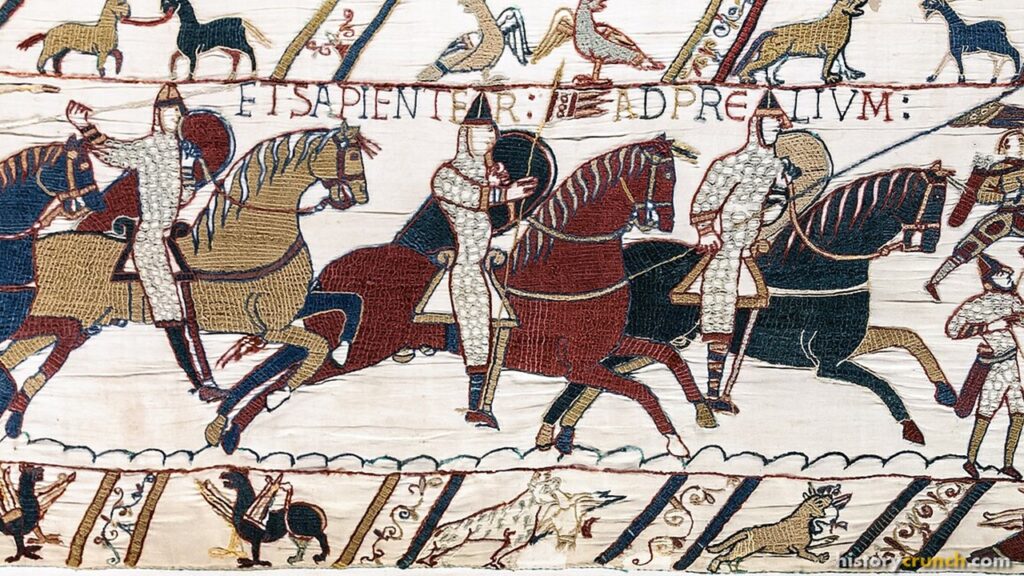
Harold’s army was roughly comparable in size to William’s, numbering around 7,000 men, but it differed significantly in composition. The English forces were made up primarily of infantry, including the elite household warriors known as housecarlsElite, highly trained household warriors who formed the core fighting force of the Anglo-Saxon army. who formed the core of the army, and a large number of less well-trained militia known as the fyrdLess well-trained militia soldiers who made up a large portion of Harold’s army at Hastings.. Harold’s army had no cavalry to speak of, and crucially, most of his archers had not yet arrived when the battle began. William’s army by contrast included a significant force of mounted knights whose cavalry could strike with speed and power.
FactsthatCrunchHow did army composition shape each side's strategy at the Battle of Hastings?
Battle of Hastings – Major Events
The battle began at approximately nine o’clock in the morning on October 14th, 1066. William’s forces advanced on Harold’s position on the ridge in three stages: first his archers shot volleys of arrows at the English shield wallA dense defensive formation where soldiers stand close together with overlapping shields to block attacks., then his infantry advanced to engage at close quarters, and then his cavalry charged. The English shield wall, with its overlapping shields forming a dense defensive barrier along the ridge, proved extremely difficult to break. The Norman archers found that their arrows were largely ineffective because the English were positioned at the top of the slope and many arrows flew over their heads. The Norman infantry attack was beaten back with heavy losses.
In fact, during one stage of the battle, a section of the Norman left wing broke and fled, and some English soldiers on the right broke from the shield wall to pursue them down the slope. When the fleeing Normans turned and cut down their pursuers, it revealed a key weakness in the English position. William recognized this and deliberately used the same tactic again, ordering sections of his cavalry to feign retreat to draw the English out of their protective formation and then wheel around to attack them in the open. This tactic of the feigned retreatA battle tactic where soldiers pretend to flee in order to lure the enemy out of a strong position. worked effectively and gradually wore down the English numbers.
The battle continued throughout the day and was fiercely contested on both sides. Harold’s housecarls fought with enormous skill and determination, and the English line held for hours. However, as the afternoon wore on, the English were steadily weakened and thinned by continued Norman attacks. By late afternoon, Harold was killed. The most famous account holds that he was struck in the eye by an arrow, as depicted in the Bayeux Tapestry, though some historians believe he may have been cut down by Norman knights in a final mounted charge. With Harold dead and his brothers Leofwine and Gyrth also killed earlier in the fighting, the English army broke apart and fled. William had won one of the most consequential battles in the history of the British Isles.
FactsthatCrunchFollow the chain from top to bottom. Tap any step to read what happened.
Battle of Hastings – Aftermath
Following his victory, William marched his army toward London. Initial English resistance collapsed and the city submitted to him. On Christmas Day, December 25th, 1066, William was crowned King of England in Westminster Abbey, becoming the first Norman king of England. He became known to history as William the Conqueror.
The Norman Conquest did not end with Hastings. Resistance movements broke out across England in the years that followed, including revolts in Exeter, the north of England, and elsewhere. William suppressed these rebellions with great severity. In the north, his campaign of brutal devastation in 1069 and 1070, known as the Harrying of the NorthWilliam’s brutal campaign of 1069–1070 that destroyed crops, livestock, and settlements across northern England., destroyed crops, livestock, and settlements across a wide area, killing thousands and leaving a trail of destruction from which the region took generations to recover.
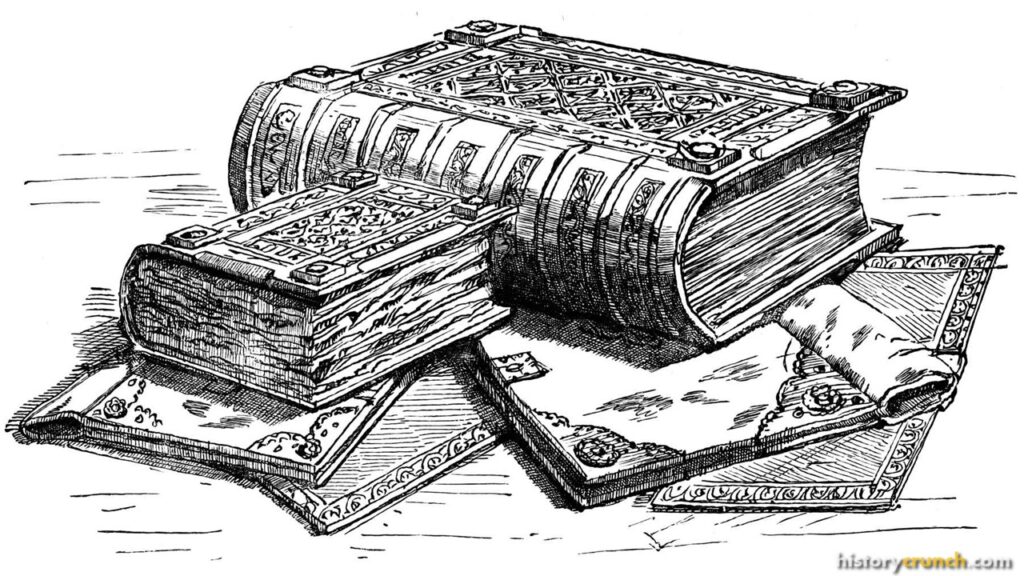
Over the following years, William replaced most of the existing English nobility with Norman lords who were granted land in exchange for military service. The old Anglo-Saxon aristocracy was largely swept away and replaced by a new French-speaking ruling class. He also commissioned the Domesday BookA comprehensive survey of land ownership and resources across England, ordered by William in 1085 and carried out in 1086. in 1085, a comprehensive survey of land ownership and resources across England, which remains one of the most remarkable administrative documents in medieval history.
Battle of Hastings – Significance
The significance of the Battle of Hastings in the history of England is enormous. It was the last successful foreign conquest of England and one of the most consequential military events in the entire history of the British Isles. The Norman Conquest it set in motion transformed virtually every aspect of English society, government, and culture.
The most immediate change was the replacement of the Anglo-Saxon ruling class with a Norman one. French became the language of the English court, the law, and the church, a situation that lasted for roughly 300 years. The influence of French on the English language during this period was so significant that modern English is a blend of Anglo-Saxon and Norman French elements that would not exist in its current form without the Norman Conquest. For instance, many everyday English words such as castle, noble, court, and justice came into the language from Norman French after 1066.
William also introduced a stronger and more centralized form of feudalism than had previously existed in England, reorganizing land ownership so that all of England’s land was technically held from the king. This gave the monarchy greater power over the nobility than had been the case under the Anglo-Saxon kings. As such, the Battle of Hastings stands as one of the most significant single events in the history of the Middle Ages, a turning point that reshaped the English nation and left a legacy that can still be felt in the English language, legal system, and culture today.
FactsthatCrunchAfter William became king in 1066, he used feudal land tenure to reorganize all of England's land so that every acre was technically held from the crown, giving the king tighter control over the nobility than any Anglo-Saxon ruler had held before.
Explore Middle Ages · 476 – 1500 CE
Keep exploring Middle Ages with these History Crunch resources.
Key Vocabulary
Witenagemot
Housecarls
Fyrd
Shield wall
Feigned retreat
Harrying of the North
Domesday Book
Frequently Asked Questions
Who won the Battle of Hastings?
William, Duke of Normandy, won the Battle of Hastings on October 14th, 1066. His Norman army defeated the Anglo-Saxon forces of King Harold II, who was killed in the fighting. The victory let William march on London and claim the English throne.
Why did the Battle of Hastings happen?
The battle grew out of a crisis over who would rule England after King Edward the Confessor died without children. Harold Godwinson was crowned king, but William believed Edward had promised the throne to him. William invaded England to take the crown by force.
How did King Harold die at Hastings?
King Harold was killed in the late afternoon of the battle, which broke the English army apart. The most famous account says an arrow struck him in the eye, as shown in the Bayeux Tapestry. Some historians think Norman knights cut him down in a final charge instead.
What tactic helped the Normans win?
The feigned retreat was a key tactic in the Norman victory. William ordered sections of his cavalry to pretend to flee, which drew English soldiers out of their strong shield wall. The Normans then turned and cut down the exposed men in the open.
Why was Harold’s army weakened before the battle?
Harold’s army was tired because it had just fought another battle in the north. On September 25th, 1066, his forces beat Harald Hardrada of Norway at Stamford Bridge. The men then marched nearly 200 miles (320 km) back south to face William without fully recovering.
Why was the Battle of Hastings so important?
The battle began the Norman Conquest, which changed nearly every part of English life. The Anglo-Saxon ruling class was replaced by French-speaking Norman lords. French shaped the English language, law, and church for about 300 years, and many words like castle and justice come from that time.
Cite This Article
To cite this article as a source, use one of the formats below.
MLA: Millar, B. “Battle of Hastings: A Detailed Summary.” HistoryCrunch, 15 October 2026, https://historycrunch.com/battle-of-hastings/.
APA: Millar, B. (2026). Battle of Hastings: A Detailed Summary. HistoryCrunch. https://historycrunch.com/battle-of-hastings/
Chicago: Millar, B. “Battle of Hastings: A Detailed Summary.” HistoryCrunch. October 15, 2026. https://historycrunch.com/battle-of-hastings/
Sources
- Fordham Medieval Sourcebook
- Barbara Rosenwein, A Short History of the Middle Ages.
- Jacques Le Goff, Medieval Civilization 400-1500.