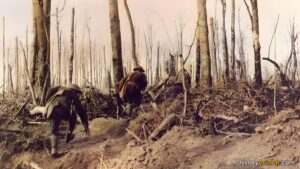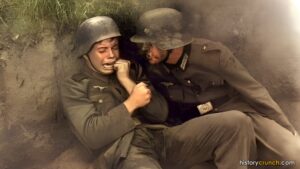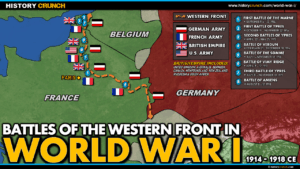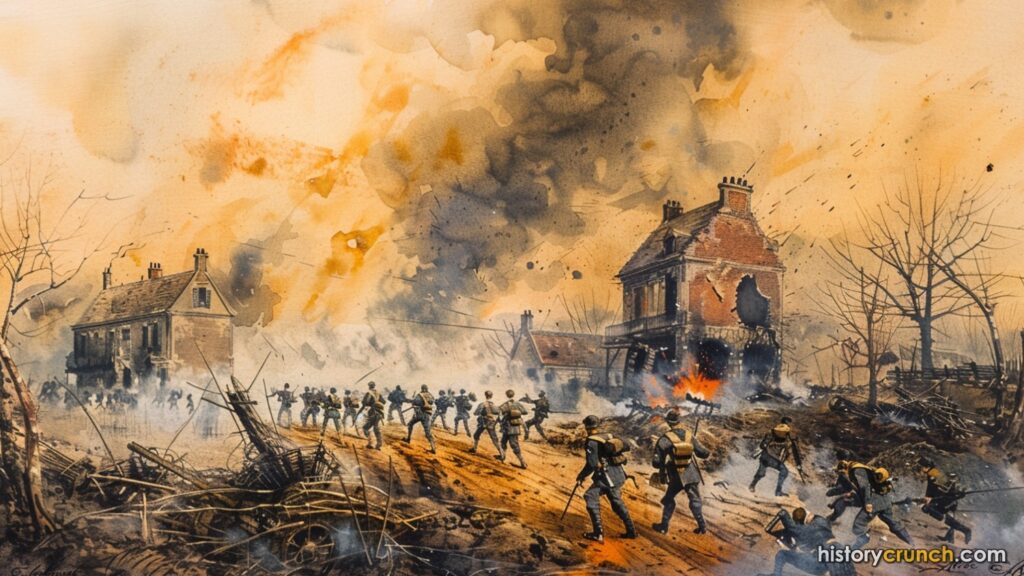
The Battle of Saint-Mihiel was an important battle of World War I that was fought along the Western Front. This was the line of fighting that occurred in the trenches that stretched through Belgium and northern France. The Battle of Saint-Mihiel was fought in 1918 between the Allied Powers of France and the United States against the Central Powers of Germany and the Austro-Hungarian Empire. Historians consider the Battle of Saint-Mihiel to be a significant battle in the history of the United States and its role in World War I.
 FactsthatCrunch
A salient is a section of a military front line that bulges outward toward enemy territory, leaving the troops inside it exposed to attack from three sides. Salients formed naturally when one side advanced farther than the units on either flank. This shape made the position both harder to defend and a frequent target for enemy offensives.
The Ypres Salient in western Belgium was surrounded by German forces on three sides, making it one of the most heavily fought-over areas on the Western Front in World War I.
When and Where Did the Battle of Saint-Mihiel Occur?
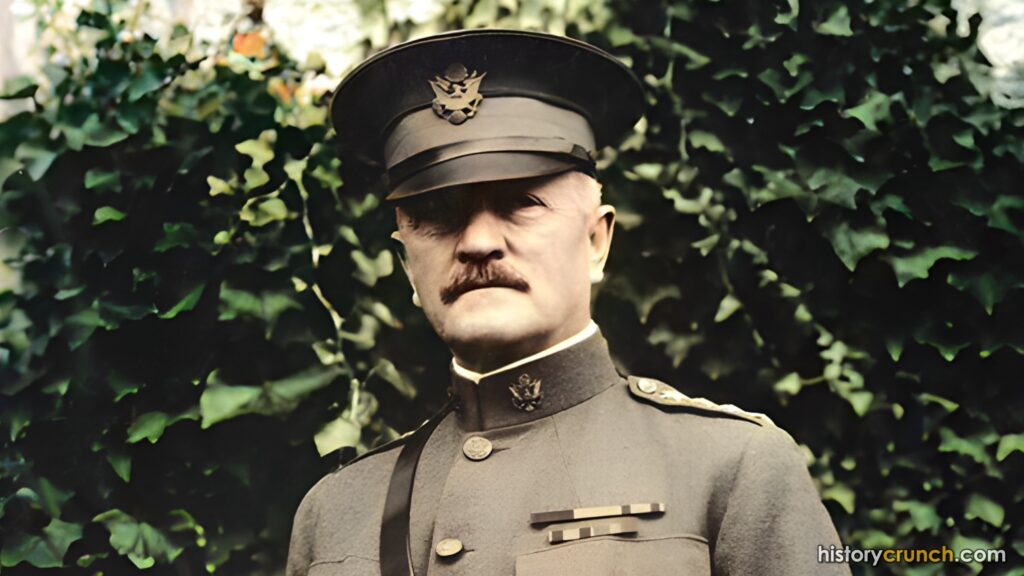
The Battle of Saint-Mihiel in World War I occurred from September 12th to the 15th in 1918. As stated above, the Battle of Saint-Mihiel took place in Northern France and was fought between the Allied Powers (United States and France) and the Central Powers (Germany and Austria-Hungary). During the course of World War I, the region of Saint-Mihiel had been controlled by Germany as a salientA bulge-like formation of enemy-held territory that pushes into the opposing side’s land. (bulge-like formation that protruded into French territory), which allowed Germany a reasonable amount of control over the area. However, in 1918, American General John J. Pershing proposed an Allied attack against the Germans in Saint-Mihiel, as he believed it would create an opening for Allied troops to advance into Germany.
What Happened During the Battle of Saint-Mihiel in World War I?
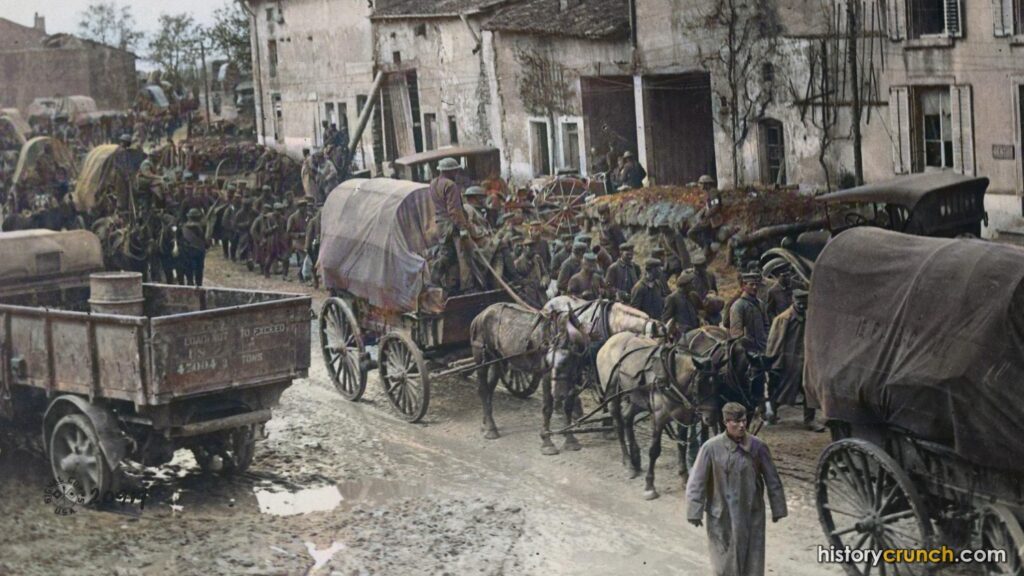
The American First Army began the attack on September 12th, 1918, when several American divisions advanced into the southern portion of the German-controlled Saint-Mihiel salient. French forces supported the assault by advancing on the western section of the salient. Pershing also hoped the attack would open a path toward the city of Metz, which Germany had controlled since 1871 and which was an important railroad center that Germany used to control transportation and communications in the region. As such, the French and American forces pushed into the Saint-Mihiel salient, towards the city of Metz.
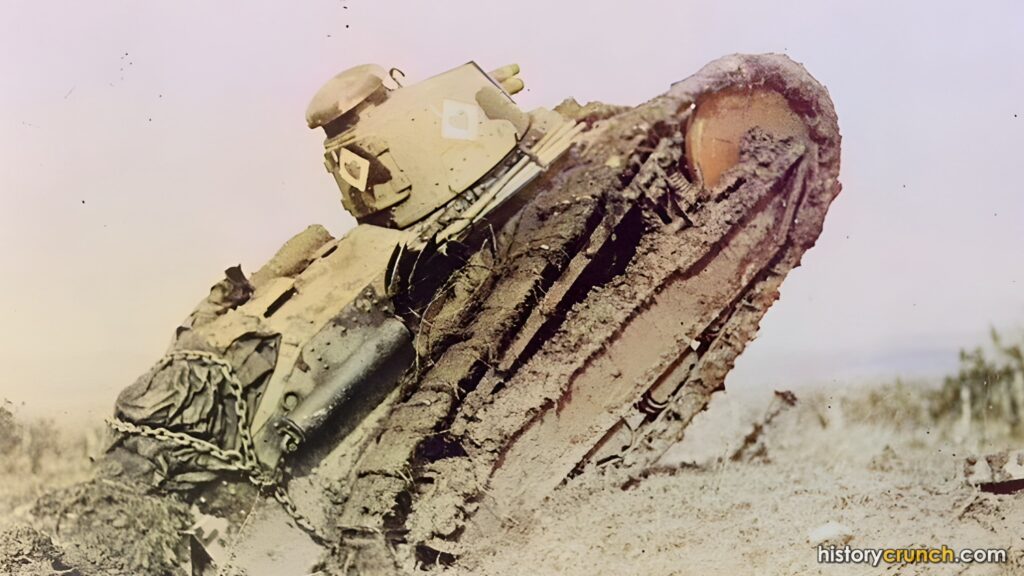
Another important aspect of the Battle of Saint-Mihiel was the use of Allied aircraft and tanks. For instance, during the battle, the Allies mobilizedOrganized and moved military forces, equipment, or vehicles into active service for battle. over 1,400 aircraft that provided air support to the troops on the ground. As well, the aircraft ensured Allied control of the air during the battle. Also, American General John J. Pershing mobilized tank units that advanced alongside the infantrySoldiers who fight on foot, as opposed to those in vehicles, aircraft, or on horseback. divisions. The combination of soldiers, aircraft and tanks allowed the Allies to advance into the Saint-Mihiel salient with little opposition from the German defenders. The battle was over just days later on September 15th, with the American forces capturing all of the objectives that they had set out to accomplish.
At the Battle of Saint-Mihiel in World War I, what primary role did Allied aircraft play in support of the ground attack?
What Was the Outcome of the Battle of Saint-Mihiel?
In total, the Allies suffered approximately 7,000 casualtiesSoldiers lost in battle through death, wounds, or capture. while the Germans suffered over 22,000. General Pershing began preparing for the final major American engagement of World War I, the Meuse–Argonne OffensiveA large, organized military attack intended to push into enemy territory..
 FactsthatCrunch
 Black & whiteColor
World War I timeline · 1914 – 1918
Key Vocabulary
Western Front
Salient
Mobilized
Infantry
Casualties
Offensive
Frequently Asked Questions
When was the Battle of Saint-Mihiel fought?
The Battle of Saint-Mihiel was fought from September 12th to the 15th, 1918. It took place in northern France along the Western Front near the end of World War I. The fighting lasted only about four days before the Allies reached their goals.
Who fought in the Battle of Saint-Mihiel?
The battle pitted the Allied Powers of the United States and France against the Central Powers of Germany and Austria-Hungary. American General John J. Pershing led the American First Army in the attack. French forces supported the assault on the western side of the salient.
What was the Saint-Mihiel salient?
The Saint-Mihiel salient was a bulge-like formation that pushed German-held territory into French land. This gave Germany control over the area for much of the war. Pershing believed an attack there could open a path for Allied troops to advance toward Germany.
How were aircraft and tanks used in the battle?
The Allies mobilized over 1,400 aircraft to give air support and control the skies above the battlefield. Pershing also sent tank units forward alongside the infantry. The mix of soldiers, planes, and tanks helped the Allies advance with little German resistance.
What was the outcome of the Battle of Saint-Mihiel?
The Allies won and captured all of their objectives by September 15th, 1918. The Allies suffered about 7,000 casualties while the Germans lost more than 22,000. Pershing then began preparing for the Meuse-Argonne Offensive, the final major American action of the war.
Cite This Article
To cite this article as a source, use one of the formats below.
MLA: Beck, Elias. “Battle of Saint-Mihiel in World War I: A Detailed Summary.” HistoryCrunch, 29 September 2026, https://historycrunch.com/battle-of-saint-mihiel-in-world-war-i/.
APA: Beck, E. (2026). Battle of Saint-Mihiel in World War I: A Detailed Summary. HistoryCrunch. https://historycrunch.com/battle-of-saint-mihiel-in-world-war-i/
Chicago: Beck, Elias. “Battle of Saint-Mihiel in World War I: A Detailed Summary.” HistoryCrunch. September 29, 2026. https://historycrunch.com/battle-of-saint-mihiel-in-world-war-i/
Sources
- Imperial War Museum
- Hew Strachan, The First World War.
- Fordham Modern History Sourcebook