Douglas Haig was the Commander-in-ChiefThe officer with highest authority over all military forces in a particular theater of war. of the British Expeditionary Force on the Western Front from December 1915 until the end of World War I in 1918. He is one of the most debated figures in the history of the war. Some historians remember him as a stubborn commander who sent hundreds of thousands of men to their deaths for little gain. Others point to his leadership in 1918 as one of the greatest victories in British military history.
 FactsthatCrunch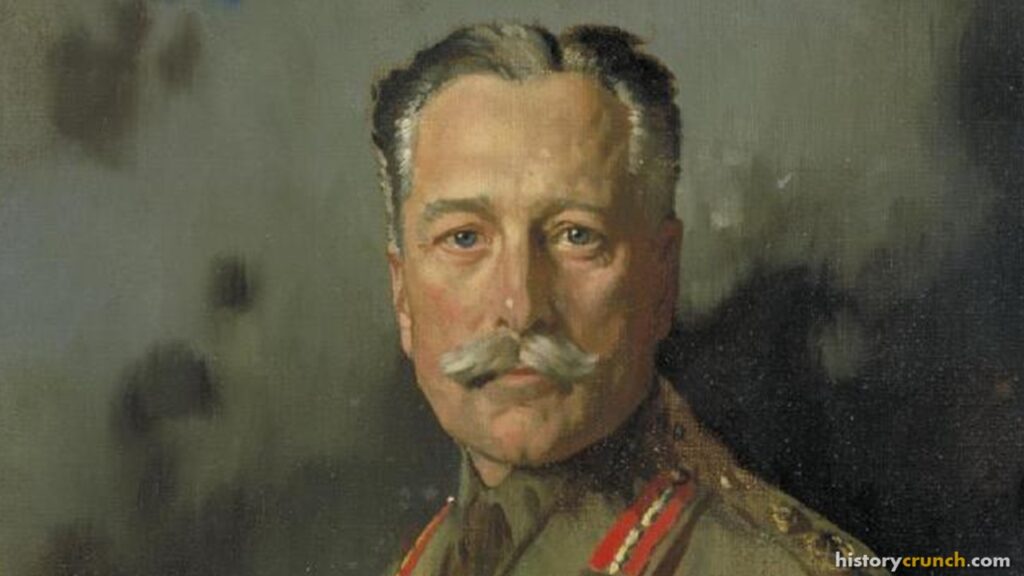
Douglas Haig’s Early Life
Douglas Haig was born on June 19th, 1861 CE in Edinburgh, Scotland. His family was wealthy and had made their money in the Scotch whisky business. He was educated at Brasenose College at the University of Oxford and then at the Royal Military College at Sandhurst, which is the main training school for British army officers. He graduated at the top of his class in 1885 CE and joined the 7th Hussars as a cavalrySoldiers who fight on horseback, traditionally used for fast-moving attacks and scouting. officer. He spent much of his early career serving in India and built a reputation as a hard-working and ambitious soldier.
Haig gained his first experience of combat during the Sudan campaign of 1898 CE and then served in the Second Boer War in South Africa from 1899 to 1902 CE. After the Boer War, he spent a decade in senior staff and planning roles. For instance, he worked closely with the government to help reform the British army and plan the British Expeditionary Force. The British Expeditionary Force, known as the BEF, was the professional British army that would be sent to Europe in the event of war with Germany. As such, by the time World War I began in 1914 CE, Haig was one of the most experienced senior officers in the British army.
FactsthatCrunchWhat kind of family did Douglas Haig come from?
Haig was born in Edinburgh, Scotland, on June 19th, 1861, into a wealthy family that had made its fortune in the Scotch whisky business. That money paid for his education at Oxford and Sandhurst, the British army's officer school, before he joined the cavalry in 1885.
Douglas Haig and the Early War
When Britain entered World War I in August of 1914 CE, Haig took command of I Corps of the BEF and led his troops to France. The Western Front was the main line of battle between the Allied and German forces. It stretched from the English Channel coast in Belgium south through France to the Swiss border. In the early months of the war, Haig’s corps fought at a series of battles including Mons, the Marne and the First Battle of Ypres in late 1914 CE.
By December of 1914 CE, Haig was promoted to command the newly formed First Army. He directed several offensives during 1915 CE, including the battles of Neuve-Chapelle, Aubers Ridge and Loos. None of these achieved major gains and all resulted in heavy casualties. Regardless, his reputation as a capable commander held. In December of 1915 CE, Prime Minister Asquith appointed him Commander-in-Chief of the entire BEF. He replaced General John French, who had struggled to deal with the demands of the war. From that point on, Haig was responsible for all decisions made by the British army on the Western Front.
FactsthatCrunchIn December 1915, Prime Minister Herbert Asquith removed General John French as Commander-in-Chief of the BEF because French had struggled to meet the demands of modern industrial warfare on the Western Front.
By late 1915, the British government judged that the BEF needed stronger leadership after a year of costly offensives with no decisive breakthrough. Haig's record as a hard-working senior officer made him Asquith's choice to take over the top command.
Douglas Haig and the Battle of the Somme
The battle most closely linked to Haig’s name is the Battle of the Somme, which lasted from July 1st to November 18th, 1916 CE. The Battle of the Somme was a large Allied attack along the Somme River in northern France. Its main goal was to take pressure off the French army, which had been suffering enormous losses at the Battle of Verdun since February of 1916 CE. Before the infantry attack began, the British fired a seven-day artillery bombardmentA sustained, heavy attack using large guns to destroy enemy positions before troops advance. at the German lines. Haig and his commanders believed this would destroy the German defenses and allow British troops to advance with little difficulty.
The bombardment did not work as expected. On July 1st, 1916 CE, the first day of the infantry attack, the British army suffered approximately 57,000 casualties. This was the single bloodiest day in the history of the British army. Haig continued the offensive through the summer and into the autumn. He argued that the attacks were wearing down the German army through attritionA strategy of deliberately causing more losses to the enemy than they can replace, even at great cost to your own side.. Attrition is the idea of deliberately causing more losses to the enemy than they can replace, even at great cost to your own forces. The battle ended in November of 1916 CE. Total British casualties exceeded 400,000 men. The territorial gain was a strip of land roughly 7 miles (12 kilometers) deep at its furthest point. Critics argued that this gain was far too small to justify such enormous losses. As such, the Battle of the Somme became one of the most controversial events in British military history.
FactsthatCrunchThe first day of the Battle of the Somme, July 1st, 1916, in numbers.
Douglas Haig and the Battle of Passchendaele
In 1917 CE, Haig launched another major offensive. The Third Battle of Ypres, more commonly known as the Battle of Passchendaele, was launched in July of 1917 CE in the Flanders region of Belgium. Haig’s goals included breaking through the German lines and capturing the Belgian coast, where German submarines were based. He also wanted to take pressure off the French army, which had been badly weakened by a series of mutiniesOrganized refusals by soldiers to obey orders from their commanders. earlier that year.
The campaign was fought in terrible conditions. Heavy rain and the destruction of drainage systems by artillery fire turned the battlefield into deep mud. For months, British and Commonwealth soldiers struggled forward through the mud and took heavy casualties. Haig called off the offensive in November of 1917 CE. British and Commonwealth forces had suffered approximately 250,000 casualties and had advanced only a few miles (a few kilometers). The name Passchendaele became, like the Somme, a symbol of the terrible cost of the war. Prime Minister David Lloyd George was deeply critical of Haig throughout this period. He later wrote in his memoirs that Haig was unequal to his task. As such, the battles of the Somme and Passchendaele made Haig one of the most criticized commanders in the history of the British army.
FactsthatCrunchI never concealed from myself or my colleagues that I thought Sir Douglas Haig was intellectually and temperamentally unequal to the command of an Army of millions fighting battles on fields which were invisible to any Commander.
Lloyd George wrote this after the war about Haig's leadership at costly battles like the Somme and Passchendaele. He admitted that during the fighting he had kept these doubts from the public to maintain confidence in the army's commander.
Douglas Haig and the Hundred Days Offensive
Despite the failures of 1916 and 1917 CE, the final months of the war brought a very different result. After a dangerous German offensive in early 1918 CE pushed the Allied lines back, the Allied forces launched a series of major attacks beginning on August 8th, 1918 CE. This campaign is known as the Hundred Days Offensive. Haig worked closely with French General Ferdinand Foch, who had been appointed Supreme Allied Commander in April of 1918 CE. Together they directed a series of attacks across a wide front that broke through the German lines one after another.
The German army had been worn down by four years of war and could not hold on. Germany signed the armisticeA formal agreement between enemies to stop fighting, ending a war or battle. that ended World War I on November 11th, 1918 CE. Many historians point to the Hundred Days Offensive as one of the greatest military achievements in the history of the British army. For instance, Haig’s defenders argue that the strategy of attrition in 1916 and 1917, for all its terrible cost, had weakened Germany enough that the final advance was possible. As such, the end of the war gave Haig’s supporters important evidence that his overall approach had worked.
FactsthatCrunchWhat did Douglas Haig and Ferdinand Foch achieve during the Hundred Days Offensive beginning August 8th, 1918?
Douglas Haig’s Death and Legacy
Haig had been made a Field MarshalThe highest possible rank in the British army, awarded for exceptional wartime leadership. in 1917, and after the war he was created Earl Haig in 1919 CE. He devoted the rest of his life to helping veterans of the war. For instance, he helped to found the British Legion, an organization that supported former soldiers and their families. He spent years traveling across the British Empire raising money for men who had served under him. Douglas Haig died on January 29th, 1928 CE in London at the age of sixty-six.
Douglas Haig remains one of the most debated figures in the history of World War I. His critics point to the enormous casualties at the Somme and Passchendaele and argue that his methods were wasteful and unimaginative. His defenders point to the victory of 1918 CE and argue that no other approach would have defeated Germany on the Western Front. Regardless, the name of Douglas Haig is linked forever to both the terrible cost and the final victory of the First World War.
 FactsthatCrunch
The general blamed for the deaths of hundreds of thousands of soldiers spent his final years traveling the British Empire raising money for the very men he had commanded.
After World War I, Haig helped found the British Legion, an organization built to support former soldiers and their families. He had been made a Field Marshal in 1917 and was created Earl Haig in 1919, but he gave much of his remaining time to veterans' welfare rather than public honors. He continued this work until his death on January 29th, 1928 in London.
Explore World War I
Keep exploring World War I with these History Crunch resources.
Key Vocabulary
Commander-in-Chief
Cavalry
Attrition
Artillery bombardment
Mutinies
Armistice
Field Marshal
Frequently Asked Questions
Who was Douglas Haig?
Douglas Haig was the British commander who led the British Expeditionary Force on the Western Front from December 1915 until the end of World War I. He directed major battles such as the Somme and Passchendaele. He remains one of the most debated military leaders in British history.
Why is Douglas Haig so controversial?
Haig is controversial because his battles cost hundreds of thousands of lives for small gains in land. Critics called his methods wasteful and unimaginative, pointing to the Somme and Passchendaele. His defenders argue that his strategy wore Germany down and helped win the war in 1918.
What happened on the first day of the Battle of the Somme?
On July 1st, 1916 CE, the British army suffered about 57,000 casualties, the single bloodiest day in its history. A seven-day bombardment had failed to destroy the German defenses as Haig expected. The battle went on until November of 1916 CE, with British losses passing 400,000 men.
What was the Hundred Days Offensive?
The Hundred Days Offensive was a string of Allied attacks that began on August 8th, 1918 CE and ended the war. Haig worked with French General Ferdinand Foch to break through the German lines one after another. Germany signed the armistice on November 11th, 1918 CE.
What did Douglas Haig do after World War I?
Haig had been made a Field Marshal in 1917, and after the war he was created Earl Haig in 1919 CE. He spent the rest of his life helping veterans and their families. He helped found the British Legion and raised money for former soldiers across the British Empire.
When did Douglas Haig die?
Douglas Haig died on January 29th, 1928 CE in London at the age of sixty-six. He was born in Edinburgh, Scotland, on June 19th, 1861 CE into a wealthy family. His legacy stays tied to both the heavy cost and the final victory of the war.
Cite This Article
To cite this article as a source, use one of the formats below.
MLA: Millar, B. “Douglas Haig: A Detailed Biography.” HistoryCrunch, 30 September 2026, https://historycrunch.com/douglas-haig/.
APA: Millar, B. (2026). Douglas Haig: A Detailed Biography. HistoryCrunch. https://historycrunch.com/douglas-haig/
Chicago: Millar, B. “Douglas Haig: A Detailed Biography.” HistoryCrunch. September 30, 2026. https://historycrunch.com/douglas-haig/
Sources
- Hew Strachan, The First World War.
- Margaret MacMillan, The War That Ended Peace.