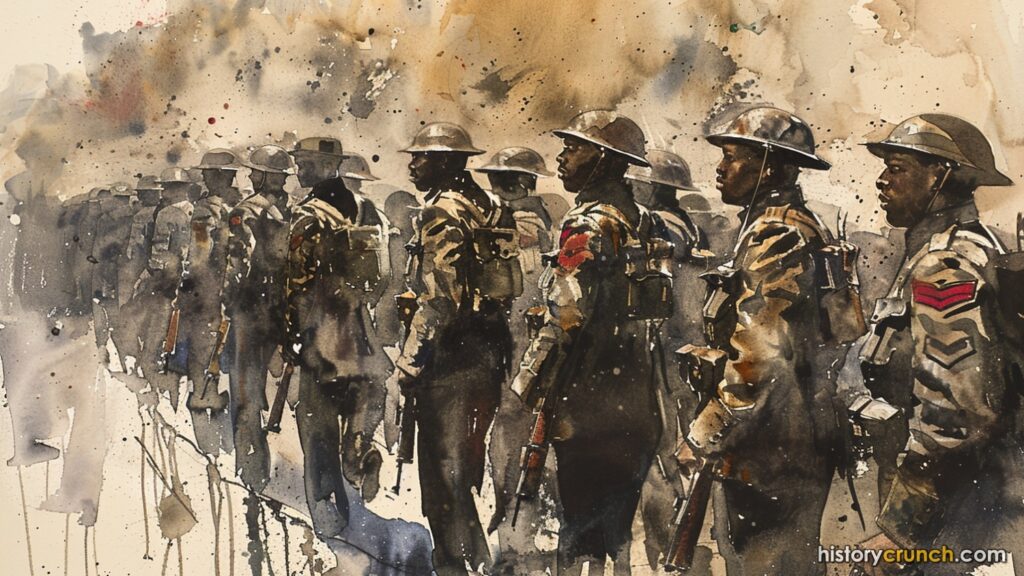
The Harlem Hellfighters is the commonly used name for the 369th Infantry Regiment of the United States Army, which participated in both World War I and World War II. The Harlem Hellfighters were made up of African American soldiers, although some Puerto Rican soldiers also served in the regiment during World War I, including members of its famous band. Regardless, the Harlem Hellfighters are important to the history of the United States and the role of African Americans.
 FactsthatCrunch
Segregation means keeping groups of people separated based on race. In the United States, it was practiced in schools, public spaces, and the military. People were treated differently and given unequal access to resources based only on their racial background.
During World War I, the U.S. Army practiced segregation by training African American soldiers at separate camps from white soldiers, and by placing African American regiments under white officers.
Formation of the Harlem Hellfighters
The Harlem Hellfighters (369th Regiment) was first created on June 2nd, 1913 in the New York Army National Guard as the 15th New York Infantry Regiment, and its soldiers were organized in 1916. Many African American men wanted to participate in World War I, but were generally turned away from the armed forces due to racist beliefs of the time. Regardless, the passage of the Selective Service Act of 1917A law making military service required for all American men aged 21 to 30. made military service mandatory for all American men between the ages of 21 and 30. As such, African American men were conscriptedForced by law to join the military rather than choosing to volunteer. into the Great War, and the government established an all-African American regiment as a way of segregatingKeeping groups of people separated based on race. the troops. In fact, the African American soldiers trained in different locations from the white soldiers. With that said, white officers led most African American units, although the 369th also had a small number of African American officers.
Racism towards African Americans was common at the time of World War I, however many African Americans hoped that their participation in the war effort would help ease it. This did not necessarily prove true, since racism remained a common problem in the United States well into the mid-20th century and is arguably still a significant issue today. Regardless, African Americans were proud to fight for their country in World War I, and did so with hope of a better future for themselves.
 FactsthatCrunch
The 369th’s regimental band, led by Lieutenant James Reese Europe, is credited with helping bring American jazz to audiences in France during World War I.
Europe recruited skilled musicians for the band, including several from Puerto Rico. After the war, the band toured American cities and helped make jazz popular across the country.
Harlem Hellfighters in World War I
The 369th Infantry Regiment (Harlem Hellfighters) was officially called into federal service in July of 1917, after the United States declared war and joined the war effort of World War I. For instance, they began training and readying themselves for military action. The Hellfighters first trained at Camp Whitman in New York and then at Camp Wadsworth in South Carolina. Throughout this period, the soldiers experienced considerable racism from townspeople in South Carolina. The racist beliefs of the time also led to the Harlem Hellfighters not fighting alongside white American soldiers during the war. In April of 1918, the 369th Infantry Regiment was assigned to the French Army. This was done due to the belief among the American Army that the African American soldiers were inferior and should not be allowed to fight alongside white American regiments. As such, during the course of World War I, the Harlem Hellfighters were attached to French Army Divisions. In fact, while they wore American uniforms, the Harlem Hellfighters were supplied with French rifles, helmets and other related gear.
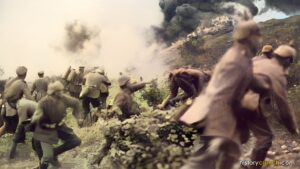
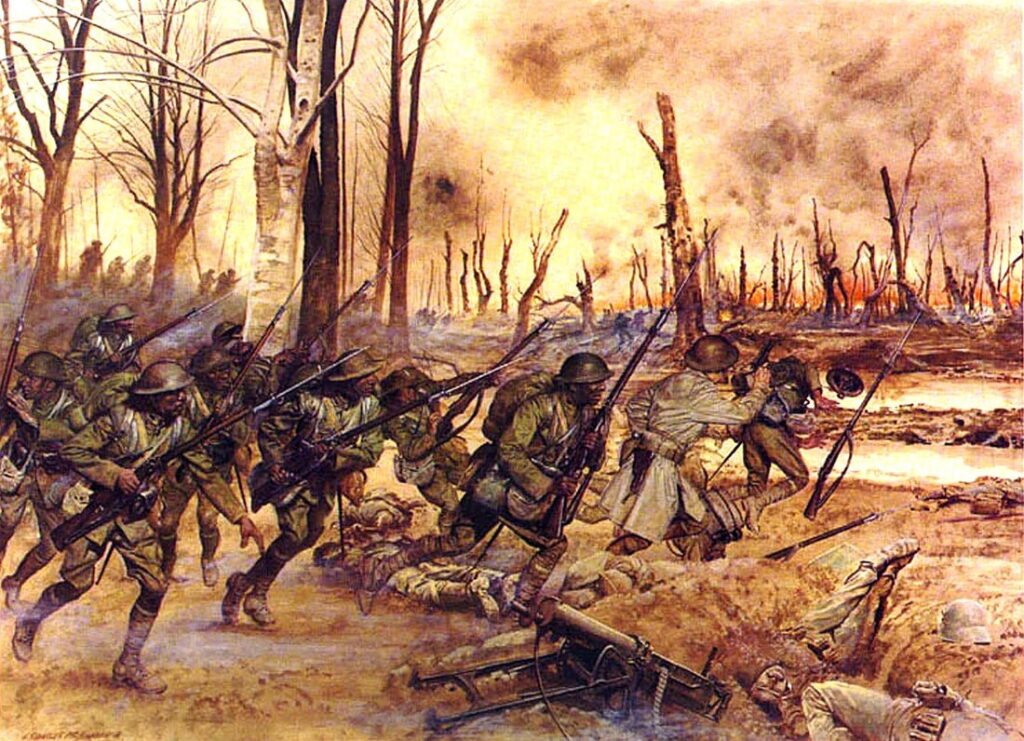
Throughout 1918, the Harlem Hellfighters participated in several significant aspects of World War I. In fact, during World War I, they spent 191 days in the front-line trenches on the Western FrontThe main battleground in western Europe during World War I, known for trench warfare.. This was more than any other American unit of the time. As well, the Harlem Hellfighters suffered the most losses of any American regiment with 1,500 casualtiesSoldiers killed, wounded, or otherwise lost during military combat.. For example, the regiment fought in the Champagne region of France and in the Meuse-Argonne Offensive, including the capture of the village of Séchault in September of 1918. Furthermore, the regiment also gained its famous nickname during this time. In fact, the name ‘Hellfighters’ was given to them by the Germans.
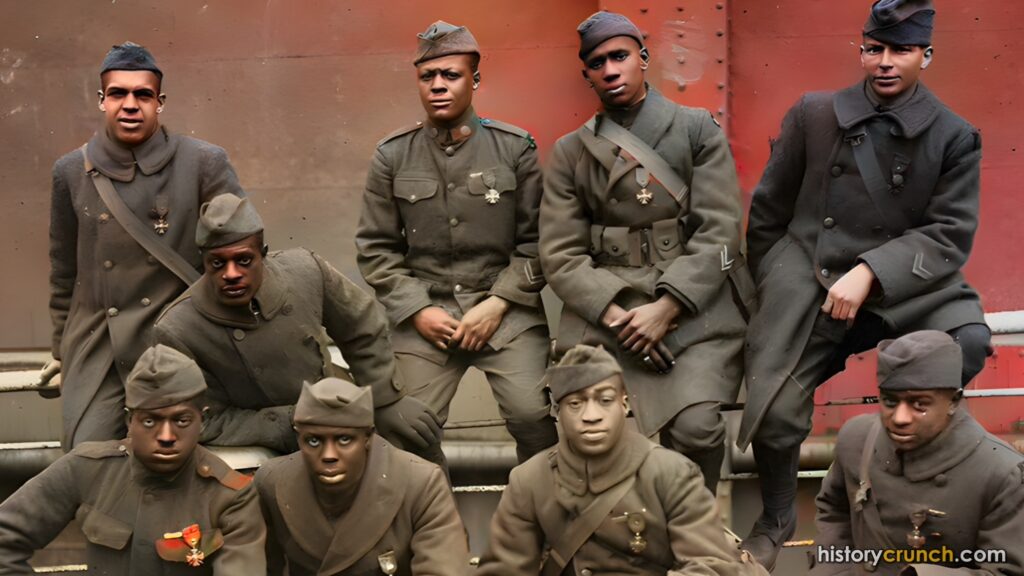
The Harlem Hellfighters received numerous honors for their actions in World War I. For example, Private Henry Johnson famously fought off a German raid in the Argonne Forest on May 14th, 1918. His actions led to the rescue of numerous other soldiers and prevented a German advance. While he died in 1929, he was awarded the Medal of Honor posthumouslyAwarded or done after a person has already died. on June 2nd, 2015, by President Barack Obama. Johnson and fellow soldier Needham Roberts were also among the first American soldiers to receive the Croix de GuerreA French military medal awarded for bravery and service during World War I., which was a French military honor for service in World War I. In all, 170 soldiers from the Harlem Hellfighters were given the Croix de Guerre, in recognition of their bravery and valor on the battlefield.
At the end of World War I, the 369th Regiment ‘Hellfighters Band’ continued performing throughout Europe and the United States. In fact, they even became one of the most famous military bands in all of Europe.
 FactsthatCrunch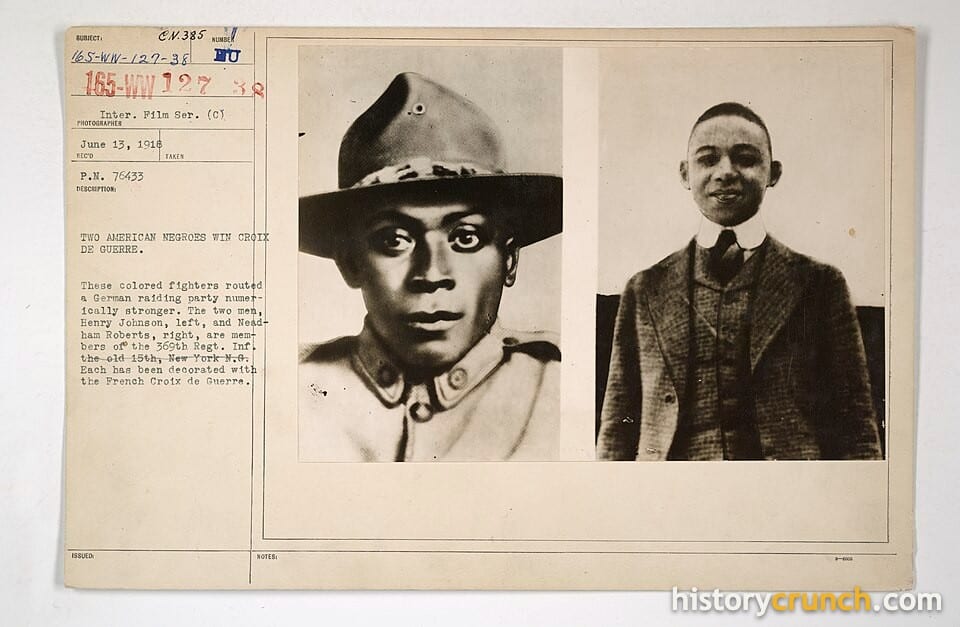
Harlem Hellfighters in World War II
The Harlem Hellfighters were re-established on May 15th, 1942 in the midst of World War II. The United States joined the fighting of World War II, due to the Japanese attack on Pearl Harbor on December 7th, 1941. As a result, the United States joined the fighting of World War II alongside the Allied nations. In fact, in World War II the Harlem Hellfighters (369th Infantry Regiment) was attached to the 93rd Infantry Division, which was the ‘colored’ unit of the United States Army. During World War II, the Harlem Hellfighters were generally used in construction and security projects throughout the Pacific Theater. This included operations in New Guinea and the Philippines. The Harlem Hellfighters returned to the United States on February 1st, 1946 following the August 1945 defeat of Imperial Japan.
Why did the United States join World War II and re-establish the Harlem Hellfighters in 1942?
Explore World War I · 1914 – 1918
Keep exploring World War I with these History Crunch resources.
Key Vocabulary
Conscripted
Selective Service Act of 1917
Segregating
Western Front
Croix de Guerre
Posthumously
Casualties
Frequently Asked Questions
Who were the Harlem Hellfighters?
The Harlem Hellfighters were the 369th Infantry Regiment of the United States Army. The unit was made up of African American soldiers, with some Puerto Rican soldiers serving in World War I. They fought in both World War I and World War II and became famous for their courage.
Why were the Harlem Hellfighters called by that name?
The nickname “Hellfighters” was given to the regiment by German soldiers during World War I. It reflected the fierce and determined way the unit fought on the Western Front. The name stuck and became a lasting badge of honor for the soldiers.
Why did the Harlem Hellfighters fight with the French Army?
In April of 1918 the regiment was assigned to the French Army because of racist beliefs in the American military. Leaders wrongly believed African American troops should not fight alongside white American regiments. The soldiers wore American uniforms but carried French rifles, helmets, and other gear.
What did the Harlem Hellfighters achieve in World War I?
The regiment spent 191 days in the front-line trenches, more than any other American unit of the time. They also suffered about 1,500 casualties, the most of any American regiment. In all, 170 of their soldiers received the French Croix de Guerre for bravery.
Who was Henry Johnson?
Henry Johnson was a private who fought off a German raid in the Argonne Forest on May 14th, 1918. His actions saved fellow soldiers and stopped a German advance. He was among the first Americans to earn the Croix de Guerre, and he received the Medal of Honor after his death in 2015.
What did the Harlem Hellfighters do in World War II?
The regiment was re-established on May 15th, 1942 and attached to the 93rd Infantry Division. The unit was mainly used for construction and security work in the Pacific Theater. This included operations in New Guinea and the Philippines before the soldiers returned home in 1946.
Cite This Article
To cite this article as a source, use one of the formats below.
MLA: Beck, Elias. “Harlem Hellfighters: A Detailed Summary.” HistoryCrunch, 30 September 2026, https://historycrunch.com/harlem-hellfighters/.
APA: Beck, E. (2026). Harlem Hellfighters: A Detailed Summary. HistoryCrunch. https://historycrunch.com/harlem-hellfighters/
Chicago: Beck, Elias. “Harlem Hellfighters: A Detailed Summary.” HistoryCrunch. September 30, 2026. https://historycrunch.com/harlem-hellfighters/
Sources
- Imperial War Museum
- Hew Strachan, The First World War.