The North Atlantic Treaty Organization (NATO) is one of the most important military alliances in modern history. NATO was established on April 4th, 1949, when twelve nations from North America and Western Europe signed the North Atlantic Treaty, also known as the Washington Treaty, in Washington, D.C. The alliance was founded primarily in response to the growing threat of Soviet expansionism in Europe in the years following World War II. In general, historians consider NATO to be significant for several reasons, including: the central role it played in containing Soviet expansionismA country’s effort to extend its power and territory by taking control of other nations or regions. during the Cold War, the collective defenseThe agreement that an attack on one alliance member counts as an attack on all members, requiring a joint response. commitment at the heart of its founding treaty, the way it formalized the military division of Europe into two opposing blocs, and its continued expansion and relevance in the decades following the end of the Cold War. For instance, NATO remains an important alliance still today.
 FactsthatCrunch
By early 1949, diplomats from the United States, Canada, and ten Western European nations had spent months hammering out the terms of a new military treaty in Washington, D.C. The central question was whether the final agreement would include a true collective defense guarantee, a binding promise that an attack on one member would require a military response from all the others. In the days before the signing ceremony in April 1949, it was still unclear whether the treaty would contain that hard commitment or whether the collective defense clause would be softened into something closer to a vague political pledge.
NATO – Background
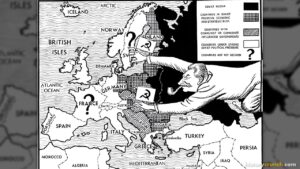
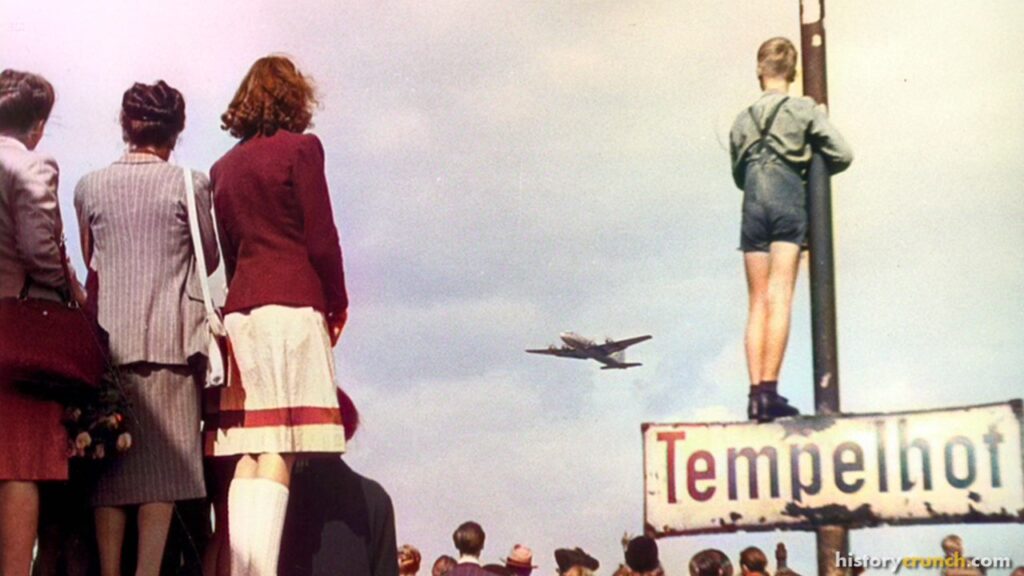
To fully understand NATO, it is first important to understand the conditions that led to its creation. Following the end of World War II in 1945, the nations of Europe faced an enormous challenge of reconstruction. Approximately 36.5 million Europeans had died during the conflict, and much of the continent’s infrastructure had been destroyed. At the same time, the Soviet Union had occupied large sections of Eastern Europe and was actively working to bring these countries under communist control. For instance, a communist coup in Czechoslovakia in February of 1948 eliminated that country’s democratic government and replaced it with a Soviet-backed communist regime. As well, in June of 1948 the Soviet Union launched the Berlin Blockade, attempting to cut off western access to West Berlin in a direct challenge to the Allied Powers.
These events convinced western democratic leaders that a formal military alliance was necessary to deter further Soviet aggression in Europe. Discussions had begun among the United States, Britain, and Canada as early as 1947, and by March of 1948 these talks had expanded to include France, Belgium, the Netherlands, and Luxembourg.
NATO – Founding and Article 5
As mentioned above, the North Atlantic Treaty was signed in Washington, D.C., on April 4th, 1949. The twelve founding member nations of NATO were: Belgium, Canada, Denmark, France, Iceland, Italy, Luxembourg, the Netherlands, Norway, Portugal, the United Kingdom, and the United States.
The main goal of NATO was expressed in Article 5 of the North Atlantic Treaty. Article 5 stated that an armed attack against one or more of the member nations in Europe or North America would be considered an attack against all of them. This principle is known as ‘collective defense’ and was the central commitment that bound the alliance together. For instance, Article 5 meant that any Soviet military attack on a NATO member state would trigger a response from all members, including the United States and its nuclear arsenal. As such, Article 5 was intended to act as a powerful deterrentSomething that discourages an enemy from attacking by making the consequences too costly or dangerous. against Soviet expansionism in Western Europe.
It should also be noted that the treaty was not solely a military document. Article 2 allowed members to engage in non-military cooperation, while Article 3 laid the foundation for cooperation in military preparedness.
FactsthatCrunchWho were the twelve founding members of NATO, and what did Article 5 commit them to?
NATO – The Cold War
In the years following its founding, NATO developed rapidly into the primary military structure of the western democratic nations in Europe. In 1950, NATO began establishing an integrated military force in Europe under the command of United States General Dwight D. Eisenhower, who had been the Supreme Allied Commander in Europe during World War II.
NATO expanded its membership during the early Cold War years. For instance, Greece and Turkey joined the alliance in 1952, and West Germany was admitted on May 6th, 1955. The admission of West Germany into NATO was particularly significant and had an immediate impact on the Cold War. The Soviet Union viewed the rearming and integration of West Germany into the western alliance as a direct threat, and responded by creating its own military alliance just eight days later. On May 14th, 1955, the Soviet Union and seven communist states in Eastern Europe signed the Warsaw Pact, formally establishing a rival military alliance that stood in direct opposition to NATO throughout the remainder of the Cold War.
Throughout the Cold War, NATO and the Warsaw PactThe rival military alliance formed by the Soviet Union and seven communist Eastern European states on May 14th, 1955. faced each other in a tense military standoff across Europe. Both sides built up large conventional and nuclear forces, and the threat of conflict between the two alliances shaped the military strategies of all the nations involved. For instance, one of the earliest NATO military strategies was known as ‘massive retaliationAn early NATO strategy threatening a large-scale American nuclear strike in response to any Soviet attack on a member.‘, which held that any Soviet attack on a NATO member would be met with a large-scale American nuclear response. This strategy was intended to deter Soviet aggression by making the cost of any attack unacceptably high. As such, NATO became central to the policy of containment that the United States pursued throughout the Cold War to prevent the spread of communism.
It should also be noted that despite the enormous tension of the Cold War era, NATO never engaged in direct military conflict with the Warsaw Pact during this period. The alliance was never required to invoke Article 5 during the Cold War, and the deterrent effect of the alliance is generally credited by historians with helping prevent a direct military confrontation between the superpowers in Europe.
West Germany joined NATO on May 6th, 1955, and the Soviet Union responded by creating the Warsaw Pact eight days later, on May 14th, 1955.
NATO – After the Cold War
The end of the Cold War in the early 1990s raised important questions about the future role of NATO. With the dissolution of the Soviet Union in December of 1991 and the collapse of communist governments across Eastern Europe, the primary threat NATO had been created to deter had disappeared. Regardless, NATO continued to exist and adapt to new challenges in the world.
One of the most significant post-Cold War developments was the expansion of NATO’s membership to include former Warsaw Pact nations and former Soviet republics. For instance, Hungary, Poland, and the Czech Republic joined NATO in 1999, followed by Bulgaria, Estonia, Latvia, Lithuania, Romania, Slovakia, and Slovenia in 2004. This eastward expansion was welcomed by the newly democratic nations of Eastern Europe as a guarantee of their security, but was viewed with serious concern by Russia, which saw the expansion of NATO toward its borders as a potential threat. As such, NATO’s expansion in the 1990s and early 2000s became a significant source of tension in relations between Russia and the western nations in the years that followed.
NATO also took on new roles in the 1990s. For instance, the alliance conducted its first major military operations in Bosnia and Herzegovina from 1992 to 1995, during the Yugoslav Wars and Bosnian Genocide, and carried out airstrikes against Yugoslavia in 1999 in response to the Kosovo Crisis. These operations represented a significant expansion of NATO’s role beyond the collective defense of its own members’ territory.
However, the most significant example of Article 5 in NATO’s history came on September 12th, 2001, the day after the terrorist attacks on the United States on September 11th, 2001. For the first and only time in the alliance’s history, Article 5 was formally invokedOfficially put into effect according to the rules of a treaty or agreement., with all NATO members agreeing that the attacks on the United States constituted an attack against all of them. This led directly to NATO’s involvement in the war in Afghanistan, which began in October of 2001.
FactsthatCrunchWhen and why was NATO's Article 5 invoked for the first time?
Article 5 was formally invoked on September 12th, 2001, the day after the September 11th terrorist attacks on the United States. It was the first and only time in the alliance's history that all NATO members agreed an attack on one member counted as an attack on all of them. This decision led directly to NATO's involvement in the war in Afghanistan, which began in October of 2001.
NATO – Significance
NATO was significant for several important reasons. First, during the Cold War it provided the western democratic nations with a credible and unified military deterrent against Soviet expansionism in Europe. The collective defense commitment of Article 5, backed by American nuclear power, helped deter direct Soviet military aggression against Western Europe throughout the Cold War and contributed to the relative stability of the European continent during this dangerous period.
Second, NATO formalized the military and political division of Europe that characterized the Cold War era. The creation of NATO and the subsequent formation of the Warsaw Pact established two clearly defined military blocs in Europe and shaped the military strategies, diplomatic relations, and political cultures of all the nations involved for over four decades.
Third, NATO’s continued existence and expansion after the Cold War demonstrated that the alliance had evolved beyond its original purpose. In general, the ongoing membership of former Warsaw Pact nations and former Soviet republics in NATO reflects the degree to which the geopolitical landscape of Europe was transformed by the end of the Cold War and the dissolution of the Soviet Union. As such, NATO remains one of the most enduring and consequential military alliances in modern history.
Explore Cold War · 1947 – 1991
Keep exploring Cold War with these History Crunch resources.
Key Vocabulary
Expansionism
Collective defense
Deterrent
Massive retaliation
Containment
Warsaw Pact
Invoked
Frequently Asked Questions
When was NATO founded and why?
NATO was founded on April 4th, 1949, when twelve nations signed the North Atlantic Treaty in Washington, D.C. The alliance was created mainly to deter Soviet expansion in Europe after World War II. Events like the Czechoslovak coup and the Berlin Blockade convinced western leaders that a formal military alliance was needed.
What is Article 5 of the NATO treaty?
Article 5 states that an armed attack on one member is treated as an attack on all members. This idea is called collective defense, and it bound the alliance together. It was meant to deter the Soviet Union, since any attack could trigger a response backed by American nuclear power.
Who were the twelve founding members of NATO?
The twelve founding members were Belgium, Canada, Denmark, France, Iceland, Italy, Luxembourg, the Netherlands, Norway, Portugal, the United Kingdom, and the United States. These nations came from North America and Western Europe. Greece and Turkey joined in 1952, and West Germany was admitted on May 6th, 1955.
How was NATO different from the Warsaw Pact?
NATO was the military alliance of western democratic nations, while the Warsaw Pact grouped the Soviet Union and its communist allies. The Soviets created the Warsaw Pact on May 14th, 1955, just eight days after West Germany joined NATO. The two blocs faced each other in a tense standoff across Europe for decades.
Has Article 5 ever been used?
Article 5 has been invoked only once, on September 12th, 2001, after the terrorist attacks on the United States. Every member agreed the attacks counted as an attack on the whole alliance. This decision led directly to NATO’s involvement in the war in Afghanistan, which began in October of 2001.
What happened to NATO after the Cold War?
NATO survived the Cold War and expanded eastward to include former Warsaw Pact nations and former Soviet republics. Hungary, Poland, and the Czech Republic joined in 1999, with seven more nations added in 2004. Russia viewed this expansion toward its borders as a threat, which created lasting tension with western nations.
Cite This Article
To cite this article as a source, use one of the formats below.
MLA: Millar, B. “North Atlantic Treaty Organization (NATO): A Detailed Summary.” HistoryCrunch, 9 October 2026, https://historycrunch.com/north-atlantic-treaty-organization-nato/.
APA: Millar, B. (2026). North Atlantic Treaty Organization (NATO): A Detailed Summary. HistoryCrunch. https://historycrunch.com/north-atlantic-treaty-organization-nato/
Chicago: Millar, B. “North Atlantic Treaty Organization (NATO): A Detailed Summary.” HistoryCrunch. October 9, 2026. https://historycrunch.com/north-atlantic-treaty-organization-nato/
Sources
- Vladislav Zubok, A Failed Empire.
- Odd Arne Westad, The Global Cold War.
- John Lewis Gaddis, The Cold War: A New History.