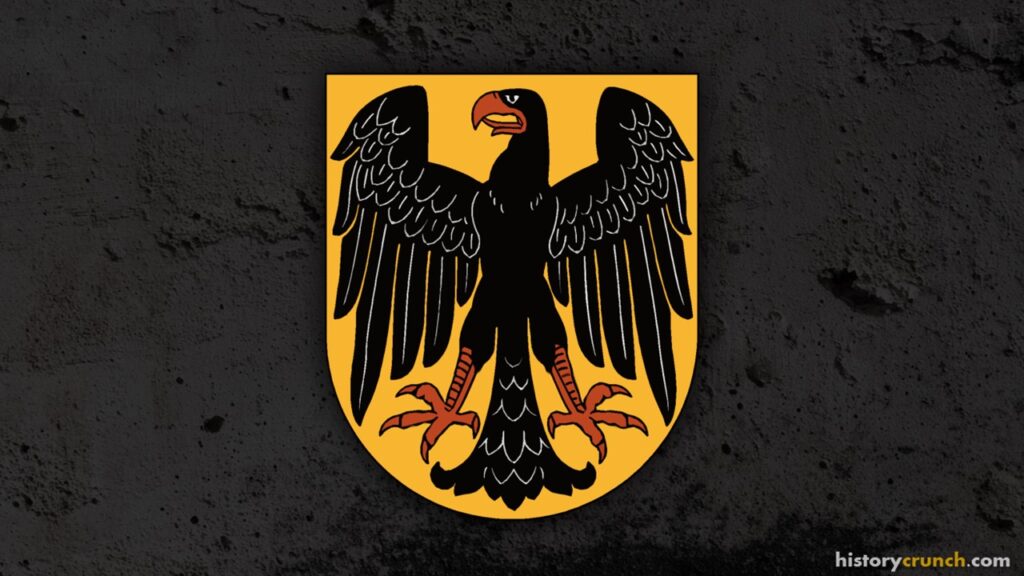
The Weimar RepublicA system of government where citizens elect representatives to make decisions on their behalf. was the democratic government of Germany from 1919 to 1933, during the difficult years between World War I and the rise of Nazi Germany. It is called the Weimar Republic because the assembly that created the new constitutionThe written set of laws and principles that explains how a government is organized and what rights people have. met in the city of Weimar, Germany after the collapse of the German Empire at the end of the First World War. The Weimar Republic is important because it existed during one of the most unstable periods in modern German history. It faced defeat and humiliation after World War I, anger over the terms of the Treaty of Versailles, violent political extremism, economic crisis and finally the rise of Adolf Hitler. In this way, the history of the Weimar Republic helps explain how Germany moved from empire to democracy and then from democracy to a Nazi dictatorship.
 FactsthatCrunch
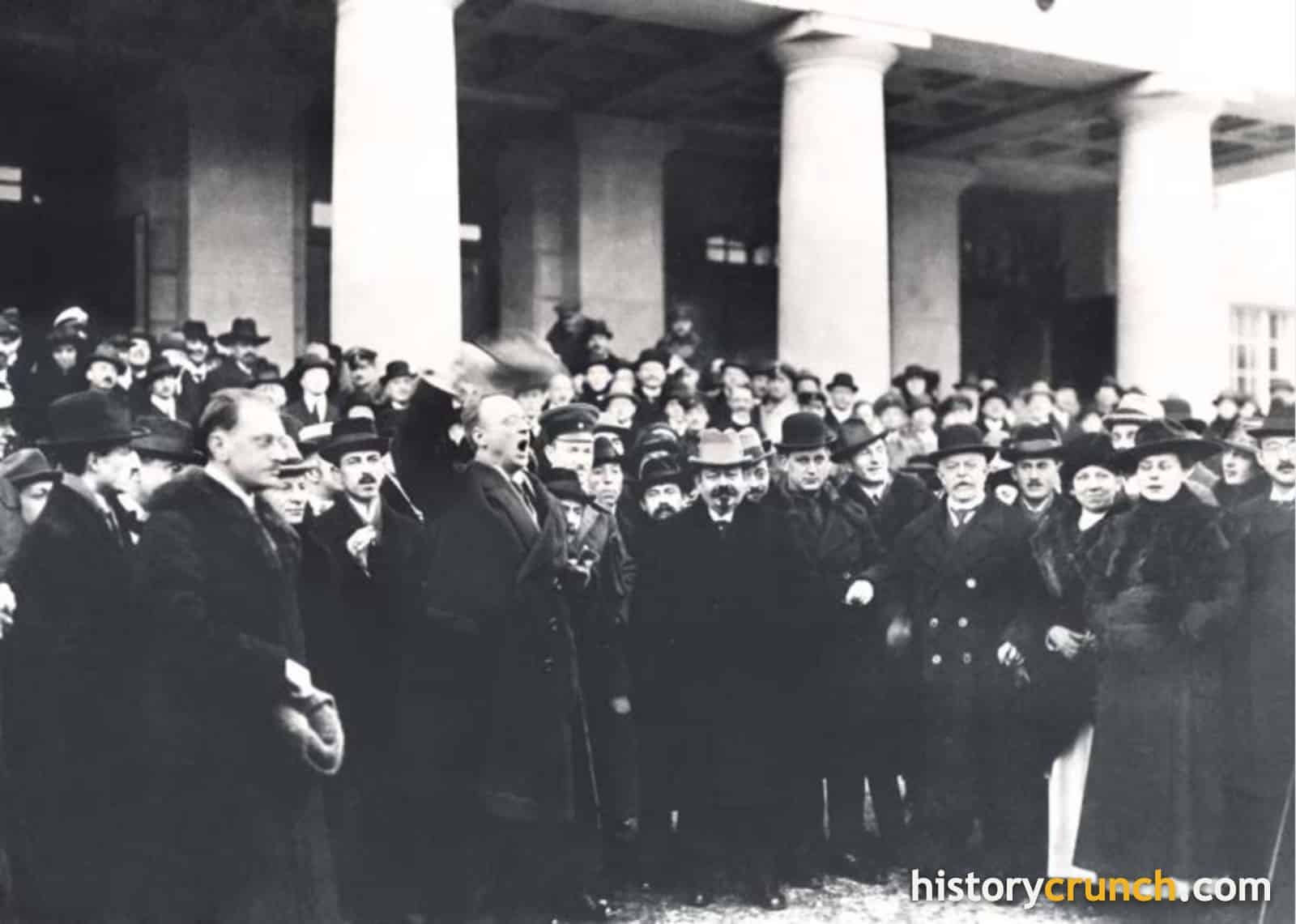
Friedrich Ebert Becomes the First President of the Weimar Republic
Meeting in the theater at Weimar, the new National Assembly elected Friedrich Ebert, a Social Democrat, as Germany's first democratic head of state. Crowds outside cheered the start of a republic that would last until 1933.
What Was Germany Like After World War I?
Germany changed dramatically in the final weeks of World War I. As the war was ending, unrest spread across the country and the old imperial system began to collapse. More specifically, on November 9th, 1918, the German monarchy fell and a new republic was proclaimed. This is significant because it marked the end of the rule of Kaiser Wilhelm II and the beginning of a new political system. Kaiser Wilhelm II had played a major role in German political and social life before and during the events of World War I.
The new government inherited enormous problems from the very beginning. Germany had accepted defeat in the First World War, millions had been killed or wounded, and many citizens were angry, exhausted, and uncertain about the future. Many also believed the stab-in-the-back mythThe false claim that Germany lost World War I not on the battlefield but because of betrayal at home by socialists, democrats, and Jews., the false claim spread by army leaders such as Erich Ludendorff that Germany had not been beaten on the battlefield but betrayed at home by socialists, democrats and Jews. At the same time, radical groups on both the left and the right of the political spectrum hoped to shape Germany in their own image. This is important because the Weimar Republic was born in crisis rather than stability, which made its survival much more difficult from the start.
FactsthatCrunchGermany lost World War I because socialists, democrats, and Jewish people betrayed the country from within while its army was still undefeated.
This claim, known as the stab-in-the-back myth, was false. The German military had already suffered serious battlefield defeats by late 1918, and army leaders such as Erich Ludendorff spread the story to shift blame away from the military's own failures. The myth gave many Germans a false explanation for the defeat and was later used by Adolf Hitler to build resentment against democratic and Jewish Germans.
Weimar Republic – Creation
As stated above, Germany sought to establish a new government following its acceptance of defeat at the end of World War I. In fact, the Weimar National Assembly met in Weimar from February 6th, 1919 to August 11th, 1919, and during that period it created a new constitution for Germany. Then, on February 11th, 1919, Friedrich Ebert was elected president, and on August 11th, 1919, the new constitution was adopted. This is significant because it established Germany as a democratic republic with elected representatives, a president and civil rights protected in law. This was a dramatic shift from the order of the previous German Empire under Kaiser Wilhelm II.
The constitution was modern in several important ways. For instance, it gave voting rights to men and women, created proportional representationAn electoral system where a party wins seats in parliament based on the share of votes it receives. and included protections for individual rights. However, it also contained weaknesses that created significant issues in the new republic. One of the most important was ‘Article 48’, which allowed the president to rule by emergency decreeAn order issued by a leader to create or change laws without the normal approval of parliament during a crisis. in times of crisis. This is important because what appeared to be a safeguard in an emergency later became one of the tools used to weaken German democracy, during the rise to power of Adolf Hitler and the Nazi Party.
Weimar Republic – Early Issues
One of the greatest problems faced by the Weimar Republic was the Treaty of Versailles, which Germany signed on June 28th, 1919. The treaty forced Germany to accept blame for the war, pay reparationsPayments a defeated country is forced to make to cover the costs and damages caused by a war., reduce its military and give up important territory. In fact, many Germans saw the treaty as deeply humiliating and unfair. This is significant because anger over Versailles damaged support for the new democracy almost from the moment it began.
Furthermore, many Germans blamed the Weimar Republic for accepting the treaty, even though the new democratic leaders had inherited a terrible situation from the end of the First World War. This resulted in the republic being associated with defeat, shame and weakness in the minds of many citizens. Therefore, the Weimar Republic had to govern a country in which large numbers of people already distrusted it before it had even had much chance to succeed. This is important because democracies are much harder to protect when many citizens do not believe in them. In fact, the ‘will of the people’ is an important aspect of any democracy, and the early issues of the Weimar Republic made it difficult for it to properly reflect the will of the German people.
The early years of the Weimar Republic were also marked by serious political violence. Germany faced uprisings, assassination attempts and plots from political groups that rejected democracy altogether. In January of 1919, the communist Spartacist uprising in Berlin was crushed by the army and the Freikorps, and its leaders Karl Liebknecht and Rosa Luxemburg were murdered. In March of 1920, right-wing Freikorps units seized Berlin in the Kapp Putsch, which collapsed after four days when workers answered with a general strike. In June of 1922, Foreign Minister Walther Rathenau was shot dead in his car by right-wing extremists. For instance, extremist groups on the far left wanted to incite a communist revolution, while groups on the far right wanted to bring about nationalist or authoritarian rule. This is significant because the Weimar Republic was attacked from both sides, which made political stability very difficult to achieve.
One especially famous example was the Beer Hall Putsch, which took place on November 8th and 9th, 1923 in Munich, Germany. In this failed coup attempt, Adolf Hitler and his supporters tried to overthrow the Weimar government by force. The putsch ultimately failed, and Hitler was arrested, but the event remained important. In fact, historians consider the Beer Hall Putsch to be a significant event in the rise to power of Adolf Hitler and the Nazi Party.
FactsthatCrunchThe Weimar Constitution, adopted on August 11th, 1919, included Article 48, which allowed the German president to rule by emergency decree without approval from parliament.
Weimar Republic – Economic Crisis
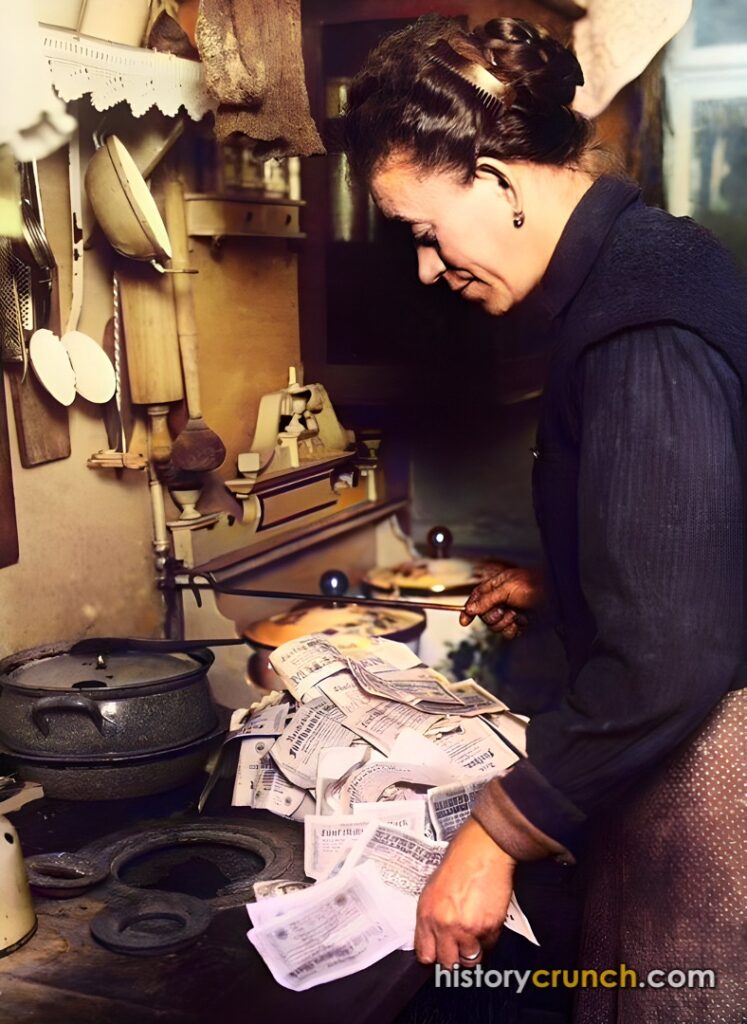
The Weimar Republic also faced devastating economic problems, especially in 1922 and 1923. One of the most serious crises followed the French and Belgian occupation of the Ruhr, which began on January 11th, 1923 after Germany fell behind on the reparations payments that it was supposed to make as part of the terms of the Treaty of Versailles. Essentially, the Ruhr region was an important component of the German economy because of its vast natural resources. As such, when the Ruhr region was occupied by France and Belgium, it caused economic hardship for the Weimar Republic and the German people. In response to this crisis, the German government printed more money to support workers and businesses. This resulted in hyperinflationWhen prices rise so fast and money loses value so quickly that basic goods become nearly impossible to afford., which meant that German money lost value at an incredibly fast rate. This is important because economic collapse can destroy faith in a government even when that government is not fully to blame for the crisis.
By November of 1923, the German mark had become almost worthless, and families needed huge amounts of money just to buy basic goods. For instance, people saw savings disappear, wages lose value almost immediately, and ordinary shopping become chaotic and frightening. This is significant because the crisis hurt the middle class especially badly, and it pushed many Germans toward anger, bitterness and support for radical solutions. Therefore, the economic crisis of 1923 became one of the most damaging moments in the history of the Weimar Republic, and historians consider it to be an important aspect of the eventual rise to power of Adolf Hitler.
The economic woes of the Weimar Republic were worsened with the start of the Great Depression. In fact, the Great Depression began after the stock market crash of October of 1929. It was a global economic recession that created hardship across the entire world, but Germany was hit especially hard. For instance, businesses failed, unemployment rose sharply and political divisions became even more intense.
As economic suffering worsened, extremist parties gained support. In fact, Adolf Hitler blamed Germany’s problems on groups such as communists, Jewish people, and the Weimar Republic itself, while presenting himself as the leader who could restore German pride and stability. From March of 1930, Chancellor Heinrich Brüning governed by presidential decree under Article 48 because no majority could be found in the Reichstag, and his successors Franz von Papen and Kurt von Schleicher did the same. By July of 1932, the Nazi Party had become the largest party in the Reichstag, which was the German parliament. As such, the economic conditions of hyperinflation and the Great Depression contributed to the feelings of anger and resentment among the German population during the Interwar Period.
Weimar Republic – Collapse and the Rise of Hitler
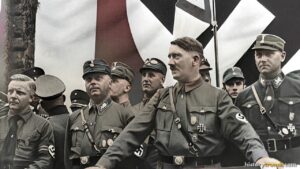
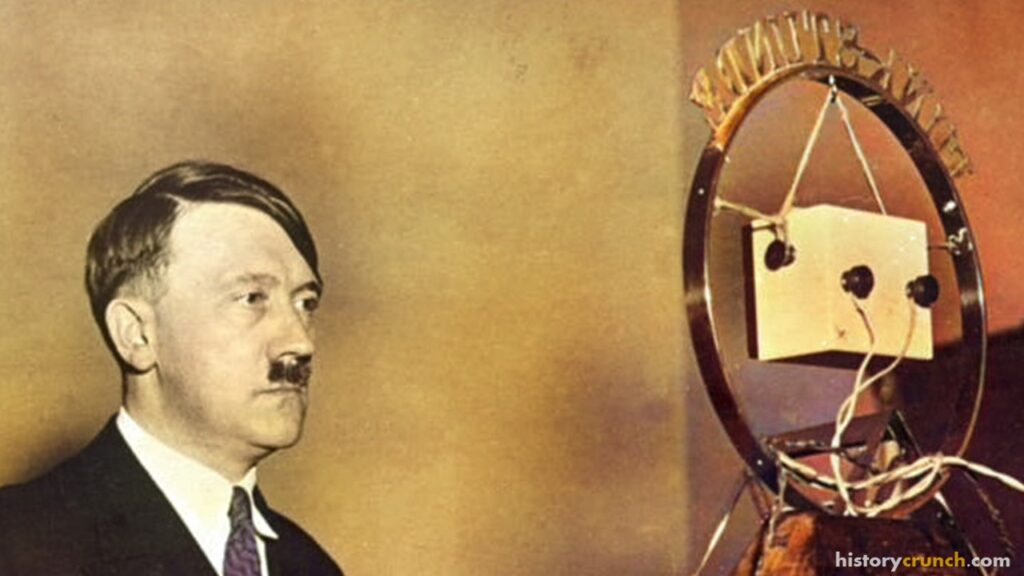
The final collapse of the Weimar Republic came on January 30th, 1933, when President Paul von Hindenburg appointed Adolf Hitler as Chancellor of Germany. Hitler entered office through the legal political system, but he quickly moved to destroy democracy from within. This is significant because the end of the Weimar Republic did not come through one dramatic revolution alone. Instead, it came through political breakdown, elite miscalculation, and the use of democratic institutions by someone who did not believe in democracy.
For instance, only a few weeks later, the Reichstag Fire took place on February 27th, 1933. Hitler and the Nazis used the fire to create fear of a communist threat, and this resulted in emergency powers that greatly increased their control. Then, on March 23rd, 1933, the Enabling Act gave Hitler the power to make laws without the normal approval of parliament. Therefore, the Weimar Republic was effectively destroyed, and Nazi dictatorship began to replace German democracy. The era of Nazi ideology and the Nazi Party had begun.
 FactsthatCrunch
In what order did the key events that destroyed the Weimar Republic and brought Hitler to power unfold?
Weimar Republic – Significance
The Weimar Republic was significant because it was Germany’s first major democratic experiment, and it showed both the promise and the fragility of democracy in a time of crisis. It created a modern constitution, expanded political participation, and allowed important social and cultural change. However, it also struggled under the weight of economic collapse, political violence and weak public trust of the new system. This is important because the history of the Weimar Republic helps explain why democracy can fail when a society is deeply divided and under severe pressure.
Overall, the Weimar Republic connected the end of the old German Empire to the rise of Hitler and Nazi Germany. In fact, its fall remains one of the clearest examples in modern history of how dictatorship can rise when democratic institutions are weakened by fear, anger and instability. Therefore, the Weimar Republic is important not only in German history, but also in the larger history of democracy in the modern world.
FactsthatCrunchThe Weimar Republic was Germany's first democratic government, lasting from 1919 to 1933, and it had real strengths alongside serious weaknesses.
Explore World War I · 1914 – 1918
Keep exploring World War I with these History Crunch resources.
Key Vocabulary
Republic
Constitution
Proportional representation
Stab-in-the-back myth
Reparations
Hyperinflation
Emergency decree
Frequently Asked Questions
Why is it called the Weimar Republic?
It is called the Weimar Republic because the assembly that wrote its new constitution met in the city of Weimar. The group gathered there in 1919 after the fall of the German Empire. Weimar was chosen partly because Berlin was unsafe due to political unrest at the time.
What was Article 48 and why did it matter?
Article 48 was a part of the Weimar constitution that let the president rule by emergency decree in a crisis. It was meant to be a safeguard during serious trouble. Later it became a tool that helped weaken German democracy during the rise of Adolf Hitler.
What caused the hyperinflation of 1923?
Hyperinflation grew worse after France and Belgium occupied the Ruhr region on January 11th, 1923. Germany had fallen behind on reparations payments owed under the Treaty of Versailles. The government then printed more money, and the German mark lost value at a shocking rate.
What was the stab-in-the-back myth?
The stab-in-the-back myth was the false claim that Germany lost World War I because of betrayal at home. Army leaders such as Erich Ludendorff blamed socialists, democrats and Jews rather than defeat on the battlefield. The myth damaged trust in the new republic and fueled anger among many Germans.
How did the Weimar Republic finally end?
The Weimar Republic effectively ended on January 30th, 1933, when President Paul von Hindenburg made Adolf Hitler the chancellor. Hitler then used events like the Reichstag Fire to gain emergency powers. The Enabling Act of March 23rd, 1933, let him make laws without parliament, which destroyed democracy.
Cite This Article
To cite this article as a source, use one of the formats below.
MLA: Millar, B. “Weimar Republic: A Detailed Summary.” HistoryCrunch, 30 September 2026, https://historycrunch.com/weimar-republic/.
APA: Millar, B. (2026). Weimar Republic: A Detailed Summary. HistoryCrunch. https://historycrunch.com/weimar-republic/
Chicago: Millar, B. “Weimar Republic: A Detailed Summary.” HistoryCrunch. September 30, 2026. https://historycrunch.com/weimar-republic/
Sources
- John Keegan, The First World War.
- Hew Strachan, The First World War.
- Fordham Modern History Sourcebook
- Margaret MacMillan, The War That Ended Peace.