The Holocaust is one of the most important events of the 20th century and is perhaps the most significant genocideA mass killing of a group of people targeted for ethnic, religious, or racial reasons. in human history. A genocide is a mass killing of a group of people for ethnic, religious or racial reasons. The term ‘holocaust’ refers to death by fire in reference to the way that people were executed during the event. It unfolded during the reign of Adolf Hitler in Nazi Germany and the major events of World War II. During the Holocaust, which occurred from 1933 to 1945, over 11 million people were executed. In total, 6 million were Jewish people, while the other 5 million included several other groups, including: disabled people, homosexuals, communists, Soviet and Polish prisoners of war, Roma, and other religious and ethnic minorities.
In order to understand the Holocaust, it is first important to understand when and how it occurred. In general, it unfolded as a series of major events in several key stages. First were the major causes of the Holocaust which ultimately led to the start of the genocide, including: anti-Semitism, Social Darwinism, Eugenics, Ultranationalism, Adolf Hitler, and the Nazi Party. The sections below detail the main stages of the Holocaust. In these sections you will find links to learn more detailed information about each topic in relation to the Holocaust.
Holocaust – Nuremberg Laws
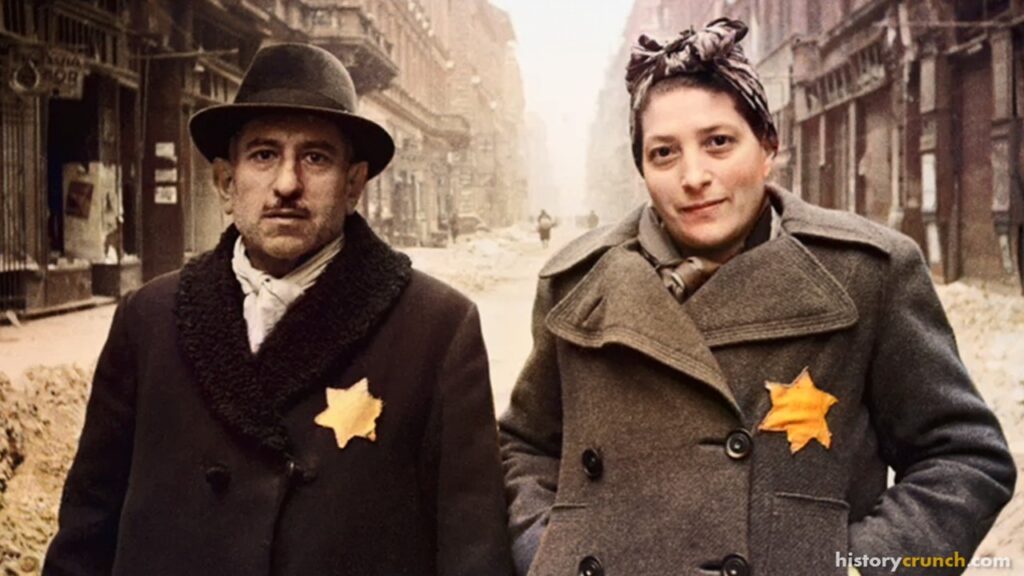
The first stage of the Holocaust was the Nuremberg Laws. First passed in 1935, the Nuremberg LawsGerman laws passed in 1935 that made Jewish people second-class citizens and banned marriage between Jews and Germans. made German Jewish people second class citizens and banned sexual relations and marriage between Jewish people and persons of German blood. Officially, the Nuremberg Laws were known as the ’Law for the Protection of German Blood and Honor’. The goal of the laws for the Nazis was to limit the ability of Jewish genetic traits to spread and to legalize discrimination against Jewish people in Germany. In general, the Nazi regime carried out several different forms of discrimination against undesirable people in society, including: economic discrimination, social discrimination and political discrimination. The Nuremberg Laws best represent social discrimination, because the laws isolated Jewish people within their own country and outlawed them from expressing a sense of connection with the nation.
 FactsthatCrunch
The Nazi regime used economic and political measures to remove Jewish people from public life, then added social laws such as the Nuremberg Laws to cut off Jewish people from German society entirely. Together these forms of discrimination laid the legal foundation for later stages of the Holocaust.
Holocaust – Kristallnacht
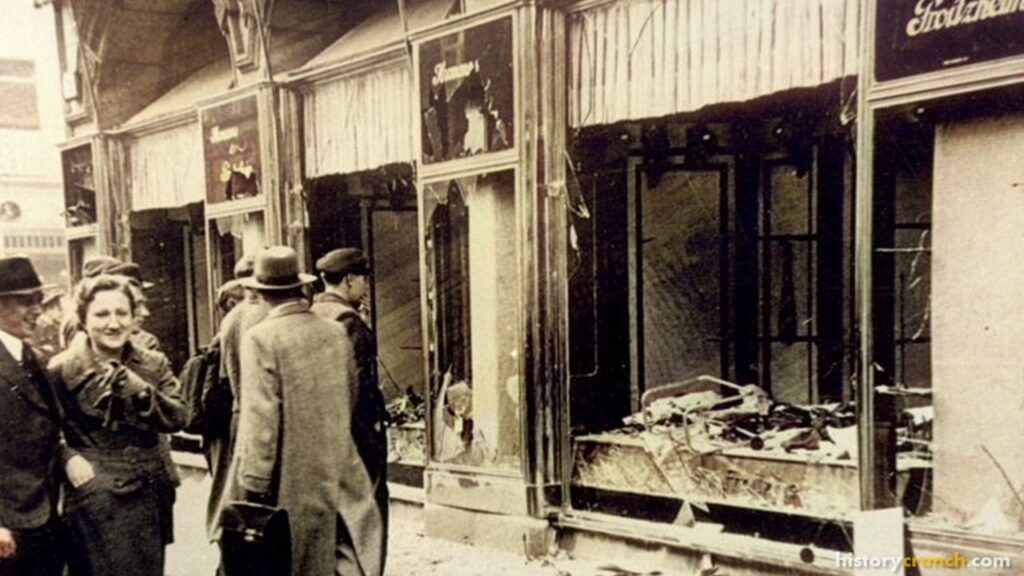
One of the most important events of the Holocaust is known as Kristallnacht, which translates to ‘Night of Broken Glass’. It was an organized attack carried out against Jewish people living in Germany on November 9th, 1938 and 10th, 1938. The attack was carried out by Sturmabteilung forces (SA) which were the paramilitary part of the Nazi Party. Throughout the 1930s, Adolf Hitler and the Nazi Party had risen to power in German politics. By 1938, the Nazi Party was well established in Germany and was a popular political force in the Reichstag, which was the name for the German parliament. The SA was made up of members of the Nazi Party and acted as a protection force for the party while also carrying out aggressive attacks against those deemed to be enemies of Germany, including the Jewish. The events of KristallnachtAn organized Nazi attack on Jewish businesses, synagogues, and homes on November 9–10, 1938. saw SA forces destroy Jewish owned businesses, synagogues and homes. It was called ‘Night of Broken Glass’ due to the large amount of broken glass that was on the streets the next morning from the storefronts and homes. In total, 91 Jewish people were murdered and another 30,000 Jewish men were arrested and imprisoned.
Holocaust – Jewish Emigration
As Adolf Hitler and the Nazi Party rose to power in Germany, German Jewish people began to emigrate out of Germany. Events, such as the Nuremberg Laws and Kristallnacht highlighted the growing danger for Jewish people in Germany. German Jews emigrated to several different places including: the United States, Palestine, South America and other countries in Europe. For example, between 1933 and 1938 nearly 150,000 German Jewish people emigrated out of the country.
Holocaust – Moved to the Ghettoes
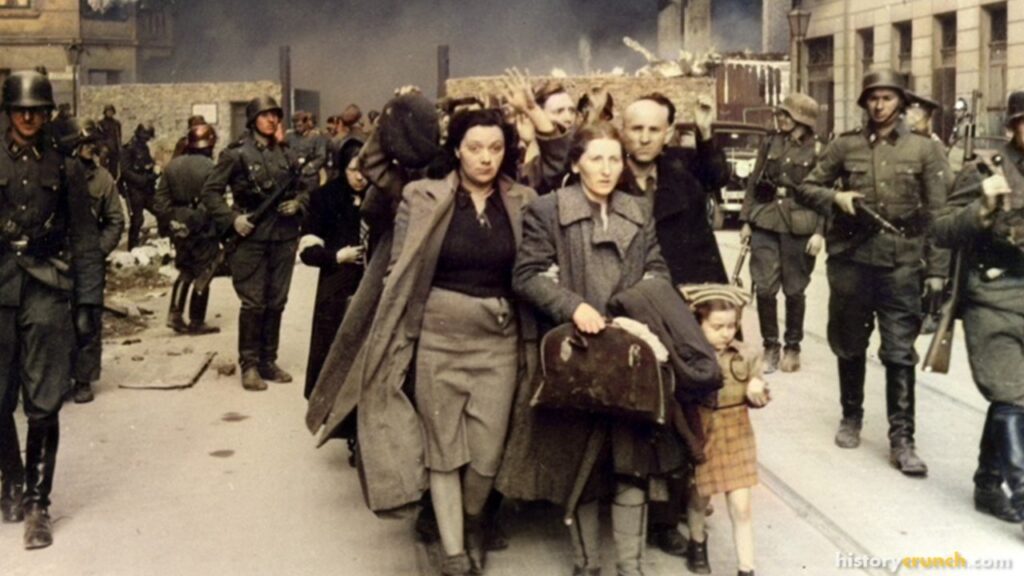
A main event of the Holocaust was the creation of the ghettos in Poland following the start of World War II. World War II began on September 1st, 1939, with the Nazi invasion of Poland. This was an important event, because Poland served an important purpose for Germany and the Holocaust. First, Adolf Hitler viewed Poland (and the Soviet Union) as ‘lebensraumA German word meaning ‘living space,’ used by Hitler to justify seizing Polish and Soviet territory for German settlement.’, or living space, for German families. Second, it was in Poland that the Nazis established ghettos for the Jewish (and others). For example, Polish cities such as Warsaw were used to contain captured Jewish populations. Third, Poland became the site of many of the Nazi death camps that carried out the deaths of millions during the Holocaust.
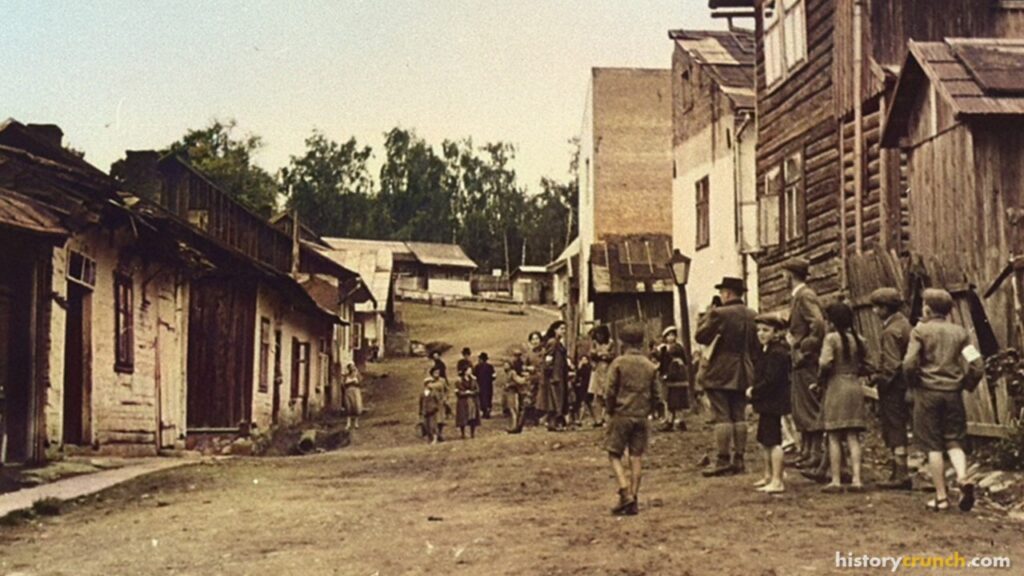
As the German army captured territory (and people) across Europe they deported millions of Jewish people to the ghettos. Ghettos were city districts in which the Jewish were forced to live, and which were used to isolate them from the rest of the European populations. The ghettos were surrounded by walls or fences to prevent Jewish and non-Jewish people from interacting and to forcibly contain the Jewish. In total there were over 1,000 ghettos established across Nazi controlled Europe during the time period. The conditions of the ghettos were miserable. Jewish families, who were forced to live in them, faced: overcrowding, starvation, lack of medical supplies, lack of proper sanitation and running water, lack of proper clothing to deal with extreme cold, spread of infectious diseases and forced labor for the Nazis.
 FactsthatCrunch
Approximately 500,000 Jews died inside the Nazi ghettos from starvation and disease, before deportations to the death camps even began.
The Nazis and their allies established more than 1,000 ghettos across occupied Europe, most of them in German-occupied Poland, the Baltic states, and the Soviet Union. Conditions inside the ghettos included extreme overcrowding, almost no food, no clean water, and no medical supplies, which caused typhus, tuberculosis, and other infectious diseases to spread rapidly. The Warsaw Ghetto alone held over 400,000 people in a small city district, and roughly 85,000 of its residents died from ghetto conditions before mass deportations to death camps began.
Holocaust – Einsatzgruppen
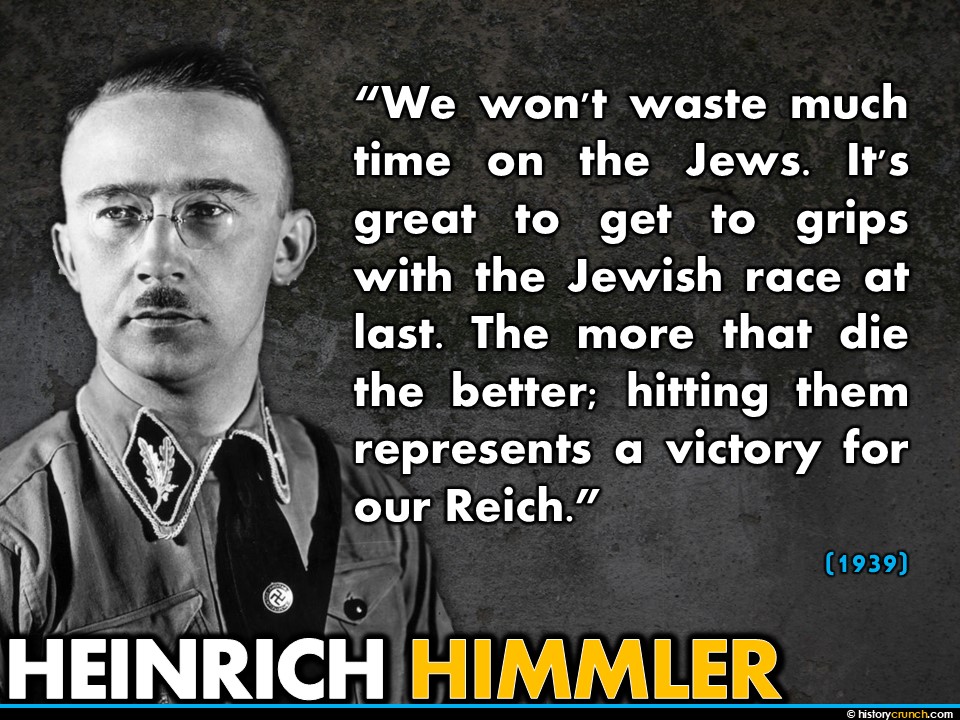
One of the ways that the Nazi regime carried out the Holocaust was with the einsatzgruppen. The einsatzgruppenSS death squads that followed Nazi front-line forces and executed Jewish people and other minorities in captured territory. were Schutzstaffel (SS) death squads that captured and killed Jewish and other minorities during the events of World War II and the Holocaust. In general, the death squads followed directly behind the front line Nazi forces as they conquered territory throughout Europe as part of World War II. Once the Nazi forces had captured an area, the einsatzgruppen would begin the process of rounding up any undesirable people living in the region and carry out their executions. Since the einsatzgruppen were part of the larger SS structure, their actions were under the direction of the head of the SS, Heinrich Himmler.
 FactsthatCrunch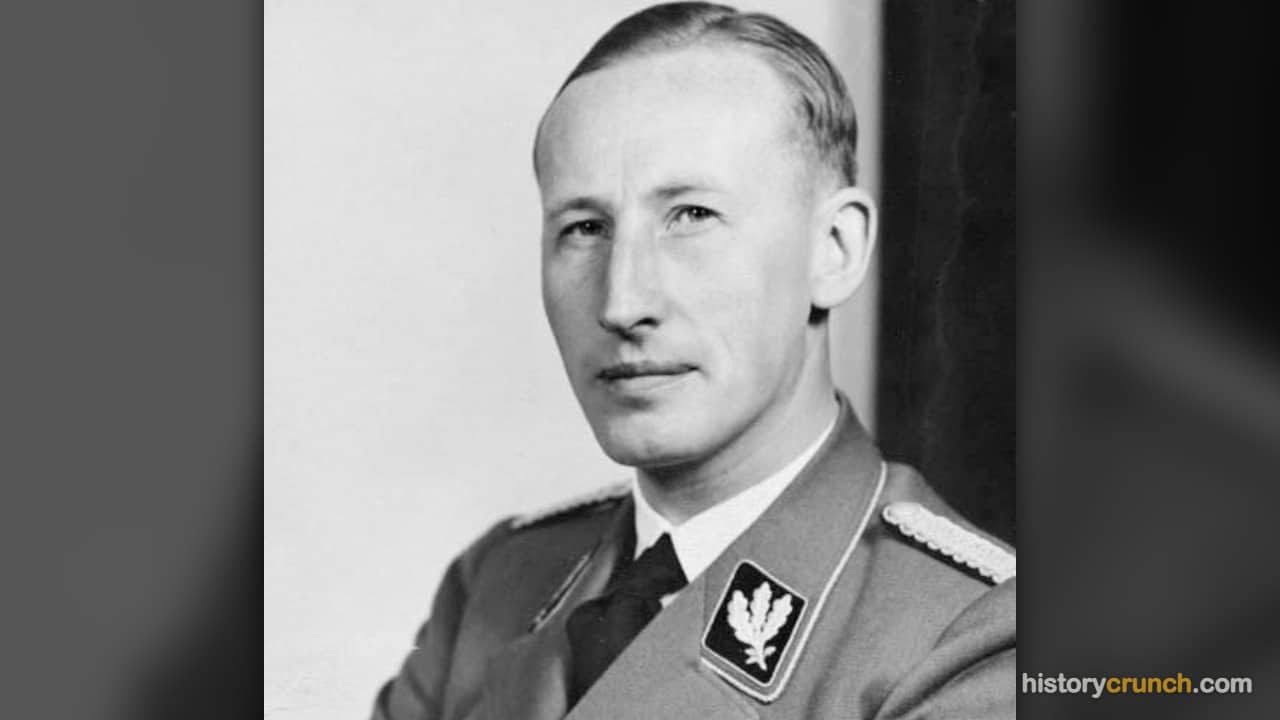
Holocaust – Trains to the Camps
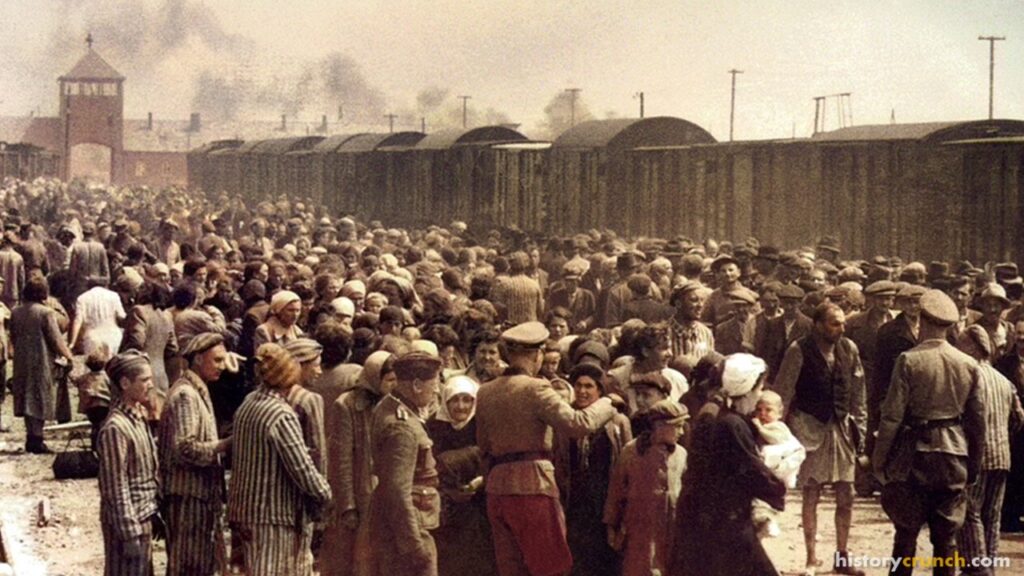
The next stage of the Holocaust was the removal of the Jewish from the ghettoes and their transportation to the camps aboard trains. When they were being boarded upon the trains, the Jews were told to label their belongings which would follow them to their destinations. This was a lie to deceive the Jewish. The Nazis even constructed fake train stations with fake schedules to deceive the Jewish. The trains were not passenger trains but instead were boxcars which were typically used for shipping livestock or other shipped goods. There were 125 to 135 people stuffed into each boxcar. The passengers were not given food or water and the boxcars did not have toilets. The trains could take several days to arrive to their destinations, depending on the distance from the camps. As a result, many people died along the way, including old, young and sick.
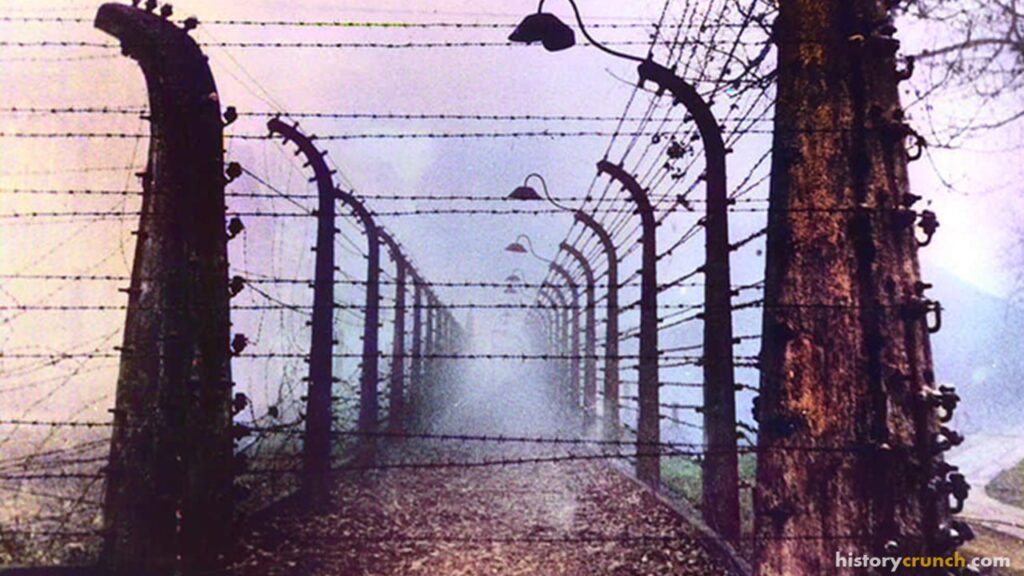
Upon arriving to a camp, the survivors were removed from the trains into holding areas with electrified fences. It was here that the Nazis began to separate the Jewish from each other. Women and children were separated from men. Old and sick were separated from healthy. Famously, Nazi soldiers and doctors separated the people to the left and right. Those sent to the left were sent to their immediate death, while those sent to right were sent to carry out forced labor until they died.
 FactsthatCrunch
How did the Nazis use deception and trains to move Jewish people to the camps during the Holocaust?
Holocaust – Death Camps and Concentration Camps
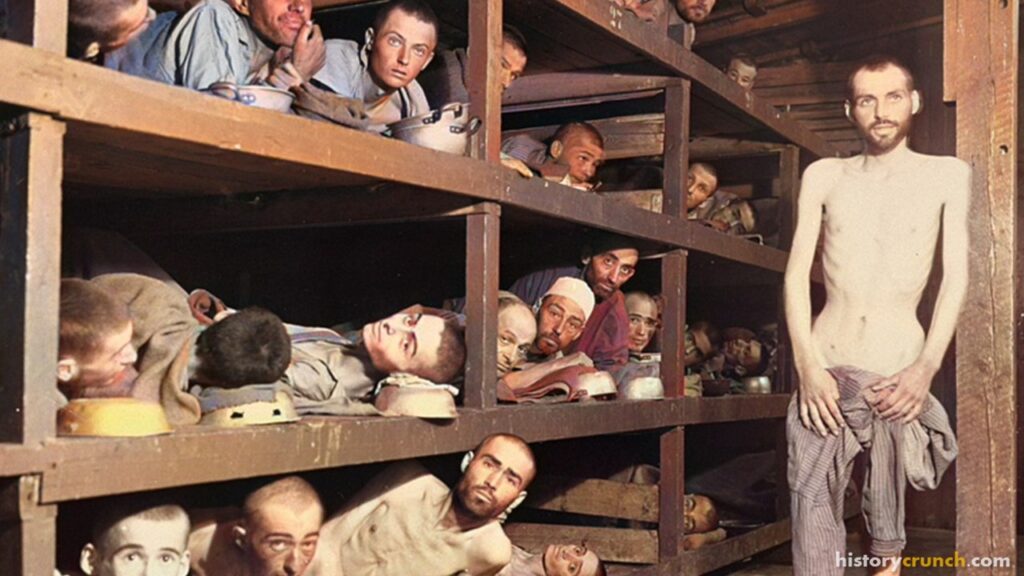
In general, concentration camps were labor camps in which generally healthy men were sent to labor for the Nazis. The most famous concentration camp, which also had a death camp, was Auschwitz. People in concentration camps often died from disease, starvation and poor treatment due to the horrible conditions in which they were forced to live, including: overcrowding, lack of running water, lack of heat, lack of food, tiring and difficult labor, and mistreatment by Nazi guards. For example, the barracks for the prisoners were sometimes, literally, old horse sheds that the Nazis converted for humans by building crude bunk beds in the horse stalls. The bunks were built four levels high and the prisoners were forced to sleep with 3 to 4 people per level. A barrack typically held over 400 people inside.
The situation for those sent to death camps was much different. Death camps were camps in which people were killed almost immediately after departing the train. This was the final destination for many old, young and sick people considered to be ‘undesirable’ by the Nazi Regime. While many concentration camps were located in Germany, death camps were generally located in Poland since it contained the highest population of Jewish peoples. As well, it allowed the Nazi government to remove the actual death camps from Germany and ‘hide’ their crimes. In 1942, the Nazis opened several famous death camps, including: Belzec, Sobibor and Treblinka. Death camps evolved over time, especially in terms of how they carried out the executions. The death camps were constructed with gas chambers in which people could be locked and killed with a poisonous gas.
 FactsthatCrunch
Concentration camps were detention and labor sites where many prisoners died from brutal conditions. Death camps were purpose-built killing centers designed to murder people, especially Jewish people, on arrival and at a massive scale.
Holocaust – Liberation of Camps
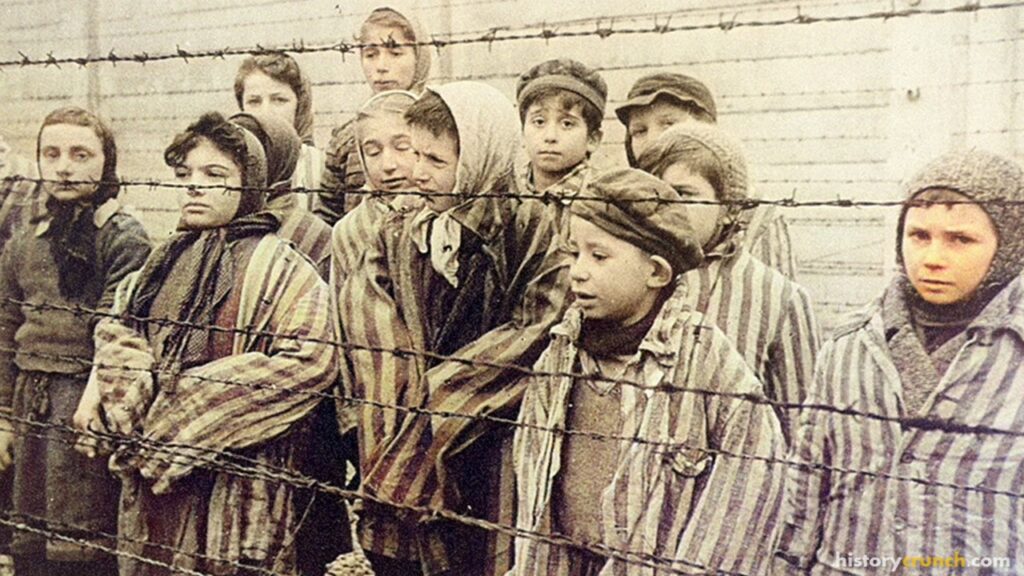
As World War II came to an end and the Allied armies pushed their way through Poland, they came across the systems of concentration and death camps that were part of the Holocaust. While high command officers of the Allied forces were aware that the camps existed during the course of World War II, the average Allied soldier (American, British, Canadian, French, Soviet) was unaware and was surprised by the horrors they discovered. Often, the Nazi guards left in a rush and abandoned the camps fearing the arrival of the Allied troops. As such, they tried to execute as many prisoners as possible before abandoning their post and the Allied soldiers found camps with bodies scattered throughout. Since many were not killed before the Nazi guards fled the camps, the Allies also discovered thousands of sick and dying people. Other times, the Nazi guards took the prisoners with them and forced them to march until they died. Regardless, the Allied soldiers discovered horrible atrocities and began the process of recording their discovery for history. Many of the images that exist today, from the camps, come from the records of Allied soldiers who liberated the camps.
 FactsthatCrunch
The things I saw beggar description… The visual evidence and the verbal testimony of starvation, cruelty and bestiality were so overpowering as to leave me a bit sick.
General Dwight D. Eisenhower · Cable to General George C. Marshall · April 15th, 1945
Eisenhower wrote these words after touring the Ohrdruf camp in Germany on April 12th, 1945, with Generals George Patton and Omar Bradley. American troops of the Third Army had reached the camp on April 4th, 1945, and found bodies left behind by the fleeing guards along with starving survivors. Eisenhower visited on purpose so he could give first-hand testimony if anyone later dismissed the reports as propaganda, and he ordered soldiers, reporters, and nearby German civilians to see the camp for themselves.
Holocaust – Nuremberg Trials
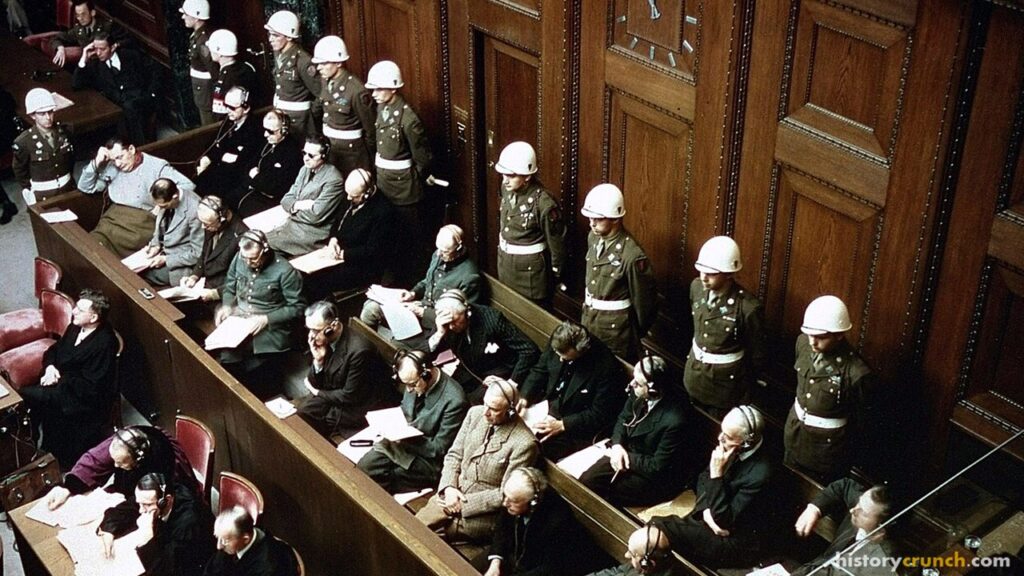
The brutality of the concentration camps and death camps shocked the Allied leaders and led to calls for justice against the Nazis based on the concepts of ‘war crimes’ and ‘crimes against humanity’. During World War II, the Allied powers met several times to discuss post-war Europe and how to bring the Nazis to justice. The Nuremberg Trials began on November 20th, 1945 with indictments against twenty-four captured Nazis and different Nazi organizations, including: Nazi leadership, the SS, the Gestapo, and the SA. The first charge was that the Nazis participated in a conspiracy to wage war and end the peace following World War I. The second charge was that the German leadership planned and carried out wars of aggression. The third charge was for war crimes and the fourth charge was for carrying out crimes against humanitySerious offenses against civilians so severe they are prosecuted under international law, not just national law.. Of the twenty-two Nazis tried at the Nuremberg Trials only three were found not guilty. The other nineteen were convicted and either sentenced to prison terms, including life in prison, or given a death sentence.
The Nuremberg Trials were a significant event in the history of World War II and the Holocaust. They were the first such ‘international’ trials and established a model for future trials. For example, in the 1990s, following the genocide in Rwanda, a similar international court was established to try war criminals from that country. As well, the Nuremberg Trials helped establish a renewed interest in human rights issues. For instance, the United Nations was established in 1945 with the goal of preventing similar future conflicts. Furthermore, the United Nations created the Universal Declaration of Human Rights in 1948 with the goal of restoring faith in basic human rights and to avoid future related war crimes, crimes against humanity and genocides.
 FactsthatCrunch
Which of the following was one of the four charges brought against Nazi leaders at the Nuremberg Trials?
Explore World War II · 1939 – 1945
Keep exploring World War II with these History Crunch resources.
Key Vocabulary
Genocide
Anti-Semitism
Nuremberg Laws
Kristallnacht
Einsatzgruppen
Lebensraum
Crimes against humanity
Frequently Asked Questions
When did the Holocaust take place?
The Holocaust took place between 1933 and 1945, during the rise and rule of Nazi Germany. It began with laws that targeted Jewish people and grew far more deadly after World War II started in 1939. The killing ended in 1945 when Allied armies defeated Germany and freed the camps.
How many people died in the Holocaust?
Over 11 million people were killed during the Holocaust. About 6 million of them were Jewish, and the other 5 million came from other targeted groups. These groups included disabled people, Roma, communists, homosexuals, and Soviet and Polish prisoners of war.
What was the difference between concentration camps and death camps?
Concentration camps were labor camps where mostly healthy men were forced to work for the Nazis. Death camps were built to kill people quickly, often right after they left the train. Many death camps stood in Poland, which helped the Nazis hide their crimes from Germany.
Why were Jewish people forced into ghettos?
The Nazis used ghettos to isolate Jewish people from the rest of Europe’s population. These were city districts surrounded by walls or fences that trapped people inside. Over 1,000 ghettos were set up across Nazi controlled Europe, and conditions there were crowded and deadly.
What were the Nuremberg Trials?
The Nuremberg Trials were court cases that put captured Nazi leaders on trial for their crimes. They began on November 20th, 1945, with charges that included war crimes and crimes against humanity. Nineteen of the twenty-two Nazis on trial were found guilty and given prison terms or death sentences.
Cite This Article
To cite this article as a source, use one of the formats below.
MLA: Beck, Elias. “Holocaust: A Detailed Overview.” HistoryCrunch, 16 September 2026, https://historycrunch.com/holocaust-overview/.
APA: Beck, E. (2026). Holocaust: A Detailed Overview. HistoryCrunch. https://historycrunch.com/holocaust-overview/
Chicago: Beck, Elias. “Holocaust: A Detailed Overview.” HistoryCrunch. September 16, 2026. https://historycrunch.com/holocaust-overview/
Sources
- Imperial War Museum
- Max Hastings, Inferno / All Hell Let Loose.
- The National WWII Museum