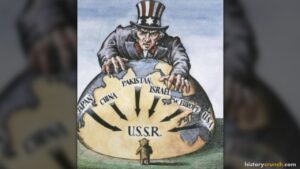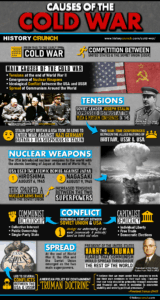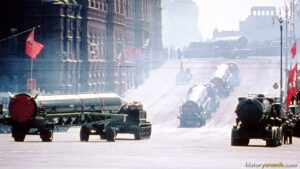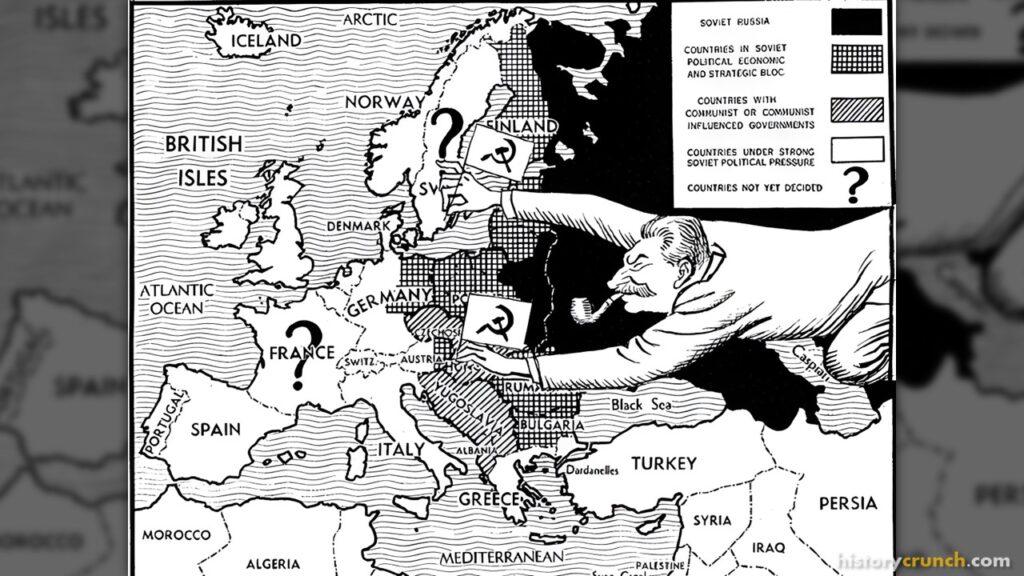
Soviet expansionismA foreign policy where a country tries to gain control over new territories and extend its power and influence. in the Cold War was significant because it increased global tensions and caused the United States and its allies to adopt the policy of containment to resist the spread of communism. The Cold War lasted from the end of World War II in 1945 until the early 1990s, and was one of the most significant events of the 20th century. At its heart, the Cold War was essentially a ‘face off’ or competition between the United States and the Soviet Union in the years following World War II. This conflict between the two major superpowers led to different foreign policy strategies, including the policy of expansionism.
Summary
Expansionism as a foreign policy strategy was used by the Soviet Union in the timeframe of the Cold War. For instance, the Soviet Union sought to spread communism and its influence to other regions of the world in the years following the end of World War II. This is important, because in the Cold War both the United States and the Soviet Union worked to spread their ‘sphere of influenceThe regions of the world where a country has significant political, economic, or military control over others.’. Both wanted to expand their influence around the world in order to gain support for their separate ideologiesSystems of political beliefs, such as communism or liberalism, that guide how a country is governed., which included communism (for the Soviets) and liberalism (for the Americans). Soviet expansionism in the Cold War was often met with containmentAn American policy aimed at stopping the spread of communism to other countries during the Cold War. on the part of the United States, because the Americans hoped to stop the spread of communism. As such, Soviet expansionism and American containment led to many different examples of conflict between the two superpowers, which heightened tensions throughout the 20th century.
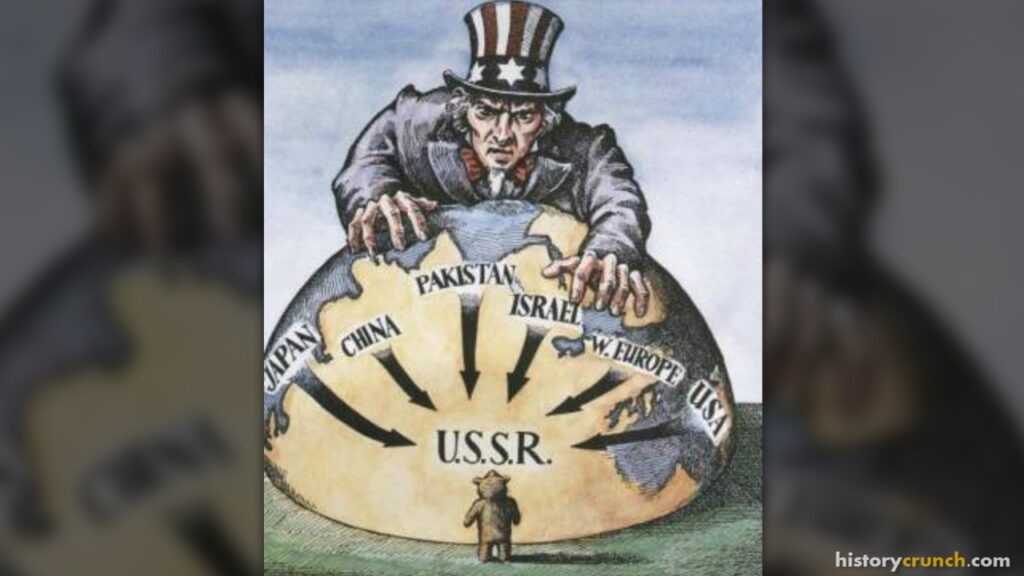
As stated above, the Soviet Union used the foreign policy of expansionism regularly throughout the timeframe of the Cold War. They did this in the hopes of gaining access to new territory and influence over specific regions, which they considered to be economically, politically and militarily important. One of the first examples of Soviet expansionism in the Cold War was the spread of Soviet influence in Eastern Europe at the end of World War II. During the Second World War, the Soviet Union was allied with the other Allied Powers, which included France, Britain and the United States. As such, near the end of World War II, when Nazi Germany began to lose the war, each of the Allied armies pushed in towards German territory. For their part, the Soviet Army captured large sections of Eastern Europe including the Eastern half of Germany. While the other Allied Powers (such as Britain and the United States) liberated Western Europe, the Soviet Union chose to maintain control over the territories in Eastern Europe. Winston Churchill, the famous Prime Minister of Britain during World War II, famously referred to this as an ‘Iron Curtain’. In fact, the Soviet Union held control over Eastern Germany until the early 1990s, when the Soviet Union collapsed, and the two halves of Germany were reunited.
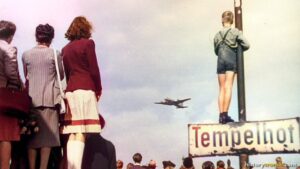
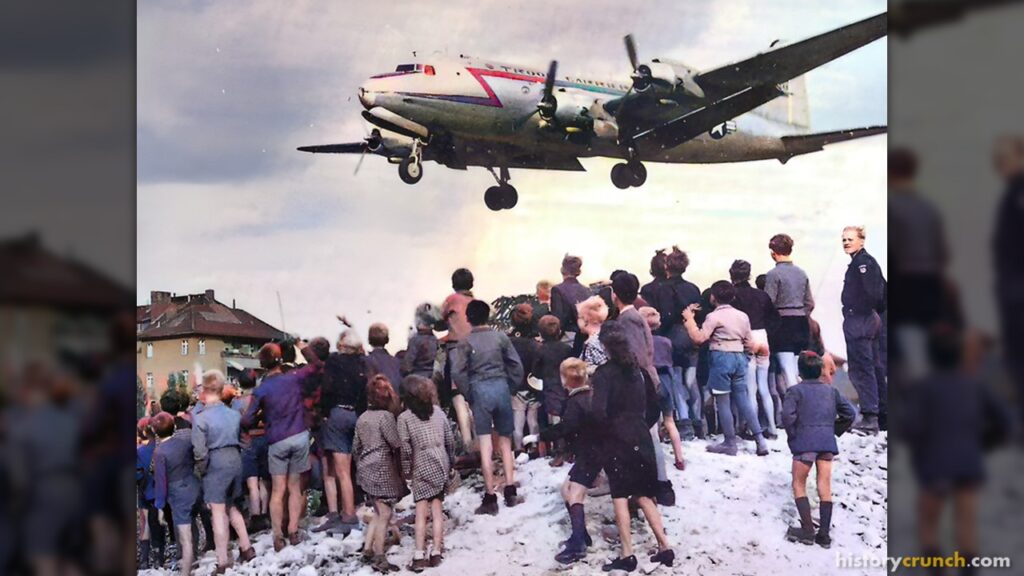
Throughout the Cold War, there were several more examples of Soviet expansionism. In each of the examples, the Soviet Union was attempting to increase its influence and gain an advantage over the United States. These examples include the Berlin Blockade, Korean War and the Vietnam War. In the Berlin Blockade, which took place from 1948 until 1949, the Soviet Union was trying to gain control over Western Berlin. Berlin was the German capital, and had been split into four zones by the Allied Powers, at the end of World War II. However, the Soviet leader, Joseph Stalin, was unhappy with this arrangement and sought to control the entire city of Berlin. It led to a major conflict, in which the United States (and its allies) ‘fought’ back against the Soviet expansion attempt with the events of the Berlin Airlift. Second, the two proxy warsConflicts where two major powers support opposing sides in another country’s war instead of fighting each other directly. in Korea and Vietnam involved the Soviet Union trying to expand its influence into regions in the East and Southeast Asian areas of Asia. This worried the United States and led to the events of both the wars, which saw American soldiers intervene in each of the two countries. In fact, the wars in Korea and Vietnam were some of the largest conflicts following the events of World War II.
Cold War timeline · 1947 – 1991
Key Vocabulary
Expansionism
Containment
Sphere of influence
Ideologies
Iron Curtain
Proxy wars
Berlin Airlift
Frequently Asked Questions
What was Soviet expansionism in the Cold War?
Soviet expansionism was the effort by the Soviet Union to spread communism and its influence to new regions after World War II. The Soviets wanted territory and control over areas they saw as important for their economy, politics, and military. This push often clashed with the United States, which tried to stop the spread of communism.
How did the United States respond to Soviet expansionism?
The United States responded with a policy called containment, which aimed to stop communism from spreading further. This idea shaped American foreign policy for decades during the Cold War. It led to direct involvement in conflicts like the Korean War and the Vietnam War.
What was the “Iron Curtain”?
The “Iron Curtain” was a phrase used by British Prime Minister Winston Churchill to describe the divide in Europe. It marked the line between the free nations of Western Europe and the countries controlled by the Soviet Union in the east. The Soviets kept control of these Eastern European territories until the early 1990s.
What was the Berlin Blockade?
The Berlin Blockade lasted from 1948 until 1949 and was an attempt by the Soviet Union to gain control of West Berlin. Berlin had been split into four zones by the Allied Powers at the end of World War II. Soviet leader Joseph Stalin wanted the whole city, so the United States and its allies answered with the Berlin Airlift.
Why were the Korean War and Vietnam War called proxy wars?
They were called proxy wars because the two superpowers fought for influence without fighting each other directly. The Soviet Union tried to spread communism into these parts of Asia, which worried the United States. American soldiers then intervened in both countries, making these some of the largest conflicts after World War II.
Cite This Article
To cite this article as a source, use one of the formats below.
MLA: Beck, Elias. “Soviet Expansionism in the Cold War: A Detailed Summary.” HistoryCrunch, 18 September 2026, https://historycrunch.com/soviet-expansionism-in-the-cold-war/.
APA: Beck, E. (2026). Soviet Expansionism in the Cold War: A Detailed Summary. HistoryCrunch. https://historycrunch.com/soviet-expansionism-in-the-cold-war/
Chicago: Beck, Elias. “Soviet Expansionism in the Cold War: A Detailed Summary.” HistoryCrunch. September 18, 2026. https://historycrunch.com/soviet-expansionism-in-the-cold-war/
Sources
- Vladislav Zubok, A Failed Empire.
- Odd Arne Westad, The Global Cold War.
- Wilson Center Digital Archive
- John Lewis Gaddis, The Cold War: A New History.