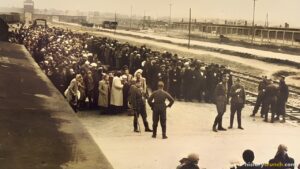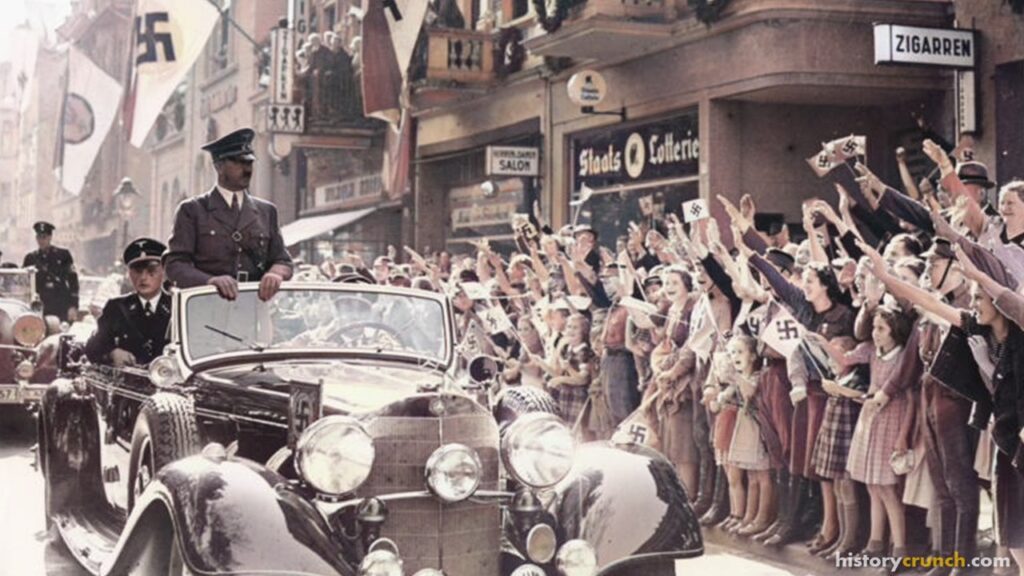
The Nazi Party, officially known as the National Socialist German Workers’ Party, was a far-right political group in Germany that was led by Adolf Hitler. It rose to power in the 1920s and 1930s by promoting extreme nationalism, anti-Semitism, and the idea of Aryan racial superiority. The Nazi Party was significant to the events of Nazi Germany, the Holocaust and World War II.
 FactsthatCrunch
What were the main forms of anti-Semitism that the Nazi Party used against Jewish people?
Nazi Party – Background
After the defeat in World War I, German society experienced a major crisis that had both economic and societal impacts. For example, following its defeat in World War I, Germany was made to accept the terms of the Treaty of Versailles, which significantly hurt the German economy by causing mass hyperinflationAn extreme and rapid rise in prices that destroys the value of a country’s money.. As well, a large number of Germans felt that they were betrayed by signing unfavorable peace terms that unfairly hurt the country. These circumstances contributed to the creation of various nationalist movements, including the creation of the National Socialist German Workers’ Party (NSDAP), which is also known as the Nazi Party. As such, the Nazi Party was established and grew among the backdrop of a tumultuous time in German history.
Socialism in the party’s title was considered not to represent classical left-wing socialism, but as a right-oriented ideology or ‘national solidarity’, that is, national unity needed to address some of the higher goals. According to Hitler’s definition, socialism is an ideology that has as the highest goal the benefit of its own people. As such, despite its name, the National Socialist Party acted as an extremely right-oriented political movement.
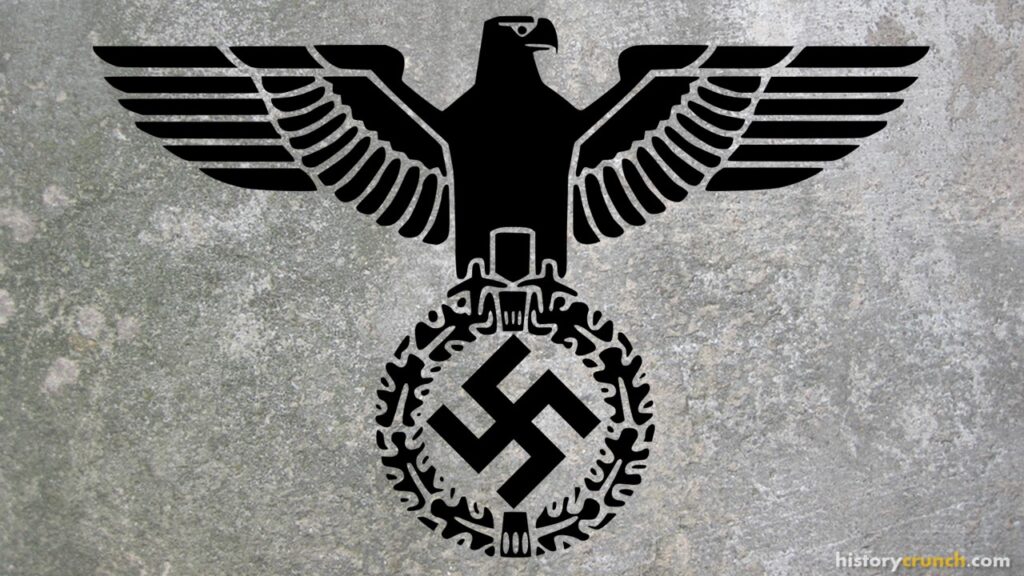
A ‘swastika’ was accepted as a sign of the ‘Aryan’ race, replacing the cross on the German flag. A red flag with a white field in the middle and a black swastika was also selected. At the top of the swastika, surrounded by wreaths of oak leaves, there was another traditional symbol, the German eagle. These became the predominant symbols of the Nazi Party throughout its reign of power in Germany.
 FactsthatCrunch
The word Nazi is a short form of Nationalsozialist, the German word for National Socialist.
The party's full name was the National Socialist German Workers' Party, shortened in German to NSDAP. Members usually called themselves National Socialists, while the short form Nazi became the name most people used.
Nazi Party – History
Early History
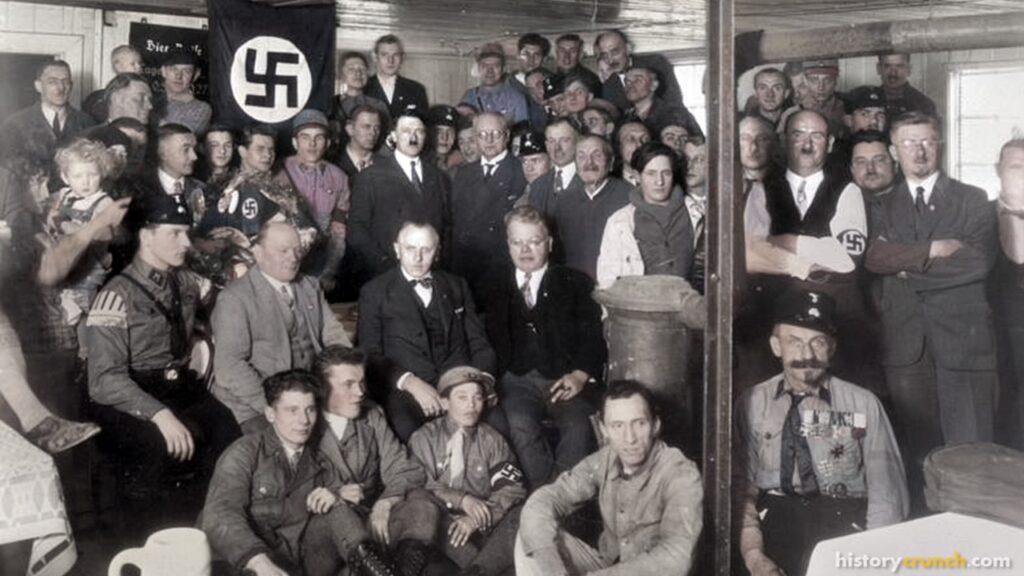
The Nazi Party was founded in 1919 as the German Workers’ Party (DAP) in Munich, in the aftermath of World War I. In 1920, under the influence of Adolf Hitler, the party adopted its new name and a fascistRelating to a far-right system of government built on dictatorial power, extreme nationalism, and suppression of opposition. ideology combining ultranationalism, anti-communism, anti-Semitism, and authoritarianism. In fact, these aspects became the foundation of Nazi ideology and were driving forces that led to events such as World War II and the Holocaust.
The founder of the party was Anton Drexler. Adolf Hitler initially joined the party, which at that time counted about 60 members and soon became its leader. As the 55th member of the party, he was registered under number 555, in an attempt to show that the party had more members than they really did. At the first mass meeting on February 24th, 1920, Hitler read the party’s program, which consisted of 25 points. Two themes were the backbone of the entire program: the German defeat in World War I and nationalism.
 FactsthatCrunch
The Nazi Party was founded by Adolf Hitler in 1919.
Hitler Becomes Leader of the Nazi Party
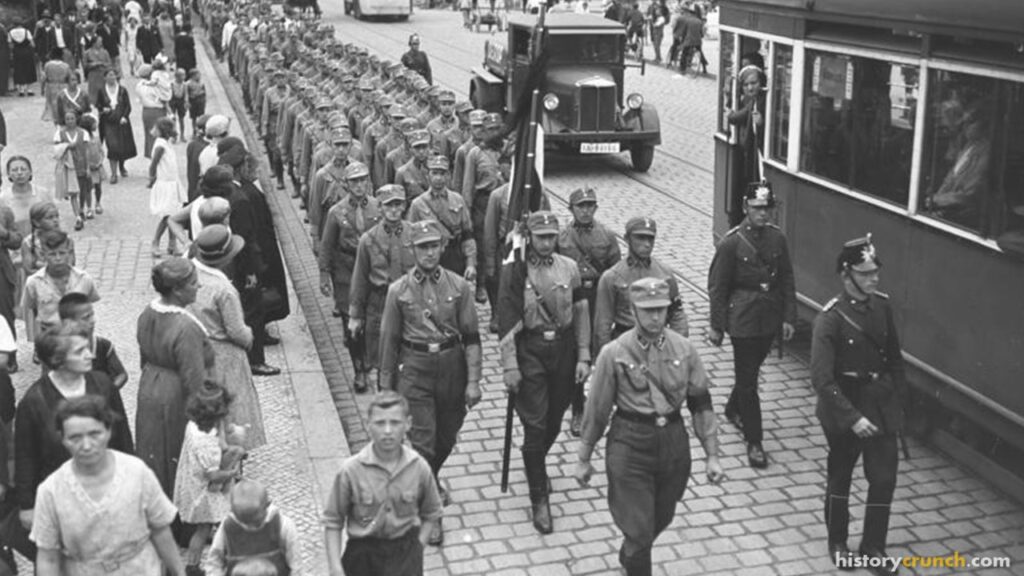
Hitler took leadership over the Nazi Party in 1921 while Drexler remained as an honorary president. Very quickly, Hitler declared himself as the leader, taking the title ‘Führer’, and assumed near total control over the party. Next, Hitler created the SturmabteilungenThe paramilitary wing of the Nazi Party, known as Stormtroopers, who used violence to intimidate opponents. (SA) in 1921. This was the paramilitary wing of the party and they acted as ‘Stormtroopers’ for the Nazi cause. For instance, SA members were known to carry out the earlier violent attacks against those that did not support the Nazi Party. Furthermore, it was essentially the police of the Nazi Party and had the task of securing of meetings, attacking socialists and communists, and persecuting Jewish people.
Also, Hitler worked to create and develop the basics of what would eventually become the Hitler Youth. This was a paramilitary youth organization that promoted the ideals of fascism and the Nazi Party in general. The Hitler Youth was founded in July of 1926 and existed until 1945. It grew out of a small youth group the party had formed in 1922, one year after its adult counterpart, the Sturmabteilung (the SA). It was made up of different sections for male youth ages 14–18; younger boys for ages 10–14; and a general girls section. The Hitler Youth were viewed as future “Aryan supermen” and were indoctrinatedTaught to accept a set of beliefs without questioning them. in anti-Semitism. The organization put more emphasis on physical and military training than on academic study.
Beer Hall Putsch
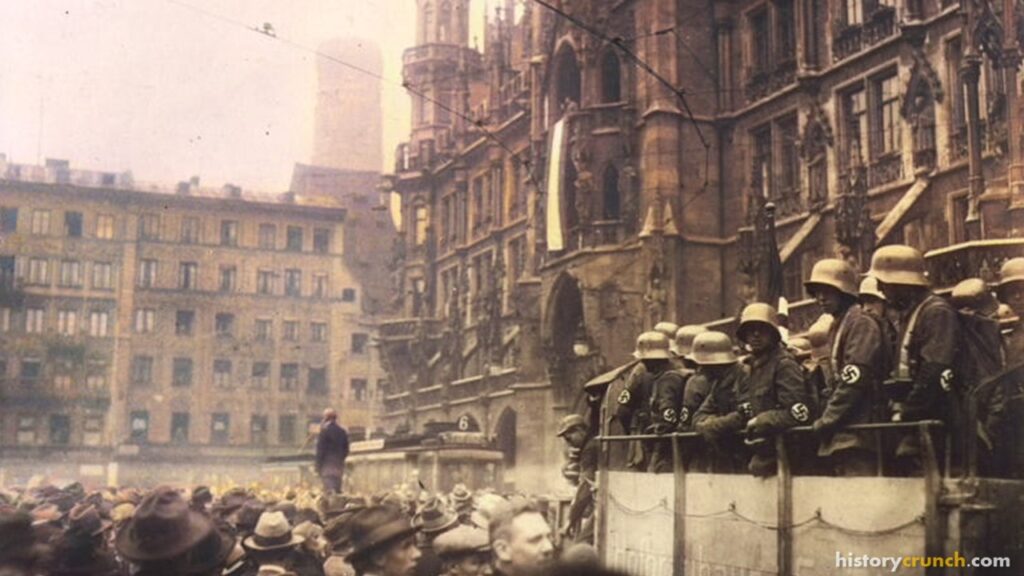
The SA were famously involved in the events of the Beer Hall Putsch in 1923, which was a failed coup attempt by Hitler and led to his arrest. During his time in prison, Hitler wrote ‘Mein Kampf‘ (My Struggle), his autobiographical book that outlined his views and political goals. For instance, in it he argued that the world was a racial struggle for domination, in which the Aryan race is superior to others.
After his release from prison, Hitler worked to grow the popularity of the Nazi Party and have it achieve power through democratic means. It should also be noted that the SS (Schutzstaffel) was created at this time. The SS was created to act as Hitler’s personal guards and went on to be responsible for the events of the Holocaust. Regardless, the Nazi Party continued to gain popularity in German society throughout the late 1920s and early 1930s. In fact, the Great Depression of the 1930s drastically weakened the Weimar Republic, which was the German government of the time. The economic crisis created by the Great Depression led to further hardships in Germany including: mass unemployment, poverty, and political extremism. The Nazi Party promised to restore German pride, rebuild the economy, and destroy communism. Eventually, by 1932, the Nazi Party had 800,000 members and had become the largest party in the ReichstagThe parliament building and legislative body of the German government., which was the German parliament.
Reichstag Fire
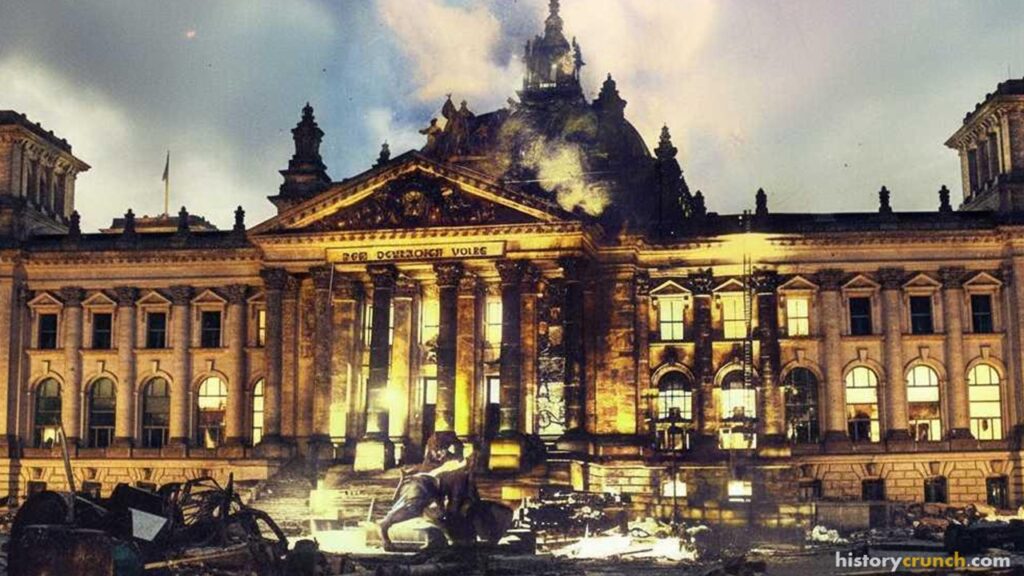
Under pressure from conservative elites who believed they could control Hitler, President Paul von Hindenburg appointed Hitler Chancellor of Germany on January 30th, 1933. Having become Chancellor, Hitler prevented all attempts by his opponents to gain a majority in parliament, and was presented with an opportunity in February of 1933 when the Reichstag building was set on fire. Hitler believed this was his chance to use the people’s fear of communism as a means of gaining complete control of Germany. The fire was blamed on communists to build on people’s fears that there was a communist revolution emerging in Germany. Due to public and political concerns, the day after the fire Hitler asked for and received from President Hindenburg the Reichstag Fire Decree. It suspended most civil liberties in Germany and was used by the Nazis to ban publications not considered “friendly” to the Nazi cause.
After the Reichstag Fire in February of 1933, the Nazis pushed through the Reichstag Fire Decree and the Enabling Act, which gave Hitler sweeping powers and essentially dismantled the German democratic government. The Gestapo, SS, and SA were all used to eliminate political opponents, silence dissent, and enforce Nazi Party ideology.
 FactsthatCrunch
What Did the Enabling Act Do to Germany's Government?
Passed in March 1933, the Enabling Act gave Adolf Hitler the power to make laws without approval from the Reichstag, which was the German parliament. It effectively dismantled Germany's democratic government by stripping elected representatives of their authority and placing full legislative power in Hitler's hands. The act followed the Reichstag Fire Decree, and together the two measures allowed the Nazi Party to eliminate political opponents and take complete control of the German state.
Night of the Long Knives
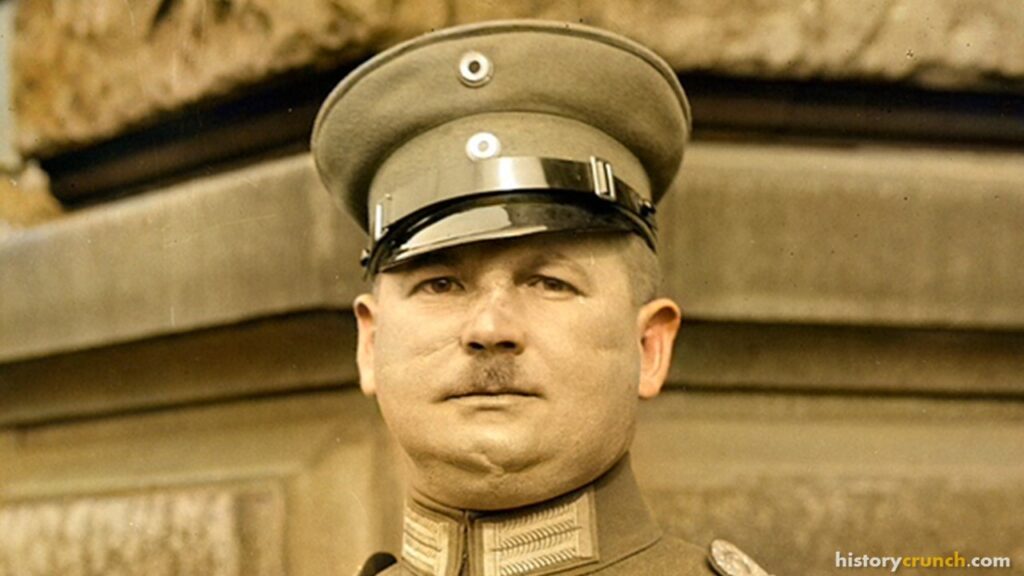
Soon, however, the SA became the main problem facing Hitler and the Nazi Party. More specifically, Hitler did not trust the SA and its leadership because he did not feel as though he had complete control over it. In a violent attack in June of 1934, Hitler with the help of the SS and the Gestapo, ordered an attack on SA, in which their leader, Ernst Röhm, and somewhere between 85 and 200 others were killed. This attack is known as the ‘Night of Long Knives‘, and was a purge of the Nazi Party’s own ranks. The attack allowed Hitler to further consolidate the power of the Nazi Party in his own fascist dictatorship.
President Paul von Hindenburg died on August 2nd, 1934. Rather than holding new presidential elections, Hitler’s cabinet passed a law proclaiming the presidency dormant and transferred the role and powers of the head of state to Hitler as Führer und Reichskanzler (leader and chancellor). As head of state, Hitler now became supreme commander of the armed forces. Hitler’s rise to power of Germany was complete.
 FactsthatCrunch
By June 1934, Adolf Hitler had grown deeply uneasy about the SA, the Nazi Party's paramilitary wing. He did not feel he had complete control over the organization or its leader, Ernst Roehm, and he feared the SA's power as a rival force within the Nazi movement. Hitler, working with the SS and the Gestapo, was on the verge of deciding whether to order a violent purge of his own party's ranks.
Kristallnacht
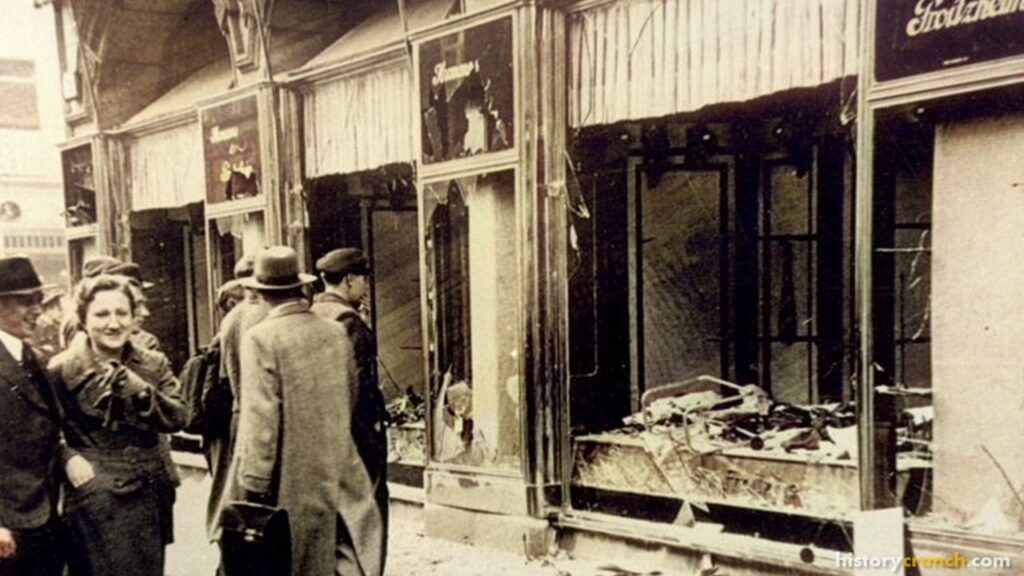
Attacks on the Jewish people continued throughout this period and were fully supported by the Nazi Party. For instance, the passage of the Nuremberg Laws essentially abolished their German citizenship; they were also banned from marrying or having relations with a German. As well, the Nazi Party sanctioned attacks against the Jewish people, such as during the events of Kristallnacht. Also known as the ‘Night of Broken Glass’, it was an organized attack against Jewish people, Jewish businesses and synagogues that took place on November 9th to the 10th in 1938. The events of Kristallnacht took place across Nazi Germany and Austria. It was significant because historians consider it to be an early example of the Nazi regime’s persecution of Jewish people, which ultimately resulted in the brutality of the Holocaust.
 FactsthatCrunch
Key takeaways
The Nuremberg Laws, passed on September 15th, 1935, removed German citizenship from Jewish people and used ancestry categories to define who counted as Jewish under Nazi law.
The laws banned marriage between Jewish people and German citizens, making racial discrimination official government policy.
The Nuremberg Laws were a major step toward the persecution that led to the Holocaust, stripping Jewish Germans of legal protections they had held for decades.
World War II
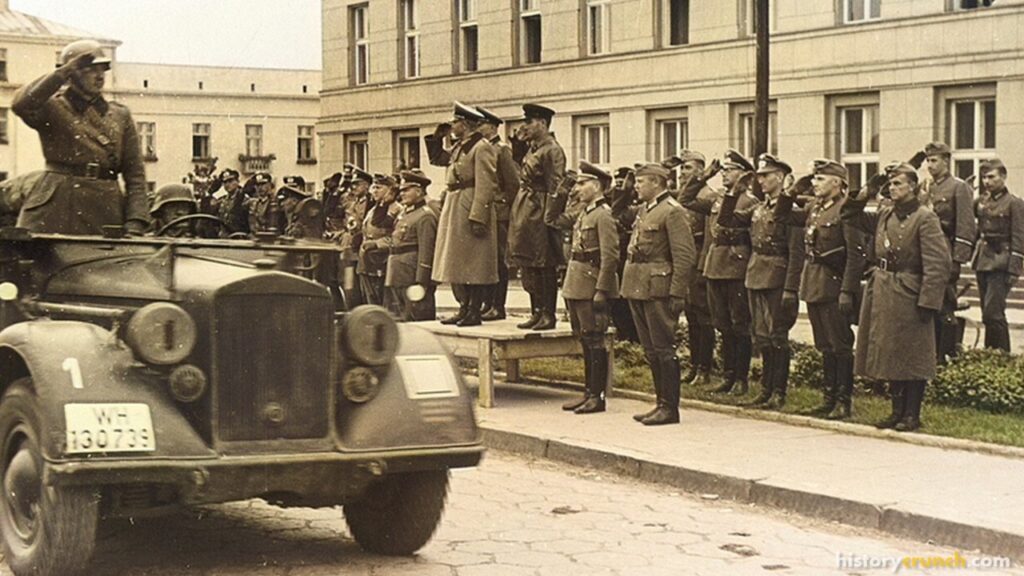
Throughout the late 1930s, the Nazi regime implemented numerous policies that prepared it for the eventual outbreak of World War II. For instance, the Nazis worked to remilitarize the nation following World War I. As well, Hitler aggressively argued in favor of expanding Germany’s territory in Europe, which ultimately led to the Nazi German invasion of Poland in 1939. This essentially was the outbreak of World War II. Throughout the time period of World War II, the Nazi regime worked to support the war effort, but also carried out the events of the Holocaust. Under Nazi rule, Germany carried out a systematic genocideThe deliberate and systematic killing of a large group of people because of their race, ethnicity, or religion. that resulted in the murder of 6 million Jewish people, as well as approximately 5 million others that were considered ‘undesirable’ in German society. The events of the Holocaust and World War II highlight the brutality and extremist ideology of the Nazi Party. In fact, as the war turned against Germany, the Nazi regime became more brutal and desperate. They carried out mass executions and used child soldiers in major battle situations. Hitler remained in power until his suicide on April 30th, 1945, just before Germany’s surrender in May of 1945.
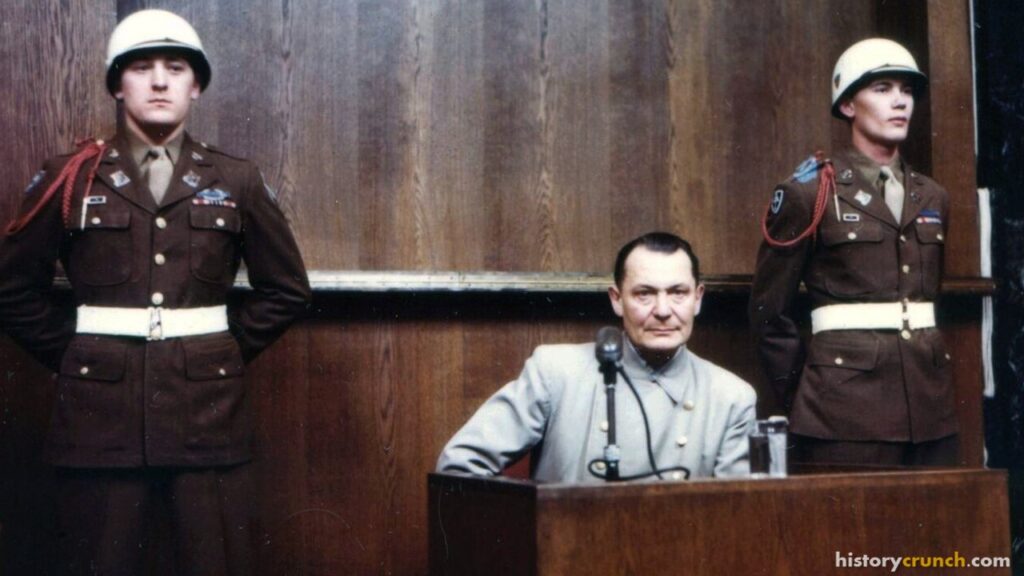
Before the proclamation of the end of the war, many members of the Nazi Party fled or committed suicide. Some, having burned their Nazi identity cards, tried to fit into the postwar German society. With the fall of Nazi Germany, the Nazi Party was banned, and its leaders were tried for war crimes and crimes against humanity during the Nuremberg Trials. Many, including Hermann Goering, Joachim von Ribbentrop, and others, were executed or imprisoned.
 FactsthatCrunch
Germany Sends 60 Divisions Into Poland, Opening World War II in Europe
Germany launched its invasion of Poland before dawn on September 1st, 1939, deploying 60 divisions and close to 1.5 million soldiers along the border. The attacking force included more than 2,000 tanks and nearly 900 bombers, which struck Polish airfields and cities from the first hours of the assault. Poland's army was not fully mobilized and was heavily outnumbered, and its air force of roughly 300 planes was largely destroyed within the first few days of fighting.
Nazi Party – Structure
The Nazi Party was a highly centralized and structured organization. Above all else, it was structured to promote absolute loyalty to Adolf Hitler, who held the title of Führer (Leader). The structure of the Nazi Party combined military organization and ideological indoctrination, which allowed it to function as both a political movement and as a tool of totalitarian control. The Nazi Party used propaganda, mass rallies, and strict discipline to build a cult of personality around Hitler and maintain ideological control over German society.
Leadership
The Nazi Party had a highly structured leadership, with Adolf Hitler having absolute authority as the Führer.
- Führer (Leader): At the top was Adolf Hitler, who held absolute authority. As Führer, Hitler had total control over policy, ideology and actions of the Nazi Party.
- Deputy Führer: Initially held by Rudolf Hess, then Martin Bormann, this position oversaw internal party affairs and acted as Hitler’s proxy in many decisions.
- Reichsleiter (National Leaders):
These were top-ranking officials responsible for specific domains, such as:- Joseph Goebbels – Propaganda
- Heinrich Himmler – SS and internal security
- Robert Ley – German Labor Front (DAF)
- Alfred Rosenberg – Ideological education
 FactsthatCrunch
Regional Administration
The Nazi Party was divided geographically to maintain tight control across Germany and occupied territories:
- Gau (Regions): Germany was divided into 42 Gaue, each led by a GauleiterA regional leader of the Nazi Party who acted as a local dictator and answered directly to Hitler., who acted as the party’s regional dictator, directly accountable to Hitler.
- Kreis (District): Each Gau was divided into Kreise (districts), led by a Kreisleiter.
- Ortsgruppe (Local Group): Local branches representing towns or cities, led by an Ortsgruppenleiter.
- Zelle (Cell): Subdivisions within Ortsgruppen, responsible for managing neighborhoods or parts of a town.
- Block (Block): The smallest unit, each Blockleiter monitored a few dozen homes, ensuring ideological loyalty and surveillance of citizens.
Related Organizations
To reach all people in German society, the Nazi Party developed specialized branches for propaganda, indoctrination, and mobilization:
- SA (Sturmabteilung – Stormtroopers): The Nazi Party’s original paramilitary wing, responsible for intimidating political opponents.
- SS (Schutzstaffel): Originally Hitler’s bodyguard, it evolved into a powerful elite force controlling internal security, concentration camps, and carrying out the major events of the Holocaust.
- NSDAP Women’s League: Promoted traditional gender roles, encouraging women to focus on motherhood, loyalty, and domestic life.
- Hitler Youth (Hitlerjugend) & League of German Girls (BDM): Indoctrinated boys and girls with Nazi values, preparing boys for military service and girls for motherhood.
- German Labor Front (DAF): Replaced independent trade unions, controlling workers and promoting the Nazi work ethic.
- National Socialist Teachers League, Doctors’ League, and Lawyers’ League: Professional organizations that enforced ideological conformity within professions.
Security Organizations
These organizations used terror and repression to instill fear in the people under control of the Nazi Regime:
- Gestapo (Secret State Police): Suppressed opposition through surveillance, arrest, and torture, often collaborating with the SS. The Secret Police of Nazi Germany.
- SD (Sicherheitsdienst): The SS intelligence agency responsible for gathering information on enemies of the Nazi regime.
Explore World War II · 1939 – 1945
Keep exploring World War II with these History Crunch resources.
Key Vocabulary
Hyperinflation
Fascist
Sturmabteilungen
Putsch
Indoctrinated
Reichstag
Genocide
Gauleiter
Frequently Asked Questions
Why was the Nazi Party called socialist if it was far-right?
The word “socialist” in the party’s name did not mean classic left-wing socialism. Hitler used it to mean national unity, or putting the German people above all else. In practice, the party fought communists and socialists and acted as a far-right movement.
Who founded the Nazi Party?
Anton Drexler founded the party in 1919 as the German Workers’ Party (DAP) in Munich. Adolf Hitler joined soon after, when it had only about 60 members. Hitler took over as leader in 1921 and renamed and reshaped the group.
How did the Nazi Party gain so much power?
The Great Depression of the 1930s brought mass unemployment and poverty that weakened the Weimar government. The Nazis promised to restore German pride, rebuild the economy, and crush communism. By 1932 they had 800,000 members and were the largest party in the Reichstag.
What was the Night of the Long Knives?
The Night of the Long Knives was a violent purge Hitler ordered in June 1934. He did not trust the SA and its leader Ernst Röhm, so he had the SS and Gestapo kill them. Between 85 and 200 people died, letting Hitler tighten his control.
What happened to the Nazi Party after World War II?
The Nazi Party was banned after Germany fell in May 1945. Many top leaders were tried for war crimes and crimes against humanity at the Nuremberg Trials. Figures like Hermann Goering and Joachim von Ribbentrop were executed or imprisoned.
How was the Nazi Party organized?
The Nazi Party was highly centralized and built to keep total loyalty to Hitler. Germany was divided into 42 regions called Gaue, each run by a Gauleiter answering to Hitler. Smaller districts, local groups, cells, and blocks watched citizens down to the neighborhood level.
Cite This Article
To cite this article as a source, use one of the formats below.
MLA: Woida, K.L. “Nazi Party: A Detailed Summary.” HistoryCrunch, 1 October 2026, https://historycrunch.com/nazi-party/.
APA: Woida, K. L. (2026). Nazi Party: A Detailed Summary. HistoryCrunch. https://historycrunch.com/nazi-party/
Chicago: Woida, K.L. “Nazi Party: A Detailed Summary.” HistoryCrunch. October 1, 2026. https://historycrunch.com/nazi-party/
Sources
- USHMM
- Richard J. Evans, The Third Reich Trilogy.