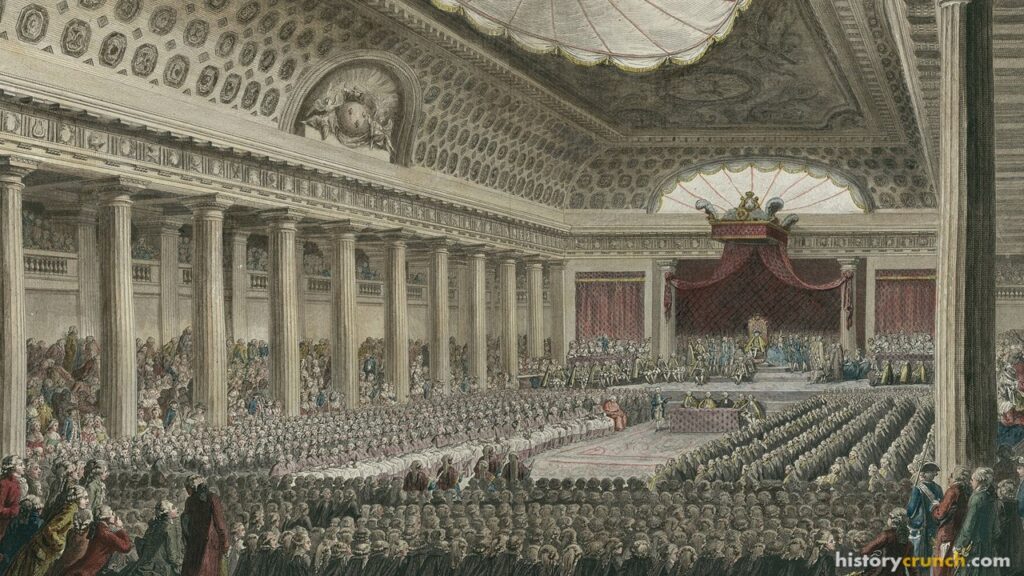
The opening of the Estates-General on May 5th, 1789 in Versailles.
Table of Contents
The Estates-General of 1789 was a meeting of the three estates within French society which included the clergy, nobility and the peasant classes. This article details the history and significance of the Estates-General of 1789 in relation to the French Revolution.
The Estates-General of 1789 was a meeting of representatives from France’s three social classes: the clergy (First Estate), the nobility (Second Estate), and the commoners (Third Estate). It was called by King Louis XVI to address the nation’s growing economic crisis, but quickly turned into a debate over representation and power. Frustrated by inequality, the Third Estate broke away to form the National Assembly, sparking the beginning of the French Revolution.
What causes pushed the Third Estate to break away and form the National Assembly during the French Revolution?
combines into one
The Third Estate declared itself the National Assembly on June 17th, 1789, breaking from the Estates-General and launching the French Revolution.
France's Debt Crisis France owed enormous debts after years of costly wars, including support for the American Revolution. King Louis XVI called the Estates-General in May 1789 specifically to find a way to fix the government's empty treasury.
Unfair Tax BurdenThe Third Estate paid most of France's taxes while the clergy and nobility held exemptions. Merchants, lawyers, laborers, and peasants carried this load with little say in how the government spent the money.
Voting by Order The traditional rule gave each estate one vote, so the First and Second Estates together could always outvote the Third Estate two to one, making the Third Estate's 578 delegates count for nothing.
Blocked ReformLouis XVI's ministers, including Finance Minister Jacques Necker, addressed only the financial crisis and kept to strict protocol, leaving the Third Estate with no path to change the voting rules through normal discussion.
Impasse at Versailles Talks broke down completely when neither side would give ground on the voting question. The Third Estate's delegates concluded that staying inside the Estates-General would never produce a fair result for the people they represented.
National Assembly DeclaredOn June 17th, 1789, the Third Estate's delegates voted to call themselves the National Assembly, claiming the right to speak for the French nation and to act with or without the other two estates.
Tap a stage to read its detail.
France's Debt CrisisFrance owed enormous debts after years of costly wars, including support for the American Revolution. King Louis XVI called the Estates-General in May 1789 specifically to find a way to fix the government's empty treasury.
Unfair Tax BurdenThe Third Estate paid most of France's taxes while the clergy and nobility held exemptions. Merchants, lawyers, laborers, and peasants carried this load with little say in how the government spent the money.
Voting by OrderThe traditional rule gave each estate one vote, so the First and Second Estates together could always outvote the Third Estate two to one, making the Third Estate's 578 delegates count for nothing.
Blocked ReformLouis XVI's ministers, including Finance Minister Jacques Necker, addressed only the financial crisis and kept to strict protocol, leaving the Third Estate with no path to change the voting rules through normal discussion.
Impasse at VersaillesTalks broke down completely when neither side would give ground on the voting question. The Third Estate's delegates concluded that staying inside the Estates-General would never produce a fair result for the people they represented.
National Assembly DeclaredOn June 17th, 1789, the Third Estate's delegates voted to call themselves the National Assembly, claiming the right to speak for the French nation and to act with or without the other two estates.
Estates System of France Before the French Revolution
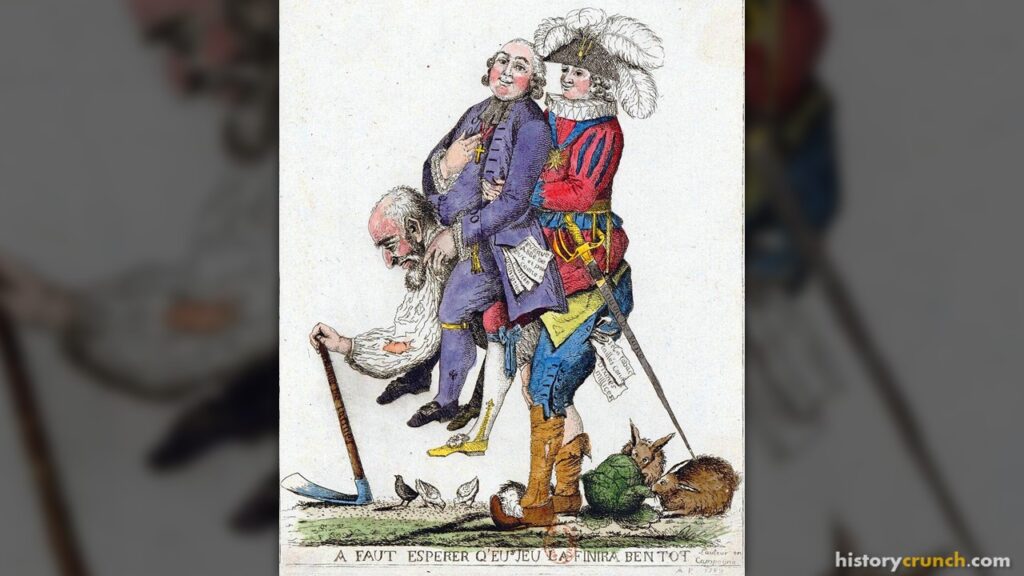
The Estates-General was a meeting of the three estates within French society which included the clergy, nobility and the peasant classes. The estate to which a person belonged was very important because it determined that person’s rights, obligations and status. Members of the Roman Catholic clergy, who numbered about 100,000, made up the first estate. The clergy included people such as: monks, nuns, parish priests and bishops. The church had many privileges in French society, including the collection of tithesOne-tenth of a person’s income formally taken in support of the church and clergy.. Tithes are one-tenth of a person’s income which is formally taken in support of the church and clergy. Also, the Church did not pay land taxes, even though it owned about 10% of the land and was very wealthy.
The second estate consisted of the French nobility, which numbered about 400,000 people. The nobles owned about 20% of the land and had many feudal privileges. For example, they were exemptOfficially excused from a duty or requirement that others must follow. from paying many taxes and were allowed to collect duesPayments that peasants were required to give to the nobility under the feudal system. from the peasants. The nobility occupied most of the powerful positions in the army, Church and government.
All other people in France, about 97% of the population, belonged to the third estate. This group included: merchants, lawyers, poor laborers, and ordinary peasants. They paid most of the taxes collected by the government but were generally looked down upon by the nobility. They resented the power of the Church and the nobility.
Caricature of the Third Estate carrying the First Estate (clergy) and the Second Estate (nobility) on its back. It highlights the Estates System of France before the French Revolution.
What privileges did the First Estate and Second Estate each hold before the French Revolution, and what did they share?
Tap an item to read its detail.
Collected TithesThe Church collected tithes from French people, taking roughly one-tenth of a person's income to fund the clergy and church operations.
Church Land HoldingsThe Church owned about 6 percent of French land, a significant share that it held without paying land taxes on it.
Spiritual Authority The clergy held formal religious authority over French society, performing baptisms, marriages, burials, and other sacraments that all French people depended on.
FeudalDues Collection Nobles could collect feudal dues, called seigneurial fees, directly from the peasants who worked on or lived near their land.
Military Command Nobles occupied most of the senior command positions in the French army, giving them control over military appointments and promotions.
Land Ownership The nobility owned about 20 percent of French land, far more than the clergy, and used that land to generate income and power.
Exempt from Land TaxBoth the First and Second Estates were exempt from paying land taxes to the royal government, leaving that burden almost entirely on the Third Estate.
Political Access Both estates held reserved seats and voting power in the Estates-General, giving them formal influence over royal decisions that the Third Estate could not match alone.
Escape from Common Law Members of both estates could claim legal privileges that set them apart from commoners, including access to separate courts and protection from certain penalties.
Collected TithesThe Church collected tithes from French people, taking roughly one-tenth of a person's income to fund the clergy and church operations.
Church Land HoldingsThe Church owned about 6 percent of French land, a significant share that it held without paying land taxes on it.
Spiritual AuthorityThe clergy held formal religious authority over French society, performing baptisms, marriages, burials, and other sacraments that all French people depended on.
FeudalDues CollectionNobles could collect feudal dues, called seigneurial fees, directly from the peasants who worked on or lived near their land.
Military CommandNobles occupied most of the senior command positions in the French army, giving them control over military appointments and promotions.
Land OwnershipThe nobility owned about 20 percent of French land, far more than the clergy, and used that land to generate income and power.
Exempt from Land TaxBoth the First and Second Estates were exempt from paying land taxes to the royal government, leaving that burden almost entirely on the Third Estate.
Political AccessBoth estates held reserved seats and voting power in the Estates-General, giving them formal influence over royal decisions that the Third Estate could not match alone.
Escape from Common LawMembers of both estates could claim legal privileges that set them apart from commoners, including access to separate courts and protection from certain penalties.
Estates-General of 1789 (French Revolution) – Summary
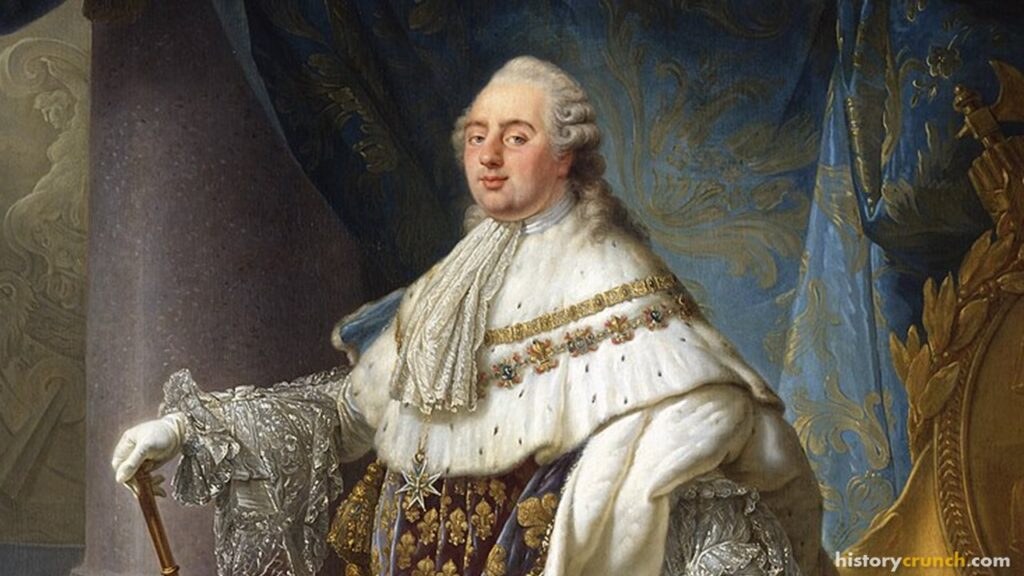
Louis XVI called the Estates-General in May of 1789, the first since 1614, in hopes of helping to advise him on the economic and agricultural crisis that France was facing in the years before the French Revolution. The Estates-General included 303 delegatesPeople chosen to represent a larger group at a formal meeting or assembly. for the clergy, 282 delegates for the nobility, and 578 delegates for the peasant class.
‘Louis XVI, King of France and Navarre, wearing his grand royal costume in 1779’ by Antoine-François Callet. (1778)
Immediately, the goal of the meeting was to deal with France’s financial crisis. Louis XVI’s ministers, including the popular Jacques Necker, spoke only about the financial situation facing the country and otherwise stayed with protocolThe official rules or customs for how a formal event or meeting is carried out. on how to carry out the Estates-General. Traditionally, voting would occur with each estate or order having one vote to represent the entire estate. This would mean that the first estate would receive one vote, the second estate would receive one vote and the third estate would receive one vote. However, this angered the representatives of the third estate who preferred a system in which each representative would receive one vote.
The third estate feared that if the representatives voted by order then the clergy and nobility would overrule them on every vote and the third estate would have no power in the meeting. At the same time, the first and second estates feared losing some of their privilege to the third estate if the voting was changed such that each representative voted. Since the third estate nearly doubled the representatives of the other two estates, it was feared that the third estate could overrule the other two on important matters. This is exactly what the third estate was counting on. Representatives of the third estate also believed that some poorer priests of the first estate would vote alongside them, considering their financial position.
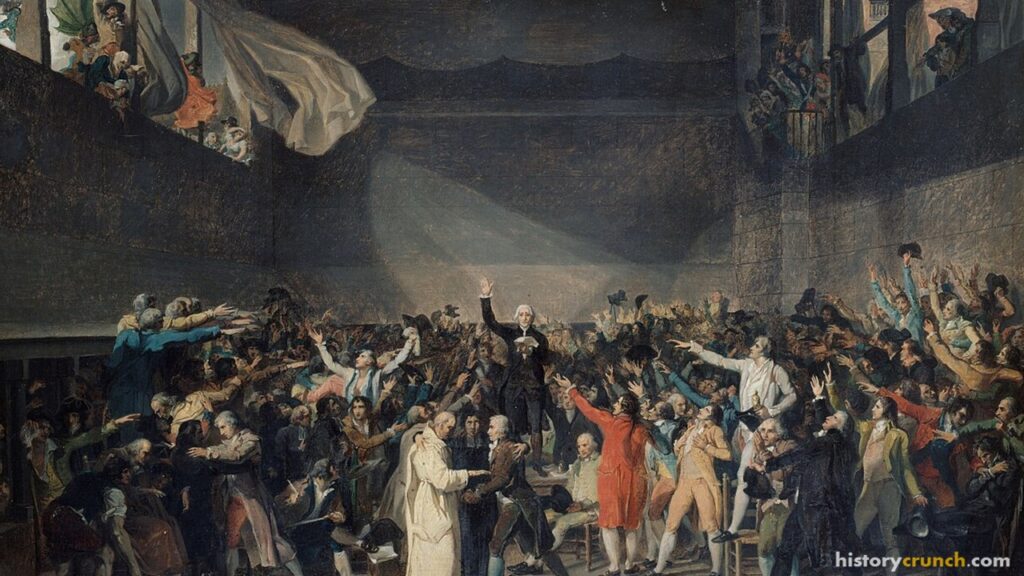
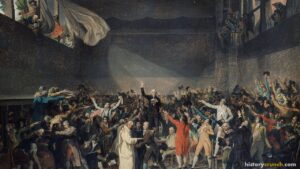
In the end, the Estates-General reached an impasseA situation where no agreement can be reached and progress is completely blocked. in which they could not come to agreement about how to carry out the voting of the meeting. In response, the third estate carried out their own discussions and established themselves as the National Assembly, and sought to work with or without the other two estates. Louis XVI tried to halt the actions of the third estate by commanding an end to the Estates-General and forcing each estate to separate. Famously, the National AssemblyThe separate governing body formed by the Third Estate after breaking away from the Estates-General in 1789. responded by moving their discussions to the nearby tennis court where they took the “Tennis Court Oath”. The Estates-General had failed and the first steps of the French Revolution had been taken.
‘Le Serment du Jeu de paume’ by Jacques-Louis David (1790). It shows the events of the Tennis Court Oath in the French Revolution.
Why did the Third Estate want each delegate to have one vote in the Estates-General of 1789?
Tap an option.
ExplanationThe Third Estate had 578 delegates compared to 303 for the clergy and 282 for the nobility. Voting by delegate rather than by estate meant the Third Estate could outvote the other two, especially if some poorer priests joined their side. Voting by estate would give each group one vote, leaving the Third Estate permanently outnumbered two to one.
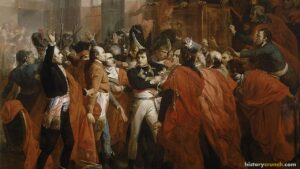
Ten years in which France destroyed its monarchy, tried to build a republic, and ended under Napoleon. The timeline runs from the Estates General to the coup that closed the revolution.
One-tenth of a person’s income formally taken in support of the church and clergy.
Exempt
Officially excused from a duty or requirement that others must follow.
Dues
Payments that peasants were required to give to the nobility under the feudal system.
Delegates
People chosen to represent a larger group at a formal meeting or assembly.
Protocol
The official rules or customs for how a formal event or meeting is carried out.
Impasse
A situation where no agreement can be reached and progress is completely blocked.
National Assembly
The separate governing body formed by the Third Estate after breaking away from the Estates-General in 1789.
Frequently Asked Questions
What was the Estates-General of 1789?
The Estates-General of 1789 was a meeting of representatives from France’s three social classes. These were the clergy, the nobility, and the commoners. King Louis XVI called it to deal with a serious money crisis facing the country.
Why did King Louis XVI call the Estates-General?
Louis XVI called the Estates-General in May of 1789 to get advice on France’s financial and farming crisis. It was the first meeting of its kind since 1614. His ministers, including Jacques Necker, focused mainly on the money problems.
What were the three estates in French society?
The three estates were the clergy, the nobility, and everyone else. The First Estate was the clergy, about 100,000 people. The Second Estate was the nobility, about 400,000 people. The Third Estate held about 97% of the population and paid most of the taxes.
Why did the Third Estate demand a change in voting?
The Third Estate wanted each representative to have one vote instead of each estate getting one vote. Under the old system, the clergy and nobility could always outvote the commoners two to one. Since the Third Estate had far more delegates, voting by head would give them real power.
How did the Estates-General lead to the French Revolution?
The meeting stalled because the estates could not agree on how to vote. In response, the Third Estate broke away and formed the National Assembly. When the king tried to stop them, they took the Tennis Court Oath, which marked the first steps of the revolution.
Cite This Article
To cite this article as a source, use one of the formats below.
MLA: Beck, Elias. “Estates-General of 1789 (French Revolution): A Detailed Summary.” HistoryCrunch, 22 September 2026, https://historycrunch.com/estates-general-of-1789-french-revolution/.
APA: Beck, E. (2026). Estates-General of 1789 (French Revolution): A Detailed Summary. HistoryCrunch. https://historycrunch.com/estates-general-of-1789-french-revolution/
Chicago: Beck, Elias. “Estates-General of 1789 (French Revolution): A Detailed Summary.” HistoryCrunch. September 22, 2026. https://historycrunch.com/estates-general-of-1789-french-revolution/
Sources
William Doyle, The Oxford History of the French Revolution.
Jeremy D. Popkin, A New World Begins: The History of the French Revolution.
Fordham Modern History Sourcebook
Facebook
X
Reddit
Pinterest
LinkedIn
We strive to produce educational content that is accurate, engaging and appropriate for all learners. If you notice any issues with our content, please contact us and let us know!
AUTHOR INFORMATION
Elias Beck
I'm a passionate history and geography teacher with over 15 years of experience working with students in the middle and high school years. I have an Education Degree with a focus in World History. I have been writing articles for History Crunch since 2015 and love the challenge of creating historical content for young learners!
France played a decisive role in the American Revolution, providing weapons, money, soldiers, and naval power that helped the thirteen colonies defeat Britain and secure their independence.
There were several main causes of the French Revolution, including: the Age of Enlightenment, the history of the Estates System, the absolute monarchy of Louis XVI, weather conditions before 1789 and economic crisis. This article details the five main causes of the French Revolution.
Charlotte Corday was a prominent figure in the events of the French Revolution and was a key supporter of the Girondins. She became famous for assassinating Jean-Paul Marat in 1793. This article details the life and significance of Charlotte Corday, especially in relation to the French Revolution.
The French Revolution was one of the most significant events in history, and contributed to the foundation of modern democratic values. This article details the history and significance of the French Revolution.
The Tennis Court Oath was one of the most significant events of the French Revolution. This article details the history and significance of the Tennis Court Oath.
The Directory was controlled by five ‘directors’ who oversaw the economic and political aspects of French society during the later stages of the French Revolution. This article details the history and significance of the Directory.

 FactsthatCrunch