South Korea after the Korean War is one of the most remarkable stories of national recovery in modern history, since a country left in ruins in 1953 grew into a wealthy, industrialized democracy within a few decades. When the fighting stopped, South Korea was one of the poorest places on Earth, its cities flattened and its people dependent on foreign aid to survive. Over the following years, the nation moved through poverty, dictatorship, and political struggle before achieving rapid economic growth and, eventually, democratic government.
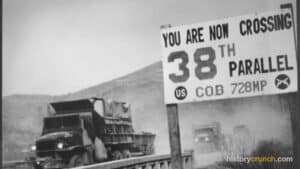
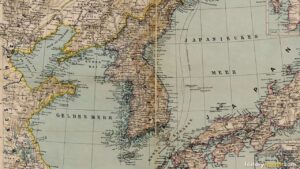
South Korea, officially called the Republic of Korea, is the southern half of the Korean Peninsula in East Asia. It was created in 1948 when the peninsula was divided along the 38th parallelThe line of latitude that divided the Korean Peninsula into an American-backed south and a Soviet-backed north., a line of latitude that separated the American-backed south from the Soviet-backed north. After the Korean War ended in 1953, this line became a fortified border, and South Korea began the long process of rebuilding as a separate nation.
 FactsthatCrunch
What Was the Cold War in Asia?
To understand South Korea after the Korean War, it helps to understand the Cold War, which shaped nearly every part of the country’s story. The Cold War was a long period of tension and rivalry between the United States and the Soviet Union that lasted from the end of World War II until the early 1990s. Rather than fighting each other directly, the two superpowers competed for influence around the world, backing opposing governments in places such as Korea, Vietnam, and Cuba.
In East Asia, this rivalry divided the Korean Peninsula into two hostile states. The United States supported the capitalist and anti-communist government in the south, while the Soviet Union and later China supported the communist government in the north. The Korean War, fought from 1950 to 1953, was the first major armed conflict of the Cold War, and its outcome left Korea permanently split. Because of this, South Korea’s early years were defined by the constant threat of another war and by heavy reliance on American military and economic support.
FactsthatCrunchHow Did the Korean War End?
The Korean War did not end with a clear victory for either side. After three years of brutal fighting, the front line had returned to roughly where the war began, near the 38th parallel. Rather than a peace treaty, the two sides signed an armisticeAn agreement between enemies to stop fighting, but not a full peace treaty ending the war., which is an agreement to stop fighting, on July 27th, 1953.
Because the armistice was only a ceasefire and not a formal peace treaty, the war technically never ended. A heavily guarded strip of land called the Demilitarized ZoneA heavily guarded strip of land along the border between North and South Korea keeping the two sides apart., or DMZ, was created along the border to keep the two sides apart. The DMZ still exists today and remains one of the most tightly guarded borders in the world. As a result, South Korea has lived for more than seventy years in a state of uneasy truce with its northern neighbor.
FactsthatCrunchThe Korean War ended with a formal peace treaty signed by both sides in 1953.
How Poor Was South Korea After the War?
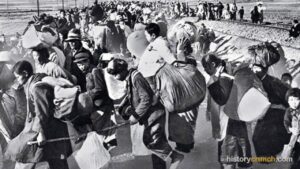
South Korea emerged from the Korean War as one of the poorest countries on the planet. The war had killed millions of people across the peninsula and destroyed homes, factories, roads, and railways. Cities such as the capital, Seoul, had been fought over and changed hands several times, leaving large areas in rubble.
In the years right after the war, most South Koreans worked in farming, and the country had very little industry. It also had few natural resources and a small home market, which made rebuilding difficult. To survive, South Korea depended heavily on money and supplies sent by the United States. In fact, foreign aid paid for much of the government’s budget and kept the economy running through the 1950s.
FactsthatCrunchWhat was life like in South Korea right after the Korean War ended in 1953?
When the armistice was signed, millions of South Koreans had lost their homes, and cities such as Seoul had been reduced to rubble after changing hands multiple times during the fighting. Most people depended on foreign aid from the United States just to get food and basic supplies, since the country had almost no working industry left. Farming was the main way most families survived, but with factories, roads, and railways destroyed, rebuilding daily life was an extremely slow and difficult process.
Who Was Syngman Rhee?
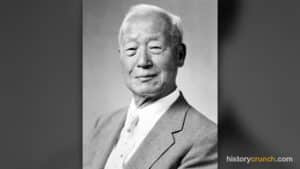
The first president of South Korea was Syngman Rhee, a strongly anti-communist leader who had helped found the country in 1948. Rhee led the nation through the Korean War and remained in power afterward. While he was firmly opposed to communism, his government became known for corruption and for limiting political freedom.
Over time, Rhee took steps to keep himself in office. More specifically, he changed the constitution and used force against political opponents in order to stay in power. Under his rule, the economy grew slowly and many South Koreans grew frustrated with poverty, unfairness, and dishonest elections. This growing anger would eventually bring his time in office to a dramatic end.
FactsthatCrunch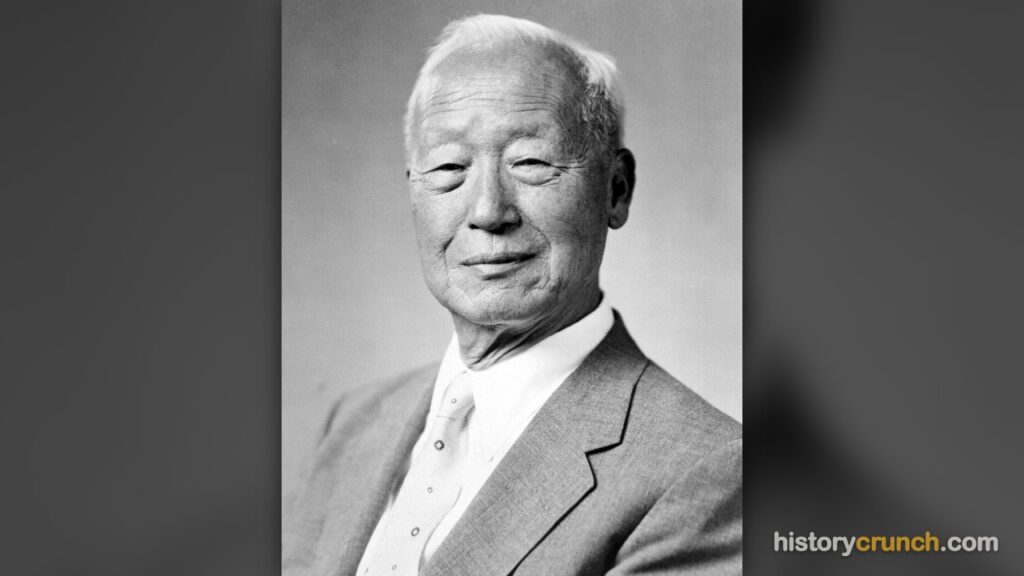
What Was the April Revolution of 1960?
The April Revolution was a wave of mass protests in 1960 that forced Syngman Rhee from power. The unrest began after an election in March of 1960 that many South Koreans believed had been rigged in Rhee’s favor. Anger grew quickly, especially after the body of a student who had been killed during earlier protests was discovered.
Students and workers led huge demonstrations in the streets, and police opened fire on some of the crowds, killing many protesters. Faced with growing public fury, Rhee resigned on April 26th, 1960, and later went into exile. His departure ended the First Republic of South Korea. A new government, known as the Second Republic, was formed, but it was weak and struggled to control rising prices, food shortages, and continued unrest.
In what order did these April Revolution of 1960 events happen, from the rigged election to Rhee's exile?
How Did Park Chung-hee Come to Power?
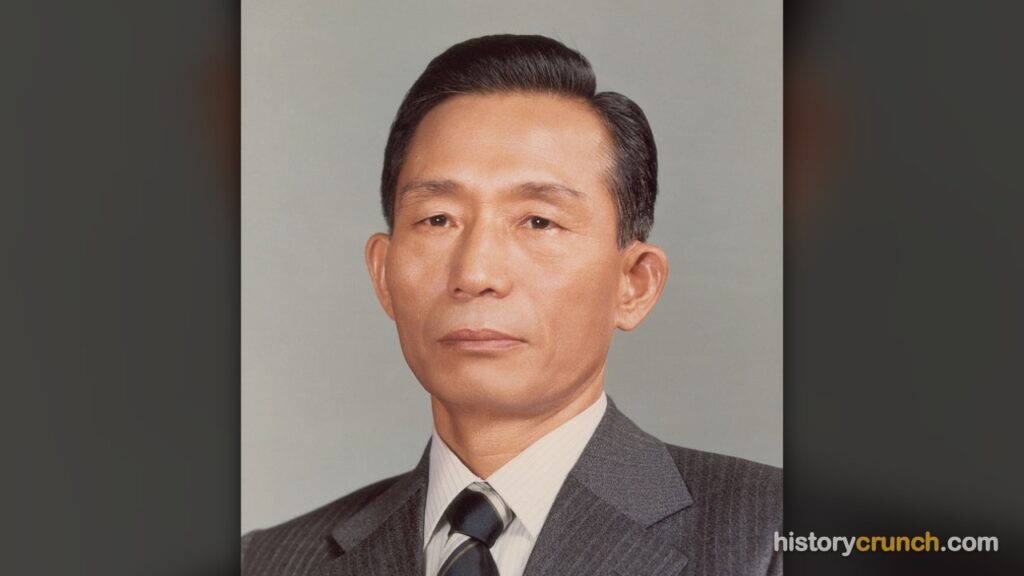
The weak Second Republic did not last long. In May of 1961, a group of military officers led by General Park Chung-hee seized control of the government in a coupThe sudden and often forceful takeover of a government, usually by military officers., which is the sudden and often forceful takeover of a government. Park then ruled South Korea as its leader for the next eighteen years.
Park’s rule was harsh and authoritarianA style of rule in which a leader holds tight control and does not allow much political freedom., meaning he held tight control and did not allow much political freedom. He jailed opponents, censored the press, and cracked down on protests and labor movements. At the same time, he made economic growth the central goal of his government. In reality, his combination of firm control and careful planning would help transform the South Korean economy.
FactsthatCrunchA coup is the sudden, forceful takeover of a government, usually carried out by a military group or small faction without a public vote. The group seizes power quickly and removes the existing leadership by force or threat of force. A coup skips elections and legal processes entirely.
In May 1961, General Park Chung-hee led a military coup that removed South Korea's elected government and placed the armed forces in control of the country.
What Was the Miracle on the Han River?
The Miracle on the Han River is the name given to South Korea’s rapid economic growth in the decades after the Korean War. The Han River flows through Seoul, and the phrase describes how the country changed from a poor, war-torn land into a modern industrial power. Beginning in the 1960s, South Korea grew at an extraordinary pace.
Under Park Chung-hee, the government directed the economy toward building factories and selling goods to other countries, a strategy known as export-led growthAn economic strategy focused on building factories and selling goods to other countries to make a nation richer.. Large family-owned companies, later called chaebolLarge family-owned South Korean companies that grew into giant businesses producing ships, cars, steel, and electronics., grew into giant businesses that produced ships, cars, steel, and electronics. For instance, companies that started during this era eventually became world-famous brands. American aid, low wages, and long working hours all helped fuel this growth, though these gains also came with real hardships for many workers.
Park was assassinated in 1979, which led to another period of political turmoil. Military leaders held power for several more years, and protests against military rule continued. Finally, in the late 1980s, growing pressure from students, workers, and ordinary citizens pushed South Korea to hold free elections and become a true democracy. As a result, the country combined its economic success with genuine political freedom.
FactsthatCrunchWhat did South Korea's export-led growth after the Korean War depend on most heavily?
Significance of South Korea After the Korean War
South Korea after the Korean War is significant because it shows how a nation can rebuild itself from near-total destruction. In just a few decades, the country moved from being one of the poorest places on Earth to being one of the world’s leading economies. This transformation stands as one of the most dramatic recovery stories of the twentieth century.
The story is also important because it shows both the costs and the results of rapid change. South Korea’s growth came under harsh military governments that limited freedom, yet the same nation later became a strong democracy through the efforts of its own people. In addition, the divided peninsula remains a major issue in world affairs, since North and South Korea are still technically at war. For these reasons, the history of South Korea after the Korean War remains central to understanding modern East Asia and the lasting effects of the Cold War.
FactsthatCrunchSouth Korea's rapid economic growth under military rule after the Korean War brought real gains and serious costs at the same time.
Korean War timeline · 1950 – 1953
Key Vocabulary
38th parallel
Armistice
Demilitarized Zone
Coup
Export-led growth
Chaebol
Authoritarian
Frequently Asked Questions
Did the Korean War officially end?
No, the Korean War never officially ended with a peace treaty. The fighting stopped in 1953 with an armistice, which is only a ceasefire, so North and South Korea remain technically at war today. The two sides are separated by the Demilitarized Zone, and no formal peace agreement has ever been signed.
Why was South Korea so poor after the war?
South Korea was poor because the war destroyed much of its cities, factories, and farmland. Most people worked in agriculture, and the country had few natural resources to build an economy. On top of this, the peninsula had been split so that many industries and power plants ended up in the north, leaving the south with even less to work with.
Who were the main leaders of South Korea after the war?
The two most important early leaders were Syngman Rhee and Park Chung-hee. Rhee served as the first president until protests forced him out in 1960, and Park took power in a military coup in 1961 and led the country until 1979. Both men were strongly anti-communist, but each governed in ways that limited democracy.
How did South Korea become rich so quickly?
South Korea grew rich by focusing its economy on building factories and exporting products to other countries. The government worked closely with large companies to produce goods such as steel, ships, cars, and electronics. This plan, combined with a hardworking population and foreign aid, allowed the country to grow at a very fast pace starting in the 1960s.
When did South Korea become a democracy?
South Korea became a full democracy in the late 1980s after years of protests against military rule. Large demonstrations pushed the government to allow free and direct presidential elections in 1987. Since then, South Korea has held regular democratic elections and is now widely seen as one of Asia’s strongest democracies.
Cite This Article
To cite this article as a source, use one of the formats below.
MLA: Millar, B. “South Korea After the Korean War: A Detailed Summary.” HistoryCrunch, 15 August 2026, https://historycrunch.com/south-korea-after-the-korean-war/.
APA: Millar, B. (2026). South Korea After the Korean War: A Detailed Summary. HistoryCrunch. https://historycrunch.com/south-korea-after-the-korean-war/
Chicago: Millar, B. “South Korea After the Korean War: A Detailed Summary.” HistoryCrunch. August 15, 2026. https://historycrunch.com/south-korea-after-the-korean-war/
Sources
- Wilson Center Digital Archive
- Sheila Miyoshi Jager, Brothers at War: The Unending Conflict in Korea.