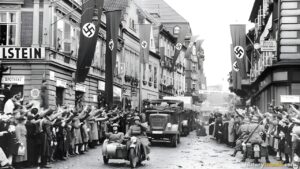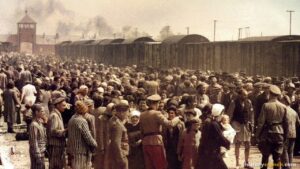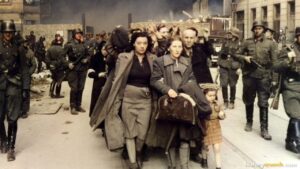
Nazi Germany was one of the most important and destructive regimes of the 20th century, and its actions reshaped the modern world. The term refers to the country of Germany during the 1930s and 1940s under the dictatorship of Adolf Hitler and the Nazi Party. During this period, the regime carried out two of the most significant events in modern history: World War II and the Holocaust. Studying the significance of Nazi Germany helps explain how a democracy collapsed into a dictatorship, how a single government pursued mass murder as official policy, and why the world changed so dramatically after 1945.
Nazi Germany was a totalitarian state, which means a form of government where a single party controls nearly every part of public and private life and allows no political opposition. In such a system, the leader and ruling party attempt to control the economy, the schools, the media, the courts, and even the beliefs of ordinary citizens. Under Hitler and the Nazi Party, Germany became a one-party dictatorship that used propaganda, censorship, and terror to force obedience across all of German society.
What Was the Interwar Period in Europe?
Nazi Germany belongs to a period historians call the interwar period, which are the roughly two decades between the end of World War I in 1918 and the start of World War II in 1939. This era began with the defeat of Germany in the First World War and the harsh peace settlement known as the Treaty of Versailles. The treaty forced Germany to accept blame for the war, pay large reparations, and give up land and military strength. Many Germans felt humiliated and angry, and that anger became a powerful force in German politics.
After the war, Germany became a democracy known as the Weimar Republic. In fact, this new government struggled from the start because it was blamed for signing the Treaty of Versailles and because it faced economic crisis after economic crisis. More specifically, the Great Depression of the 1930s devastated Germany, causing mass unemployment, poverty, and political extremism. The economic crisis created by the Great Depression drastically weakened the Weimar Republic, which was the German government of the time, and led to further hardships in Germany including mass unemployment, poverty, and political extremism. These conditions created the opportunity for extreme political groups, including the Nazi Party, to gain support.
How Did the Nazi Party Come to Power?
The Nazi Party grew out of a small political group that Adolf Hitler joined shortly after World War I. The Nazi Party, officially known as the National Socialist German Workers’ Party, was a far-right political group in Germany that was led by Adolf Hitler, and it rose to power in the 1920s and 1930s by promoting extreme nationalism, anti-Semitism, and the idea of Aryan racial superiority. Hitler became known as a powerful public speaker who blamed Germany’s problems on Jewish people, communists, and the Treaty of Versailles.
In 1923, Hitler and the Nazis tried to seize power by force. In November of 1923 Hitler and the SA led the Beer Hall Putsch, which was the Nazi Party’s attempt to overrun the German government and assume control for itself, but the Beer Hall Putsch was a failure and Hitler was put on trial for treason. While in prison, Hitler wrote his book Mein Kampf, which laid out his ideology. Hitler’s ideology at the time centered on extreme German nationalism, anti-Semitism, anti-communism and Lebensraum (Living Space).
After his release, Hitler changed strategy and pursued power through elections instead of violence. As the Great Depression deepened, support for the Nazi Party grew quickly. By 1932, the Nazi Party had 800,000 members and had become the largest party in the Reichstag, which was the German parliament. On January 30th, 1933, Hitler was appointed Chancellor of Germany, and within months he transformed the country from a democracy into a dictatorship.
Hitler’s control became total the following year. President Paul von Hindenburg died on August 2nd, 1934, and rather than holding new presidential elections, Hitler’s cabinet passed a law proclaiming the presidency dormant and transferred the role and powers of the head of state to Hitler as Führer und Reichskanzler, meaning leader and chancellor, so that as head of state Hitler now became supreme commander of the armed forces. From this point on, Hitler ruled Germany as an absolute dictator.
How Did Nazi Germany Control the German People?
Once in power, the Nazi Party used many tactics to keep control over daily life. The Nazi Party used several different tactics to maintain control over the German people, including censorship, propaganda, terror and repression, racial ideology and secret police. These methods worked together to silence opposition and to make Nazi ideas seem normal and acceptable.
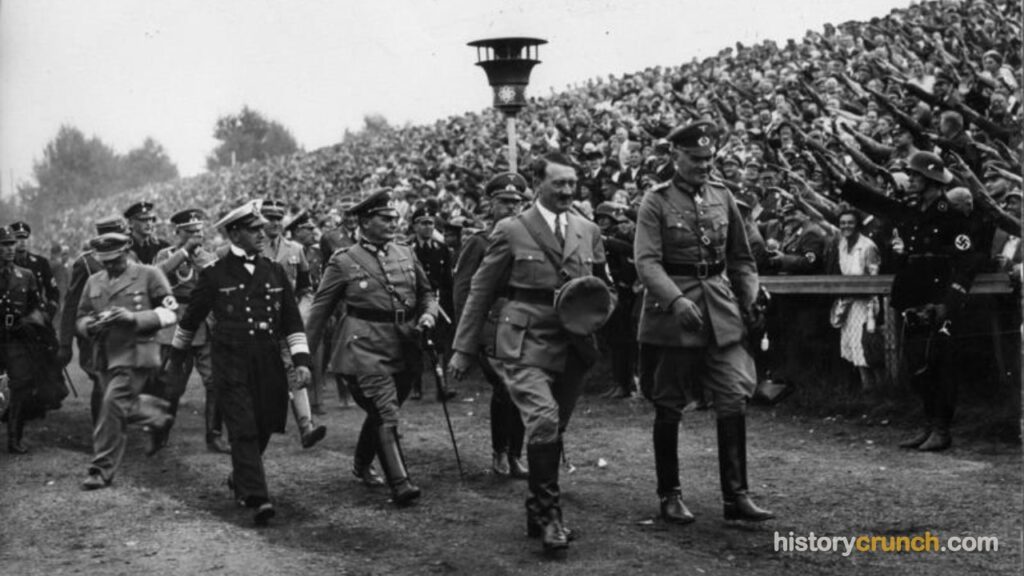
Propaganda played a central role in Nazi control. In fact, the regime used posters, films, radio, and newspapers to spread its message and to build loyalty to Hitler. This included control of newspapers, magazines, books, art, theater, music, movies, and radio. The government also targeted young people directly, creating groups such as the Hitler Youth to raise children with Nazi values. New textbooks taught students to obey the Nazi Party, love Hitler, and hate Jews.
Fear and violence backed up this control. As stated above, the regime used secret police and terror to crush anyone who opposed it. Following a power struggle between the SA leadership and Hitler in 1934, Himmler was promoted within the Nazi Party and soon oversaw much of the police forces in Germany including the Gestapo, which were the Nazi’s secret police. As a result, ordinary Germans learned that speaking out against the government could lead to arrest, imprisonment, or worse.
Why Did Nazi Germany Start World War II?
A central goal of Nazi Germany was to expand its territory. In his book Mein Kampf, Hitler wrote about his desire for more living space, or lebensraum, for the German people. It was Hitler’s belief that Germany needed more land in order to carry out his ambitions and he intended to gain this land from the countries that were to the east of Germany, such as Poland and the Soviet Union. To reach this goal, Hitler carried out a series of aggressive actions that broke the terms of the Treaty of Versailles.
These actions escalated tensions across Europe. For instance, Nazi Germany remilitarized the Rhineland, annexed Austria in 1938, and occupied Czechoslovakia in 1939. Britain and France responded with a policy of appeasement, which meant giving in to some of Hitler’s demands in the hope of avoiding another war. Hitler became convinced that the Western democracies of Britain and France would not stop him, and historians have argued that the failure of appeasement gave Hitler and the Nazi regime confidence to pursue more aggressive territorial expansions.
The turning point came in 1939. The Nazi Germany invasion of Poland began on September 1st, 1939 and is considered to be the beginning of World War II. In response, Britain and France declared war on Germany, and Europe was plunged into a devastating conflict just two decades after the end of World War I. The invasion also introduced a new style of fast, mechanized warfare. The Nazi Germany invasion of Poland is considered to be an example of blitzkrieg, which means lightning war.
What Was the Role of Nazi Germany in the Holocaust?
Perhaps the most tragic significance of Nazi Germany lies in the Holocaust, the systematic murder of millions of people. The Nazi regime’s racist ideology divided people into groups and targeted those it considered inferior. In his book Mein Kampf, Adolf Hitler promoted the idea that Germany should actively seek to create a master race which he referred to as Aryans, who he believed were northern Europeans with certain genetic traits, and he believed that Aryan genetic traits should be promoted and that all others should be restricted or removed from society.
To carry out this ideology, the Nazis practiced eugenics and later mass murder. Eugenics in Nazi Germany played a central role in the Nazi regime’s racist ideology that led to the Holocaust, and Nazi eugenics sought to eliminate individuals deemed genetically unfit or inferior, including Jewish people, disabled people, and others with hereditary illnesses. The regime built concentration camps and killing centers where these crimes were committed on an enormous scale. As head of the SS, Himmler oversaw the concentration camps, and played a major role in organizing mass murder, forced labor, and other atrocities.
The scale of the killing was staggering. Hitler carried out the Holocaust, which led to the death of over 11 million people. This included six million Jewish people, along with millions of others such as disabled people, Roma, political prisoners, and prisoners of war. The Holocaust remains one of the most important and studied genocides in human history.
Significance of Nazi Germany
The significance of Nazi Germany can be understood in several ways. First, it stands as a powerful warning about how quickly a democracy can collapse into a dictatorship. Life in Nazi Germany was significant because it showed how a dictatorship can reshape an entire society, as the regime tried to control schools, youth groups, media, law, religion, and culture, while also using fear and violence to silence opposition. The story of the Weimar Republic’s fall shows that even a modern nation can lose its freedoms during times of crisis.
Second, Nazi Germany was responsible for the deadliest war in human history. The Nazi Party was the dominant force in Germany throughout the 1930s and 1940s, and was responsible for events such as World War II and the Holocaust. World War II led to the deaths of tens of millions of people and reshaped the map and politics of the entire world.
Third, the crimes of Nazi Germany changed how the world thinks about human rights. In reality, the horror of the Holocaust helped inspire new international efforts to protect people from genocide and persecution after 1945. Historians have identified several reasons for the overall significance of the Holocaust, including its importance as an example of anti-Semitism and prejudice, its importance as a genocide, and its role in the development of human rights initiatives after 1945. For these reasons, the study of Nazi Germany remains one of the most important subjects in modern history.
Frequently Asked Questions
What Years Was Nazi Germany?
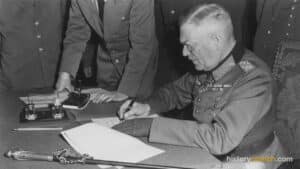
Nazi Germany existed from 1933 to 1945, beginning when Hitler became Chancellor and ending with Germany’s defeat in World War II. This twelve-year period is sometimes called the Third Reich, a name the Nazis used to describe their empire. The regime came to a complete end in May of 1945 when Germany surrendered to the Allied powers.
Why Is Nazi Germany So Important in History?
Nazi Germany is important because it caused World War II and the Holocaust, two events that shaped the entire 20th century. It also serves as a lasting example of how dangerous dictatorship, racism, and propaganda can become. Studying the period helps people recognize the warning signs of extremism today.
Who Ruled Nazi Germany?
Adolf Hitler ruled Nazi Germany as its dictator, holding the title of Führer, which means leader. He led the Nazi Party and controlled the government, the military, and nearly every part of German society. Powerful figures such as Heinrich Himmler and Joseph Goebbels served under him and helped run the regime.
How Did Nazi Germany Fall?
Nazi Germany fell after it was defeated by the Allied powers in World War II. The Soviet Union advanced from the east while Britain, the United States, and their allies advanced from the west, closing in on Germany from both sides. Hitler died at the end of the war, and Germany surrendered in May of 1945.
What Is the Difference Between Nazi Germany and the Weimar Republic?
The Weimar Republic was the democratic government of Germany from 1919 to 1933, while Nazi Germany was the dictatorship that replaced it. The Weimar Republic allowed elections, free speech, and multiple political parties. Once Hitler took power, he ended democracy and turned Germany into a one-party state ruled by the Nazi Party.
Cite This Article
To cite this article as a source, use one of the formats below.
MLA: Millar, B. “Significance of Nazi Germany: A Detailed Summary.” HistoryCrunch, 15 August 2026, https://historycrunch.com/significance-of-nazi-germany/.
APA: Millar, B. (2026). Significance of Nazi Germany: A Detailed Summary. HistoryCrunch. https://historycrunch.com/significance-of-nazi-germany/
Chicago: Millar, B. “Significance of Nazi Germany: A Detailed Summary.” HistoryCrunch. August 15, 2026. https://historycrunch.com/significance-of-nazi-germany/
Sources
- Ian Kershaw, Hitler (biography).
- Michael Burleigh, The Third Reich: A New History.