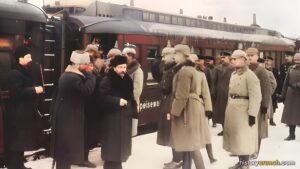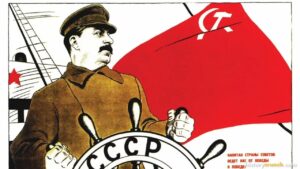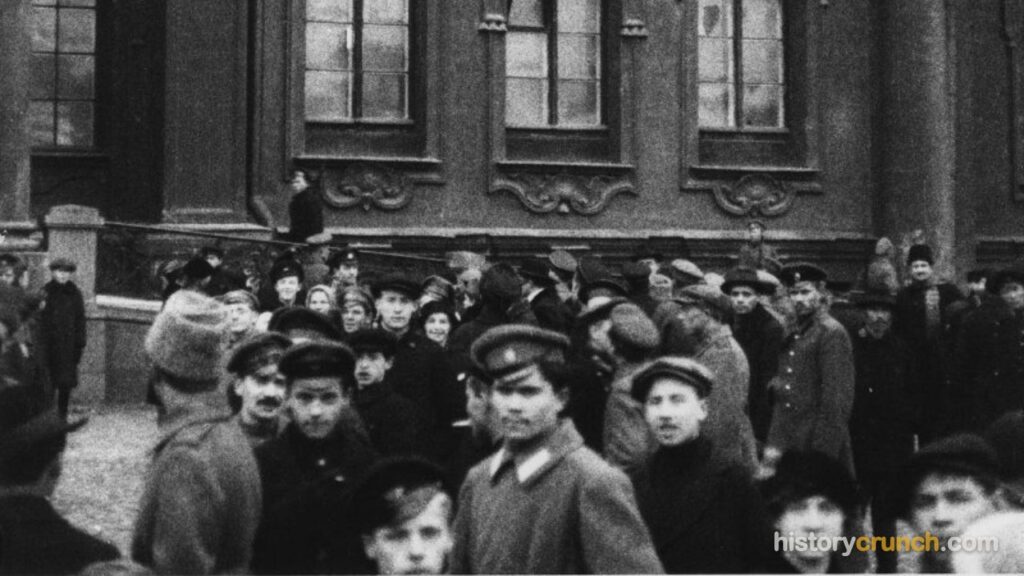
The Russian Revolution of 1917 was one of the most significant events of the 20th century, and its impacts stretched far beyond the borders of Russia. The revolution ended centuries of rule by the Romanov family, brought down the monarchy of Tsar Nicholas II, and led to the creation of the world’s first communist state. In the years that followed, the effects of these events reshaped Russian society, changed the outcome of World War I, and helped set the stage for major global events such as World War II and the Cold War.
The term “impacts of the Russian Revolution” refers to the political, social, and economic changes that resulted from the events of 1917 and the years that followed. These impacts include the end of the Russian monarchy, the rise of the Bolshevik government, the formation of the Soviet Union, and the spread of socialist and communist ideas around the world. Understanding these effects helps explain much of the history of the 20th century.
What Was the Russian Revolution of 1917?
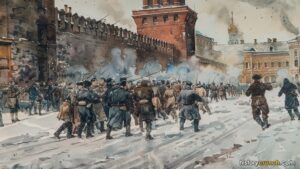
The Russian Revolution of 1917 was actually a series of major events that unfolded across a single year. It began with the February Revolution, when food shortages and anger over World War I pushed workers, soldiers, and women into the streets of Petrograd, which is now called St. Petersburg. The protests demanded bread, peace, and an end to autocracy, which is a system in which one ruler holds total power. As the unrest grew, Tsar Nicholas II was forced to give up his throne, ending centuries of Romanov rule.
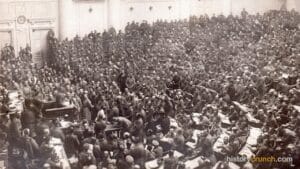
After the tsar’s abdication, a temporary government known as the Provisional Government took control of Russia. However, this new government struggled to solve the country’s problems. In fact, it kept Russia in World War I and failed to address land reform and social inequality, which left many Russians frustrated. This created an opening for a radical group known as the Bolsheviks, led by Vladimir Lenin.
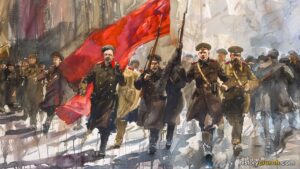
In October of 1917, the Bolsheviks staged a takeover in an event known as the October Revolution, which is also called the Bolshevik Revolution. They overthrew the Provisional Government and set up a new government based on the ideas of communism, a system in which property and wealth are meant to be shared by the community rather than owned privately. This second revolution marked the high point of the overall revolutionary process that had begun earlier that same year.
How Did the Revolution End the Russian Monarchy?
One of the most immediate impacts of the Russian Revolution was the complete collapse of the Russian monarchy. The Romanov family had ruled Russia for more than 300 years, and Tsar Nicholas II held nearly unlimited power before 1917. When he abdicated during the February Revolution, this long tradition of tsarist rule came to a sudden end.
The fate of the royal family showed just how complete this change was. After giving up power, Nicholas II and his family were held prisoner and later moved to the city of Yekaterinburg. In July of 1918, the former tsar and his entire family were killed to prevent them from being rescued by anti-Bolshevik forces. This event removed any chance that the monarchy might return and firmly ended the old order in Russia.
What Was the Russian Civil War?
Another major impact of the Russian Revolution was the outbreak of the Russian Civil War, which lasted from 1918 to 1922. The conflict was a struggle between the Bolshevik forces, known as the Reds, and a wide coalition of anti-Bolshevik forces, known as the Whites. The White forces included monarchists, conservatives, liberals, and other groups united mainly by their opposition to Bolshevik rule.
The civil war brought immense suffering to Russia. In reality, the fighting resulted in millions of casualties and led to widespread famine across the country. Foreign powers also became involved, sending troops to Russia and adding an international dimension to the struggle. However, after several years of brutal fighting, the Bolsheviks emerged victorious and secured control over the former Russian Empire.
The civil war had lasting effects on the shape of the new state. More specifically, it contributed to the development of a highly centralized and authoritarian government in Russia. The experience of fighting a desperate war also shaped Soviet attitudes toward the outside world for decades to come.
How Did the Revolution Create the Soviet Union?
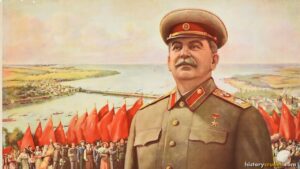
Perhaps the most important long-term impact of the Russian Revolution was the creation of the Soviet Union. After the Bolsheviks won the civil war, they organized the lands of the former Russian Empire into a new country known as the Union of Soviet Socialist Republics, or the USSR. This new state was officially formed in 1922 and became the world’s first communist nation.
The Soviet Union was made up of many different republics, including Russia, Ukraine, Belarus, Kazakhstan, and several others across Europe and Central Asia. In fact, it grew to occupy nearly one-sixth of the Earth’s land surface, making it one of the largest countries in the world. The government controlled the economy, industry, and farmland according to communist principles, which was a dramatic change from the way Russia had been run under the tsars.
Early on, the Soviet economy was badly damaged by years of war and revolution. As a result, Lenin introduced a plan called the New Economic Policy, which allowed some limited private business to help the country recover. This showed that even the leaders of the revolution had to make practical compromises to keep the new state alive.
How Did the Revolution Affect World War I?
The Russian Revolution also had a direct impact on the events of World War I, which was still being fought in 1917. The Bolsheviks had promised to bring peace, and once in power they moved to pull Russia out of the war. To do this, they signed a peace treaty with Germany known as the Treaty of Brest-Litovsk.
Under this treaty, Russia gave up large amounts of territory in order to end its involvement in the fighting. This allowed Germany to shift many of its soldiers from the Eastern Front to the Western Front in France. As stated above, the revolution therefore changed the course of the war, even though Germany would eventually be defeated by the Allies in 1918.
How Did the Revolution Spread Communism Around the World?
Beyond Russia, the Russian Revolution inspired revolutionary movements across the globe and contributed to the rise of socialism and communism. The success of the Bolsheviks showed workers and activists in other countries that a communist government was possible. As a result, communist and socialist parties gained new energy in many parts of the world.
The Soviet Union served as a model for other nations seeking an alternative to capitalism, the economic system based on private ownership and free markets. For instance, communist ideas would later spread to countries in Eastern Europe and Asia during and after World War II. This global spread of communism became one of the defining themes of 20th-century history.
How Did the Revolution Lead to the Cold War?
In the long run, the creation of the Soviet Union helped set the stage for the Cold War, which was a period of tension between the United States and the Soviet Union after World War II. The revolution had produced a powerful communist state, and after 1945 that state became one of two global superpowers. The other superpower was the United States, a capitalist and democratic nation.
The two superpowers held opposite ideologies, which are systems of political and economic beliefs. The Soviet Union sought to expand communism to other regions, while the United States tried to stop this spread through a policy called containment. This clash led to major events such as the Korean War, the Vietnam War, and the Berlin Blockade, all of which can be traced back to the changes first set in motion by the Russian Revolution.
Significance of Impacts of the Russian Revolution
The impacts of the Russian Revolution were among the most far-reaching of any event in modern history. In the short term, the revolution ended the Romanov dynasty, pulled Russia out of World War I, and sparked a devastating civil war. Each of these changes transformed daily life for the people of Russia and reshaped the political map of Eastern Europe.
In the long term, the revolution created the Soviet Union and gave the world its first communist state. This new nation influenced revolutions and movements across the globe and stood at the center of the Cold War for much of the 20th century. For these reasons, the Russian Revolution is often viewed as one of the key turning points that shaped the modern world, and its effects were felt long after the last shots of the civil war had been fired.
Frequently Asked Questions
What were the main impacts of the Russian Revolution?
The main impacts of the Russian Revolution were the end of the Russian monarchy, the creation of the Soviet Union, and the spread of communism around the world. It also pulled Russia out of World War I and triggered a bloody civil war. Together, these changes made the revolution one of the most important events of the 20th century.
Did the Russian Revolution end the monarchy?
Yes, the Russian Revolution ended the monarchy and the rule of the Romanov family, who had governed Russia for more than 300 years. Tsar Nicholas II gave up his throne in 1917, and he and his family were later killed in 1918. This brought a permanent end to tsarist rule in Russia.
How did the Russian Revolution affect the rest of the world?
The Russian Revolution affected the rest of the world by inspiring communist and socialist movements in many countries. The Soviet Union became a model for nations that wanted an alternative to capitalism. In later decades, this helped communism spread to parts of Eastern Europe and Asia.
Why did the Russian Revolution lead to the Cold War?
The Russian Revolution led to the Cold War because it created a powerful communist state that later clashed with the capitalist United States. After World War II, these two nations became rival superpowers with opposite ideologies. Their competition to spread or contain communism defined global politics for decades.
When was the Soviet Union created?
The Soviet Union was officially created in 1922, after the Bolsheviks won the Russian Civil War. It combined Russia with several other republics into a single communist country. The Soviet Union would go on to exist until it dissolved in 1991.
Cite This Article
To cite this article as a source, use one of the formats below.
MLA: Millar, B. “Impacts of the Russian Revolution: A Detailed Summary.” HistoryCrunch, 11 August 2026, https://historycrunch.com/impacts-of-the-russian-revolution/.
APA: Millar, B. (2026). Impacts of the Russian Revolution: A Detailed Summary. HistoryCrunch. https://historycrunch.com/impacts-of-the-russian-revolution/
Chicago: Millar, B. “Impacts of the Russian Revolution: A Detailed Summary.” HistoryCrunch. August 11, 2026. https://historycrunch.com/impacts-of-the-russian-revolution/
Sources
- Library of Congress — Revelations from the Russian Archives
- Orlando Figes, A People's Tragedy.
- S.A. Smith, Russia in Revolution: An Empire in Crisis 1890-1928.
- Sheila Fitzpatrick, The Russian Revolution.