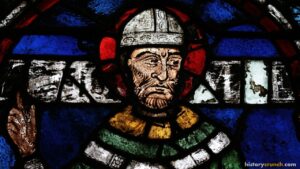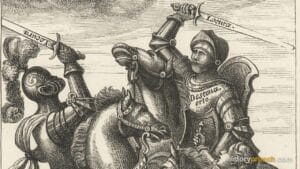
The Middle Ages is one of the most important periods in the history of Europe and the world. Understanding how the Middle Ages began helps explain the major events and features of the period, such as feudalism, the Manor System and the Crusades. In general, the Middle Ages began with the fall of the Western Roman Empire in 476 CE, which caused major changes in the political, social and religious life of people across Europe.
During the fall of the Western Roman Empire and the Early Middle Ages, did each of these groups or powers belong to the Roman and Byzantine world or to the Germanic world?

What Were the Middle Ages?
The Middle Ages, also known as the Medieval PeriodAnother name for the Middle Ages, covering European history from the 5th to the 15th century., refers to the period of European history that stretched from the 5th century to the 15th century. More specifically, historians generally place the beginning of the Middle Ages at 476 CE and its end at approximately 1500 CE, with the start of the RenaissanceThe period of cultural rebirth that followed the Middle Ages, used by historians to mark the end of the Medieval Period around 1500 CE.. Due to its length, the Middle Ages is divided into three smaller periods, including: the Early Middle Ages, the High Middle Ages and the Late Middle Ages. Each of these periods had its own important characteristics and events that shaped European society at the time. The term “Middle Ages” was actually created by later historians who viewed the period as a bridge between the ancient world of Greece and Rome and the modern world that emerged from the Renaissance.
Fall of the Western Roman Empire
The Middle Ages began with the fall of the Western Roman Empire in 476 CE. For centuries, the Roman Empire had been one of the most powerful civilizations in the world. At its height, it controlled vast territories across Europe, North Africa and the Middle East. However, by the 4th and 5th centuries, the empire had grown very large and difficult to govern effectively. For instance, Roman leaders struggled to defend its long borders from outside groups, manage its massive armies and maintain order across its many territories.
To help manage its size, the Roman Empire had already been divided into a Western Roman Empire and an Eastern Roman Empire by the late 4th century. The Eastern Roman Empire, also called the Byzantine Empire, was centered in Constantinople (modern-day Istanbul, Turkey) and would survive for another thousand years. The Western Roman Empire, however, faced much greater pressure and instability. It struggled with economic problems, political corruption and a series of weak emperors who could not hold the empire together.
FactsthatCrunchWhy did the Roman Empire split into a Western and Eastern half?
The Roman Empire grew so large that it became very difficult for one ruler to govern and defend all of it, so by the late 4th century CE it was divided into a Western Roman Empire and an Eastern Roman Empire to make it easier to manage. The Eastern half, centered in Constantinople, was more stable and became known as the Byzantine Empire. The Western half faced much greater pressure, including economic problems, political corruption, weak emperors, and attacks from Germanic tribes along its long borders.
Role of the Germanic Tribes
A major factor in the fall of the Western Roman Empire was the pressure placed on its borders by Germanic tribesGroups such as the Visigoths, Vandals, Ostrogoths and Franks who lived along the edges of Roman territory and eventually moved into Roman lands.. Groups such as the Visigoths, Vandals, Ostrogoths and Franks had long lived along the edges of Roman territory. As the empire weakened, these groups began to move into Roman lands in larger numbers. Roman leaders sometimes allowed these groups to settle within the empire in exchange for military service, but this arrangement often created more problems than it solved. The loyalty of these groups to Rome was not guaranteed, and conflicts between Roman forces and Germanic groups became increasingly common.
In 410 CE, the Visigoths, led by their king Alaric, sacked the city of Rome itself, which sent shockwaves throughout the empire. It was the first time in almost 800 years that the city had been captured by an outside group. While Rome recovered from the attack, it was a clear sign of how vulnerable the empire had become. The final blow came in 476 CE when a Germanic leader named Odoacer overthrew the last Western Roman Emperor, Romulus Augustulus. This event is traditionally used by historians to mark the end of the Western Roman Empire and the beginning of the Middle Ages in Europe.
The Byzantine Empire
While the Western Roman Empire collapsed in 476 CE, the Eastern Roman Empire, known as the Byzantine Empire, continued to survive and thrive. The Byzantine EmpireThe Eastern Roman Empire, centered in Constantinople, that survived from 330 CE until 1453 CE and preserved Roman law and culture. was based in the city of Constantinople and lasted from 330 CE until 1453 CE, when it was finally conquered by the Ottoman Turks. During that time it was one of the most powerful civilizations in the world and played a major role in preserving the knowledge and culture of ancient Greece and Rome. As such, the fall of the Western Roman Empire did not mean the end of Roman civilization entirely. For instance, the Byzantine Empire continued to practice Roman law, speak Greek and follow the Christian faith throughout the Middle Ages. The survival of the Byzantine Empire is important to understand because it meant that Roman ideas and knowledge were kept alive during the centuries that followed the fall of Rome in the west.
FactsthatCrunchAfter 476 CE, the two halves of the old Roman Empire followed very different paths through the Middle Ages.
Political Changes After the Fall of Rome
With the collapse of the Western Roman Empire, Europe entered a period of significant political change. The centralized government that Rome had provided for centuries was gone, and in its place arose many smaller kingdoms ruled by various Germanic groups. Europe became a collection of different kingdoms and territories, each with its own ruler, laws and customs. This made political life in Europe far more fragmentedBroken into many separate, disconnected pieces rather than unified under one government. and unstable than it had been under Roman rule.
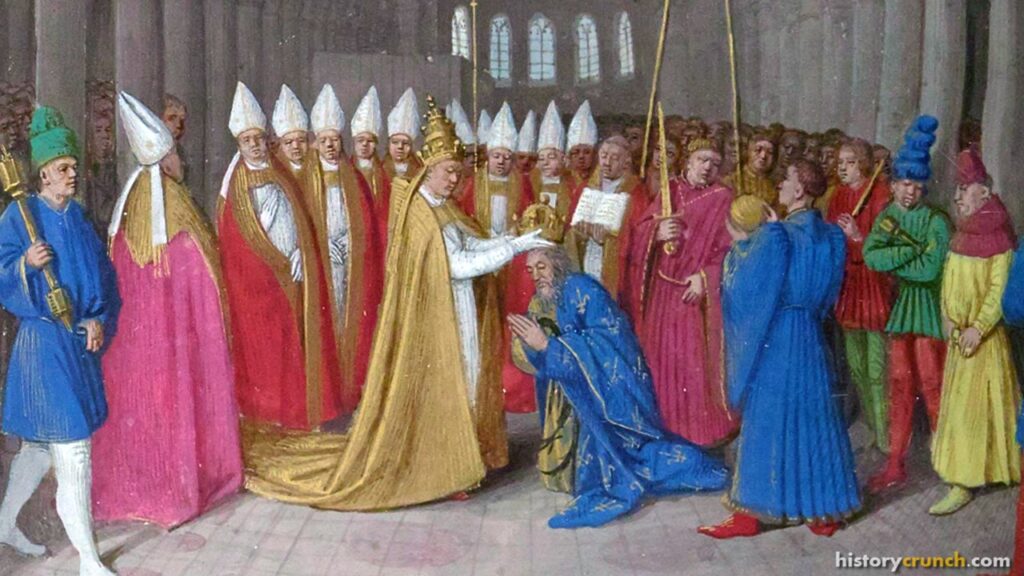
During the Early Middle Ages, one of the most important kingdoms to emerge was that of the Franks, who controlled much of what is now France and Germany. The Frankish king Charlemagne, who ruled in the late 8th and early 9th centuries, was one of the most powerful rulers of the Early Middle Ages and briefly united much of western Europe under his rule. His reign is often seen as an important stabilizing force during an otherwise difficult and chaotic period.
FactsthatCrunchCharlemagne ruled the Frankish kingdom and expanded it to cover much of western Europe, uniting territories that are now France, Germany, and northern Italy under one ruler. He promoted education and the use of Latin across his lands, and his reign gave the Early Middle Ages a period of political order that shaped later European kingdoms and governments.
Rise of Feudalism and the Catholic Church
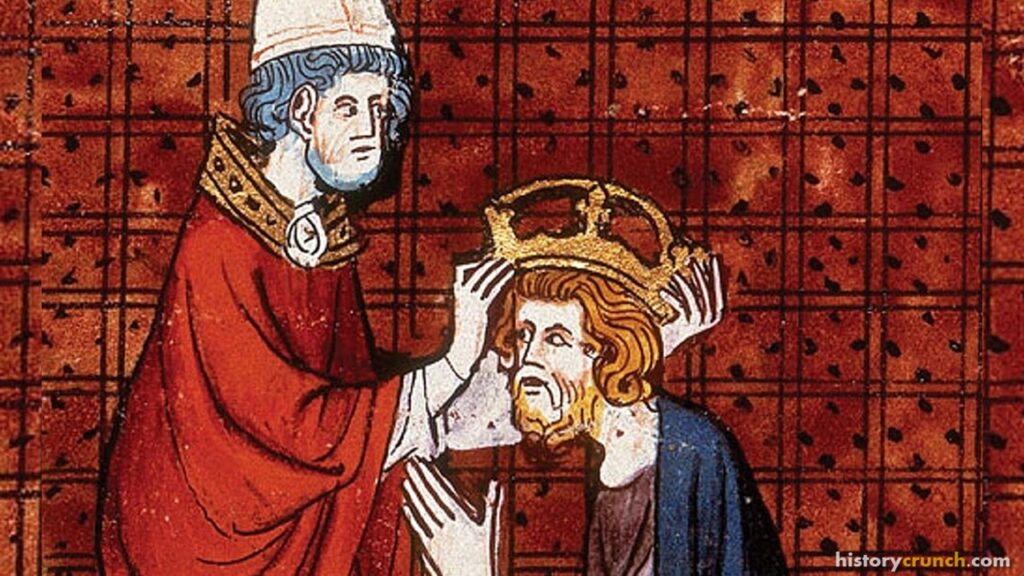
Two institutions became especially important as Europe adjusted to life without Roman rule: feudalism and the Catholic Church. FeudalismA system where kings and nobles granted land to lower lords in exchange for loyalty and military service, bringing order after Rome’s fall. was a system of government and land ownership that helped bring order to the political instability that followed the fall of Rome. Under feudalism, kings and nobles controlled large areas of land and granted portions of that land to lower lords in exchange for loyalty and military service. Peasants, known as serfsPeasants who worked a lord’s land in exchange for protection under the feudal system., worked the land in exchange for protection from their local lord. This social hierarchy became the foundation of medieval European society and was closely tied to the Manor System, which organized the everyday management of land and agriculture throughout the Middle Ages.
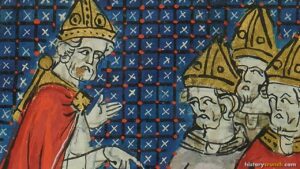
The Catholic Church also played a central role in holding European society together during the Early Middle Ages. With no strong central government to provide guidance and law, the Church stepped into many of those roles. For instance, it provided education, cared for the sick and offered a shared religious identity that connected people across different kingdoms. The Pope, as the head of the Catholic Church, held enormous influence over both religious and political life throughout the Middle Ages.
FactsthatCrunchFeudalism was a system of land and loyalty that organized medieval European society into a clear set of ranks, each with specific duties.
Significance of the Beginning of the Middle Ages
In conclusion, the Middle Ages began with the fall of the Western Roman Empire in 476 CE, a collapse brought on by centuries of internal weakness and external pressure from Germanic tribes. What followed was a period of major change across Europe, as new kingdoms, feudal systems and the Catholic Church shaped a very different kind of society than the one Rome had built. As such, understanding how the Middle Ages began is important because it helps explain many of the key features and events of the period that followed, including the Crusades, the Black Death and eventually the Renaissance.
FactsthatCrunchWhat were the lasting effects of the Fall of Rome on medieval European society?
Explore Middle Ages · 476 – 1500 CE
Keep exploring Middle Ages with these History Crunch resources.
Key Vocabulary
Medieval Period
Fragmented
Germanic tribes
Feudalism
Serfs
Byzantine Empire
Renaissance
Frequently Asked Questions
When did the Middle Ages begin?
The Middle Ages began in 476 CE with the fall of the Western Roman Empire. This date marks when the last Western Roman emperor was removed from power. Historians use it as the start of a new era that lasted until about 1500 CE.
What caused the fall of the Western Roman Empire?
The Western Roman Empire fell because of both internal weakness and outside pressure. It suffered from economic problems, political corruption and a series of weak emperors. At the same time, Germanic tribes pushed against its long borders and moved into Roman lands.
Who was Odoacer?
Odoacer was a Germanic leader who overthrew the last Western Roman emperor, Romulus Augustulus, in 476 CE. His action is traditionally used to mark the end of the Western Roman Empire. This event also signals the beginning of the Middle Ages in Europe.
Did Roman civilization end completely in 476 CE?
No, Roman civilization did not end completely, because the Eastern Roman Empire survived. Known as the Byzantine Empire, it was centered in Constantinople and lasted until 1453 CE. It kept Roman law, the Greek language and much ancient knowledge alive for another thousand years.
What filled the gap after Rome lost power in the west?
After Rome lost power, smaller Germanic kingdoms, feudalism and the Catholic Church shaped European life. Feudalism organized land and loyalty between kings, nobles and serfs. The Church provided education, cared for the sick and gave people a shared religious identity.
Cite This Article
To cite this article as a source, use one of the formats below.
MLA: Millar, B. “How Did the Middle Ages Begin?: A Detailed Summary.” HistoryCrunch, 13 October 2026, https://historycrunch.com/how-did-the-middle-ages-begin/.
APA: Millar, B. (2026). How Did the Middle Ages Begin?: A Detailed Summary. HistoryCrunch. https://historycrunch.com/how-did-the-middle-ages-begin/
Chicago: Millar, B. “How Did the Middle Ages Begin?: A Detailed Summary.” HistoryCrunch. October 13, 2026. https://historycrunch.com/how-did-the-middle-ages-begin/
Sources
- Barbara Rosenwein, A Short History of the Middle Ages.
- Jacques Le Goff, Medieval Civilization 400-1500.
- The Met (Heilbrunn Timeline) — medieval art
- Chris Wickham, Medieval Europe.