
The Age of Enlightenment is the long argument, running from Luther's theses in 1517 to the Congress of Vienna in 1815, over a single question: what should we believe, and on whose say-so? It begins with men checking an authority against the evidence, in a monk's list of objections and an astronomer's arithmetic, and it ends with that habit written into the founding documents of two republics and the law code of a third. In between come Hobbes and Locke on where a government's power comes from, Newton's laws, Voltaire in the Bastille and then in England, Diderot's Encyclopedia, Rousseau on chains, Kant on the nerve to think for yourself, Wollstonecraft on the half of humanity the age forgot, and monarchs in Berlin, Vienna and St Petersburg who read all of it and kept every scrap of power. Every card here sits on a real date.
From Luther’s theses to the Congress of Vienna
The Age of Enlightenment is the long argument, running from Luther's theses in 1517 to the Congress of Vienna in 1815, over a single question: what should we believe, and on whose say-so? It begins with men checking an authority against the evidence, in a monk's list of objections and an astronomer's arithmetic, and it ends with that habit written into the founding documents of two republics and the law code of a third. In between come Hobbes and Locke on where a government's power comes from, Newton's laws, Voltaire in the Bastille and then in England, Diderot's Encyclopedia, Rousseau on chains, Kant on the nerve to think for yourself, Wollstonecraft on the half of humanity the age forgot, and monarchs in Berlin, Vienna and St Petersburg who read all of it and kept every scrap of power. Every card here sits on a real date.
A habit of checking authority against evidence, spread by print.
It starts as a method, not a set of conclusions.
The Scientific Revolution proved the method worked, and the philosophers borrowed it.
Copernicus and Galileo proved that measurement beats authority.
Because England killed one king, replaced another, and then wrote the terms down.
A civil war made the question of where authority comes from urgent and practical.
Because he proved that a few knowable rules can govern everything.
One interrupted year produced the calculus, the theory of light and the beginnings of gravity.
Good universities, cheap printing and a small city where everyone argued.
Hume took empiricism as far as it would go and was refused a chair for it.
From an agreement among the people, not from God.
Hobbes uses the contract to justify absolute power.
Rights you hold by being human, which a government may not take.
Locke: life, liberty and property, held before any government exists.
Split the power up and let each part check the others.
Montesquieu compared many countries and concluded that concentrated power always ends badly.
Slowly, and mostly because war had proved too expensive.
The Thirty Years War made religious war look ruinous rather than holy.
Because they disagreed about what people are like without a government.
Hobbes wrote with a civil war in front of him and feared disorder above everything.
Seriously reforming, and seriously unwilling to give up any power.
Frederick abolished torture and called himself the first servant of the state.
One man, one faith, one law, and a court built to keep nobles busy.
Louis XIV took personal control at twenty-two and never let go.
Because wars are expensive and the people who could pay were exempt.
The Seven Years War left every government deep in debt.
An honest civil service, a full treasury and an army out of all proportion.
Frederick I bought the title and founded an academy for prestige.
The administration and the science, and none of the liberty.
Peter built a capital facing Europe and forced a nobility to dress like it.
Further than anywhere else, and it was reversed within a decade.
A war fought over her inheritance turned Maria Theresa into a reformer.
Cheap print, anonymous publication and a salon to read it in.
The salon gave ideas a room and put them in the hands of women.
Prison, exile, burning, or a false imprint and a foreign press.
Bruno was burned and Galileo silenced within living memory of each other.
Largely the women who ran the rooms the ideas were read in.
Rambouillet's blue room set the pattern: seating by interest, not by rank.
Bastille at 22, exile at 32, celebrity at 60, Pantheon at 97.
Prison for some verses made him a writer and gave him his name.
The words are Locke's, the structure is Montesquieu's, the argument is Paine's.
Jefferson's opening paragraph is Locke with the words changed.
It supplied the language. Debt, harvests and privilege supplied the crisis.
Rousseau and Locke gave the revolutionaries their vocabulary.
Burke said yes. It is the hardest question the age leaves behind.
The Declaration of 1789 is the age's finest statement.
Running the salons, and mostly left out of the rights.
The salons were made and run by women and are where the ideas circulated.
Less than it should have, while writing that all men are created equal.
The Declaration's author owned people as he wrote it.
From a Scottish professor who distrusted merchants.
Hume's essays on trade came first and shaped Smith.
A 26-year-old in Milan wrote a short book and Europe changed its laws.
Beccaria argued punishment should be certain, proportionate and fixed in advance.
Hume and Kant both said yes, and said so from inside the movement.
Hume showed we never actually observe cause and effect.
Because if the mind is a blank sheet, whoever writes on it shapes the person.
Locke's blank slate made upbringing decisive rather than birth.
Equality before the law, rights on paper, and the habit of asking why.
Vienna in 1815 put the monarchs back and kept the peace for a generation.
The Enlightenment did not begin on a date. It begins with a habit: checking an authority against the thing the authority claims to describe. Luther checked the Church against scripture in 1517 and split Christendom. Copernicus checked the heavens against his own arithmetic in 1543 and moved the Earth. Galileo built a telescope and looked. Bacon wrote down the method and Descartes looked for one certainty to rebuild on. Meanwhile Europe fought its last and worst religious war, and a Paris hostess began seating writers and dukes in the same circle. By 1642 the tools were on the table and the old order had visible cracks.
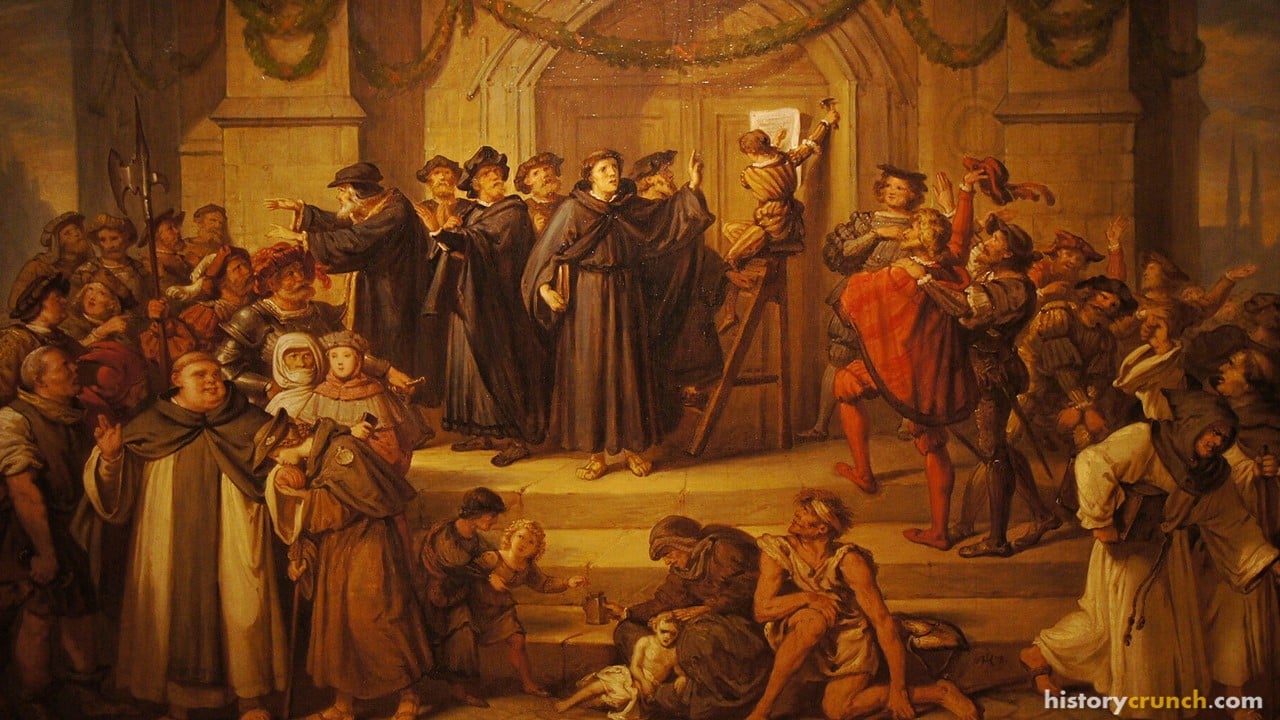
On October 31st, 1517 an Augustinian monk named Martin Luther sent a list of ninety-five objections to the selling of indulgences to the Archbishop of Mainz. Printed copies were circulating across Germany within weeks. Luther was not trying to break the Church; he was asking it to argue. What he got instead was excommunication, and a Europe divided into Catholic and Protestant states that would fight over the division for more than a century.
LEARN MORESHOW LESSwhy it matters · key numbersRELIGIONIt established that an ordinary reader could weigh what an authority told him against the source it came from, and act on the difference. Every thinker in this timeline inherits that habit.
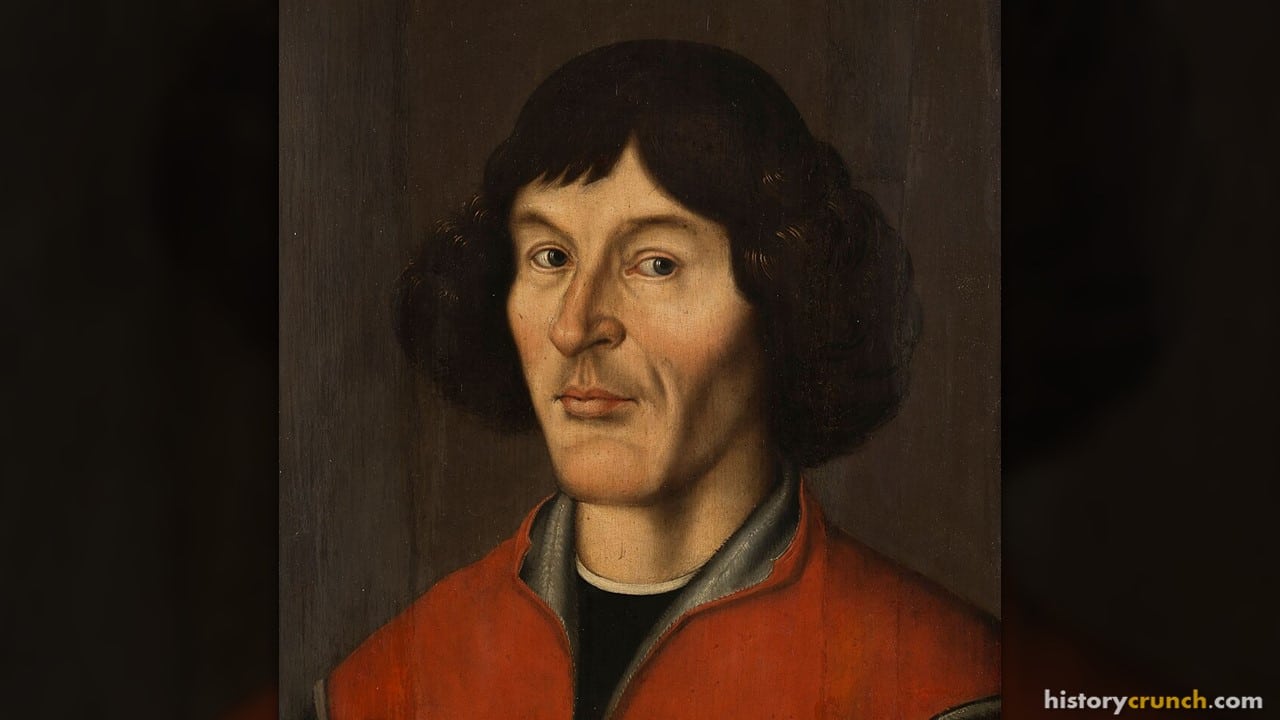
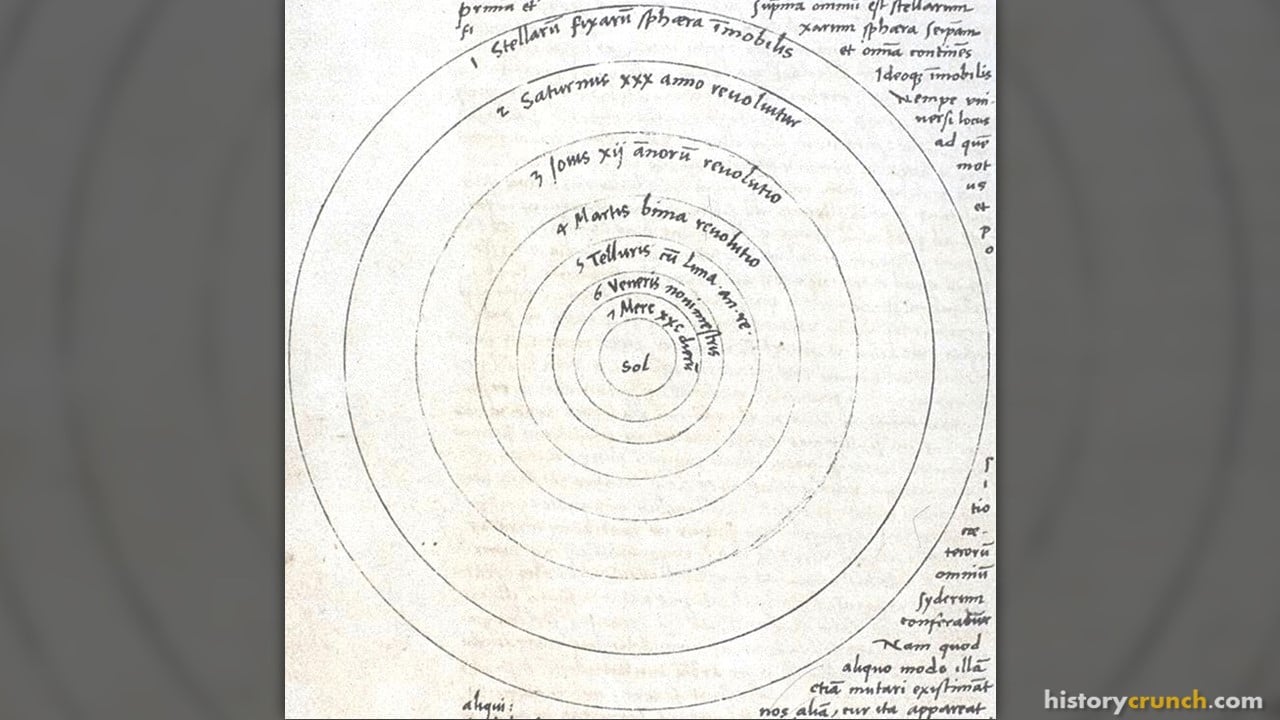
Nicolaus Copernicus spent thirty years working out the heliocentric model, in which the Earth goes round the Sun rather than the reverse, and almost as long refusing to publish it. On the Revolutions of the Heavenly Spheres finally appeared in 1543, the year he died, reportedly reaching him on his deathbed. The book was mathematics, not propaganda, and for fifty years few people noticed. But it had moved the Earth, and once moved it could not be put back.
LEARN MORESHOW LESSwhy it mattersSCIENCEIt is the first great case of a measurement beating an authority. The Church, Aristotle and plain common sense all said the Earth stood still, and the numbers said otherwise.
On April 13th, 1598 Henry IV of France signed an edict granting the Protestant Huguenots the right to worship, to hold office and to fortify towns, in a kingdom that remained officially Catholic. It ended over thirty years of religious war. The edict was not toleration as a principle; it was toleration as a truce. But it proved that a state could hold together while containing two religions.
LEARN MORESHOW LESSwhy it mattersRELIGIONFor ninety years France was the working proof that a country need not kill over belief. Its revocation in 1685 was just as instructive, and Enlightenment writers used both halves of the lesson.
The Dominican friar Giordano Bruno was burned alive in the Campo de' Fiori in Rome on February 17th, 1600 after eight years of trial. He had argued that the universe was infinite, that the stars were other suns with worlds of their own, and a good deal of theology the Church found worse. He was not a scientist and offered no evidence, but he was killed for saying it, and that is what was remembered.
LEARN MORESHOW LESSwhy it mattersRELIGIONBruno became the warning that hung over every thinker for the next two centuries. Galileo, thirty-three years later, had the Campo de' Fiori firmly in mind when he agreed to recant.
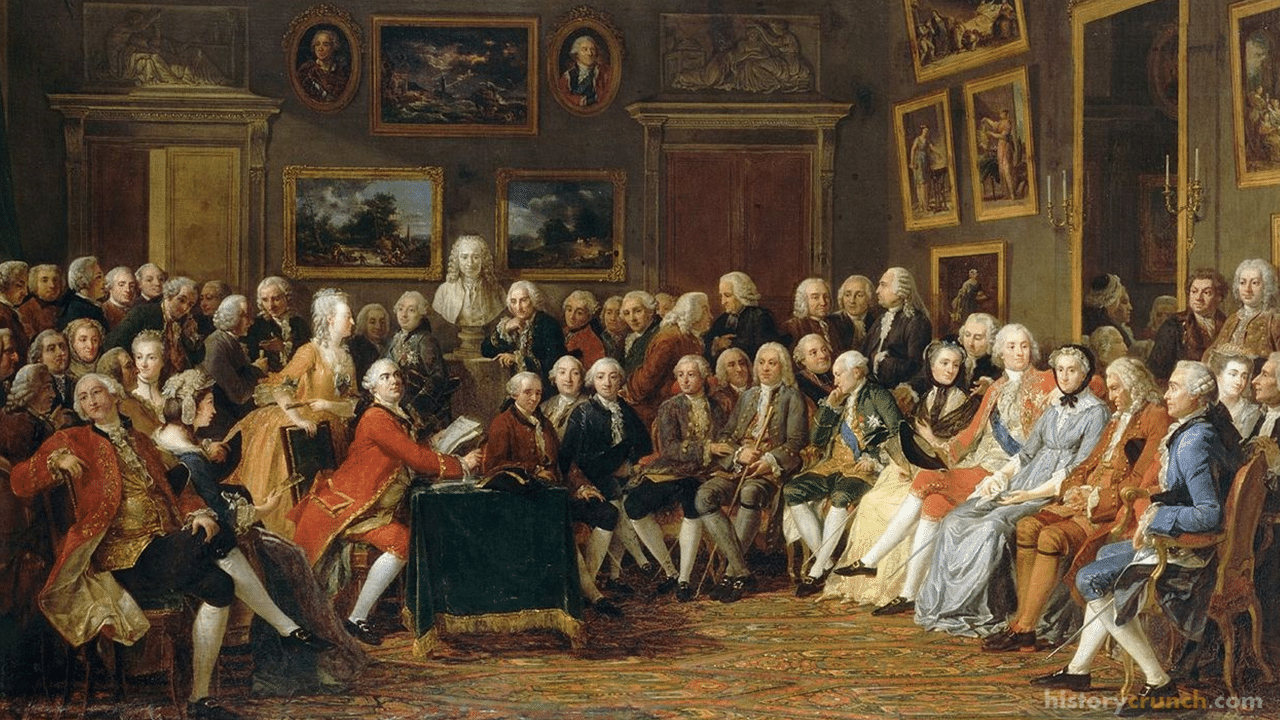
From about 1608 Catherine de Vivonne, Marquise de Rambouillet, began receiving writers, scholars and nobles in a blue-hung room in her Paris house, seating them in a circle rather than by rank and letting the conversation run. It was the first of the salons. For the next two centuries they gave French intellectual life somewhere to happen that was neither a court nor a university, and they were run by women.
LEARN MORESHOW LESSwhy it mattersCULTUREIdeas need a room. The salon is where a banker's daughter, a duke and an unpublished philosopher could argue as equals, and where most of this timeline's books were first read aloud.
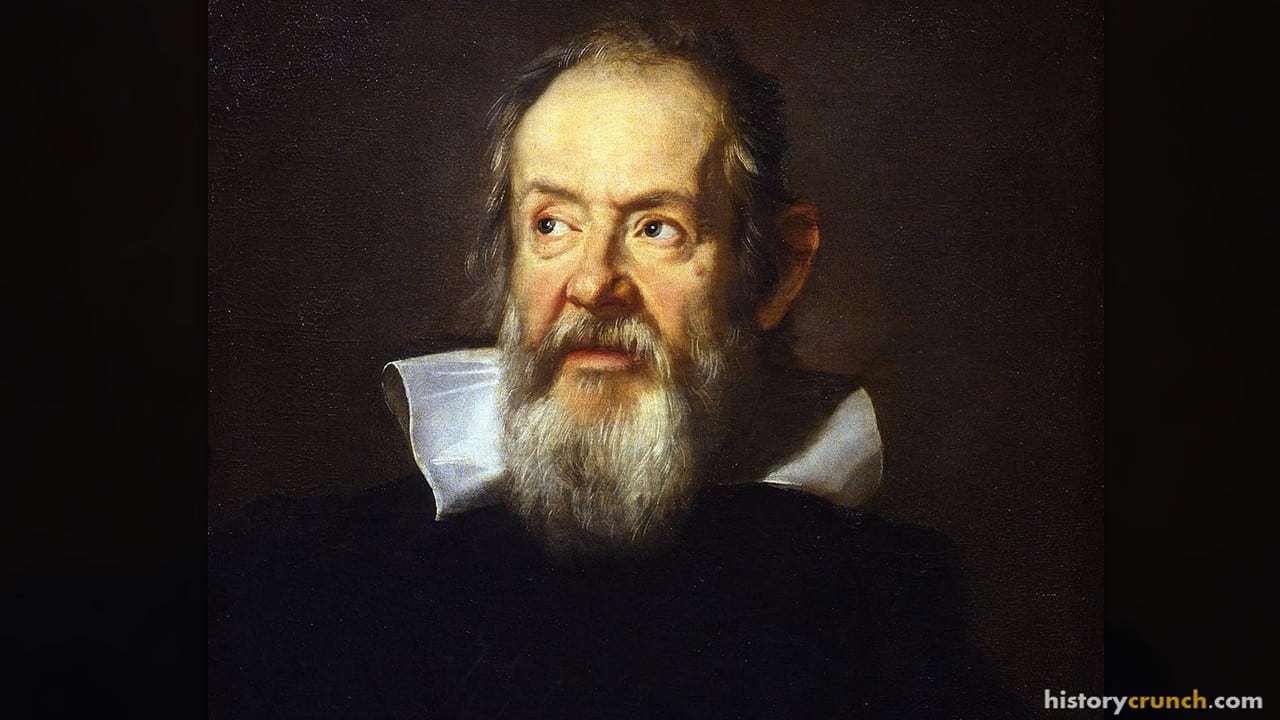
In March 1610 Galileo Galilei published a short book describing what he had seen through a telescope he had built himself: mountains and craters on the Moon, hundreds of stars invisible to the eye, and four moons going round Jupiter. The last was the damaging one. If anything at all circled a body other than the Earth, the old picture of the heavens was simply wrong.
LEARN MORESHOW LESSwhy it mattersSCIENCEAnybody with a tube and two lenses could check him, and within a year people across Europe were doing exactly that. Evidence that others can repeat is a different kind of authority.
The revolt that began in Prague in May 1618 grew into thirty years of fighting that drew in Spain, France, Sweden, Denmark and most of the German states. Armies lived off the country they crossed. Some German regions lost a third of their people to fighting, famine and disease. It was the last and worst of Europe's wars of religion.
LEARN MORESHOW LESSwhy it mattersMILITARYIt made religious war look like a bad idea on purely practical grounds, and it left rulers wanting a firmer kind of state. Absolutism and toleration both grow out of this wreckage.
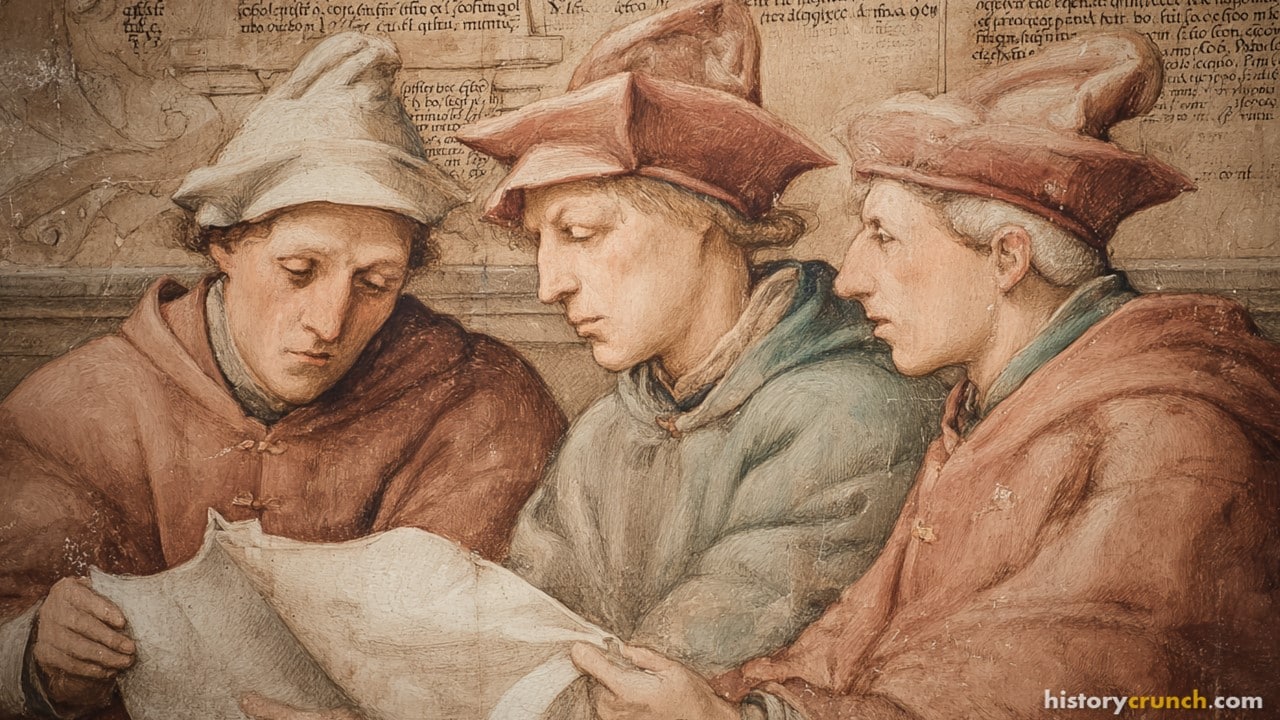
In 1620 the English lawyer and politician Francis Bacon published the Novum Organum, a new instrument to replace Aristotle's. Do not reason down from what you already believe, he argued; gather observations, test them, and reason up. He also named the habits of mind that get in the way, calling them idols: the ones built into human nature, the ones we get from our own upbringing, from language, and from the theories we inherit.
LEARN MORESHOW LESSwhy it mattersSCIENCEBacon wrote the method down before there was much science to apply it to. The Royal Society, forty years later, took him as its founder.
On June 22nd, 1633, aged sixty-nine, Galileo knelt in a Roman convent and read aloud a statement abjuring the opinion that the Earth moves. He was sentenced to house arrest and spent his last nine years in it, going blind. His Dialogue was put on the Index of Forbidden Books, where it stayed until 1835.
LEARN MORESHOW LESSwhy it matters · key numbersSCIENCEIt settled nothing about the heavens and everything about the Church's authority over enquiry. For the rest of the century the center of European science moved north, to places Rome could not reach.
Rene Descartes set out in 1637 to doubt everything he could possibly doubt, to see what survived. His senses might deceive him, his memories might be false, the world might be a dream. But the doubting itself required a doubter. I think, therefore I am, was the one brick he could not kick away, and he proposed to rebuild all knowledge on it, by reason alone.
LEARN MORESHOW LESSwhy it mattersPHILOSOPHYRationalism starts here: the claim that careful reasoning, not tradition and not scripture, is where knowledge begins. Every philosopher in this timeline is either building on Descartes or arguing with him.
Charles I raised his standard at Nottingham in August 1642 after years of quarrelling with Parliament over money, religion and how far a king's word went. The fighting lasted, on and off, until 1651. Thomas Hobbes watched the beginning of it from Paris, having fled two years earlier, and it shaped everything he afterwards wrote about order.
LEARN MORESHOW LESSwhy it matters · 1 key figureMILITARYIt turned an argument about taxes into a working demonstration that a people could depose a king. The question of what authority rests on stopped being theoretical.
In fifty years Europe acquired the laws of motion, the social contract, the constitutional monarchy and the scientific society, and executed a king. Hobbes wrote Leviathan out of the English Civil War and made government a thing people had built rather than a thing God had given. Newton proved that the same rule governs an apple and the Moon. Locke argued that a government which attacks its people's rights may be replaced, and then Parliament replaced one. Across the Channel Louis XIV was building the opposite: one man, one faith, one law, at Versailles. Both models now existed, and the next century would argue about them.
Isaac Newton was born on January 4th, 1643 in a farmhouse in Lincolnshire, small enough at birth that his mother said he would have fitted in a quart pot. His father was already dead. He was a difficult, solitary and extraordinarily persistent man who would spend as many years on alchemy and biblical chronology as on the mathematics that made him famous.
LEARN MORESHOW LESSwhy it matters · 1 key figurePEOPLEHe is the figure the whole age points at. When Enlightenment writers wanted to argue that the world was orderly and knowable, they said: look at Newton.
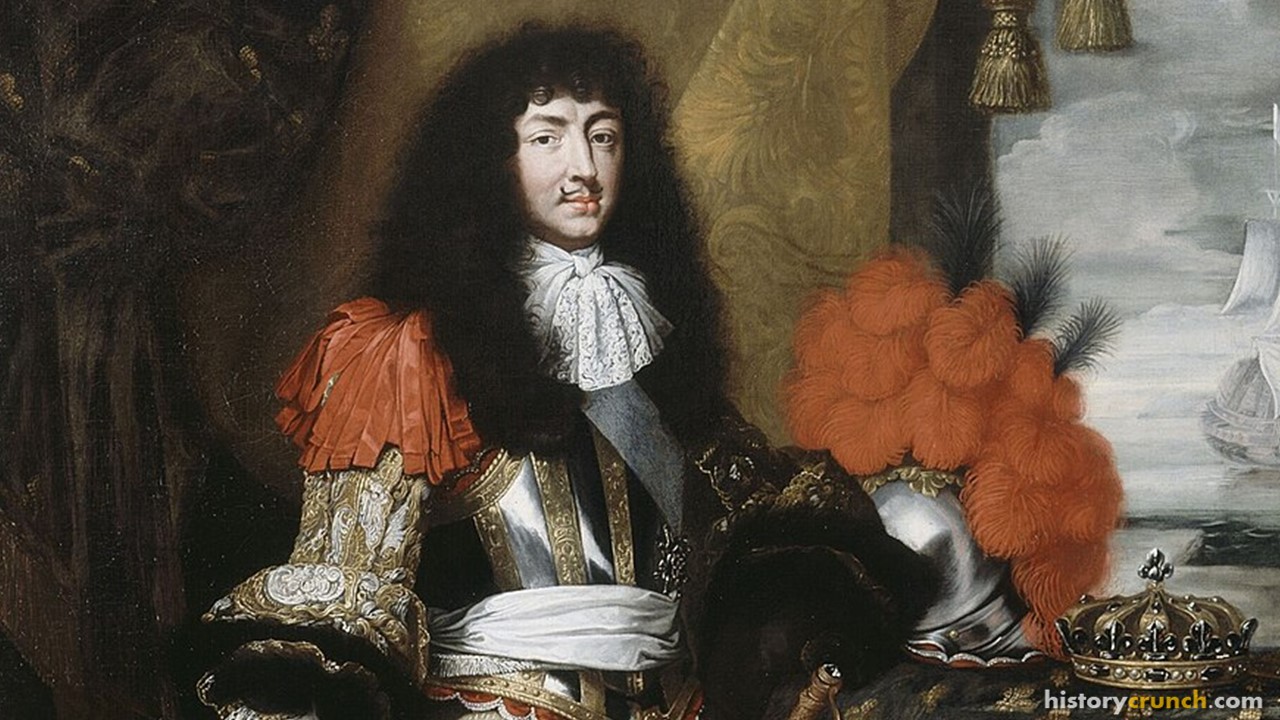
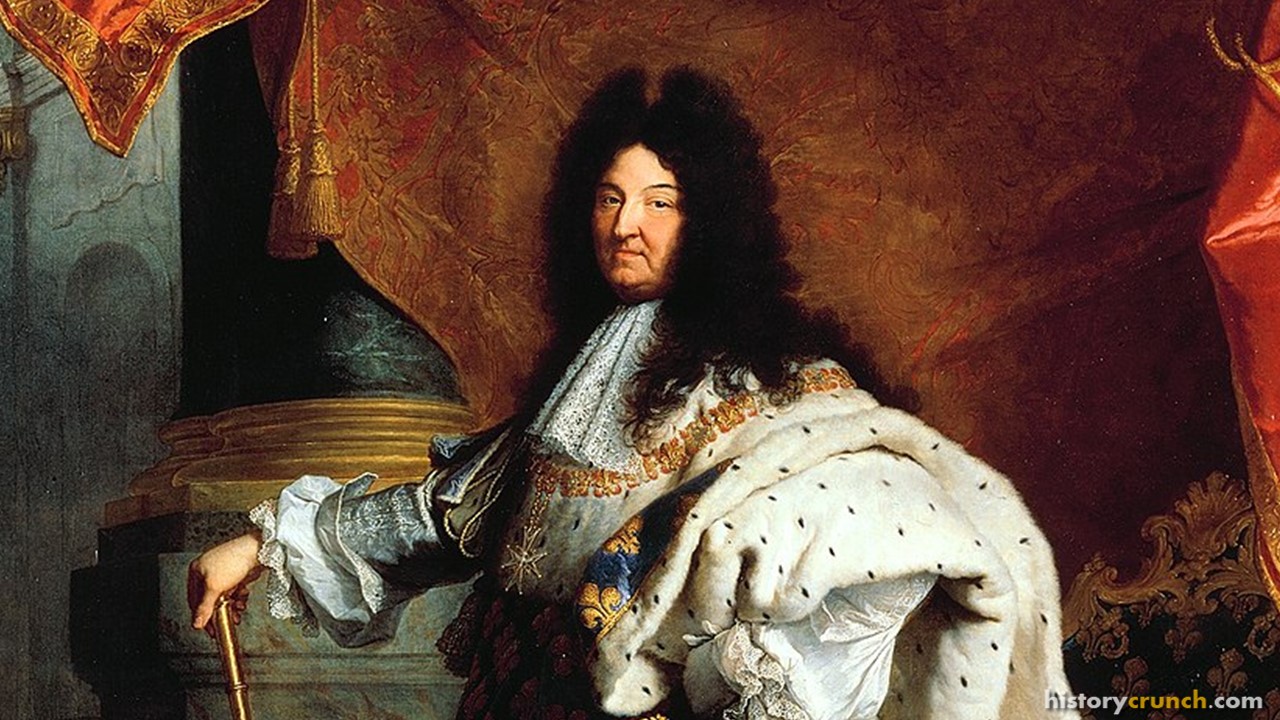
Louis XIV became king on May 14th, 1643, four years old, on the death of his father. His mother and Cardinal Mazarin ruled for him. He would hold the throne for seventy-two years, the longest reign of any monarch on record, and he built the model of absolute monarchy that every other European ruler either copied or measured himself against.
LEARN MORESHOW LESSwhy it matters · key numbersPOLITICALAbsolutism is the thing the Enlightenment argues with. To understand why Montesquieu wanted power divided, start with the king who held all of it.
The treaties signed at Munster and Osnabruck in October 1648 ended the Thirty Years War. They accepted that the ruler of each German state would settle its religion, that the states themselves were sovereign, and that Europe would be organized as a set of independent powers rather than a single Christendom. It is usually taken as the beginning of the modern state system.
LEARN MORESHOW LESSwhy it mattersPOLITICALReligion stopped being a reason to invade a neighbor. What replaced it as the business of kings was territory, trade and dynasty, which is the world the Enlightenment is born into.
Parliament's forces having won the war, Charles I was tried for treason against his own kingdom and beheaded outside the Banqueting House in Whitehall on January 30th, 1649. He refused to plead, on the ground that no court could try a king. He was executed anyway, and England was governed as a republic for eleven years.
LEARN MORESHOW LESSwhy it mattersPOLITICALA king had been killed before, but never sentenced by a court in his own name. Every European monarch understood what had just been shown to be possible.
Writing in exile with the English war behind him, Thomas Hobbes argued that life without government is a war of everyone against everyone, and famously that it would be solitary, poor, nasty, brutish and short. To escape it, people hand their power to a sovereign and agree to obey. The sovereign's authority comes not from God but from that agreement, which was a dangerous thing to say to either side.
LEARN MORESHOW LESSwhy it matters · a source · 1 key figurePHILOSOPHYHobbes uses the contract to justify absolute power and Locke will use it to limit power, but both start from the same radical premise: government exists because people made it.
IN THEIR OWN WORDS“Solitary, poor, nasty, brutish, and short.”
Thomas Hobbes, Leviathan, 1651WHAT TO NOTICEHobbes on life without a government to keep order.
After eleven years of republic and the collapse of Cromwell's settlement, Charles II returned to London on his thirtieth birthday in May 1660. The restoration was a relief rather than a reversal: the king was back, but so was Parliament, and nobody had forgotten what had happened to his father.
LEARN MORESHOW LESSwhy it mattersPOLITICALEngland now had a monarchy that had been interrupted once. That memory is why the crisis of 1688 was settled by invitation and negotiation rather than by another civil war.
Twelve men meeting at Gresham College in London on November 28th, 1660 agreed to found a society for the promotion of experimental learning. It took Bacon as its inspiration and adopted the motto Nullius in verba, take nobody's word for it. Members performed experiments in front of each other and published what happened, including when it failed.
LEARN MORESHOW LESSwhy it matters · a sourceSCIENCEThis is the machinery that turns clever individuals into cumulative knowledge: a standing body, meeting regularly, that publishes and checks. Newton would be its president for twenty-four years.
IN THEIR OWN WORDS“Nullius in verba.”
Motto of the Royal Society, 1660WHAT TO NOTICETake nobody's word for it.
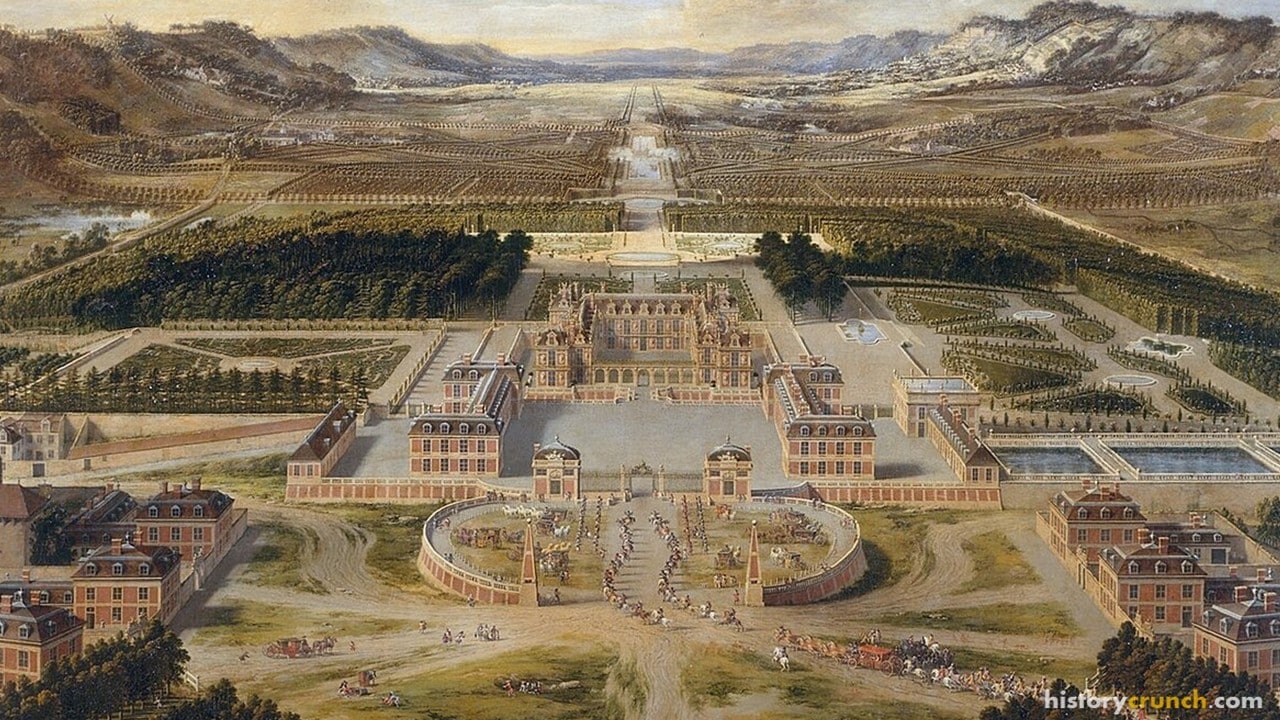
Cardinal Mazarin died in March 1661 and the twenty-two-year-old king announced that he would govern without a chief minister, answerable to God alone by divine right. He meant it. He ran his own councils, kept the great nobles occupied at court, and built Versailles partly so he could see them. The phrase usually attached to him, that he was the state, catches the design even if he never said it.
LEARN MORESHOW LESSwhy it mattersPOLITICALThis is absolutism working at full strength, and working well enough that other rulers imitated it. It is also the system that will run out of money by the 1780s.
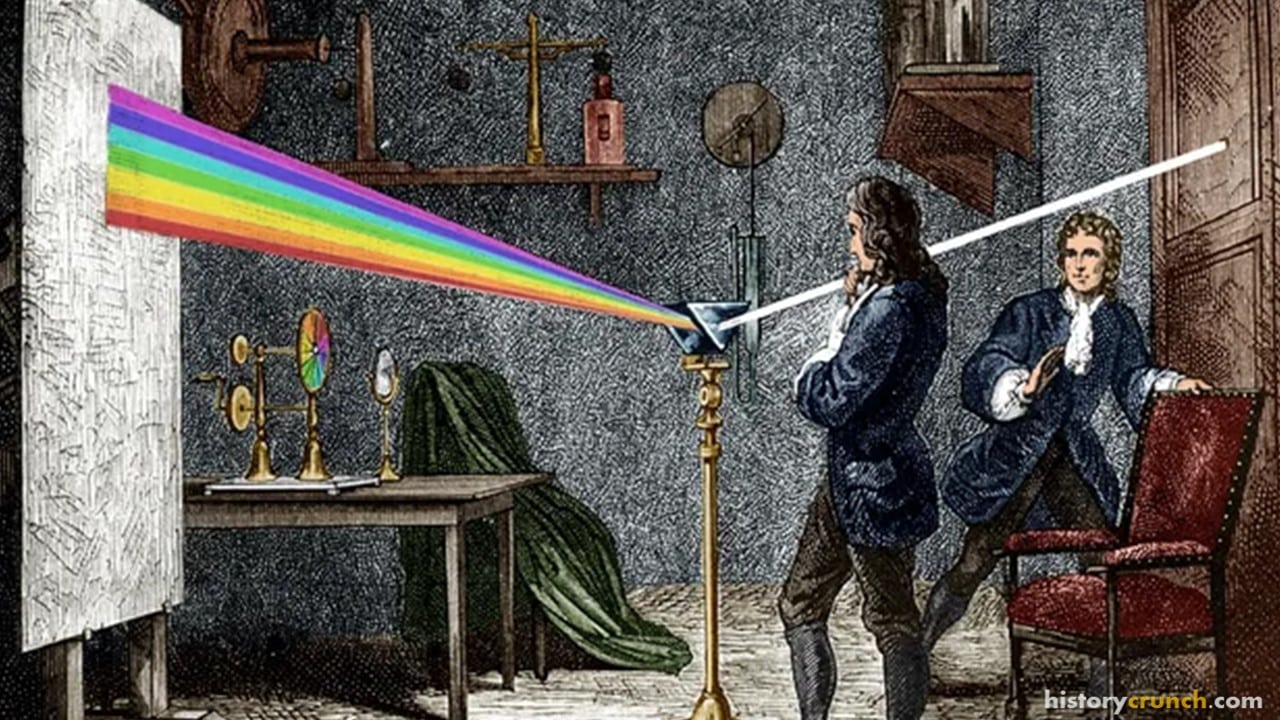
Bubonic plague closed Cambridge in 1665 and Newton went home to Lincolnshire for about eighteen months. In that time, alone and twenty-three years old, he worked out the calculus, broke white light into its colors with a prism, and began thinking about the force that holds the Moon in its orbit. He published almost none of it for twenty years.
LEARN MORESHOW LESSwhy it matters · 1 key figureSCIENCEThree of the most important ideas in the history of science came out of one interrupted academic year. The apple story is probably true in outline and Newton told it himself in old age.
Peter came to the Russian throne in 1682 as a boy, in a palace coup that he watched, and took real power in the 1690s. He traveled west in disguise to learn shipbuilding, came home determined to drag Russia into Europe, taxed beards, built a navy and a new capital, and crushed opposition without hesitation, including the execution of his own son.
LEARN MORESHOW LESSwhy it mattersPOLITICALPeter is the first of the rulers who use Enlightenment tools for unenlightened ends: rational administration, modern science and brutal autocracy in one package.
On October 18th, 1685 Louis XIV cancelled his grandfather's edict. Protestant worship was banned, churches pulled down, ministers exiled and children ordered to be baptized Catholic. Emigration was forbidden and perhaps two hundred thousand Huguenots left anyway, taking their trades to England, the Dutch Republic and Prussia, which welcomed them.
LEARN MORESHOW LESSwhy it matters · key numbersRELIGIONIt handed the argument for toleration its best evidence. Locke wrote his Letter Concerning Toleration in Dutch exile within four years, and Voltaire never stopped citing France's loss.
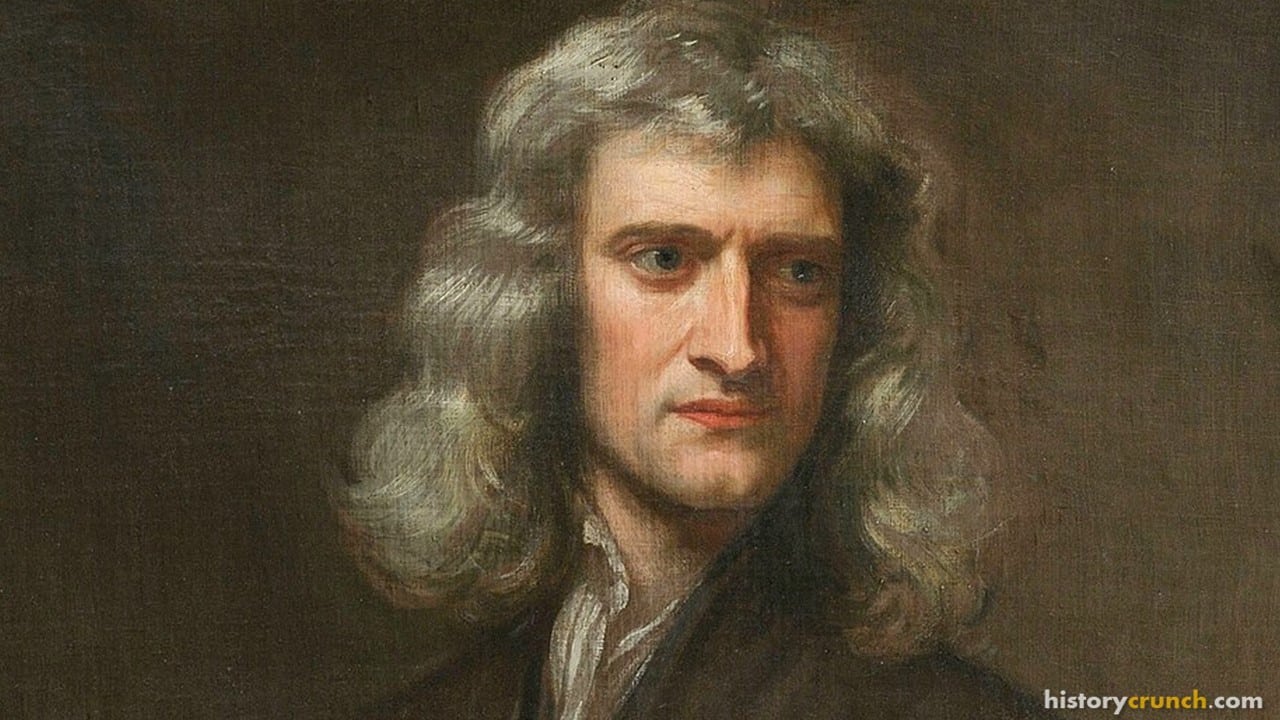
Prodded and paid for by Edmond Halley, Newton finally wrote out what he had been sitting on. The Mathematical Principles of Natural Philosophy set out three laws of motion and one law of gravity, and proved that the same rule that makes an apple fall keeps the Moon in orbit and the planets on their paths. It was mathematics anyone could check, and it predicted things nobody had measured yet.
LEARN MORESHOW LESSwhy it matters · key numbers · 1 key figureSCIENCEThe universe turned out to run on a handful of rules a person could write down. If the heavens work like that, thinkers asked, why not politics, law and economics?
Leading members of Parliament, alarmed by the Catholic James II, invited the Dutch Protestant William of Orange to come over. He landed at Torbay on November 5th, 1688 with an army. James's support drained away and he fled to France. The crown passed to William and his wife Mary on terms set by Parliament, and hardly a shot was fired.
LEARN MORESHOW LESSwhy it mattersPOLITICALA king had been replaced by agreement rather than by war, and on conditions. Locke's Two Treatises appeared the following year and read like its justification.
Written in Dutch exile and published anonymously in 1689, the Letter Concerning Toleration argued that the magistrate's job is to protect the natural rights of life, liberty and property, and that belief is not in his gift: force can make a man say he believes something, which is worth nothing. Locke did not extend the argument to Catholics or atheists, for reasons he thought political rather than religious.
LEARN MORESHOW LESSwhy it matters · 1 key figureRELIGIONIt moves toleration from a truce that a ruler grants to a limit on what a ruler may do at all. The American First Amendment is its direct descendant.
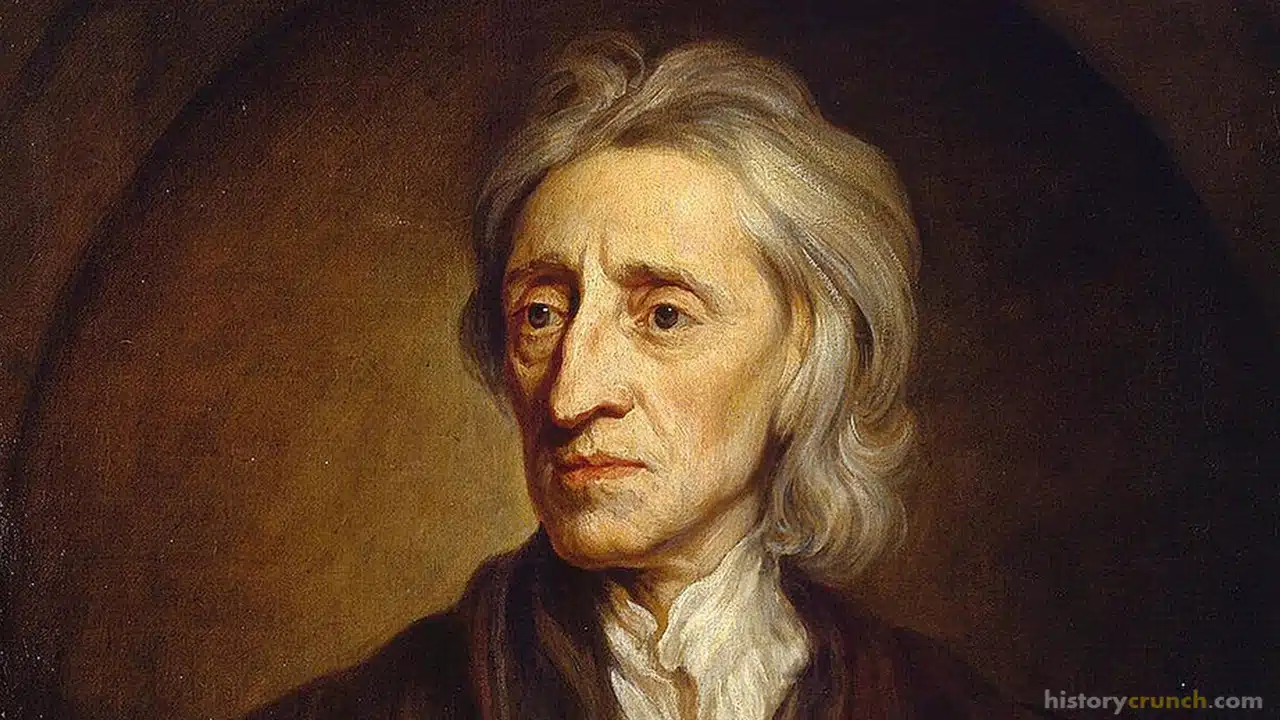
Locke published the Two Treatises of Government anonymously in 1689. People have rights to life, liberty and property before any government exists; they set up government to protect those rights; a government that attacks them has broken the trust and may be replaced. Written largely in the 1680s as a justification for resistance, it arrived looking like an explanation of what had just happened.
LEARN MORESHOW LESSwhy it matters · 1 key figurePHILOSOPHYThis is the single most quoted political text of the next hundred years. Jefferson's opening paragraph in 1776 is Locke with the words changed.
The Bill of Rights, given royal assent in December 1689, set out what the new monarchs could not do: no suspending laws, no taxation without Parliament, no standing army in peacetime without consent, free elections and free speech in Parliament. England became a constitutional monarchy in which the king reigned on terms.
LEARN MORESHOW LESSwhy it mattersPOLITICALIt is the first modern statement that a ruler's power is defined and limited by a document. Montesquieu came to England forty years later to study exactly this and went home to write about it.
The ideas left the study. Voltaire went to England, found writers honored and religion unpoliced, and spent fifty years telling France about it. Montesquieu went to look for himself. Hume pushed empiricism until it began to dissolve knowledge itself. And monarchs started to notice: Prussia crowned itself and built an academy, Peter built a capital facing west, and in 1740 a flute-playing king took Berlin and a young woman inherited Vienna against the wishes of every army in Europe. Reason was becoming respectable, which is a more dangerous thing to be than forbidden.
Twenty years in the writing, the Essay Concerning Human Understanding argued that we are born with no ideas at all, a tabula rasa, a blank slate. Everything in the mind arrives through the senses and is worked on by reflection. There are no innate principles planted by God or nature, which meant that what a person becomes depends on what happens to them.
LEARN MORESHOW LESSwhy it matters · 1 key figurePHILOSOPHYIf character comes from experience rather than birth, then education, laws and circumstances make people what they are. Every Enlightenment argument for reform rests on that.
Frederick I of Prussia founded an Academy of Sciences in Berlin in 1700, with the philosopher Leibniz as its first president, and set about making his capital a city that could be mentioned alongside Paris and London. It was prestige as much as learning, but it worked: Prussia acquired a scientific establishment it would still have two centuries later.
LEARN MORESHOW LESSwhy it mattersSCIENCEMonarchs had begun to treat science as something a serious state owned, like an army. That instinct is what made enlightened absolutism possible.
On January 18th, 1701 the Elector of Brandenburg placed a crown on his own head at Konigsberg and became Frederick I, King in Prussia. The title was negotiated with the Emperor and the preposition mattered, but the point was made. A middling north German state had bought itself a rank.
LEARN MORESHOW LESSwhy it mattersPOLITICALPrussia spends the next century turning a title into real power, and it does it through administration and an army rather than through wealth or size.
Peter founded a new city on marshland at the mouth of the Neva in May 1703, on ground taken from Sweden, and drove its construction with forced labor at a cost in lives nobody counted properly. He moved the capital there from Moscow. It faced the Baltic and Europe rather than inland, which was the entire point.
LEARN MORESHOW LESSwhy it mattersPOLITICALA capital built to look west is a policy in stone. Russia's long argument with itself about whether it belongs to Europe starts here.
Locke died on October 28th, 1704 at the age of seventy-two, at the house in Essex where he had lived quietly for years, while Lady Masham read the Psalms to him. He had spent much of his life being careful: exile, anonymous publication, and a refusal to admit authorship of the Two Treatises until his will.
LEARN MORESHOW LESSwhy it matters · 1 key figurePEOPLEHe died a respected physician and philosopher. He became, posthumously, the man whose sentences two revolutions would quote.
Frederick William I came to the Prussian throne in 1713 and set about the least glamorous work in Europe: an honest civil service, a full treasury, and an army out of all proportion to the country's size. He hated ceremony, wore uniform, beat his courtiers with a cane and collected unusually tall soldiers. He also barely fought a war.
LEARN MORESHOW LESSwhy it mattersPOLITICALHe built the machine his son would use. The saying that Prussia was not a state with an army but an army with a state is about this reign.
Charles VI had no son. In 1713 he issued the Pragmatic Sanction declaring the Habsburg lands indivisible and inheritable by a daughter, and then spent nearly thirty years buying agreement to it from every power in Europe with land, money and concessions.
LEARN MORESHOW LESSwhy it mattersPOLITICALEvery signature turned out to be worth nothing in 1740. It is the clearest lesson of the age in the gap between a legal document and the balance of power behind it.
Francois-Marie Arouet was twenty-two and already known for his wit when verses mocking the Regent, Philippe, Duke of Orleans, got him eleven months in the Bastille in 1717. He used the time to write, and came out with the pen name Voltaire. He would be imprisoned again, exiled, and in trouble with kings, bishops and censors in several countries for the next sixty years.
LEARN MORESHOW LESSwhy it matters · 1 key figureCULTURECensorship made Voltaire rather than silenced him. The lesson he drew and repeated for a lifetime was that a country that jails its writers is advertising its weakness.
Published anonymously in Amsterdam in 1721, the Persian Letters is a novel of letters between two Persians traveling in France. Because the observers are foreign, everything French becomes strange and has to be explained: the king, the pope, the coffee houses, the way women live. It was funny, it sold enormously, and it was deniable.
LEARN MORESHOW LESSwhy it matters · 1 key figureCULTUREMaking the familiar look odd is one of the age's sharpest tools. Satire from a safe distance let a writer say things that would be dangerous said plainly.
After more than twenty years of war Sweden conceded the Baltic provinces, and in November 1721 the Senate gave Peter the titles Emperor and Great. Russia announced itself as a European power, with a navy, a western capital and a reorganized state.
LEARN MORESHOW LESSwhy it mattersPOLITICALThe balance of Europe now had a fifth great power in it, and one whose rulers would take a close interest in French philosophy while ruling forty million serfs.
After a quarrel with a nobleman who had him beaten by servants and then imprisoned, Voltaire was exiled in 1726 and spent nearly three years in England. He learned the language, read Locke and Newton, took up the deism of English freethinkers who kept God and dropped the Church, met writers who were rich and respected, and saw a country where a man could publish an unpopular opinion and go on living in it.
LEARN MORESHOW LESSwhy it matters · 1 key figureCULTUREEngland became the argument. For the rest of his life Voltaire used it as the example of what France could be, which is why the book he wrote about it was burned by the hangman.
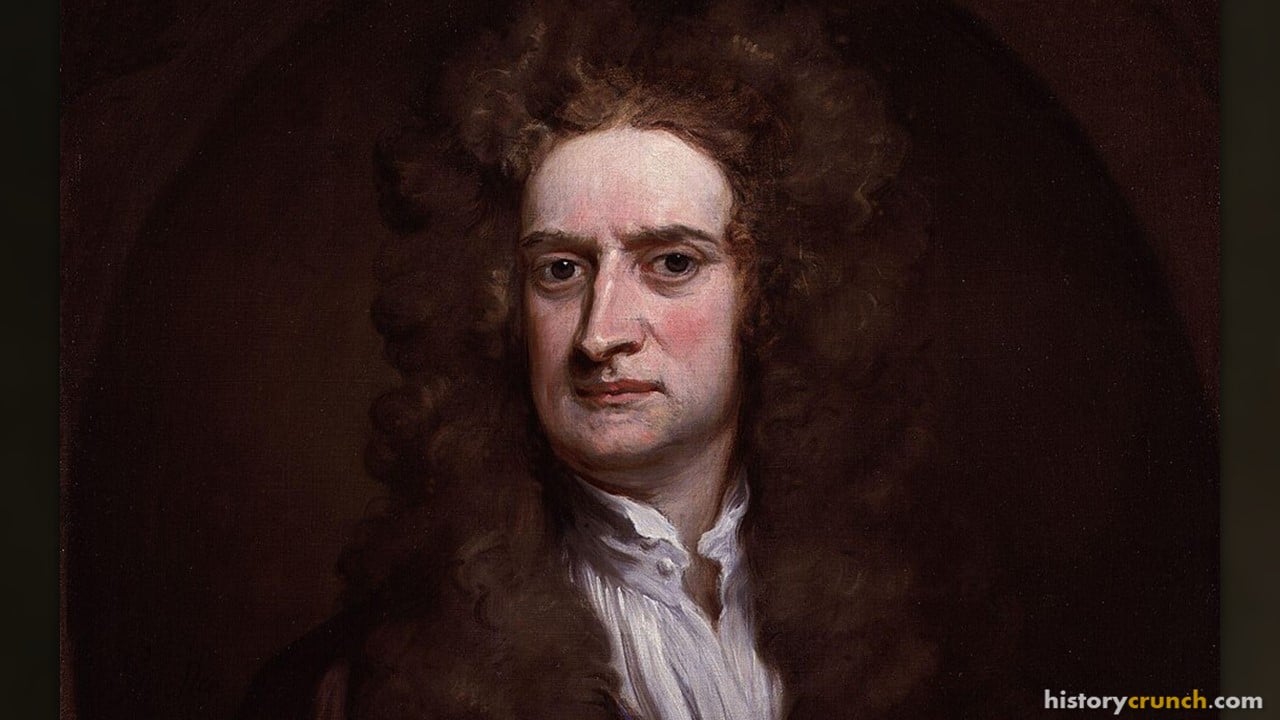
Newton died on March 31st, 1727, aged eighty-four, after nearly thirty years running the Royal Mint and twenty-four as president of the Royal Society. He was given a state funeral and buried in Westminster Abbey among kings. Voltaire was in England and never forgot the sight of a country burying a mathematician like that.
LEARN MORESHOW LESSwhy it matters · 1 key figurePEOPLEA scientist honored as a national hero was a new thing in the world, and the philosophes made much of it. Newton became the age's proof that reason pays.
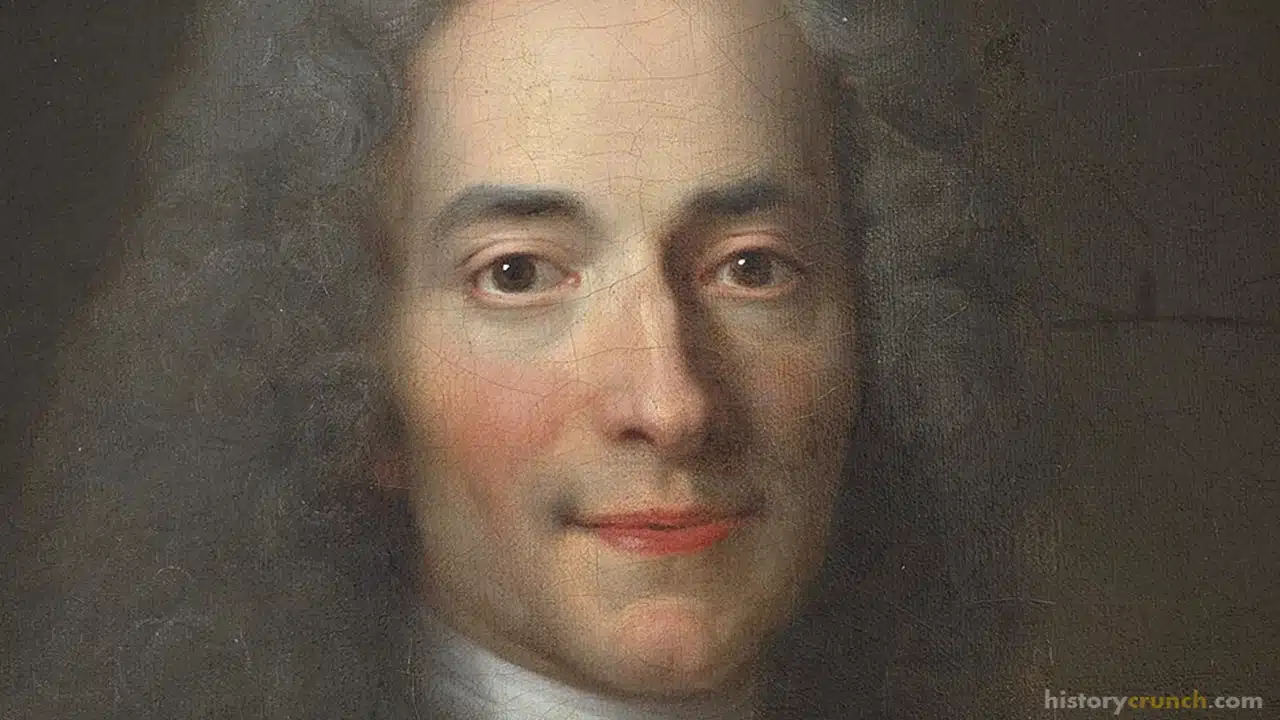
The Letters on England appeared in 1733 and described, politely, a country with religious toleration, a parliament, respected scientists and merchants who were not despised. Every compliment to England was an accusation against France, and the French authorities understood it perfectly. The book was condemned and publicly burned, and Voltaire left Paris for years.
LEARN MORESHOW LESSwhy it matters · 1 key figureCULTUREThis is the moment French readers were shown a working alternative. It made comparison a political weapon, and it is why Montesquieu went to look for himself.
David Hume was twenty-eight when the first volumes of the Treatise of Human Nature appeared in 1739. He pushed empiricism further than anyone: we never observe cause and effect, only one thing following another; the self is a bundle of perceptions; reason is the slave of the passions. Almost nobody read it, and he said so himself.
LEARN MORESHOW LESSwhy it matters · 1 key figurePHILOSOPHYHume is the age doubting its own tools. Kant said reading him woke him from his dogmatic slumber, and the Critique of Pure Reason is the answer.
Frederick II came to the throne in May 1740, a flute-playing, French-writing prince his father had despised, and within months invaded Silesia. He ruled for forty-six years, corresponded with Voltaire, abolished torture, allowed religious freedom and called himself the first servant of the state, while keeping every lever of power in his own hand.
LEARN MORESHOW LESSwhy it mattersPOLITICALHe is the model of enlightened absolutism and its best illustration: real reform, real tolerance, and not one inch of power given away.
Charles VI died in October 1740 and his daughter inherited the Habsburg lands, exactly as the Pragmatic Sanction said she should. Frederick invaded Silesia within weeks, France and Bavaria joined in, and Maria Theresa spent eight years fighting to keep her inheritance. She kept most of it, lost Silesia, and set about rebuilding the state that had nearly failed her.
LEARN MORESHOW LESSwhy it mattersMILITARYThe war made a reformer out of her. Austria's tax, army and school reforms all come from the discovery that the old arrangements did not work.
Having failed as a philosopher, Hume tried again as an essayist. The Essays, Moral and Political of 1741 and 1742 were short, clear and often funny, on politics, trade, manners and superstition. They sold. He spent the rest of his life writing for readers rather than for philosophers, and became famous for a six-volume history of England.
LEARN MORESHOW LESSwhy it matters · 1 key figurePHILOSOPHYIt is a lesson the philosophes all learned: an idea that stays in a treatise changes nothing. The Enlightenment was a publishing phenomenon as much as a philosophical one.
This is the Enlightenment at full height and it happens mostly in Paris, in salons run by women, around a project to write down everything anyone knew. Montesquieu divided power three ways. Diderot spent twenty-one years on the Encyclopedia. Rousseau attacked property, civilization and the way children were taught, and quarrelled with everyone. Voltaire wrote Candide after an earthquake killed tens of thousands at Mass and made it impossible to say that all was for the best. Beccaria argued torture out of existence in twenty years. And in Berlin, Vienna and St Petersburg, rulers read all of it and applied exactly as much as suited them.
Twenty years of work, published anonymously in Geneva in 1748 to keep ahead of the censors. Montesquieu compared the laws of many countries and argued that liberty survives only where the power to make laws, to carry them out and to judge under them are held by different hands, each able to check the others: the separation of powers. He thought he had seen it working in England.
LEARN MORESHOW LESSwhy it matters · key numbers · 1 key figurePOLITICALThis is the blueprint. The American constitution of 1787 is built on it almost diagram by diagram, and so is most of what came after.
The Enquiry Concerning Human Understanding of 1748 was the Treatise made short and readable, with the argument against miracles added. Hume said a wise man proportions his belief to the evidence, and that no testimony is enough to establish a miracle unless its falsehood would be more miraculous than the thing it reports.
LEARN MORESHOW LESSwhy it matters · a source · 1 key figurePHILOSOPHYIt put a test for evidence into ordinary language, and that test is still the one people reach for. It also made sure Hume never got a university chair.
IN THEIR OWN WORDS“A wise man proportions his belief to the evidence.”
David Hume, 1748WHAT TO NOTICEFrom the section on miracles.
Denis Diderot and the mathematician Jean d'Alembert set out to gather all human knowledge into one work, the Encyclopedie, with articles by the best writers in France, and plates showing exactly how a glassblower or a printer did the job. The first volume appeared in July 1751. It was suppressed, licensed again, printed partly in secret, and it took twenty-one years.
LEARN MORESHOW LESSwhy it matters · key numbers · 1 key figureCULTUREIt was the age's central project: knowledge collected, cross-referenced and sold to anyone who could afford it, with criticism of church and state tucked into the entries where the censor would not look.
Montesquieu died on February 10th, 1755, blind in his last years from the eye trouble that had dogged him. He had been a judge, a wine grower, a traveler and, almost incidentally, the man who redesigned how governments would be built.
LEARN MORESHOW LESSwhy it matters · 1 key figurePEOPLEHe did not live to see any of it applied. The constitution that follows his design most closely was written thirty-two years after his death, on another continent.
Rousseau's Discourse on the Origin of Inequality of 1755 argued that people in the state of nature were free, healthy and roughly equal, and that the trouble began with property: the first man who fenced a piece of ground and found people simple enough to believe him was the founder of civil society. Progress, he said, had mostly made things worse.
LEARN MORESHOW LESSwhy it matters · 1 key figurePHILOSOPHYRousseau is the Enlightenment's internal critic, using its own methods to attack its faith in progress. That is why he quarrelled with nearly everyone in this timeline.
On the morning of All Saints' Day 1755, with the churches full, an earthquake destroyed Lisbon. Fire and a sea wave finished what the shaking began and tens of thousands died. The question was immediate and unavoidable: what kind of providence drowns the devout at Mass and leaves the brothels standing?
LEARN MORESHOW LESSwhy it mattersDISASTERIt broke the comfortable argument that this is the best of all possible worlds. Voltaire wrote a furious poem about it and then Candide, and Rousseau wrote back defending providence.
Frederick invaded Saxony in August 1756 and started a war that ran to 1763 and was fought in Europe, North America, the Caribbean, West Africa and India. Prussia survived against France, Austria, Russia and Sweden together. Britain took Canada and dominance in India. Everyone involved ended it deeply in debt.
LEARN MORESHOW LESSwhy it mattersMILITARYThe debts are the point. France's share of them leads directly to the financial crisis of the 1780s, the Estates-General and the Revolution.
Candide was published anonymously in 1759 and banned almost everywhere, which did it no harm at all. Its hero is dragged through war, earthquake, slavery and the Inquisition while his tutor keeps insisting that all is for the best in the best of all possible worlds, and it ends with the advice that we must cultivate our garden.
LEARN MORESHOW LESSwhy it matters · a source · 1 key figureCULTUREIt is the most read book of the French Enlightenment and the one that did most damage, because it made optimism about a cruel world look not wicked but ridiculous.
IN THEIR OWN WORDS“We must cultivate our garden.”
Voltaire, Candide, 1759WHAT TO NOTICEThe last line: stop explaining the world and go and do some good in it.
Published in 1762, The Social Contract argued that legitimate authority comes only from the people as a whole, that sovereignty cannot be given away or represented, and that law must express what Rousseau called the general will. It was banned in both France and Geneva and he had to run.
LEARN MORESHOW LESSwhy it matters · a source · 1 key figurePOLITICALLocke gave the revolutionaries their rights and Rousseau gave them their theory of the people. The Declaration of the Rights of Man draws on both, and so do arguments about democracy still.
IN THEIR OWN WORDS“Man is born free, and everywhere he is in chains.”
Jean-Jacques Rousseau, The Social Contract, 1762WHAT TO NOTICEThe opening sentence.
Emile, or On Education appeared a month after The Social Contract and was burned in Paris a month after that. Rousseau argued that a child should learn from experience and from things rather than from books and beatings, at the pace of its own development. The section on religion was what got it condemned.
LEARN MORESHOW LESSwhy it matters · 1 key figureEDUCATIONModern ideas about childhood as a stage with its own needs begin here. So does a long argument about Rousseau's treatment of girls in the book, and about his own five children, all left at the foundling hospital.
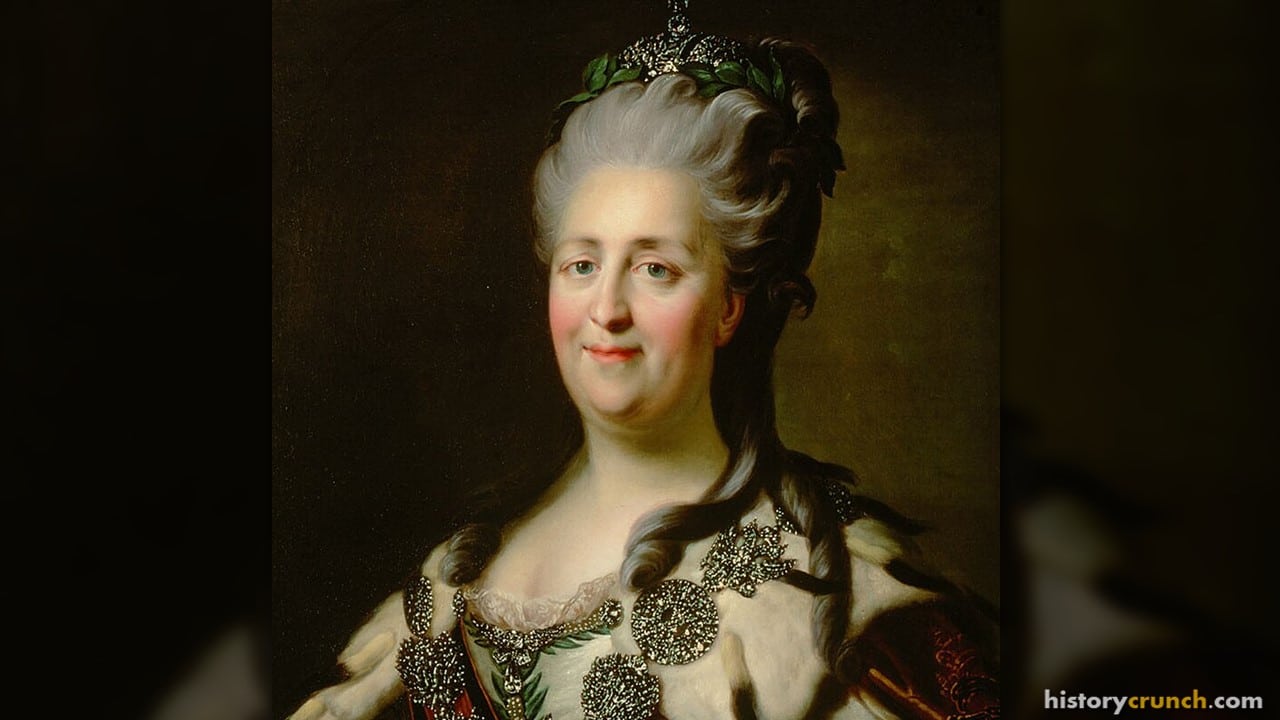
Catherine came to power in July 1762 in a coup against her husband Peter III, who was dead within days. German by birth and Russian by determination, she read the philosophes, wrote to Voltaire and Diderot for years, bought Diderot's library and left him the use of it, and ruled thirty-four years without loosening serfdom by an inch.
LEARN MORESHOW LESSwhy it mattersPOLITICALShe is the sharpest test of enlightened absolutism. The correspondence was genuine, the reforms were real, and the serfs were worse off at the end of her reign than at the start.
The Peace of Paris in February 1763 gave Britain Canada and Florida and confirmed its position in India, and left France stripped of most of its overseas empire. Prussia kept Silesia. The war had cost more than any before it, and every government now had to find ways of paying for it. Britain looked to its American colonies for a contribution.
LEARN MORESHOW LESSwhy it mattersPOLITICALBoth revolutions in this timeline start with a tax bill. The Stamp Act is two years away and the Estates-General twenty-six.
Cesare Beccaria was twenty-six when On Crimes and Punishments appeared in 1764. Punishment should be certain rather than savage, proportionate to the harm, fixed in advance by law, and aimed at preventing crime rather than at revenge. Torture produces confessions from the weak rather than the truth from the guilty, and the death penalty is neither necessary nor useful.
LEARN MORESHOW LESSwhy it mattersLAWNo book of the age changed the law faster. Austria abolished torture in 1776 and Tuscany abolished the death penalty in 1786, both citing him. Frederick had already gone first in Prussia in 1754.
After the license was withdrawn in 1759, Diderot kept going. The remaining ten volumes of text were printed and delivered in 1765, officially from abroad, in practice with Malesherbes, the official in charge of the censors, looking the other way. Diderot then discovered that his publisher had been quietly censoring the proofs behind his back.
LEARN MORESHOW LESSwhy it matters · 1 key figureCULTUREGetting the thing finished at all was the achievement. Four thousand subscribers had bought a work that told them how the world was made and who was making a fool of them.
Catherine called an assembly of delegates from across Russia in 1767 to advise on new laws, and wrote them a long instruction, the Nakaz, much of it lifted from Montesquieu and Beccaria. The commission met for eighteen months, argued, and was dissolved when war with the Ottomans gave her a reason. No code came out of it.
LEARN MORESHOW LESSwhy it mattersLAWThe gap between the document and the outcome is the whole story of enlightened absolutism. She meant the words; she simply would not pay their price.
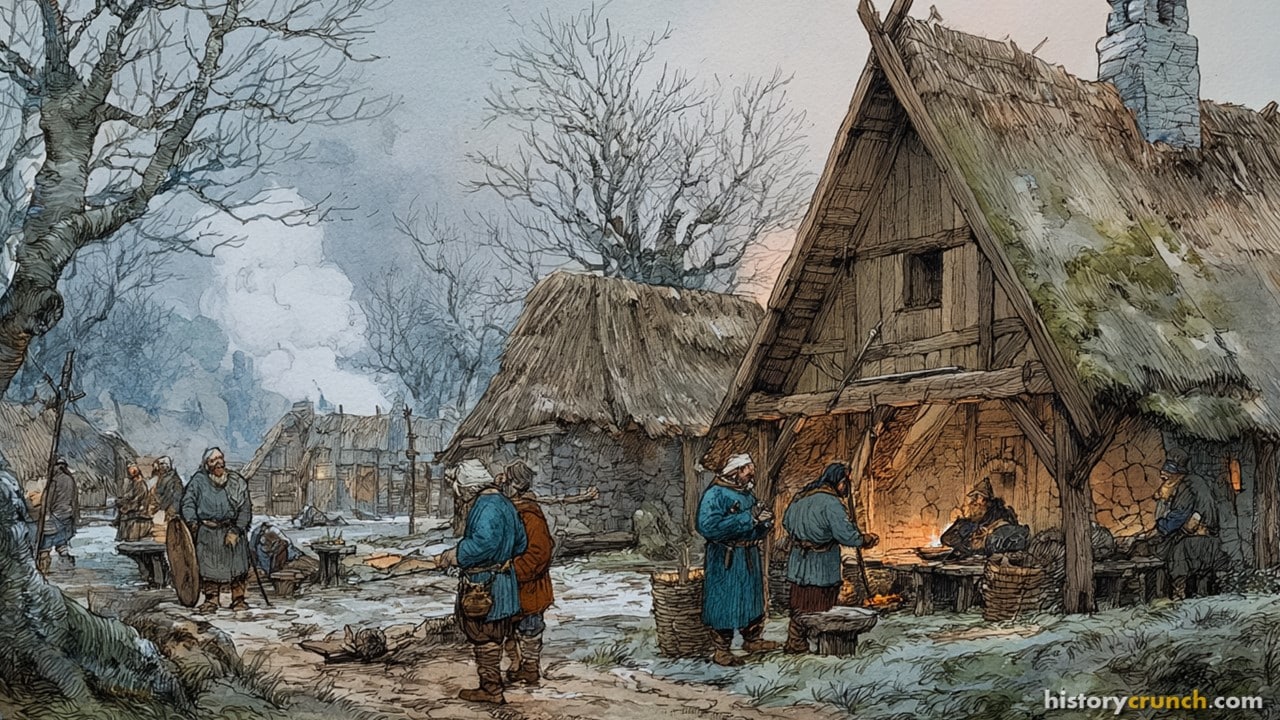
The Robot Patent of 1771 capped the days of unpaid work a Bohemian serf owed his lord. Maria Theresa was not a philosophe and disliked most of what the philosophes wrote, but she could see that a starving peasantry paid no taxes and made poor soldiers.
LEARN MORESHOW LESSwhy it mattersSOCIALReform did not need Enlightenment convictions, only an efficient state and arithmetic. That is worth knowing when weighing how much the philosophes actually changed.
The last plates were delivered in 1772, twenty-one years after the first volume. Twenty-eight volumes, some seventy-one thousand articles, and thousands of engravings showing trades and machines in working detail. Diderot had given twenty-five years to it and made very little money.
LEARN MORESHOW LESSwhy it matters · key numbers · 1 key figureCULTURENothing else so completely defines the age: everything known, written by the people who knew it, arranged so a reader could find it, and quietly subversive throughout.
A Cossack named Yemelyan Pugachev claimed to be the murdered Peter III and raised the Volga in 1773. Serfs, Cossacks and factory workers joined him and for a year the rising held a large part of the empire. It was put down with great violence and Pugachev was executed in Moscow in 1775.
LEARN MORESHOW LESSwhy it mattersSOCIALIt ended whatever chance the serfs had. Catherine came out of it convinced that concession was dangerous, and she bound them tighter for the rest of her reign.
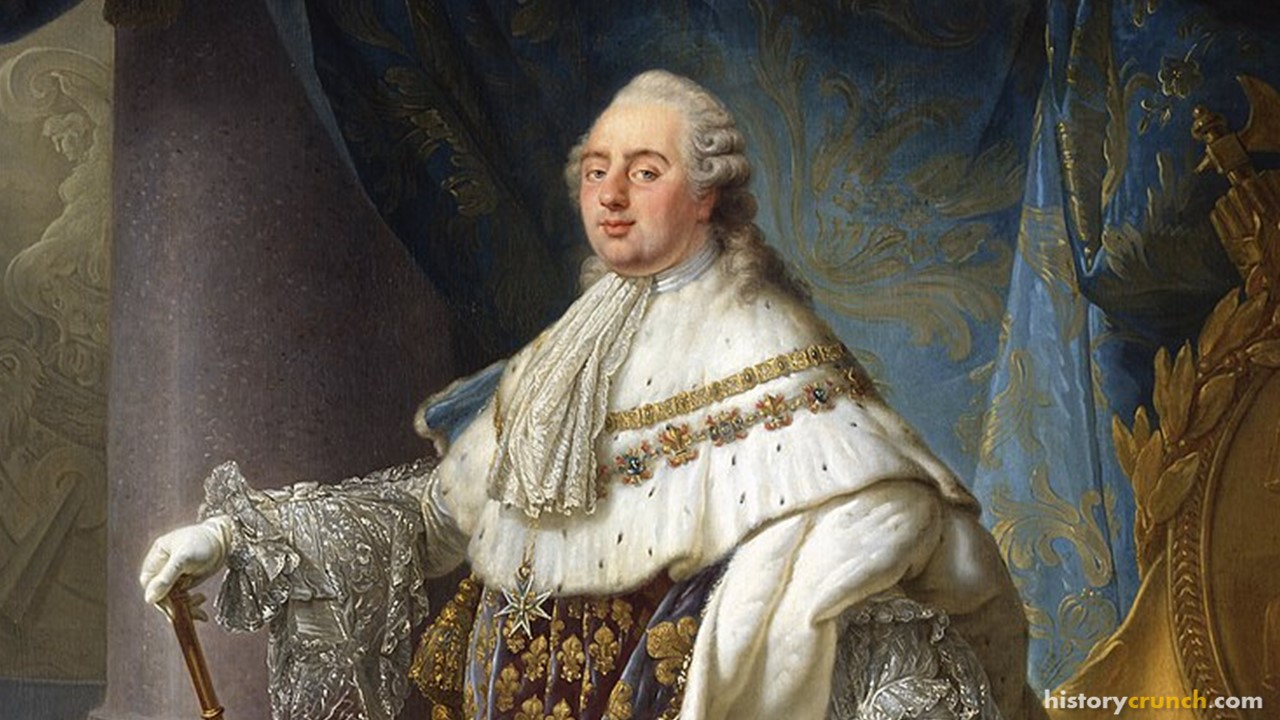
Louis XVI became king in May 1774 at nineteen, on the death of his grandfather. He was conscientious, indecisive, genuinely interested in geography and locksmithing, and he inherited a treasury ruined by two wars with a third about to be entered on the American side.
LEARN MORESHOW LESSwhy it mattersPOLITICALHe was not a tyrant and that is rather the point. The crisis that destroyed him was structural, and a well-meaning king could not reform a system whose privileges held it together.
The General School Ordinance of 1774 required a school in every parish and set out what should be taught in it. Enforcement was patchy and teachers were scarce, but the principle had been stated: the state was responsible for whether its children could read.
LEARN MORESHOW LESSwhy it mattersEDUCATIONUniversal schooling starts as a tool of government rather than a right. It becomes a right later, and the Enlightenment argument about what education is for begins here.
In the wake of Pugachev, Catherine redrew Russia's local government in 1775 into fifty provinces of roughly equal population, each with its own courts and administration, and followed it with charters setting out the rights of nobles and townsmen. It was rational, orderly, and it put the nobility firmly in charge of the countryside.
LEARN MORESHOW LESSwhy it mattersPOLITICALEnlightened administration and deepening serfdom were the same reform. Russia got a modern state apparatus resting on unfree labor.
In 1776 two books and one declaration appeared within six months: Common Sense, The Wealth of Nations, and a statement that all men are created equal. Thirteen years later France summoned an assembly it had not called since 1614, and inside three months had stormed a fortress, abolished feudalism overnight and written the Declaration of the Rights of Man. Kant asked what Enlightenment actually was and answered: the nerve to think for yourself. Wollstonecraft pointed out that the age had applied its principle to half of humanity. Burke warned it would all end with a general on horseback. By 1799 it had.
Thomas Paine had been in America fourteen months when Common Sense was published anonymously on January 10th, 1776. It argued for outright independence in the plainest language anyone had used, mocked hereditary monarchy as an absurdity, and sold in numbers nobody had seen before. Washington had it read aloud to his troops.
LEARN MORESHOW LESSwhy it matters · key numbers · 1 key figureREVOLUTIONIt moved the argument from taxes and rights as Englishmen to independence as obvious. Paine wrote for people who were not lawyers, and that is why it worked.
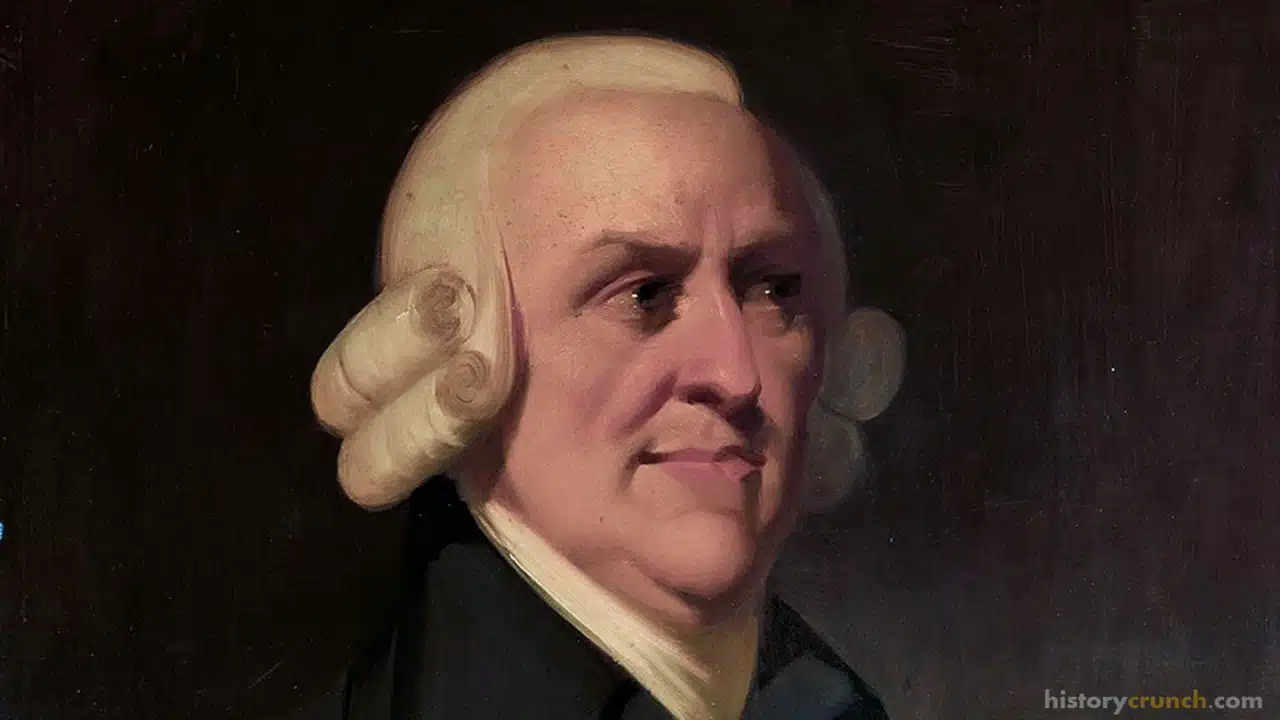
The Wealth of Nations appeared in March 1776 after ten years of work. Smith argued that wealth is what a country produces rather than the gold it hoards, that the division of labor multiplies what workers can make, and that individuals pursuing their own advantage are led as if by an invisible hand to outcomes nobody intended, the case for laissez-faire, leaving trade alone. He also warned repeatedly that merchants conspire against the public.
LEARN MORESHOW LESSwhy it mattersECONOMICSIt founded economics as a subject and gave the case for free markets its classic statement. It is also far more suspicious of business than the people who quote it tend to admit.
Adopted on July 4th, 1776, the Declaration held it self-evident that all men are created equal and endowed with unalienable rights, that governments exist to secure those rights and derive their just powers from the consent of the governed, and that a people may alter or abolish a government that destroys them. Jefferson was reworking Locke, and said so.
LEARN MORESHOW LESSwhy it matters · a sourceREVOLUTIONThis is the moment Enlightenment philosophy stops being a book and becomes the founding text of a country. The distance between its words and the slavery of the men who wrote them is the argument that follows.
IN THEIR OWN WORDS“We hold these truths to be self-evident, that all men are created equal.”
The Declaration of Independence, 1776WHAT TO NOTICEJefferson, reworking Locke.
Hume died on August 25th, 1776 of an illness he had watched coming for months. Boswell visited hoping to catch the great skeptic frightened at the end and found him joking about it instead. Adam Smith wrote afterwards that his friend had approached as nearly to the idea of a perfectly wise and virtuous man as human frailty permits, and was attacked for saying so.
LEARN MORESHOW LESSwhy it matters · 1 key figurePEOPLEA famous unbeliever dying calmly was itself an argument, and both sides understood it as one. It is why Smith's short letter caused more anger than anything in The Wealth of Nations.
Voltaire returned to Paris in 1778 after twenty-eight years away and was mobbed by crowds. The excitement finished him and he died on May 30th, aged eighty-three. The Church refused him burial and his friends smuggled the body out of the city to a country abbey. In 1791 the Revolution brought him back to the Pantheon.
LEARN MORESHOW LESSwhy it matters · 1 key figurePEOPLEEighty-three years of provoking kings and bishops ended with the Church refusing him a grave and the crowds carrying him through Paris, both in the same week.
Rousseau died on July 2nd, 1778, aged sixty-six, at Ermenonville outside Paris, having spent his last years copying music, walking, and believing himself persecuted by almost everyone he knew. He and Voltaire, who despised each other, died within five weeks and were eventually laid in the Pantheon a few steps apart.
LEARN MORESHOW LESSwhy it matters · 1 key figurePEOPLEThe Revolution took both as its fathers and could not have chosen two men who agreed less. Which of them it was really following is a question it never settled.
Hume finished the Dialogues Concerning Natural Religion years before he died and left instructions for publication afterwards, knowing what they would cost him in life. Three speakers argue about whether the order of the world proves a designer, and the argument from design comes off badly.
LEARN MORESHOW LESSwhy it matters · 1 key figurePHILOSOPHYPublishing from beyond the grave tells you what the limits of free speech really were in the 1770s, even in Edinburgh, even for a famous man.
Maria Theresa died in November 1780 after forty years, having spent the last fifteen restraining her son. Joseph II had been co-ruler since 1765 and had a drawer full of reforms she would not allow. He was now free, impatient, and intended to remake the Habsburg lands by decree in ten years.
LEARN MORESHOW LESSwhy it mattersPOLITICALWhat follows is the most thorough attempt any monarch made to legislate the Enlightenment into existence, and the clearest demonstration of what happens when reform outruns consent.
Immanuel Kant published the Critique of Pure Reason in 1781 after eleven silent years. His answer to Hume was that the mind is not a passive receiver: space, time and causation are the shapes our understanding imposes on experience. We can know the world as it appears to us, reliably and scientifically, and never the thing in itself.
LEARN MORESHOW LESSwhy it matters · 1 key figurePHILOSOPHYIt rescued science from Hume's doubt and set a permanent limit on what reason can reach. Philosophy after 1781 is a series of replies to this book.
The Patent of Toleration of October 1781 gave Lutherans, Calvinists and Orthodox Christians in the Habsburg lands near equality with Catholics: their own worship, schools and entry to professions and universities. In an empire that had spent the Thirty Years War enforcing Catholicism, it was a reversal.
LEARN MORESHOW LESSwhy it mattersRELIGIONToleration arrives from the top, by decree, in the most Catholic monarchy in Europe. Joseph did it because he thought persecution wasteful, not because he thought belief free.
A month after the toleration patent, the Serfdom Patent of November 1781 ended personal bondage in Bohemia, Moravia and the Austrian lands. A peasant could marry, move, learn a trade and send a child to school without his lord's permission. Labor dues remained, but the man was no longer tied.
LEARN MORESHOW LESSwhy it mattersSOCIALThis is the boldest act of enlightened absolutism anywhere. Frederick never went near it and Catherine went the other way.
In 1782 Joseph extended a measure of toleration to Jews in his lands: entry to trades, manufacturing and universities, and relief from some of the marks and taxes imposed on them. It came bundled with pressure to use German and to assimilate, and it fell far short of equality.
LEARN MORESHOW LESSwhy it mattersRELIGIONIt is the age in miniature: real improvement, granted from above, on terms set by the grantor, with the assumption that the minority should become more like the majority.
Diderot died on July 31st, 1784, of a blocked artery in the lungs, in an apartment Catherine the Great was paying for. He had spent twenty-five years on the Encyclopedia, written novels and plays he never published, and given away most of what he earned.
LEARN MORESHOW LESSwhy it matters · 1 key figurePEOPLEHe built the age's greatest single object and is the least famous of its great names, largely because his best work stayed in a drawer until long after he was dead.
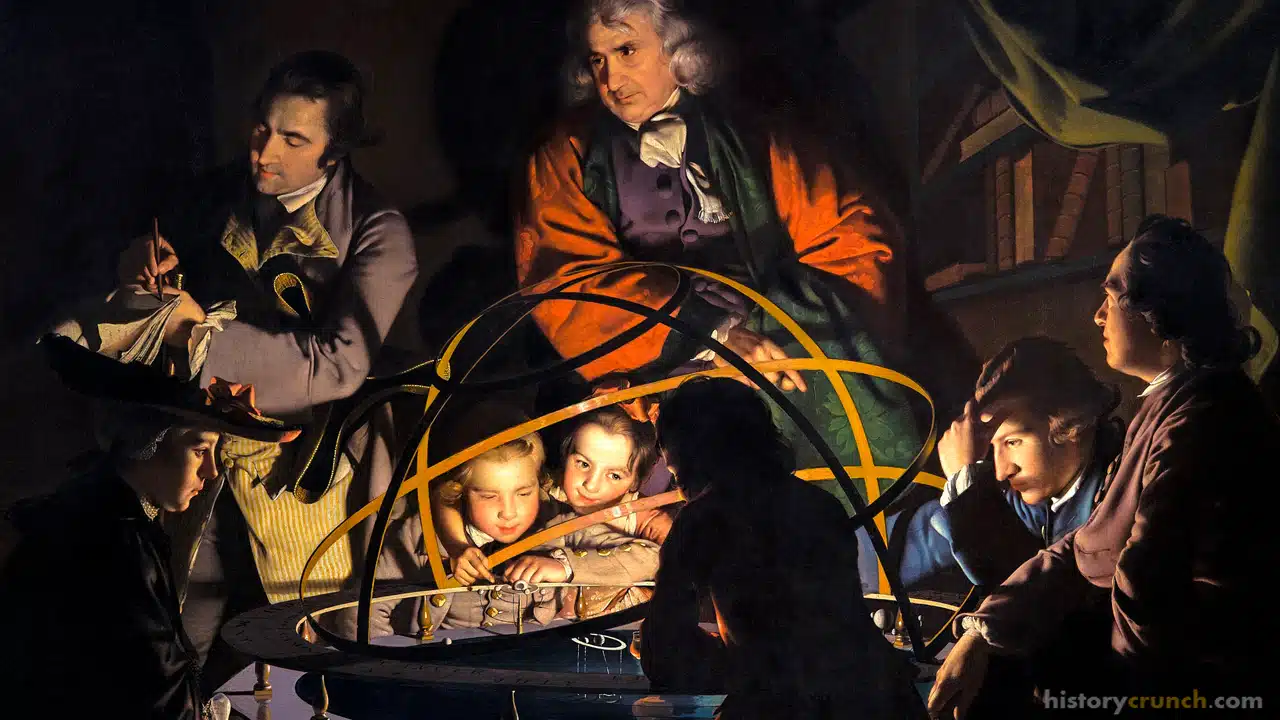
Asked by a Berlin magazine what Enlightenment was, Kant replied in 1784 that it is a person's emergence from a childhood of his own making: the inability to use your own understanding without someone else's guidance, when the fault is not lack of intelligence but lack of nerve. His motto for it was: dare to know.
LEARN MORESHOW LESSwhy it matters · a source · 1 key figurePHILOSOPHYIt is the best short answer anyone gave, and it puts the whole thing on courage rather than cleverness. Kant also notes, drily, that he is writing under a king who permits argument but expects obedience.
IN THEIR OWN WORDS“Sapere aude. Dare to know.”
Immanuel Kant, 1784WHAT TO NOTICEKant's motto for the whole age.
Frederick died at Sanssouci, his palace in the town of Potsdam outside Berlin, on August 17th, 1786, aged seventy-four, alone but for his servants and his dogs. He had doubled Prussia's territory, survived a war against three empires, abolished torture, written flute music and French verse, and quarrelled with Voltaire for most of his adult life.
LEARN MORESHOW LESSwhy it mattersPEOPLEThe model of the enlightened monarch died with him, and his successors had neither the ability nor the interest. Prussia kept the army and lost the philosophy.
Signed on September 17th, 1787 after a summer of argument in Philadelphia, the Constitution built Montesquieu's design into a working government: a legislature, an executive and a judiciary, each able to check the others, with power further divided between the states and the center. It also counted enslaved people as three fifths of a person for representation.
LEARN MORESHOW LESSwhy it mattersPOLITICALIt is the first time a country was deliberately designed from a theory of government. Both halves of that sentence, the design and what it accommodated, shape everything after.
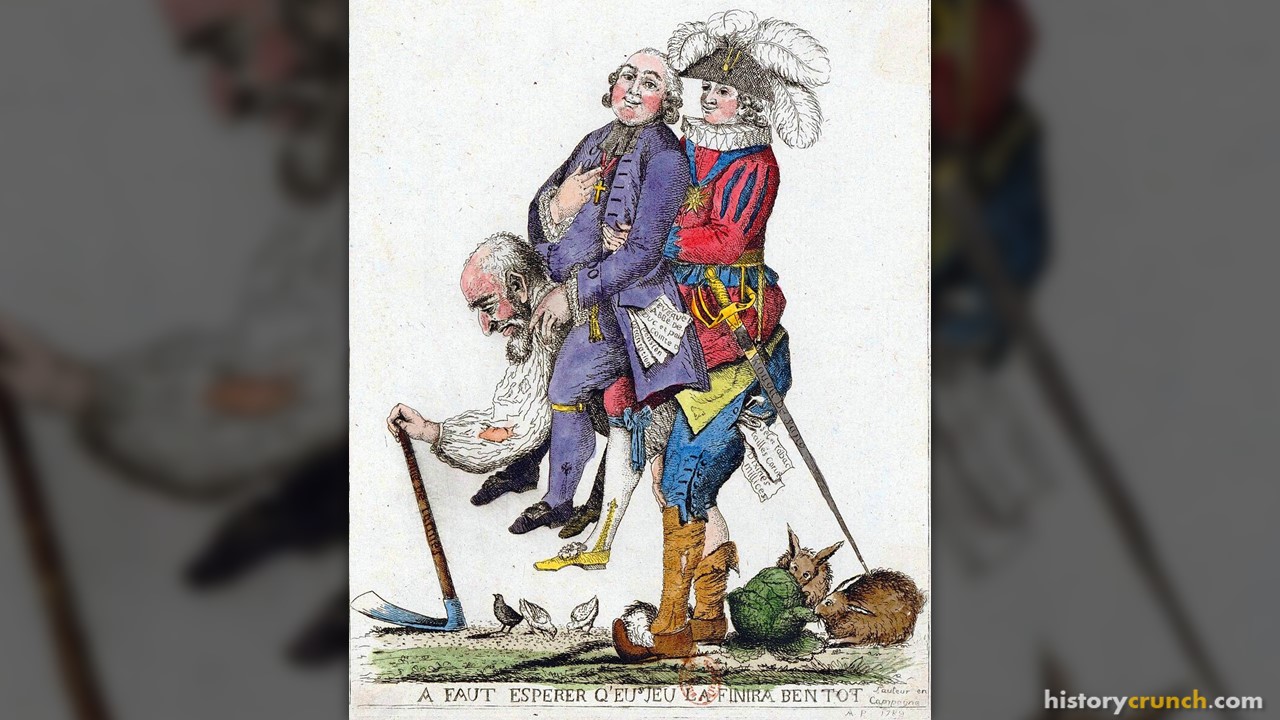
Out of money and out of options, Louis XVI summoned the Estates-General to Versailles in May 1789. The Third Estate, representing about ninety-seven per cent of the country, found itself outvoted by the clergy and nobility under the old rules, refused to accept them, declared itself the National Assembly in June and swore not to separate until France had a constitution.
LEARN MORESHOW LESSwhy it mattersREVOLUTIONThe moment the Third Estate stopped asking and started declaring is the moment absolute monarchy ended in France, six weeks before the Bastille.
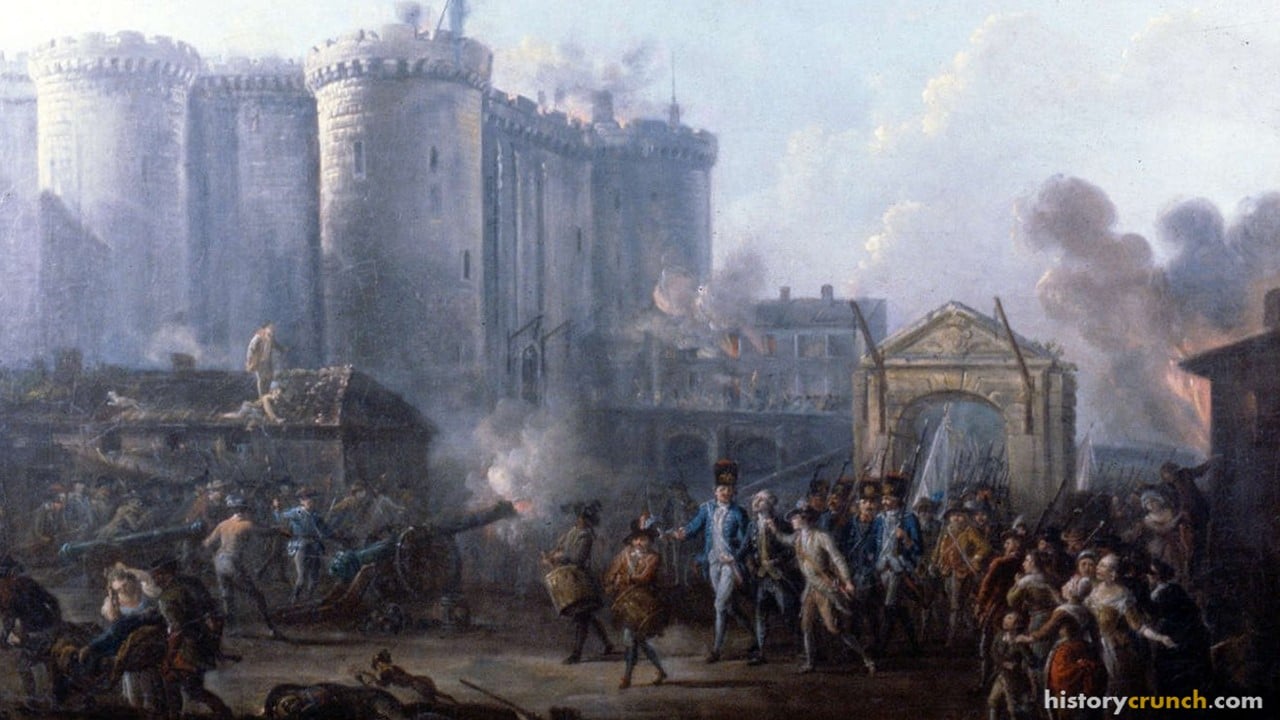
On July 14th, 1789 a Paris crowd looking for gunpowder besieged the Bastille, a royal fortress and prison holding seven inmates. The governor surrendered and was killed. The building meant far more than it held: it was the king's power to imprison a man without trial, standing in stone in the middle of the city.
LEARN MORESHOW LESSwhy it mattersREVOLUTIONIt turned a constitutional crisis into a revolution in the streets, and it gave the Revolution its date. France still keeps it.
On the night of August 4th, 1789, in an atmosphere close to hysteria as peasant risings spread across the countryside, nobles and clergy stood up one after another and renounced their privileges: hunting rights, seigneurial courts, tithes, exemptions. By morning the legal structure of the old regime was gone.
LEARN MORESHOW LESSwhy it mattersSOCIALCenturies of privilege were given up in a few hours, partly from fear and partly from conviction. It is the fastest social change in European history.
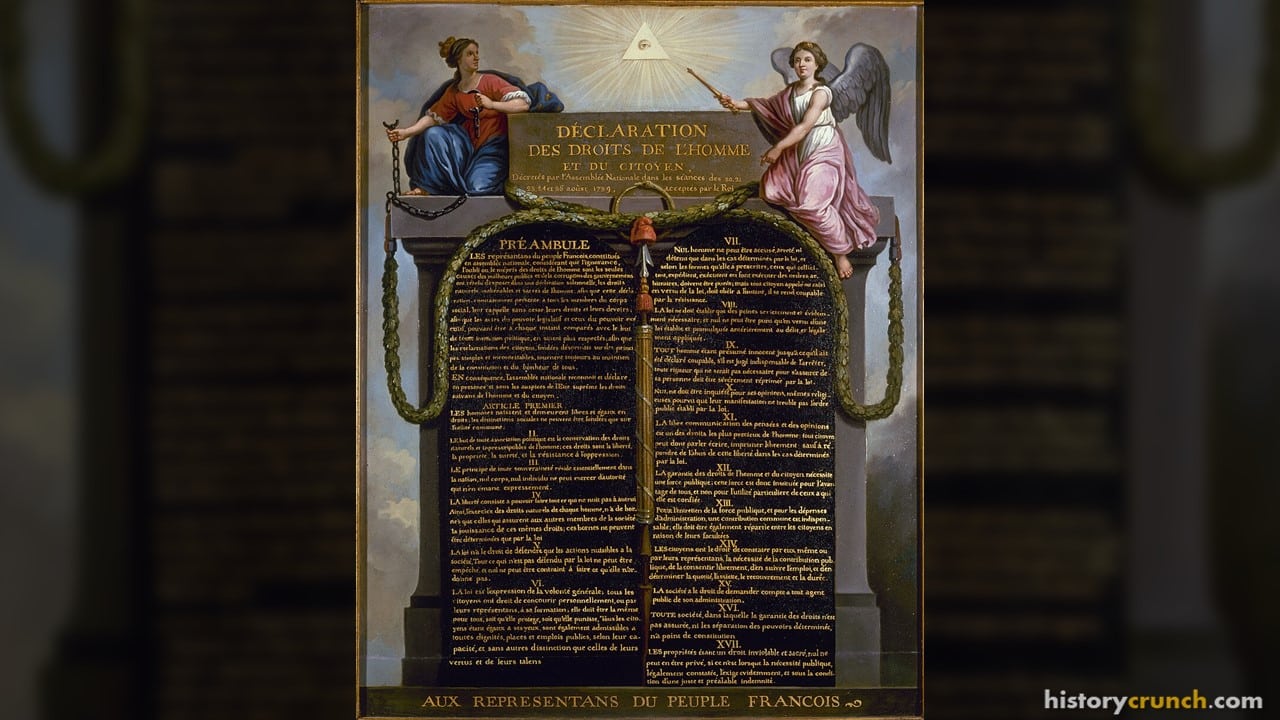
Adopted on August 26th, 1789, the Declaration stated that men are born free and equal in rights, that sovereignty rests with the nation, that law is the expression of the general will, and that liberty consists in being able to do anything that does not harm another. Locke, Montesquieu and Rousseau are all audibly present in it.
LEARN MORESHOW LESSwhy it mattersREVOLUTIONThis is the clearest single statement of what the whole timeline was arguing for. Within four years the same Assembly's successors were executing people without trial.
Joseph died on February 20th, 1790, worn out at forty-eight, with Hungary in revolt, the Austrian Netherlands lost and his brother preparing to cancel most of what he had decreed. He suggested his own epitaph: here lies a prince whose intentions were pure, but who had the misfortune to see all his plans fail.
LEARN MORESHOW LESSwhy it mattersPEOPLEReform by decree, against the country's habits and without its consent, does not hold. It is the strongest argument the age made against itself.
Edmund Burke's Reflections on the Revolution in France appeared in November 1790 and argued that a society is an inheritance rather than a machine to be redesigned, that abstract rights are no substitute for custom and law that have been tested by time, and that this revolution would end in violence and then in a general on horseback.
LEARN MORESHOW LESSwhy it matters · 1 key figurePOLITICALIt is the founding text of modern conservatism and the sharpest criticism the Enlightenment ever received. The prediction about the general came true in nine years.
Paine's reply appeared in 1791 and 1792. The dead cannot bind the living, he argued; every generation may choose its own government; and he pressed the case beyond anything Burke expected, proposing old age pensions, public education and support for the poor paid for by progressive taxation. He was charged with seditious libel and fled to France.
LEARN MORESHOW LESSwhy it matters · 1 key figureREVOLUTIONThe argument between Burke and Paine, inheritance against reason, is still the shape of most political argument. Paine also sketched the welfare state a century and a half early.
Ten amendments were ratified on December 15th, 1791. The first forbade Congress to establish a religion or prohibit its free exercise, or to abridge freedom of speech, the press, assembly or petition. Locke's letter on toleration and a century of argument about censorship were compressed into one sentence.
LEARN MORESHOW LESSwhy it mattersPOLITICALRights stopped being what a ruler granted and became what a government is forbidden to touch. That is the practical difference the Enlightenment made.
Mary Wollstonecraft wrote A Vindication of the Rights of Woman in six weeks and published it in 1792. If reason is what entitles a person to rights, she argued, then women have them, and what looks like female frivolity is the predictable result of an education designed to produce ornaments. She wanted schooling, work and legal standing.
LEARN MORESHOW LESSwhy it matters · 1 key figurePHILOSOPHYShe took the age's own principle and pointed out that it had been applied to half of humanity. It is the founding text of feminism and it is entirely an Enlightenment argument.
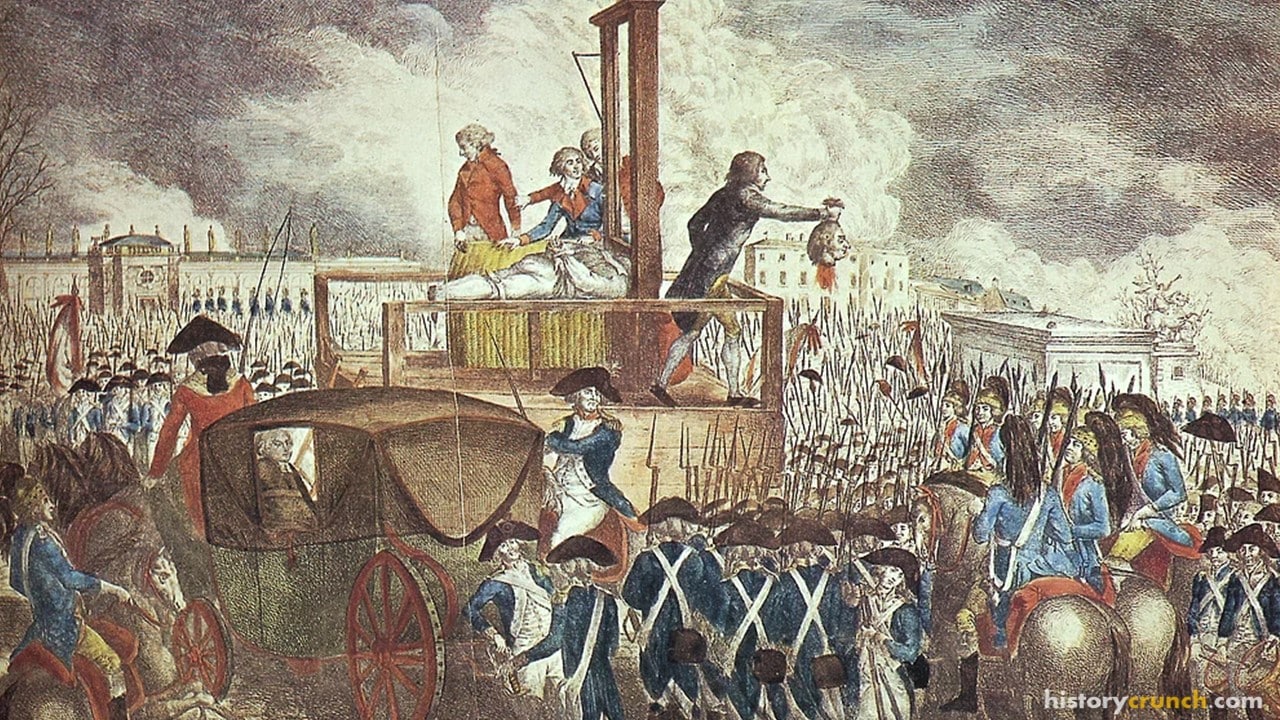
Convicted of conspiracy against liberty by a single-vote margin on the sentence, Louis XVI was guillotined in the Place de la Revolution on January 21st, 1793. He tried to address the crowd and the drums were ordered to drown him out.
LEARN MORESHOW LESSwhy it mattersREVOLUTIONCharles I had been executed by a court in 1649 and Europe survived it. This one was done in the name of the people as a matter of principle, and it put every throne on notice.
Paine had been elected to the French Convention despite speaking no French, and had argued against executing the king, which the Jacobins remembered. He was arrested in December 1793 and held in the Luxembourg for ten months. The chalk mark that should have sent him to the guillotine was put on the wrong side of his cell door.
LEARN MORESHOW LESSwhy it matters · 1 key figureREVOLUTIONThe man who wrote the two great pamphlets of both revolutions was nearly killed by one of them. Reason in power turned out to behave much like anything else in power.
Written partly in prison and published in 1794 and 1796, The Age of Reason argued for a creator known through nature and against revealed religion, going through the Bible pointing out contradictions. Paine thought he was defending God from the churches. Almost nobody read it that way.
LEARN MORESHOW LESSwhy it matters · 1 key figureRELIGIONIt destroyed him. The author of Common Sense returned to America in 1802 to find himself a pariah, and six people came to his funeral.
Catherine died of a stroke on November 17th, 1796, aged sixty-seven. She had expanded Russia enormously, founded schools and hospitals, corresponded with the greatest writers in Europe for thirty years, and left the serfs of her empire less free than she found them.
LEARN MORESHOW LESSwhy it mattersPEOPLEHer reign is the case for the prosecution and the defense at once, which is why enlightened absolutism remains the hardest question in this timeline.
Wollstonecraft died of infection on September 10th, 1797, eleven days after giving birth to a daughter, also called Mary, who would write Frankenstein. Her husband William Godwin published an honest memoir the following year, and the honesty about her life destroyed her reputation for most of a century.
LEARN MORESHOW LESSwhy it matters · 1 key figurePEOPLEHer book had to be rediscovered by a later generation. The argument in it had lost none of its force for having been ignored for ninety years.
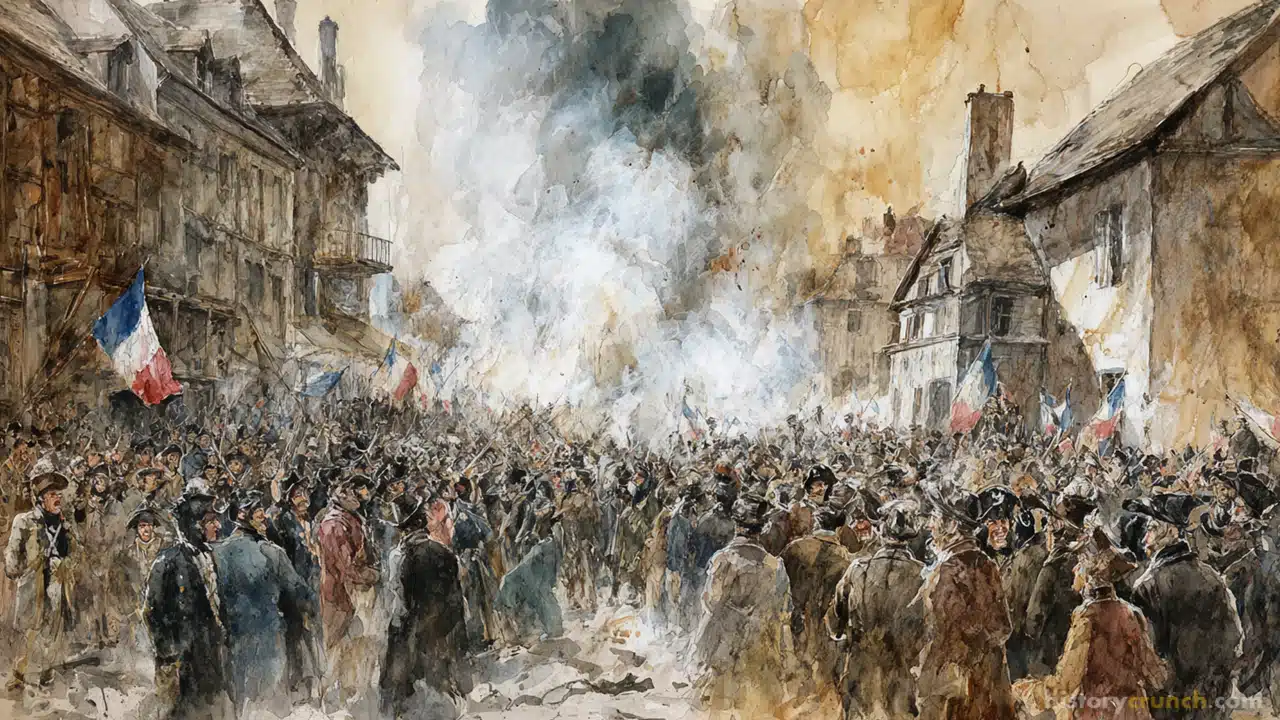
On November 9th, 1799 Napoleon Bonaparte overthrew the Directory in a coup that very nearly failed, and made himself First Consul. France had been through ten years of revolution, terror and war, and was tired enough to accept a soldier who promised order.
LEARN MORESHOW LESSwhy it mattersPOLITICALBurke had predicted this in 1790. Whether Napoleon ended the Revolution or exported it is a question the next fifteen years never quite answer.
Napoleon ended the Revolution and then wrote its best idea into law. The Civil Code of 1804 gave France, and then everywhere his armies went, one law for everyone, equality before it, property rights and civil marriage, in language an ordinary reader could follow. It also put wives back under their husbands, which is the age in one document. Kant died in the town he never left, Paine died shunned, and in 1815 the powers met at Vienna to put the old order back together. They managed the furniture. They could not put back the idea that a government has to justify itself.
France had spent a decade without a working legal system, with revolutionary decrees piled on top of a patchwork of regional customs and Roman law. In 1800 Napoleon appointed four experienced jurists to draft one code for the whole country, and sat in on many of the sessions himself, asking questions.
LEARN MORESHOW LESSwhy it mattersLAWClear law that applies equally to everyone is an Enlightenment demand going back to Beccaria and Montesquieu. This is where it gets written down.
Kant died on February 12th, 1804, aged seventy-nine, in the city where he had been born, studied, taught and never traveled more than a few miles from. His last years were lost to dementia. His last recorded words were that it is good.
LEARN MORESHOW LESSwhy it matters · 1 key figurePEOPLEThe most systematic mind of the age lived the least eventful life in it. His answer to Hume still marks the boundary between what reason can settle and what it cannot.
The separate statutes were consolidated into the Civil Code on March 21st, 1804. Equality before the law, property rights, freedom of religion, civil marriage, no privileges of birth, and the whole thing written so an ordinary literate person could read it. It also placed wives under the authority of their husbands and rolled back much of what the Revolution had given women.
LEARN MORESHOW LESSwhy it mattersLAWNapoleon carried it into every country he conquered and it outlived the empire everywhere. It is the single most durable thing the age produced, and its limits are as instructive as its reach.
Paine died on June 8th, 1809 in New York at seventy-two, poor and largely shunned for The Age of Reason. Six people went to the funeral, two of them freed slaves who had walked a long way. Ten years later an admirer dug up the bones to take them to England for a proper monument, and then lost them.
LEARN MORESHOW LESSwhy it matters · 1 key figurePEOPLEThe man who wrote the best-selling pamphlet of the American Revolution and the best answer to Burke ended as an embarrassment. Reputations are not awarded by argument.
With Napoleon beaten, the powers met at Vienna and redrew Europe to restore legitimate monarchs, balance the great powers against each other and keep revolution out. It worked for a generation and there was no general European war for ninety-nine years.
LEARN MORESHOW LESSwhy it mattersPOLITICALBut the ideas could not be put back. Constitutions, nationalism and the belief that government needs consent kept surfacing, in 1830, in 1848, and after. The Enlightenment outlasted the settlement designed to contain it.

I'm a passionate history and geography teacher with over 15 years of experience working with students in the middle and high school years. I have an Education Degree with a focus in World History. I have been writing articles for History Crunch since 2015 and love the challenge of creating historical content for young learners!

I'm the founder of History Crunch, which I first began in 2015 with a small team of like-minded professionals. I have an Education Degree with a focus in Social Studies education. I spent nearly 15 years teaching history, geography and economics in secondary classrooms to thousands of students. Now I use my time and passion researching, writing and thinking about history education for today's students and teachers.

K.L. is a content writer for History Crunch. She is a fantastic history and geography teacher that has been helping students learn about the past in new and meaningful ways since the mid-2000s. Her primary interest is Ancient History, but she is also driven by other topics, such as economics and political systems.
To cite this timeline as a source, use one of the formats below.
MLA: Beck, E., et al. “Age of Enlightenment Timeline.” HistoryCrunch, 19 September 2026, https://historycrunch.com/enlightenment-timeline/.
APA: Beck, E., Millar, B., & Woida, K.L. (2026). Age of Enlightenment Timeline. HistoryCrunch. https://historycrunch.com/enlightenment-timeline/
Chicago: Beck, E., B. Millar, and K.L Woida. “Age of Enlightenment Timeline.” HistoryCrunch. September 19, 2026. https://historycrunch.com/enlightenment-timeline/
© History Crunch
A habit of checking authority against evidence, spread by print.
The Scientific Revolution proved the method worked, and the philosophers borrowed it.
Because England killed one king, replaced another, and then wrote the terms down.
Because he proved that a few knowable rules can govern everything.
Good universities, cheap printing and a small city where everyone argued.
From an agreement among the people, not from God.
Rights you hold by being human, which a government may not take.
Split the power up and let each part check the others.
Slowly, and mostly because war had proved too expensive.
Because they disagreed about what people are like without a government.
Seriously reforming, and seriously unwilling to give up any power.
One man, one faith, one law, and a court built to keep nobles busy.
Because wars are expensive and the people who could pay were exempt.
An honest civil service, a full treasury and an army out of all proportion.
The administration and the science, and none of the liberty.
Further than anywhere else, and it was reversed within a decade.
Cheap print, anonymous publication and a salon to read it in.
Prison, exile, burning, or a false imprint and a foreign press.
Largely the women who ran the rooms the ideas were read in.
Bastille at 22, exile at 32, celebrity at 60, Pantheon at 97.
The words are Locke's, the structure is Montesquieu's, the argument is Paine's.
It supplied the language. Debt, harvests and privilege supplied the crisis.
Burke said yes. It is the hardest question the age leaves behind.
Running the salons, and mostly left out of the rights.
Less than it should have, while writing that all men are created equal.
From a Scottish professor who distrusted merchants.
A 26-year-old in Milan wrote a short book and Europe changed its laws.
Hume and Kant both said yes, and said so from inside the movement.
Because if the mind is a blank sheet, whoever writes on it shapes the person.
Equality before the law, rights on paper, and the habit of asking why.
No question matches that word.
Research question 1A habit of checking authority against evidence, spread by print.
Research question 2The Scientific Revolution proved the method worked, and the philosophers borrowed it.
Research question 3Because England killed one king, replaced another, and then wrote the terms down.
Research question 4Because he proved that a few knowable rules can govern everything.
Research question 5Good universities, cheap printing and a small city where everyone argued.
Research question 6From an agreement among the people, not from God.
Research question 7Rights you hold by being human, which a government may not take.
Research question 8Split the power up and let each part check the others.
Research question 9Slowly, and mostly because war had proved too expensive.
Research question 10Because they disagreed about what people are like without a government.
Research question 11Seriously reforming, and seriously unwilling to give up any power.
Research question 12One man, one faith, one law, and a court built to keep nobles busy.
Research question 13Because wars are expensive and the people who could pay were exempt.
Research question 14An honest civil service, a full treasury and an army out of all proportion.
Research question 15The administration and the science, and none of the liberty.
Research question 16Further than anywhere else, and it was reversed within a decade.
Research question 17Cheap print, anonymous publication and a salon to read it in.
Research question 18Prison, exile, burning, or a false imprint and a foreign press.
Research question 19Largely the women who ran the rooms the ideas were read in.
Research question 20Bastille at 22, exile at 32, celebrity at 60, Pantheon at 97.
Research question 21The words are Locke's, the structure is Montesquieu's, the argument is Paine's.
Research question 22It supplied the language. Debt, harvests and privilege supplied the crisis.
Research question 23Burke said yes. It is the hardest question the age leaves behind.
Research question 24Running the salons, and mostly left out of the rights.
Research question 25Less than it should have, while writing that all men are created equal.
Research question 26From a Scottish professor who distrusted merchants.
Research question 27A 26-year-old in Milan wrote a short book and Europe changed its laws.
Research question 28Hume and Kant both said yes, and said so from inside the movement.
Research question 29Because if the mind is a blank sheet, whoever writes on it shapes the person.
Research question 30Equality before the law, rights on paper, and the habit of asking why.