Freedom of religion is one of the most important individual liberties in the modern world, and it stands at the heart of how democratic societies think about human rights. In simple terms, it is the idea that people should be able to follow, practice, and express their own religious beliefs without being punished or controlled by the government. It also includes the freedom to change religions or to follow no religion at all. Over many centuries this idea slowly grew out of periods of harsh persecution, bitter religious wars, and the rise of new political thinking, and it is now protected in the constitutions of many countries and in international agreements.
Freedom of religion is best understood as a natural right, meaning a right that belongs to every person simply because they are human, rather than a privilege handed out by a ruler. It usually contains two connected ideas. The first is the freedom to worship and to openly practice a chosen faith. The second is freedom from being forced to support or belong to an official state religion. Together these two ideas form the principle that matters of faith should be a personal choice and not something a government can command.
What Was the Long History of Religious Tolerance?
The story of freedom of religion did not begin in modern times. In fact, there are many examples of ancient rulers allowing several faiths to exist side by side within the same territory. Cyrus the Great granted religious freedom throughout the Achaemenid Empire, which freed Jews who had been held captive in Babylon. A few centuries later, on the Indian subcontinent, the Buddhist Maurya Empire established religious freedom through the Edicts of Ashoka, a ruler in the 3rd century BCE.
Other empires took a mixed approach. The Roman Empire had varying policies, some tolerant and some intolerant, with Judaism allowed but Christianity persecuted until Emperor Constantine in the early 4th century CE. Later, in the Islamic world, the Pact of Umar in 637 CE established dhimmi status within the Islamic Caliphates, in which non-Muslim believers of the book, meaning Jews and Christians, were allowed to practice their religions in exchange for a tax and other obligations. Even the vast Mongol Empire followed this pattern, since Genghis Khan granted religious freedom to everyone in the Mongol Empire. These examples show that toleration existed long before it became a written legal right.
How Did the Reformation Change Religion in Europe?
The modern idea of freedom of religion is closely tied to the Reformation, which was a major split within Christianity. The modern conception of freedom of religion begins with the Reformation, a schism within Christianity between Roman Catholicism and Protestantism. For centuries, most of Europe had been united under the Roman Catholic Church, and disagreeing with the Church could be extremely dangerous.
The event most often seen as the start of this split came from a German monk named Martin Luther. He sent his Ninety-Five Theses to the Archbishop of Mainz in 1517 and posted them at the doors of Wittenberg churches. More specifically, the theses challenged the authority of the Pope and lower Church authorities, especially the selling of indulgences, which were meant to provide absolution from punishment for forgiven sin. Luther’s ideas spread quickly across Europe with the help of the printing press, and soon millions of people were following new Protestant churches that broke away from Rome.
This split did not lead to peace right away. Instead, it triggered a long era of religious conflict often called the Wars of Religion. In these struggles, Catholic and Protestant rulers fought over which faith would dominate different regions, and ordinary people were often persecuted, driven from their homes, or killed because of their beliefs.
How Did the Wars of Religion Lead to Toleration?
Out of these violent conflicts came some of the first laws that formally protected religious minorities. The Wars of Religion ended through treaties and decrees that laid a foundation for religious freedom between and within states. For instance, the Union of Utrecht in 1579 established a united Protestant Netherlands independent from Catholic Spain.
One of the most famous of these decrees came from France. The Edict of Nantes was issued on April 13th, 1598, by Henry IV of France, and it granted the Huguenots substantial rights in a nation still considered essentially Catholic. The Huguenots were French Protestants who had suffered greatly during years of civil war. The controversial edict was one of the first decrees of religious tolerance in Europe and granted unheard-of religious rights to the French Protestant minority. More specifically, the edict upheld Protestants in freedom of conscience and permitted them to hold public worship in many parts of the kingdom, though not in Paris.
Toleration in this period, however, was often fragile and could be taken away. In reality, on October 18th, 1685, Louis XIV formally revoked the Edict of Nantes and deprived the French Protestants of all religious and civil liberties, and within a few years more than 400,000 persecuted Huguenots emigrated to England, Prussia, Holland, and America. This showed that religious freedom needed stronger protection than the will of a single king.
How Did the Enlightenment Shape Freedom of Religion?
During the 1600s and 1700s, a movement of thinkers known as the Enlightenment developed powerful new ideas about individual rights. Central to their work was the concept of natural rights. Natural rights are those that are not dependent on the laws, customs, or beliefs of any particular culture or government, and are therefore universal and inalienable, meaning they cannot be repealed or restrained by human laws.
Enlightenment philosophers argued that people were born with rights that no ruler could rightfully take away, and freedom of conscience was seen as one of these rights. In fact, although natural rights have been discussed since antiquity, it was the philosophers of the Age of Enlightenment that developed the modern concept of natural rights, which has been critical to modern republican government and civil society. These ideas encouraged the belief that government should protect the freedoms of its citizens rather than dictate their faith.
The influence of these ideas can be seen in the great political documents of the era. As stated above, natural rights thinking flowed directly into law, and the acceptance of natural rights often led to the formal protection of certain universal rights in documents ranging from the United States Bill of Rights of 1791 to the United Nations Universal Declaration of Human Rights of 1948.
How Did the United States Protect Religious Freedom?
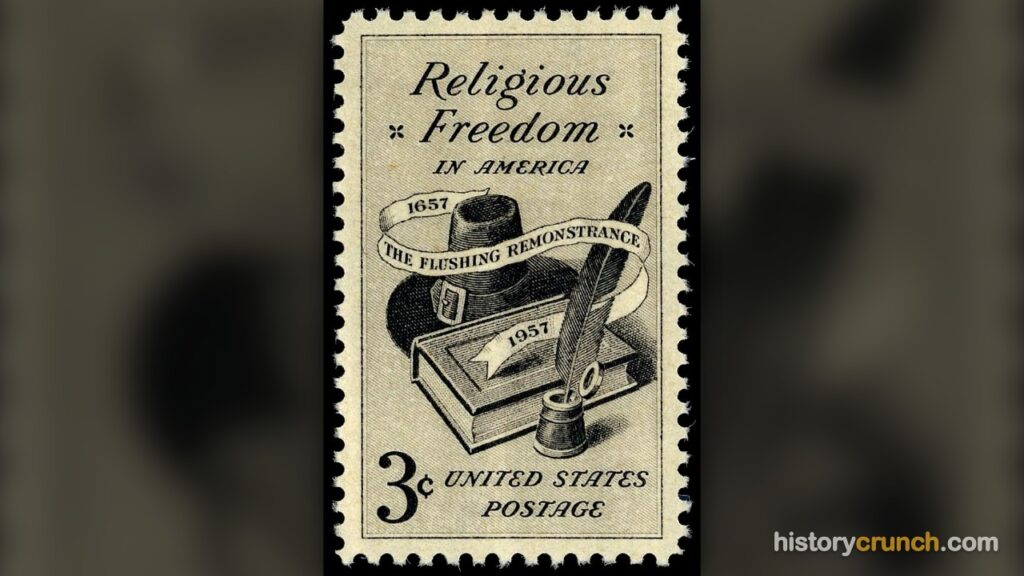
The American colonies were an important testing ground for religious freedom, in part because so many settlers had fled persecution in Europe. Yet toleration was not guaranteed there either. For example, in 1635 Roger Williams, a Puritan dissident, was banned from Massachusetts, after which he moved south and founded Rhode Island, which became the first colony with no established church and the first to grant religious freedom to everyone, including Quakers and Jews.
After the American Revolution, protecting individual freedoms became a national priority. During the ratification of the U.S. Constitution, one of the biggest criticisms of the document was that it lacked a bill of rights, and some states even delayed ratification because it lacked protections for individual liberties and freedoms. To answer these concerns, a set of amendments was added.
The result was the First Amendment, which placed religious liberty at the very front of American law. The First Amendment was adopted on December 15th, 1791, and it established a separation of church and state that prohibited the federal government from making any law respecting an establishment of religion, while also protecting the free exercise of religion for its citizens. Importantly, while the First Amendment enforces the separation of church and state, it does not exclude religion from public life, and from the colonial era to the present religion has played a major role in politics in the United States.
Even with the amendment in place, its exact meaning has been debated ever since. In reality, the U.S. Supreme Court over the years has ruled inconsistently on matters of religious freedom, such as the display of religious symbols in government buildings. This shows that freedom of religion is not a settled question but an ongoing effort to balance different rights.
Significance of Freedom of Religion
The significance of freedom of religion is enormous, because it is now viewed as one of the building blocks of a free society. Freedom of religion is considered by most nations to be a fundamental human right. It protects not only the ability to worship but also the deeper right of every person to hold their own beliefs about the most important questions in life.
Freedom of religion is also broad in what it covers. It supports the freedom of an individual or community, in public or private, to manifest religion or belief in teaching, practice, worship, and observance, and it also includes the right not to profess or practice any religion, which is often called freedom from religion. This means the principle protects believers of every faith as well as those who choose no faith at all.
Finally, the growth of religious freedom helped shape the overall modern idea of human rights. The same reasoning that says a government cannot control a person’s faith also supports freedoms of speech, the press, and assembly. In this way, the long struggle for religious liberty, from ancient empires to the Enlightenment and the constitutions of today, remains one of the most powerful examples of how individual rights slowly won recognition around the world.
Frequently Asked Questions
What Is Freedom of Religion in Simple Terms?
Freedom of religion is the right to follow, practice, and express any faith without government punishment, as well as the right to follow no religion at all. It rests on the idea that belief is a personal choice and that the state should not force anyone to accept an official religion. Many countries treat it as a basic human right that applies equally to everyone.
Who First Used the Phrase “Freedom of Religion”?
The early Christian writer Tertullian is credited with being the first to use the term in the Western tradition. Tertullian was the first-known writer to employ the term freedom of religion, which appears in the 24th chapter of his Apologeticum. He argued that true belief cannot be forced and must come from a person’s own conviction.
Why Was the Edict of Nantes Important?
The Edict of Nantes was important because it was one of the earliest laws in Europe to formally grant rights to a religious minority. It granted the Huguenots full civil rights, including access to education, and established a special court composed of both Protestants and Catholics to handle disputes arising from the edict. Its later revocation showed how easily such rights could be lost when they depended on the will of one ruler.
How Does the First Amendment Protect Religion?
The First Amendment protects religion through two clauses, one preventing the government from establishing an official religion and one protecting the free exercise of faith. Over time this protection was expanded to cover state and local governments as well, not just the federal government. Courts continue to interpret exactly how far these protections reach in everyday life.
Is Freedom of Religion a Human Right Today?
Yes, freedom of religion is recognized as a fundamental human right by most nations and by international agreements. It appears in documents such as the United Nations Universal Declaration of Human Rights, which was adopted in 1948. Despite this recognition, many people around the world still face persecution for their beliefs, which is why the right remains an active concern for governments and human rights groups.
Cite This Article
To cite this article as a source, use one of the formats below.
MLA: Millar, B. “Freedom of Religion: A Detailed Summary.” HistoryCrunch, 9 August 2026, https://historycrunch.com/freedom-of-religion/.
APA: Millar, B. (2026). Freedom of Religion: A Detailed Summary. HistoryCrunch. https://historycrunch.com/freedom-of-religion/
Chicago: Millar, B. “Freedom of Religion: A Detailed Summary.” HistoryCrunch. August 9, 2026. https://historycrunch.com/freedom-of-religion/
Sources
- J.M. Roberts & Odd Arne Westad, The Penguin History of the World.
- Jerry Bentley & Herbert Ziegler, Traditions & Encounters: A Global Perspective on the Past.