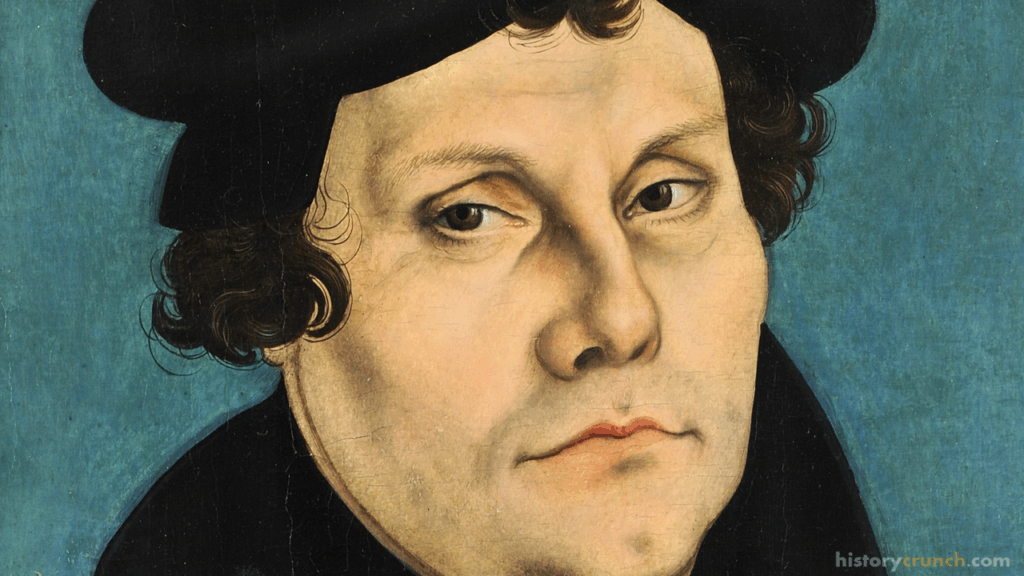
Martin Luther was a central figure of the Protestant Reformation in Europe and in the history of Christianity. He lived from 1483 to 1546 in Germany during the time frame of the Renaissance. To fully understand Martin Luther’s significance, it’s first important to have knowledge of the time period, including: Renaissance, Humanism and Christianity.
MARTIN LUTHER – HISTORY OF CHRISTIANITY
Christianity first emerged from Judaism in the Middle East in the mid-1st century. It began in the century after the death of Jesus Christ of Nazareth, whom the religion is based around. In fact, Christianity is centered on the teachings and life of Christ. As part of his teachings, Jesus taught his followers to reject sin and instead follow the code passed down in the Sermon on the Mount. The Sermon on the Mount was a series of teachings on morals found in the Gospel of Matthew. The purpose of Jesus’s teachings was in preparation for Judgement Day when God was said to reward the righteous and condemn the sinners. These teachings and writings later were solidified into a book known today as the Holy Bible. Christ’s following caused anger among some people at the time and ultimately led to his death. The Romans, under pressure from local religious leaders, arrested him and crucified him around 30 CE.
The Roman Catholic Church (Catholicism) developed out of early Christianity and established itself as the main religion in Europe and sections of the Middle East throughout the Middle Ages. At the time, Catholicism was the only denomination of the religion and was generally known simply as Christianity. As a result, most Christians of the time period believed in several similar aspects of faith. Christian faith and belief centers on a few main factors, known as creeds. A creed is best defined as a formal statement of belief. The most widely held creed in Christianity is the Apostle’s Creed (as well as the Nicene Creed) which dates from the 4th century. The Apostle’s Creed (and Christian faith) contains several different points but there are three main one’s that are generally universally held by Christians. First, the Apostle’s Creed stated belief in God the Father, Jesus Christ, and the Holy Spirit (Trinity). Second, it stated belief in the death and resurrection of Jesus Christ. Third, it stated belief in the second coming of Jesus Christ and Judgement Day.
MARTIN LUTHER – RENAISSANCE
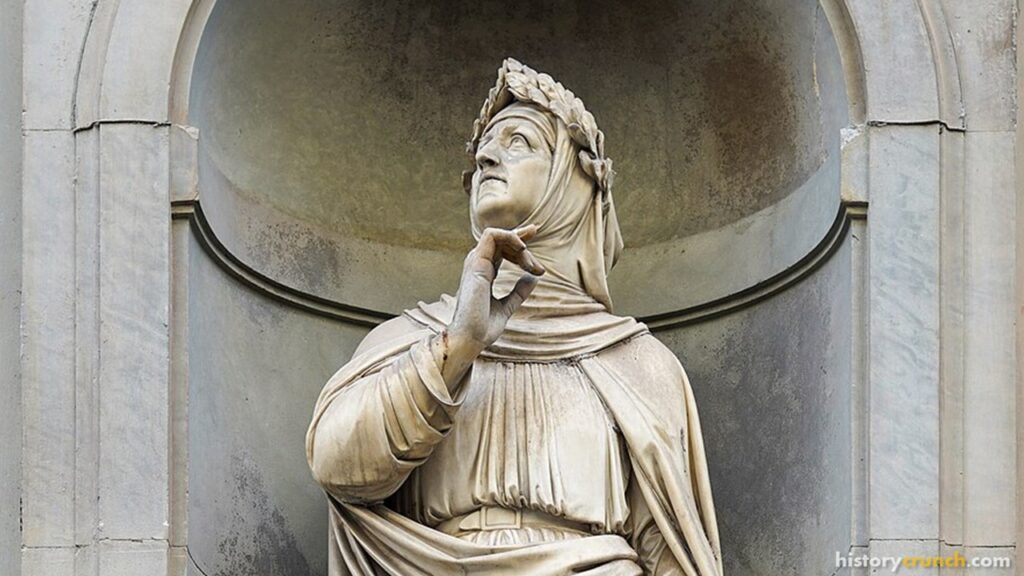
The Renaissance in Europe began in the 14th century and it had a profound impact on Christianity at the time. A major feature of the Renaissance was the introduction of Renaissance Humanism. In general, Renaissance Humanism was the study of ancient Greek and Roman texts with the goal of promoting new norms and values in society. These norms and views varied from those at the time because they focused less heavily on a religious worldview. Instead, Renaissance humanists such as Petrarch used ancient texts to promote a worldview based on logic and reason. This was a major challenge to the Catholic Church and ultimately led to the Protestant Reformation, of which Martin Luther played an important role.
MARTIN LUTHER – PROTESTANT REFORMATION
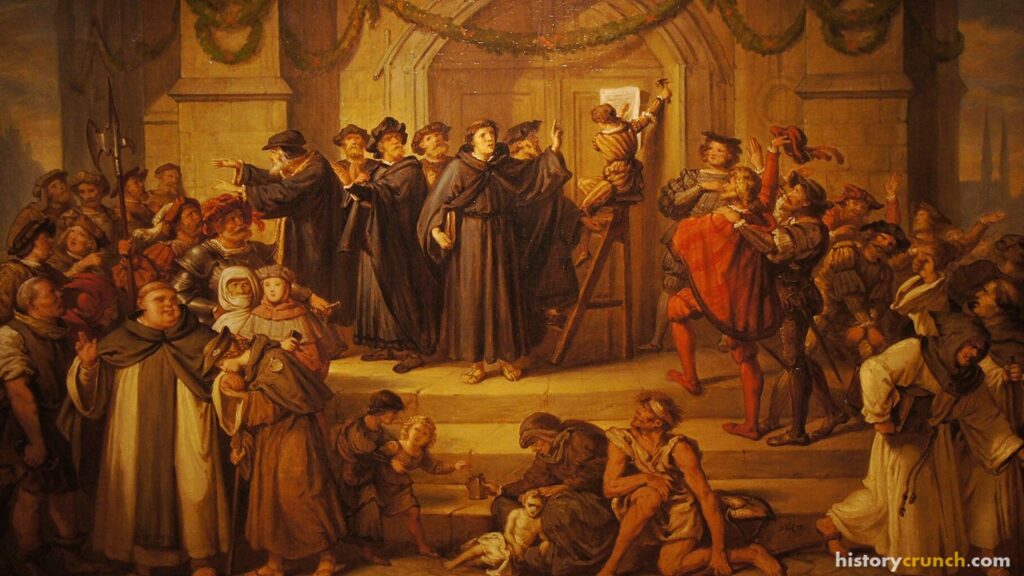
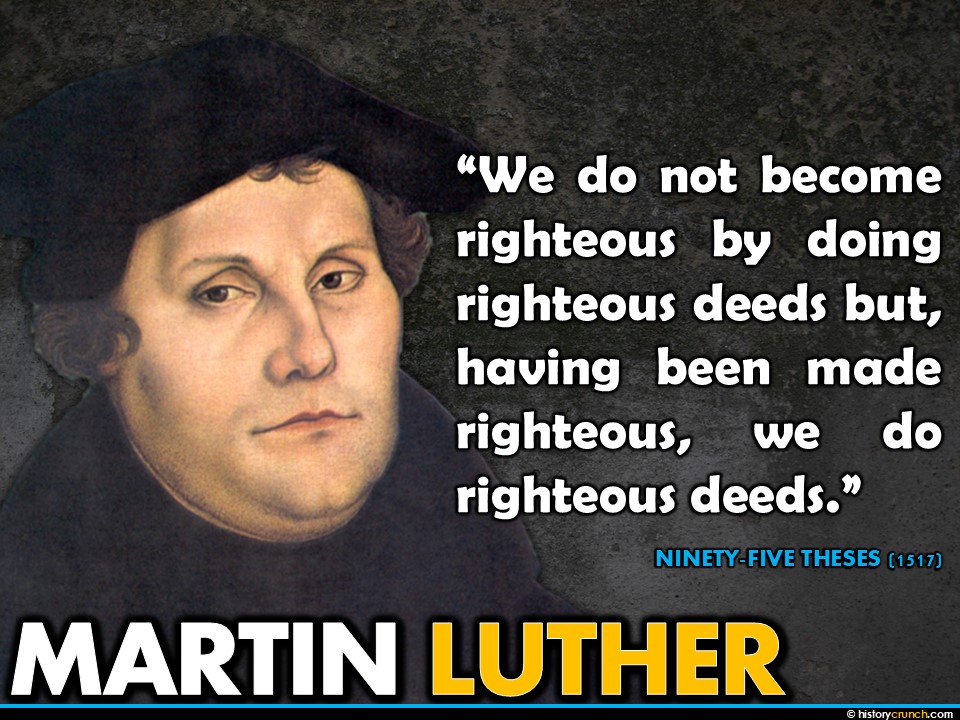
The Protest Reformation began at the start of the 16th century. Historians consider it have started with the publication of Martin Luther’s ‘Ninety-five Theses’ in 1517. Martin Luther (who lived from 1483 to 1546) was a German professor and monk. In his work ‘Ninety-five Theses’, Luther challenged several different teachings and practices of the Catholic Church. For instance, he argued against the notion that salvation was gained through good deeds and instead suggested that it could be attained simply through belief in Jesus Christ. As well, he argued that the scriptures themselves were the only true form of teachings and any other directives from the Catholic Church were not necessarily in line with Christianity. Furthermore, he translated the Bible into his native language of German which allowed many more people to access it and understand it for themselves. These ideas resonated with many Europeans as their worldview had been altered due to the development of humanism and the overall Renaissance. Ultimately, his ideas clashed with those of the Catholic Church and then Pope Leo X. In fact, he was excommunicated from the Church and was forced into hiding. Regardless, his actions inspired others to further the cause of reforming the Church, including: John Calvin and Huldrych Zwingli.
Luther sent the final years of his life is poor health and suffered from multiple illnesses. Despite this he continued to call for reforms of the Catholic Church. He finally died on February 18th, 1546 at the age of 62. He left a considerable legacy having helped altered the history of Christianity.