Separation of powers is one of the most important ideas in the history of modern government, and it shapes how many countries are governed to this day. The idea holds that the power of a government should be divided among separate branches, so that no single person or group can control everything at once. This principle grew directly out of the Age of Enlightenment, when thinkers across Europe began to question the unchecked authority of kings and to search for ways to protect the freedom of ordinary people.
More specifically, separation of powers is a system of government in which the main tasks of ruling a country are split among different branches. In most modern examples, these are the legislative branch, which makes the laws, the executive branch, which carries out and enforces the laws, and the judicial branch, which interprets the laws and settles disputes. Each branch is meant to work on its own tasks and to limit the power of the other two, so that authority is spread out rather than gathered in a single set of hands.
What Was the Age of Enlightenment?
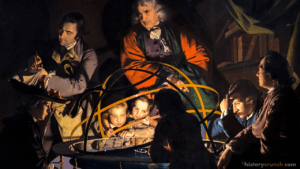
The Age of Enlightenment was a major intellectual and philosophical movement that swept across Europe during the 17th and 18th centuries. Also known as the Age of Reason, this period saw thinkers, writers, and scientists challenge traditional ideas about government, religion, and society. Enlightenment philosophers believed that reason and careful observation, rather than tradition alone, were the best tools for understanding the world and improving human life.
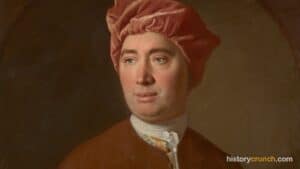
In fact, the Enlightenment involved an intellectual movement in which famous thinkers questioned some of the basic foundations of society, including the role of the government, the sources of authority, and ideas centered on liberty. Some of the most prominent of these thinkers included John Locke, Jean-Jacques Rousseau, Voltaire, and Baron de Montesquieu. These philosophers argued that political authority needed to be justified with reason, and not simply accepted because a king claimed the right to rule.
As stated above, the movement transformed the way people thought about government, religion, science, and human rights. It laid the groundwork for modern democracy and inspired later events such as the American Revolution and the French Revolution. The idea of separation of powers was one of the movement’s most lasting contributions to the world.
Where Did the Idea of Separation of Powers Come From?
The roots of separation of powers reach far back into ancient history. Thinkers in ancient Greece and ancient Rome had already noticed that the work of government could be divided into different kinds of tasks, such as making laws and carrying them out. In fact, ancient writers described mixed forms of government in which a king, a council of nobles, and an assembly of the people all shared authority and checked one another.
For centuries, however, most of Europe was ruled by absolute monarchs who held nearly total power. These kings and queens claimed the divine right to rule, meaning they believed their authority came directly from God and could not be questioned by anyone on earth. Under such a system, the same ruler could make the laws, enforce them, and judge those accused of breaking them, all at the same time.
During the Enlightenment, thinkers began to argue that this concentration of power was dangerous to liberty. They looked back to the older idea that government could be divided and applied it to the problems of their own time. Their goal was to design a system that could prevent any one ruler from becoming a tyrant.
How Did Montesquieu Shape Separation of Powers?
The thinker most closely tied to the idea of separation of powers was the French philosopher Baron de Montesquieu. He is best known for his role as a writer and philosopher in the Age of Enlightenment, alongside others such as John Locke, Voltaire, and Jean-Jacques Rousseau. While Montesquieu wrote several works, his book titled the Spirit of the Laws was by far his most influential.
First published in 1748, Montesquieu released the Spirit of the Laws anonymously in order to avoid censorship. Since the ideals of the Enlightenment often opposed the absolute monarchies of Europe, governments frequently censored works like his. Regardless, the book was widely read across Europe, especially in Britain and America, and became one of the most influential works of the entire Age of Enlightenment.
In the Spirit of the Laws, Montesquieu argued that the powers of government should be split among the executive, legislative, and judicial branches. He warned that when these powers were united in the same person or the same body, there could be no liberty. This was because a single ruler with all three powers could pass any law, enforce it however they wished, and punish anyone who objected.
More specifically, Montesquieu saw the division of powers as a safeguard against exactly the kind of unchecked authority that absolute monarchs exercised. He studied the government of England, where power was shared among the king, Parliament, and the courts, and he used it as a model for his ideas. His writing gave later reformers a clear plan for how a free government might be organized.
What Are the Three Branches of Government?
Under the system of separation of powers, government is generally divided into three branches, each with its own job. The legislative branch is responsible for making laws. In many countries this branch takes the form of an elected assembly or parliament that debates and votes on new rules for society.
The executive branch is responsible for carrying out and enforcing the laws that the legislature passes. This branch is usually led by a president, prime minister, or other head of government, along with the officials and departments that run the day-to-day business of the state. In reality, the executive is the branch that most people picture when they think of a country’s leader.
The judicial branch is responsible for interpreting the laws and settling disputes. Judges and courts decide what the law means in real situations and determine whether someone has broken it. In some systems the courts can also decide whether a law itself follows the rules of the nation’s constitution.
How Do Checks and Balances Work?
Separation of powers works hand in hand with a related idea known as checks and balances. The intention behind organizing government this way was to prevent any single branch from becoming too powerful. Under checks and balances, each branch is given the ability to limit the power of the other two, so that no branch can act without some form of oversight.
For instance, a legislature might pass a law, but the executive could have the power to reject, or veto, that law. In turn, the legislature might be able to override that veto with a large enough vote, and the courts might be able to strike down the law if it violates the constitution. In this way the three branches are constantly balancing one another.
The founders of the United States drew heavily on these ideas when they wrote their Constitution in 1787. They created a Congress to make laws, a president to enforce them, and a system of courts to interpret them, and they carefully gave each branch tools to check the others. This design was meant to guard against tyranny by making sure that power would always be shared rather than concentrated.
Significance of Separation of Powers
The significance of separation of powers is enormous, because it became one of the foundations of modern democratic government. The idea offered a practical answer to a question that had troubled people for centuries, which was how to prevent rulers from abusing their power. By dividing authority among separate branches, reformers found a way to protect liberty without depending on the goodwill of a single leader.
In fact, the principle spread far beyond the country where it was first put fully into practice. Many nations around the world adopted constitutions that divided government into legislative, executive, and judicial branches, and the same pattern is often repeated within states, provinces, and local governments. This structure has shaped countless political conflicts and remains central to how many governments operate today.
More broadly, separation of powers marked a turning point in the relationship between rulers and the people they governed. It reflected the Enlightenment belief that governments existed to serve their citizens and that power should be limited and accountable. For this reason, the idea stands as one of the most lasting contributions of the Age of Enlightenment to the modern world.
Frequently Asked Questions
What is separation of powers in simple terms?
Separation of powers means dividing the jobs of government among different branches so that no single group controls everything. In simple terms, one branch makes the laws, another enforces them, and a third decides what they mean. This division makes it much harder for any one person to seize total control of a country.
Who invented the separation of powers?
The French philosopher Baron de Montesquieu is most often credited with developing the modern idea of separation of powers in his 1748 book, the Spirit of the Laws. However, the basic idea had older roots in ancient Greece and Rome, where writers described governments that shared power among different groups. Montesquieu took these older observations and turned them into a clear plan for a free government.
What is the difference between separation of powers and checks and balances?
Separation of powers is the division of government into branches with different jobs, while checks and balances is the way those branches limit one another. In other words, separation of powers sets up the branches, and checks and balances give each one tools to keep the others honest. The two ideas usually work together in the same system.
Why is separation of powers important in a democracy?
Separation of powers is important in a democracy because it protects the freedom of citizens from abuse by their own government. By spreading authority across several branches, it prevents leaders from gaining the kind of unlimited power that could threaten people’s rights. This balance helps keep a government answerable to the public over the long term.
Which country first used separation of powers in its constitution?
The United States was among the first nations to build separation of powers directly into a written constitution, which it adopted in 1787. The framers created three distinct branches and gave each one ways to limit the others. Their design became a model that many other countries later studied and copied.
Cite This Article
To cite this article as a source, use one of the formats below.
MLA: Millar, B. “Separation of Powers: A Detailed Summary.” HistoryCrunch, 9 August 2026, https://historycrunch.com/separation-of-powers/.
APA: Millar, B. (2026). Separation of Powers: A Detailed Summary. HistoryCrunch. https://historycrunch.com/separation-of-powers/
Chicago: Millar, B. “Separation of Powers: A Detailed Summary.” HistoryCrunch. August 9, 2026. https://historycrunch.com/separation-of-powers/
Sources
- Jerry Bentley & Herbert Ziegler, Traditions & Encounters: A Global Perspective on the Past.
- J.M. Roberts & Odd Arne Westad, The Penguin History of the World.