The American bombing of Cambodia was one of the most controversial military campaigns of the Cold War, and its effects reshaped an entire nation. Between 1965 and 1973, the United States dropped enormous amounts of explosives on the small Southeast Asian country of Cambodia, which shared a long border with Vietnam. Most of these attacks were carried out in secret and without the approval of the United States Congress. The bombing was part of the larger Vietnam War, and it helped set the stage for one of the worst genocides of the twentieth century.
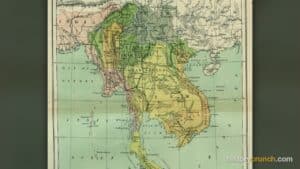
The bombing of Cambodia refers to a series of American air campaigns aimed at destroying North Vietnamese and Viet Cong bases and supply routes hidden inside Cambodian territory. Even though Cambodia was officially a neutral country and not at war with the United States, its jungles were used by communist forces fighting in Vietnam. American leaders decided that these hidden bases had to be destroyed, and they chose to do so from the air, using long-range bombers.
What Was the Vietnam War?
The Vietnam War was a long and violent conflict fought mainly between communist North Vietnam and non-communist South Vietnam, which was supported by the United States. The Vietnam War was caused by the spread of communism in Southeast Asia and by American efforts to contain communism during the Cold War. The war took place from 1955 until 1975, though it did not escalate heavily until the 1960s.
The main reason the United States got involved in Vietnam was to keep communism from spreading around the world. Since the beginning of the Cold War, the United States had followed a policy of containment, which meant actively working to stop the growth of communism. American leaders also believed in the Domino Theory, the idea that if one country in a region fell to communism, its neighbors would soon follow like a row of falling dominoes.
As the war dragged on, the fighting spilled beyond Vietnam’s borders. Cambodia and Laos, both neighbors of Vietnam, were pulled into the conflict even though their governments tried to stay out of it. This regional spread of the war is what led American leaders to focus on Cambodian territory in the first place.
Why Did the United States Bomb Cambodia?
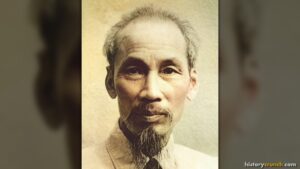
The main reason the United States bombed Cambodia was to destroy the supply lines and hidden bases used by communist forces. A famous network of roads and paths called the Ho Chi Minh Trail ran through Cambodia and Laos. North Vietnamese soldiers used this trail to move troops, weapons, food, and equipment down into South Vietnam.
For years, Cambodia’s leader, Prince Norodom Sihanouk, tried to keep his country neutral. In reality, he was unhappy about the North Vietnamese soldiers using Cambodian land, but he was too weak to force them out. As a result, communist forces were able to build bases just across the border, where American and South Vietnamese troops were not supposed to attack them.
American commanders viewed these bases as a serious threat. They believed that destroying the supply routes would weaken the enemy and pressure North Vietnam into peace talks. In fact, President Richard Nixon and his national security adviser, Henry Kissinger, hoped that heavy bombing would help the United States end the war on favorable terms rather than appear to lose it.
When Did the Bombing of Cambodia Begin?
Limited American bombing of Cambodia actually began in 1965 under President Lyndon B. Johnson, though this fact was hidden for decades. At first, these were smaller tactical air attacks aimed at communist positions near the border. For years, most people believed the campaign started later, and the true scale was not known until secret records were finally released in the year 2000.
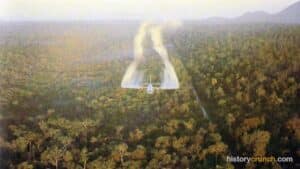
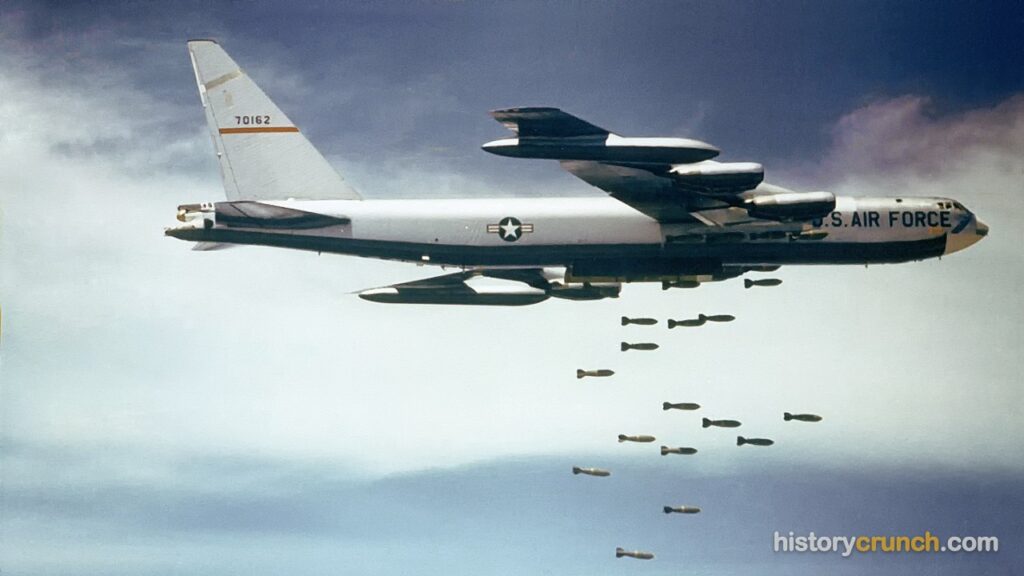
The bombing grew far larger after Richard Nixon became president. On March 18th, 1969, the United States launched a major secret campaign known as Operation Menu. For the first time, giant B-52 bombers were used to carpet bomb targets inside Cambodia, meaning they dropped huge numbers of bombs across wide areas of land.
Operation Menu lasted from March of 1969 until May of 1970. During that time, thousands of air strikes dropped more than 100,000 tons of explosives on eastern Cambodia. The main goal was to find and destroy the mobile headquarters and jungle bases of the North Vietnamese Army and the Viet Cong.
Why Was the Bombing Kept Secret?
The bombing was kept secret because Cambodia was officially a neutral nation, and attacking it could have been seen as illegal. Under the United States Constitution, only Congress has the power to declare war. By widening the war into a separate country without asking Congress, Nixon risked breaking the law, so he ordered that the campaign be hidden from the public and from most lawmakers.
To keep the secret, the military set up an unusual reporting system. Orders were passed quietly from one specific person to another, going around the normal military chain of command. Records were changed so that missions over Cambodia appeared to have taken place inside South Vietnam instead.
News of the secret bombing first leaked to the press in May of 1969, but at that time it caused little public anger. It was only later, as more details came out, that the secrecy became a major scandal. Many Americans felt betrayed when they learned how much had been hidden from them.
What Happened During the 1970 Invasion of Cambodia?
In 1970, the war in Cambodia changed dramatically. Prince Sihanouk was removed from power and replaced by General Lon Nol, who was more friendly toward the United States but soon found himself fighting communist forces inside his own country. This political shift gave American leaders a new opportunity to strike.
On April 29th, 1970, South Vietnamese ground troops crossed into Cambodia in a large invasion, and American troops followed on May 1st. The goal was to smash the enemy bases that the bombing had been targeting from the air. However, the invasion had only limited success, since many communist forces simply moved deeper into Cambodia to escape the attacks.
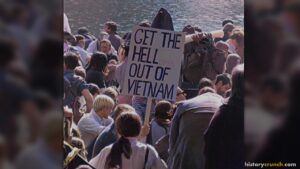
The invasion shocked the American public because it seemed to widen a war that Nixon had promised to wind down. Huge protests broke out across the United States, especially on college campuses. During one demonstration at Kent State University in Ohio, National Guard soldiers opened fire on students, killing four of them. As a result of the outcry, American ground troops were pulled out of Cambodia by the end of June of 1970.
How Did the Bombing Finally End?
Although the ground invasion ended in 1970, the bombing did not stop. A new campaign called Operation Freedom Deal replaced Operation Menu and expanded the bombing to cover most of the eastern half of Cambodia. These air strikes continued for another three years, often carried out to protect the shaky Lon Nol government from communist attacks.
By 1972 and 1973, members of Congress had grown furious about the bombing and the years of deception that had hidden it. Former soldiers testified about the secret Operation Menu missions, and public pressure mounted. In fact, some lawmakers even called for Nixon to be removed from office over the way he had escalated the campaign.
Congress finally acted by cutting off the money needed to continue the war and ordering the bombing to stop. The last American air strikes on Cambodia took place on August 15th, 1973. In response to the whole affair, Congress passed the War Powers Resolution, a law meant to limit a president’s ability to send American forces into combat without approval.
What Were the Human Costs of the Bombing?
The human cost of the bombing was staggering. Over the course of the campaign, the United States dropped an estimated 500,000 tons or more of bombs on Cambodia, and some estimates run far higher. This made Cambodia one of the most heavily bombed countries in all of history.
The bombing killed a large number of Cambodian civilians, with estimates ranging from around 50,000 to several hundred thousand people. Entire villages were destroyed, and countless families lost their homes and farmland. Because so many people fled the countryside, cities like the capital, Phnom Penh, became crowded with desperate refugees.
The destruction of rural life left deep scars. Farms were ruined, and many survivors were left angry, frightened, and homeless. This suffering would soon be used by a dangerous new political movement to gain power.
Significance of American Bombing of Cambodia
The bombing of Cambodia is significant because it helped destabilize the country and open the door to one of the worst genocides in modern history. The chaos and anger created by years of bombing helped a brutal communist group called the Khmer Rouge, led by Pol Pot, grow stronger. The group used the destruction of the countryside to recruit new followers and win support among suffering villagers.
In 1975, the Khmer Rouge captured Phnom Penh and took control of Cambodia. Once in power, they forced people out of the cities and tried to build a radical farming society. Between 1975 and 1979, their policies led to the deaths of roughly 1.7 million people or more through execution, starvation, and forced labor.
The bombing campaign also had lasting effects inside the United States. It deepened public anger over the Vietnam War, fueled the antiwar movement, and damaged trust in the government. More specifically, the secrecy surrounding the bombing became part of a larger pattern of deception that contributed to the political troubles of the Nixon presidency. For all these reasons, the American bombing of Cambodia remains one of the most debated actions of the entire Cold War.
Frequently Asked Questions
Who ordered the bombing of Cambodia?
President Richard Nixon ordered the large secret bombing campaign that began in 1969, working closely with his national security adviser, Henry Kissinger. Smaller bombing of Cambodian border areas had actually started earlier, in 1965, under President Lyndon B. Johnson, though this was not widely known at the time. Nixon greatly increased the size and secrecy of the attacks after taking office.
Was the bombing of Cambodia legal?
Many people argue the bombing was illegal because the United States Constitution gives only Congress the power to declare war, yet the campaign was carried out in secret without congressional approval. Cambodia was also a neutral country that had not declared war on the United States. These legal concerns are a major reason the operation was hidden for so long.
How many bombs were dropped on Cambodia?
The United States dropped an estimated 500,000 tons or more of bombs on Cambodia, though some studies place the number far higher. To put that in perspective, this is more than the amount of explosives used in some entire earlier wars. The heaviest bombing came in the final years of the campaign, especially before Congress forced it to stop in 1973.
How did the bombing lead to the Khmer Rouge?
The bombing destroyed farms and villages and forced huge numbers of people to flee their homes, creating anger and desperation that the Khmer Rouge used to gain support. The group pointed to the destruction as proof that the government and its American allies could not protect the people. This helped the Khmer Rouge grow from a small movement into a powerful force that seized the country in 1975.
What was the connection between the bombing and the Kent State shootings?
The Kent State shootings happened during protests against the 1970 invasion of Cambodia, which was closely tied to the bombing campaign. When Nixon announced that American troops had entered Cambodia, students across the country protested because the war seemed to be expanding. At Kent State University in Ohio, National Guard soldiers fired on demonstrators, killing four students and shocking the nation.
Cite This Article
To cite this article as a source, use one of the formats below.
MLA: Millar, B. “American Bombing of Cambodia: A Detailed Summary.” HistoryCrunch, 16 August 2026, https://historycrunch.com/american-bombing-of-cambodia/.
APA: Millar, B. (2026). American Bombing of Cambodia: A Detailed Summary. HistoryCrunch. https://historycrunch.com/american-bombing-of-cambodia/
Chicago: Millar, B. “American Bombing of Cambodia: A Detailed Summary.” HistoryCrunch. August 16, 2026. https://historycrunch.com/american-bombing-of-cambodia/
Sources
- Bernard Bailyn, The Ideological Origins of the American Revolution.
- Yale Avalon Project
- National Archives — Founders Online
- Robert Middlekauff, The Glorious Cause.