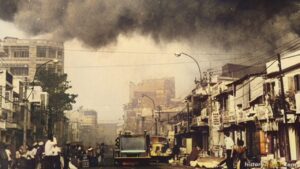
Agent Orange was one of the most controversial weapons used by the United States during the Vietnam War, and its effects lasted long after the fighting ended. It was a powerful herbicide, meaning a chemical made to kill plants, that American forces sprayed across large parts of Vietnam in order to destroy jungle cover and food crops used by their enemies. The Vietnam War was a long and bitter conflict of the Cold War era, and Agent Orange became one of its most lasting and painful legacies because the chemical also caused serious harm to human health.
A herbicide is a chemical substance designed to kill or slow the growth of unwanted plants. Agent Orange was a specific mixture of two plant-killing chemicals, and it contained a dangerous by-product called dioxin. Dioxin is a highly toxic and long-lasting pollutant that has been linked to cancers, diabetes, birth defects and other disabilities. This combination of a useful military purpose and a hidden human cost is what made Agent Orange so significant.
What Was the Vietnam War?
The Vietnam War was a major military conflict that took place primarily between 1955 and 1975. It was fought between the communist government of North Vietnam and the government of South Vietnam, which was supported mainly by the United States. Because the north was backed by communist allies such as the Soviet Union and China, historians consider the Vietnam War to be a ‘proxy war’ within the larger Cold War.
The roots of the conflict lay in decades of colonial rule and a struggle for independence. After France was defeated at the Battle of Dien Bien Phu in 1954, the country of Vietnam was divided along the 17th parallel. The northern half came under the control of communists led by Ho Chi Minh, while South Vietnam was ruled by Ngo Dinh Diem and supported by the United States.
The main reason the United States became involved in Vietnam was to keep communism from spreading. Since the start of the Cold War, American leaders had followed a policy of containment, which meant actively stopping the expansion of communism around the world. This thinking was closely tied to the Domino Theory, the Cold War belief that if one country in a region fell to communism, its neighbors would soon follow. It was within this larger struggle that the United States turned to new weapons like Agent Orange in an effort to win the war.
What Was Agent Orange?
Agent Orange was the most widely used of several herbicides that the United States sprayed in Vietnam. It got its name from the orange stripe painted around the 55-gallon (208-liter) drums used to ship and store it. In fact, several different chemicals were used, and each one was named after the colored band on its storage drum, which led to the whole group being nicknamed the “rainbow herbicides.”
More specifically, Agent Orange was made up of a roughly equal mixture of two chemicals known as 2,4-D and 2,4,5-T. The second of these chemicals contained a contaminant called TCDD, a type of dioxin. This dioxin was not added on purpose. It was an accidental by-product created during the manufacturing of the herbicide, and it turned out to be extremely toxic even in very small amounts.
Other members of the rainbow herbicide family included Agent Purple, one of the earliest defoliants used in the war, along with Agent White, Agent Blue, Agent Pink and Agent Green. As stated above, Agent Orange was by far the most common of these. It accounted for the majority of all the herbicides sprayed during the war.
Why Did the United States Use Agent Orange?
One of the biggest challenges American forces faced in Vietnam was the thick jungle. The dense forest gave North Vietnamese and Viet Cong fighters places to hide, move supplies and set ambushes, and the enemy knew the land far better than American troops did. To deal with this problem, the United States turned to chemical herbicides.
Agent Orange had two main purposes. The first was defoliation, which means stripping the leaves off trees and plants so that enemy troops and their supply routes could no longer hide beneath the forest cover. The second purpose was to destroy enemy food crops so that communist soldiers would have less to eat. The chemical was also used to clear plant growth around American military bases to make them safer from surprise attacks.
At the time, military and government officials assured troops that the herbicides were harmless to people and animals. In reality, these assurances would later prove to be dangerously wrong. The decision to use Agent Orange was also controversial from the start, because some officials worried it might be seen as a form of chemical warfare that other nations would condemn.
How Was Agent Orange Sprayed?
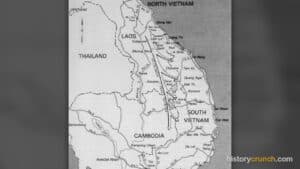
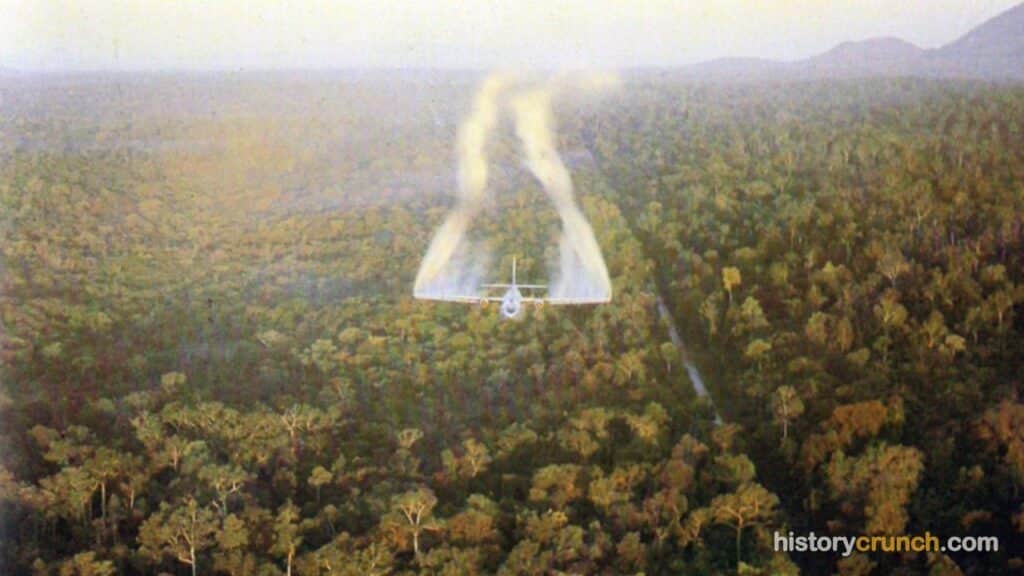
The spraying of herbicides in Vietnam was carried out through a military program codenamed Operation Ranch Hand. This operation ran from 1961 to 1971, and over that decade it sprayed more than 20 million gallons (about 76 million liters) of various herbicides over Vietnam, and also over parts of Cambodia and Laos. The soldiers who flew these missions even joked with a dark motto, “Only you can prevent a forest,” which twisted a famous American campaign about preventing forest fires.
Most of the spraying was done from the air. Low-flying airplanes and helicopters released clouds of herbicide over the forests and fields below. One of the first major operations came in September of 1962, when American pilots targeted mangrove forests in the Mekong Delta.
The scale of the spraying was enormous. Roughly 2.9 million hectares of Vietnamese farmland and forest were affected, and some 20,000 villages were sprayed, exposing up to 4 million people to the toxins. The spraying was not always precise, either. For instance, wind and the blades of the helicopters could blow the chemicals back onto the very crews who were spraying them.
What Were the Health Effects of Agent Orange?
The most serious problem with Agent Orange was not the herbicide’s effect on plants but its effect on people. The dioxin hidden inside the chemical was one of the most toxic substances ever studied, and it did not break down quickly. Instead, it lingered in the soil, water and food chain for many years, which is why its harm continued long after the war ended.
Over time, exposure to Agent Orange was linked to a long list of illnesses. These included various cancers, birth defects, rashes and severe psychological and neurological problems. The damage affected both the Vietnamese population and returning American servicemen, and in many cases it also reached their children who were born with serious defects.
The full extent of the harm is staggering. Estimates suggest that around three million Vietnamese people have been affected by dioxin, including at least 150,000 children born with serious birth defects. Because dioxin can pass from parent to child, the illnesses have appeared across multiple generations, making Agent Orange a health crisis that has stretched far beyond the years of the war itself.
How Did People Respond to Agent Orange?
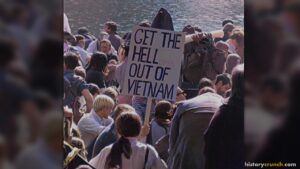
As American veterans came home and began to suffer from strange and serious health problems, many became convinced that Agent Orange was to blame. Beginning in the late 1970s, the public started to seriously question the dangers of dioxin exposure. Veterans reported chronic fatigue, numbness, vision loss, cancer and birth defects in their children, and they demanded answers and help.
This anger led to legal action. In 1979, a large class action lawsuit was filed by Vietnam veterans against the chemical companies that had produced Agent Orange for the government. The case claimed that the product had caused health problems for the veterans and their children. The suit was settled in May of 1984, and a $180 million settlement was awarded to the veterans.
The government eventually responded as well. On February 6th, 1991, President George H. W. Bush signed the Agent Orange Act of 1991. This was the first law to officially recognize a group of illnesses, such as non-Hodgkin’s lymphoma and certain other conditions, as being connected to herbicide exposure so that affected veterans could receive medical benefits. The act created a legal presumption that Vietnam veterans with these diseases had been exposed to the herbicide, which made it far easier for them to receive disability compensation.
Significance of Agent Orange in the Vietnam War
Agent Orange is significant because it shows how modern warfare could cause harm far beyond the battlefield and long after the fighting stopped. What began as a military tool to clear jungles and destroy crops became a health disaster that touched millions of lives. In reality, the chemical proved to be one of the most damaging weapons of the entire war.
The herbicide also had a lasting impact on the environment of Vietnam. Large areas of forest and farmland were poisoned, and dioxin remained in the soil and water for decades, harming wildlife and making some land unsafe to farm. This environmental damage became one more part of the difficult recovery Vietnam faced after 1975.
Finally, the story of Agent Orange changed the way many people thought about the responsibilities of governments and companies during wartime. The lawsuits and the Agent Orange Act showed that soldiers could hold powerful institutions accountable for the harm they suffered. For these reasons, Agent Orange remains one of the most studied and remembered aspects of the Vietnam War, and a powerful warning about the hidden costs of chemical weapons.
Frequently Asked Questions
Why is it called Agent Orange?
Agent Orange was named after the orange-colored stripe painted around the metal drums used to store and ship it. This was a simple way for the military to tell the different herbicides apart, since each chemical had its own colored band. Because of this system, the whole family of herbicides became known as the “rainbow herbicides.”
What is dioxin and why is it so dangerous?
Dioxin is a highly toxic pollutant that was created by accident during the making of Agent Orange. It is dangerous because it is poisonous even in tiny amounts and because it does not break down easily, allowing it to build up in soil, water and the bodies of living things. This staying power is the main reason Agent Orange kept harming people for decades after the spraying stopped.
How much Agent Orange was sprayed in Vietnam?
During Operation Ranch Hand, the United States sprayed more than 20 million gallons (about 76 million liters) of various herbicides across Vietnam, Cambodia and Laos. Agent Orange made up the largest share of these chemicals. The spraying covered millions of acres of forest and farmland between 1961 and 1971.
Did American soldiers get sick from Agent Orange?
Yes, many American veterans developed serious health problems that were later linked to Agent Orange exposure. Because the spraying was not always precise, crews and ground troops could be exposed to the chemical directly. These health concerns eventually led to major lawsuits and to new laws that provided medical benefits for affected veterans.
Is Agent Orange still a problem today?
Yes, the effects of Agent Orange can still be felt today, more than fifty years after the spraying ended. Dioxin remains in some Vietnamese soil and water, and children continue to be born with birth defects connected to their families’ exposure. Cleanup projects and health programs are still working to address this lasting damage.
Cite This Article
To cite this article as a source, use one of the formats below.
MLA: Millar, B. “Agent Orange in the Vietnam War: A Detailed Summary.” HistoryCrunch, 16 August 2026, https://historycrunch.com/agent-orange-in-the-vietnam-war/.
APA: Millar, B. (2026). Agent Orange in the Vietnam War: A Detailed Summary. HistoryCrunch. https://historycrunch.com/agent-orange-in-the-vietnam-war/
Chicago: Millar, B. “Agent Orange in the Vietnam War: A Detailed Summary.” HistoryCrunch. August 16, 2026. https://historycrunch.com/agent-orange-in-the-vietnam-war/
Sources
- Max Hastings, Vietnam: An Epic Tragedy.
- George C. Herring, America's Longest War.
- National Archives
- Fredrik Logevall, Embers of War.