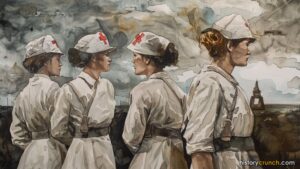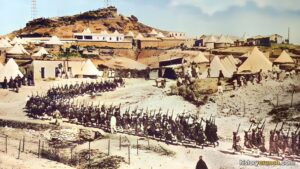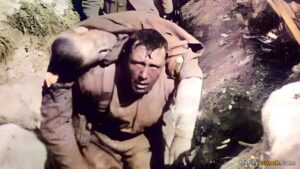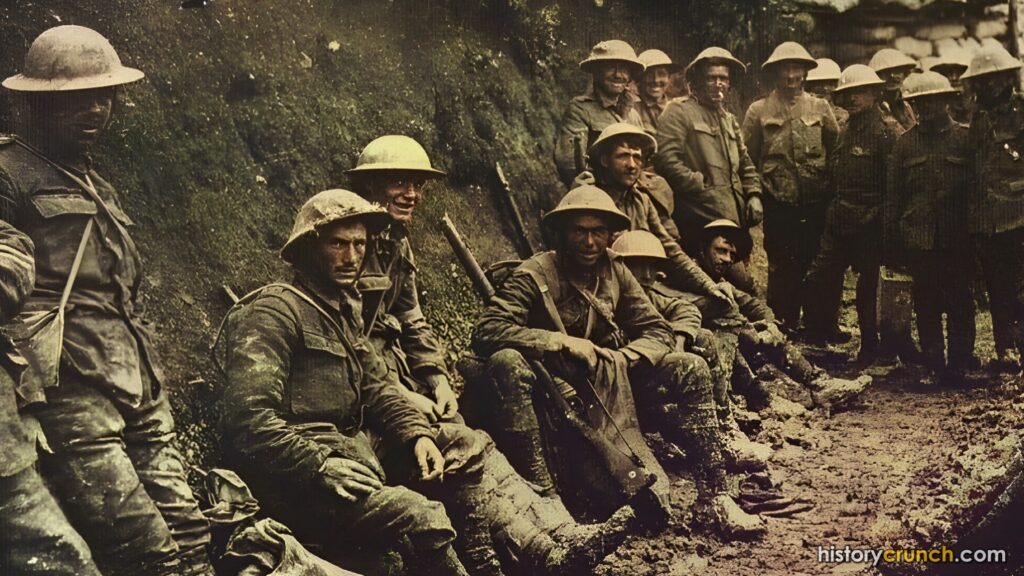
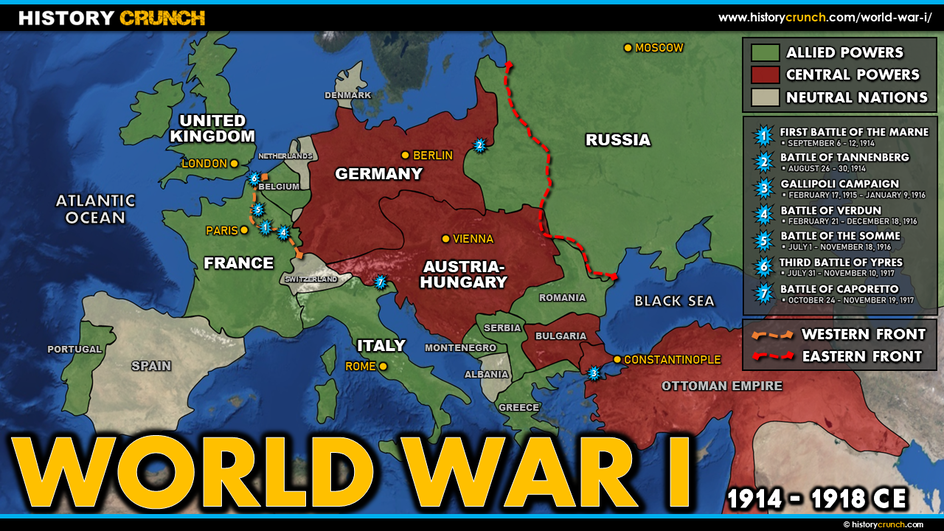
The Battle of the Somme was one of the most significant battles of World War I. In fact, it was one of the bloodiest battles in human history. The Battle of the Somme occurred in the summer and fall of 1916 along the trenches of the Western Front in northern France. Today the battle is remembered as one of the most significant from World War I and is viewed as characteristic of the nature of fighting at the time. For instance, during the Battle of the Somme, hundreds of thousands of soldiers for both the Allied and Central Powers were injured and killed. As such, the battle is seen as an example of the ‘waste of humanity’ that the trenches of the Western FrontThe line of trenches and battlefields stretching across northern France and Belgium where Allied and German forces fought. became known for.
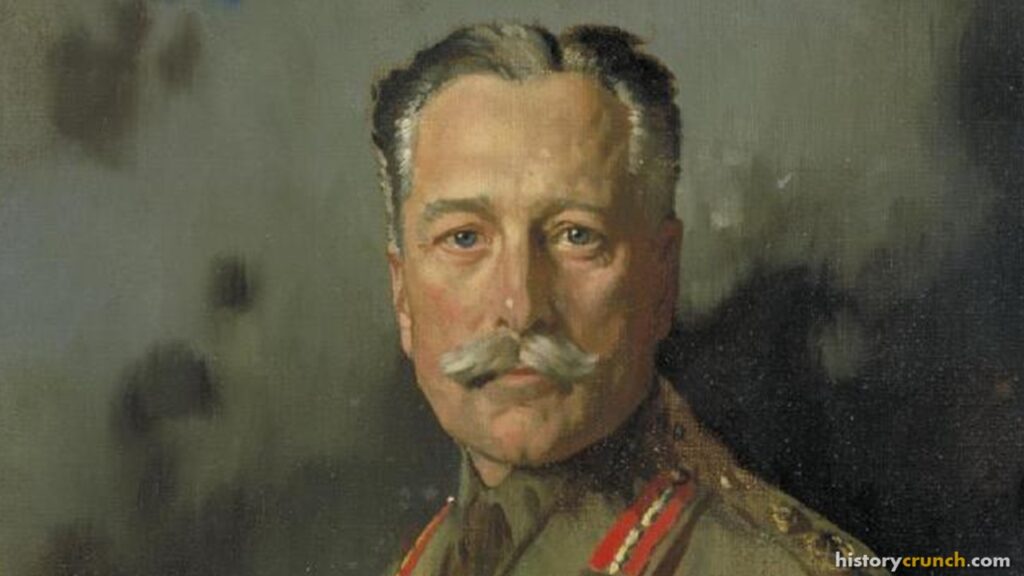

When Did the Battle of the Somme in World War I Occur?
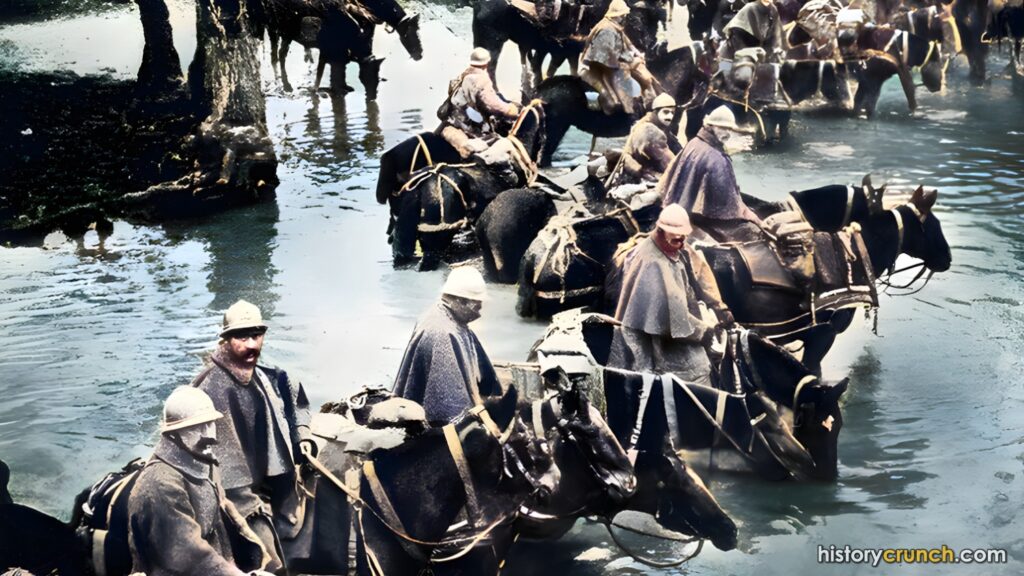
The Battle of the Somme took place from July 1st, 1916 to November 18th, 1916 and is remembered as one of the bloodiest battles in human history. It was a devastating battle that took place along the River Somme in northern France. It was fought between Allied Powers of France and Britain (along with forces from the British Empire) and the Central Power of Germany and was a major conflict on the Western Front. British Empire forces that participated in the Battle of the Somme included: Australia, Canada, Newfoundland, New Zealand, South Africa, India, etc.
 FactsthatCrunch
First Day of the Battle of the Somme
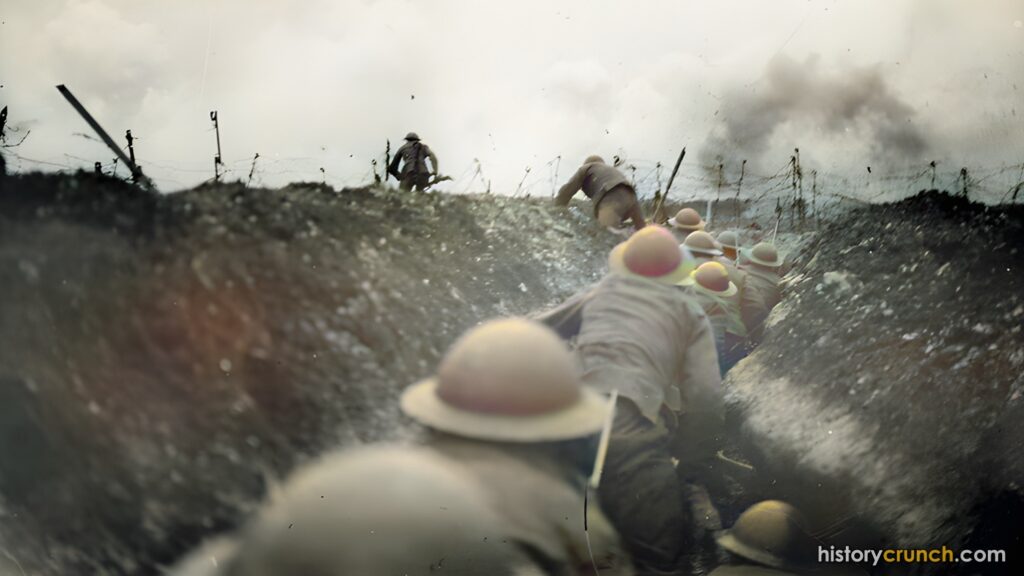
At 7:30 in the morning on July 1st, 1916, after a week of heavy shelling, British and French soldiers climbed out of their trenches and advanced toward the German lines along the River Somme. The German defenders had survived the bombardment in deep dugouts, and their machine guns cut down the attackers. It became the bloodiest single day in the history of the British Army.
What Led to the Battle of the Somme in World War I?
France and Britain both hoped that by starting the Battle of the Somme, they would relieve pressure on French defenders in Verdun during the Battle of Verdun where the French were struggling against the German assault on that region. The Allied strategy at the Battle of the Somme was to draw more German troops away from Verdun and into the Somme in hopes of causing Germany to struggle with managing both large battles at the same time.
 FactsthatCrunch
By the spring of 1916, the German army had been attacking French defenses at Verdun for months, stretching French forces and threatening to collapse that sector of the Western Front.
The Battle of Verdun began on February 21st, 1916, and the prolonged German assault pushed France to ask Britain for relief. The resulting offensive at the Somme, opening on July 1st, 1916, was shaped directly by the political and military pressure Verdun had created between the two Allied governments.
What Happened During the Battle of the Somme in World War I?
The Battle of the Somme in World War I unfolded in a series of three phases. These phases unfolded at different times throughout the summer and fall of 1916. As well, the phases included many smaller conflicts or battles between the Allied Armies and the German Army, which led to the numerous casualtiesSoldiers killed, wounded, or missing in a battle. that each suffered during the course of the Battle of the Somme.
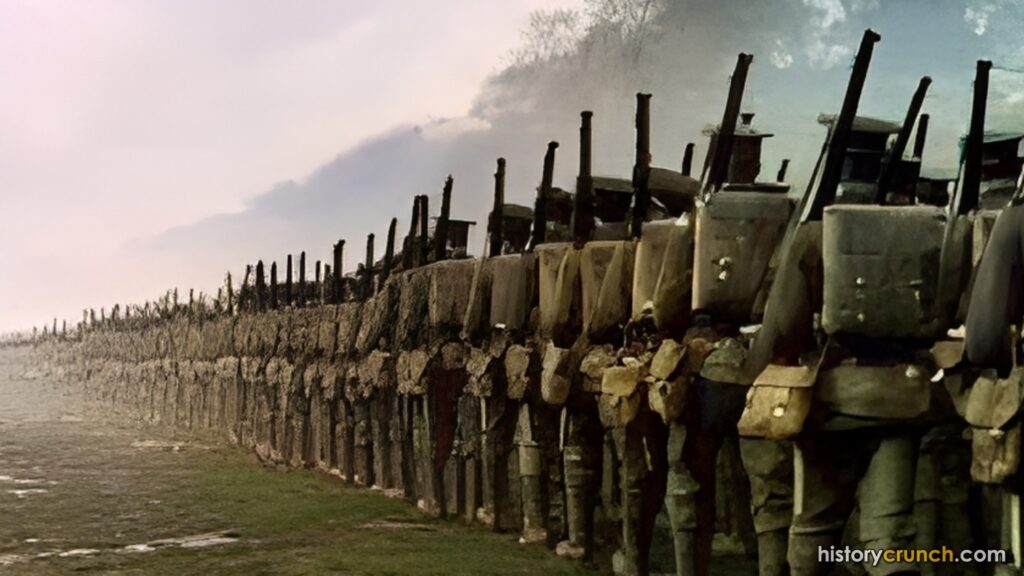
The first phase of the Battle of the Somme is considered to have taken place from July 1st to the 17th in 1916. As such, the first phase included the first day of fighting, which was particularly deadly. For instance, on the opening day of the Battle of the Somme, the British forces were ordered ‘over the topAn order for soldiers to climb out of their trenches and advance directly toward enemy lines.’ and advanced on the German line of trenches. The attack was a disaster and remains to this day as the bloodiest day in the history of the British Army. In fact, the British Army suffered over 57,000 casualties, including over 19,000 dead. These terrible losses were also true for the armies from across the British Empire that also participated in the Battle of the Somme. For example, the Newfoundland Regiment famously lost almost all of its fighting force on the first day of the battle.
The first day of fighting was also deadly for the Germans who suffered terrible losses at the hands of the British and French forces that assaulted the German defensive positions. For instance, historians estimate that the German defenders suffered between 10,000 to 12,000 casualties on the first day. Other significant conflicts of the first phase included: the Battle of Albert, Battle of Bazentin Ridge and the Battle of Fromelles.
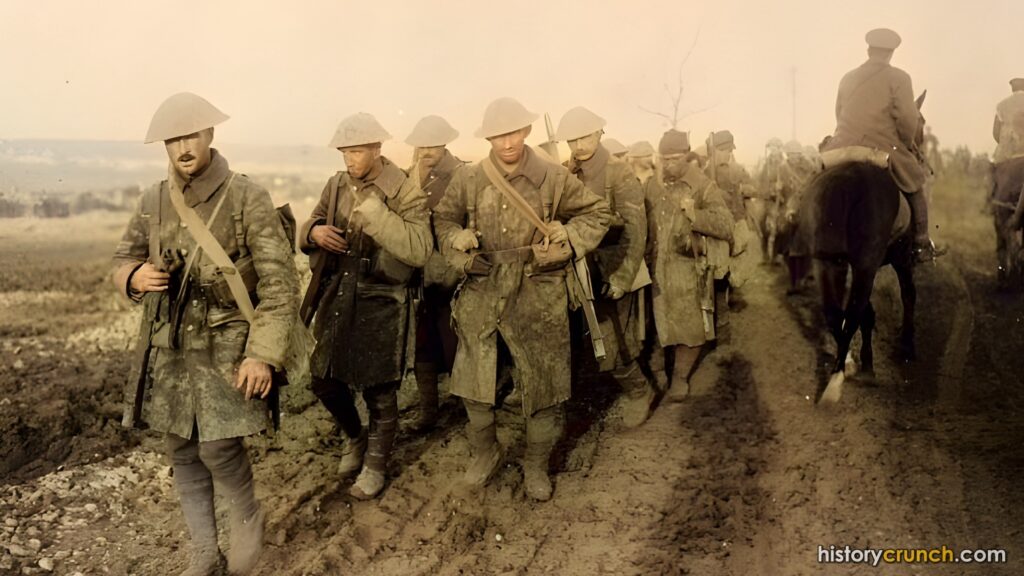
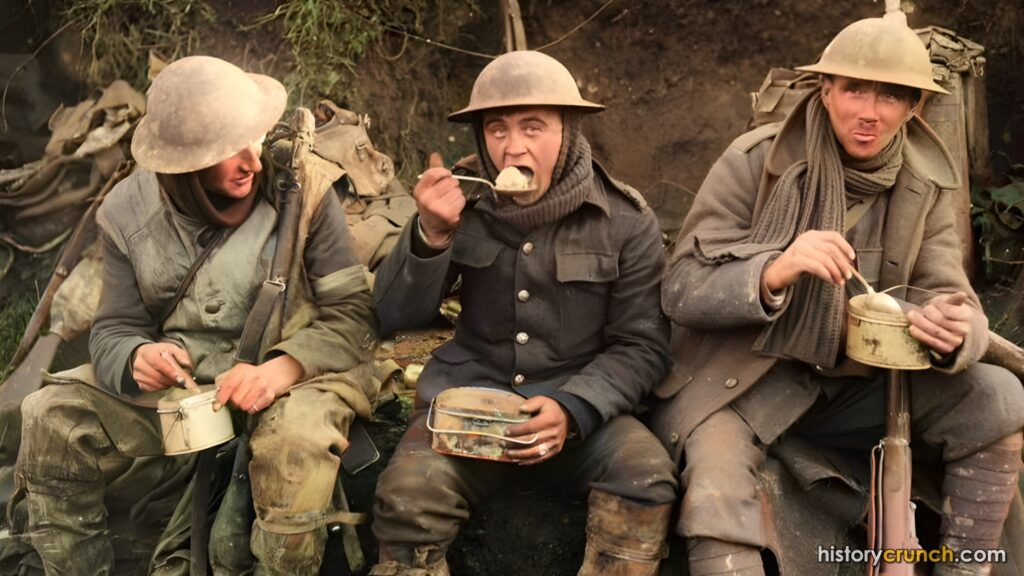
The second phase of the Battle of the Somme is considered to have occurred from July to September in 1916 and involved several significant conflicts. These conflicts included: Battle of Delville Wood, Battle of Pozières, Battle of Guillemont and the Battle of Ginchy. These battles saw intense fighting between the Allied Powers and the German Army, which led to many casualties. In fact, during this time, trench warfareA style of fighting where armies face each other from long dug-out ditches, leading to slow, deadly stalemates. began to take its toll and led to a negative experience for both sides. The trench warfare of the Battle of the Somme continued for the next few weeks, until the British introduced a new weapon into World War I.
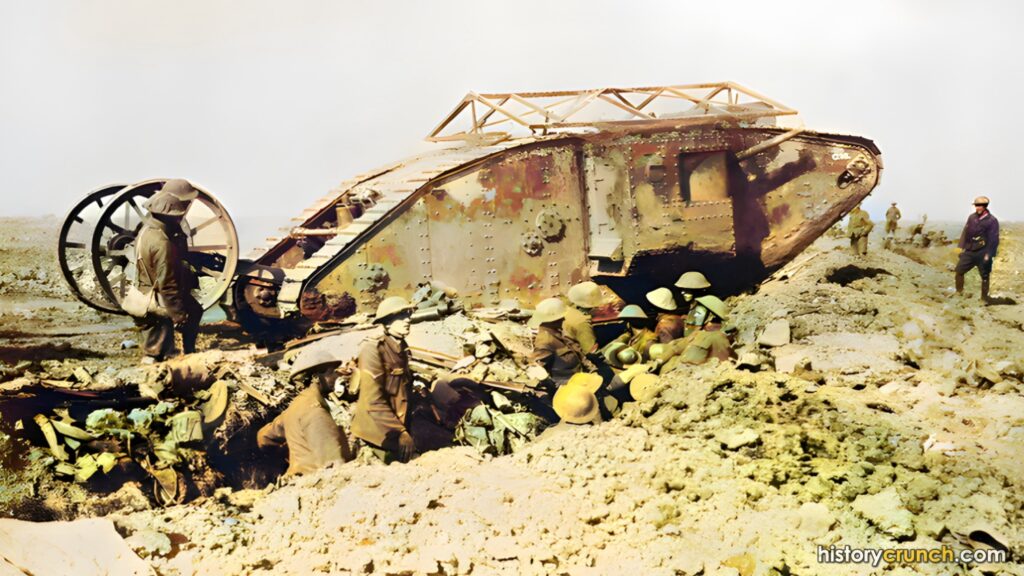
The third phase of the Battle of the Somme occurred from September to November of 1916. Similar to the earlier phases it also included several significant smaller conflicts, such as: Battle of Flers–Courcelette, Battle of Morval, Battle of Thiepval Ridge, Battle of the Transloy Ridges, Battle of the Ancre Heights, and the Battle of the Ancre. Several of these battles were very significant. For instance, the Battle of Flers–Courcelette was important because it involved the first introduction of the tank as a weapon.
The British introduced the first tanks ever into the battlefield of the Battle of the Somme on September 15th, 1916. The first use of tanks in battle had mixed results. Many of them failed due to mechanical failure and were largely uncontrollable or became stuck in the thick mud of northern France. However, they also provided a psychological advantageA benefit gained by frightening or shocking the enemy rather than through direct physical force. as the Germans were shocked to see these giant vehicles approaching them across ‘No Man’s Land’.
The Allied forces continued their difficult push forward throughout the third phase of the Battle of the Somme but struggled to gain much ground. The battle finally came to an end on November 18th, 1916 when the change in weather and arrival of snow made fighting even more difficult. Many historians consider the Battle of the Somme to be a costly Allied success, because it relieved the pressure on Verdun and wore down the German Army. Even so, the Allies advanced only about 6 miles (10 km), and the towns of Péronne and Bapaume stayed in German hands until the Germans pulled back in early 1917. With that said, the Battle of the Somme was a devastating war and led to massive casualties for both sides.
What Was the Outcome of the Battle of the Somme in World War I?
In the end, the Battle of the Somme was one of the deadliest battles of World War I. The total casualty count numbered over 1 million, with the Allied forces having over 620,000 (with approximately 420,000 of them being British and 200,000 of them French) and the German forces having approximately 400,000. The Battle of the Somme is one of the most notable battles of World War I due to it being such a brutal and devastating conflict.
World War I timeline · 1914 – 1918
Key Vocabulary
Casualties
Western Front
Over the top
Trench warfare
No Man’s Land
Psychological advantage
Frequently Asked Questions
When was the Battle of the Somme fought?
The Battle of the Somme was fought from July 1st, 1916 to November 18th, 1916. It took place along the River Somme in northern France during World War I. The fighting lasted through the summer and fall and ended when snow made battle even harder.
Why did the Allies launch the Battle of the Somme?
France and Britain hoped the attack would relieve pressure on French troops at Verdun. They wanted to pull German soldiers away from Verdun and into the Somme. The plan was to force Germany to fight two large battles at the same time.
Why was the first day of the Somme so deadly?
The first day, July 1st, 1916, remains the bloodiest day in the history of the British Army. British soldiers were ordered “over the top” to attack the German trenches, and the assault failed badly. The British suffered over 57,000 casualties, including more than 19,000 dead.
When were tanks first used in the battle?
The British first used tanks on September 15th, 1916, during the Battle of Flers-Courcelette. This marked the first time tanks were ever used in warfare. Many broke down or got stuck in the mud, but they still shocked German soldiers.
Who won the Battle of the Somme?
Many historians see the Battle of the Somme as a costly Allied success because it relieved Verdun and wore down the German Army. Still, the Allies advanced only about 6 miles (10 km), and Péronne and Bapaume stayed in German hands until early 1917. Even so, the battle caused terrible losses for both sides.
How many soldiers were killed or wounded at the Somme?
The total casualty count was over 1 million, making it one of the deadliest battles of World War I. Allied losses reached over 620,000, with about 420,000 British and 200,000 French. German forces suffered roughly 400,000 casualties.
Cite This Article
To cite this article as a source, use one of the formats below.
MLA: Beck, Elias. “Battle of the Somme in World War I: A Detailed Summary.” HistoryCrunch, 29 September 2026, https://historycrunch.com/battle-of-the-somme-in-world-war-i/.
APA: Beck, E. (2026). Battle of the Somme in World War I: A Detailed Summary. HistoryCrunch. https://historycrunch.com/battle-of-the-somme-in-world-war-i/
Chicago: Beck, Elias. “Battle of the Somme in World War I: A Detailed Summary.” HistoryCrunch. September 29, 2026. https://historycrunch.com/battle-of-the-somme-in-world-war-i/
Sources
- Imperial War Museum
- Fordham Modern History Sourcebook
- Margaret MacMillan, The War That Ended Peace.