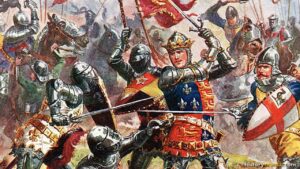
The Middle Ages was a major period in the history of Europe that lasted for approximately 1,000 years, from the 5th century to the 15th century. The end of the Middle Ages was not caused by a single event but rather by a combination of factors that transformed European society over time. In general, historians point to several main causes for the end of the Middle Ages, including: the impacts of the Black Death, the decline of feudalism, the fall of Constantinople and the beginning of the Renaissance.

What Were the Middle Ages?
The Middle Ages, also known as the Medieval Period, refers to the period of European history that stretched from the 5th century to the 15th century. More specifically, historians generally place the beginning of the Middle Ages at 476 CE, with the fall of the Western Roman Empire, and its end at approximately 1500 CE, with the start of the Renaissance. Due to its length, the Middle Ages is divided into three smaller periods, including: the Early Middle Ages, the High Middle Ages and the Late Middle Ages. The Late Middle Ages, which lasted from the start of the 14th century to the end of the 15th century, was the final period of the Middle Ages and saw many of the major changes that brought the medieval world to an end.
Impact of the Black Death
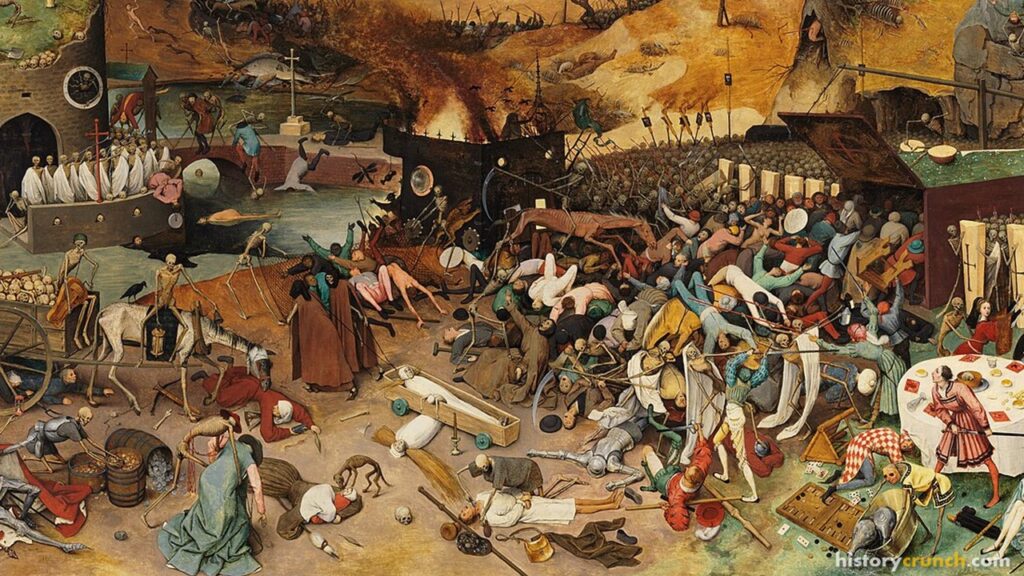
One of the most significant factors in the end of the Middle Ages was the impact of the Black Death. The Black Death is one of the most important events in Western history and is the most famous pandemicAn infectious disease that spreads across a very wide area, affecting huge numbers of people. in all of human history. A pandemic is the term used to describe the spread of an infectious disease over a wide area. The Black Death occurred during the 14th century and ravaged human populations throughout Asia and Europe as it spread along trade routes and through trading ports. Historians estimate that it resulted in the deaths of between 75 and 200 million people in Europe and Asia, with some regions losing as much as half of their population.
The Black Death had a profound impact on medieval European society. For instance, the massive loss of life caused by the plague threw the traditional social and economic structures of the Middle Ages into chaos. With so many people dead, there was a severe shortage of workers across Europe. This gave surviving peasants and serfsPeasants who were bound to a lord’s land and worked it under the feudal system. much more bargaining power than they had previously held under the feudal system. As a result, many peasants were able to demand better conditions and wages from their lords, which weakened the hold of feudalismThe medieval system where nobles controlled land and serfs worked it in exchange for the lord’s protection. over European society. Furthermore, the Black Death caused many people to question the authority of the Catholic Church, since the Church had been unable to explain or stop the spread of the disease. This questioning of the Church’s authority was an important step toward the major changes that came with the Renaissance and eventually the Protestant Reformation.
FactsthatCrunchThe Black Death's worker shortage gave surviving peasants the power to demand higher wages and better conditions, which historians argue was a key force in breaking down feudalism across medieval Europe.
Decline of Feudalism
Closely connected to the impact of the Black Death was the decline of feudalism, which was another major factor in the end of the Middle Ages. Feudalism was the social and political system that had defined life in medieval Europe for centuries. Under feudalism, kings and nobles controlled large areas of land and peasants, known as serfs, worked the land in exchange for protection from their local lord. This rigid social hierarchy was a central feature of medieval European society and was closely tied to the Manor System, which organized the everyday management of land and agriculture throughout the Middle Ages.
However, by the Late Middle Ages, feudalism had begun to weaken significantly. As stated above, the Black Death gave surviving peasants greater economic power and many left their traditional lands in search of better opportunities. At the same time, the growth of towns and cities across Europe created new economic opportunities outside of the feudal system. Trade increased, and a new merchant classA new group of traders and businesspeople that grew in towns and did not fit into the traditional noble-and-peasant hierarchy. began to emerge that did not fit neatly into the traditional feudal hierarchy of nobles and peasants. As well, the Crusades, which were a series of religious wars carried out by Christian crusaders from Europe beginning in 1095 CE, had also contributed to the weakening of feudalism. This is because many lords spent their fortunes funding crusades and large populations of people left their land to fight, which further disrupted the feudal economy. As such, the decline of feudalism was both a cause and a consequence of the broader changes taking place in Europe at the end of the Middle Ages.
FactsthatCrunchHow did peasant bargaining power look different before and after the Black Death?
Fall of Constantinople
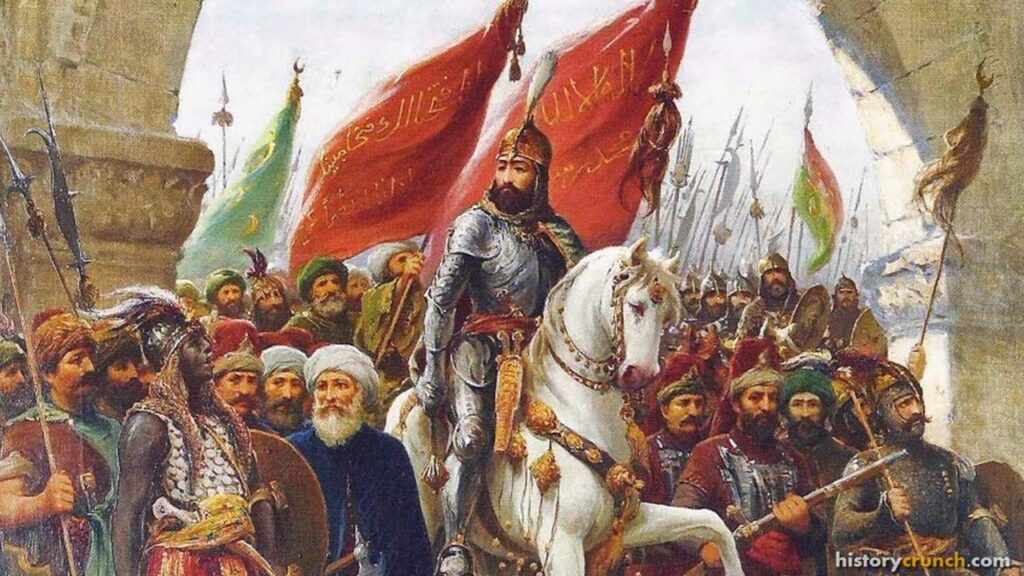
Another important event that contributed to the end of the Middle Ages was the fall of Constantinople in 1453 CE. Constantinople was the capital of the Byzantine Empire, which was the eastern half of the Roman Empire that had survived for nearly one thousand years after the fall of the Western Roman Empire in 476 CE. For much of the Middle Ages, Constantinople was one of the most powerful and wealthy cities in the world and played a major role in preserving the knowledge and culture of ancient Greece and Rome.
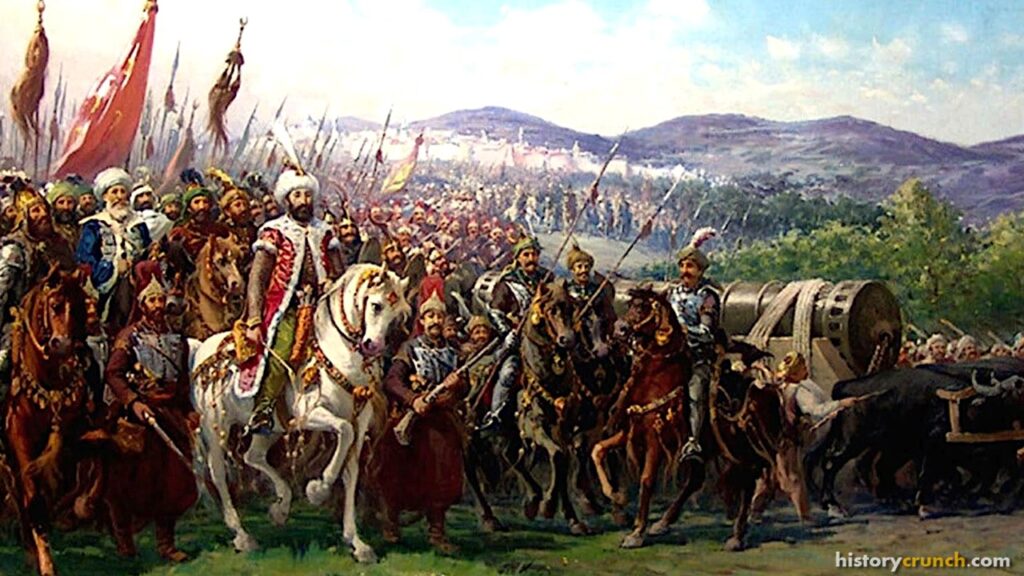
In 1453 CE, the Ottoman Sultan Mehmed II launched a major siege of Constantinople. The Ottoman forces used powerful cannons to break through the city’s defensive walls, and Constantinople fell on May 29th, 1453 CE. With its fall, the Byzantine EmpireThe eastern half of the Roman Empire that survived for nearly one thousand years after Rome’s western half fell. officially came to an end. The fall of Constantinople had a major impact on Europe for several reasons. For instance, many Byzantine scholars fled westward into Europe, bringing with them ancient Greek and Roman texts that had been preserved in Constantinople for centuries. These texts helped inspire the intellectual movement of the Renaissance, which was already beginning to take hold in the city-states of the Italian peninsula. As such, the fall of Constantinople is considered by many historians to be one of the key events that marked the transition from the Middle Ages to the Renaissance.
Beginning of the Renaissance
The most significant factor in the end of the Middle Ages was the beginning of the Renaissance. The Renaissance was an important event in European history that stretched from the 14th century to the 17th century. In historical terms, the Renaissance is important because it led to a major shift in European thought and worldview. While the Renaissance is considered to have begun in the city-states of the Italian peninsula in the 14th century, the main ideas of the movement eventually spread to all of Europe by the 16th century. The most significant changes that emerged as a result of the Renaissance can be seen in European architecture, art, literature, mathematics, music, philosophy, politics, religion and science.
The Renaissance was sparked by several factors, including the rediscovery of ancient Greek and Roman texts, increased interaction between different cultures through trade and the Crusades, and the impact of the Black Death on medieval society. In general, Renaissance humanism was the study of ancient Greek and Roman texts with the goal of promoting new norms and values in society. These norms and views varied from those of the Middle Ages because they focused less heavily on a religious worldview and instead promoted a worldview based on logic and reason. This was a fundamental shift from the feudalistic and religious life that had been the reality for most people in Europe throughout the Middle Ages. As such, the beginning of the Renaissance is considered by historians to mark the end of the Middle Ages and the beginning of the modern era in European history.
FactsthatCrunchWhat were the main sparks that caused the Renaissance to begin and end the Middle Ages?
Significance of the End of the Middle Ages
In conclusion, the end of the Middle Ages was brought about by a combination of factors, including: the devastating impact of the Black Death, the decline of feudalism, the fall of Constantinople and the beginning of the Renaissance. These events combined to transform European society in profound ways and brought an end to the medieval world that had defined life in Europe for approximately 1,000 years. As such, understanding the end of the Middle Ages is important because it helps explain the major changes that led to the modern world, including the Renaissance, the Age of Exploration and eventually the Age of Enlightenment.
FactsthatCrunchThe Middle Ages ended because of one single event.
Key Vocabulary
Pandemic
Feudalism
Serfs
Manor System
Byzantine Empire
Renaissance humanism
Merchant class
Frequently Asked Questions
When did the Middle Ages end?
Historians generally place the end of the Middle Ages at about 1500 CE. The period had lasted roughly 1,000 years, starting in 476 CE with the fall of the Western Roman Empire. No single event ended it, so the date marks a slow shift into the Renaissance.
What were the main causes of the end of the Middle Ages?
The main causes were the Black Death, the decline of feudalism, the fall of Constantinople, and the start of the Renaissance. These factors worked together over time rather than all at once. Each one weakened the social, religious, and political order that had shaped medieval Europe.
How did the Black Death help end the Middle Ages?
The Black Death killed so many people that it threw medieval society into chaos. With fewer workers left, surviving peasants could demand better wages and conditions from their lords. This weakened feudalism and also led many people to question the authority of the Catholic Church.
Why was the fall of Constantinople important?
The fall of Constantinople in 1453 CE ended the Byzantine Empire and sped the shift toward the Renaissance. The city fell to Ottoman forces led by Sultan Mehmed II on May 29th, 1453 CE. Many Byzantine scholars fled to Europe with ancient Greek and Roman texts that inspired new learning.
How did the Renaissance change Europe?
The Renaissance brought a major shift in how Europeans thought about the world. It promoted logic and reason instead of focusing mainly on a religious worldview. Starting in the Italian city-states in the 14th century, its ideas spread across Europe and reshaped art, science, and politics.
What is feudalism and why did it decline?
Feudalism was the system in which nobles controlled land and serfs worked it in exchange for protection. It declined as the Black Death gave peasants more power and as towns offered new jobs. Growing trade, a rising merchant class, and the costly Crusades also pulled people away from the old order.
Cite This Article
To cite this article as a source, use one of the formats below.
MLA: Millar, B. “End of the Middle Ages: A Detailed Summary.” HistoryCrunch, 14 October 2026, https://historycrunch.com/end-of-the-middle-ages/.
APA: Millar, B. (2026). End of the Middle Ages: A Detailed Summary. HistoryCrunch. https://historycrunch.com/end-of-the-middle-ages/
Chicago: Millar, B. “End of the Middle Ages: A Detailed Summary.” HistoryCrunch. October 14, 2026. https://historycrunch.com/end-of-the-middle-ages/
Sources
- Chris Wickham, Medieval Europe.
- Barbara Rosenwein, A Short History of the Middle Ages.