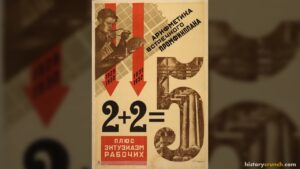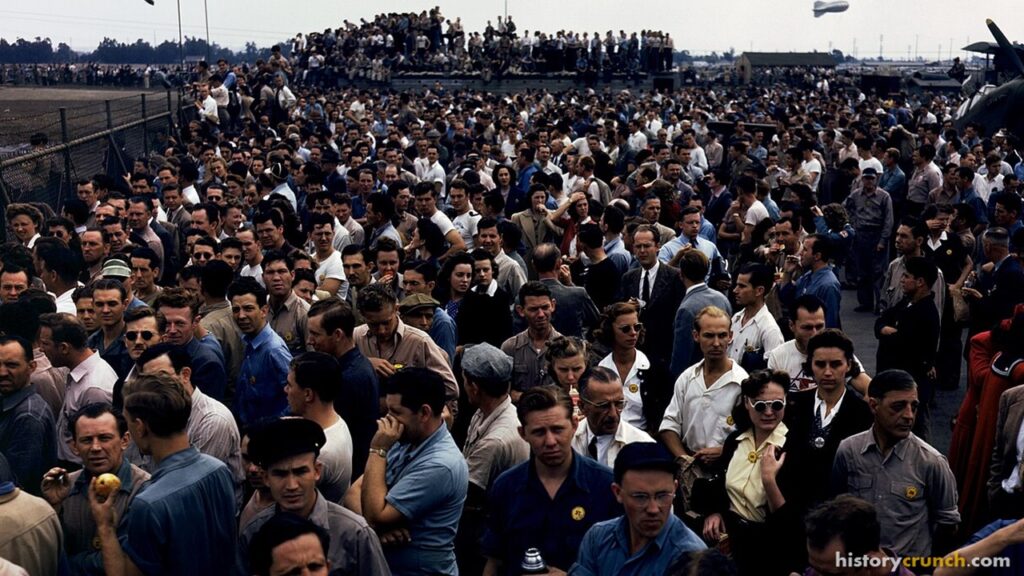
The home front of World War II refers to the experience of ordinary civilians in the countries involved in the conflict who were not fighting on the front lines. World War II is widely considered an example of total warA conflict that affects virtually every part of society, not just the military., meaning that the conflict affected virtually every aspect of society and not just the military. Citizens on the home front were expected to contribute to the war effort in a variety of ways, from working in factories that produced weapons and vehicles to conserving food and resources so they could be directed to the soldiers fighting overseas. Understanding the home front is important because it reveals how deeply the war reached into the everyday lives of millions of people and how significantly it changed their societies.
 FactsthatCrunch
What were the main demands of total war on civilians during World War II?
What Was the Home Front?
The home front is the term historians use to describe the civilian side of a war effort. While soldiers fought in battles across Europe, Africa, Asia, and the Pacific, the citizens who remained at home were also called upon to support the war in meaningful ways. Governments across the Allied nations organized their populations and economies to maximize the production of weapons, food, and other materials needed to sustain the war effort. In this sense, the entire population of a country at war was considered part of the war effort, not just the military. This is what historians mean when they describe World War II as a total war. The demands placed on civilians during the war were enormous and affected people of every age, background, and circumstance. For many people, particularly women and minority groups, the changes brought about by the home front had lasting consequences that extended far beyond the end of the conflict.
FactsthatCrunchWar Production and Industry
One of the most important aspects of the home front during World War II was the transformation of civilian industries into war production facilities. Factories that had previously made cars, appliances, and other consumer goods were converted to produce tanks, aircraft, ships, weapons, and ammunition. This industrial transformation was particularly dramatic in the United States, which had the largest and most productive economy among the Allied nations. American factories churned out staggering quantities of military equipment during the war, and the United States became known as the “Arsenal of Democracy,” supplying not only its own military but also the forces of its allies through programs like the Lend-Lease ActA 1941 US law giving the president authority to supply weapons and materials to allied nations vital to American security..
The Lend-Lease Act was passed in March of 1941, before the United States formally entered the war. It gave President Franklin D. Roosevelt the authority to provide military aid to any nation whose defense was considered vital to the security of the United States. Under this act, Britain, the Soviet Union, China, and other Allied nations received enormous quantities of weapons, vehicles, food, and other supplies from the United States. Britain in particular benefited greatly from Lend-Lease, receiving critically needed munitions and materials during the period when it was being heavily bombed by Nazi Germany and was struggling to sustain its war effort alone. The Lend-Lease Act was controversial among some Americans who opposed getting drawn into the conflict, but it proved to be one of the most important contributions the United States made to the Allied victory before it formally entered the war in December of 1941.
FactsthatCrunchThe Lend-Lease Act, passed in March of 1941, allowed the United States to supply weapons, vehicles, food, and other materials to Allied nations before America formally entered World War II.
Women on the Home Front
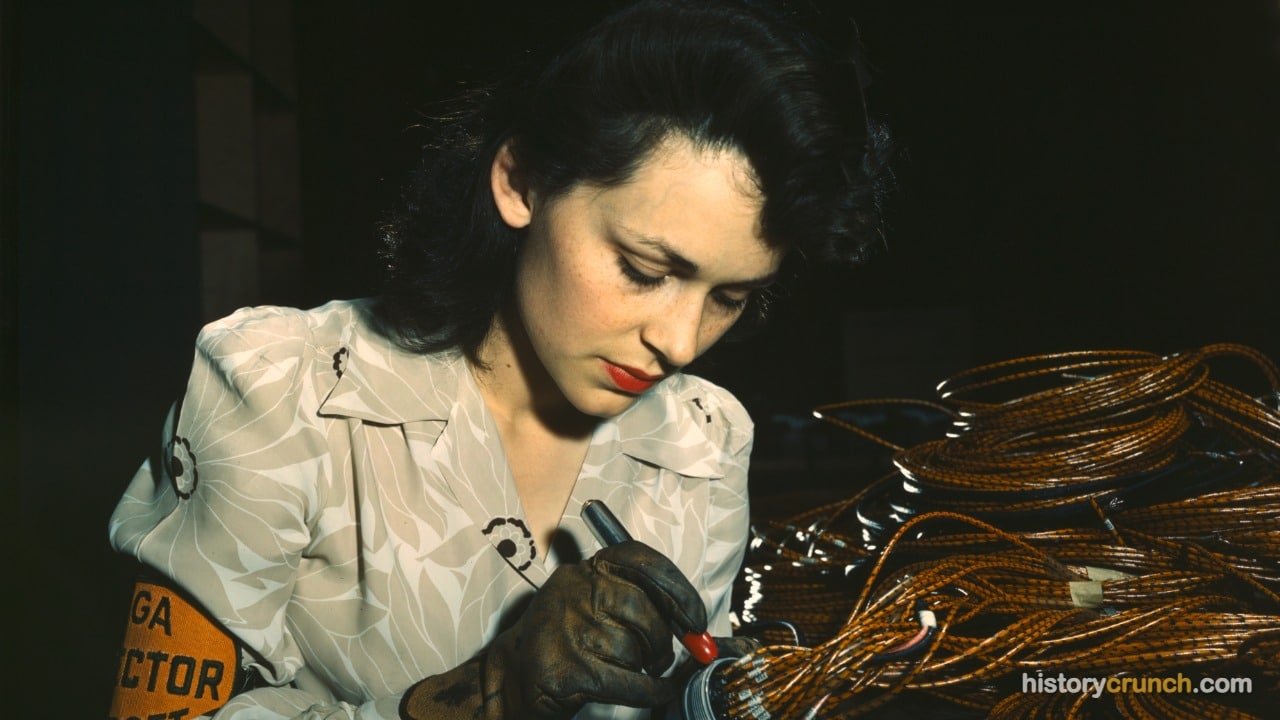
One of the most significant and lasting changes brought about by the home front of World War II was the dramatic shift in the role of women in the workforce. Before the war, very few women worked outside the home, and those who did were generally limited to roles such as teachers, secretaries, and nurses. However, when the war began and millions of men left their jobs to enlist in the military, women were needed to fill the jobs they left behind, particularly in the factories producing weapons and military equipment.
In the United States, a major propaganda campaign was launched to encourage women to enter the workforce. The most famous image associated with this campaign was Rosie the Riveter, a fictional character depicted as a strong and capable factory worker. The campaign was loosely based on real women who were entering the workforce in large numbers at the time and became one of the most iconic images of the war era. The response was remarkable. The aviation industry alone saw more than 300,000 American women working in factories producing aircraft. Approximately 350,000 women also entered the Armed Services during the war, serving in roles both at home and abroad. Between 1940 and 1945, the proportion of women in the American workforce increased from 27 percent to nearly 37 percent, and by 1945 nearly one in four married American women worked outside the home.
The experience of working in these roles during the war had a profound and lasting impact on the lives of women. Having demonstrated their ability to perform jobs that had previously been considered exclusively the domain of men, many women were unwilling to return to their pre-war roles once the conflict ended. The changes in women’s employment during the war years helped lay the groundwork for the women’s rights movements that gained momentum in the decades that followed.
Rationing on the Home Front
Another major feature of the home front during World War II was rationingA government practice of limiting how much of certain goods civilians may buy so the military receives enough supplies.. Rationing is the practice of limiting how much of certain goods civilians are allowed to purchase, in order to ensure that enough of those goods are available for the military. During World War II, governments across the Allied nations introduced rationing programs for a wide range of items, including food, fuel, clothing, rubber, and metals. In the United States, items such as sugar, meat, butter, gasoline, and nylon stockings were all rationed at various points during the war.
Citizens were issued ration books containing coupons that they had to use when purchasing rationed goods. Even if someone had enough money to buy more than their allotted share of a rationed item, they were not allowed to do so without the required coupons. Governments also encouraged citizens to grow their own food in “victory gardensVegetable gardens planted by civilians at home to grow their own food and reduce demand on commercial food supplies.” in order to reduce the demand for commercially grown produce and free up more food for the military. Victory gardens became enormously popular across the United States, Canada, Britain, and other Allied nations, with millions of families planting vegetable gardens in their yards and on any available public land. Rationing and programs like victory gardens helped ensure that the Allied military forces remained well supplied throughout the war, though they required significant sacrifice and adjustment from ordinary citizens.
FactsthatCrunchRationing in World War II made civilians limit how much food, fuel, and other goods they could buy so that military forces stayed supplied.
Propaganda on the Home Front
Governments on the home front made extensive use of propaganda to maintain public support for the war effort and to encourage citizens to contribute in every way they could. PropagandaGovernment-produced messages in posters, films, and radio meant to shape public opinion and encourage support for the war. took many forms during World War II, including posters, films, radio broadcasts, and newspaper campaigns. In the United States, the government produced large numbers of posters encouraging people to buy war bondsCertificates sold by governments to citizens as a way of borrowing money to fund the war, repaid with interest later., conserve resources, grow victory gardens, and support the troops overseas. Many of these posters also worked to build hatred and distrust of the enemy, particularly of Nazi Germany and Japan, and some of the anti-Japanese propaganda produced during the war contained deeply racist imagery that reflected the prejudices of the time.
War bonds were an important part of the home front propaganda effort. Governments sold bonds to ordinary citizens as a way of raising money to fund the war. By purchasing a bond, a citizen was essentially lending money to the government with the promise that it would be repaid with interest after the war. Campaigns encouraging citizens to buy war bonds were a major part of the home front effort in countries like the United States, Britain, and Canada, and they helped generate enormous sums of money to support the war effort.
FactsthatCrunchHow Did War Bonds Work on the World War II Home Front?
War bonds were certificates sold by governments to ordinary citizens as a way of borrowing money to pay for the war. When a person bought a bond, they were lending money to the government with a promise to be repaid with interest after the war ended. Countries such as the United States, Britain, and Canada ran major campaigns urging citizens to buy bonds, and these efforts raised enormous sums to support the war effort.
Japanese-American Internment
One of the most troubling and significant events on the American home front during World War II was the internment of Japanese-Americans. After the United States was attacked by Japan at Pearl Harbor on December 7th, 1941, fear and paranoia spread rapidly among the American public. Many Americans became suspicious of people of Japanese ancestry living in the United States, fearing that they might remain loyal to Japan and act against the interests of the United States during the war.
In February of 1942, President Franklin D. Roosevelt signed an executive order that resulted in the forced relocation and internmentThe forced relocation and confinement of a group of people to camps, used against Japanese-Americans after Pearl Harbor. of Japanese-Americans, most of whom lived on the West Coast. Approximately 120,000 people of Japanese ancestry, the majority of whom were American citizens, were forced to leave their homes, sell their property at a significant loss, and move to internment camps in the interior of the country. Life in the camps was difficult, and the people held there were not free to leave. The internment of Japanese-Americans is widely regarded today as one of the most serious violations of civil liberties in American history, as it denied citizens their basic rights based solely on their ethnic background. In 1988, the United States Congress formally apologized for the internment and provided financial compensation of $20,000 to each surviving person who had been interned. Canada carried out similar internment of Japanese-Canadians during the war for similar reasons and also issued a formal apology in 1988.
FactsthatCrunchKey takeaways
After Japan attacked Pearl Harbor on December 7th, 1941, the U.S. government forced approximately 120,000 people of Japanese ancestry, most of them American citizens, into internment camps based solely on their ethnic background. This policy is widely regarded today as one of the most serious violations of civil liberties in American history.
In 1988, Congress formally apologized and paid $20,000 to each surviving person who had been interned.
Canada carried out a similar internment of Japanese-Canadians during the war and also issued a formal apology in 1988.
The Home Front in Britain
The home front experience in Britain was shaped significantly by the German bombing campaign known as the Blitz. Beginning in September of 1940, Nazi Germany launched a sustained aerial bombing campaign against British cities, most intensely targeting London. The Blitz continued for approximately eight months and caused enormous destruction and loss of civilian life across Britain. Despite the devastation, the British government worked hard to maintain public morale, and British civilians became famous for their determination and resilience in the face of the bombing. The phrase “Keep Calm and Carry On” became associated with the spirit of the British home front during this period. Like the United States, Britain also implemented rationing, encouraged women to enter the workforce, and used propaganda extensively to maintain public support for the war.
FactsthatCrunch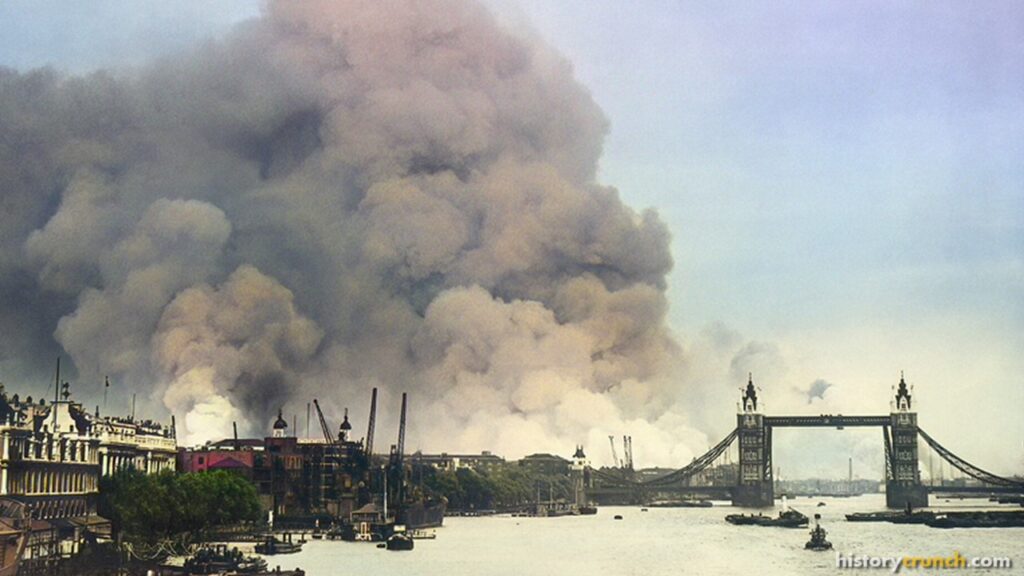 Black & whiteColor
Significance of the Home Front in World War II
The home front of World War II was an essential and inseparable part of the war effort. Without the industrial output, the rationed resources, the labor of women in the workforce, and the financial contributions of ordinary citizens through war bonds, the Allied nations could not have sustained the military campaigns that ultimately led to victory. The home front also had a profound social impact, particularly in relation to the changing role of women, which helped reshape gender roles in many countries for decades to come. At the same time, the home front was not without its darker moments, most notably the internment of Japanese-Americans in the United States and Japanese-Canadians in Canada, which serve as important reminders that fear and prejudice can lead governments to violate the rights of their own citizens even in times of war. For all of these reasons, the home front of World War II remains one of the most important and instructive topics in the study of this conflict.
FactsthatCrunchWartime demand pulled millions of women and minority workers into jobs that had previously been closed to them, reshaping who held paid work in Allied nations.
The home front of World War II reached into nearly every part of daily civilian life, from factory floors to family gardens. The social changes it set in motion extended far beyond the war years and reshaped gender roles and civil expectations for decades.
Key Vocabulary
Total war
Lend-Lease Act
Rationing
Propaganda
War bonds
Internment
Victory gardens
Frequently Asked Questions
What does the term home front mean?
The home front is the term historians use for the civilian side of a war effort. While soldiers fought overseas, people at home helped by working in factories, saving resources, and buying war bonds. Because World War II affected nearly every part of daily life, it is called a total war.
Why did women enter the workforce during World War II?
Women entered the workforce because millions of men left their jobs to join the military. Factories needed workers to build weapons, aircraft, and other military equipment. Between 1940 and 1945, the share of women in the American workforce rose from 27 percent to nearly 37 percent.
What was rationing during World War II?
Rationing limited how much of certain goods civilians could buy so the military had enough supplies. Governments issued ration books with coupons that people needed to purchase items like sugar, meat, and gasoline. Even people with plenty of money could not buy more than their share without coupons.
What was the internment of Japanese-Americans?
The internment was the forced relocation of about 120,000 people of Japanese ancestry after the attack on Pearl Harbor. Most were American citizens, yet they were made to leave their homes and move to camps far inland. In 1988, Congress apologized and paid $20,000 to each surviving person who had been interned.
What was the Arsenal of Democracy?
Arsenal of Democracy was the nickname for the United States because of its huge war production. American factories switched from making cars and appliances to building tanks, ships, aircraft, and weapons. Through the Lend-Lease Act of March 1941, the country also supplied Britain, the Soviet Union, and other allies.
What was the Blitz in Britain?
The Blitz was a sustained German bombing campaign against British cities that began in September of 1940. It lasted about eight months and hit London the hardest, causing great destruction and loss of life. British civilians became known for their resilience, captured by the phrase “Keep Calm and Carry On.”
Cite This Article
To cite this article as a source, use one of the formats below.
MLA: Millar, B. “Home Front of World War II: A Detailed Summary.” HistoryCrunch, 1 October 2026, https://historycrunch.com/home-front-of-world-war-ii/.
APA: Millar, B. (2026). Home Front of World War II: A Detailed Summary. HistoryCrunch. https://historycrunch.com/home-front-of-world-war-ii/
Chicago: Millar, B. “Home Front of World War II: A Detailed Summary.” HistoryCrunch. October 1, 2026. https://historycrunch.com/home-front-of-world-war-ii/
Sources
- Antony Beevor, The Second World War.
- The National WWII Museum