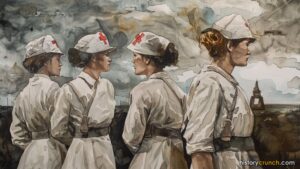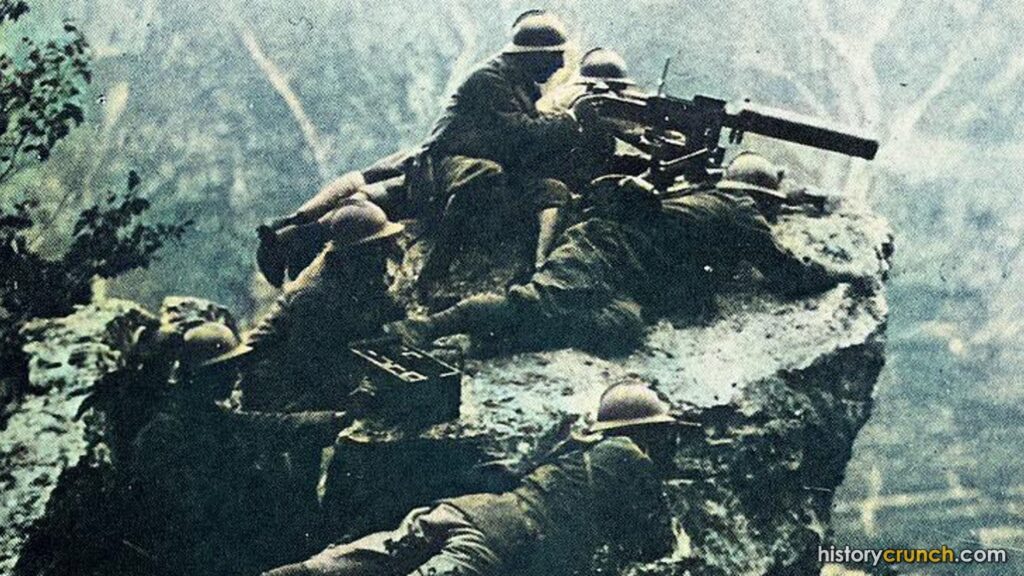
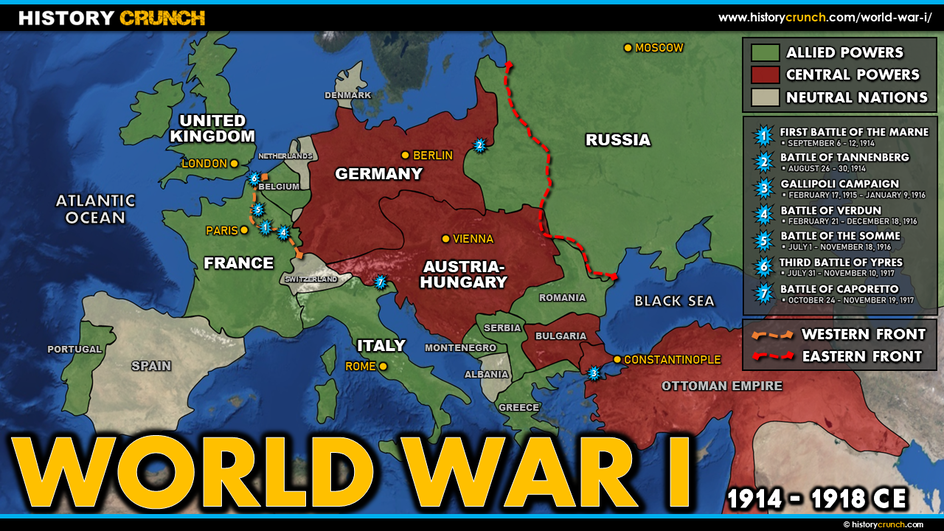
Italy in World War I was an important topic in the events of World War I. As a country, Italy was involved, to some extent, in the events that led to the outbreak of the war in 1914 and in some significant battles of the war. For example, before the start of World War I, Italy was closely allied with both Germany and Austria-Hungary as part of the Triple Alliance. However, Italy stayed neutral when the war began in 1914, and in 1915 it joined the Allied Powers of Britain, France and Russia. While World War I is most often known for the battles and conditions of the trenches on the Western Front, Italy was an important contributor to the war on the Italian Front (also known as the Alpine Front).

Italy Enters World War I
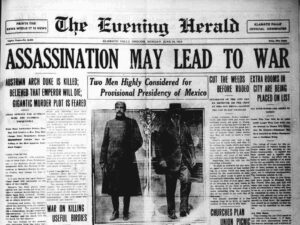
World War I erupted during the summer of 1914 in an event that historians refer to as the July Crisis. In short, this crisis was caused by the assassination of Austrian Archduke Franz Ferdinand, which led to the major European powers engaging in a conflict. As stated above, prior to the start of World War I, Italy was actually a member nation of the Triple Alliance, alongside Germany and Austria-Hungary. However, at the start of the war in 1914, Italy remained neutralNot taking sides in a war or conflict between other nations. and eventually joined the Allied Powers in 1915.

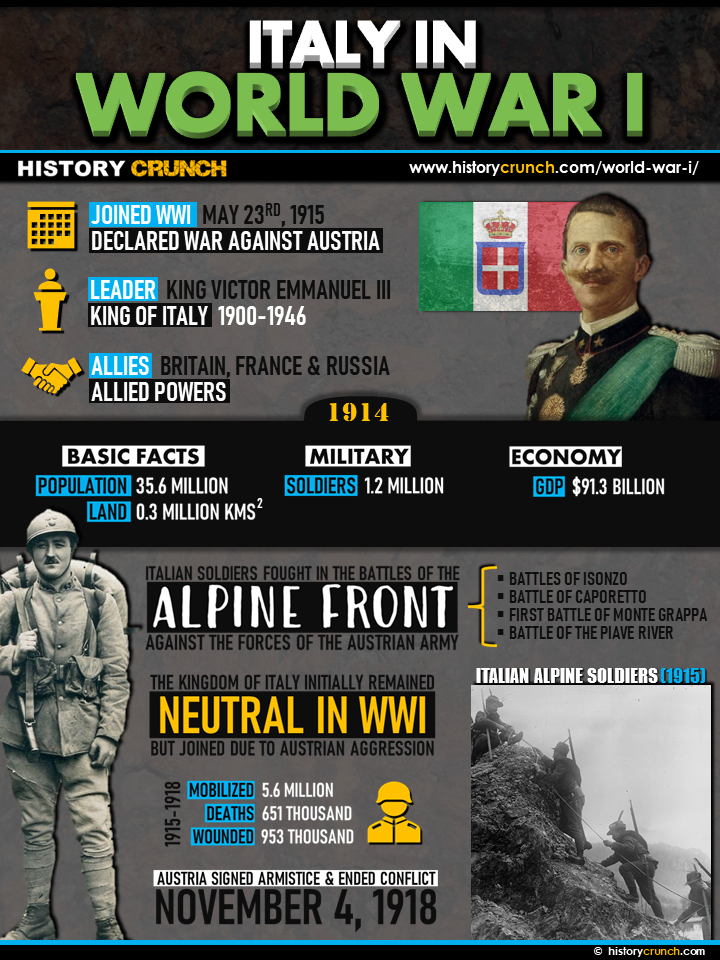
Italy sided with the Triple Entente as it considered Austria-Hungary to be the aggressor in the lead up to World War I. This is because, following Ferdinand’s death, Austria-Hungary began taking aggressive actions against Serbia, which was located in the Balkans. As a result, Italy refused to join its allies when the war began, and it later joined the Allied Powers alongside France, Britain and Russia. More specifically, Italy officially left the Triple AllianceA pre-war agreement binding Italy, Germany, and Austria-Hungary to support one another militarily. on May 3rd in 1915. This was following the secret agreement between Italy and the Triple Entente powers that led to the Treaty of LondonA secret April 1915 agreement promising Italy new territory in exchange for joining the Allied Powers., which occurred in April of 1915. On May 23rd, 1915, Italy declared war on Austria-Hungary and joined the war effort on the side of the Allied nations.
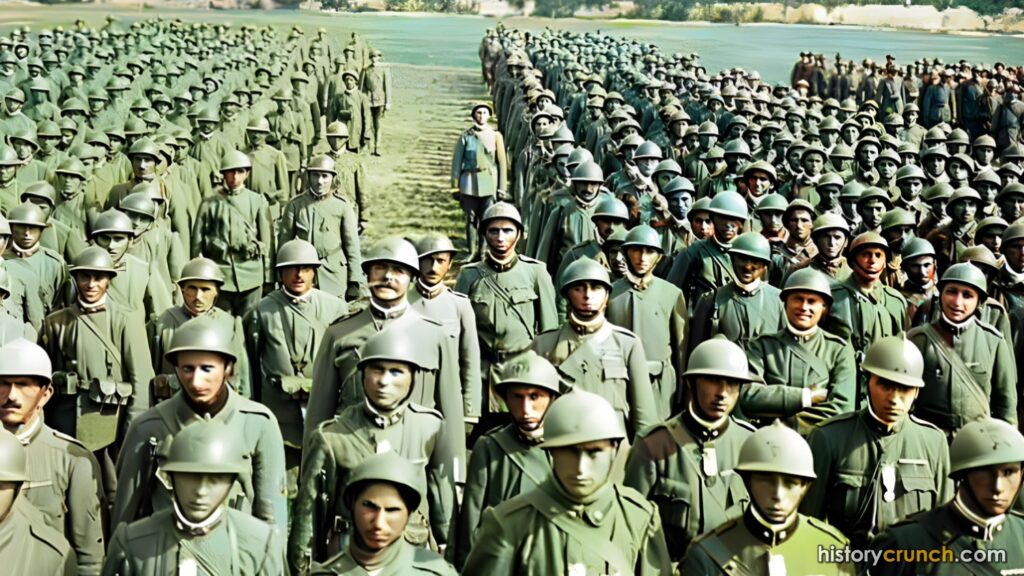
This was significant for the Allied nations because it weakened the fighting capabilities of the Central Powers and helped force Austria-Hungary to devote a certain portion of their forces to fight Italy along their shared border. By the end of the war, Italy had mobilized over 5.6 million soldiers.
 FactsthatCrunch
Italy entered World War I as a member of the Triple Alliance but switched sides in 1915, arguing that Austria-Hungary was the aggressor against Serbia. The Treaty of London, signed in April 1915, brought Italy into the Allied Powers in exchange for promises of new territory.
Italy in World War I – Army
When Italy joined the fighting of World War I, in 1915, the army was under the command of Luigi Cadorna, who was the Chief of Staff of the Italian Army. He served in the position from July of 1914 until November of 1917. As such, Cadorna oversaw the major conflicts that Italy participated in during the early years of World War I. As well, he led the initiative to build up the Italian Army throughout 1914, when it became clear that war was inevitable for Italy. In fact, by the time that Italy joined the fighting of World War I, Cadorna had approximately 1.2 million Italian soldiers under his command. However, the Italian Army had very little equipment, such as artillery, and thus lacked the ability to wage war to the same degree as some of the other European nations. With that said, the Italian Army played a significant role in World War I as it offered the Allied Nations an advantage along the Italian Front.
Luigi Cadorna’s time as the Chief of Staff of the Italian Army was marked by several failed assaults and heavy losses for the Italian Army. This led to him being replaced by Armando Diaz. Diaz stabilized the Italian Army after its heavy losses and led the Italian forces through to the end of the war. Historically, Cadorna is remembered as a poor military leader, whereas Diaz is remembered as one of the best in Italy.
Italy in World War I – Major Battles
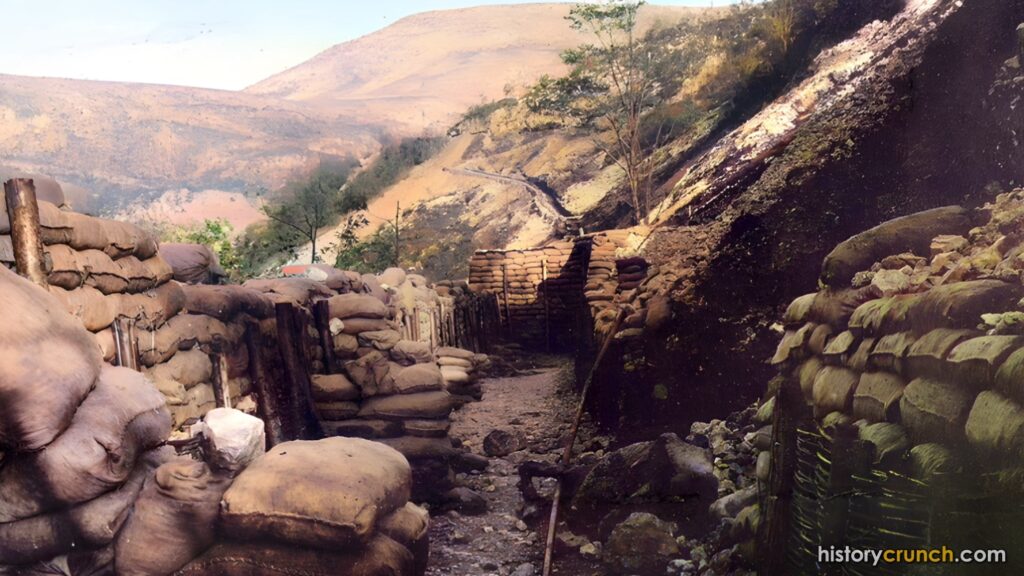
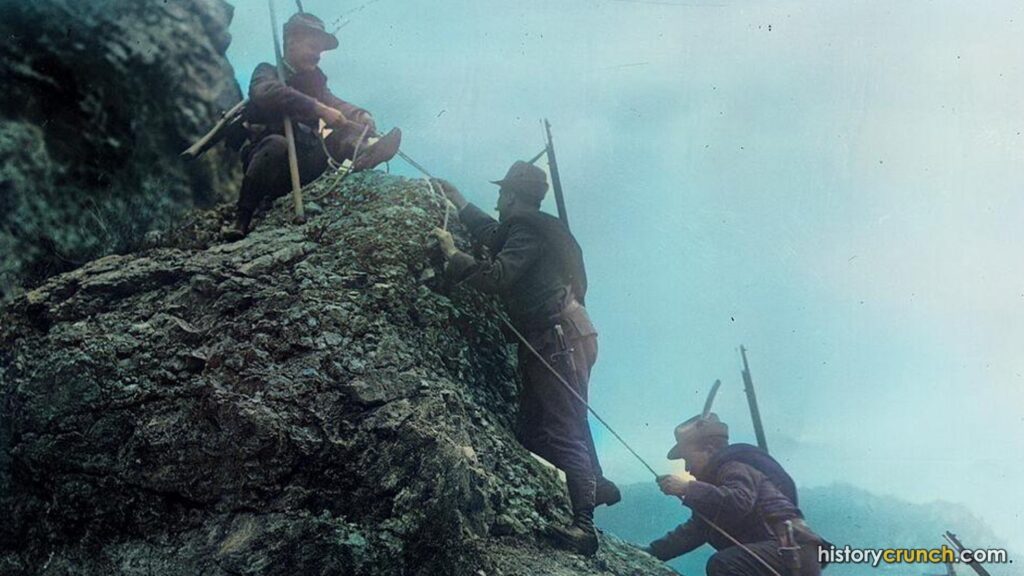
Italian forces participated in many of the main battles of World War I, but were primarily active on the Italian Front (also known as the Alpine Front). In general, the landscape of Europe in World War I was divided into a few different ‘fronts’. For instance, the Western Front was located on the western-half of Europe and included a line of trenches that stretched throughout much of northern France and Belgium. Whereas the Italian Front was along the border between Italy and Austria-Hungary. At the time, Italy wanted to gain control over sections of the region due to a rising sense of nationalism. The terrain of the region was very mountainous. As such, many of the battles that Italy participated in occurred on mountain ranges and in valleys.
As stated above, Italian forces participated in many battles of World War I. Some of the most significant battles of World War I that Italy participated in included:
As stated above, Italy didn’t join the fighting of World War I until 1915. More specifically, Italy officially joined World War I on the side of the Allied nations on May 23rd, 1915 when it declared war against Austria-Hungary. Italy then declared war on the Ottoman Empire and Bulgaria later in 1915, and on Germany in August of 1916.
Luigi Cadorna, who was the Chief of Staff of the Italian Army, devised a plan of attack that included a series of offensives against the Austro-Hungarians. His hope was to push through the Austro-Hungarian defenses and besiege the Austrian capital of Vienna. In reality, the attack was doomed and led to a stalemateA deadlock in fighting where neither side can advance or defeat the other., similar to the other fronts of World War I.
 FactsthatCrunch
How did Italy go from joining the war in 1915 to victory in 1918?
Tap a point to read its detail.
Italy in the Battles of the Isonzo
The first of these offensives involved the Battles of the Isonzo. In all, there were 12 different Battles of the Isonzo, which were fought in modern Slovenia and along the Isonzo River. These 12 battles were fought between the Italian and Austro-Hungarian armies and lasted from 1915 until 1917. The fighting in the Battles of the Isonzo was brutal and difficult for both sides. The Austro-Hungarians were primarily the defenders and took up defensive positions in the mountains, while the Italian Army were the attackers. In general, the Italian army struggled to attack in the Battles of the Isonzo due to the mountainous terrain and the rivers. For instance, crossing the Isonzo River proved difficult for the Italians due to flooding and the inability to build a bridge (or other engineering solution) while simultaneously fighting the Austrian forces. As such, throughout the 12 Battles of the Isonzo, the two sides went back and forth and both suffered terrible losses.
For instance, historians estimate that the Italian Army suffered over 950,000 casualtiesSoldiers lost to a military force through death, wounds, capture, or illness. in the Battles of the Isonzo, while the Austro-Hungarians suffered approximately 520,000. In the end, the Austro-Hungarians achieved a decisive victory at the Twelfth Battle of the Isonzo (also known as the Battle of Caporetto), which ended in November of 1917. As well, it is estimated that around 300,000 Italians died during the battles. Therefore, historians view the Battles of the Isonzo as a characteristic example of the ‘waste of war’ that World War I has become known for.
Italy in the Battle of Caporetto
As stated above, the Twelfth Battle of the Isonzo was also referred to as the Battle of Caporetto. The battle occurred from October 24th to November 19th in 1917 and was the last and most significant of the Battles of the Isonzo.
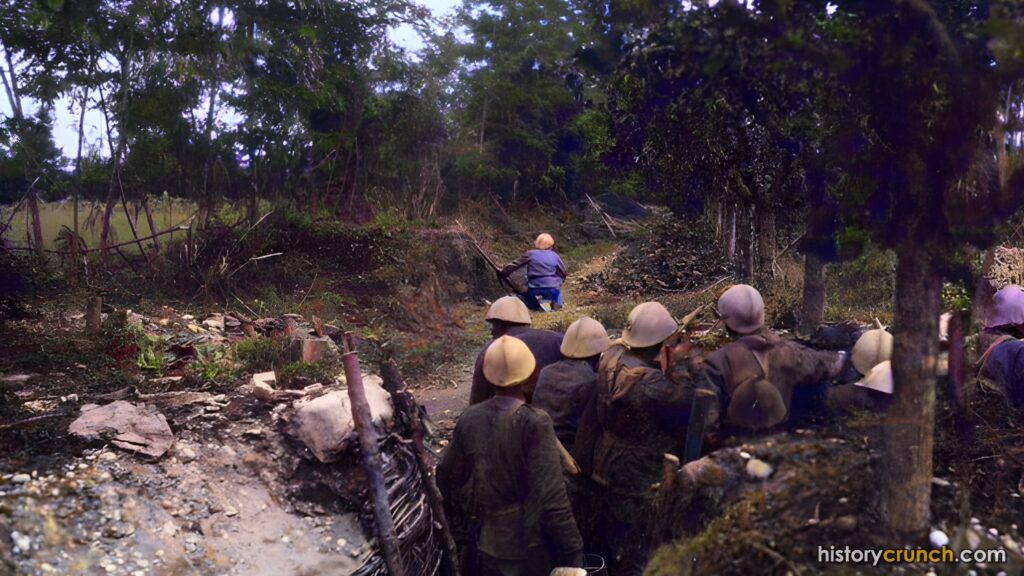
The Battle of Caporetto took place on the Italian Front of World War I, on the northeastern border of Italy. During the battle, Italian forces faced off against Austro-Hungarian forces that were also supported by elements of the German Army.
The arrival of German forces for the Battle of Caporetto was important, because by the fall of 1917, both the Italian and Austro-Hungarian forces were worn down from the previous 11 Battles of the Isonzo. In fact, Austria-Hungary hoped that the German support would allow them to advance through the Italian defenses and force the Italian Army back from the border.
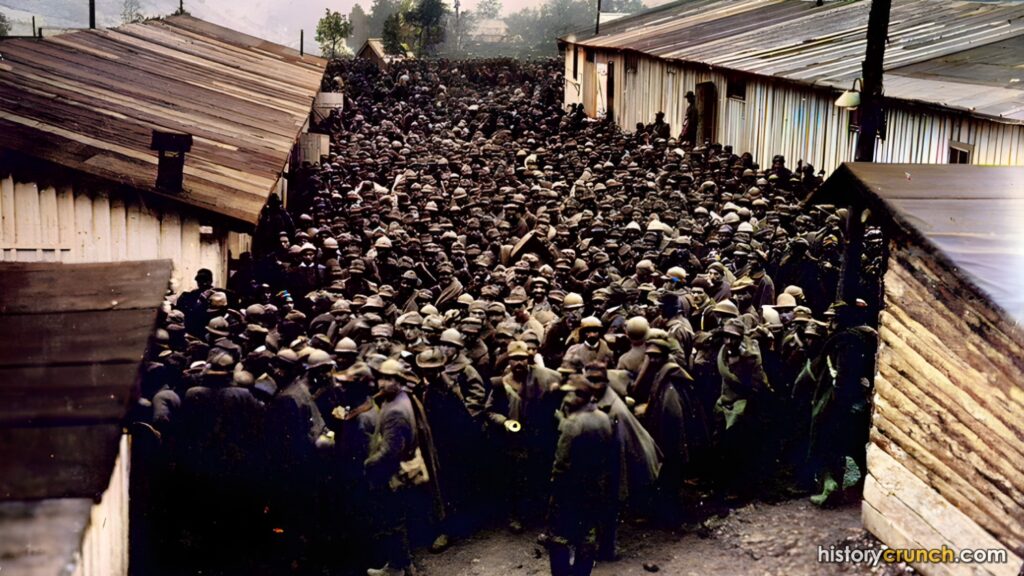
The Battle of Caporetto began on the early morning of October 24th when the Austrians and Germans carried out a series of poisonous gas attacks against the Italian trenches, which caused the Italian forces to retreat. The gas attack was followed by a heavy ‘stormtrooper’ assault by the Austrians and Germans, which included use of flamethrowers, grenades, machine guns and mortars. This specialized assault allowed the two Central Power armies to advance quickly through the Italian-held area. In fact, the Austrian and German assault was so successful that they struggled to maintain supply lines with the advancing armies. This proved to be important as it limited the distance that the Central Powers could advance into Italy. The Battle of Caporetto ended on November 19th, 1917. As a result of the battle, Italy retreated 93 miles (150 km) and suffered thousands of losses. More specifically, historians estimate that in the Battle of Caporetto, 13,000 Italian soldiers died, another 30,000 were wounded and nearly 275,000 were captured as prisoners of war. In all, the Battle of Caporetto was a terrible loss for Italy and led to a massive decrease in moraleThe confidence, enthusiasm, and willingness of soldiers or citizens to keep fighting. among Italian soldiers. In fact, the losses in the Battle of Caporetto (and the other Battles of the Isonzo) led to Chief of Staff of the Italian Army, Luigi Cadorna, being replaced by Armando Diaz in November of 1917.
What tactic opened the Battle of Caporetto and caused Italian forces to retreat immediately?
Italy in the Battle of Vittorio Veneto
The final significant Italian battle of World War I was the Battle of Vittorio Veneto, which occurred from October 24th to November 4th in 1918. It was the final major battle of the Italian front and resulted in Austria-Hungary accepting defeat in World War I. It took place in northern Italy near a town called Vittorio and was fought primarily between Italy and Austria-Hungary. Although Italy was also supported by British, French and American forces. The area was mountainous, which made the fighting difficult for the two sides. For instance, much of the fighting was centered around Monte Grappa, a 5,823 foot (1,775 meter) tall mountain in northern Italy.
The Battle of Vittorio Veneto began on the morning of October 24th, 1918, an exact year after the start of the Battle of Caporetto. In general, the Battle of Vittorio Veneto was an Italian attack against the Austro-Hungarian forces that had pushed into northern Italy as a result of the Battle of Caporetto. While the Battle of Caporetto was a massive failure for the Italian Army, the Battle of Vittorio Veneto was a decisive Italian victory.
The Battle of Vittorio Veneto began with intense artillery shelling from both sides. In fact, between October 24th and the 31st, Italy fired over 2.4 million shells. This proved successful and over the course of the battle, the Italian Army was able to dislodge the Austrians from their defensive positions in the mountains. The situation was made worse for the Austro-Hungarians as their empire began to fall apart during the timeline of the Battle of Vittorio Veneto.
For instance, on October 31st, the Hungarian Parliament proclaimed their withdrawal from the union, which officially ended the Austro-Hungarian Empire. This new political reality, combined with their losses on the battlefield caused Austria to order a full retreat of its forces in the Battle of Vittorio Veneto, and led to Austria agreeing to an armisticeA formal agreement by opposing sides to stop fighting and end a conflict.. In fact, the Armistice of Villa Giusti was signed on November 3rd, 1918, and ended the conflict between Italy and Austria-Hungary on the Italian Front during World War I. The war for Italy and Austria-Hungary was over, as was the Austro-Hungarian Empire. During the battle, Italy suffered over 37,000 casualties, while Austria-Hungary lost approximately 30,000 soldiers killed and several hundred thousand more captured.
FactsthatCrunchThe internal collapse of Austria-Hungary in late October 1918 caused its armies to disintegrate mid-battle, handing Italy a decisive victory at Vittorio Veneto.
Italy in World War I – Home Front
An important aspect of the First World War for all of the countries involved was the impact it had on the home front. This was also evident in Italy, which experienced impacts on daily life for Italian citizens.
A major factor on the Italian home front was the support, or lack thereof, for the war effort and Italy’s role in it. Italy had originally been a member of the Triple Alliance along with Austria-Hungary and Germany. However, when the war broke out in 1914, Italy remained neutral and did not join the fighting until 1915. During this time, debate raged within Italy on the merits of joining the war. Most Italian citizens did not want the country to go to war and feared what a prolonged war would do to the country. On the other hand, the government and certain nationalist factions supported the war, as they wanted to capture more regions to the north that they believed were traditional Italian territory. This divide in public opinion created a tense political situation in the country in the lead up to the war. Regardless, Italy joined the war effort in 1915 on the side of the Allied nations, which included Britain, France and Russia.
Another major aspect of the home front for Italy in World War I centered on the economic realities of the country at the time. Before the war began, Italy was economically disorganized. For example, Italy had major labor issues and struggled to maintain equal industrial production as many of the other European powers. This led to issues for Italy’s war effort, as it struggled to produce the necessary weapons of war. The labor issues included regular strikes, which the government tried to end to promote the war effort. With that said, industrial production ramped-up dramatically during the timeframe of the war and led to many industrial jobs for Italian workers.
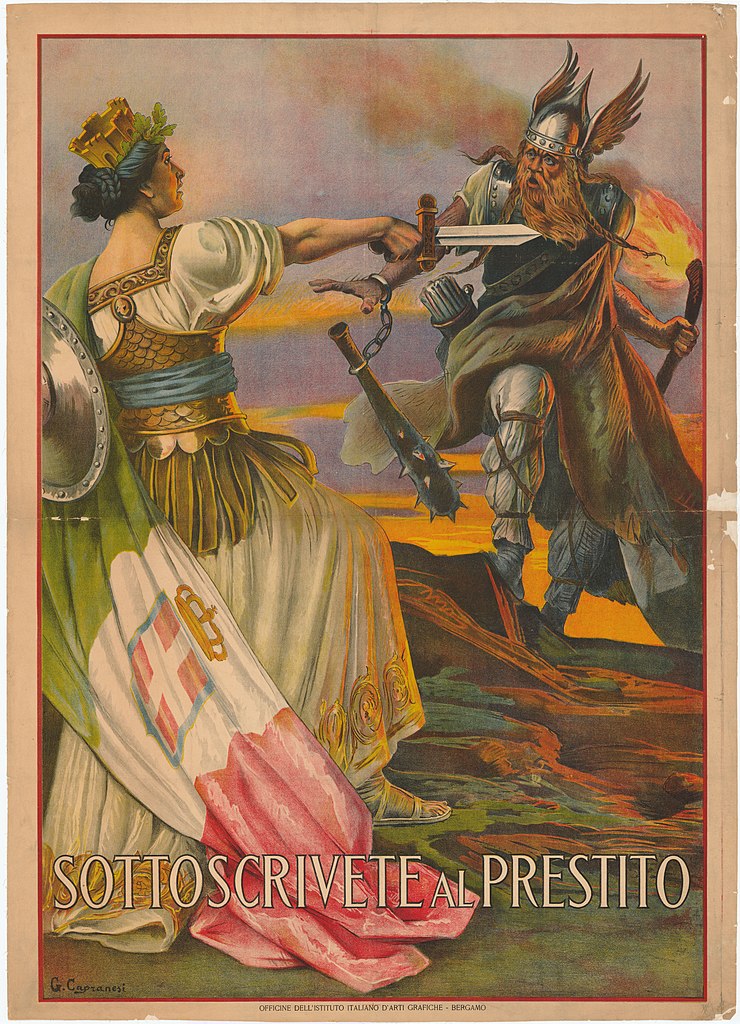
In order to promote support for the war and other initiatives, the government of the time used propaganda to convince citizens of certain messages. For example, the Italian government issued propagandaMessages issued by a government to shape public opinion, recruit soldiers, or demonize enemies. that worked to recruit soldiers for the war, ration certain items and to demonize the enemy. Italian citizens on the home front were subjected to constant messaging to ensure they supported the war effort and to maintain the push towards victory. War propaganda proved even more important following major Italian defeats, which threatened the country’s morale and overall support for the war. For example, the Italian government issued propaganda after the Battle of Caporetto, which was a major failure for the Italian Army.
 FactsthatCrunch
Italy in World War I – Significance
World War I was a highly important event in the history of Italy. First, and foremost, over 5.6 million Italian soldiers served during World War I. As well, approximately 651,000 Italian soldiers died as a result of military action during the war.
Second, the terrible losses suffered by Italy were characteristic of the overall nature of the fighting in World War I. The mountainous terrain that the Italian forces fought in was highly unique and led to several significant battles.
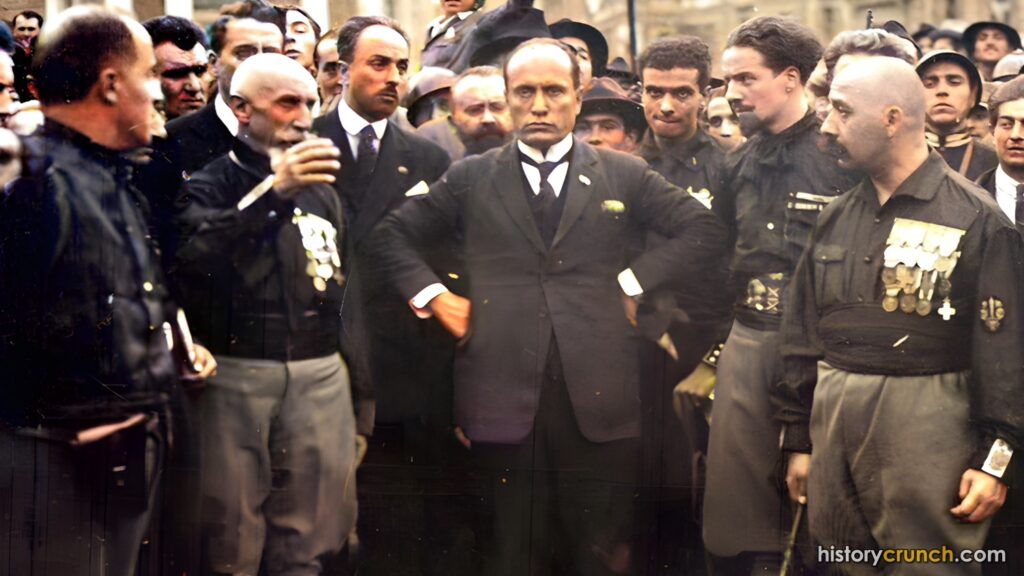
Beyond this, World War I was highly significant for the country of Italy due to its calls for increased territory. Nationalists in Italy wanted the country to gain control over more territory on its northern border that had previously been controlled by the Austro-Hungarian Empire. At the end of the war, Italy sought to gain access to this land and argued for more control in the region. In fact, some of Italy’s frustrations at the end of World War I were due to it not receiving control over more of these new territories. This led to further increases in Italian nationalism and the rise of more extremist forms of nationalism. For example, Benito Mussolini and his fascist ideology rose to prominence in Italy in the early 1920s, just after the end of World War I.
 FactsthatCrunch
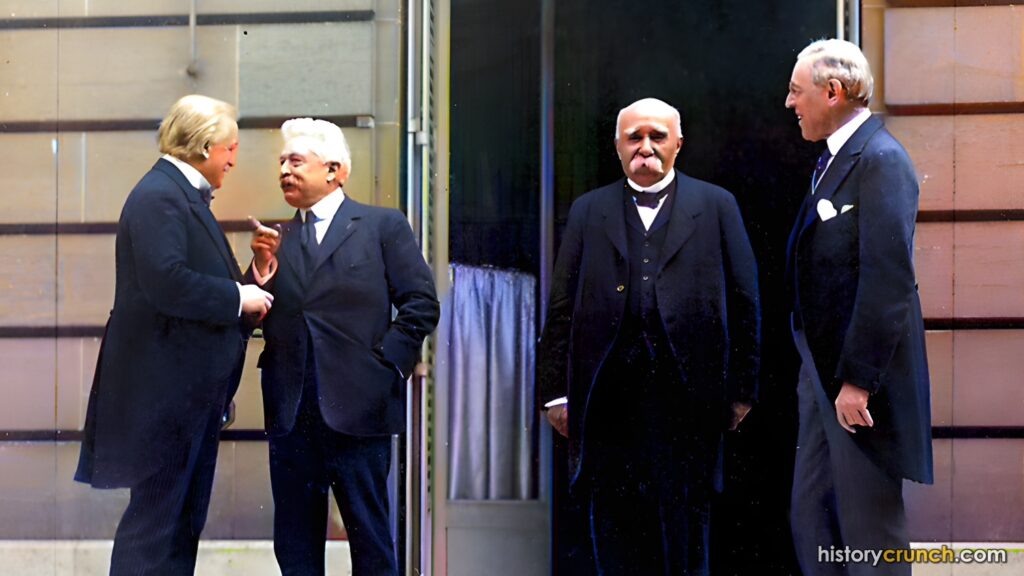 Black & whiteColor
World War I timeline · 1914 – 1918
Key Vocabulary
Triple Alliance
Neutral
Treaty of London
Stalemate
Casualties
Morale
Propaganda
Armistice
Frequently Asked Questions
Why did Italy switch sides in World War I?
Italy left the Triple Alliance and joined the Allies because it viewed Austria-Hungary as the aggressor. After Franz Ferdinand was killed, Austria-Hungary took harsh actions against Serbia. Italy also signed the secret Treaty of London in April of 1915, which promised it new territory. It then declared war on Austria-Hungary on May 23rd, 1915.
What was the Italian Front in World War I?
The Italian Front, also called the Alpine Front, ran along the border between Italy and Austria-Hungary. The land there was very mountainous, so many battles took place on peaks and in valleys. This rough terrain made attacks slow and costly for both armies. It set the Italian Front apart from the trench lines of the Western Front.
What happened at the Battle of Caporetto?
The Battle of Caporetto was a crushing defeat for Italy that lasted from October 24th to November 19th in 1917. German troops joined the Austro-Hungarians and opened with poison gas, then attacked with flamethrowers and machine guns. Italy retreated about 93 miles (150 km) and lost nearly 275,000 men as prisoners. The disaster led to Luigi Cadorna being replaced by Armando Diaz.
How did Italy finally win on the Italian Front?
Italy won a decisive victory at the Battle of Vittorio Veneto, fought from October 24th to November 4th in 1918. Italian forces, backed by British, French, and American troops, drove the Austrians out of the mountains. At the same time, the Austro-Hungarian Empire was falling apart at home. Austria-Hungary signed the Armistice of Villa Giusti on November 3rd, 1918.
How many Italian soldiers died in World War I?
About 651,000 Italian soldiers died from military action during World War I. In total, Italy mobilized more than 5.6 million men over the course of the conflict. The Battles of the Isonzo alone caused over 950,000 Italian casualties. These heavy losses showed the terrible waste of life that marked the war.
How did World War I lead to the rise of Mussolini?
Italy felt cheated at the end of the war because it did not gain all the land it wanted. Nationalists had expected to control more territory once held by Austria-Hungary. This anger fueled stronger and more extreme forms of nationalism across the country. Benito Mussolini and his fascist movement rose to power in the early 1920s.
Cite This Article
To cite this article as a source, use one of the formats below.
MLA: Beck, Elias. “Italy in World War I: A Detailed Summary.” HistoryCrunch, 29 September 2026, https://historycrunch.com/italy-in-world-war-i/.
APA: Beck, E. (2026). Italy in World War I: A Detailed Summary. HistoryCrunch. https://historycrunch.com/italy-in-world-war-i/
Chicago: Beck, Elias. “Italy in World War I: A Detailed Summary.” HistoryCrunch. September 29, 2026. https://historycrunch.com/italy-in-world-war-i/
Sources
- Fordham Modern History Sourcebook
- John Keegan, The First World War.
- Margaret MacMillan, The War That Ended Peace.
- Imperial War Museum