France in World War II had one of the most complex experiences of any nation in the entire conflict. After entering the war on September 3rd, 1939, France suffered a rapid and devastating military defeat in May and June of 1940 that led to its occupation by Nazi Germany and the establishment of Vichy France in the south. At the same time, French General Charles de Gaulle refused to accept the defeat and established the Free French movement from London. This was important because it continued fighting alongside the Allied Powers throughout the war. In total, French military losses during the war amounted to approximately 212,000 dead across all theaters of the conflict, while French civilian losses from occupation, deportation, and the events of the Holocaust were tremendous.
 FactsthatCrunch
France signed an armistice with Nazi Germany on June 22nd, 1940, about six weeks after the German attack began.
France Enters World War II
World War II began on September 1st, 1939, when Nazi Germany, under the leadership of Adolf Hitler, invaded the country of Poland. France and Britain both declared war on Nazi Germany on September 3rd, 1939, in fulfillment of their alliance commitments to Poland. In the months that followed, however, no major fighting took place between French and German forces. This quiet opening period of the war became known as the ‘Phoney War‘ and lasted from September of 1939 until May of 1940.
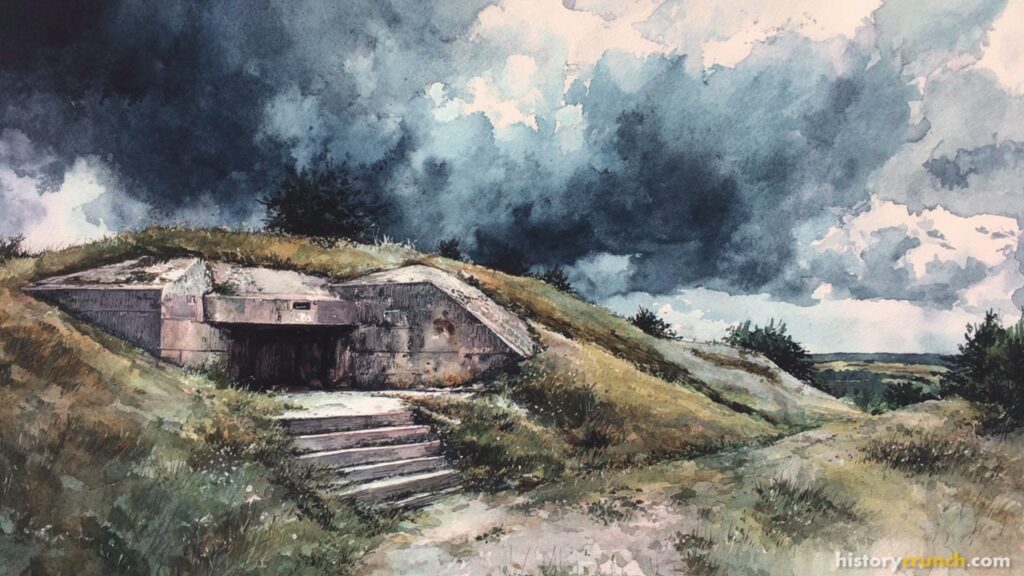
At the time, France had one of the largest standing armies in Europe, with approximately 117 divisions deployed along its northeastern front. French military strategy relied heavily on the Maginot LineA massive system of fortifications built along the Franco-German border during the 1930s that France relied on to stop a German attack., which was a massive system of fortifications along the Franco-German border that had been built during the 1930s. French commanders believed that any Nazi German offensive would either attack through the Maginot Line itself or repeat the strategy of World War I by advancing through Belgium to the north.
France in World War II – Battle of France
The Nazi German invasion of France began on May 10th, 1940, with a massive assault that combined air power, armored forces, and infantry in a rapid and highly mobile style of attack. German forces attacked through Belgium and the Netherlands in the north as expected, drawing Allied forces forward into Belgium. However, the main Nazi German forces came through the Ardennes Forest in Luxembourg and southern Belgium. This was a heavily wooded and difficult terrain that French commanders had considered impassable for armored forces. However, this force cut through French defenses with stunning speed and drove toward the English Channel, cutting off the Allied forces that had advanced into Belgium from the rest of the French army.
The Allied forces in Belgium, including the British Expeditionary Force and significant French formations, were pushed back to the coast near the French port of Dunkirk. From late May to early June of 1940, a massive naval evacuation, known as the Dunkirk Evacuation, rescued approximately 338,000 British and French soldiers from the beaches of Dunkirk. While the evacuation saved a large number of Allied soldiers, it left France in an extremely vulnerable position. Without these forces, the remainder of the French army was unable to hold back the German advance.
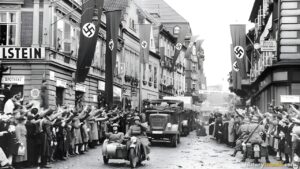
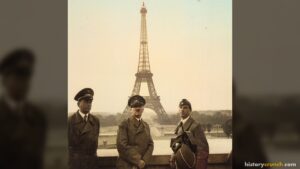
German forces then entered Paris on June 14th, 1940, and Marshal Philippe Pétain, who had become head of the French government, requested an armisticeA formal agreement to stop fighting, signed by France and Germany on June 22nd, 1940, that ended the Battle of France. on June 17th, 1940. The armistice was signed on June 22nd, 1940. Under its terms, Germany occupied the northern and western portions of France, including Paris, while Pétain’s government retained control over the unoccupied southern zone, governing from the town of Vichy. For its part, Italy, which had entered the war on June 10th, 1940 on the side of Nazi Germany, occupied a small area of southeastern France. The Battle of France was over and France was divided between direct Nazi German occupation and the southern Vichy France, which was actively collaboratingActively cooperating with an enemy occupier, as Vichy France did by helping Nazi Germany enforce laws and deport Jewish people. with the Nazi regime.
FactsthatCrunchWhy did the German attack through the Ardennes Forest succeed in May 1940?
France in World War II – Vichy France and the Occupation
Following the armistice, Vichy France, formally created on July 10th, 1940, under Marshal Pétain, governed the unoccupied southern zone of France while collaborating with Nazi Germany. The Vichy government introduced anti-Semitic laws, removed Jewish people from public life, and cooperated actively with Nazi German authorities in the persecution and deportation of Jewish people to death camps of the Holocaust. As such, the Nazi control of France was significant for both World War II and the Holocaust.
Life under occupation was extremely difficult for the French civilian population. Food rationing was introduced, and shortages of basic goods became a persistent feature of daily life throughout the occupation years. Nazi German authorities imposed forced labor requirements on the French population, and hundreds of thousands of French workers were sent to work in Germany. As well, approximately 76,000 Jewish people were deported from France to Nazi death camps, the vast majority of whom did not survive. In total, it is estimated that approximately 330,000 French civilians died as a result of the occupation, including from deportation, executions and the effects of Allied bombing.
FactsthatCrunch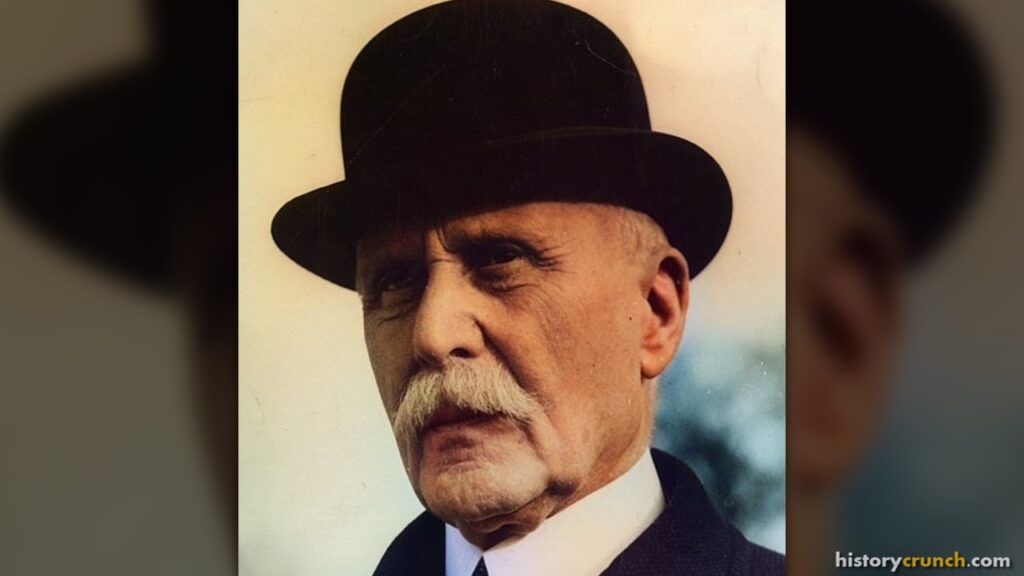
France in World War II – Free France and the French Resistance
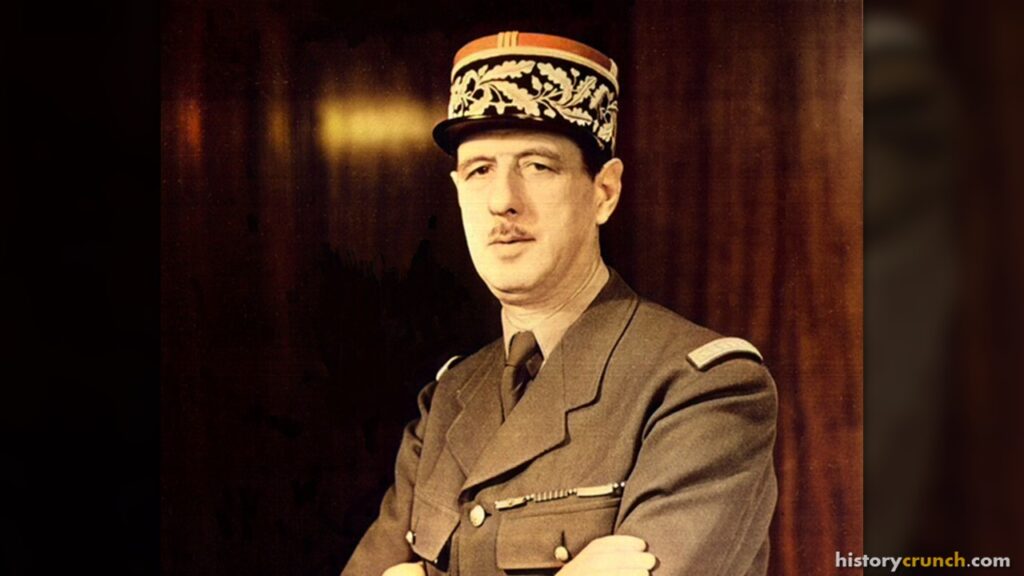
However, it should be noted that not all French people accepted the defeat and occupation. On June 18th, 1940, French General Charles de Gaulle delivered a famous radio address over the BBC from London, urging the French people to continue resisting Nazi Germany and refusing to accept the armistice as the final word. This appeal became the founding moment of the Free French movement, which de Gaulle built into an important military and political organization over the following years.
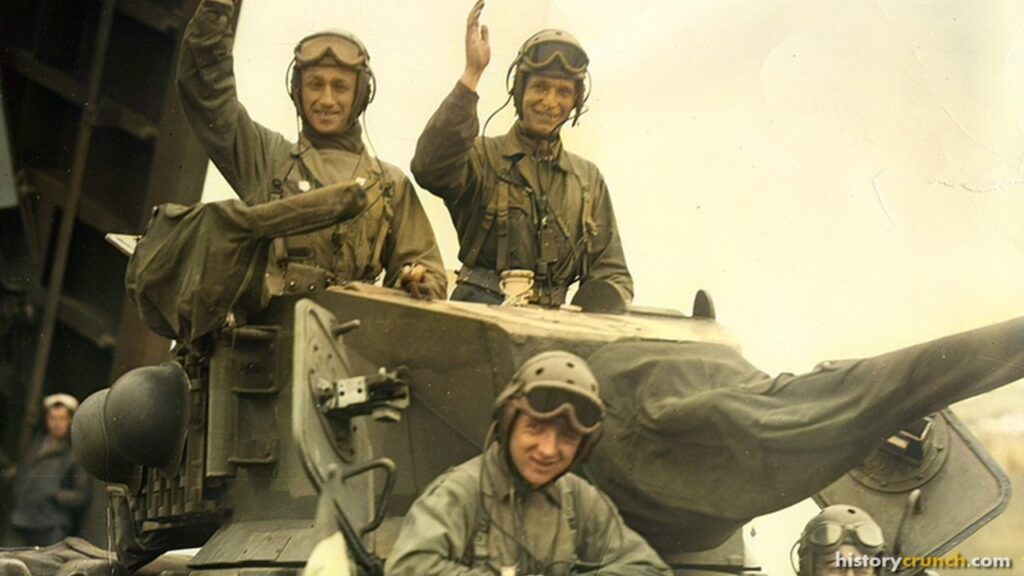
The Free French Forces grew gradually from a small initial group into a substantial military formation. For instance, by the time of the Allied invasion of Normandy in June of 1944, Free French forces numbered approximately 300,000 regular soldiers. Free French forces participated in military operations in North Africa, including campaigns in Libya and Egypt alongside British forces in 1941, and more than 100,000 Free French troops fought in the Allied campaign in Italy in 1943. As well, the Free French 1st Army under General Jean de Lattre de Tassigny participated in Operation Dragoon, the Allied invasion of southern France in August of 1944, and subsequently advanced through Alsace before joining in the final Allied advance into Nazi Germany.
Inside occupied France, the French Resistance carried out a wide range of activities against the German occupiers throughout the war. For instance, Resistance networks gathered and passed intelligence to the Allied Powers, sheltered Allied airmen who had been shot down, distributed underground newspapers, and carried out acts of sabotage against Nazi German military facilities. As the Allied invasion of France drew closer in 1944, the Resistance became increasingly organized and active. For instance, by the time of the Normandy landings, the French Forces of the InteriorThe formal name for the organized French Resistance, which numbered more than 100,000 fighters by the time of the Normandy landings., as the organized Resistance was formally known, numbered more than 100,000 fighters.
France in World War II – Major Campaigns and Battles
While the nation of France had accepted defeat following the Battle of France, the forces of Free France and the French Resistance kept fighting, which led to several significant battles and campaigns.
FactsthatCrunchWhat were the major battles and campaigns fought by the Free French Forces from 1941 to 1945?
Tap a point to read its detail.
Free French Forces in North Africa
Following the fall of France in 1940, the Free French continued fighting alongside the Allied Powers in the North African theater. Free French forces participated in a series of campaigns in Libya and Egypt against Italian and Nazi German forces from 1941 onward. For instance, Free French troops fought alongside British forces in the Western Desert campaign and participated in several important actions against Axis forces in the region. As well, when Allied forces landed in French North Africa in November of 1942 as part of Operation Torch, the French forces in the region gradually transitioned from supporting the Vichy government to joining the Free French and the Allied cause. This transition was significant because it substantially increased the size and resources available to the Free French movement.
FactsthatCrunchIn November 1942, Allied forces landed in French North Africa as part of Operation Torch, bringing French colonial troops face to face with a direct choice about which side to fight for. The French forces in the region had been under Vichy government command, actively collaborating with Nazi Germany, but the Allied landings forced a reckoning that could reshape the entire balance of the Free French movement.
Free French Forces in Italy
Free French forces played an important role in the Allied campaign in Italy from 1943 to 1944. More than 100,000 Free French troops fought as part of the French Expeditionary Corps under General Alphonse Juin in the Allied campaign to drive Nazi Germany and fascist Italy from the Italian peninsula. For instance, French forces played an important role in the Battle of Monte Cassino, particularly in May of 1944, when French and Moroccan troops broke through German mountain defenses in the Aurunci Mountains alongside the wider Allied offensive that finally cracked the Gustav Line and opened the road to Rome. As such, the Free French contribution to the Italian Campaign was one of the most significant French military achievements of World War II.
FactsthatCrunchThe French Expeditionary Corps under General Alphonse Juin lost approximately 6,500 soldiers killed in action during the Allied campaign in Italy from 1943 to 1944.
The Corps also suffered approximately 2,000 soldiers listed as missing and approximately 23,000 wounded, making Italy one of the costliest theaters for Free French forces in the entire war. French and Moroccan troops played a key role in breaking the German Gustav Line in May 1944, pushing through the Aurunci Mountains to help open the road to Rome. The high cost in lives came alongside more than 100,000 troops committed to the Italian Campaign under General Juin's command.
The Liberation of France
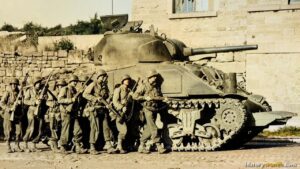
The liberation of France began in earnest with the Allied landings in Normandy on June 6th, 1944. French forces participated directly in the D-Day landings, with French commandos landing on the beaches of Normandy alongside British and American forces. The Free French 2nd Armored Division, under General Philippe Leclerc, landed at Utah Beach on August 1st, 1944, and played a central role in the subsequent breakout from Normandy.
The most celebrated episode of Free French military history in World War II was the liberation of Paris. A rising of the French Resistance in Paris began on August 19th, 1944, and fighting broke out between resistance fighters and the German garrison throughout the city. General de Gaulle pressed Allied commander General Dwight D. Eisenhower to send forces to liberate the city, arguing that its liberation was of vital importance to France’s national honor and to the restoration of democratic republican government. Eisenhower agreed, and on the night of August 24th, 1944, elements of Leclerc’s 2nd Armored Division entered Paris. On August 25th, 1944, the German military governor of the city, General Dietrich von Choltitz, formally surrendered to French forces. Importantly, von Choltitz chose not to carry out Hitler’s order to destroy Paris before surrendering, sparing the city from devastation. On August 26th, 1944, de Gaulle led a famous parade down the Champs-Élysées before enormous crowds, marking the symbolic restoration of French sovereignty over the capital. As such, the liberation of Paris was one of the most emotionally powerful moments of the entire war for the French people.
Following the liberation of Paris, French forces continued to fight alongside the Allied Powers in the advance toward Nazi Germany. The Free French 1st Army participated in Operation Dragoon, the liberation of southern France, and subsequently advanced into Alsace and across the Rhine into Germany itself. French forces were still engaged in fighting in Germany when the war in Europe ended on May 8th, 1945.
FactsthatCrunchHitler ordered that Paris be destroyed rather than handed over, but the German commander did not carry out the order.
General Dietrich von Choltitz surrendered the city to French forces on August 25th, 1944, leaving its bridges and landmarks standing. The next day, Charles de Gaulle led a victory parade down the Champs-Élysées.
France in World War II – Home Front
The French home front during World War II was shaped entirely by the experience of occupation. The Nazi German occupiers extracted enormous resources from France, including food, industrial production, and forced labor. For instance, over 600,000 French workers were sent to work in Germany under the Service du Travail ObligatoireA compulsory labor service introduced by the Vichy regime in February 1943 that sent over 600,000 French workers to work in Germany., the compulsory labor service introduced by the Vichy regime in February of 1943. Food rationing was strict and persistent, and the standard of living for ordinary French people declined significantly throughout the occupation years.
It should also be noted that the occupation created deeply painful divisions within French society that took many years to heal after the war. For instance, some French people collaborated actively with the Nazi German occupiers, providing information to the authorities, profiting from the persecution of Jewish people, or serving in the MiliceA Vichy paramilitary force that actively hunted members of the French Resistance during the German occupation., a Vichy paramilitary force that actively hunted Resistance fighters. Others risked their lives to resist the occupation, shelter Jewish people, or assist Allied soldiers. After the liberation, thousands of people accused of collaboration faced punishment, and approximately 10,000 were executed, many without trial, in the months following the liberation of France.
FactsthatCrunchThe French Resistance was a network of groups inside German-occupied France during World War II that worked secretly to fight Nazi control. Members gathered military information, helped Allied soldiers escape, and carried out acts of sabotage such as cutting telephone lines and destroying rail lines. The movement grew steadily after Germany occupied France in 1940 and included people from many different political backgrounds and jobs.
"When Resistance members passed secret reports about German troop positions to the Allies before the 1944 invasion of Normandy, they helped make the operation more likely to succeed."
France in World War II – Significance
World War II was one of the most important and defining events in modern French history. First, the rapid defeat of France in 1940 was a profound shock to the French nation and to the world, as France had been considered one of the great military powers of Europe. The defeat forced France to confront difficult questions about its military preparedness, its political system, and ultimately its national identity.
Second, the experience of occupation, collaboration, and resistance left deep and lasting scars on French society. The Vichy regime’s role in the persecution of Jewish people, and the participation of French police in deportations to Nazi death camps, remained deeply controversial in France for decades and raised questions about collective responsibility that the country has continued to grapple with. For instance, it was not until July of 1995 that a French president publicly acknowledged that the French state bore responsibility for the deportation of Jews during the occupation, when President Jacques Chirac issued a formal apology.
Third, the Free French movement and the French Resistance gave France a basis on which to claim a place among the victorious Allied Powers at the end of the war, despite the defeat of 1940. De Gaulle’s insistence that France had never truly surrendered and that the Free French represented the legitimate continuation of the French Republic helped restore French national pride and allowed France to emerge from the war as one of the permanent members of the United Nations Security Council. As such, France’s role in World War II, in all its complexity, played an important part in shaping the identity and international standing of modern France.
FactsthatCrunch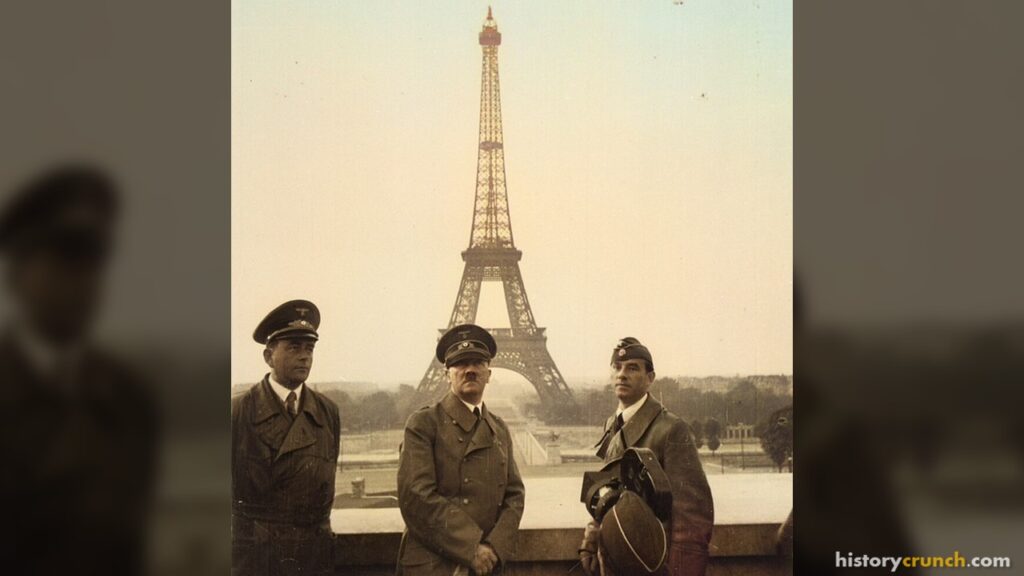 Black & whiteColor
Key Vocabulary
Phoney War
Maginot Line
Armistice
Collaborating
Service du Travail Obligatoire
Milice
French Forces of the Interior
Frequently Asked Questions
Why did France fall so quickly in 1940?
France fell in about six weeks because German forces used a fast, mobile style of attack through the Ardennes Forest. French commanders had thought this wooded terrain was impassable for tanks, so they left it lightly defended. German forces broke through and cut off Allied armies in Belgium. Paris fell on June 14th, 1940, and an armistice was signed on June 22nd, 1940.
What was Vichy France?
Vichy France was the French government that ruled the unoccupied southern zone after the 1940 armistice. Led by Marshal Philippe Pétain and based in the town of Vichy, it collaborated with Nazi Germany. The regime passed anti-Semitic laws and helped deport Jewish people to death camps. About 76,000 Jews were deported from France, and most did not survive.
Who was Charles de Gaulle and what were the Free French?
Charles de Gaulle was a French general who refused to accept the 1940 defeat. On June 18th, 1940, he gave a radio address from London urging the French to keep fighting. This founded the Free French movement, which grew into a major military force. By the Normandy landings in June of 1944, Free French forces numbered about 300,000 soldiers.
When was Paris liberated in World War II?
Paris was liberated in late August of 1944. A Resistance uprising began on August 19th, 1944, and Free French tanks entered the city on the night of August 24th. The German commander, General Dietrich von Choltitz, surrendered on August 25th and refused Hitler’s order to destroy the city. De Gaulle led a famous parade down the Champs-Élysées on August 26th, 1944.
How many people from France died in World War II?
French military losses totaled about 212,000 dead across all parts of the war. French civilian losses were also heavy, with roughly 330,000 deaths from occupation, executions, deportation, and Allied bombing. Of the roughly 76,000 Jewish people deported from France, only about 2,500 survived the Holocaust. These losses left deep and lasting scars on French society.
Why does France sit on the United Nations Security Council despite its 1940 defeat?
France earned a place among the victorious Allies through the Free French movement and the Resistance. De Gaulle argued that France had never truly surrendered and that the Free French carried on the French Republic. This claim helped restore national pride after the shock of 1940. France emerged from the war as a permanent member of the United Nations Security Council.
Cite This Article
To cite this article as a source, use one of the formats below.
MLA: Millar, B. “France in World War II: A Detailed Summary.” HistoryCrunch, 1 October 2026, https://historycrunch.com/france-in-world-war-ii/.
APA: Millar, B. (2026). France in World War II: A Detailed Summary. HistoryCrunch. https://historycrunch.com/france-in-world-war-ii/
Chicago: Millar, B. “France in World War II: A Detailed Summary.” HistoryCrunch. October 1, 2026. https://historycrunch.com/france-in-world-war-ii/
Sources
- Antony Beevor, The Second World War.
- Imperial War Museum
- Max Hastings, Inferno / All Hell Let Loose.
- Gerhard L. Weinberg, A World at Arms.