The Blitz was the sustainedContinuing for a long time without stopping. Nazi German bombing campaign against Britain during World War II and became one of the most famous home-front experiences of the war. The main Blitz lasted from September 7th, 1940, to May of 1941, and it was significant because it brought the war directly to civilians in London, England, and many other British cities while also showing that Germany could not force Britain out of the war through bombing alone.
Blitz in World War II – Background
By the summer of 1940, Nazi Germany had already defeated Poland, Denmark, Norway, the Low Countries, and France. This left Britain standing as Germany’s main enemy in western Europe. Since Britain was an island, Germany could not use the same fast land attacks (blitzkrieg tactics) that had worked so well on the mainland of Europe. Instead, Adolf Hitler hoped that air power could weaken Britain, destroy moraleThe confidence and determination felt by a group of people under difficult conditions., and prepare the way for a possible invasion called Operation Sea Lion.
The Blitz also grew out of the Battle of Britain. During that battle, the LuftwaffeThe air force of Nazi Germany during World War II., which was the German air force, tried to defeat the Royal Air Force, or RAF, and gain control of the skies. When that did not happen, Germany increasingly turned toward bombing London, England, and other cities. Therefore, the Blitz was not a separate event from the air war of 1940. It was the next stage of Germany’s attempt to knock Britain out of the war.
 FactsthatCrunch
Hitler hoped that German air power would weaken Britain and prepare the way for an invasion called Operation Sea Lion.
Blitz in World War II – the Blitz Begins
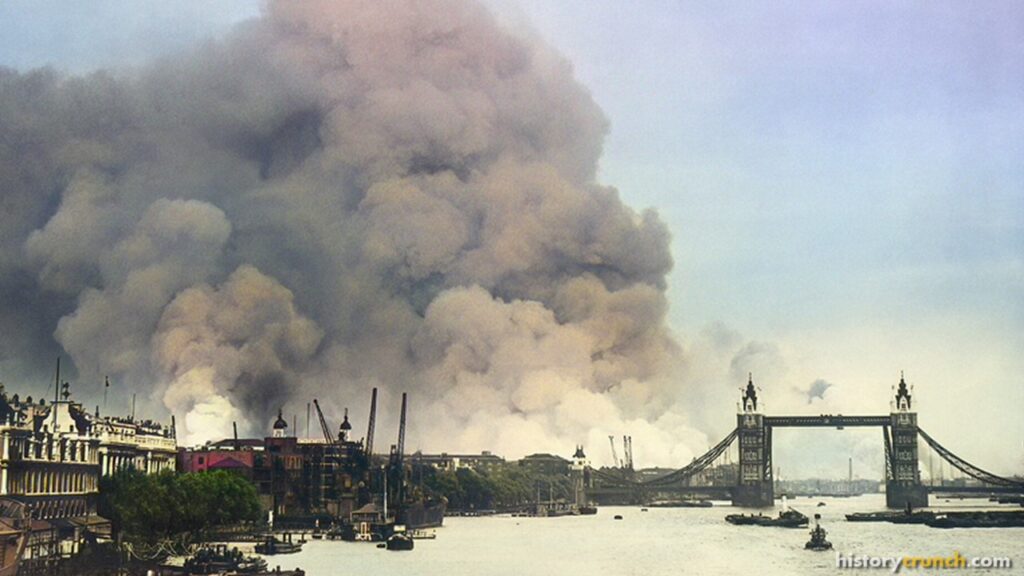
The Blitz began on September 7th, 1940, when German bombers launched a major attack on London, England. That first day became known as Black Saturday. The raid killed about 430 people and injured about 1,600 more. After that, London was bombed night after night, and the city was attacked on 57 straight nights. This was important because it turned bombing from an occasional fear into part of daily life for civilians.
Although London became the best-known target, the Blitz was much wider than London alone. From mid-November of 1940 major provincial cities and industrial centers were increasingly targeted, and later attacks also focused on ports. Cities such as Coventry, England, Birmingham, England, Liverpool, England, Plymouth, England, Southampton, England, and Sheffield, England, were all hit. In this way, the Blitz became a national experience across much of Britain, not just a London story.
One of the most famous provincial raids was the attack on Coventry, England, on the night of November 14th, 1940. The raid was especially devastating, heavily damaged factories and public utilities, and helped create the phrase “to coventrate,” meaning to destroy a city by bombing. This raid was important because it showed how destructive concentrated bombing could be against an industrial city and helped make Coventry one of the best-known symbols of civilian suffering in wartime Britain.
FactsthatCrunch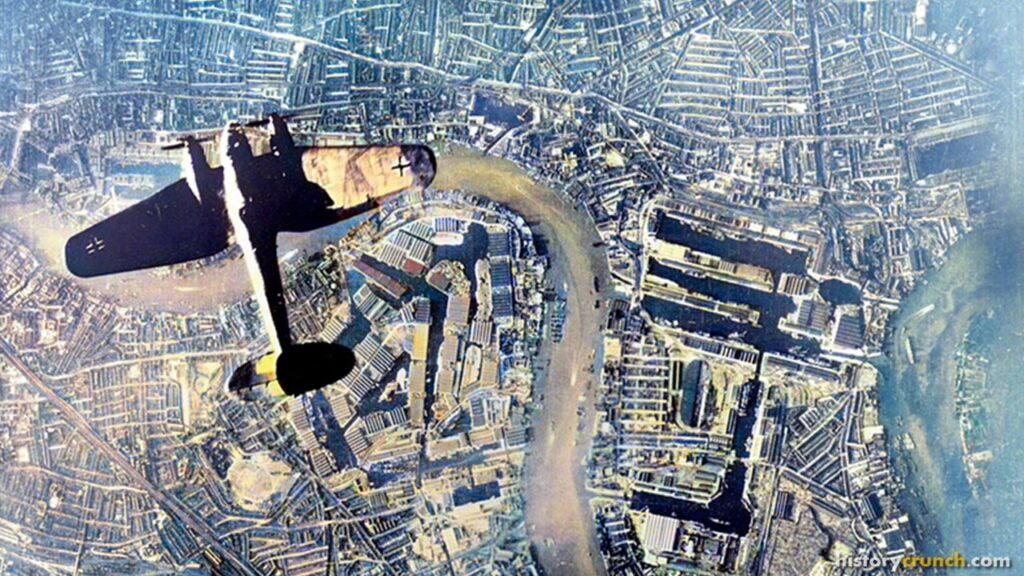 Black & whiteColor
Blitz in World War II – Life During the Blitz
For civilians, the Blitz meant blackouts, air-raid sirens, shelters, fires, rubble, and constant uncertainty. Families had to decide whether to remain in their homes, use backyard Anderson shelters, or seek safety in public spaces. As bombing became more intense, many people in London, England, took refuge in Underground railway stations. At first officials resisted this, but the government eventually accepted it and improved conditions with bunk beds, bathrooms, and other services. These shelters became one of the most memorable parts of civilian life during the Blitz.
Even under heavy bombing, everyday life did not completely stop. Many people still worked, shops reopened when they could, and emergency services tried to keep the city functioning. London’s essential services were disrupted but never permanently broken. This is significant because one of Germany’s main goals was to break British morale, yet British cities kept operating even after severe raids. For high school students, this is one of the clearest examples of how the home front became part of the war effort.
The human cost was still enormous. For instance, over 43,000 civilians were killed during the nine months of the Blitz, and almost half of those deaths occurred in London. Across the whole war, more than 60,000 British civilians were killed by German bombing. Large numbers of houses were damaged or destroyed, and many families were made homeless. Therefore, even though Britain remained in the war, the cost to ordinary people was very high.
FactsthatCrunchWhere did people in London take shelter during the Blitz?
Many Londoners slept in Underground railway stations. Others used Anderson shelters in their backyards or public shelters. At first officials tried to stop people from using the Underground, but the government later accepted it and added bunk beds, bathrooms and other services.
Blitz in World War II – Why the Blitz Failed
Germany hoped that bombing would force Britain to surrender or at least make invasion easier. However, the Blitz did not achieve that goal. From a military perspective the campaign was counterproductiveProducing the opposite result of what was intended, making things worse instead of better. because Germany failed to win control of the skies, and by mid-September of 1940 the RAF had effectively won the Battle of Britain. Hitler then postponed Operation Sea Lion, and on May 11th, 1941, he called off the Blitz as his attention shifted east toward the Soviet Union.
This failure was important in the larger history of World War II. Britain remained a base for future Allied operations, and the war against Germany continued rather than ending in 1940. As such, the Blitz is often remembered not only for destruction, but also for the fact that Germany could not bomb Britain into submission. The campaign hurt cities and civilians badly, but it did not produce the political collapse Hitler wanted.
FactsthatCrunchBlitz in World War II – Significance
The Blitz was significant because it showed how modern war could reach deep into civilian life. Bombing no longer affected only soldiers at the front. It also affected workers, children, families, transportation systems, churches, schools, and entire neighborhoods. In this sense, the Blitz helps students understand the idea of total warA conflict in which whole societies, not just armies, become targets and active participants., in which whole societies become targets and participants in the conflict.
The Blitz was also significant because it became one of the defining experiences of Britain in World War II. It strengthened the image of British endurance, kept the United Kingdom in the war after the fall of France, and marked the failure of Germany’s attempt to force a quick victory in the west. Regardless of the heavy destruction it caused, the Blitz did not defeat Britain. Instead, it became one of the clearest examples of civilian resilienceThe ability of people to keep going and recover after severe hardship or destruction. during the war.
Explore World War II · 1939 – 1945
Keep exploring World War II with these History Crunch resources.
Key Vocabulary
Sustained
Blitzkrieg
Luftwaffe
Morale
Counterproductive
Total war
Resilience
Frequently Asked Questions
What was the Blitz in World War II?
The Blitz was Nazi Germany’s long bombing campaign against Britain during World War II. The main attacks ran from September 7th, 1940, to May of 1941. The word comes from the German term blitzkrieg, which means lightning war.
When did the Blitz start and end?
The Blitz began on September 7th, 1940, with a major raid on London that became known as Black Saturday. Adolf Hitler called off the campaign on May 11th, 1941. By then his attention had shifted east toward the Soviet Union.
Which British cities were bombed during the Blitz?
London was bombed the most, including 57 straight nights of raids. Many other cities were also hit, such as Coventry, Birmingham, Liverpool, Plymouth, Southampton, and Sheffield. The attack on Coventry on November 14th, 1940, was one of the most destructive raids.
How many people died in the Blitz?
More than 43,000 civilians were killed during the nine months of the Blitz. Almost half of those deaths happened in London. Across the whole war, German bombing killed over 60,000 British civilians and left many families homeless.
Why did the Blitz fail?
The Blitz failed because Germany never gained control of the skies and could not break British morale. The RAF had effectively won the Battle of Britain by mid-September of 1940. Hitler then postponed his planned invasion, called Operation Sea Lion, and Britain stayed in the war.
How did people stay safe during the Blitz?
Families used blackouts, air-raid sirens, and shelters to protect themselves. Many used backyard Anderson shelters, while others in London took refuge in Underground railway stations. The government later improved these stations with bunk beds, bathrooms, and other services.
Cite This Article
To cite this article as a source, use one of the formats below.
MLA: Millar, B. “Blitz in World War II: A Detailed Summary.” HistoryCrunch, 2 October 2026, https://historycrunch.com/blitz-in-world-war-ii/.
APA: Millar, B. (2026). Blitz in World War II: A Detailed Summary. HistoryCrunch. https://historycrunch.com/blitz-in-world-war-ii/
Chicago: Millar, B. “Blitz in World War II: A Detailed Summary.” HistoryCrunch. October 2, 2026. https://historycrunch.com/blitz-in-world-war-ii/
Sources
- Antony Beevor, The Second World War.
- Imperial War Museum
- Max Hastings, Inferno / All Hell Let Loose.
- Gerhard L. Weinberg, A World at Arms.