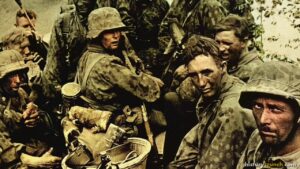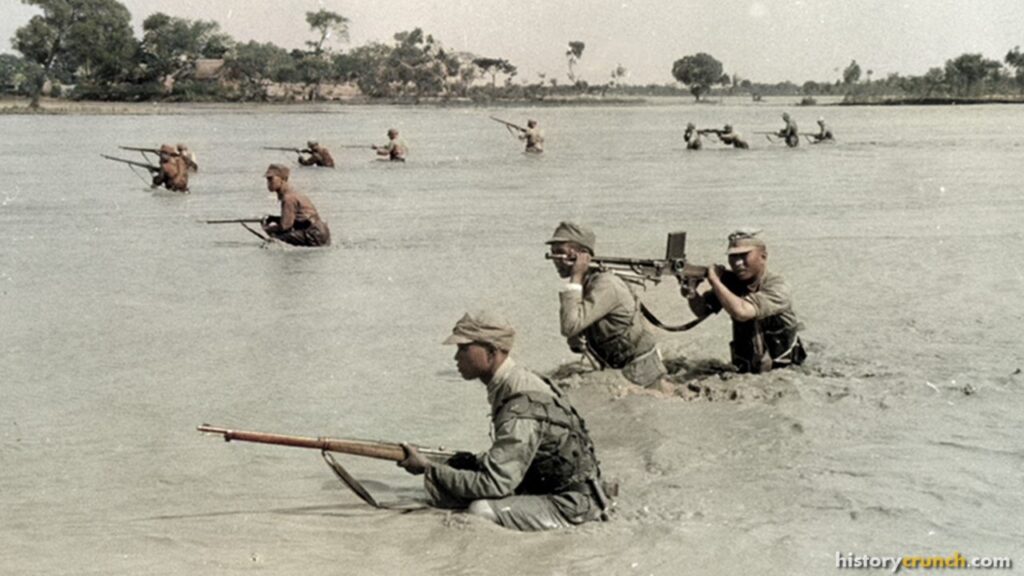
The Second Sino-Japanese War was a major conflict between China and Imperial Japan that lasted from July 7th, 1937 to September 9th, 1945. In fact, historians consider the conflict to be one of the most important wars in Asia during the 20th century. As well, many view the Second Sino-Japanese War as an important event in the lead up to World War II, especially in terms of the war in the Pacific.
 FactsthatCrunch
When Did the Second Sino-Japanese War Start and End?
The Second Sino-Japanese War began on July 7th, 1937, and ended when Japan surrendered in September of 1945. It started with a clash between Chinese and Japanese troops at the Marco Polo Bridge near Beijing. After the attack on Pearl Harbor in December of 1941, the war in China became part of World War II, and it ended with Japan's defeat at the end of that war.
What Was Imperialism in China?
To understand the Second Sino-Japanese War, it is first necessary to understand imperialism in China. During the Age of Imperialism, several outside powers pushed into China and established special rights, trading privileges and spheres of influenceAreas where an outside power claimed special rights and dominated trade or politics without fully annexing the territory.. These powers included Britain, France, Germany, Russia and Japan.
Japan’s role became more aggressive over time. In 1931, Japanese forces invaded Manchuria, which was the northeastern region of China, and established the puppet stateA country that appears independent but is actually controlled by a foreign power. of Manchukuo in 1932. This is important because the invasion of Manchuria showed that Japan was already using force to expand on the Asian mainland before the larger war of 1937 began. In that sense, the Second Sino-Japanese War grew out of earlier Japanese expansion in China.
FactsthatCrunchWhat were the main spheres of influence that outside powers carved out in China before World War II?
Second Sino-Japanese War – Causes
There were several important causes of the Second Sino-Japanese War. First, Japan wanted more territory, natural resources, and political influence in East Asia. Japanese leaders believed that expansion into China would strengthen the Japanese Empire and help secure the necessary natural resources that are needed for industry and war. This resulted in a policy that treated China as a region to be controlled.
Second, China was politically divided and militarily weaker than Japan in several key ways. Although Chiang Kai-shek led the Nationalist government, China was still dealing with internal conflict, regional divisions, and the earlier struggle between the Nationalists and the Chinese Communists. With that said, pressure from Japan helped push these rival Chinese groups into a temporary cooperation known as the ‘Second United FrontA temporary cooperation between China’s rival Nationalist and Communist groups, forced by Japanese aggression.‘. As such, Japanese aggression helped force a temporary pause in the events of the Chinese Civil War.
Regardless, the immediate spark for the war came with the Marco Polo Bridge Incident on the night of July 7th, 1937. Japanese troops were carrying out military exercises near Wanping, close to Beijing, when they claimed that one of their soldiers was missing and demanded entry into the walled town. The Chinese refused and fighting broke out between the two sides. Although the exact cause of the first shots remains debated, historians generally treat this incident as the start of the Second Sino-Japanese War.
The Marco Polo Bridge Incident began when Japanese troops demanded entry into the walled town of Wanping after claiming one of their soldiers was missing.
Second Sino-Japanese War – Major Events
One of the first major campaigns of the war was the Battle of Shanghai, which lasted from August 13th, 1937 to November 26th, 1937. This was a huge and bloody battle in which Chinese forces fought hard to defend one of the country’s most important cities. In fact, the fighting in Shanghai was much more intense and prolonged than many Japanese leaders had expected. Regardless, after Shanghai fell, Japanese forces pushed toward Nanjing, which was then the capital of the Republic of China. Japanese troops captured the city on December 13th, 1937. What followed became one of the most notorious atrocitiesExtremely cruel and violent acts, especially those committed against civilians during war. of the war. In fact, over the next six weeks, Japanese soldiers carried out mass killings, rape, looting, and other brutal acts against Chinese civilians and prisoners of war in what became known as the Nanking Massacre.
Another major campaign followed at the city of Wuhan in 1938. Japanese forces eventually captured the city after months of fighting, but China continued resisting and moved its wartime capital farther inland to Chongqing.
The war changed after December 7th, 1941, when Japan attacked Pearl Harbor, and the United States was brought into the fighting of World War II. After the attack on Pearl Harbor, the conflict in China became fully linked to the wider Pacific War and to World War II as a whole. China was now fighting Japan as part of the broader Allied Powers of World War II, and foreign aid became more important to the Chinese war effort. This is significant because the Second Sino-Japanese War was no longer only a regional conflict, since it had now become one major front in World War II.
Even so, the war in China remained extremely difficult. Japanese forces still held large areas of eastern China, while the Nationalists and Communists, which had previously been engaged in the Chinese Civil War, were often suspicious of one another despite their temporary alliance. With that said, Japan’s position gradually weakened as the larger war turned against it in the latter stages of World War II.
The Second Sino-Japanese War ultimately ended in 1945. After the atomic bombings of Hiroshima and Nagasaki in August of 1945 and the Soviet attack on Japanese forces in Manchuria, Japan moved toward surrender. As a result, Japan announced its surrender on August 15th, 1945, and the formal surrender process in China followed soon after, with Chinese authorities accepting the Japanese surrender on September 9th, 1945.
The end of the war did not bring full peace to China. Instead, the struggle between the Nationalists and Communists soon returned, and the Chinese Civil War resumed. This is important because the end of the Second Sino-Japanese War removed one major conflict, but it did not resolve the political divisions within China itself.
FactsthatCrunch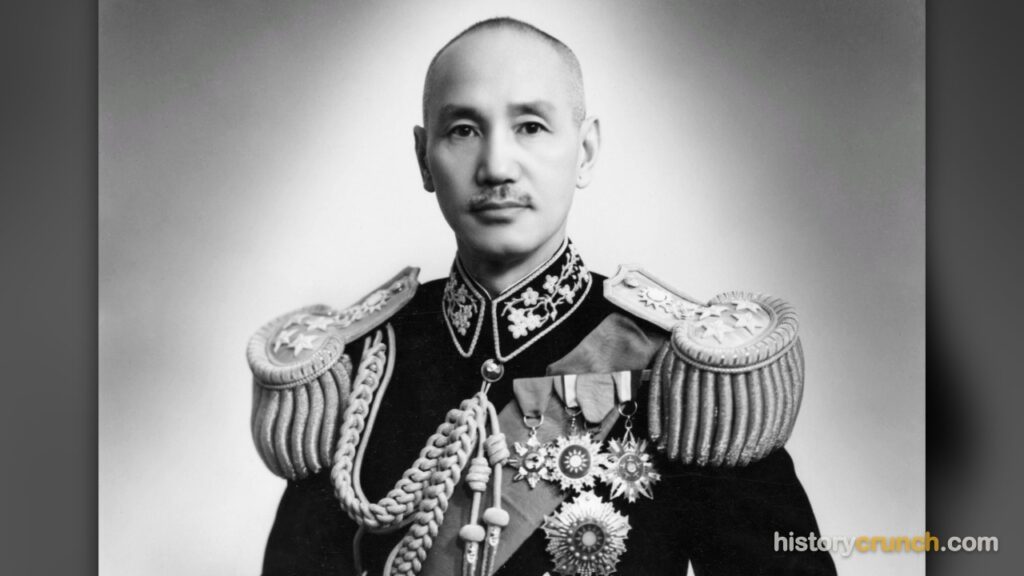
Second Sino-Japanese War – Significance
The Second Sino-Japanese War was one of the most important wars in modern Asian history. It weakened China, and ultimately led to the end of Imperial Japan, and contributed directly to the larger conflict of World War II in the Pacific. For China, the war deepened suffering but also strengthened resistance to foreign invasion. For Japan, the war became a long and costly struggle that tied down troops and resources for years. Finally, the Second Sino-Japanese War also led to the events of the Nanking Massacre, which was an example of war crimesSerious violations of the rules of war, such as mass killing of civilians or prisoners. and crimes against humanity.
Explore World War II · 1939 – 1945
Keep exploring World War II with these History Crunch resources.
Key Vocabulary
Imperialism
Puppet state
Spheres of influence
Second United Front
Atrocities
War crimes
Allied Powers
Frequently Asked Questions
When did the Second Sino-Japanese War start and end?
The Second Sino-Japanese War lasted from July 7th, 1937 to September 9th, 1945. It began with the Marco Polo Bridge Incident near Beijing. It ended when Chinese authorities accepted the formal Japanese surrender, weeks after Japan announced its surrender on August 15th, 1945.
What caused the Second Sino-Japanese War?
The main cause was Japan’s drive for more land, natural resources, and political power in East Asia. Japanese leaders believed that controlling China would strengthen their empire and supply materials for industry and war. China was also politically divided and militarily weaker, which made it a target. The Marco Polo Bridge Incident provided the immediate spark.
What was the Nanking Massacre?
The Nanking Massacre was one of the worst atrocities of the war, carried out after Japanese troops captured Nanjing on December 13th, 1937. Over the next six weeks, Japanese soldiers killed, raped, and looted on a massive scale. The victims included both civilians and prisoners of war. Historians treat it as a clear example of war crimes and crimes against humanity.
How did the war connect to World War II?
The war became part of World War II after Japan attacked Pearl Harbor on December 7th, 1941. From that point, China fought Japan as one of the Allied Powers. The conflict in China turned into a major front of the larger Pacific War. Foreign aid also became more important to the Chinese war effort.
What happened in China after the war ended?
The end of the war did not bring lasting peace to China. The old struggle between the Nationalists and the Communists soon returned, and the Chinese Civil War resumed. The two sides had formed a temporary alliance against Japan called the Second United Front. Once Japan surrendered, that cooperation quickly broke down.
Cite This Article
To cite this article as a source, use one of the formats below.
MLA: Millar, B. “Second Sino-Japanese War: A Detailed Summary.” HistoryCrunch, 1 October 2026, https://historycrunch.com/second-sino-japanese-war/.
APA: Millar, B. (2026). Second Sino-Japanese War: A Detailed Summary. HistoryCrunch. https://historycrunch.com/second-sino-japanese-war/
Chicago: Millar, B. “Second Sino-Japanese War: A Detailed Summary.” HistoryCrunch. October 1, 2026. https://historycrunch.com/second-sino-japanese-war/
Sources
- Imperial War Museum
- Max Hastings, Inferno / All Hell Let Loose.
- Antony Beevor, The Second World War.
- The National WWII Museum