Annexation of Austria by Nazi Germany: A Detailed Summary

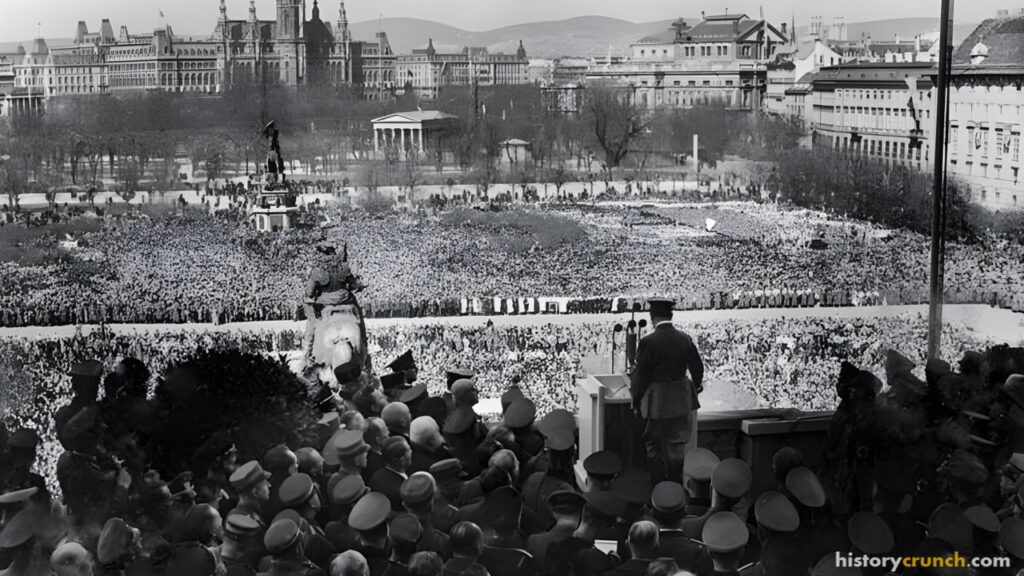
Adolf Hitler announces the Anschluss in Vienna in 1938.

Table of Contents

The Nazi Germany annexation of Austria was an important event in the buildup to World War II. This article details the history and significance of the annexation of Austria.

The annexationWhen one country takes over and absorbs another country, making it part of its own territory. of Austria by Nazi Germany, known also as the ‘Anschluss’, occurred in March of 1938 and marked a significant step in Adolf Hitler’s expansionist aggression in the years before World War II. The event was an example of the failure of appeasement, which was the foreign policy strategy that was practiced by the Western democracies, such as Britain and France. As such, historians view the Nazi Germany annexation of Austria as a major step towards World War II, which broke out in September of 1939.
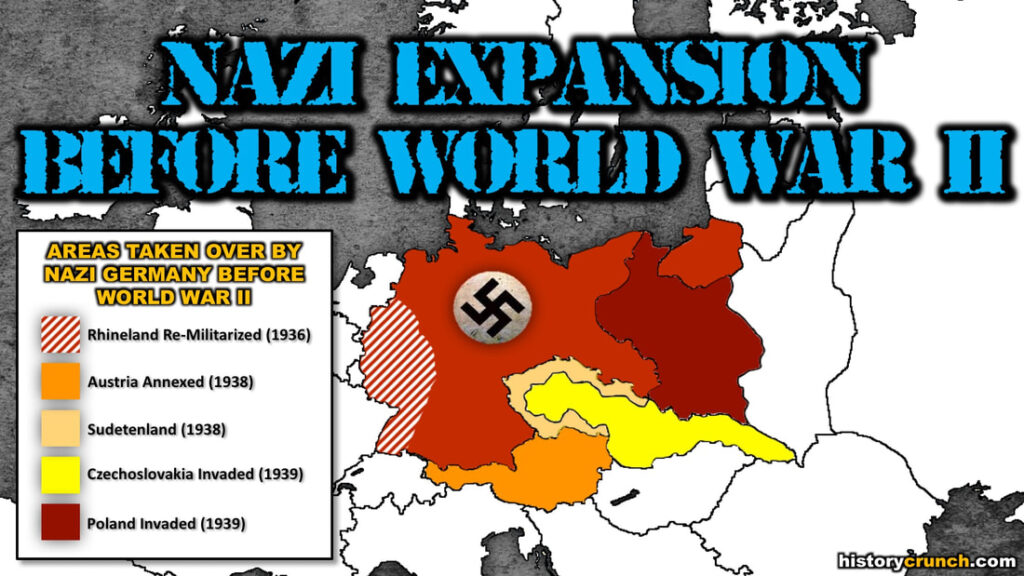
Appeasement Before World War II Map
Treaty of Saint-Germain
noun
The Treaty of Saint-Germain was a peace agreement signed in 1919 after World War I that broke up the Austro-Hungarian Empire and set the rules Austria had to follow. One of those rules banned Austria from uniting with Germany, a restriction that Adolf Hitler ignored when he carried out the Anschluss in March 1938.
Source: National Archives (United Kingdom)© factsthatcrunch.com

Annexation of Austria by Nazi Germany – Background

Historians consider the Nazi Germany annexation of Austria to be one of the most significant events in the years before the start of World War II. More specifically, this was the time frame when the foreign policy of appeasement was being practiced by the Western democracies, such as Britain and France. The policy essentially worked by conceding to some of Adolf Hitler’s, the Nazi leader, demands. It was driven by the desire to maintain peace in Europe, especially in relation to the death and destruction caused by the events of World War I. AppeasementA foreign policy of giving in to some of an aggressive leader’s demands in order to avoid war. reached its peak under British Prime Minister Neville Chamberlain, who believed that giving into some of Hitler’s territorial demands would prevent another large-scale war. All of this eventually culminated in the Nazi Germany invasion of Poland in September of 1939, and the outbreak of World War II. As such, historians consider the failure of appeasement as a significant cause of World War II, and the annexation of Austria was one of several examples of the failure of appeasement, alongside: the remilitarization of the Rhineland, the events of the Munich Conference and the occupation of Czechoslovakia.
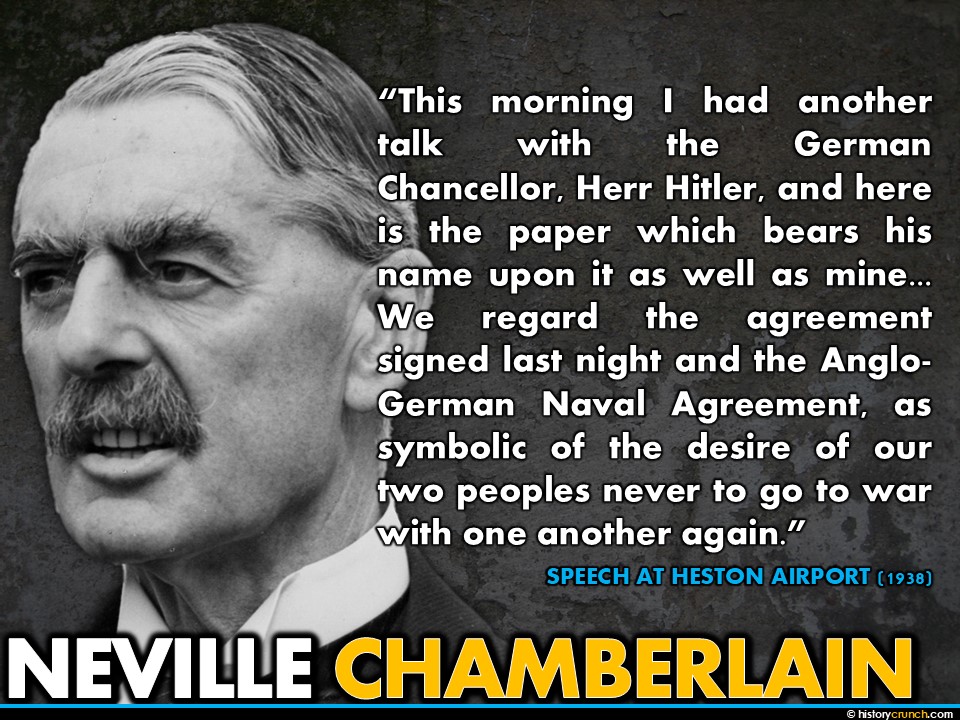
Neville Chamberlain quote graphic featuring his 1938 Heston Airport speech about Anglo-German peace

Another note of importance was the role that culture played in the Nazi Germany annexation of Austria. For instance, Austria and Germany shared a deep cultural, linguistic, and historical connection. After World War I, there was widespread agreement in both countries that the two should be unified. However, the Treaty of Versailles and the Treaty of Saint-Germain both denied the unification of Germany and Austria, as a means to maintain peace in Europe. Furthermore, Adolf Hitler, the fascist dictator of Nazi Germany, was born in Austria in 1889. As such, he personally shared a deep connection with Austria. Finally, during the 1930s, Austrian Nazis, inspired by Hitler’s rise in Germany, actively sought to bring Austria under the control of the Nazi Party.
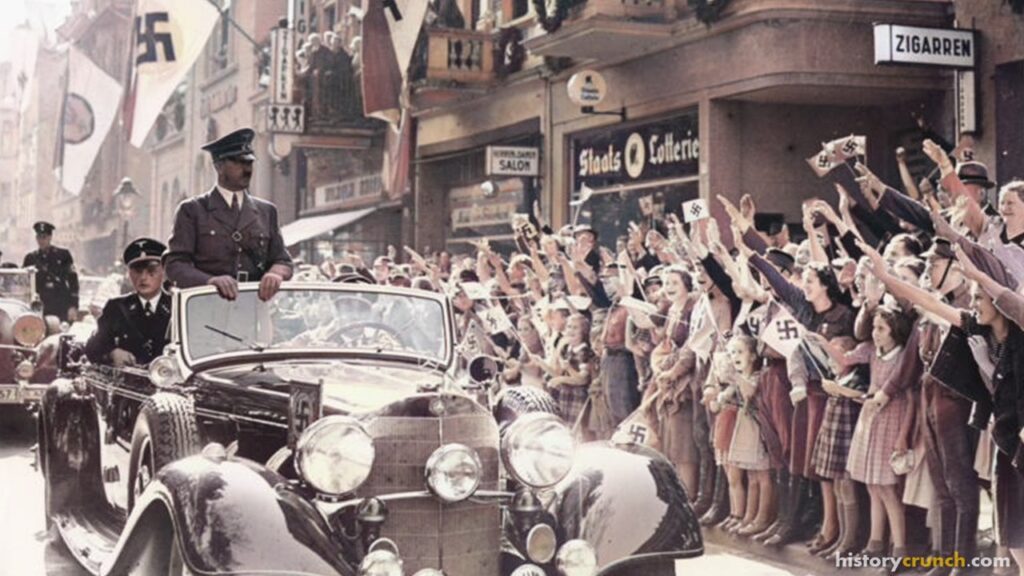
Adolf Hitler standing in an open Mercedes car greeted by cheering crowds waving swastika flags in a German street
Adolf Hitler in Bonn, Germany in 1938. (Colorized by historycrunch.com)
World War IIVenn DiagramInteractive
Facts that CrunchFactsthatCrunch

What did Austria and Germany share before 1938, and what kept them separate?

Tap an item to read its detail.
Austria OnlyGermany Only
Independent Republic After World War I, Austria became a separate republic under the Treaty of Saint-Germain of 1919, which legally barred it from uniting with Germany.
Kurt Von Schuschnigg Austria's Chancellor through the 1930s, Schuschnigg actively worked to preserve Austrian independence and resisted Nazi pressure until his forced resignation on March 11th, 1938.
Hitler's Birthplace Adolf Hitler was born in Braunau am Inn, Austria, in 1889, giving him a strong personal connection to the country he would later absorb into Nazi Germany.
Austrian Nazi Movement During the 1930s, Austrian Nazis, inspired by Hitler's rise across the border, actively organized inside Austria to bring the country under Nazi Party control.
German-Speaking Population Both Austria and Germany were majority German-speaking nations, a shared linguistic identity that Hitler used to argue all German speakers should live under one government.
Shared Cultural Ties Austria and Germany shared deep cultural and historical connections built over centuries, including common traditions, literature, and a sense of pan-German identity.
Post-WWI Unification Desire After World War I, many citizens in both Austria and Germany supported political union between the two countries, believing they naturally belonged together.
Treaty Prohibition on Union The Treaty of Versailles and the Treaty of Saint-Germain both explicitly forbade unification of Germany and Austria, treating the ban as essential to maintaining peace in Europe.
Nazi Party Rule By the mid-1930s, Germany was governed by the Nazi Party under Hitler, with a fully centralized authoritarian state, while Austria remained under a separate, non-Nazi government.
Rhineland Remilitarization Germany remilitarized the Rhineland in 1936, a move that violated the Treaty of Versailles and went unchallenged by Britain and France, boosting Hitler's confidence before the Anschluss.
Larger Military Power By 1938, Nazi Germany had rebuilt a substantial military force through rearmament programs during the 1930s, giving it far greater military strength than Austria possessed.
Independent RepublicAfter World War I, Austria became a separate republic under the Treaty of Saint-Germain of 1919, which legally barred it from uniting with Germany.
Kurt Von SchuschniggAustria's Chancellor through the 1930s, Schuschnigg actively worked to preserve Austrian independence and resisted Nazi pressure until his forced resignation on March 11th, 1938.
Hitler's BirthplaceAdolf Hitler was born in Braunau am Inn, Austria, in 1889, giving him a strong personal connection to the country he would later absorb into Nazi Germany.
Austrian Nazi MovementDuring the 1930s, Austrian Nazis, inspired by Hitler's rise across the border, actively organized inside Austria to bring the country under Nazi Party control.
German-Speaking PopulationBoth Austria and Germany were majority German-speaking nations, a shared linguistic identity that Hitler used to argue all German speakers should live under one government.
Shared Cultural TiesAustria and Germany shared deep cultural and historical connections built over centuries, including common traditions, literature, and a sense of pan-German identity.
Post-WWI Unification DesireAfter World War I, many citizens in both Austria and Germany supported political union between the two countries, believing they naturally belonged together.
Treaty Prohibition on UnionThe Treaty of Versailles and the Treaty of Saint-Germain both explicitly forbade unification of Germany and Austria, treating the ban as essential to maintaining peace in Europe.
Nazi Party RuleBy the mid-1930s, Germany was governed by the Nazi Party under Hitler, with a fully centralized authoritarian state, while Austria remained under a separate, non-Nazi government.
Rhineland RemilitarizationGermany remilitarized the Rhineland in 1936, a move that violated the Treaty of Versailles and went unchallenged by Britain and France, boosting Hitler's confidence before the Anschluss.
Larger Military PowerBy 1938, Nazi Germany had rebuilt a substantial military force through rearmament programs during the 1930s, giving it far greater military strength than Austria possessed.
Source: The National Archives, UK© factsthatcrunch.comMore World War II Facts →

Annexation of Austria by Nazi Germany – Summary

As stated previously, Nazi Germany carried out the annexation of Austria in 1938. More specifically, Hitler officially proclaimed the annexation of Austria on March 13th, 1938. The Treaty of Versailles forbade Germany from uniting with Austria but Hitler, who was born in Austria, wanted to unite all German speaking people under his control.  The German annexation of Austria was known as the ‘Anschluss’ which was the Nazi German term for ‘union’ or ‘connection’ in the region. 

In order to conquer Austria, Hitler threatened invasion of the Austrian nation-state. For instance, on March 11th, 1938, Hitler issued an ultimatumA final demand where one side warns another that refusal will lead to serious consequences. and demanded the resignation of Austria’s ChancellorThe head of government in Austria or Germany, similar to a prime minister., Kurt von Schuschnigg. Schuschnigg was actively trying to preserve Austrian independence and frustrated Hitler’s attempts to control the region. That same day, Schuschnigg resigned after realizing that the western democracies of Britain and France were not going to intervene and stop the Anschluss. Arthur Seyss-Inquart, a Nazi sympathizer, was hand-picked by Hitler to become the next Austrian Chancellor.

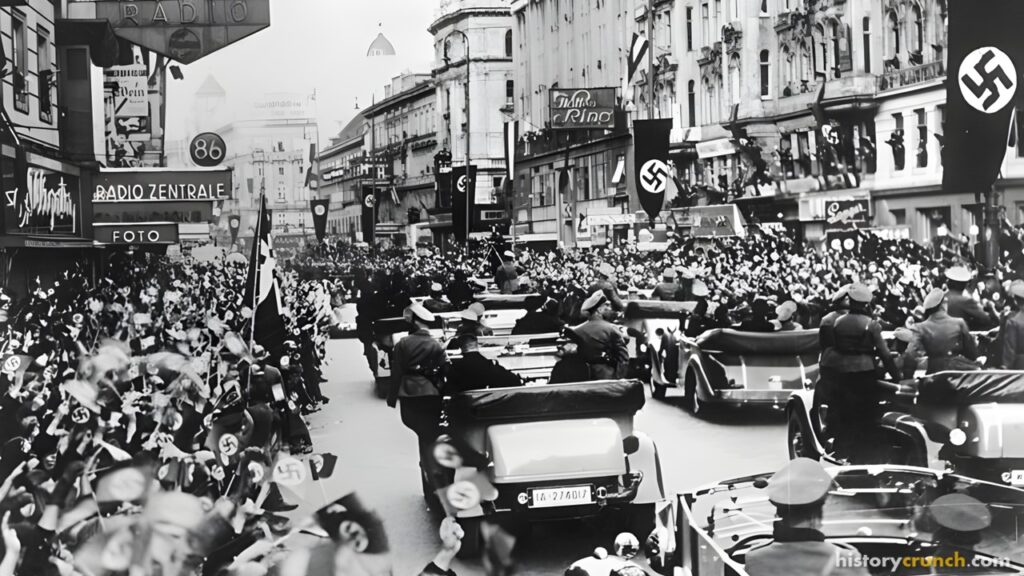
The next day, on March 12th, 1938, Nazi Germany troops crossed the border into Austria under orders from Hitler. They were greeted enthusiastically by many Austrians. In fact, the Nazi regime used the opportunity to photograph the cheering Austrian crowds, as a means of propagandaInformation, images, or media used by a government to shape public opinion in its favor..

After obtaining power the Austrian Nazis ‘invited’ the German forces into the country and the annexation of Austria was complete.  Britain and France protested the move by Germany but did not respond in any meaningful way, which furthered Hitler’s belief that the Allied nations would not stop his aggression. In all, the entire annexation of Austria by Nazi Germany, was carried out without a single bullet fired by either side. Hitler had essentially conquered Austria without any bloodshed. Rather, he used fear, repression and propaganda.

World War IIImage ExplorerInteractive
Facts that CrunchFactsthatCrunch
Cheering crowds greet the Nazis in Vienna, Austria during the Annexation.
Nazi flags lining the street Large swastika flags hang from buildings and are carried by crowd members along both sides of the street. This heavy display of Nazi symbols was a deliberate political tool used to show German authority and to make the takeover of a city look like a celebration rather than an occupation.
Crowd waving small swastika flags Thousands of people crowd the sidewalks holding small Nazi flags and raising their arms in the Nazi salute. Whether attendance was voluntary or pressured, the Nazi regime used images like this as propaganda to claim that local populations welcomed German control.
Open military motorcade Several open-topped cars carrying uniformed German officers move slowly through the street. This kind of motorcade was a standard Nazi display of military power, used to present leaders publicly and to reinforce the idea that German forces were in full command of the city.
German-language commercial signs Signs reading 'Radio Zentrale' and 'Foto' are visible on the left side of the street, showing a German-speaking urban environment. This detail, combined with the Nazi flags, points to the Anschluss of March 1938, when Germany absorbed Austria and Nazi forces entered Vienna.
Cheering crowds greet the Nazis in Vienna, Austria during the Annexation.
Source: Imperial War Museum© factsthatcrunch.comMore World War II Facts →

Annexation of Austria by Nazi Germany – Significance

The Nazi Germany annexation of Austria was an incredibly significant event, especially in terms of the outbreak of World War II. For instance, the annexation of Austria was one of several examples of the failure of appeasement, alongside: the remilitarization of the Rhineland, the events of the Munich Conference and the occupation of Czechoslovakia. Furthermore, the unification of Germany and Austria violated the terms of the Treaty of Versailles, but Britain and France took no action to stop Hitler’s aggression. This ultimately reinforced Hitler’s belief that Western democracies would not confront him. As such, the success of the Austrian annexation convinced Hitler he could continue his aggression and led directly to his next moves against Czechoslovakia and the Sudetenland.

Militarily, the annexation proved to be significant for the strength of Nazi Germany in the buildup to World War II. In fact, the annexation gave Nazi Germany control over Austria’s resources, military assets, and strategic geographic position in Europe. Ultimately, this strengthened Hitler’s position in Central Europe and drastically altered the balance of power in Europe.

Another important factor was the impact of the Anschluss on Austria’s Jewish population, which totaled approximately 200,000 people. For instance, Austrian Jews immediately faced persecutionOngoing cruel or unfair treatment of a group of people because of who they are., including forced labor, public humiliation and later deportation to concentration camps as part of the events of the Holocaust.

World War IINotebook Cause and Effect
Facts that CrunchFactsthatCrunch
Why Britain and France Did Not Stop the Anschluss
Causes
Britain and France followed a policy of appeasement, believing giving Hitler limited gains would prevent a larger war.
Many British leaders felt the Versailles Treaty had been unfair to Germany and saw some German expansion as acceptable.
Fear of another devastating war made both governments reluctant to risk military conflict over Austria.
Neither country had made a firm military commitment to defend Austria's independence.
Austria absorbed into Nazi Germany
Effects
Hitler concluded that Britain and France would not use force to stop him, making him bolder.
Germany gained Austria's industrial resources and trained soldiers, strengthening its war capacity.
The absorption encouraged Hitler to demand the Sudetenland in Czechoslovakia just months later, in September 1938.
Czechoslovakia lost a key buffer zone and soon faced German pressure without meaningful outside support.
Source: Imperial War Museums© factsthatcrunch.comMore World War II Facts →

Explore World War II · 1939 – 1945

Keep exploring World War II with these History Crunch resources.

Key Vocabulary

Annexation
When one country takes over and absorbs another country, making it part of its own territory.
Appeasement
A foreign policy of giving in to some of an aggressive leader’s demands in order to avoid war.
Ultimatum
A final demand where one side warns another that refusal will lead to serious consequences.
Chancellor
The head of government in Austria or Germany, similar to a prime minister.
Propaganda
Information, images, or media used by a government to shape public opinion in its favor.
Persecution
Ongoing cruel or unfair treatment of a group of people because of who they are.
Remilitarization
The act of rebuilding or sending military forces back into an area that was previously banned from having them.

Frequently Asked Questions

What was the Anschluss?

The Anschluss was the annexation of Austria by Nazi Germany in March of 1938. The word was the Nazi German term for “union” or “connection.” Hitler used it to describe joining Austria with Germany under his control.

When did Nazi Germany annex Austria?

Hitler officially proclaimed the annexation of Austria on March 13th, 1938. German troops had crossed the border the day before, on March 12th. The pressure began on March 11th, when Hitler demanded that Austria’s chancellor resign.

Why did Hitler want to annex Austria?

Hitler wanted to unite all German speaking people under his control, and Austria shared a deep cultural and linguistic link with Germany. He was also born in Austria in 1889, so he felt a personal connection to it. Gaining Austria added resources and a strong strategic position in Central Europe.

How did the Anschluss relate to appeasement?

The annexation was a clear example of the failure of appeasement by Britain and France. Both nations protested but took no real action to stop Hitler. Their inaction convinced him that the Western democracies would not confront his aggression.

What happened to Austria’s Jewish population after the Anschluss?

Austria’s roughly 200,000 Jews immediately faced persecution after the annexation. This included forced labor, public humiliation, and later deportation to concentration camps. These events became part of the Holocaust.

Was the annexation of Austria violent?

The entire annexation was carried out without a single bullet fired by either side. Hitler used fear, repression, and propaganda instead of force. Many Austrians greeted German troops with cheers, which the Nazis photographed for propaganda.

Cite This Article

To cite this article as a source, use one of the formats below.

MLA: Woida, K.L. “Annexation of Austria by Nazi Germany: A Detailed Summary.” HistoryCrunch, 4 October 2026, https://historycrunch.com/annexation-of-austria-by-nazi-germany/.

APA: Woida, K. L. (2026). Annexation of Austria by Nazi Germany: A Detailed Summary. HistoryCrunch. https://historycrunch.com/annexation-of-austria-by-nazi-germany/

Chicago: Woida, K.L. “Annexation of Austria by Nazi Germany: A Detailed Summary.” HistoryCrunch. October 4, 2026. https://historycrunch.com/annexation-of-austria-by-nazi-germany/

Sources

  • Imperial War Museum
  • The National WWII Museum
  • Gerhard L. Weinberg, A World at Arms.
  • Antony Beevor, The Second World War.
Facebook
X
Reddit
Pinterest
LinkedIn

We strive to produce educational content that is accurate, engaging and appropriate for all learners. If you notice any issues with our content, please contact us and let us know!

AUTHOR INFORMATION
Picture of K.L Woida

K.L Woida

K.L. is a content writer for History Crunch. She is a fantastic history and geography teacher that has been helping students learn about the past in new and meaningful ways since the mid-2000s. Her primary interest is Ancient History, but she is also driven by other topics, such as economics and political systems.
Gestapo
Nazi Germany

Gestapo: A Detailed Summary

The Gestapo was the secret police of Nazi Germany and its main goal was to maintain the Nazi regime in Germany and later in the

Oskar Schindler
Holocaust

Oskar Schindler: A Detailed Biography

Oskar Schindler used his influence in the Nazi Party to save over 1,200 Jewish people in the time of the Holocaust. This article details the life and significance of Oskar Schindler.

Eva Braun.
Nazi Germany

Eva Braun: A Detailed Biography

Eva Braun was the secret companion and briefly the wife of Adolf Hitler. She lived at the edge of Nazi Germany for over a decade, hidden from the public, and died with Hitler in his Berlin bunker in 1945.

Watercolor painting of African American soldiers of the 369th Infantry Regiment marching in helmets during World War I
World War I

Harlem Hellfighters: A Detailed Summary

The Harlem Hellfighters, officially known as the 369th Infantry Regiment, were an African American infantry unit in World War I, renowned for their valor and resilience in the face of adversity, breaking down racial barriers and earning widespread recognition for their bravery.

Charles de Gaulle in 1942. (Colorized by historycrunch.com)
World War II

Charles de Gaulle: A Detailed Biography

Charles de Gaulle was significant because he led Free France during World War II and later helped create the political system of modern France. This article details the life and significance of Charles de Gaulle.

German Panzer during Operation Sonnenblume in April of 1941 in the North African Theater of World War II. (Colorized by historycrunch.com)
World War II

North African Theater of World War II: A Detailed Summary

The North African Theater of World War II was a major area of fighting that took place across the desert regions of North Africa. This article details the history and significance of the North African Theater of World War II.