The Marshall Plan was a program launched in 1948 by the United States to provide economic aidMoney or resources one country gives to another to help its people and businesses recover or grow. to Western European countries following the events of World War II. Its goal was to help rebuild the war-torn economies of Europe after the destruction of the Second World War and to limit the spread of Soviet influence in Eastern Europe. Historians consider the Marshall Plan to be a significant development of the Cold War.
 FactsthatCrunch
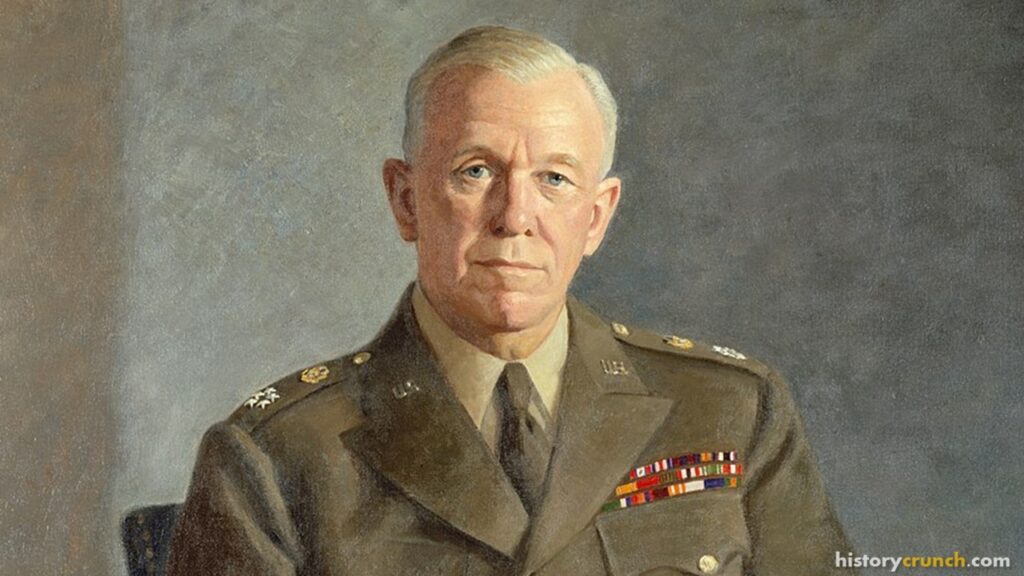
Our policy is directed not against any country or doctrine but against hunger, poverty, desperation, and chaos. Its purpose should be the revival of a working economy in the world so as to permit the emergence of political and social conditions in which free institutions can exist.
George C. Marshall · Harvard University, Cambridge, Massachusetts · June 5th, 1947
Secretary of State George Marshall spoke at Harvard's commencement ceremony on June 5th, 1947, after visiting Europe, where economies were still in ruins two years after World War II and food, fuel, and money were running out. In this short address he offered American aid to help European nations rebuild, an offer that became the European Recovery Program, known as the Marshall Plan. His careful wording left the door open to any country willing to cooperate, but the Soviet Union rejected the aid and pressured its satellite states to refuse it too.
What Was the Cold War?
The Cold War was a major world event that took place from approximately 1945 until 1991. In general, the Cold War was a period of increased tensions and hostility between the superpowers of the United States and the Soviet Union (USSR). It was characterized by a global struggle between capitalism and communism, with both sides competing for influence around the world. Although it never escalated into direct war between the superpowers, it involved proxy warsConflicts where two major powers support opposing sides instead of fighting each other directly., nuclear arms races, and ideological confrontations. The Marshall Plan is one of the most significant events of the Cold War. More specifically, the Marshall Plan was an economic recovery program following World War II, which aimed at stopping the spread of communism in Europe.
Marshall Plan – What Led to It?
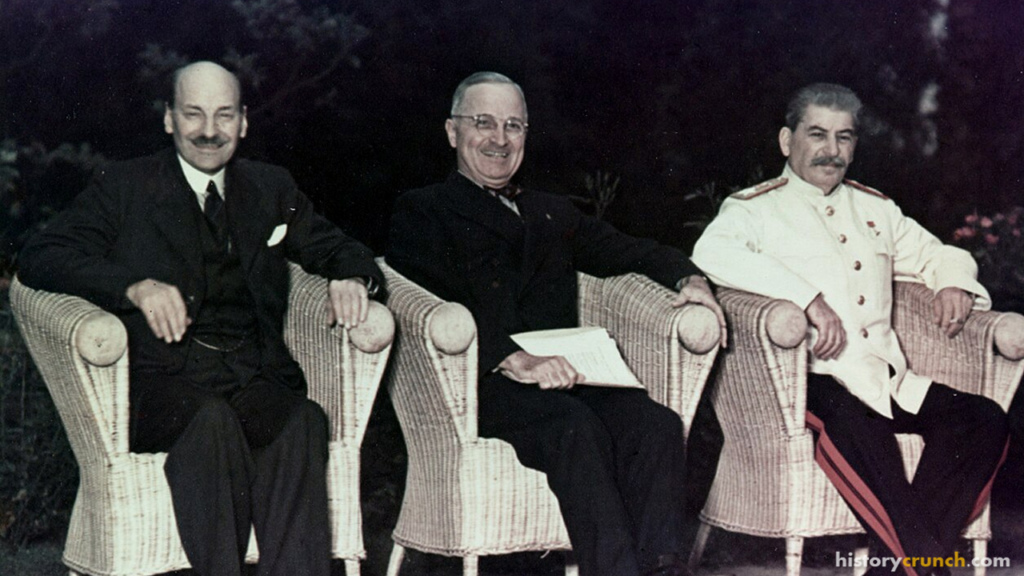
When World War II came to an end in 1945, the Allied powers (USA, Britain and the Soviet Union) held conferences to discuss how Germany should be divided up upon its defeat. The first conference was held at Yalta in February of 1945 and the second was held at Potsdam in July of the same year. The agreements ultimately led to the splitting of the defeated Germany into four Allied occupation zones with portions controlled by the Soviet Union, United States, Britain and France.
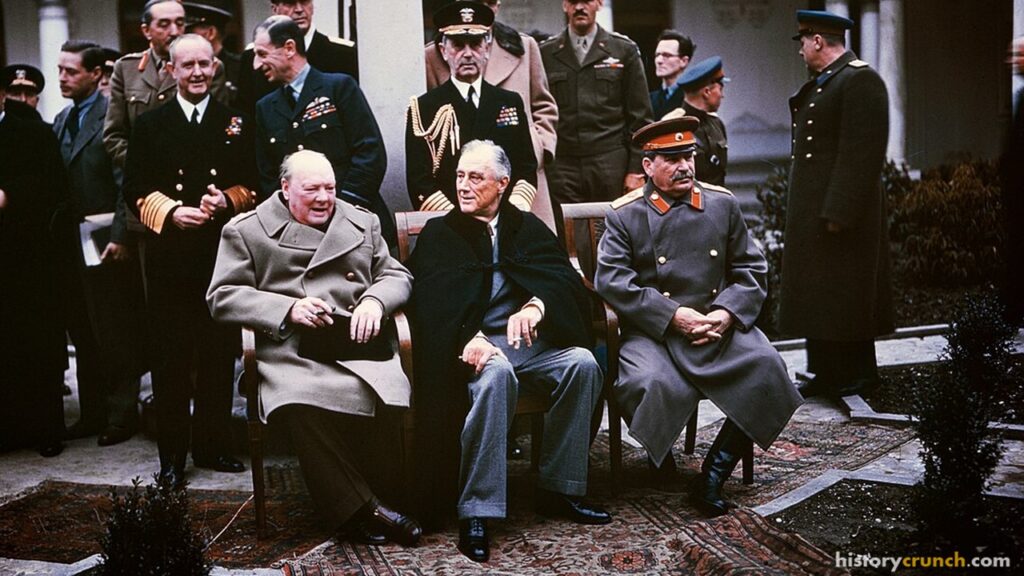
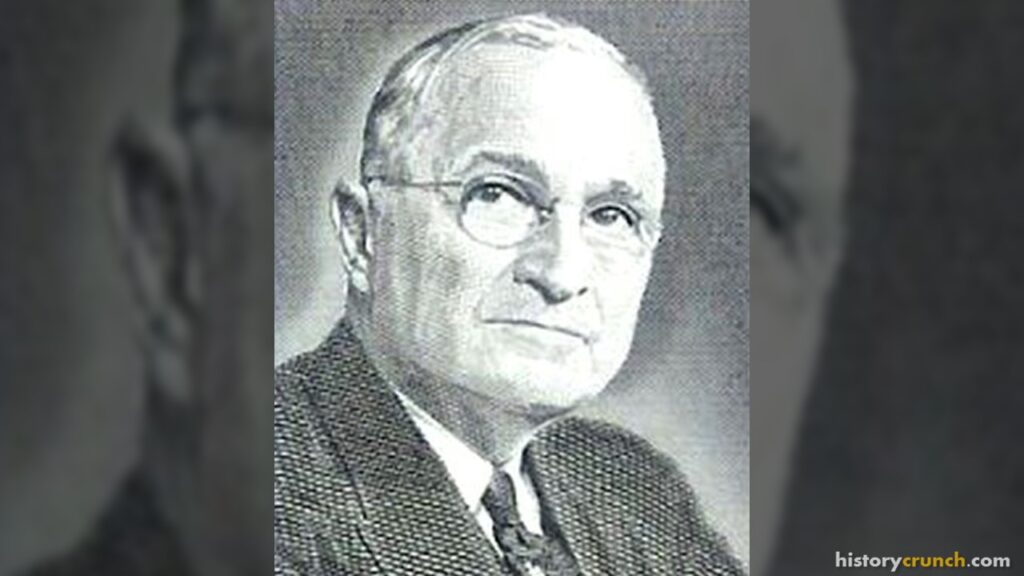
As the Allied countries liberated Europe from Nazi control and pushed the Nazi German army back into its own country, another development began to emerge. More specifically, Joseph Stalin’s forces captured and retained control over the European territory that they had ‘liberated’. United States President Harry S. Truman, along with others, viewed this as a threat to the democratic world, because it allowed communism to spread throughout the nations of Eastern Europe. Truman was concerned that many other nations would ‘fall’ to communism and threaten democracy around the world.
In response Truman argued that the United States and its allies should actively combat the spread of communism wherever it emerged. Historians refer to this idea as the Truman Doctrine. As part of the Truman DoctrineThe United States policy that said America should actively fight the spread of communism wherever it appears., the United States worked to help rebuild Europe following the destruction of World War II. It was hoped that by rebuilding Europe, the United States could help prevent European countries from turning to communism.
Marshall Plan – Summary
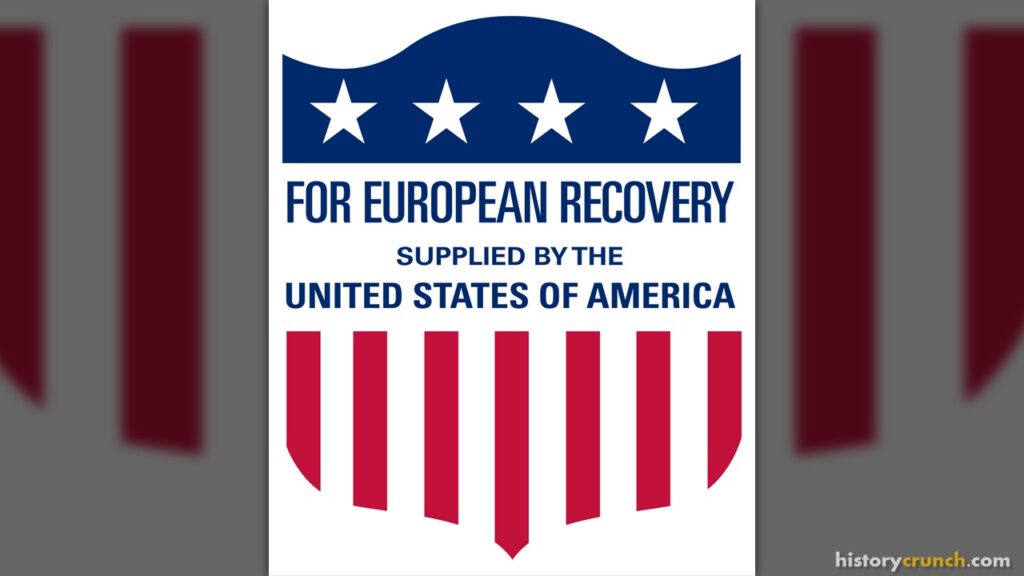
In order to rebuild Europe, the United States implemented the economic policy called the European Recovery Program, although it is commonly known as the Marshall Plan. The plan took effect in April of 1948 and over a course of four years it saw the United States commit about $13.3 billion (well over $150 billion in today’s currency) to rebuild Western Europe. The plan was named after Secretary of State George Marshall, who supported the economic recovery of Europe in the hopes that it would prevent the spread of communism and restore Western European democracies. At its heart, the Marshall Plan saw countries receive financial support when they adopted free marketAn economic system where prices and trade are controlled by competition, not by the government. economic principles and opened their countries to free trade. In response to the Marshall Plan, the Soviet Union developed their own economic recovery plan called the Molotov Plan.
 FactsthatCrunch
American leaders saw the Marshall Plan as a practical way to stop communism from spreading into weak, war-damaged economies. Secretary of State George Marshall and President Truman believed that hungry, jobless populations would turn to communist parties unless Western Europe recovered quickly. The program required countries to accept free market principles and open trade in exchange for aid, which reinforced American-style economic values across the region.
Soviet leaders, led by Foreign Minister Vyacheslav Molotov, viewed the Marshall Plan as an American attempt to pull European countries into a Western political and economic orbit and undermine Soviet authority. The USSR rejected the aid and pressured its satellite states in Eastern Europe to refuse it as well. In response, the Soviet Union launched its own program, the Molotov Plan, to channel economic support to Eastern European countries on Soviet terms and keep them firmly within the Soviet sphere.
Marshall Plan – Significance
The Marshall Plan was a significant aspect of the early years of the Cold War. This is because it played a key role in the economic recovery of Western Europe after the devastation of World War II. By providing over $13 billion in aid, the plan helped rebuild the infrastructure of Europe, which had been destroyed in the major battles and operations of the Second World War. Not only was this significant to the redevelopment of Europe, but it also helped the nations avoid extremist ideologies in their time of weakness. In particular, the American government saw it as necessary to prevent the spread of communism and Soviet expansionism in Europe.
The Marshall Plan also led to more tensions in the overall Cold War. For instance, its goal was to strengthen democratic governments and contain the spread of communism. While it did that, the Marshall Plan also deepened the divide between the Eastern and Western blocs, as the Soviet Union rejected the aid and pressured its satellite statesCountries that are officially independent but are controlled or heavily influenced by a more powerful neighboring country. in Eastern Europe to do the same. As such, the Soviet Union viewed the Marshall Plan as an attack on its authority in Europe, which created more tensions between the United States and the Soviet Union.
Politically, the Marshall Plan solidified American influence in Europe and laid the foundation for future alliances such as the North Atlantic Treaty Organization (NATO). This proved to be vitally important in the remaining decades of the Cold War.
 FactsthatCrunch
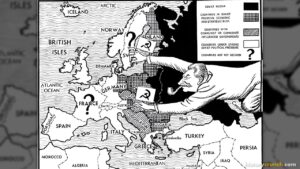
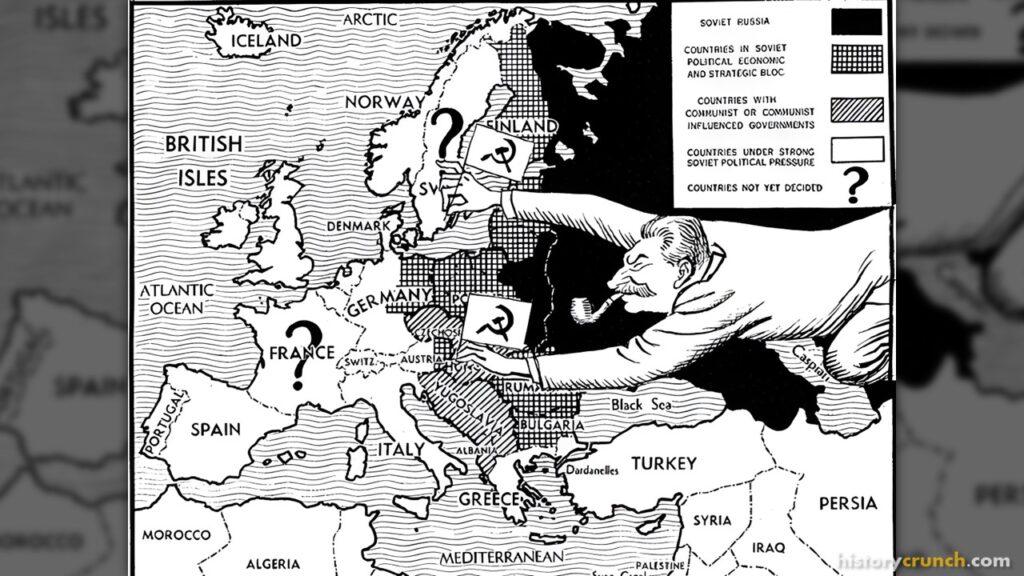
In 1947, the Soviet Union refused to participate in the Marshall Plan and pressured its satellite states in Eastern Europe to reject the aid as well, cementing a hard economic boundary across the continent.
Europe largely divided by military occupation, but no formal economic wall between East and West
Eastern and Western Europe locked into separate economic systems, deepening Cold War divisions
Explore Cold War · 1947 – 1991
Keep exploring Cold War with these History Crunch resources.
Key Vocabulary
Economic aid
Proxy wars
Truman Doctrine
Free market
Satellite states
Soviet expansionism
Frequently Asked Questions
What was the Marshall Plan?
The Marshall Plan was a United States program that gave economic aid to Western European countries after World War II. Its official name was the European Recovery Program. It aimed to rebuild war-torn economies and to stop the spread of communism in Europe.
When did the Marshall Plan begin?
The Marshall Plan took effect in April of 1948 and ran for about four years. It was launched a few years after World War II ended in 1945. The program was part of the early Cold War between the United States and the Soviet Union.
Who was the Marshall Plan named after?
The Marshall Plan was named after George Marshall, who served as the United States Secretary of State. He supported the economic recovery of Europe to help block the spread of communism. The plan carried his name because he backed the idea of rebuilding Western European democracies.
How much money did the Marshall Plan provide?
The Marshall Plan committed about $13.3 billion over four years, which equals well over $150 billion in today’s money. This aid helped rebuild roads, factories, and other infrastructure destroyed in the war. Countries received support when they adopted free market rules and opened up to free trade.
How did the Soviet Union respond to the Marshall Plan?
The Soviet Union rejected the Marshall Plan and pressured its satellite states in Eastern Europe to refuse the aid. In response, it created its own program called the Molotov Plan. Soviet leaders saw the Marshall Plan as an attack on their power, which deepened Cold War tensions.
Cite This Article
To cite this article as a source, use one of the formats below.
MLA: Beck, Elias. “Marshall Plan: A Detailed Summary.” HistoryCrunch, 9 October 2026, https://historycrunch.com/marshall-plan/.
APA: Beck, E. (2026). Marshall Plan: A Detailed Summary. HistoryCrunch. https://historycrunch.com/marshall-plan/
Chicago: Beck, Elias. “Marshall Plan: A Detailed Summary.” HistoryCrunch. October 9, 2026. https://historycrunch.com/marshall-plan/
Sources
- Vladislav Zubok, A Failed Empire.
- Wilson Center Digital Archive
- Odd Arne Westad, The Global Cold War.