The TranscontinentalCrossing an entire continent from one side to the other. Railroad is one of the most significant engineering feats in American history. Throughout the expansion westward and the events of the Industrial Revolution, it became clear that the rail system was the ticket to a more unified and advanced American society. Completed in 1869, the Transcontinental Railroad connected the eastern and western parts of the United States, revolutionizing transportation, commerce, and the nation’s growth. Spanning over 1,900 miles, its completion marked a significant achievement in American history, and was important to: Westward Expansion, the Industrial Revolution and the Gilded Age.
 FactsthatCrunch
How Long Did Crossing the United States Take Before and After the Transcontinental Railroad?
Before the Transcontinental Railroad opened in 1869, crossing the country by wagon took roughly 4 to 5 months, and the sea voyage around Cape Horn in South America took about 6 months. By 1870, the railroad cut that journey to about a week.
What Led to the Transcontinental Railroad?
The idea of a transcontinental railroad dates back to the early 19th century, as the United States expanded westward. The Gold Rush of 1849 and the subsequent influx of settlers to the western territories heightened the need for a faster, more efficient means of transportation. Prior to the railroad, travel across the country was difficult and time-consuming, often taking months by wagon or ship. The railroad promised to cut travel time drastically, making it possible to get across the country in just a few days.
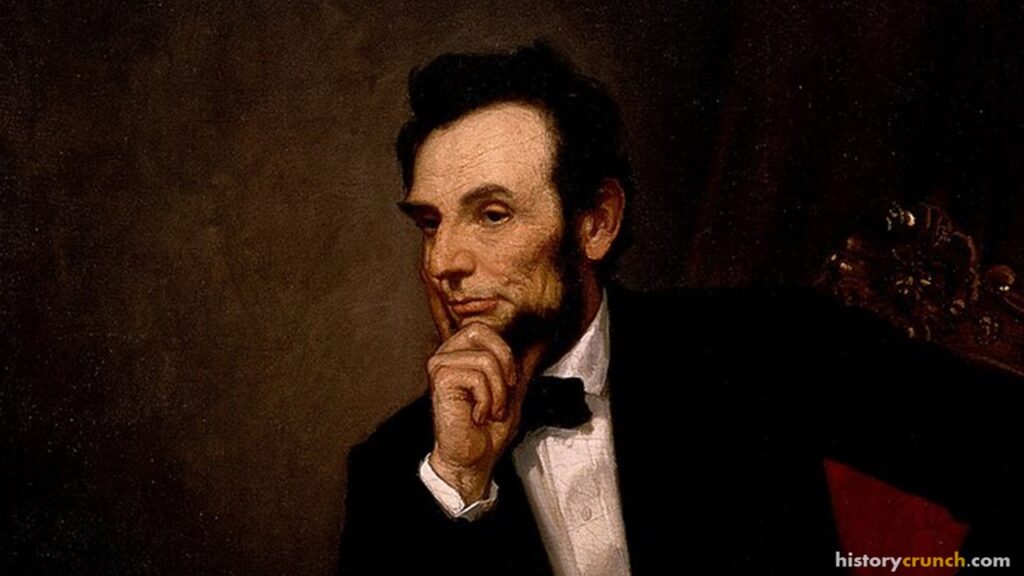
Recognizing the potential benefits of a transcontinental railroad, the United States government played a crucial role in its realization. For example, in 1862, President Abraham Lincoln signed the Pacific Railway ActA law signed in 1862 giving federal land and loans to the two companies building the railroad., which provided federal support for the project. The act granted land and loans to two companies: the Union Pacific Railroad, building westward from Omaha, Nebraska, and the Central Pacific Railroad, constructing eastward from Sacramento, California. This government backing was essential in overcoming the immense financial and logistical challenges of the project.
 FactsthatCrunch
The rush for a railroad west began with a few flakes of gold spotted at Sutter's Mill in California on January 24th, 1848.
Carpenter James W. Marshall found the gold while building a sawmill for John Sutter near Coloma, California. Word spread fast, and about 300,000 people rushed to California. Getting there took months by wagon or ship, which made Americans demand a faster route across the country.
Construction of the Transcontinental Railroad
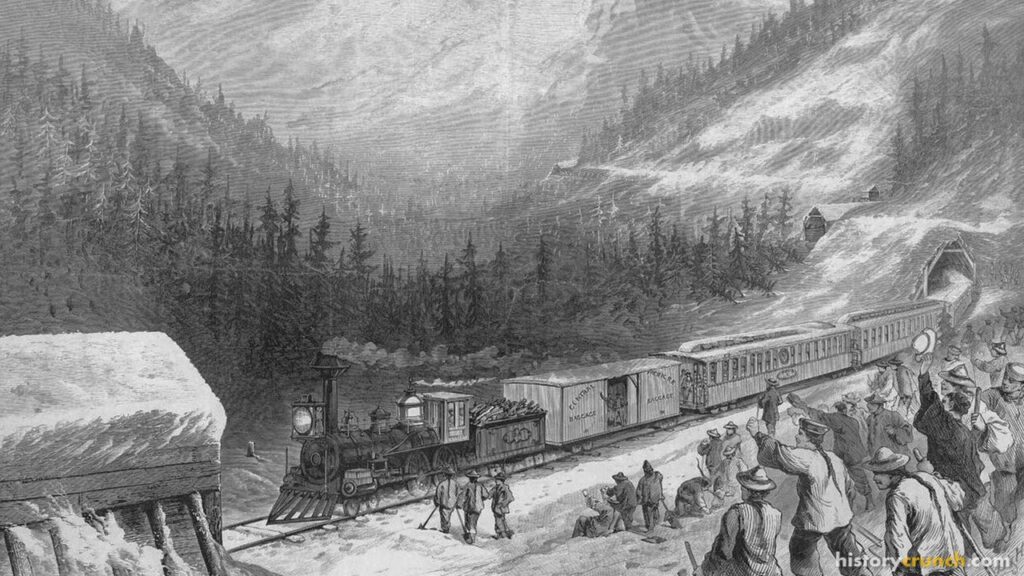
The construction of the Transcontinental Railroad was an enormous undertaking that required the labor of thousands of workers, including many immigrants. In fact, the Central Pacific Railroad relied heavily on Chinese laborers, while the Union Pacific employed a large number of Irish immigrants and Civil War veterans. These workers faced gruelingSo physically demanding and exhausting that it pushes workers to their absolute limits. conditions, including harsh weather, dangerous terrain, and long hours. Despite the challenges, their relentless efforts were important in completing the railroad.
Building the Transcontinental Railroad had several significant engineering challenges. For instance, workers had to deal with the varied geography of the United States. More specifically, they had to get across the rugged terrain of the Sierra Nevada and Rocky Mountains, carve tunnels through solid rock, and build bridges over vast rivers. Innovations in engineering and construction techniques were necessary to overcome these obstacles. In fact, the use of explosives, such as nitroglycerinA highly explosive liquid used to blast through solid rock during railroad construction., and the development of advanced tunnelingThe process of digging or boring a passage through solid rock or earth. methods were important in completing the project.
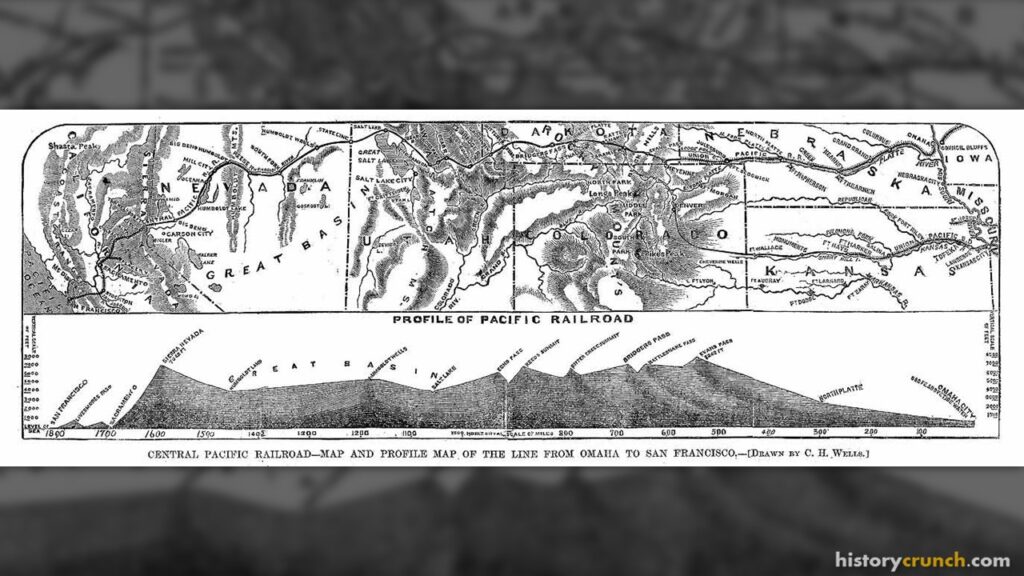
By early 1869, the Central Pacific worked its way through the mountains, and the Union Pacific had built farther, leading them to be only miles from each other in Utah. In order to complete the mission, President Ulysses S. Grant vowed to withhold public funding for the project until a meeting point had been determined.
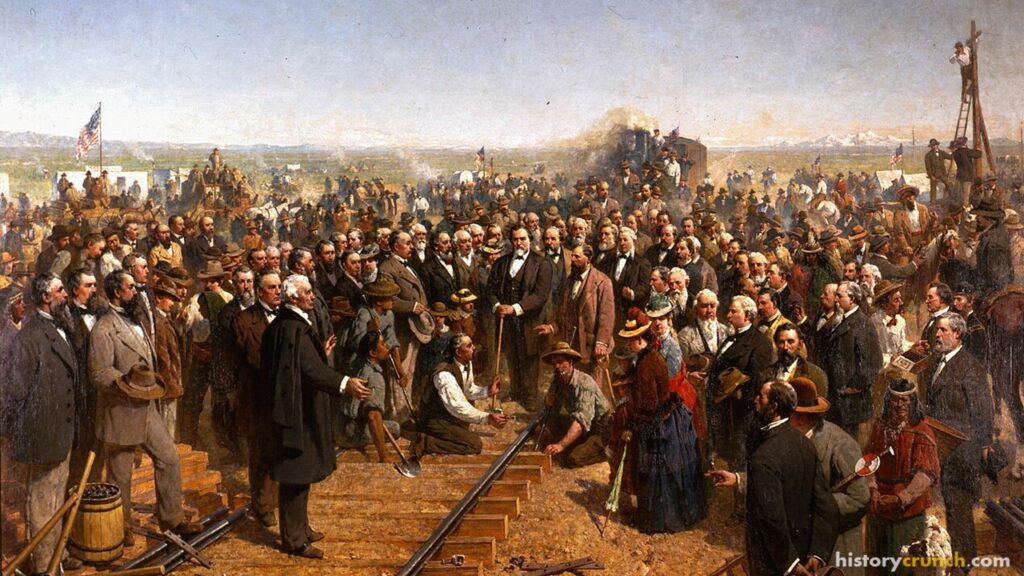
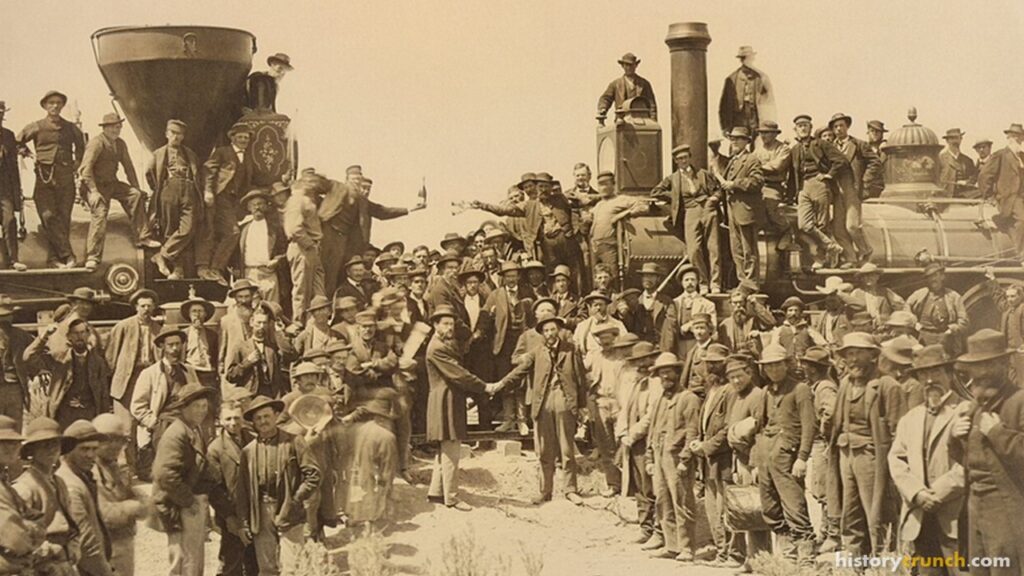
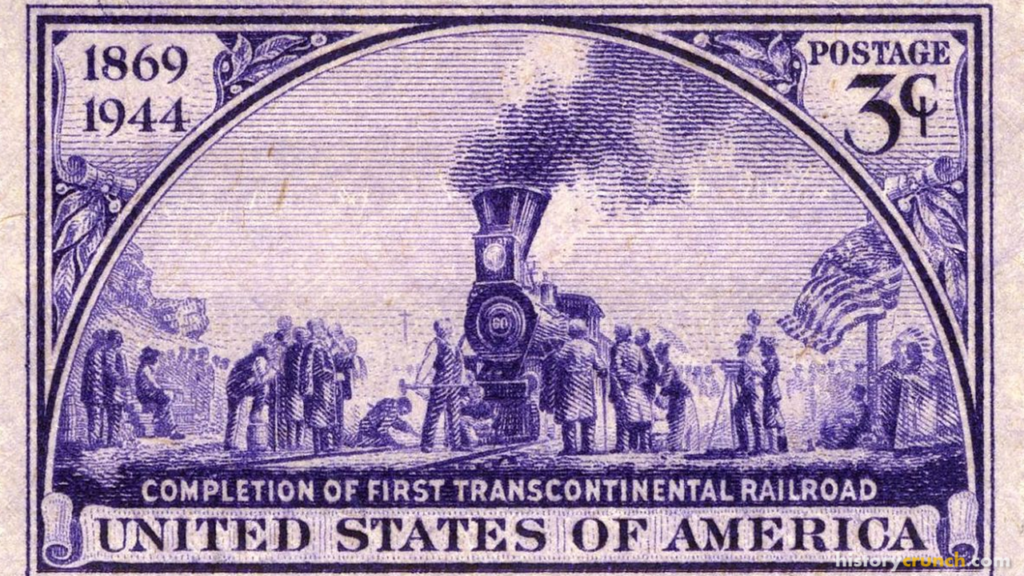
Finally, the two railroad companies met at Promontory SummitThe location in Utah where the two railroad lines met and were joined on May 10, 1869., Utah, on May 10th, 1869, marking the completion of the Transcontinental Railroad. The ceremonial driving of the ‘Golden SpikeA ceremonial spike driven at Promontory Summit to mark the joining of the two railroad lines.’ signified the joining of the two lines and the realization of a transcontinental connection. This event was celebrated nationwide, as it marked the dawn of a new era in American transportation and commerce.
Controversies of the Transcontinental Railroad
While the Transcontinental Railroad was a remarkable achievement, it was not without its challenges and controversies. The construction process was fraught with difficulties, including financial scandals, labor disputes, and conflicts with Native American tribes. The displacement of Native American communities and the environmental impact of the railroad were significant issues. Moreover, the working conditions for laborers were often harsh and dangerous, leading to numerous injuries and fatalities.
 FactsthatCrunch
The Transcontinental Railroad, completed on May 10th, 1869, brought major benefits to many Americans while causing serious harm to others.
Impacts of the Transcontinental Railroad
The Transcontinental Railroad had a profound impact on the United States, including economically, socially and culturally. First, the construction of the Transcontinental Railroad had a positive impact on the American economy. For instance, it improved the movement of goods and people across the country, opening up new markets and stimulating economic growth. The railroad enabled the efficient transport of raw materials from the western territories to the eastern manufacturing centers, and vice versa. This connectivity helped grow the development of industries such as mining, agriculture, and manufacturing. In fact, the construction of the railroad proved vital during the Gilded Age of American history.
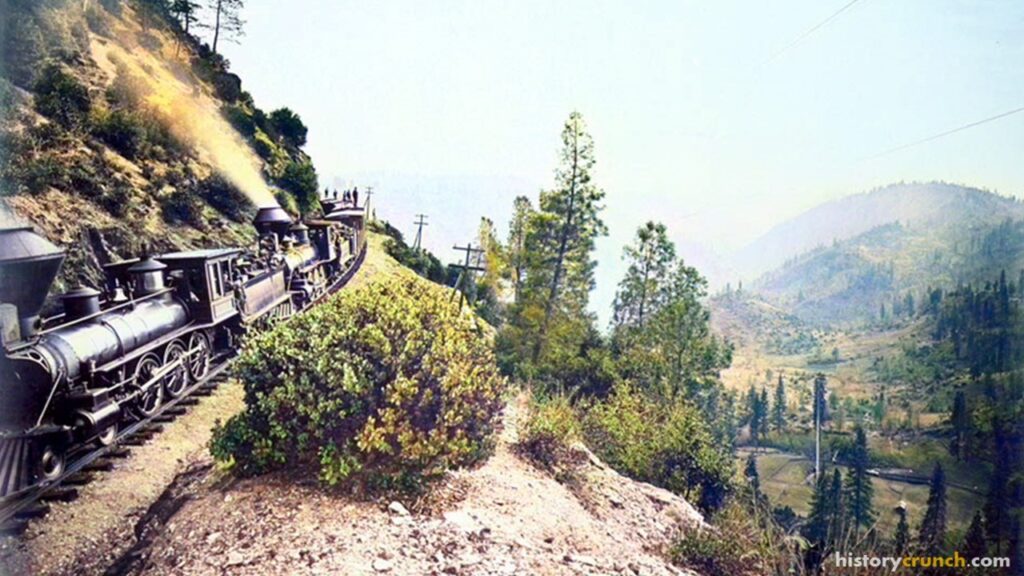
Beyond its economic benefits, the Transcontinental Railroad also had significant social and cultural impacts. For instance, it made travel more accessible, allowing people to move across the country with unprecedented ease. This movement contributed to the settlement and development of the western United States, as towns and cities sprang up along the railroad’s route. Additionally, the railroad played a role in shaping the American cultural landscape, symbolizing progress, adventure, and the pioneering spirit.
 FactsthatCrunch
When the Transcontinental Railroad opened in 1869, it cut cross-country travel time from several months by wagon or ship to just a few days, making the American West far easier to reach.
Before the railroad, the American West was difficult to reach and hard to supply. The Union Pacific and Central Pacific lines completed in 1869 made large-scale settlement and commercial development of the West practical for the first time.
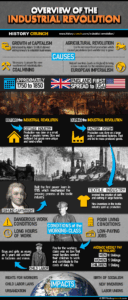
Industrial Revolution timeline · 1760 – 1840
Key Vocabulary
Transcontinental
Pacific Railway Act
Grueling
Nitroglycerin
Tunneling
Promontory Summit
Golden Spike
Frequently Asked Questions
When was the Transcontinental Railroad completed?
The Transcontinental Railroad was completed on May 10th, 1869, at Promontory Summit, Utah. That day, the two rail lines were joined with a ceremonial “Golden Spike.” The event was celebrated across the country as a major moment in American history.
Which two companies built the Transcontinental Railroad?
The Union Pacific Railroad and the Central Pacific Railroad built the Transcontinental Railroad. The Union Pacific worked westward from Omaha, Nebraska, while the Central Pacific worked eastward from Sacramento, California. The two lines finally met in Utah in 1869.
Who worked to build the railroad?
Thousands of workers built the railroad, and many of them were immigrants. The Central Pacific relied heavily on Chinese laborers, while the Union Pacific hired many Irish immigrants and Civil War veterans. These workers faced harsh weather, dangerous terrain, and long hours.
Why was the Transcontinental Railroad important?
The railroad connected the eastern and western United States, cutting cross-country travel from months to just a few days. It moved goods and people faster, opening new markets and helping industries like mining and farming grow. It also encouraged settlement of the western territories.
What role did the government play in the project?
The federal government made the project possible through the Pacific Railway Act, which President Abraham Lincoln signed in 1862. The law gave land and loans to the two railroad companies. This support helped them handle the huge costs and challenges of building over 1,900 miles (3,058 km) of track.
What controversies surrounded the railroad?
The railroad caused serious harm even as it was celebrated as an achievement. It displaced Native American communities and led to conflicts with several tribes. There were also financial scandals, labor disputes, and dangerous working conditions that caused many injuries and deaths.
Cite This Article
To cite this article as a source, use one of the formats below.
MLA: Woida, K.L. “Transcontinental Railroad: A Detailed Summary.” HistoryCrunch, 26 September 2026, https://historycrunch.com/transcontinental-railroad/.
APA: Woida, K. L. (2026). Transcontinental Railroad: A Detailed Summary. HistoryCrunch. https://historycrunch.com/transcontinental-railroad/
Chicago: Woida, K.L. “Transcontinental Railroad: A Detailed Summary.” HistoryCrunch. September 26, 2026. https://historycrunch.com/transcontinental-railroad/
Sources
- Joel Mokyr, The Enlightened Economy.
- The Science Museum Group