Flag of the United Kingdom. Britain was the first country to industrialize and undergo the effects of the Industrial Revolution.
Table of Contents
Britain was the first country to industrialize due to a variety of factors, including: its abundant coal reserves, the British Agricultural Revolution, stable political conditions, transportation routes and the accumulation of capital from its colonies.
The Industrial Revolution began first in Britain in the 1700s. Historians have identified several reasons for why the Industrial Revolution began first in Britain, including: the effects of the Agricultural Revolution, large supplies of coal, geography of the country, a positive political climate, and a vast colonial empire.
The Agricultural Revolution was a major event in world history and had a profound effect on life in Britain. For example, many historians consider the Agricultural RevolutionA period of major changes in farming methods that greatly increased how much food Britain could produce. to be a major cause of the Industrial Revolution, especially in terms of when and how it began in Britain. For instance, the Industrial Revolution began due in part to an increase in food production, which was the key outcome of the Agricultural Revolution. Food production increased due to new innovations and inventions, including: the discovery of crop rotationA farming method of planting different crops in a field each season to keep the soil fertile and productive. by Charles Townshend and the invention of the seed drillA machine that plants seeds in neat rows underground, making farming faster and wasting fewer seeds. by Jethro Tull. The increased food production allowed Britain’s population to also increase which benefitted the Industrial Revolution in two ways. First, the increased population helped produce workers for the factories and mines that were so important to the Industrial Revolution. Second, the larger population created a market for goods to be sold to which helped the owners of the factories to make a profit off of the sale of their goods.
The British Agricultural Revolution was a major event in world history and had a profound effect on populations throughout Europe and other historical events.
Why did Britain's population grow during the Agricultural Revolution?
A
New farming methods, including crop rotation linked to Charles Townshend and the seed drill invented by Jethro Tull, greatly increased how much food Britain could produce. More food meant fewer people went hungry, which allowed more people to survive and the overall population to rise. This larger population later gave the Industrial Revolution both workers for its factories and mines and customers to buy the goods those factories made.
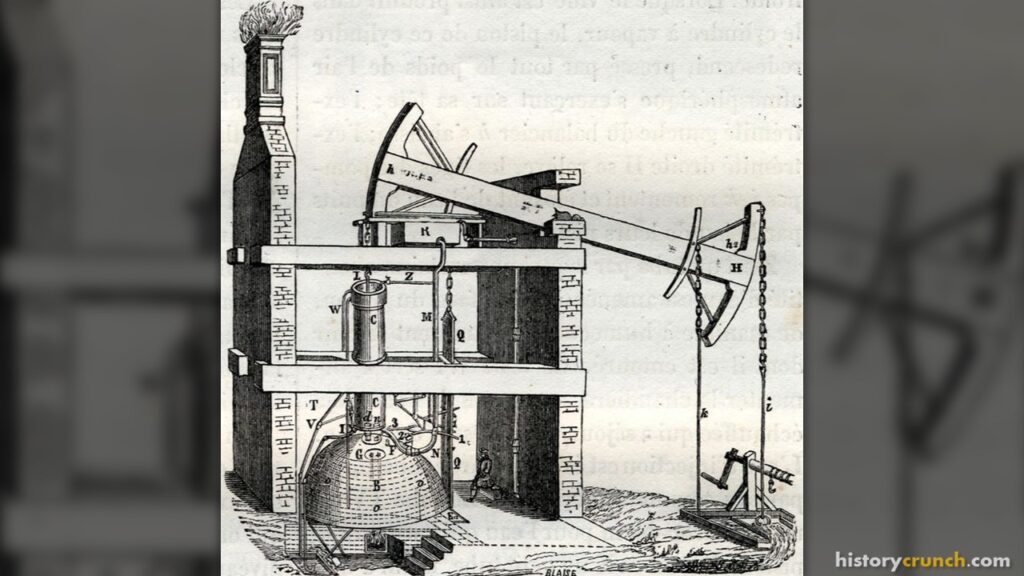
The next main reason for why Britain was the first to industrialize was the large supplies of coal present in the country. Coal was a necessary ingredient in the industrial process as it fueled the steam engines that were used in trains, ships and all other sorts of machinery. Not only did Britain have large supplies of the resource, but it was also easily obtainable. Unlike other European nations, coal in Britain was relatively close to the surface and was therefore relatively easy for miners to find and extract it. The mining of coal became even easier after the invention of the steam engine by Thomas Newcomen, which was originally used to pump water out of coal mines.
BornFebruary 28th, 1664, in Dartmouth, Devon, England
DiedAugust 5th, 1729, in London, England
RoleEnglish inventor and ironmonger; builder of the first practical steam engine
Tap a heading to open the note.
Early Work
Newcomen worked as an ironmonger and Baptist lay preacher in Dartmouth before turning his attention to solving the flooding problem in English coal mines.
The Atmospheric Engine
In 1712, Newcomen built the first successful atmospheric steam engine at a coal mine in Dudley, in the English Midlands.
How It Worked
The engine used steam and atmospheric pressure together to push a piston, which drove a pump that pulled water out of flooded mine shafts.
Impact on Coal Mining
Newcomen's engine made it possible to dig coal mines much deeper than before, because miners no longer had to stop work when tunnels flooded.
Link to the Industrial Revolution
Cheap coal powered the factories, trains, and ships of the Industrial Revolution, so Newcomen's pump helped make that coal available on a large scale.
Later Influence
James Watt studied Newcomen's design in the 1760s and built a more efficient steam engine, which became the main power source for Industrial Revolution machinery.
The third main reason for Britain’s industrialization was the basic geography of the country. An important aspect of early industrialization was the ability of people to transport goods and resources easily across the country. For example, goods produced in factories needed to be able to be transported cheaply and reliably to market so that they could be sold for a profit. At the same time, factory owners needed to have raw materials shipped to their factories so that they could be turned into consumer goods. At the time Britain had some of the best rivers for easily and affordably transporting goods and resources. Improvements in shipbuilding and the introduction of the steamboat furthered Britain’s dominance in this area. As well, as the Industrial Revolution began in the country, several entrepreneurs constructed canal systemsNetworks of human-made waterways built to move goods and raw materials cheaply across the country. that helped expand Britain’s transportation capabilities. As such, the geography of the country allowed industrialization to flourish because it made transporting goods easy for the factory owners.
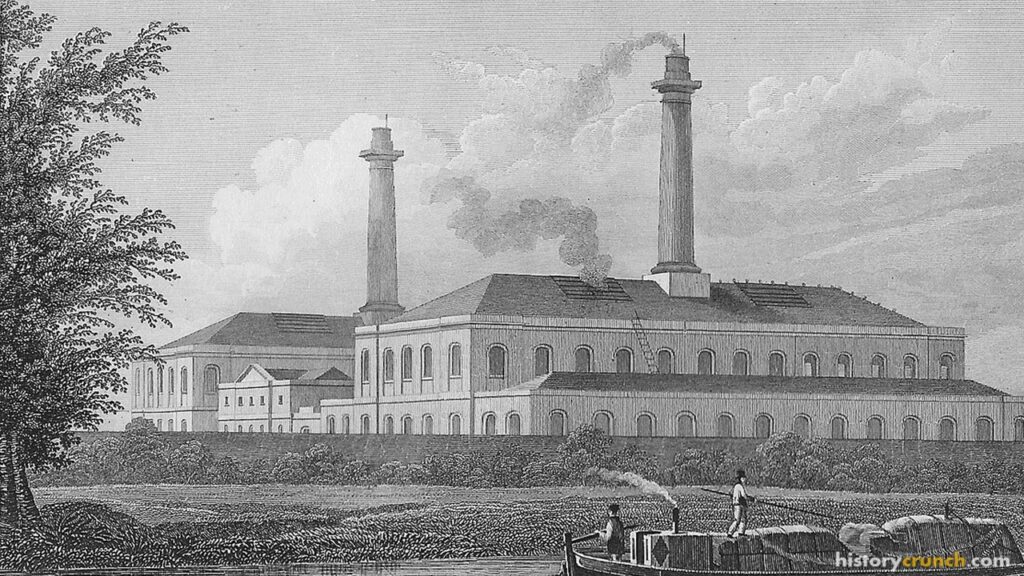
Imperial Gas Company’s gasworks on the Regent Canal in London, England. (1828)
How did rivers and canals each help move goods across Britain during the Industrial Revolution, and what did they have in common?
Tap an item to read its detail.
Natural Course Rivers followed natural paths shaped by the landscape, so their routes could not be changed to suit factory owners or growing industrial towns.
Variable Depth River depth changed with rainfall and seasons, making them unreliable during dry summers or after floods.
No Construction Cost Rivers were free to use as transport routes because nature had already formed them, with no building investment needed from entrepreneurs.
Early Industrial Use Rivers were Britain's main freight routes before the canal-building era, carrying coal, grain, and cloth to coastal ports for export.
Steamboat Adoption Improvements in shipbuilding and the introduction of the steamboat made river transport faster and extended Britain's ability to move goods by water.
Built by Entrepreneurs Canal systems were funded and constructed by private entrepreneurs who saw profit in creating reliable inland freight routes for factory owners.
Controlled Route Canals could be dug in planned lines directly linking coal fields, factories, and market towns regardless of natural geography.
Bridgewater Canal Opened in 1761 to carry coal from the Duke of Bridgewater's mines to Manchester, it cut the price of coal in the city and sparked a wave of canal building.
Consistent Depth Canal builders maintained a set water depth along the whole length, so barges could carry heavy loads reliably year round.
Expanded Capability Canal networks expanded Britain's overall transportation capability beyond what rivers alone could provide, connecting inland industrial areas to ports and cities.
Cheap Freight Both rivers and canals allowed goods and raw materials to be moved cheaply in bulk, which was essential for factory owners to make a profit.
Waterway Transport Both were waterway transport routes used during the Industrial Revolution to ship raw materials to factories and finished goods to markets.
Supported Industry Both helped industrialization flourish by solving the core problem of moving coal, cloth, and other goods across the country reliably.
Linked to Trade Both connected production sites to buyers, supporting the markets that factory owners needed to sell goods and recover their costs.
Natural CourseRivers followed natural paths shaped by the landscape, so their routes could not be changed to suit factory owners or growing industrial towns.
Variable DepthRiver depth changed with rainfall and seasons, making them unreliable during dry summers or after floods.
No Construction CostRivers were free to use as transport routes because nature had already formed them, with no building investment needed from entrepreneurs.
Early Industrial UseRivers were Britain's main freight routes before the canal-building era, carrying coal, grain, and cloth to coastal ports for export.
Steamboat AdoptionImprovements in shipbuilding and the introduction of the steamboat made river transport faster and extended Britain's ability to move goods by water.
Built by EntrepreneursCanal systems were funded and constructed by private entrepreneurs who saw profit in creating reliable inland freight routes for factory owners.
Controlled RouteCanals could be dug in planned lines directly linking coal fields, factories, and market towns regardless of natural geography.
Bridgewater CanalOpened in 1761 to carry coal from the Duke of Bridgewater's mines to Manchester, it cut the price of coal in the city and sparked a wave of canal building.
Consistent DepthCanal builders maintained a set water depth along the whole length, so barges could carry heavy loads reliably year round.
Expanded CapabilityCanal networks expanded Britain's overall transportation capability beyond what rivers alone could provide, connecting inland industrial areas to ports and cities.
Cheap FreightBoth rivers and canals allowed goods and raw materials to be moved cheaply in bulk, which was essential for factory owners to make a profit.
Waterway TransportBoth were waterway transport routes used during the Industrial Revolution to ship raw materials to factories and finished goods to markets.
Supported IndustryBoth helped industrialization flourish by solving the core problem of moving coal, cloth, and other goods across the country reliably.
Linked to TradeBoth connected production sites to buyers, supporting the markets that factory owners needed to sell goods and recover their costs.
The next major reason for Britain being the first country to industrialize was the political climate of the time. In the 1700s, Britain had a stable government after having gone through civil war and revolution in the decades before. In contrast, France underwent its own revolution in the late 1780s and 1790s (French Revolution), meaning it was not concerned with industrialization and was instead focused on its own internal conflict. As well, the British government was open to the ideas of laissez-faire capitalism which were necessary for industrialization to occur. For example, the British government promoted free trade policies with its neighboring countries which helped create markets for British produced goods. Also, the government implemented the Enclosure ActsBritish laws that turned shared farmland into private property, forcing small farmers off the land., as part of the Enclosure Movement, which promoted private property, and allowed wealthy land owners to increase their farms. This then led to the mass movement of smaller farmers to towns and cities in search of work. Finally, the British government supported other aspects of capitalism, which helped entrepreneurs to create wealth by owning and operating factories and mines. For example, in the early years of the Industrial Revolution, the government allowed child labor and did not restrict owners in terms of rules and regulations, such as: minimum wage laws or worker rights. As such, the political climate created a system in which wealthy business-minded people were able to easily start companies.
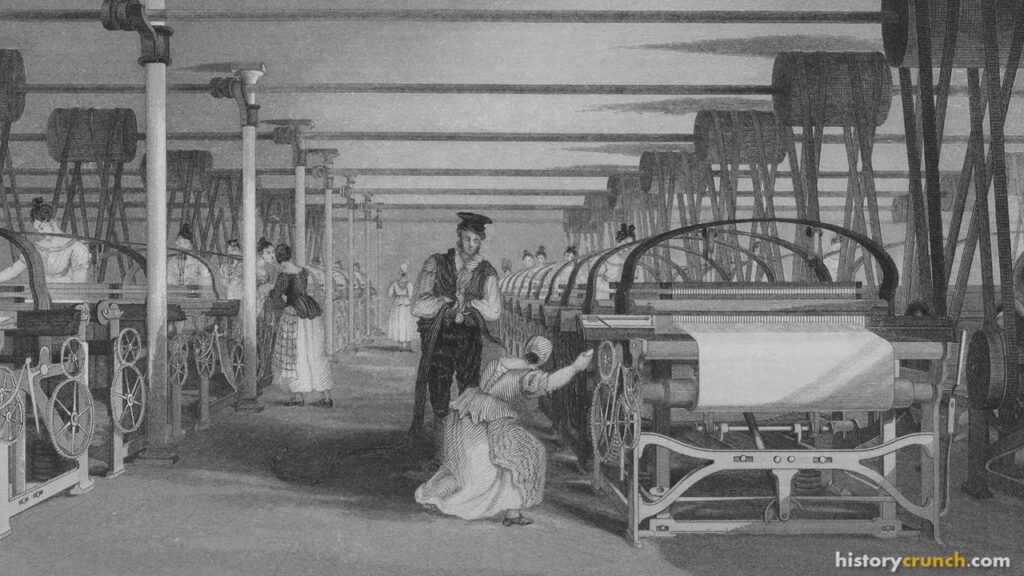
‘Illustration of power loom weaving’ by T. Allom, Engraver J. Tingle. The Power Loom was an important invention during the time of the Industrial Revolution.
Gov't stays out of business★ governmentHelped factory owners operate with few ruleskey term!
Laissez-Faire
(noun phrase)
Laissez-faire is the idea that the government should not interfere with trade or business, letting owners make their own decisions about prices, wages, and working conditions. During the Industrial Revolution, the British government followed this approach, placing few rules on factory owners.
in a sentence: Under laissez-faire policy, British factory owners set their own wages with no minimum required by law.
The final reason for why Britain was the first country to industrialize was due in large part to its vast colonial empire. When the Industrial Revolution began, Britain was in the midst of the Age of Imperialism, which saw European nations explore and dominate vast areas of land around the world. Britain had the largest empire out of all of the countries participating in the Age of ImperialismA period when European nations explored and took control of large areas of land around the world.. For example, by the late 1700s, Britain had control over areas such as North America, the Caribbean and parts of India, and in the years that followed it added Australia, South Africa and Egypt. This is important because it gave Britain access to huge amounts of natural resources that it could then use in the factories that developed during the Industrial Revolution. As well, the colonies also gave Britain exclusive trading rights to hundreds of millions of people. This resulted in Britain having a massive market for its goods to be sold in. For example, during the Industrial Revolution, Britain collected cotton from India, transported it to Britain, where it was turned into cloth and clothing and then sold the finished goods back to India.
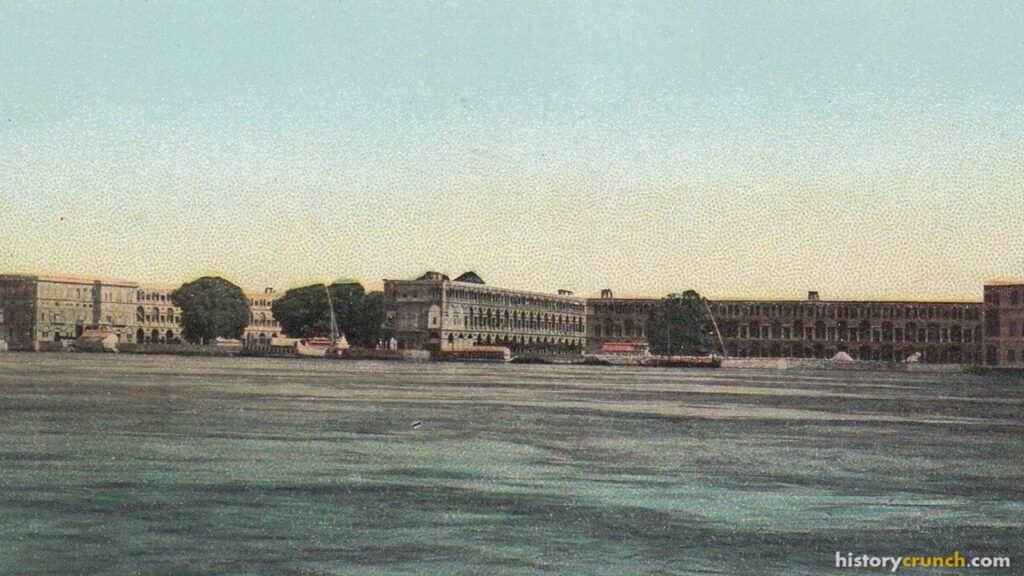
Postcard showing British barracks on the Nile River that was built during the British occupation of Egypt. (1910)
The eventBritain's colonial empire supplying raw materials and markets during the Industrial Revolution
Tap each impact to read what it led to.
Raw Materials for FactoriesBritain's colonies sent large quantities of natural resources back to Britain. Cotton from India was one key example, giving textile factories a steady supply to spin and weave into cloth.
Captive Export MarketsColonies provided Britain with millions of customers for finished goods across North America, the Caribbean, and India, making it far easier for factory owners to sell goods at a profit.
Wealth Flowing into BritainProfits from colonial trade gave British merchants and entrepreneurs capital to invest in new machinery and factories. This flow of money helped the Industrial Revolution grow faster than it could have from domestic trade alone.
Unequal Trade CycleBritain collected raw materials cheaply from colonies, manufactured finished products at home, then sold those products back to the same colonies at higher prices. India's cotton trade is the clearest example of this cycle.
Expanded Empire Reinforcing IndustryAs British factories produced more goods, Britain had greater reason to hold and expand its colonies to secure both supply and sales. The empire and the factory system each supported the growth of the other.
Why Was Britain the First Country to Industrialize? – Summary
In conclusion, historians have identified several reasons for the development of industrialization in Britain, and for why Britain was such an ideal spot for the Industrial Revolution to begin. These reasons include: the effects of the Agricultural Revolution, large supplies of coal, geography of the country, a positive political climate, and a vast colonial empire. They all combined to allow Britain to have the necessary conditions that caused industrialization to flourish.
A stable government was in place by the early 1700s, after civil war and revolution had already ended.
The government backed laissez-faire capitalism and free trade, letting factory owners operate with few restrictions.
Britain held a large colonial empire by the 1700s, giving it raw materials from places like India and the Caribbean and millions of customers for finished goods.
Coal deposits sat close to the surface, making them cheaper and faster to mine than in most of Europe.
France
The French Revolution began in the late 1780s and continued through the 1790s, pulling the government's attention toward internal conflict.
Political instability slowed the kind of long-term investment that building factories and canal networks required.
France had fewer coal fields close to cheap water transport and a smaller canal network for moving goods.
France did not have the same scale of colonial trade routes that fed raw materials directly into industrial production.
VS
Britain's stable government, geography, coal supply, and colonial empire created conditions that France could not match in the 1700s. France's revolution in the late 1780s and 1790s delayed any serious turn toward industrialization.
Eighty years in which machines, coal and factories moved work out of the home and people into the cities. The timeline follows the inventions and the laws that eventually answered them.
A period of major changes in farming methods that greatly increased how much food Britain could produce.
Crop rotation
A farming method of planting different crops in a field each season to keep the soil fertile and productive.
Seed drill
A machine that plants seeds in neat rows underground, making farming faster and wasting fewer seeds.
Laissez-faire capitalism
An economic idea that governments should leave businesses alone and not interfere with trade or industry.
Enclosure Acts
British laws that turned shared farmland into private property, forcing small farmers off the land.
Age of Imperialism
A period when European nations explored and took control of large areas of land around the world.
Canal systems
Networks of human-made waterways built to move goods and raw materials cheaply across the country.
Frequently Asked Questions
When did the Industrial Revolution begin in Britain?
The Industrial Revolution began in Britain in the 1700s. It started there before spreading to other parts of Europe and the world. Several conditions came together at the same time to make Britain the ideal place for industry to grow.
How did the Agricultural Revolution help start the Industrial Revolution?
The Agricultural Revolution raised food production, which allowed Britain’s population to grow. New tools helped, such as the seed drill invented by Jethro Tull and crop rotation linked to Charles Townshend. A larger population gave factories more workers and created more customers to buy goods.
Why was coal so important to British industry?
Coal fueled the steam engines used in trains, ships, and factory machines. Britain held large supplies that sat close to the surface, so miners could reach them easily. The steam engine built by Thomas Newcomen made mining simpler by pumping water out of the mines.
How did Britain’s geography help industrialization?
Britain had rivers that let people move goods and raw materials cheaply and reliably. Factory owners needed to ship supplies in and finished products out to sell for a profit. Better shipbuilding, steamboats, and new canal systems made this transportation even easier.
How did Britain’s colonial empire support the Industrial Revolution?
Britain’s empire gave it huge amounts of natural resources and millions of new customers. By the late 1700s, Britain held colonies in North America and the Caribbean and a growing hold on India. For example, Britain took cotton from India, made it into cloth at home, then sold the finished goods back to India.
Why did the political climate favor industry in Britain?
Britain had a stable government while France was caught up in its own revolution in the late 1780s and 1790s. The British government backed free trade and laissez-faire capitalism, which helped markets grow. Few rules on business, including no minimum wage or worker rights, made it easy to start factories.
Cite This Article
To cite this article as a source, use one of the formats below.
MLA: Beck, Elias. “Why Was Britain the First Country to Industrialize?: A Detailed Summary.” HistoryCrunch, 24 September 2026, https://historycrunch.com/why-was-britain-the-first-country-to-industrialize/.
APA: Beck, E. (2026). Why Was Britain the First Country to Industrialize?: A Detailed Summary. HistoryCrunch. https://historycrunch.com/why-was-britain-the-first-country-to-industrialize/
Chicago: Beck, Elias. “Why Was Britain the First Country to Industrialize?: A Detailed Summary.” HistoryCrunch. September 24, 2026. https://historycrunch.com/why-was-britain-the-first-country-to-industrialize/
Sources
Fordham Modern History Sourcebook
Joel Mokyr, The Enlightened Economy.
Robert C. Allen, The Industrial Revolution: A Very Short Introduction.
Facebook
X
Reddit
Pinterest
LinkedIn
We strive to produce educational content that is accurate, engaging and appropriate for all learners. If you notice any issues with our content, please contact us and let us know!
AUTHOR INFORMATION
Elias Beck
I'm a passionate history and geography teacher with over 15 years of experience working with students in the middle and high school years. I have an Education Degree with a focus in World History. I have been writing articles for History Crunch since 2015 and love the challenge of creating historical content for young learners!
The British Agricultural Revolution, spanning the 17th to the 19th centuries, was a period of significant agricultural development marked by innovations in farming techniques. Historians consider it important to the start of the Industrial Revolution in Britain.
Assembly line manufacturing, introduced during the Industrial Revolution, revolutionized production by allowing for the mass production of goods through a sequential and efficient process, significantly reducing costs and time.
Utopian Socialism was an early form of socialist thought that emerged in the early 19th century and called for the creation of ideal cooperative communities to solve the problems caused by industrial capitalism. This article details the history, main principles, and significance of Utopian Socialism.
Charles Townshend is remembered today as a significant statesman for England, but more importantly for his role in the British Agricultural Revolution and the innovation of crop rotation.
Economic individualism is centered on the idea of less government involvement or intervention in the economy. This article details the history and main principles of economic individualism.

 FactsthatCrunch