
The Russian Revolution of 1917 ended three centuries of rule by the tsars and created the world's first communist state. It happened twice in one year: in March, when the women of Petrograd came out for bread and the soldiers refused to shoot them, and in November, when Lenin's Bolsheviks took a city of two million with a few thousand armed men and a palace with nobody at the door. Then came three years of civil war, terror and famine that killed ten million, and a state that lasted 69 years and shaped every decade of the twentieth century. This timeline runs from the first Romanov in 1613 to the last flag over the Kremlin in 1991, and every card on it sits on a real date.
From the first Romanov to the last red flag over the Kremlin.
The Russian Revolution of 1917 ended three centuries of rule by the tsars and created the world's first communist state. It happened twice in one year: in March, when the women of Petrograd came out for bread and the soldiers refused to shoot them, and in November, when Lenin's Bolsheviks took a city of two million with a few thousand armed men and a palace with nobody at the door. Then came three years of civil war, terror and famine that killed ten million, and a state that lasted 69 years and shaped every decade of the twentieth century. This timeline runs from the first Romanov in 1613 to the last flag over the Kremlin in 1991, and every card on it sits on a real date.
Marx expected it in Britain or Germany. It came in the most backward great power in Europe.
Serfdom, autocracy, a lost war, and a state that would not reform.
Who owns the fields the peasants work. The question that Lenin answered in one evening and Stalin reversed in one winter.
Emancipation, Stolypin, the Decree on Land, collectivization.
Russia had a revolution in 1905 without a world war. It had two in 1917 because of one.
Tannenberg, the Great Retreat, the tsar at the front, the bread queues.
A Siberian peasant with the run of the palace. Less power than people thought, and more damage.
The heir's illness, the empress's faith, the ministerial leapfrog, the murder.
Lenin said so. The same city, the same soviet, the same Trotsky, twelve years apart.
Port Arthur, Bloody Sunday, Tsushima, the October Manifesto, the Duma.
Bread, women, soldiers who would not shoot, and a train that could not get home.
March 8th to 15th, 1917.
Kind, dutiful, devoted to his family, and certain God had made him an autocrat.
Accession, Khodynka, Bloody Sunday, the front, abdication, the cellar.
It had the offices; the Soviet had the soldiers; and it kept fighting a war the country wanted to leave.
Dual power, Lenin's return, the July Days, Kerensky, Kornilov.
Not a storm. A takeover of bridges, stations and a telephone exchange by a few thousand armed men, and a palace with nobody guarding the door.
The Soviet, the Military Revolutionary Committee, the night of November 6th, the Winter Palace, the decrees.
A sealed train, ten theses, one failed rising, a wig, and a majority of ten to two.
April 16th to November 7th, 1917.
Mensheviks, Socialist Revolutionaries, Kadets, anarchists. In 1917 the Bolsheviks were one party among many, and not the largest.
The 1903 split, the Provisional Government, the Constituent Assembly, its dissolution.
The organizer of October and the builder of the Red Army, written out of the story by the man who beat him.
1905, the Petrograd Soviet, the Military Revolutionary Committee, the Red Army, exile, the ice axe.
Petrograd: the tsar's capital, Russia's biggest factory town, and a garrison of 160,000 bored reservists.
Peter's window, Bloody Sunday, the bread queues, the garrison, the Winter Palace, the move to Moscow.
They held the center, the railways and the factories; they gave the peasants land; and they were more ruthless.
The Czech Legion, the Whites, the intervention, the Red Army, Wrangel.
The Cheka was six weeks old before the civil war began. Terror was policy before it was necessity.
The Cheka, the shooting of Lenin, the September decree, the camps, the Great Purge.
Because the alternative was losing all of it. Peace at any price was the price of keeping power.
The Decree on Peace, the negotiations, the treaty, Germany's defeat.
Kronstadt, the famine, and an economy at a fifth of its prewar size. A retreat to save the revolution.
War communism, Kronstadt, the NEP, the famine, the plan that ended it.
A lawyer's son whose brother was hanged, who spent seventeen years in exile, and who built the first communist state in seven.
The hanging, the split, the sealed train, October, the Terror, the NEP, the mausoleum.
Paperwork. He took the job nobody wanted and filled every office with people who owed him.
General Secretary, Lenin's Testament, socialism in one country, Trotsky's expulsion, the Five-Year Plan.
House arrest, a train to Siberia, a cellar in Yekaterinburg, a mine shaft, and a DNA test seventy years later.
Abdication, Tobolsk, the cellar, the bones, the saints.
Started it. Then fought in it, and got the vote before Britain or America.
Bread queues, Women's Day, the Battalions of Death, the vote, Kollontai.
A seminary dropout from Georgia who robbed banks for the party, edited Pravda in 1917, and took the job with the filing cabinets.
Georgia, Siberia, 1917, General Secretary, the Testament, the purge.
Written for Britain, translated for Russia, rewritten by Lenin for a country with no working class to speak of.
The Manifesto, Das Kapital, Marx's death, the RSDLP, the split.
A classless society with no private property. What they built was a one-party state with a planned economy.
The Manifesto, the Decree on Land, war communism, the NEP, the Five-Year Plan.
Marx's theory plus Lenin's method: the vanguard party, the dictatorship of the proletariat, and the plan.
The split, the April Theses, the dissolved assembly, socialism in one country, the Comintern.
As fear. Strikes, bombs, raids, and 550 people deported on the 'Soviet Ark'.
The Comintern, the 1919 strikes, the Palmer Raids, the Cold War.
Collective farms, famine, show trials, and a gulag. The state that October built, run by the man Lenin tried to remove.
Collectivization, the Holodomor, the Great Purge, Trotsky's murder, Khrushchev's speech.
To China, Eastern Europe, Korea, Vietnam and Cuba. By 1950 a third of humanity lived under governments that traced themselves to October.
The Comintern, socialism in one country, the Cold War, the end.
It promised peace, land, bread and freedom. It delivered a superpower, a famine and a gulag, and it ended in 69 years.
The decrees, the terror, collectivization, the purge, the end.
Six weeks after October the Bolsheviks created a political police with no legal limits. It outlived the Soviet Union.
The Cheka, the Red Terror, Kronstadt, the purge, the end.
The Romanovs ruled Russia for 304 years, from a sixteen-year-old boy chosen in 1613 to a signature in pencil in a railway carriage in 1917. Peter the Great made Russia a great power without making it a modern state; Catherine talked Enlightenment and gave away serfs; Alexander II freed the serfs and was killed by a bomb for his trouble. Meanwhile in London a German exile wrote that the industrial workers of the world would rise. Russia had almost none. It was the last place Marx expected his revolution, and the first to have it.
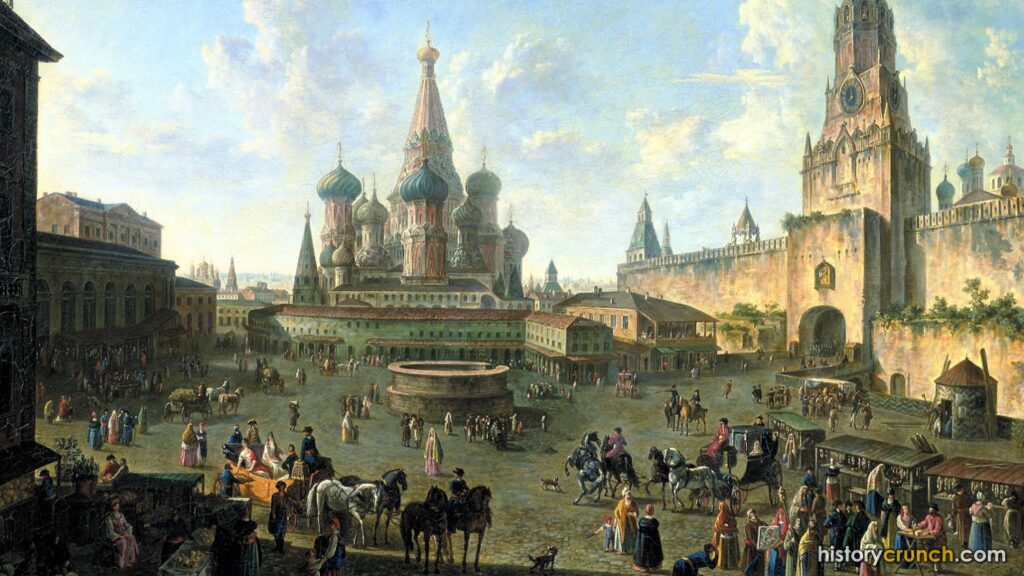
In February 1613 an assembly of nobles, clergy and townsmen chose a sixteen-year-old boy, Michael Romanov, as tsar, ending fifteen years of civil war, famine and foreign invasion that Russians called the Time of Troubles. His family would rule Russia for 304 years, until March 1917.
LEARN MORESHOW LESSwhy it mattersPOLITICSEvery tsar on this timeline is a Romanov. The dynasty that fell in 1917 had been on the throne longer than the United States has existed.
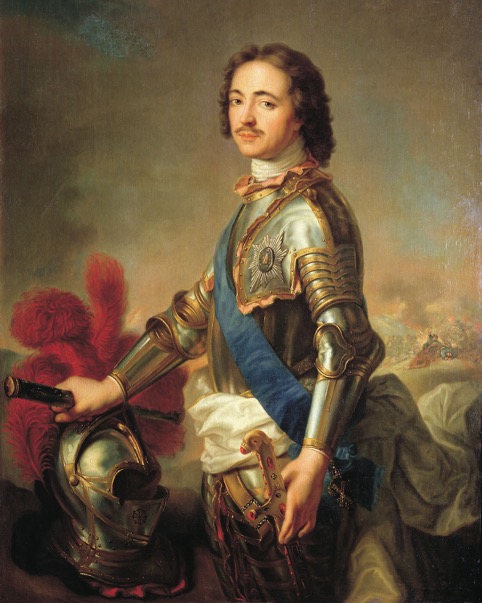
Peter I, tsar from 1682 to 1725, forced Russia to modernize: he shaved the boyars' beards, built a navy, and in May 1703 founded a new capital, St. Petersburg, on a swamp by the Baltic, where the revolutions of 1905 and 1917 would later happen. He also fixed the pattern of Russian government for two centuries: all power in the tsar, and reform only from the top.
LEARN MORESHOW LESSwhy it matters · key numbersPOLITICSPeter made Russia a great power without making it a modern state. The gap between the two is the story of this timeline.
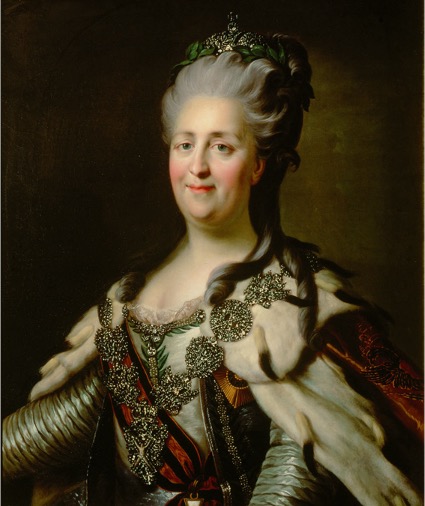
Catherine II took the throne in a coup in July 1762 and ruled until 1796. She corresponded with Voltaire, expanded Russia to the Black Sea and into Poland, and founded schools and hospitals. She also gave away hundreds of thousands of state peasants as serfs to her favorites, and crushed the Pugachev peasant rising of 1773 to 1775 with mass hangings.
LEARN MORESHOW LESSwhy it mattersPOLITICSThe empire got bigger and grander while most of its people stayed the property of their landlords. That contradiction lasted until 1861 and its resentments until 1917.
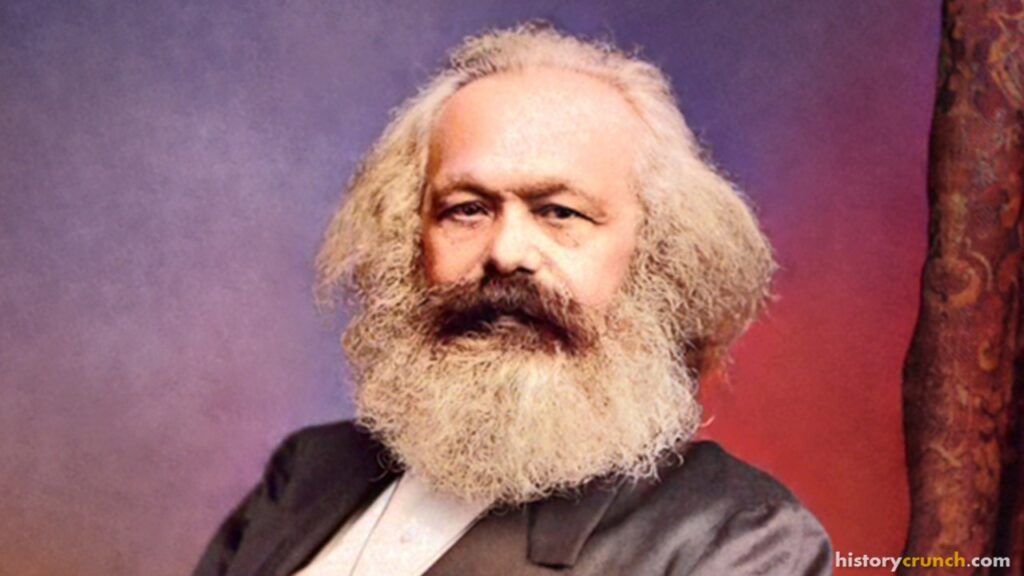
On February 21st, 1848 Karl Marx and Friedrich Engels published a 23-page pamphlet in London arguing that all history is the struggle between classes, that the industrial workers, the proletariat, would overthrow the factory-owning bourgeoisie, and that a classless society would follow. It ends: 'Workers of the world, unite!'
LEARN MORESHOW LESSwhy it matters · a source · 1 key figureIDEASThe idea that would take power in Russia in 1917 was written by two Germans for industrial Britain. Russia, with almost no factories in 1848, was the last place Marx expected it to happen.
IN THEIR OWN WORDS“The proletarians have nothing to lose but their chains. They have a world to win.”
Karl Marx and Friedrich Engels, The Communist Manifesto, 1848
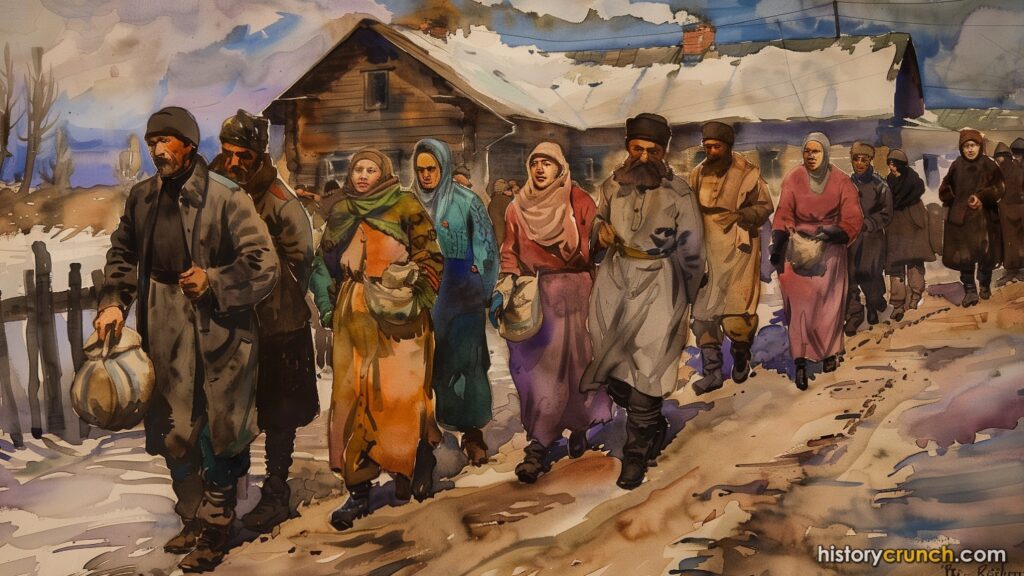
On March 3rd, 1861 Tsar Alexander II signed the Emancipation Edict freeing about 23 million privately owned serfs, nearly a third of Russia's people, who until then could be bought, sold and flogged by their owners. But the freed peasants had to pay for the land they received over 49 years, usually got less than they had farmed before, and stayed bound to their village commune.
LEARN MORESHOW LESSwhy it matters · key numbersSOCIETYFreedom on paper and debt in practice. The land question, who owns the fields the peasants work, was still unanswered in 1917, and Lenin's answer won him the countryside.
In September 1867 Marx published the first volume of Das Kapital, his 800-page study of how capitalism works and why, he argued, it must fail: workers create all value, owners keep the surplus, and the system lurches from crisis to crisis until the workers take it over. The book was translated into Russian in 1872, the first translation anywhere, and the censor let it through as too difficult to be dangerous.
LEARN MORESHOW LESSwhy it matters · 1 key figureIDEASRussian students read Marx before most Germans did. The censor was wrong.
On March 13th, 1881 members of the People's Will, a revolutionary group of a few dozen young people, killed Alexander II with a bomb in a St. Petersburg street, on the very day he had approved the first small step toward an elected assembly. His son Alexander III tore up the plan, hanged the assassins, and ruled by police and censorship for thirteen years.
LEARN MORESHOW LESSwhy it mattersVIOLENCEReform died with the reformer. For the next generation of revolutionaries, including Lenin's older brother, the lesson was that bombs worked and petitions did not.
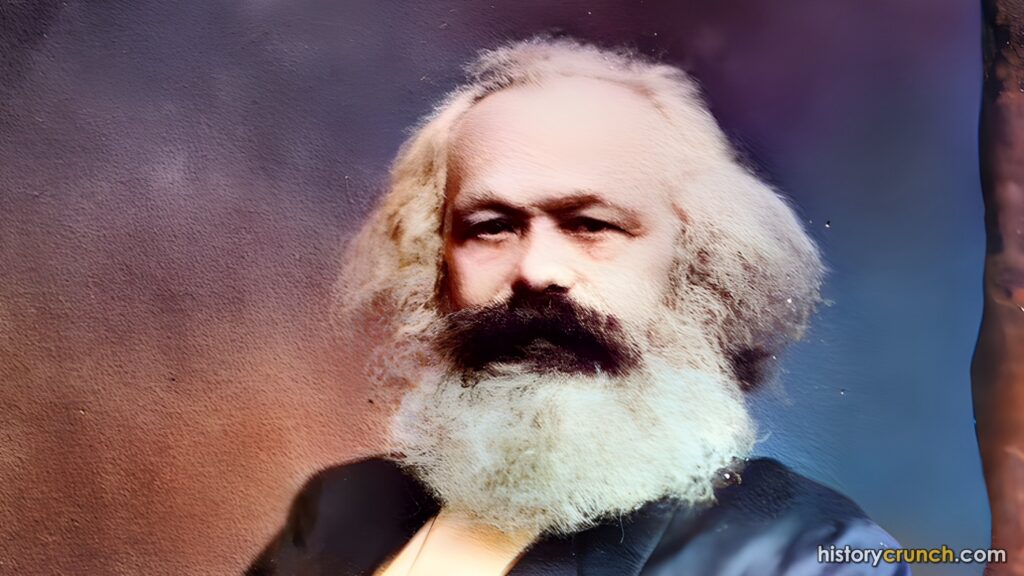
Marx died in London on March 14th, 1883, aged 64, with the last two volumes of Das Kapital unfinished; Engels edited them from his notes. Eleven people came to the funeral. That same year the first Russian Marxist group, Emancipation of Labor, was founded in exile in Geneva by Georgi Plekhanov.
LEARN MORESHOW LESSwhy it matters · 1 key figureIDEASMarx never saw a Marxist government and never expected one in Russia. Thirty-four years later his face was on the walls of the Winter Palace.
On May 20th, 1887 Alexander Ulyanov, a 21-year-old student, was hanged for plotting to throw a bomb at Alexander III. His seventeen-year-old brother Vladimir, at school in Simbirsk, was expelled from Kazan University within the year for joining a student protest, and turned to Marx. He would later take the name Lenin.
LEARN MORESHOW LESSwhy it matters · 1 key figureVIOLENCEThe regime made its most dangerous enemy by hanging a student. Vladimir Ulyanov never spoke publicly about his brother, and never forgave.
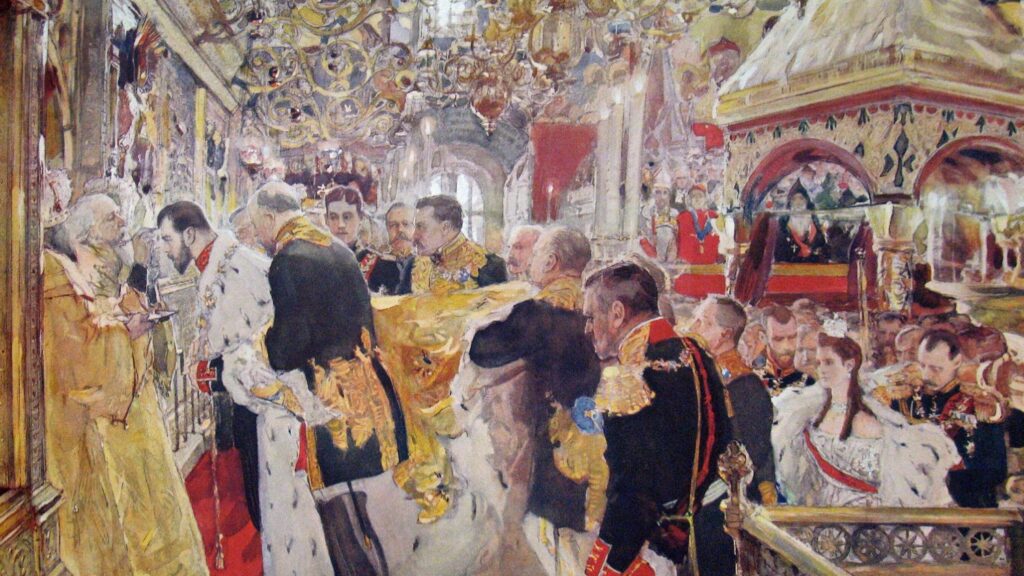
Alexander III died suddenly of kidney disease on November 1st, 1894, and his 26-year-old son Nicholas, who had never been given any part in governing, became autocrat of 130 million people. He married the German princess Alexandra of Hesse three weeks later, and told the provincial councils the following year that hopes for a constitution were 'senseless dreams'.
LEARN MORESHOW LESSwhy it matters · a source · 1 key figurePOLITICSNicholas was kind, dutiful, and certain that God had given him absolute power. He held that belief, unchanged, through everything that follows.
IN THEIR OWN WORDS“I know nothing of the business of ruling.”
Nicholas II to his brother-in-law, on the day his father died, November 1894
Nicholas II, who said on the day he became tsar that he knew nothing of ruling, kept absolute power through twenty years of warnings. A lost war with Japan, the shooting of unarmed petitioners on Bloody Sunday, mutiny, a general strike, and a parliament promised under duress and then emptied of power. The revolutionaries split into Bolsheviks and Mensheviks over whether a party should be a conspiracy or a movement. And a Siberian peasant with a reputation for healing walked into the palace, because the heir to the throne bled and would not stop.
On May 30th, 1896, four days after Nicholas's coronation in Moscow, half a million people gathered on Khodynka Field for free beer, sausage and a souvenir mug. A rumor that the gifts were running out started a stampede across ditches and trenches; about 1,400 people were crushed to death. Nicholas went to a ball at the French embassy that evening as planned.
LEARN MORESHOW LESSwhy it matters · key numbersSOCIETYA disaster at the start and a tsar who did not seem to notice. Many Russians remembered it as an omen; more remembered the ball.
In March 1898 nine delegates met secretly in the city of Minsk to found a Marxist party for Russia. Eight were arrested within weeks. The party survived in exile, led by Plekhanov and a young Lenin, whose newspaper Iskra ('The Spark') was smuggled into Russia from 1900.
LEARN MORESHOW LESSwhy it mattersPOLITICSThe party that ruled Russia for seventy years began as nine men in a wooden house who could not finish their meeting.
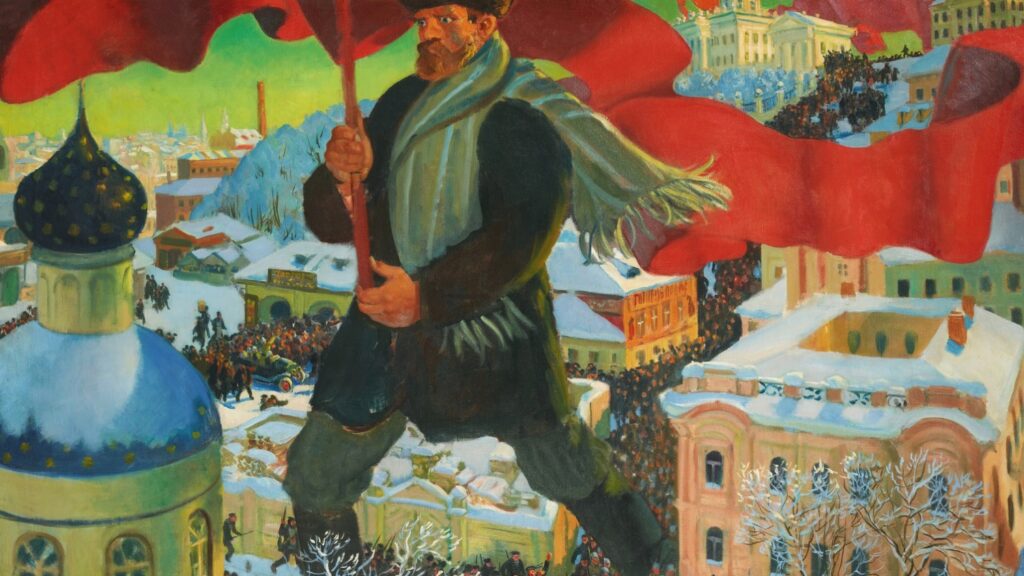
At its second congress in Brussels and London in July and August 1903 the party split over a single line in its rules. Lenin wanted a small, disciplined party of full-time revolutionaries; Julius Martov wanted a broad one open to anyone who agreed with it. Lenin won one vote and called his faction the Bolsheviks, 'the majority'; Martov's became the Mensheviks, 'the minority', although they were usually the larger group.
LEARN MORESHOW LESSwhy it matters · a debate · 1 key figurePOLITICSThe whole later shape of Soviet rule is in Lenin's side of the argument: a vanguard party, a small party that decides for the workers, not with them.
Was the split about principle or about Lenin?
Principle. Lenin's argument that a police state could only be beaten by a conspiracy of professionals was borne out in 1917.
Lenin. Martov and Trotsky both said at the time that he wanted a party he could control, and the 'majority' was a majority of one vote at one session.
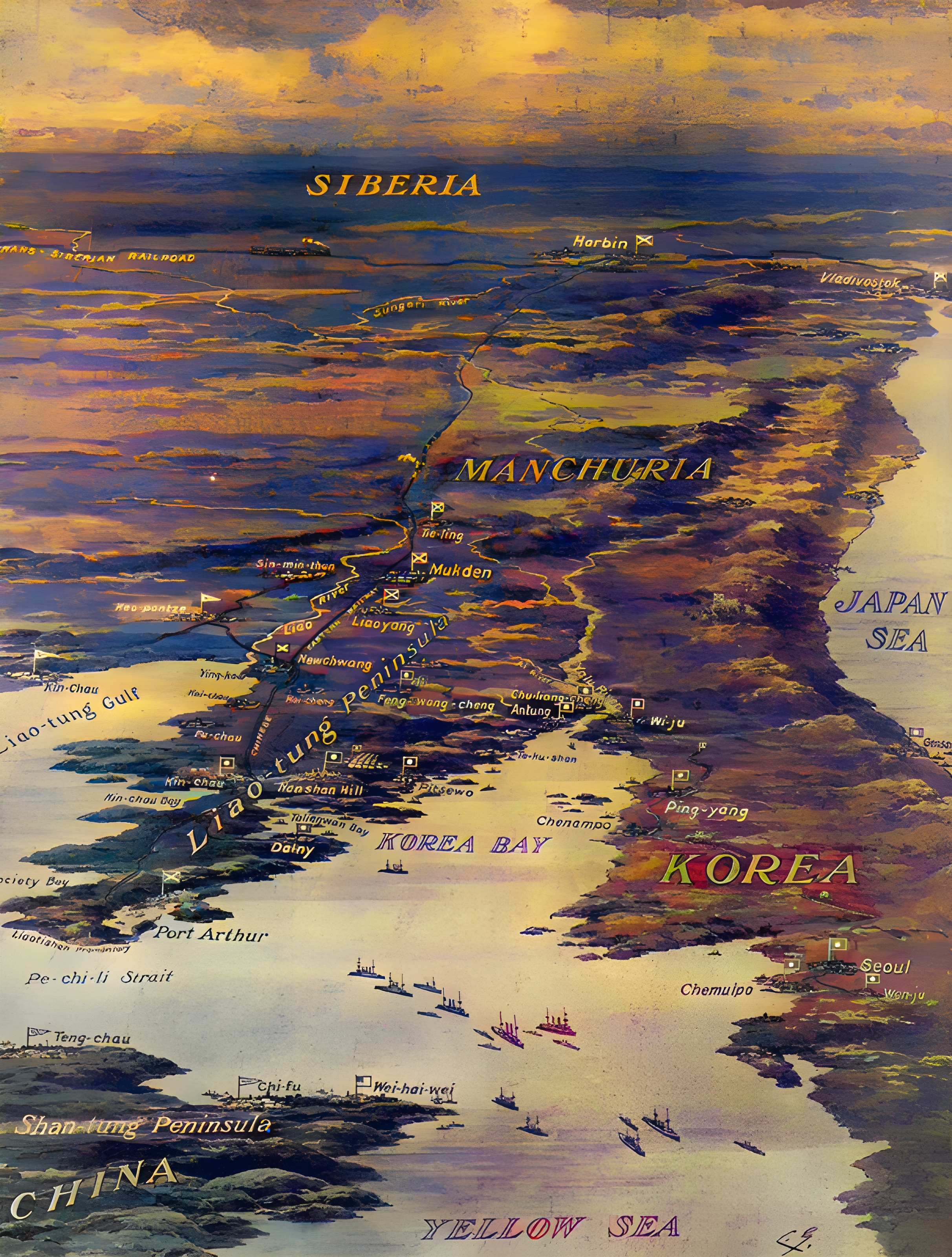
On the night of February 8th, 1904 Japanese torpedo boats attacked the Russian fleet at Port Arthur, in the Chinese region of Manchuria, without a declaration of war. Russia and Japan were both expanding into Korea and Manchuria; Nicholas's ministers had expected 'a short victorious war' to calm unrest at home. Instead Russia lost every major battle.
LEARN MORESHOW LESSwhy it mattersWARThe first modern defeat of a European power by an Asian one, and the war that showed Russians their government could not even fight.
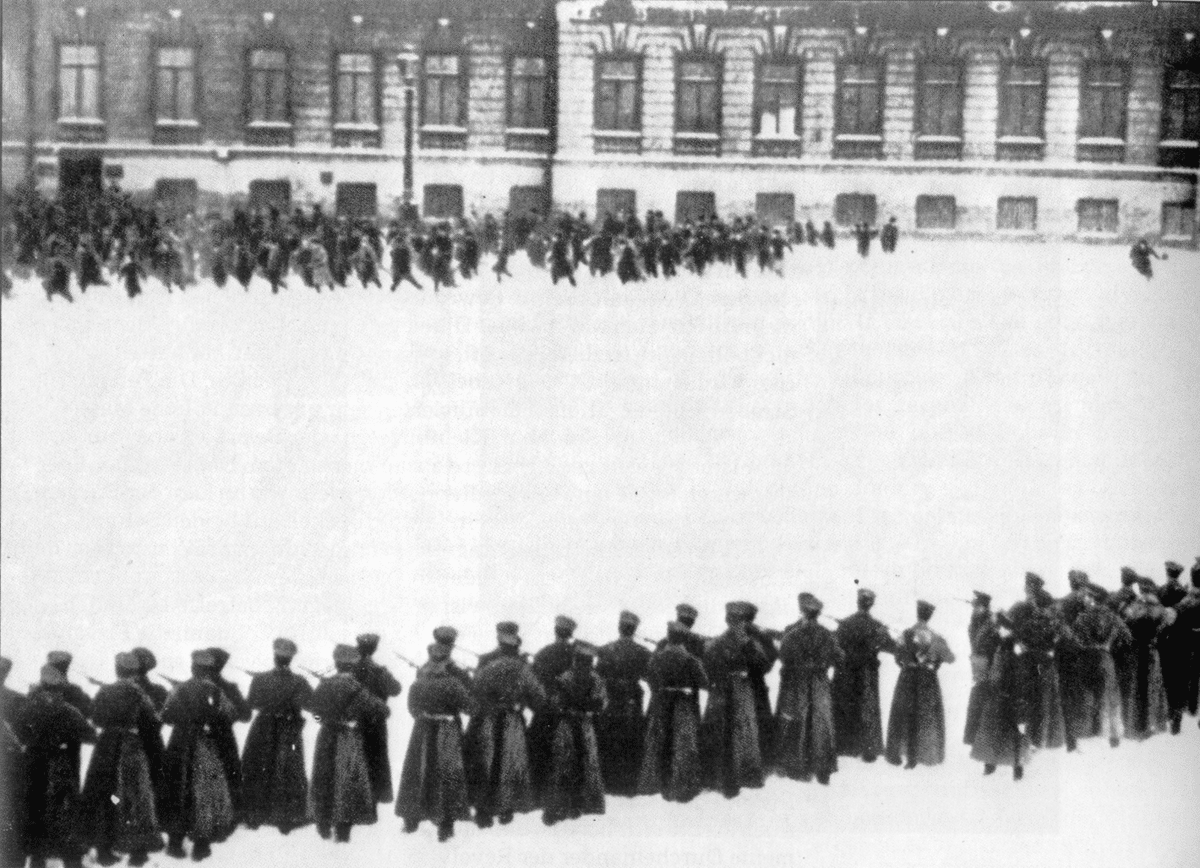
On Sunday January 22nd, 1905 about 150,000 workers and their families, led by a priest, Father Gapon, marched on the Winter Palace in St. Petersburg carrying icons and portraits of the tsar, with a petition asking for an eight-hour day, a constituent assembly and an end to the war. Nicholas was not there. Soldiers fired on the crowds; the government admitted 130 dead, and other counts run to a thousand.
LEARN MORESHOW LESSwhy it matters · key numbers · a sourceVIOLENCEThe marchers came to ask the tsar for help and were shot by his soldiers. The bond between 'the little father' and his people, the thing autocracy rested on, broke that afternoon.
IN THEIR OWN WORDS“We workers, our children, our wives and our old, helpless parents have come, Sire, to seek truth and protection from you.”
The workers' petition to Nicholas II, January 22nd, 1905
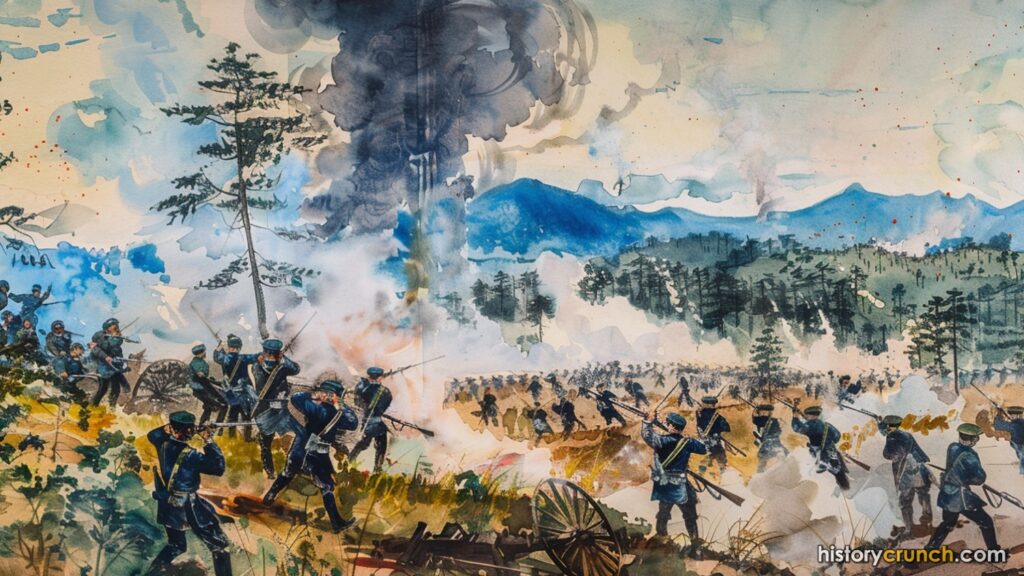
Russia's Baltic Fleet sailed 18,000 miles around Africa and Asia to relieve Port Arthur, which fell before it arrived. On May 27th and 28th, 1905 Admiral Togo's fleet met it in the Tsushima Strait and sank or captured 21 of its 38 ships, including all eight battleships, for the loss of three torpedo boats. About 5,000 Russian sailors died.
LEARN MORESHOW LESSwhy it matters · key numbersWARThe most complete naval defeat of modern times, and the end of Russia as a Pacific power. At home it turned unrest into revolution.
On June 27th, 1905 sailors on the battleship Potemkin in the Black Sea refused to eat rotten, maggoty meat, shot their officers, and ran up the red flag. They sailed to Odessa, where troops fired on crowds that had gathered to support them, then fled to Romania. It was the first mutiny in the Russian armed forces in the revolution.
LEARN MORESHOW LESSwhy it mattersREVOLTBloody Sunday had shown the tsar's soldiers would shoot at crowds. After the Potemkin mutiny, no tsar could be sure his soldiers would obey the next order to fire, and in March 1917 they did not.
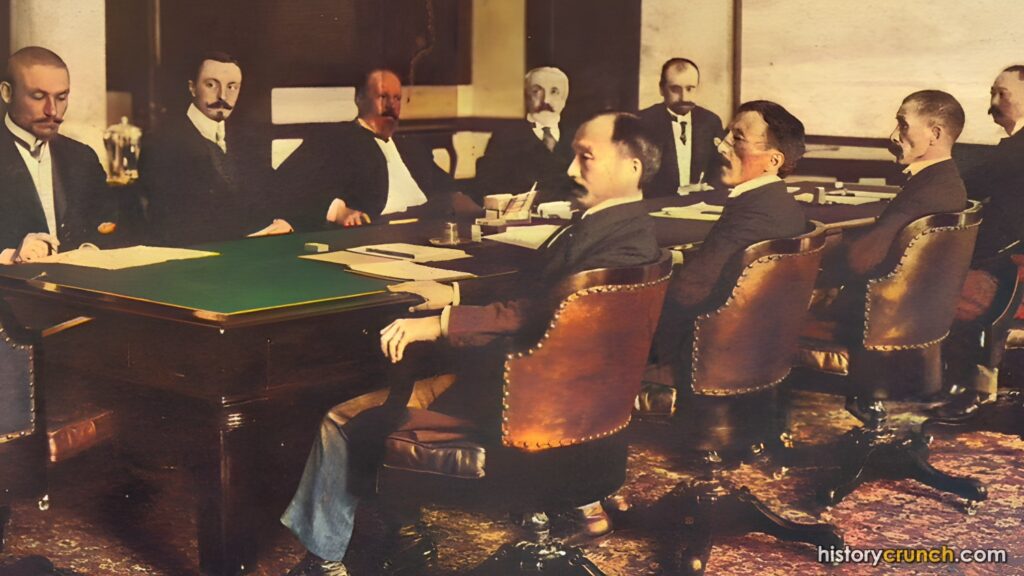
On September 5th, 1905, in Portsmouth, New Hampshire, Russia and Japan signed a peace brokered by President Theodore Roosevelt, who won the Nobel Peace Prize for it. Russia gave up Port Arthur, southern Manchuria in China and half of Sakhalin island and recognized Japan's control of Korea. About 50,000 Russian soldiers and sailors had died.
LEARN MORESHOW LESSwhy it mattersWARA humiliation signed in America, brokered by an American president. The government that had wanted a short victorious war got neither.
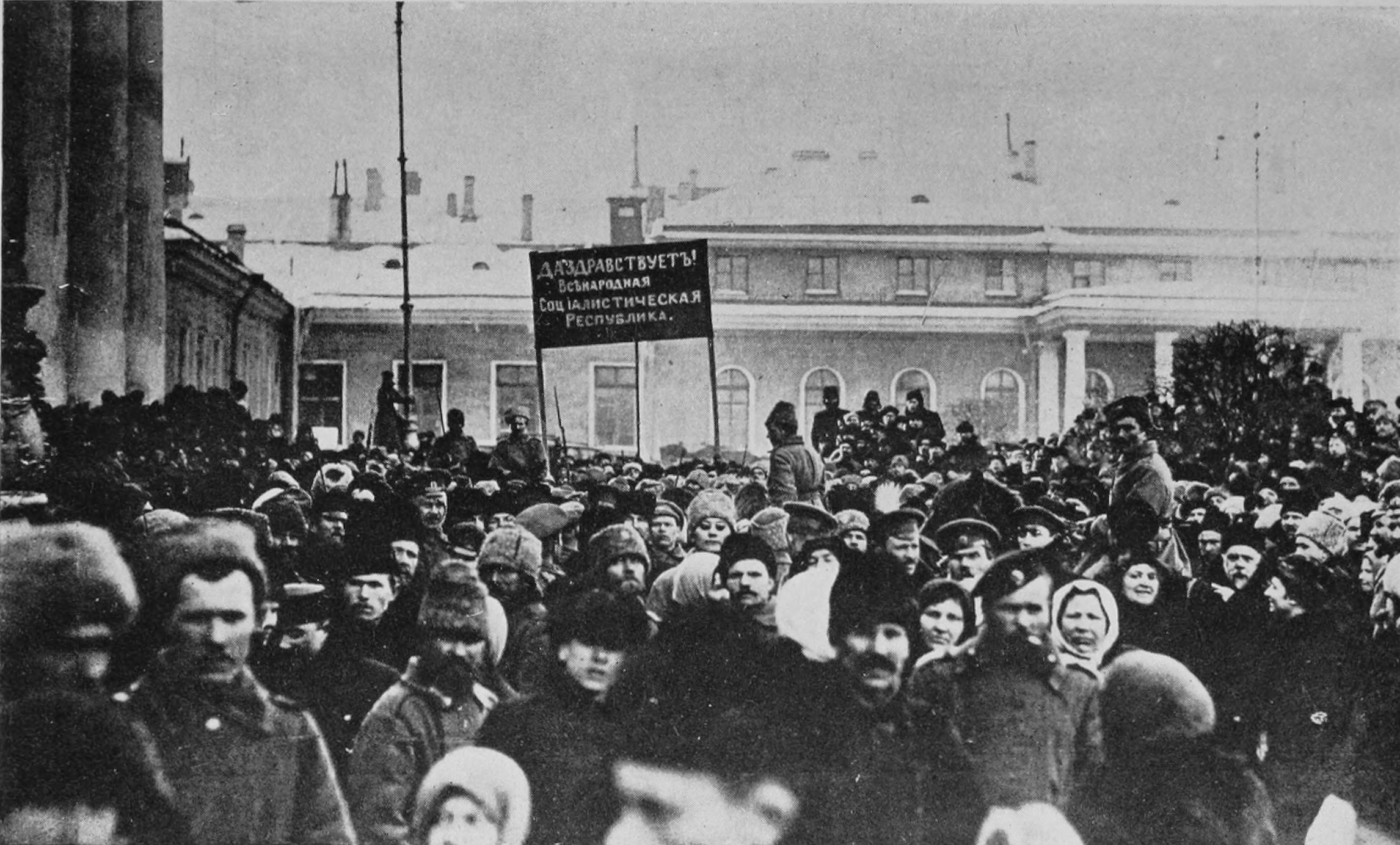
A general strike in October 1905 stopped the railways, the post, the factories and the banks, and the first workers' council, the St. Petersburg Soviet, was formed with the 26-year-old Leon Trotsky as its chairman. On October 30th Nicholas, advised that the only alternative was a military dictatorship nobody would lead, signed a manifesto promising civil liberties and an elected legislature, the Duma.
LEARN MORESHOW LESSwhy it matters · 2 key figuresPOLITICSThe closest Russia came to a constitutional monarchy. Nicholas signed it under duress and spent the next eleven years taking it back.
The first Duma opened in the Tauride Palace on May 10th, 1906, with a majority demanding land reform and real power. Two weeks earlier Nicholas had issued Fundamental Laws reserving to himself command of the army, foreign policy, the budget and the right to rule by decree, and stating that he was still 'autocrat'. He dissolved the Duma on July 21st. The second lasted three months; the third was elected on rules that shut most workers and peasants out.
LEARN MORESHOW LESSwhy it mattersPOLITICSA parliament that could talk but not govern, under a tsar who thought even that was too much. By 1914 most Russians had stopped expecting anything from it.
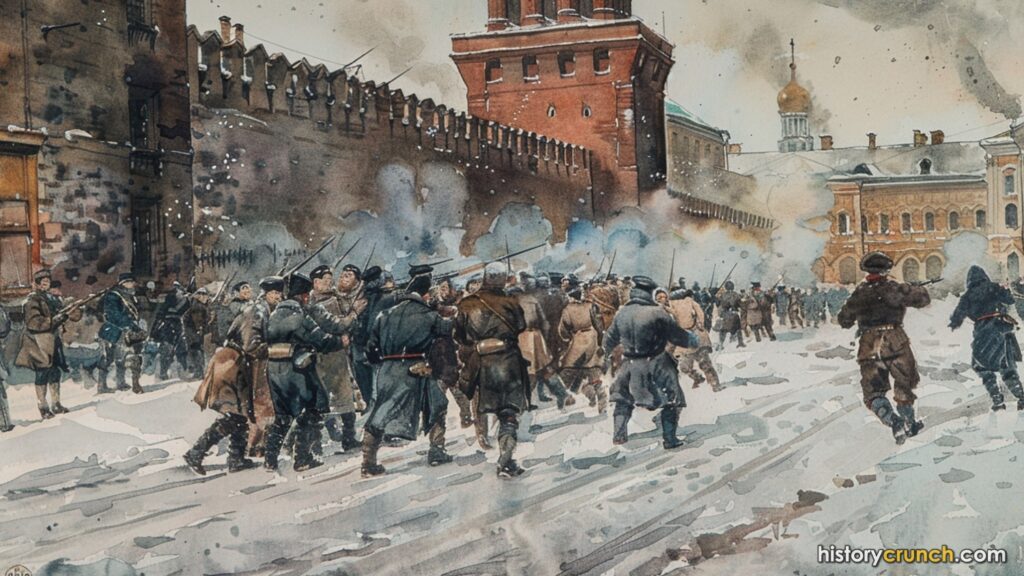
Prime minister Pyotr Stolypin hanged so many rebels that the noose was called 'Stolypin's necktie', and on November 22nd, 1906 began a reform to let peasants leave the commune and own their land as private farms. About a quarter had done so by 1914. He said he needed twenty years of peace to make Russia stable. He was shot dead in the Kiev opera house in September 1911, in front of the tsar, and Russia got eight years.
LEARN MORESHOW LESSwhy it mattersSOCIETYThe last serious attempt to fix the land question from the top. Nobody who came after him tried.
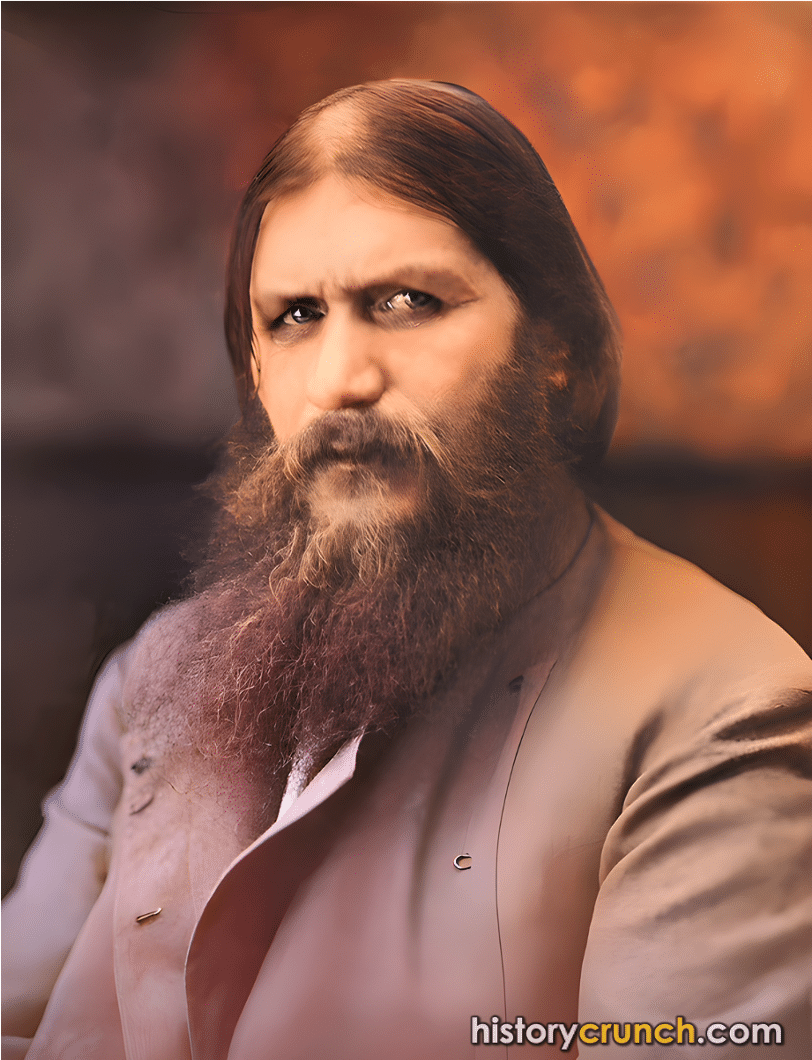
Grigori Rasputin, a Siberian peasant with a reputation as a holy man and healer, was first brought to the imperial family in 1905 and by October 1907 had been called to the bedside of the three-year-old heir, Alexei, who had hemophilia, a disease that made any bleed potentially fatal. When the boy's bleeding stopped, the Empress Alexandra came to believe Rasputin alone could keep her son alive.
LEARN MORESHOW LESSwhy it matters · 1 key figureSOCIETYThe heir's illness was a state secret, so Russians saw only a drunken peasant with the run of the palace. The damage to the monarchy's reputation was enormous, and self-inflicted.
On April 17th, 1912 troops fired on striking miners at the Lena goldfields in Siberia, who were protesting rotten meat and 16-hour days, killing about 170. The minister of the interior told the Duma: 'So it has been, and so it will be.' Strikes across Russia went from 100,000 workers that year to 1.5 million in the first half of 1914.
LEARN MORESHOW LESSwhy it matters · key numbersVIOLENCEAfter seven quiet years the strikes came back, bigger than in 1905. On the eve of the war Russia's cities were already close to boiling.
Russia went to war in 1914 with the largest army in the world and one rifle for every two men. It lost an army in five days at Tannenberg, lost Poland in the Great Retreat, and lost its faith in the tsar when he took command of the army and left the capital to his wife and Rasputin. By the winter of 1917 Petrograd was at forty below, the bread had run out, and the women in the queues were talking of revolution. In eight days of March the crowds came out, the garrison refused to shoot, and the dynasty ended with nobody willing to defend it.
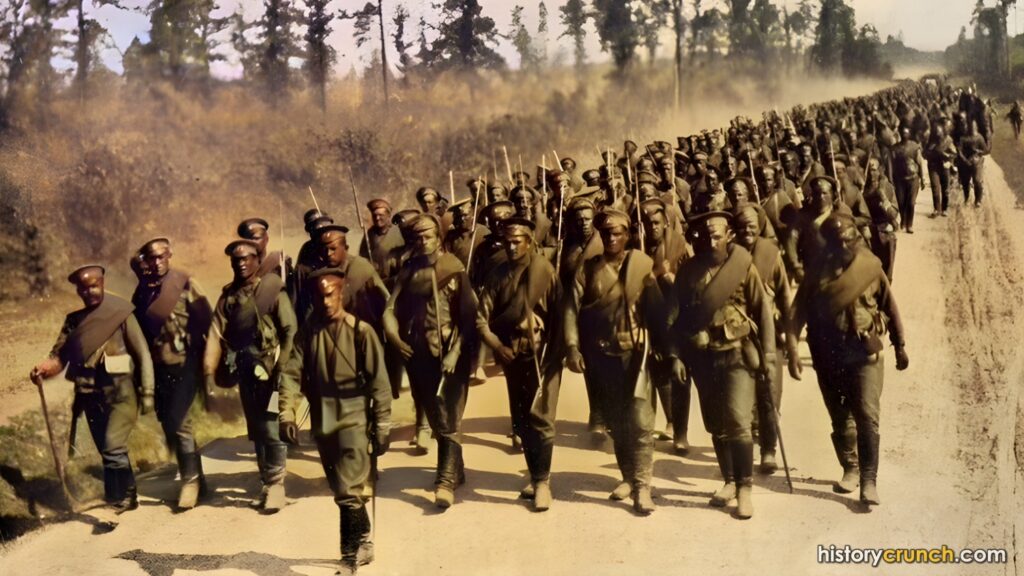
After Austria-Hungary declared war on Serbia on July 28th, 1914, Nicholas II ordered full mobilization on July 30th to protect Russia's Slavic ally, and Germany declared war on Russia on August 1st. Crowds knelt in Palace Square as the tsar appeared on the balcony, and the German-sounding St. Petersburg was renamed Petrograd. Russia went to war with 5.9 million men, the largest army in the world, and one rifle for every two of them.
LEARN MORESHOW LESSwhy it matters · key numbersWARFor a few weeks the war united Russia behind the tsar. It then did more than anything else to destroy him.
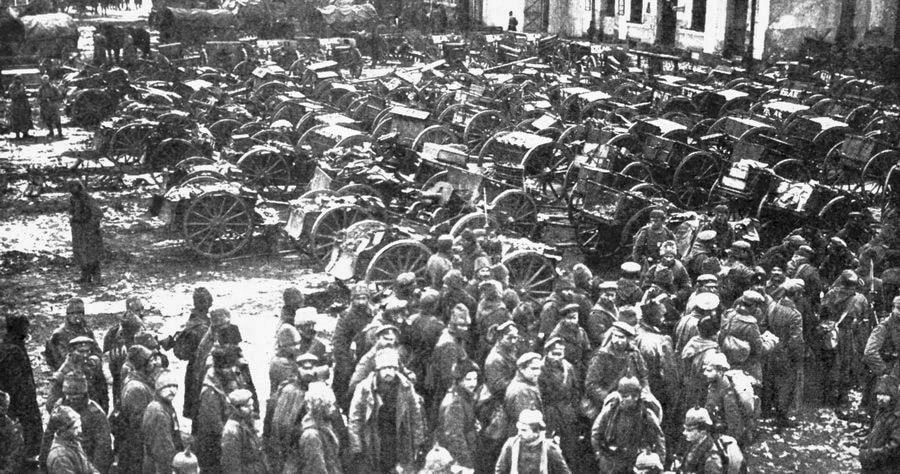
From August 26th to 30th, 1914 the German Eighth Army under Paul von Hindenburg and Erich Ludendorff surrounded General Samsonov's Second Army in East Prussia, which had advanced faster than its supplies and sent its orders by radio in clear. About 78,000 Russians were killed or wounded and 92,000 captured; Samsonov walked into the forest and shot himself. Russia never invaded Germany again.
LEARN MORESHOW LESSwhy it matters · key numbersWARThe war was three weeks old and Russia had lost an entire army. The pattern held: brave soldiers, no shells, no boots, generals who could not talk to each other.
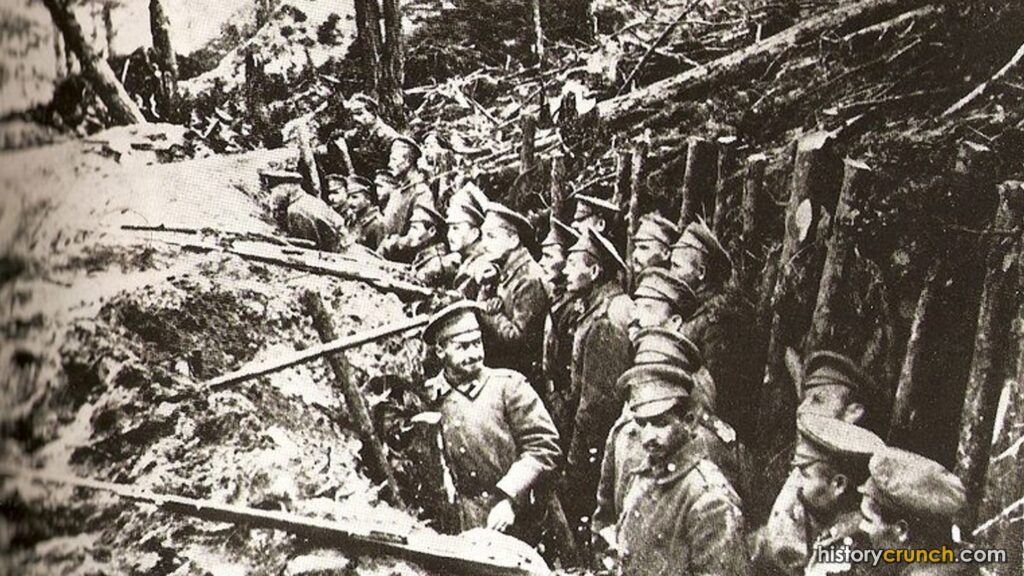
Against Austria-Hungary the story was different. Between August 23rd and September 11th, 1914 Russian armies drove the Austrians out of Galicia, took the city of Lemberg and inflicted about 400,000 casualties at a cost of some 250,000. Austria-Hungary never fully recovered as a fighting force.
LEARN MORESHOW LESSwhy it mattersWARRussia could beat Austria; it could not beat Germany. The Germans would have to prop up their ally for the rest of the war, which is part of why Germany wanted Russia out of it.
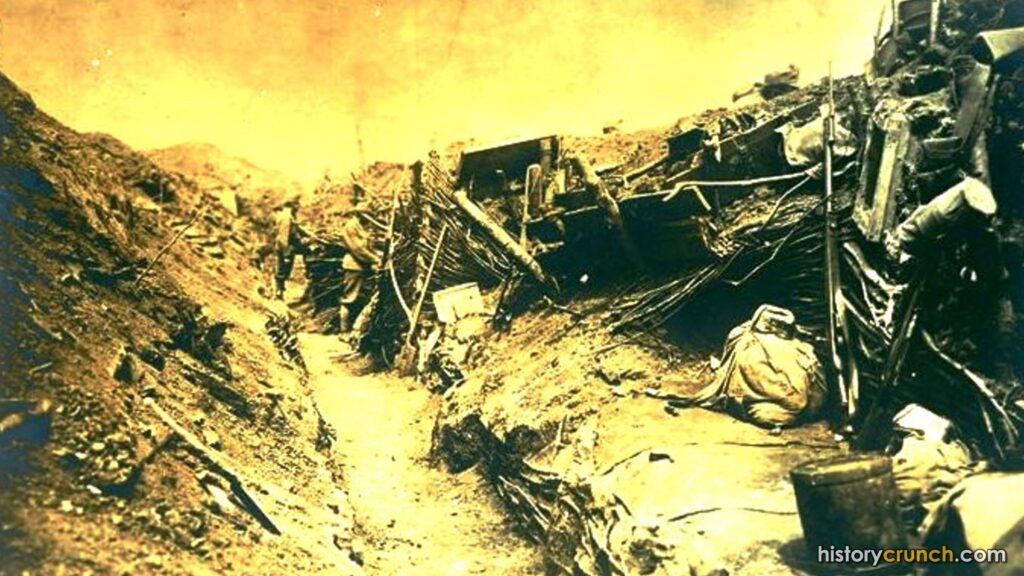
On May 2nd, 1915 German and Austrian artillery opened the Gorlice-Tarnow offensive and the Russian front collapsed. By September Russia had lost Poland, Lithuania and Galicia, 300 miles of territory, and about a million men as prisoners. Whole regiments went into the line without rifles, told to pick one up from the dead. Refugees clogged every road east.
LEARN MORESHOW LESSwhy it matters · key numbersWARThe retreat broke the army's faith in its commanders and the country's faith in the government. Ministers who said so were sacked.
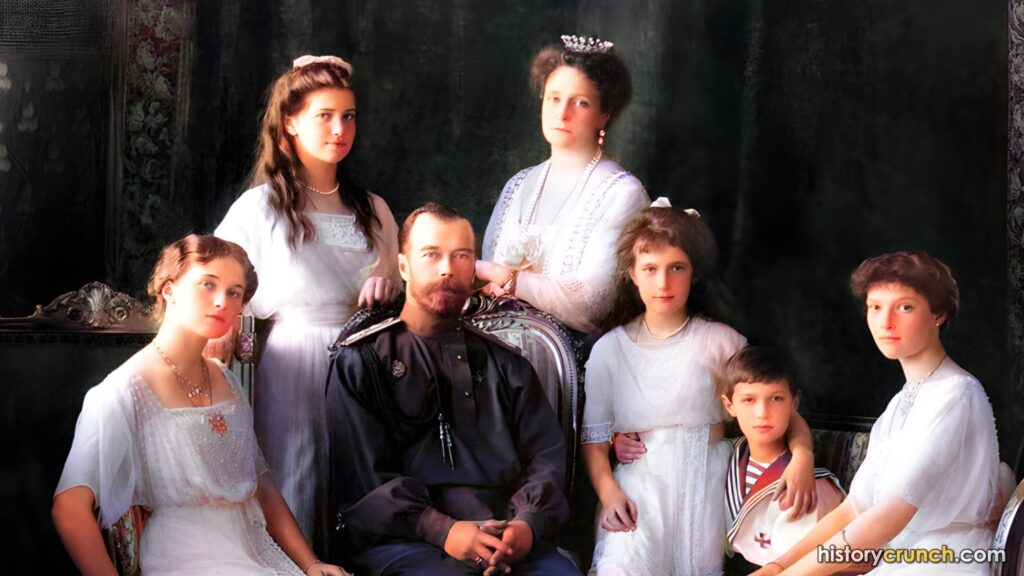
On September 5th, 1915, against the advice of every minister, Nicholas dismissed his cousin Grand Duke Nicholas and made himself commander-in-chief, moving to headquarters at Mogilev, 500 miles from the capital. Every defeat from now on was his personally. In Petrograd the Empress Alexandra, with Rasputin at her side, took over the government, sacking four prime ministers in sixteen months.
LEARN MORESHOW LESSwhy it matters · 2 key figuresPOLITICSThe single worst decision of the reign. It tied the crown to the front, and left the capital to a German-born empress and a Siberian peasant.
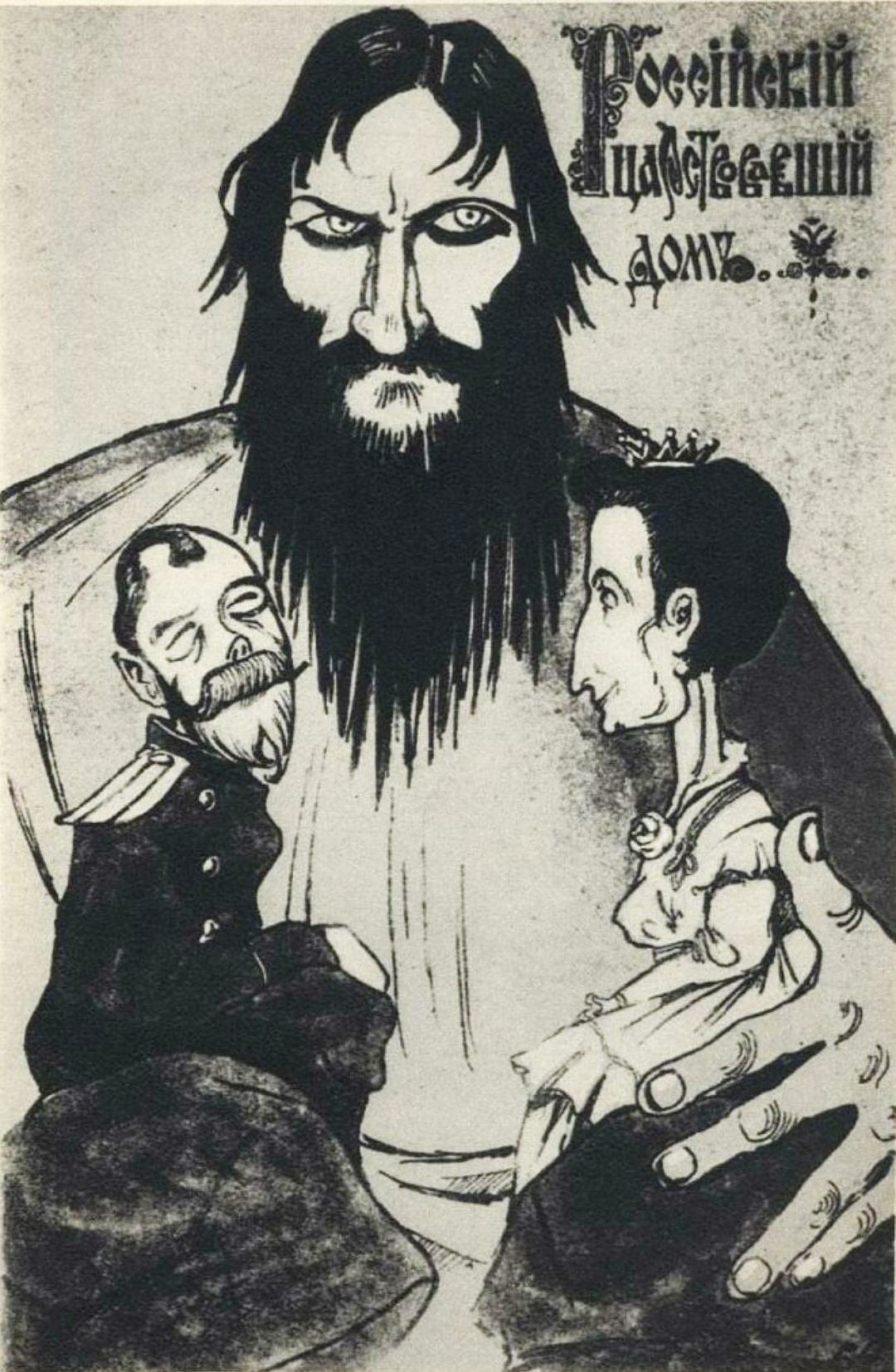
In 1916 Russia had four prime ministers, five interior ministers and three war ministers. Alexandra chose them by whether Rasputin approved; one, Boris Sturmer, was widely believed to be pro-German. In November the Duma leader Pavel Milyukov listed the government's failures one by one and asked after each: 'Is this stupidity, or is it treason?' The speech was banned and copied by hand across the country.
LEARN MORESHOW LESSwhy it matters · a source · 1 key figurePOLITICSBy the end of 1916 nobody in Russia, from the grand dukes down, believed the government could run the war. What they disagreed about was who should replace it.
IN THEIR OWN WORDS“Is this stupidity, or is it treason?”
Pavel Milyukov, leader of the Kadet party, to the Duma, November 14th, 1916
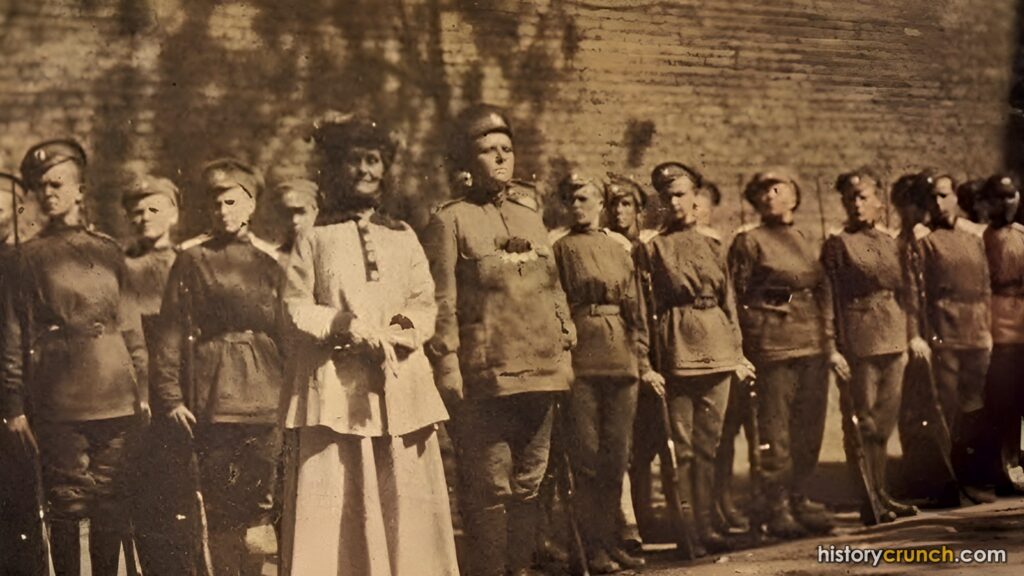
On June 4th, 1916 General Brusilov attacked along a 300-mile front and in three months took 400,000 Austrian prisoners, the greatest Allied victory of the war so far. It cost Russia about a million casualties and could not be followed up. Deserters now numbered in the hundreds of thousands. In 1917 the Provisional Government would form women's 'Battalions of Death' to shame the men into fighting.
LEARN MORESHOW LESSwhy it matters · key numbersWARRussia's armies could still win. Its railways, factories and government could not keep them supplied, and its soldiers had stopped believing in the reason.
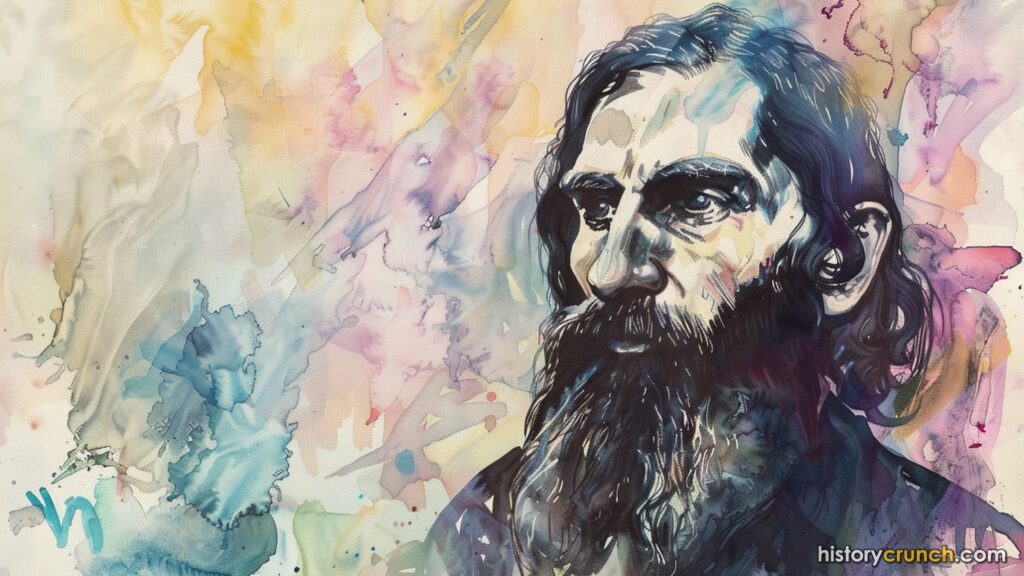
On the night of December 30th, 1916 Prince Felix Yusupov, the richest man in Russia, and the tsar's cousin Grand Duke Dmitri lured Rasputin to the Yusupov palace, fed him cakes and wine they believed were poisoned, shot him, shot him again as he fled across the courtyard, and pushed his body through the ice of the Neva. They thought they were saving the monarchy.
LEARN MORESHOW LESSwhy it matters · 1 key figureVIOLENCEThe tsar's own family killed the tsar's adviser and the tsar's own class celebrated. Ten weeks later the monarchy was gone, and Rasputin's death had changed nothing.
In the winter of 1916 to 1917 the temperature in Petrograd fell to minus 40 degrees, the railways froze, and flour deliveries to the capital fell to half of what its two and a half million people needed. Women queued from before dawn for bread; prices had quadrupled since 1914 while wages had doubled. Police reported that the queues were talking of revolution.
LEARN MORESHOW LESSwhy it matters · key numbersSOCIETYNot ideology but bread. The revolution began in the queue outside a bakery.
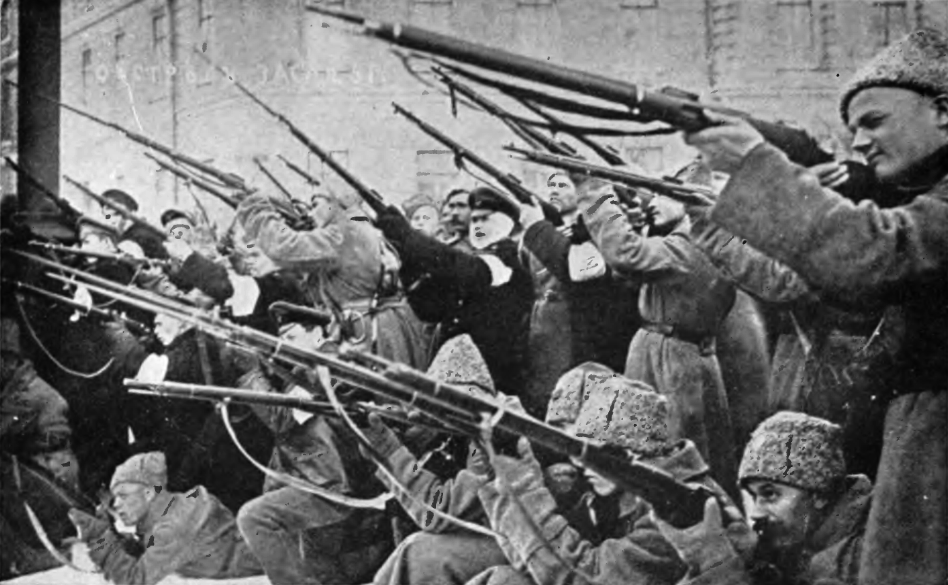
On March 8th, 1917, which was February 23rd in Russia's Old Style calendar, women textile workers in Petrograd walked out to mark International Women's Day and demand bread, and called the men out of the factories with them. By the next day 200,000 were on the streets. On March 10th the tsar telegraphed from headquarters ordering the disorders stopped by force.
LEARN MORESHOW LESSwhy it matters · key numbersREVOLTNo party planned it. The February Revolution was started by working women who had run out of patience and bread, and every revolutionary leader was somewhere else.
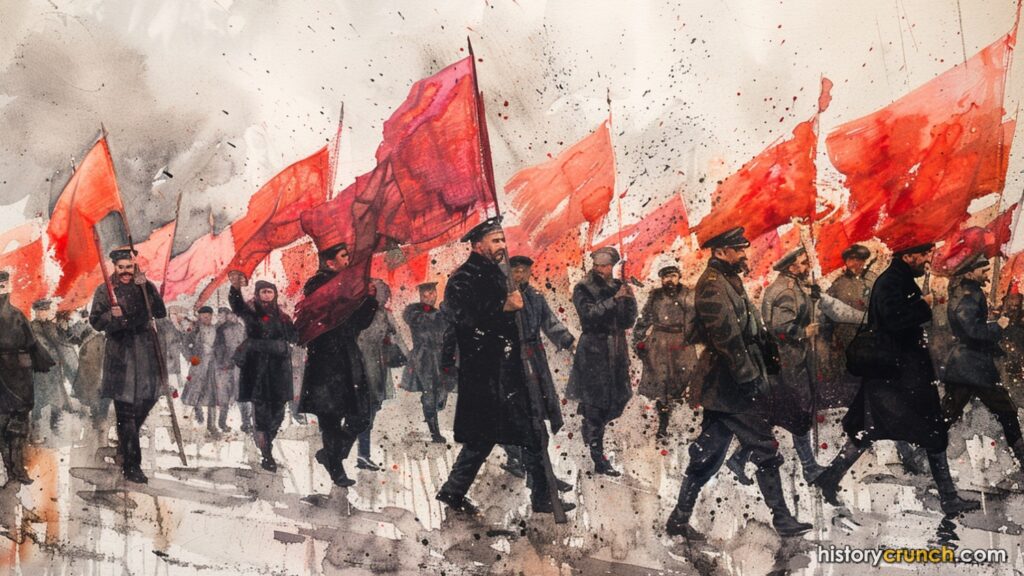
On March 11th soldiers fired on the crowds and killed about 150 people. That night the Volynsky Regiment decided it would not fire again, and on the morning of March 12th it shot its commanding officer and marched out to join the workers. By evening 66,000 of the 160,000 soldiers in Petrograd had mutinied, the police had vanished, and the crowds had opened the prisons and burned the courts.
LEARN MORESHOW LESSwhy it matters · key numbersREVOLTThis is the moment the revolution won. A government can survive a crowd; it cannot survive its army refusing to shoot.
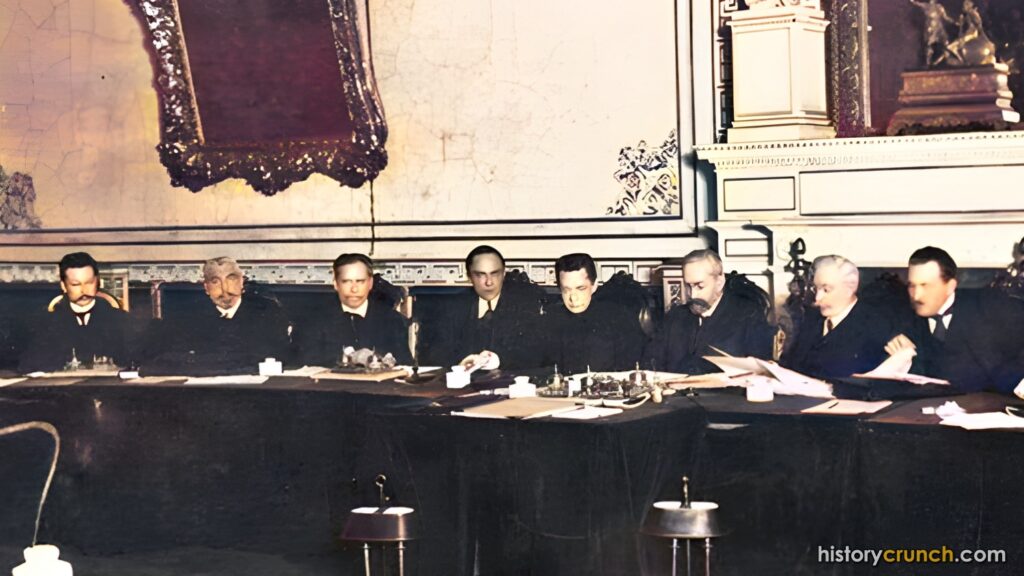
On the same day, March 12th, two bodies formed in the Tauride Palace: a committee of Duma politicians that became the Provisional Government, and a Petrograd Soviet of Workers' and Soldiers' Deputies elected from the factories and barracks. On March 14th the Soviet issued Order Number One, telling soldiers to obey the government only where the Soviet agreed. Trotsky called it 'dual power'.
LEARN MORESHOW LESSwhy it mattersPOLITICSThe liberals had the offices and the Soviet had the soldiers. For eight months Russia had two governments, and the one with the guns did not want to govern yet.
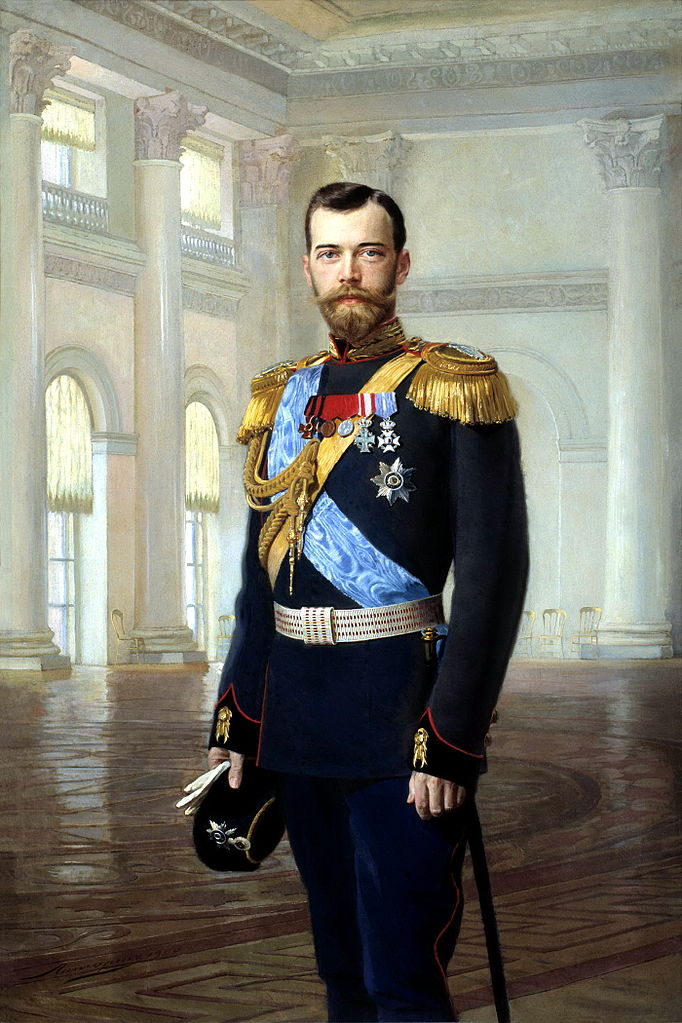
Nicholas set out for Petrograd by train but railway workers blocked the line, and on March 15th, 1917, in his carriage at Pskov, his generals told him the army would not fight for him. He chose to abdicate for himself and, against the law, for his hemophiliac son, in favor of his brother Michael. Michael declined the next day. Three hundred and four years of Romanov rule ended with a signature in pencil.
LEARN MORESHOW LESSwhy it matters · a source · 1 key figurePOLITICSNobody defended the monarchy: not the generals, not the Duma, not the Church, not his own family. It did not fall so much as evaporate.
IN THEIR OWN WORDS“All around me there is treachery, cowardice and deceit.”
Nicholas II, diary, March 15th, 1917
Between March and November 1917 Russia had two governments and then none it had voted for. The Provisional Government kept the war and postponed the land; the Soviet held the soldiers and did not want to rule. Lenin came home in a sealed train and said take power now. A rising in July failed; a general's march in September armed the Bolsheviks; and on the night of November 6th a few thousand Red Guards took the bridges, the stations and a palace with nobody at the door. The next evening Lenin gave Russia peace and the peasants the land. Two weeks later, in the only free election it would hold for 74 years, Russia voted against him.
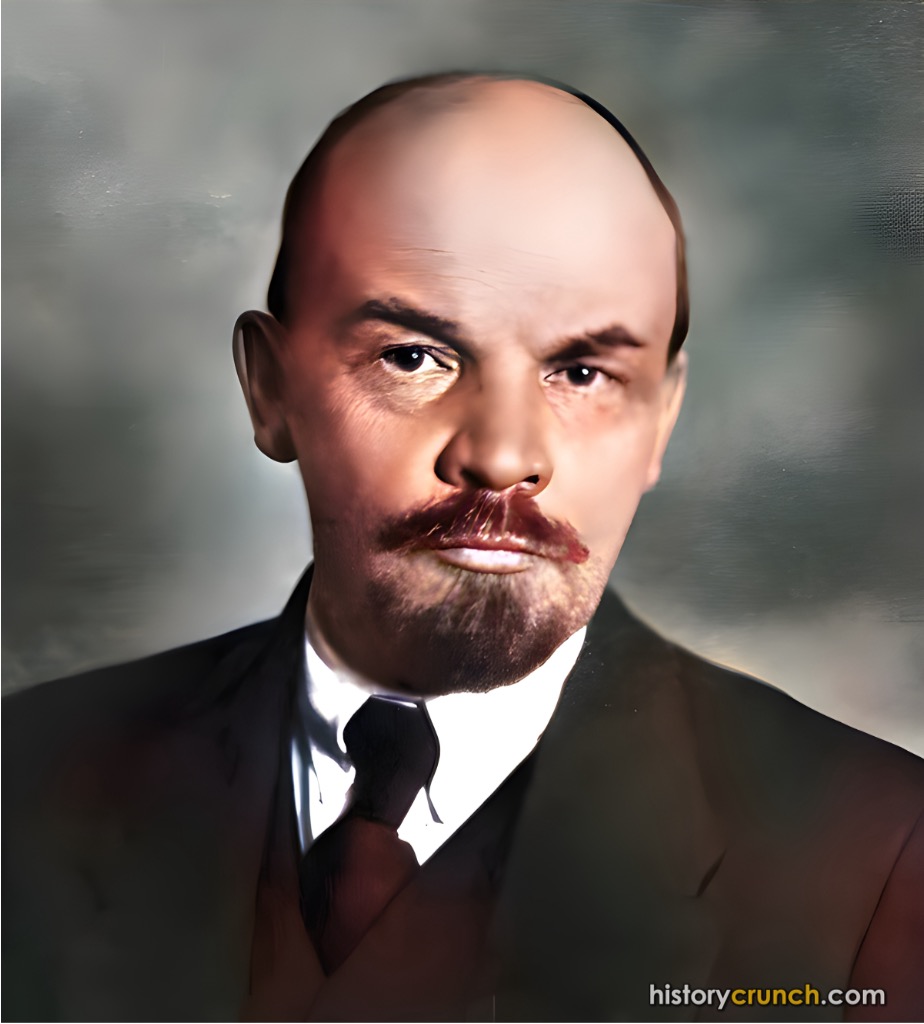
Lenin had spent seventeen years in exile and was in Zurich when the tsar fell. Germany's government under Kaiser Wilhelm II, wanting Russia out of the war, let him and 31 other exiles cross Germany in a sealed railway carriage. He arrived at Petrograd's Finland Station on the night of April 16th, 1917, and told the crowd that the revolution had only begun. The next day he issued the April Theses: no support for the Provisional Government, no support for the war, all power to the soviets.
LEARN MORESHOW LESSwhy it matters · a source · 1 key figurePOLITICSEvery other socialist thought Russia needed years of capitalism before it could have socialism. Lenin said take power now. Within six months his party did.
IN THEIR OWN WORDS“Peace, land, bread.”
Vladimir Lenin, in the speeches of April 1917 that made it the Bolshevik slogan
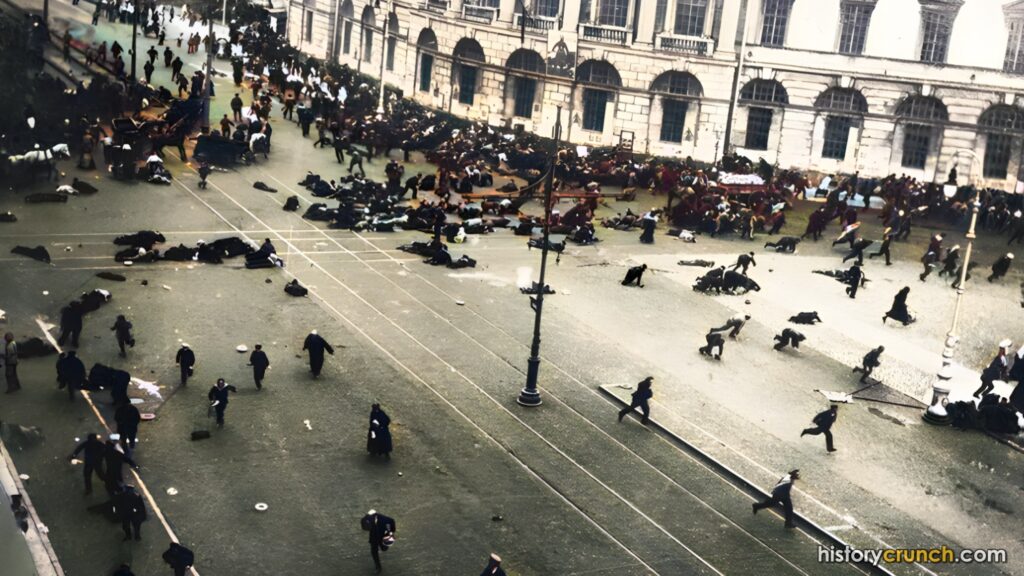
On July 16th and 17th, 1917, after a failed Russian offensive at the front, half a million soldiers, sailors and workers marched through Petrograd under Bolshevik slogans demanding the Soviet take power. The Bolsheviks had not called it and did not lead it; troops loyal to the government fired on the crowds, killing hundreds. Lenin fled to Finland in disguise; Trotsky and other leaders were jailed. The Bolsheviks seemed finished.
LEARN MORESHOW LESSwhy it matters · 2 key figuresREVOLTToo early. Lenin learned that a rising needed the Soviet and the garrison behind it, and in October he had both.
On July 21st, 1917 Alexander Kerensky, a 36-year-old socialist lawyer who replaced the liberal Kadets' prince Lvov, and the one man who sat in both the government and the Soviet, became prime minister. He kept Russia in the war, postponed the land question and the election of a constituent assembly until the war was won, and moved into the tsar's rooms in the Winter Palace.
LEARN MORESHOW LESSwhy it mattersPOLITICSKerensky was the last chance for a democratic Russia. He had no army he could trust and he made the same promise the tsar had, to fight on, to a country that wanted out.
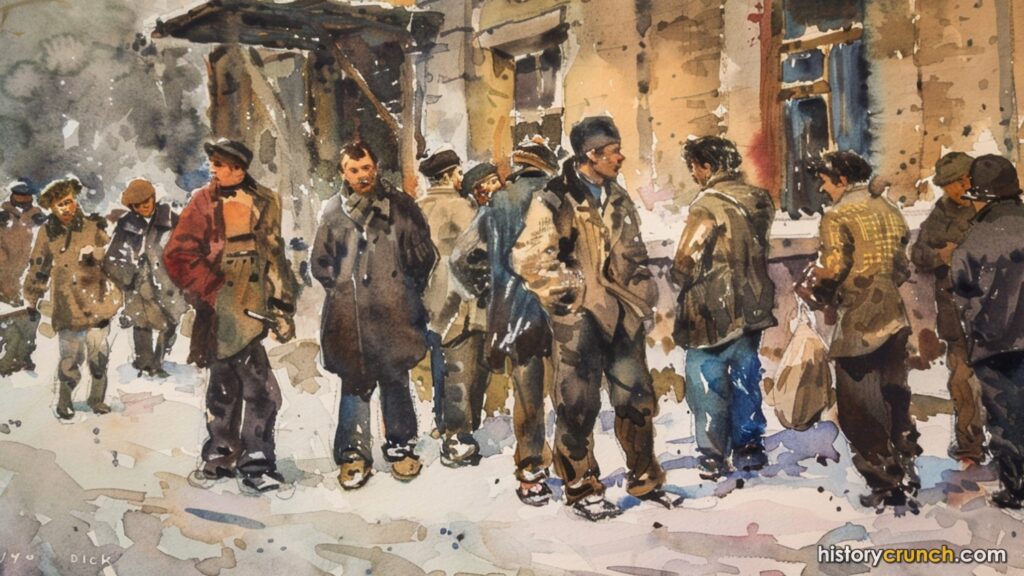
In early September 1917 the commander-in-chief, General Lavr Kornilov, sent troops toward Petrograd, either to restore order or to seize power; Kerensky, who may have encouraged him, declared him a traitor on September 9th and turned to the Soviet for help. The Soviet armed 40,000 workers as Red Guards, railwaymen stopped Kornilov's trains, and his troops melted away. The Bolsheviks kept the rifles.
LEARN MORESHOW LESSwhy it matters · key numbersREVOLTKerensky beat the general by arming the Bolsheviks. Two months later they used the guns on him.
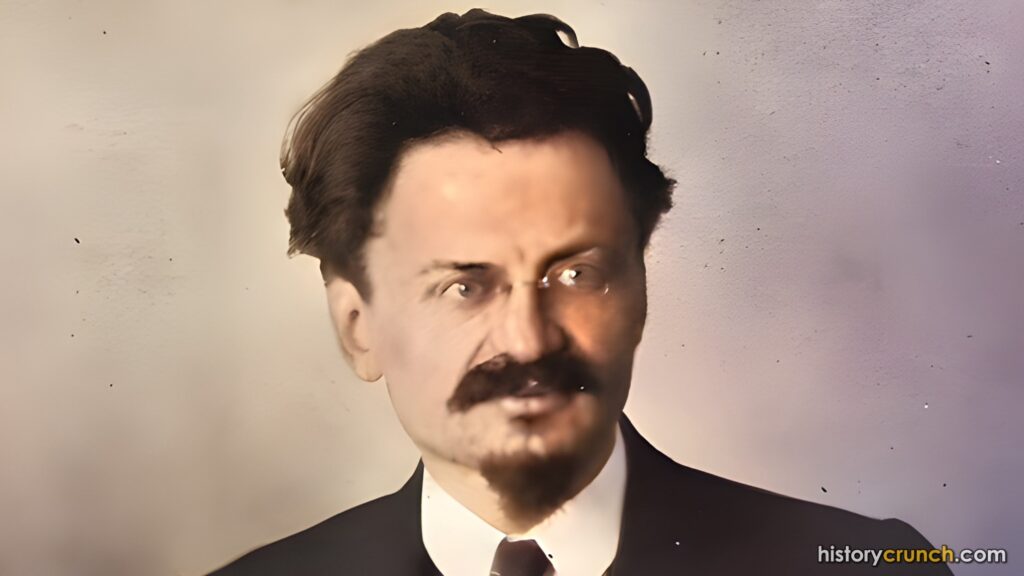
With Kornilov defeated and the war going on, the Bolsheviks won majorities in the Petrograd and Moscow soviets in September, and on October 8th, 1917 Leon Trotsky, freed from jail, became chairman of the Petrograd Soviet, the post he had held in 1905. On October 23rd Lenin, back in the city in a wig, persuaded the Bolshevik central committee by ten votes to two to prepare an armed rising.
LEARN MORESHOW LESSwhy it matters · 2 key figuresPOLITICS'All power to the soviets' now meant all power to the Bolsheviks. Trotsky's Military Revolutionary Committee gave the party the garrison's guns with the Soviet's authority.
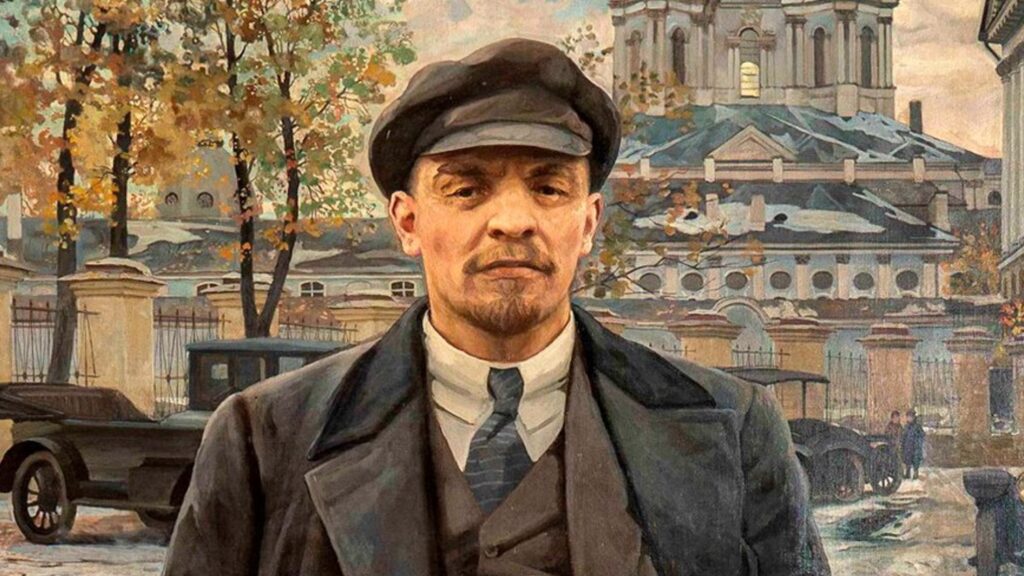
On the night of November 6th to 7th, 1917 (October 24th to 25th in the old calendar) Red Guards and soldiers directed by Trotsky's Military Revolutionary Committee took the bridges, stations, telephone exchange and power plant of Petrograd almost without a shot. Kerensky left the city in a car to find loyal troops and never came back. That afternoon Lenin announced to the Congress of Soviets that the Provisional Government had fallen.
LEARN MORESHOW LESSwhy it matters · 2 key figuresREVOLTNot a storm but a takeover: a few thousand armed men in a city of two million, and a government with no one left to defend it.
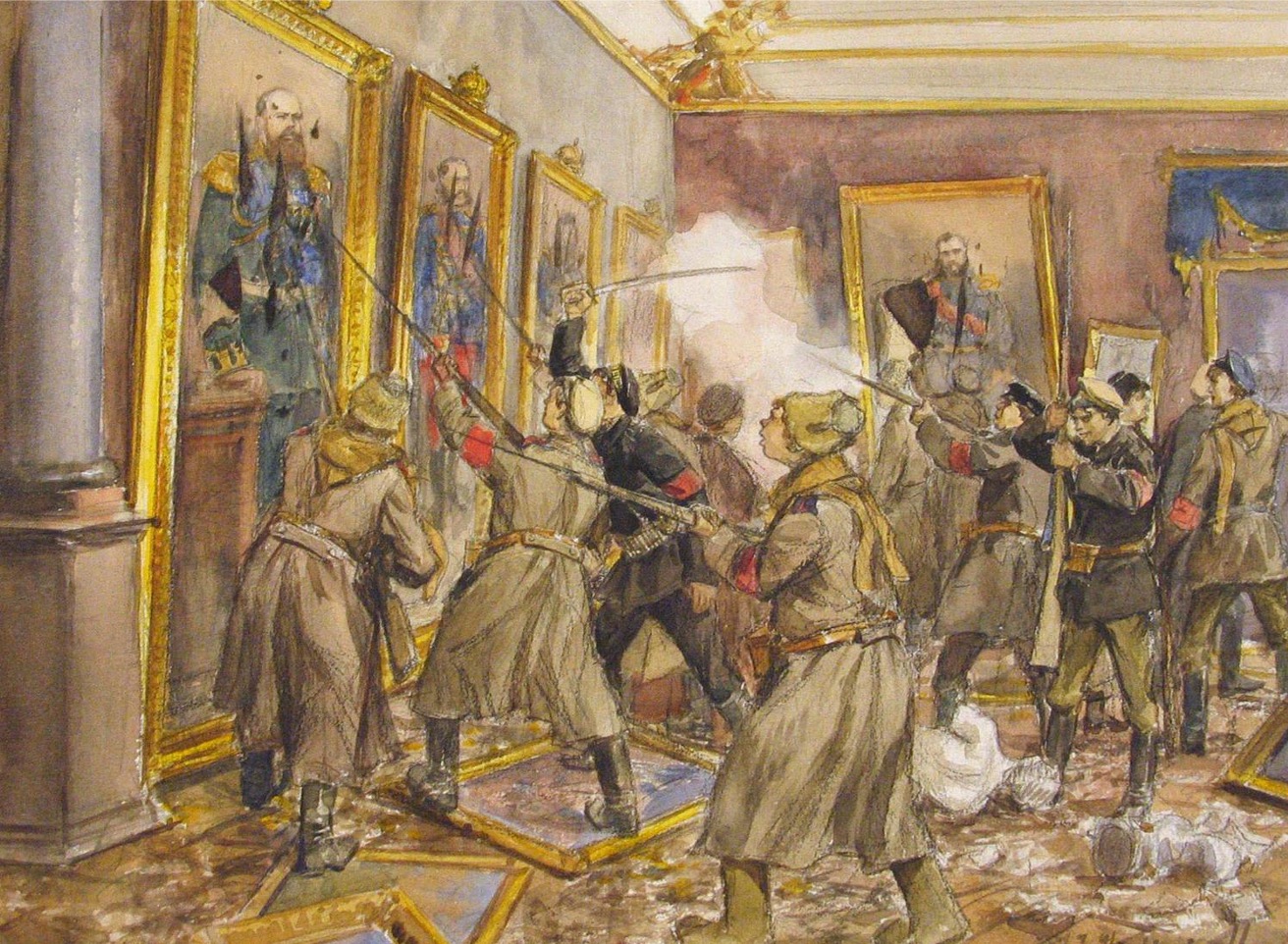
The Provisional Government's ministers sat all day in the Winter Palace guarded by cadets, a women's battalion and some Cossacks, most of whom drifted away. After a blank shot from the cruiser Aurora and a few live shells from the fortress, Red Guards and sailors walked in through unguarded doors and arrested the ministers at 2 a.m. on November 8th. About six people died. The famous storming with thousands charging the gates is from a 1920 re-enactment and a 1928 film.
LEARN MORESHOW LESSwhy it matters · a debateREVOLTThe end of the Provisional Government took less than a day and fewer lives than a bad traffic accident. The myth was made afterwards, on purpose.
Was October a popular revolution or a coup?
A revolution. The Bolsheviks held majorities in the soviets of both capitals, and the slogans they seized power on, peace and land, were what most Russians wanted.
A coup. A few thousand armed men took a city of two million at night, the Congress of Soviets was told afterwards, and the one free election Russia held two weeks later voted against them.
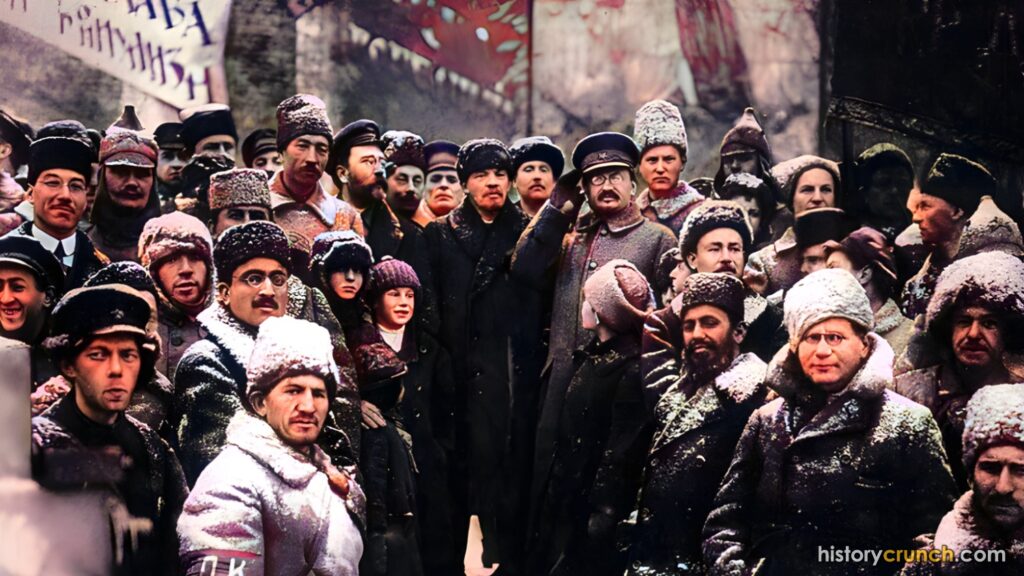
On the evening of November 8th, 1917 the Congress of Soviets passed two decrees Lenin had written. The Decree on Peace called on all warring nations for an immediate armistice without annexations. The Decree on Land abolished private ownership of land without compensation and handed the estates of the nobles, the Church and the crown to the peasants, who were already taking them. A Council of People's Commissars, with Lenin as chairman and Trotsky as foreign commissar, became the government.
LEARN MORESHOW LESSwhy it matters · 2 key figuresPOLITICSPeace and land in one evening, after eight months in which the Provisional Government had delivered neither. This is why the countryside let the Bolsheviks keep power.
On November 25th, 1917, in the only free national election Russia held until 1991, about 44 million people voted for a Constituent Assembly to write a constitution. The peasant-based Socialist Revolutionaries won about 40 percent of the vote and 380 seats; the Bolsheviks won 24 percent and 168, strongest in the cities and the army. Lenin let the assembly meet once.
LEARN MORESHOW LESSwhy it matters · key numbersPOLITICSThe Bolsheviks lost the election they had promised, and decided that the soviets, which they controlled, outranked it.
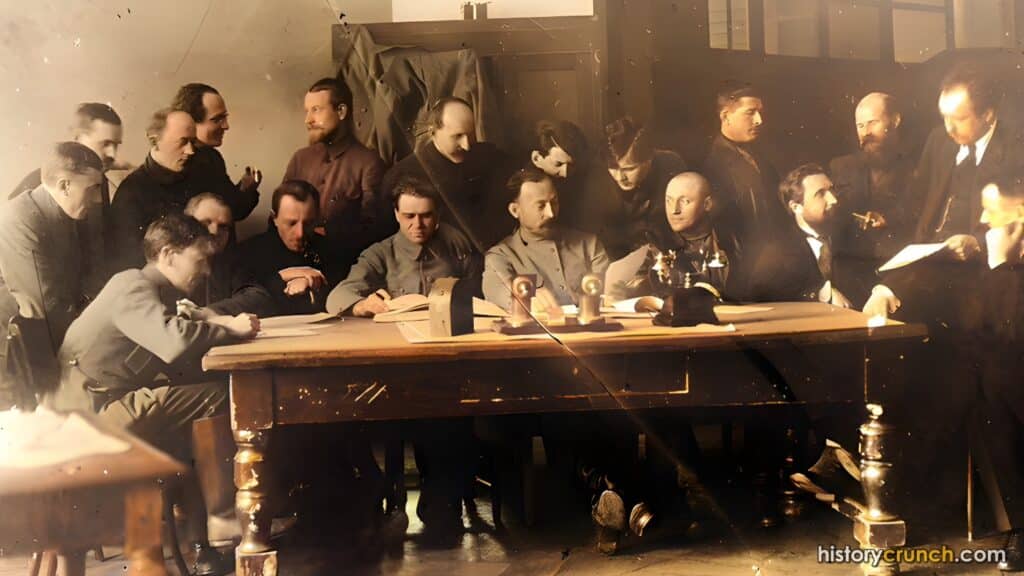
On December 20th, 1917 the Council of People's Commissars created the All-Russian Extraordinary Commission for Combating Counter-Revolution and Sabotage, the Cheka, under Felix Dzerzhinsky, a Polish nobleman who had spent eleven years in tsarist prisons. It began with a few dozen staff and no legal limits. By 1921 it had about 200,000 and its own army.
LEARN MORESHOW LESSwhy it mattersTERRORSix weeks into Soviet power, a political police answerable to no court. Every later Soviet secret police, the OGPU, the NKVD and the KGB, descended from it.
The Bolsheviks bought peace with a third of Russia, moved the capital to the Kremlin, shot the tsar and his children, and fought three years of civil war against the Whites, the Czechs, the Poles and fourteen foreign armies. Trotsky built a Red Army of five million from nothing. The Cheka shot hostages by the hundred after Lenin was wounded, and terror became policy in the newspaper. Grain was taken at gunpoint, the cities emptied, the revolution's own sailors rose at Kronstadt and were shot, and about ten million people died. The Reds won because they held the center, gave the peasants land, and were more ruthless.
The Constituent Assembly, elected in November with a Socialist Revolutionary majority, opened in the Tauride Palace on January 18th, 1918, refused to accept Soviet rule as a condition, and sat through the night. At 4 a.m. a sailor told the chairman the guards were tired. When the deputies came back on January 19th the doors were locked and Red Guards stood outside. It never met again.
LEARN MORESHOW LESSwhy it mattersPOLITICSThe democratic revolution ended here, not in October. From this day every rival to the Bolsheviks had only force left.
On January 28th, 1918 the government decreed a Workers' and Peasants' Red Army of volunteers. It had almost no officers, so when Trotsky became war commissar in March he brought in 50,000 former tsarist officers, watched by political commissars and with their families held as hostages, and restored conscription and the death penalty for desertion. By 1920 the Red Army had five million men.
LEARN MORESHOW LESSwhy it matters · key numbers · 1 key figureWARTrotsky built an army out of a mob in two years, using the tsar's officers to do it. It was the Bolsheviks' single greatest achievement and it won them the civil war.
On February 14th, 1918 Soviet Russia adopted the Gregorian calendar used by the rest of Europe, jumping straight from January 31st to February 14th. This is why the February Revolution is celebrated in March and the October Revolution on November 7th: they happened under the old calendar, thirteen days behind.
LEARN MORESHOW LESSwhy it mattersSOCIETYA small card that explains a big confusion. Every date on this timeline is in the modern calendar; the names of the two revolutions are not.
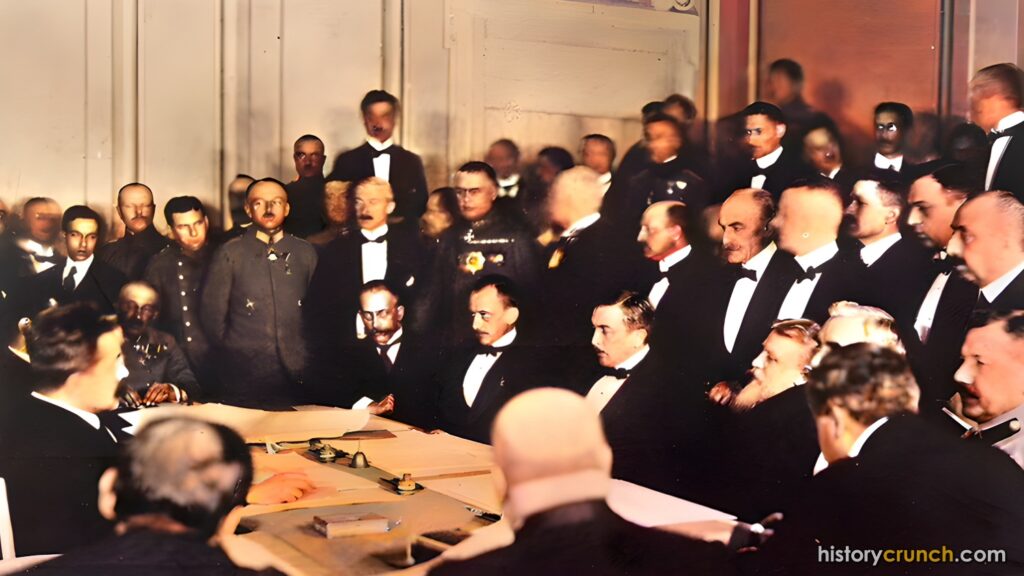
On March 3rd, 1918 Soviet Russia signed peace with Germany and its allies at Brest-Litovsk, giving up Poland, Ukraine, Finland, the Baltic states and part of the Caucasus: a third of its population, a third of its farmland and half its industry. Trotsky had tried 'neither war nor peace' and the Germans had simply advanced. Lenin forced the terms through the party by threatening to resign, arguing that the revolution had to survive at any price.
LEARN MORESHOW LESSwhy it matters · key numbers · elsewhereWARPeace, the first of the three promises, at a price no tsar would have paid. Germany turned its whole army west; eight months later Germany lost anyway and the treaty was void.
Germany moved fifty divisions to France for its spring offensive of 1918. The United States, whose troops were arriving, was the reason it was not enough.
With German troops 100 miles from Petrograd, the government moved by train to Moscow on March 12th, 1918 and set up inside the Kremlin, the fortress of the old tsars. Petrograd, the capital Peter the Great had built to face Europe, lost its status after 206 years. The Bolshevik party renamed itself the Communist Party the same week.
LEARN MORESHOW LESSwhy it mattersPOLITICSThe revolution made in Petrograd was governed from the Kremlin. Moscow has been the capital ever since.
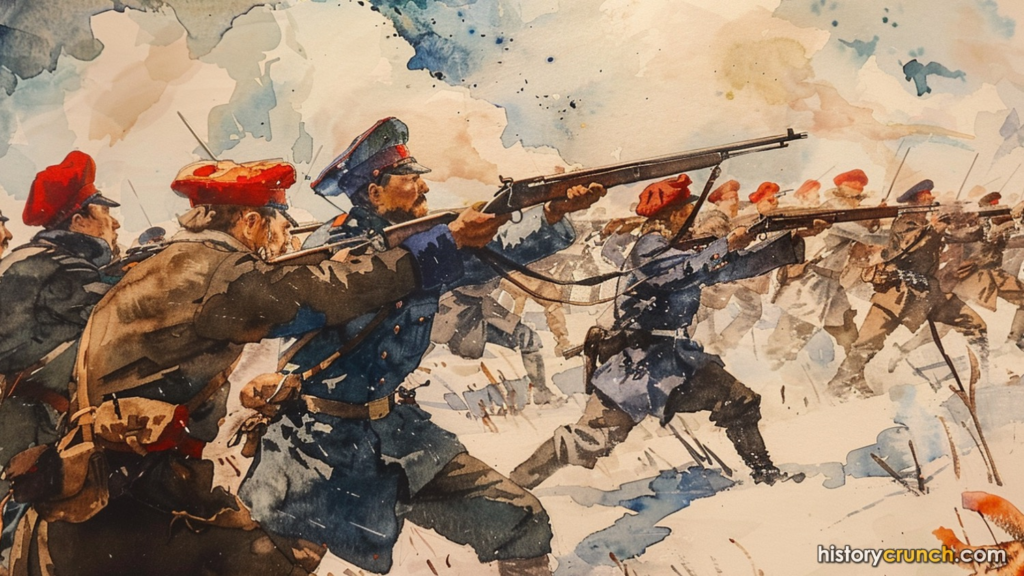
On May 25th, 1918 the Czechoslovak Legion, 40,000 former prisoners of war travelling east along the Trans-Siberian Railway to sail home and fight for the Allies, revolted when the Soviets tried to disarm them. Within weeks they controlled the railway from the Volga to the Pacific and had toppled Soviet rule across Siberia, where anti-Bolshevik governments sprang up under their protection.
LEARN MORESHOW LESSwhy it mattersWARThe civil war became a real war the day an army of Czechs seized the railway. Without them the Whites had no front.
In the early hours of July 17th, 1918, with the Czech Legion approaching Yekaterinburg, the local Soviet, with Moscow's approval, took Nicholas, Alexandra, their five children, their doctor and three servants into the cellar of the house where they were held and shot them, finishing the wounded with bayonets. The bodies were burned, doused in acid and buried in a mine shaft. Alexei was thirteen; Anastasia seventeen.
LEARN MORESHOW LESSwhy it matters · 1 key figureVIOLENCEThe Bolsheviks killed the children so that there would be no heir and no going back. The bones were found in 1979 and 1991 and identified by DNA.
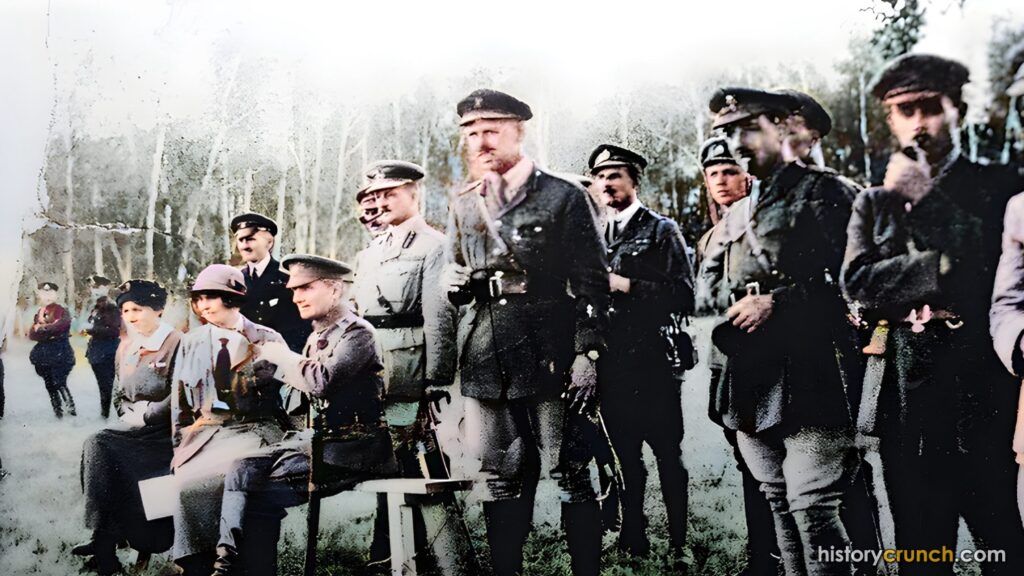
On August 2nd, 1918 British, French and American troops landed at Archangel on the White Sea, joining others at Murmansk and Vladivostok. About 180,000 foreign soldiers from fourteen countries, including Japan, eventually took part, first to keep war supplies from the Germans, then to help the Whites. They fought little, achieved less, and were mostly gone by 1920.
LEARN MORESHOW LESSwhy it matters · key numbersWARThe intervention was too small to win and just big enough to let the Bolsheviks say, for seventy years, that the capitalist world had invaded Russia.
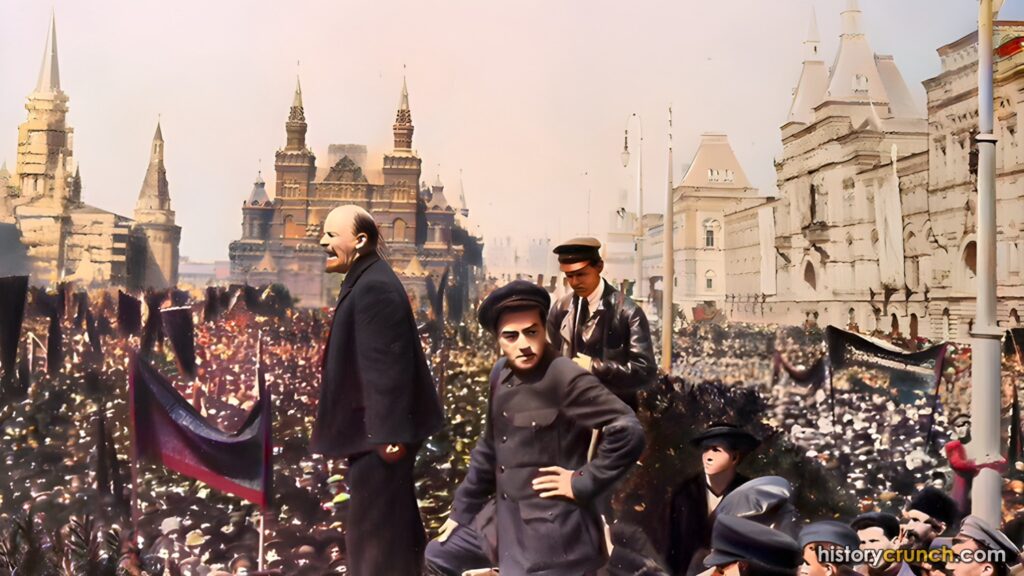
On August 30th, 1918, as Lenin left a Moscow factory where he had been speaking, a Socialist Revolutionary named Fanya Kaplan fired three shots and hit him twice, in the neck and shoulder. The same morning the head of the Petrograd Cheka had been assassinated. Lenin survived; Kaplan was shot without trial four days later. The bullets stayed in his body and may have hastened the strokes that killed him.
LEARN MORESHOW LESSwhy it matters · 1 key figureVIOLENCEThe two shootings were the excuse for the Red Terror, which began within the week.
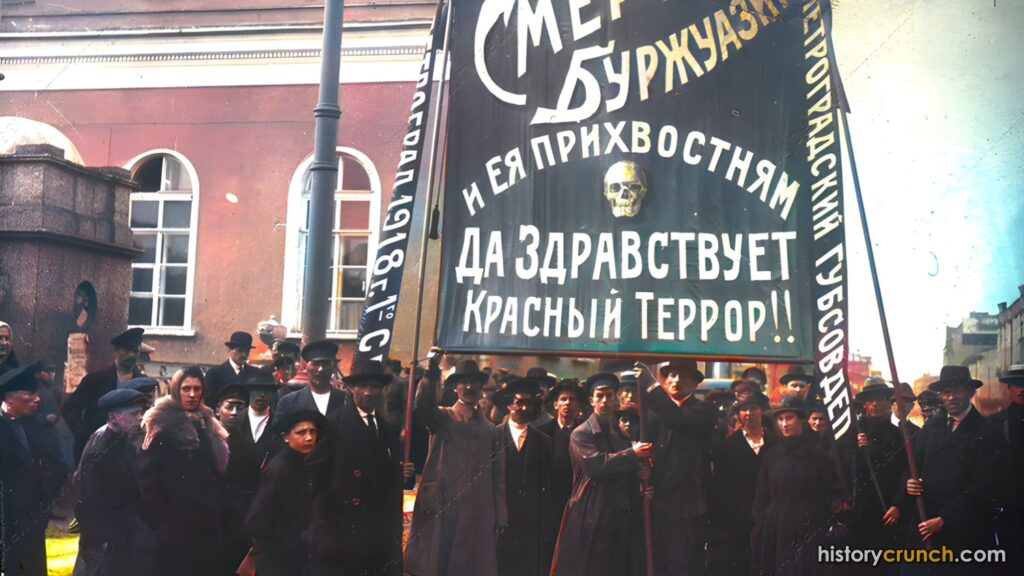
On September 5th, 1918 the government ordered the Cheka to shoot anyone 'connected with White Guard organizations, conspiracies and revolts' and to put 'class enemies' in concentration camps. Hostages were taken and shot in batches: 500 in Petrograd in one night. Estimates of those killed by the Cheka between 1918 and 1922 run from 50,000 to more than 200,000.
LEARN MORESHOW LESSwhy it matters · key numbers · a sourceTERRORTerror as policy, announced in the newspaper. The Whites were as brutal, but the Reds wrote it down as a principle and built the institutions to carry it out.
IN THEIR OWN WORDS“We are not waging war against individuals. We are exterminating the bourgeoisie as a class.”
Martin Latsis, Cheka commander, in the Cheka newspaper Red Terror, November 1st, 1918
From mid-1918 the government nationalized every factory, banned private trade, paid workers in rations rather than money, and sent armed squads into the villages to seize grain at gunpoint. Peasants answered by planting less and hiding what they grew. By 1920 industrial output was a fifth of 1913 and the cities were emptying as workers went home to find food.
LEARN MORESHOW LESSwhy it matters · key numbersECONOMYThe Bolsheviks called it communism and later said it was an emergency. Either way it fed the army and starved everyone else.
Admiral Alexander Kolchak, who had declared himself Supreme Ruler of Russia at Omsk in November 1918, advanced west in March 1919 to within 400 miles of Moscow. In the south General Denikin took Kiev and Orel by October, and General Yudenich reached the suburbs of Petrograd. For a few weeks in the autumn of 1919 the Bolsheviks held only the old heartland around Moscow.
LEARN MORESHOW LESSwhy it mattersWARThe Whites attacked from three sides but never together, and they offered the peasants the landlords back. Every White advance drove the villages toward the Reds.
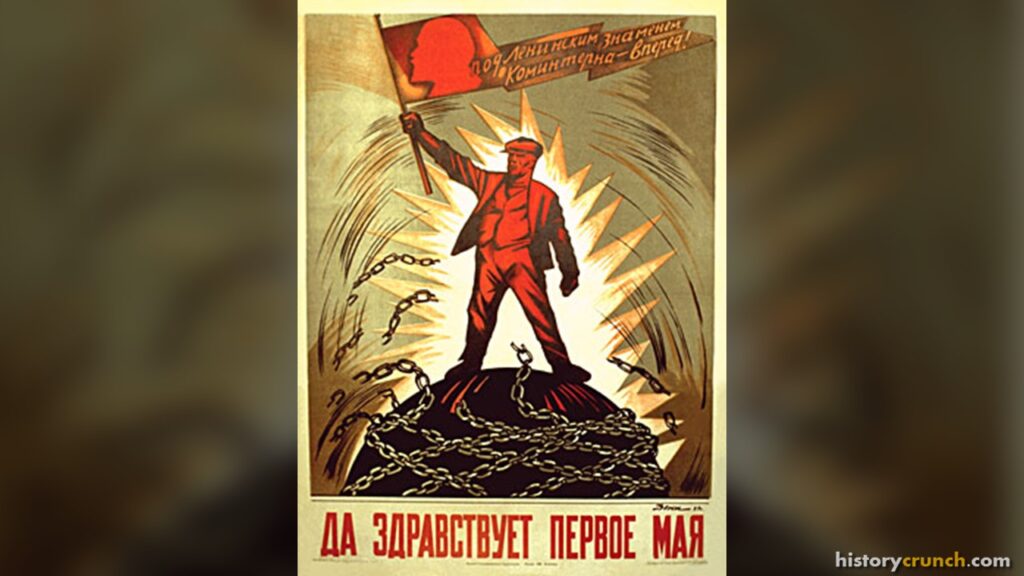
On March 2nd, 1919 Lenin founded the Communist International in Moscow to direct communist parties worldwide toward revolution. Within two years there were communist parties in most countries of Europe and the Americas, all taking orders from Moscow. Risings in Hungary and Germany failed; the fear they caused did not.
LEARN MORESHOW LESSwhy it mattersIDEASFrom 1919 the Russian Revolution was not just a Russian event. Every government in the world now had a party inside it that answered to the Kremlin.
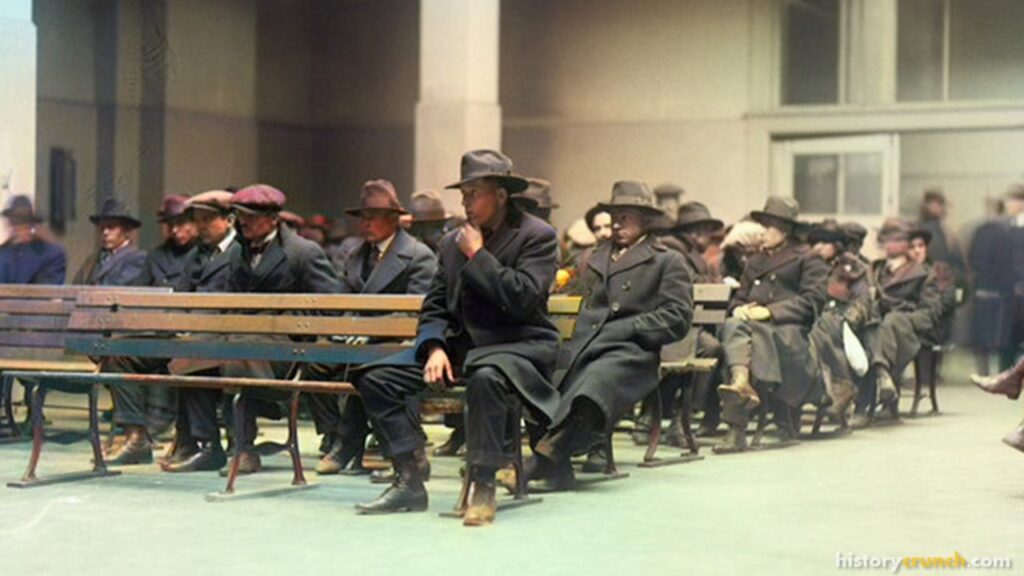
On November 7th, 1919, the second anniversary of the October Revolution, and again on January 2nd, 1920, Attorney General A. Mitchell Palmer's agents raided meeting halls in 36 American cities and arrested about 6,000 suspected radicals, most of them immigrants, many without warrants. About 550 were deported, including the anarchist Emma Goldman, on a ship the press called the 'Soviet Ark'.
LEARN MORESHOW LESSwhy it matters · key numbersWORLDThe revolution's first effect on the United States was fear. The pattern, panic, raids, deportations and a retreat when the panic passed, returned in the 1950s.
In 1920 the Red Army, having beaten the Whites, drove a Polish invasion out of Ukraine and pushed on toward Warsaw, where Lenin hoped a Polish revolution would open the road to Germany. On August 16th, 1920 the Poles under Pilsudski counterattacked and routed it. The Treaty of Riga in March 1921 fixed a border 150 miles east of where the Bolsheviks had wanted, and the revolution stopped at Russia's edge.
LEARN MORESHOW LESSwhy it mattersWARThe only time the Red Army tried to carry the revolution into Europe by force, and it lost. Marxism stayed in one country, which shaped everything Stalin did.
On November 14th, 1920 General Wrangel, commanding the last organized White army, evacuated 146,000 soldiers and civilians from the Crimea in 126 ships to Constantinople. About 50,000 who stayed were shot by the Cheka. The civil war was effectively over. Between fighting, terror, disease and the famine that followed, it had killed about ten million people, far more than Russia lost in the world war.
LEARN MORESHOW LESSwhy it matters · key numbersWARThe Reds won because they held the center, the railways and the factories, offered the peasants land, and were more ruthless. The Whites had generals; the Reds had a state.
The sailors of Kronstadt, the naval fortress outside Petrograd, had been the shock troops of 1917. On March 1st, 1921 they voted for free elections to the soviets, free speech and an end to grain seizures. Trotsky sent 50,000 troops across the ice on March 7th; the fortress fell on March 18th after a week of fighting, and about 2,000 sailors were shot afterwards.
LEARN MORESHOW LESSwhy it matters · 1 key figureREVOLTThe revolution's own sailors were shot for demanding what the revolution had promised. Lenin called it 'the flash that lit up reality' and changed course within the week.
Lenin brought back the market to save the revolution, and called it a retreat. Stalin took the job nobody wanted, General Secretary, and filled the party with his people. Lenin's strokes, his warning against Stalin, his death and his embalmed body in Red Square; the founding of the Soviet Union on the map of the tsars' empire; the argument between socialism in one country and permanent revolution; Trotsky's expulsion; and in 1928 and 1929 the Five-Year Plan and collectivization, which took back everything 1917 had given the peasants. The revolution from above had begun.
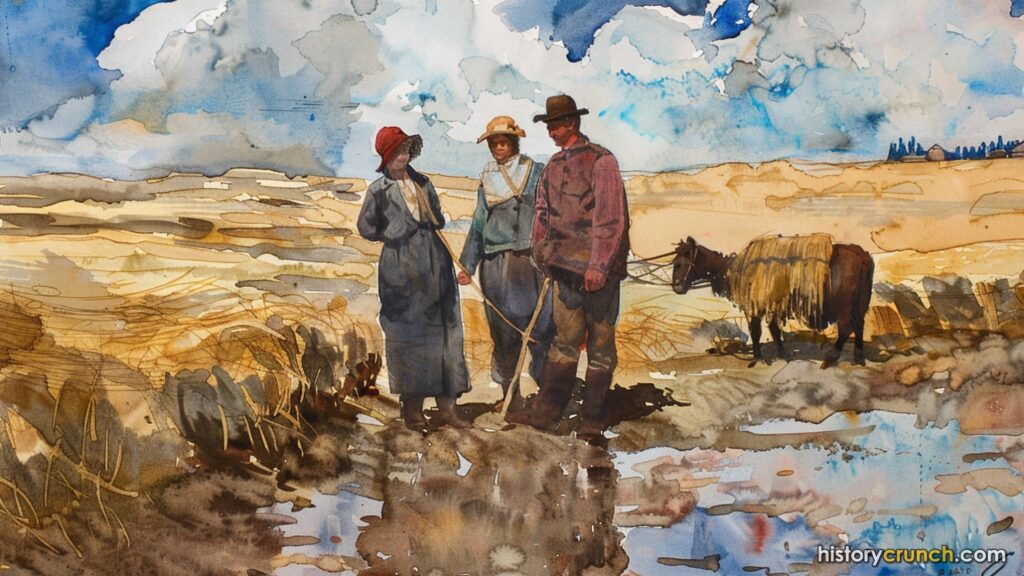
On March 21st, 1921, at the party congress that met while Kronstadt was being stormed, Lenin replaced grain seizure with a tax in kind and let peasants sell their surplus. Small shops, private trade and money came back; the state kept the 'commanding heights' of banks, railways and heavy industry. Lenin called it 'a temporary retreat' and 'state capitalism'. By 1926 the harvest was back to prewar levels.
LEARN MORESHOW LESSwhy it matters · a debate · 1 key figureECONOMYThe revolution that had abolished the market brought it back to survive. The argument over how long the retreat should last was the argument that Stalin won.
Was the NEP a betrayal of the revolution or its salvation?
Salvation. It ended the famine, restored the harvest to 1913 levels by 1926, and proved a socialist state could use markets, as China found again in 1978.
Betrayal. It created a new class of traders and rich peasants, the NEPmen and kulaks, and Stalin's crushing of them in 1929 was the logic of October finished.
Drought in 1921 fell on a countryside already stripped by grain seizures. About 25 million people in the Volga region and Ukraine went hungry; there were reports of cannibalism. Lenin allowed the American Relief Administration under Herbert Hoover into Russia, and at its peak in 1922 it was feeding ten million people a day. About five million died.
LEARN MORESHOW LESSwhy it matters · key numbersSOCIETYThe worst famine in Europe in centuries, and the Bolsheviks' own policy had made it worse. It, and Kronstadt, forced the retreat called the NEP.
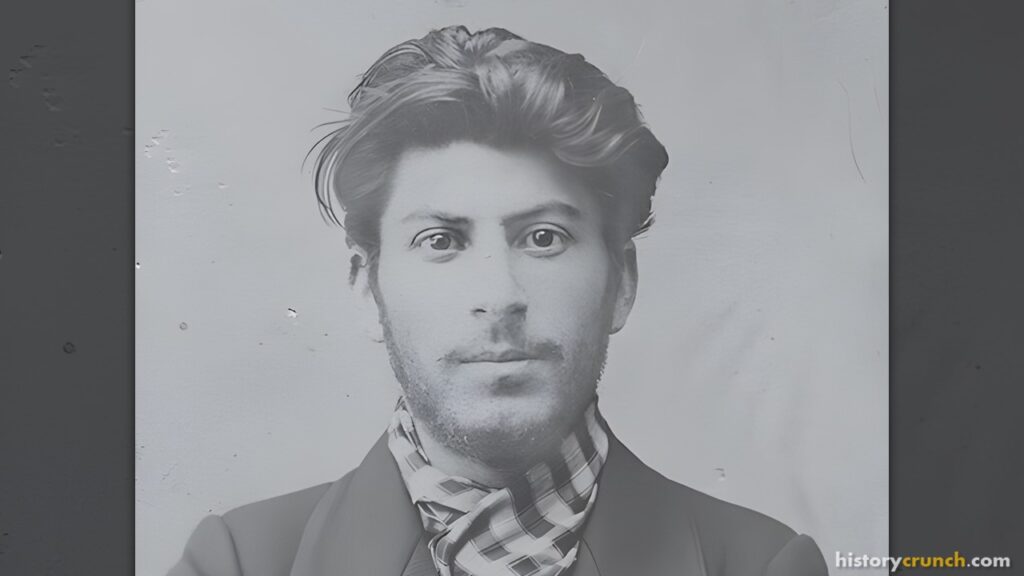
On April 3rd, 1922 Joseph Stalin, a Georgian former bank robber and Bolshevik organizer, was made General Secretary of the Communist Party, a job nobody else wanted because it was about paperwork: appointments, files, agendas. He used it to fill every party office with people who owed him. Trotsky, the hero of October, did not notice until it was too late.
LEARN MORESHOW LESSwhy it matters · 1 key figurePOLITICSPower in a one-party state lay in the party's filing cabinets. Stalin understood that before anyone else.
Lenin suffered a stroke on May 26th, 1922, a second in December, and a third in March 1923 that took his speech. Between them, in December 1922 and January 1923, he dictated a 'Testament' assessing his possible successors: Trotsky was the ablest but too sure of himself, and Stalin 'too rude' and should be removed as General Secretary. His wife gave it to the party after his death. Stalin's allies had it suppressed.
LEARN MORESHOW LESSwhy it matters · a source · 2 key figuresPOLITICSThe founder of the state tried from his sickbed to stop Stalin and failed. The document surfaced in 1956, thirty years too late.
IN THEIR OWN WORDS“Comrade Stalin, having become General Secretary, has concentrated unlimited power in his hands, and I am not sure that he always knows how to use that power with sufficient caution.”
Vladimir Lenin, 'Letter to the Congress', December 24th, 1922
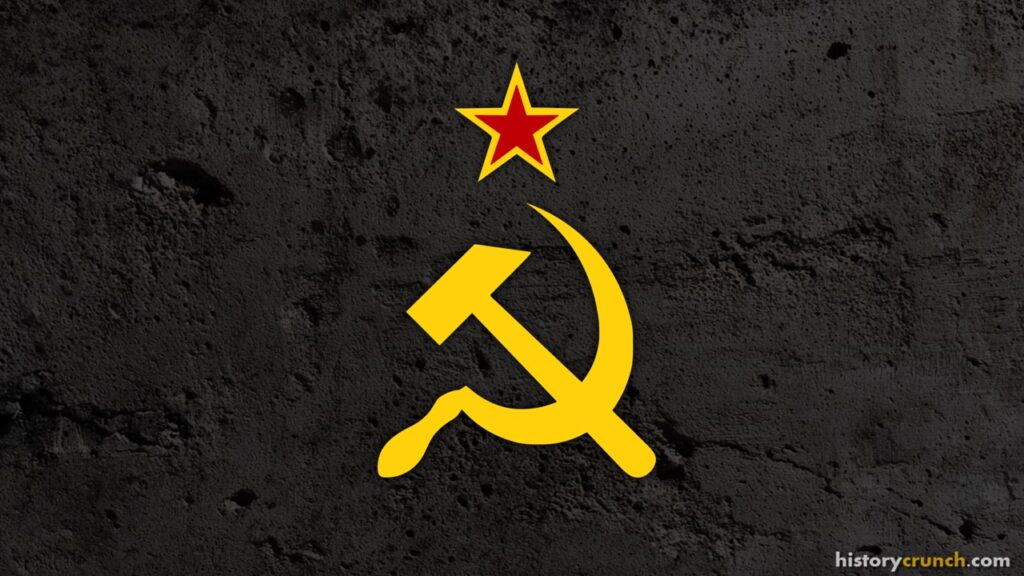
On December 30th, 1922 Russia, Ukraine, Belarus and the Transcaucasian republics signed the treaty creating the Union of Soviet Socialist Republics, in theory a voluntary federation of equal republics with the right to leave, in practice ruled from Moscow by one party. It covered a sixth of the earth's land and about 135 million people, and lasted 69 years to the day.
LEARN MORESHOW LESSwhy it matters · key numbersPOLITICSThe world's first communist state, built on the ruins of the tsars' empire and almost exactly the same shape.
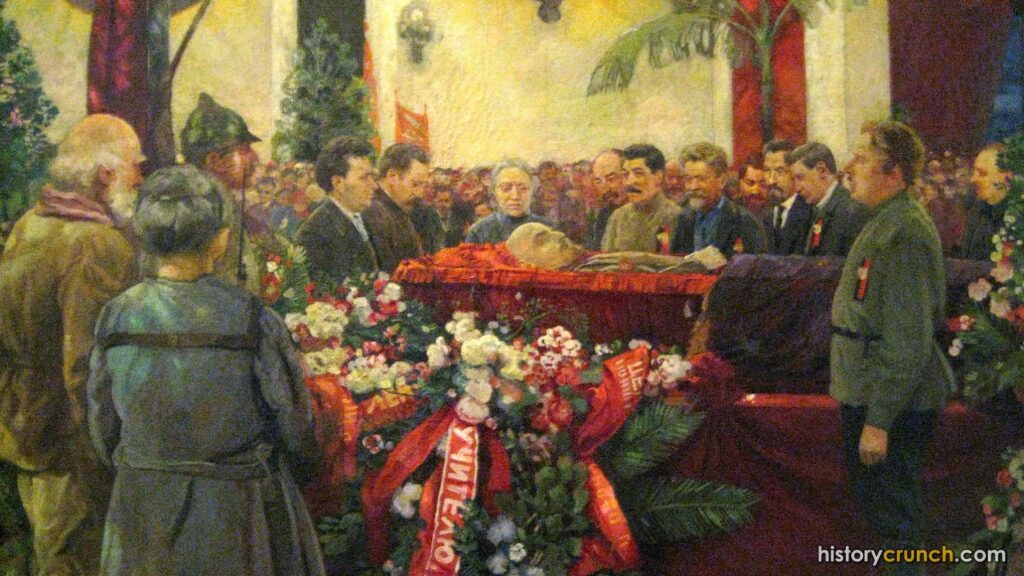
Lenin died at his country house at Gorki on January 21st, 1924, aged 53. Against his widow's wishes the party embalmed his body and put it on display in a mausoleum in Red Square, where it still lies, and renamed Petrograd Leningrad. Stalin gave the funeral oration; Trotsky, recovering from illness in the south, was told the wrong date and missed it.
LEARN MORESHOW LESSwhy it matters · 3 key figuresPOLITICSA state built around one man's authority now had to decide who inherited it. The next five years were the answer.
In December 1924 Stalin argued that the Soviet Union could build socialism on its own without waiting for revolution in the West, which after Germany's failed risings of 1923 was clearly not coming. Trotsky's 'permanent revolution' said the opposite: that a backward country could not build socialism alone. Stalin's version was patriotic, practical and popular with a party tired of waiting.
LEARN MORESHOW LESSwhy it matters · 2 key figuresIDEASThe argument decided the direction of Marxist-Leninism and the Soviet Union: inward, defensive, and industrialized by force. Trotsky lost it on the merits as well as the machine.
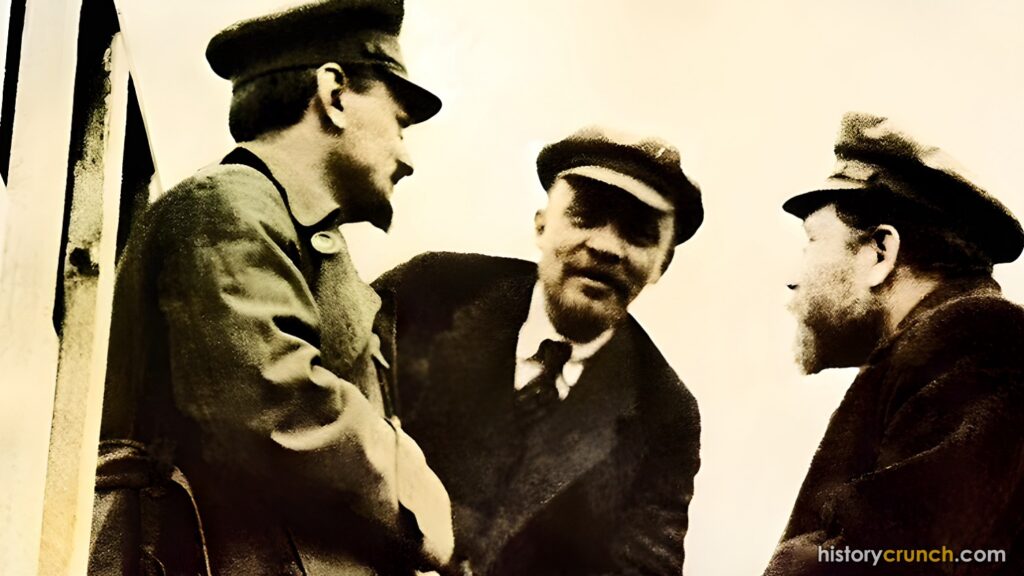
Stalin allied first with Zinoviev and Kamenev against Trotsky, then with Bukharin against all three. On November 12th, 1927 Trotsky and Zinoviev were expelled from the Communist Party for organizing opposition demonstrations on the tenth anniversary of October; in January 1928 Trotsky was deported to Alma-Ata in Kazakhstan, and in February 1929 out of the Soviet Union altogether. He never saw Russia again.
LEARN MORESHOW LESSwhy it matters · 2 key figuresPOLITICSThe man who built the Red Army and led the October rising was gone within five years of Lenin's stroke. By 1929 Stalin had no rivals left.
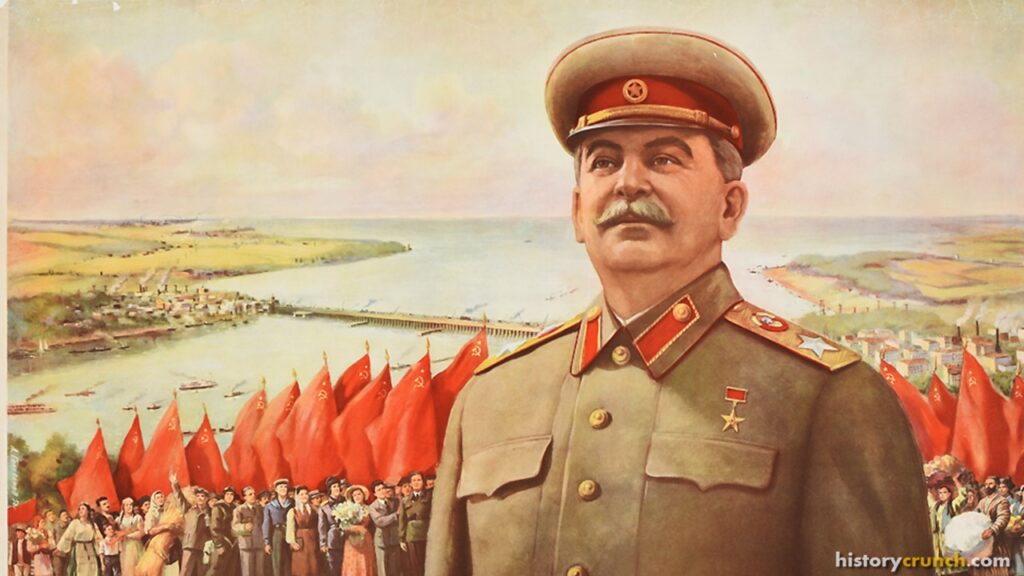
On October 1st, 1928 the first Five-Year Plan began: a command economy in which the state set targets for every mine, factory and farm, and the NEP's markets were shut down. Steel, coal and electricity output were to double or triple; whole cities like Magnitogorsk were built from nothing. The plan was declared complete in four years. Living standards fell and the gulag supplied the labor.
LEARN MORESHOW LESSwhy it matters · 1 key figureECONOMYThe end of the NEP and the beginning of the Soviet system as the world knew it for sixty years: everything planned, nothing private, and the plan enforced by the police.
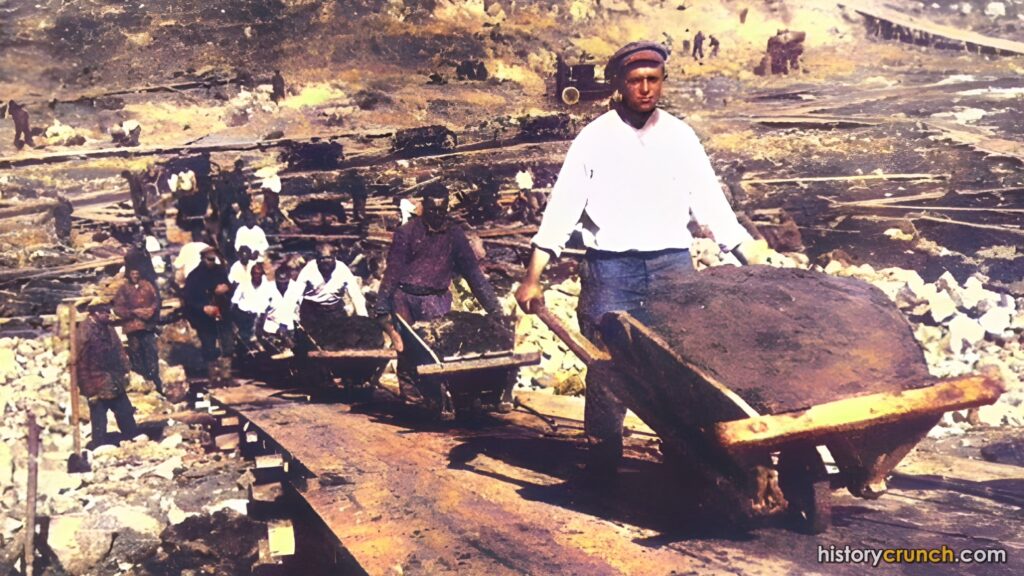
On December 27th, 1929 Stalin announced the 'liquidation of the kulaks as a class'. Over the next four years 25 million peasant households were forced into collective farms; those who resisted, or simply owned two cows, were shot or deported to Siberia by the million. Peasants slaughtered half the country's livestock rather than hand it over. The land Lenin had given the peasants in 1917 was taken back.
LEARN MORESHOW LESSwhy it matters · key numbers · 1 key figureECONOMYThe second revolution, from above. The 1917 promise of land lasted twelve years.
The famine in Ukraine that killed millions while grain was exported. The purge that shot almost every Bolshevik of 1917 and 700,000 others. Trotsky killed with an ice axe on another continent. The Cold War, in which the two systems born of 1917 and 1776 faced each other with nuclear weapons for 44 years. Khrushchev's admission of what Stalin had been. The tsar's bones dug up and reburied as the Soviet Union itself was dissolved, 69 years to the day after it was founded. The argument about what it all meant is still going on, in Russia most of all.
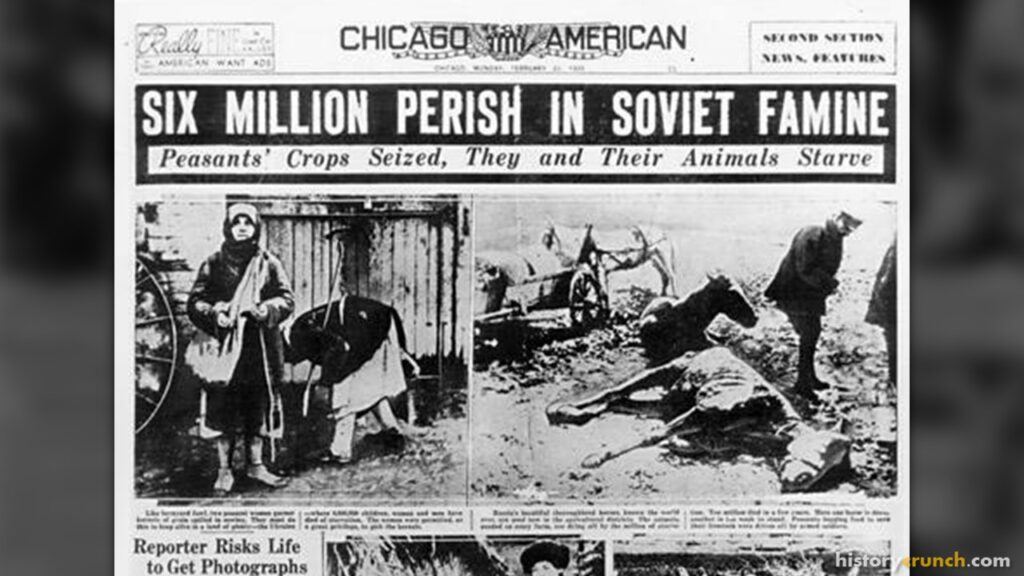
In 1932 and 1933 Stalin's grain quotas and the seizure of seed and livestock produced a famine across Ukraine and the Kazakh steppe while the state exported grain abroad. Villages were sealed and peasants forbidden to leave for the cities. Between 3.5 and 5 million people died in Ukraine alone. Ukraine and about thirty other countries now recognize it as a genocide.
LEARN MORESHOW LESSwhy it matters · key numbers · 1 key figureSOCIETYCollectivization's bill. The revolution that began with the promise of land ended, for the Ukrainian countryside, in a famine made by policy.
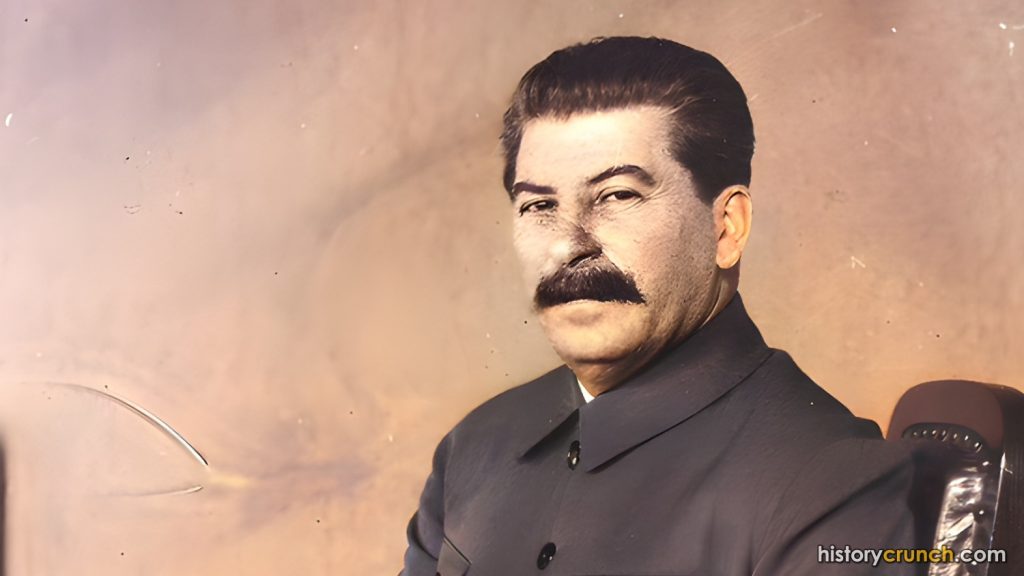
On August 19th, 1936 Zinoviev and Kamenev, who had stood beside Lenin in 1917, confessed at a show trial in Moscow to plotting with Trotsky and were shot. Over the next two years the NKVD arrested about 1.5 million people and shot about 700,000, including most of Lenin's central committee, three of the five marshals of the Red Army and the NKVD's own chiefs. Millions more went to the gulag.
LEARN MORESHOW LESSwhy it matters · key numbers · 1 key figureTERROROf the men who made October, almost none survived Stalin. The party that had promised a classless society had become a machine for killing its own.
Trotsky spent his exile in Turkey, France, Norway and finally a fortified house in Mexico City, writing against Stalin. On August 20th, 1940 a Spanish NKVD agent, Ramon Mercader, who had befriended his secretary, drove an ice axe into his skull as he read a manuscript. He died the next day, aged 60. Mercader served twenty years in a Mexican prison and was made a Hero of the Soviet Union.
LEARN MORESHOW LESSwhy it matters · 1 key figureVIOLENCEStalin's reach was worldwide. The last of Lenin's inner circle died on another continent, and the revolution's history was rewritten without him.
On March 12th, 1947 President Harry Truman asked Congress to support Greece and Turkey against communism, and the Cold War between the Soviet Union and the United States had a name and a doctrine. For 44 years the two systems born of 1917 and 1776 faced each other with nuclear weapons, in Korea, Vietnam, Berlin, Cuba and Afghanistan.
LEARN MORESHOW LESSwhy it matters · elsewhereWORLDThe Russian Revolution's longest shadow. Every crisis of the second half of the twentieth century runs back to the question of whether the Bolshevik model would spread.
By 1950 communist governments ruled a third of the world's people, in China, Eastern Europe, North Korea and Vietnam. Almost all of them had been trained or armed by Moscow.
Stalin died on March 5th, 1953. On February 25th, 1956, in a closed session of the party congress, his successor Nikita Khrushchev spoke for four hours on Stalin's crimes: the purges, the torture, the cult of personality, the Testament Lenin had written against him. Delegates fainted. The speech was read to every party cell in the country and leaked to the West within weeks.
LEARN MORESHOW LESSwhy it matters · 1 key figurePOLITICSThe Soviet state admitted that its revolution had produced a mass murderer, and tried to save the revolution by blaming the man. It never fully answered the question.
In July 1991 the grave in the forest outside Yekaterinburg, found secretly in 1979, was officially opened and nine skeletons were identified by DNA as Nicholas, Alexandra, three daughters and their servants. Alexei and one sister were found nearby in 2007. In 1998 the family was buried in the Peter and Paul Cathedral in St. Petersburg with the other tsars, and in 2000 the Russian Orthodox Church made them saints.
LEARN MORESHOW LESSwhy it matters · 1 key figureMEMORYThe revolution's first victims were reburied as the state that killed them was ending. Leningrad had voted to call itself St. Petersburg again a month earlier.
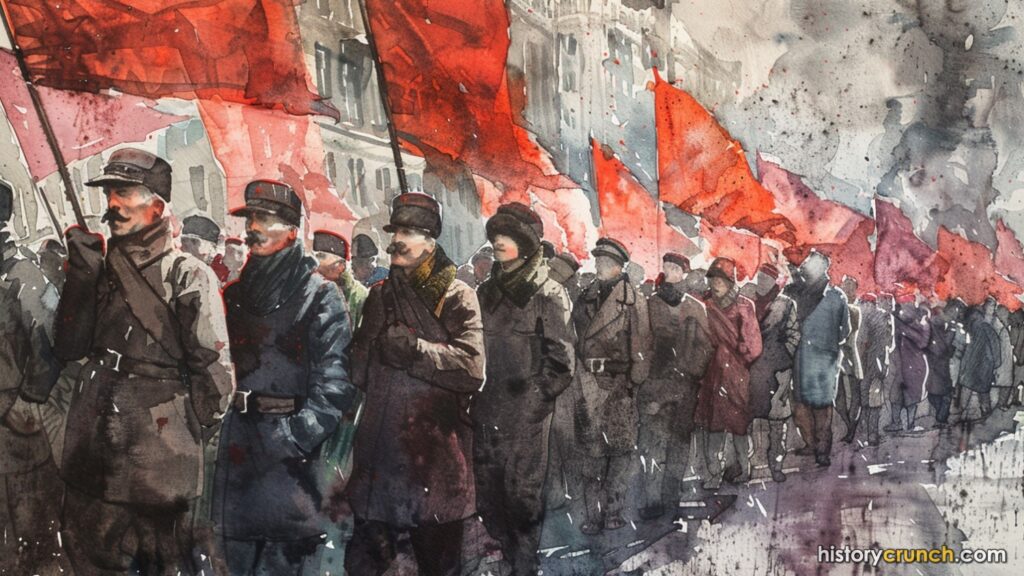
On December 25th, 1991 Mikhail Gorbachev resigned as president of a country that no longer existed, and the red flag over the Kremlin came down for the last time. The fifteen republics went their own ways. The state founded on December 30th, 1922 had lasted 69 years; the Communist Party that Lenin's nine men founded in Minsk in 1898 was banned in Russia.
LEARN MORESHOW LESSwhy it matters · a debatePOLITICSThe end of the story the timeline tells. What began in a bread queue in Petrograd in 1917 ended with a flag coming down in Moscow, and the argument about what it all meant is still going on.
Did the Russian Revolution fail?
Yes. It promised peace, land, bread and freedom and delivered civil war, famine, collectivization and the gulag, and the state it built collapsed in 69 years.
Not simply. It turned a peasant empire into an industrial superpower that beat Hitler and put the first man in space, and it frightened the capitalist world into welfare states and workers' rights it might not otherwise have granted.

I'm a passionate history and geography teacher with over 15 years of experience working with students in the middle and high school years. I have an Education Degree with a focus in World History. I have been writing articles for History Crunch since 2015 and love the challenge of creating historical content for young learners!

K.L. is a content writer for History Crunch. She is a fantastic history and geography teacher that has been helping students learn about the past in new and meaningful ways since the mid-2000s. Her primary interest is Ancient History, but she is also driven by other topics, such as economics and political systems.
To cite this timeline as a source, use one of the formats below.
MLA: Beck, E., and K.L Woida. “Russian Revolution Timeline.” HistoryCrunch, 15 September 2026, https://historycrunch.com/russian-revolution-timeline/.
APA: Beck, E., & Woida, K.L. (2026). Russian Revolution Timeline. HistoryCrunch. https://historycrunch.com/russian-revolution-timeline/
Chicago: Beck, E., and K.L Woida. “Russian Revolution Timeline.” HistoryCrunch. September 15, 2026. https://historycrunch.com/russian-revolution-timeline/
© History Crunch
Marx expected it in Britain or Germany. It came in the most backward great power in Europe.
Who owns the fields the peasants work. The question that Lenin answered in one evening and Stalin reversed in one winter.
Russia had a revolution in 1905 without a world war. It had two in 1917 because of one.
Historians disagree about whether the war caused the revolution or only timed it. One view is that Russia was heading for revolution anyway: the strikes of 1912 to 1914 were bigger than those of 1905, and the regime had learned nothing. The other is that the monarchy was stabilizing under Stolypin's reforms and a growing economy, and that without the war's defeats and hunger it could have survived for a generation. Both agree that the war decided when, and made sure the collapse was total.
A Siberian peasant with the run of the palace. Less power than people thought, and more damage.
Lenin said so. The same city, the same soviet, the same Trotsky, twelve years apart.
Bread, women, soldiers who would not shoot, and a train that could not get home.
Kind, dutiful, devoted to his family, and certain God had made him an autocrat.
Historians disagree about how far Nicholas II caused his own fall. One view holds him responsible: he refused every reform, dismissed the Duma, took command of an army he could not lead and left the capital to his wife and Rasputin. The other holds that no tsar could have held an empire of 130 million peasants together through industrialization and a world war, and that a stronger man would only have delayed the end. Most now say the job was nearly impossible and he made it harder.
It had the offices; the Soviet had the soldiers; and it kept fighting a war the country wanted to leave.
Not a storm. A takeover of bridges, stations and a telephone exchange by a few thousand armed men, and a palace with nobody guarding the door.
Historians disagree about whether October was a popular revolution or a coup. The Soviet view, and some Western historians since, stress that the Bolsheviks held majorities in the soviets of both capitals and that peace and land were what most Russians wanted. Others point out that a few thousand armed men took a city of two million at night, that the Congress of Soviets was presented with a done deed, and that the free election two weeks later gave the Bolsheviks a quarter of the vote. The best answer may be that it was a coup carried out in the name of a revolution that was real.
A sealed train, ten theses, one failed rising, a wig, and a majority of ten to two.
Mensheviks, Socialist Revolutionaries, Kadets, anarchists. In 1917 the Bolsheviks were one party among many, and not the largest.
The organizer of October and the builder of the Red Army, written out of the story by the man who beat him.
Petrograd: the tsar's capital, Russia's biggest factory town, and a garrison of 160,000 bored reservists.
They held the center, the railways and the factories; they gave the peasants land; and they were more ruthless.
The Cheka was six weeks old before the civil war began. Terror was policy before it was necessity.
Because the alternative was losing all of it. Peace at any price was the price of keeping power.
Kronstadt, the famine, and an economy at a fifth of its prewar size. A retreat to save the revolution.
A lawyer's son whose brother was hanged, who spent seventeen years in exile, and who built the first communist state in seven.
Historians disagree about whether Stalinism grew from Leninism or betrayed it. One view is that Lenin built every tool Stalin used: the one-party state, the Cheka, the ban on factions, terror as policy, and that Stalin only turned them up. The other is that Lenin's NEP, his Testament against Stalin and his horror at Georgian brutality show a different road, and that the purges and the famine were Stalin's alone. The argument matters because it decides whether the revolution failed by accident or by design.
Paperwork. He took the job nobody wanted and filled every office with people who owed him.
House arrest, a train to Siberia, a cellar in Yekaterinburg, a mine shaft, and a DNA test seventy years later.
Started it. Then fought in it, and got the vote before Britain or America.
A seminary dropout from Georgia who robbed banks for the party, edited Pravda in 1917, and took the job with the filing cabinets.
Written for Britain, translated for Russia, rewritten by Lenin for a country with no working class to speak of.
A classless society with no private property. What they built was a one-party state with a planned economy.
Marx's theory plus Lenin's method: the vanguard party, the dictatorship of the proletariat, and the plan.
As fear. Strikes, bombs, raids, and 550 people deported on the 'Soviet Ark'.
Collective farms, famine, show trials, and a gulag. The state that October built, run by the man Lenin tried to remove.
To China, Eastern Europe, Korea, Vietnam and Cuba. By 1950 a third of humanity lived under governments that traced themselves to October.
It promised peace, land, bread and freedom. It delivered a superpower, a famine and a gulag, and it ended in 69 years.
Historians disagree about whether the Russian Revolution failed. One view is that it did, by its own measures: it promised peace, land, bread and freedom and delivered civil war, famine, collectivization and terror, and the state it built lasted 69 years and collapsed of its own weight. The other is that it turned a peasant empire into an industrial power that destroyed Nazi Germany and reached space, that it forced the capitalist world to grant welfare states and workers' rights it might otherwise have refused, and that its failures were Stalin's rather than the revolution's. The argument is still live in Russia itself.
Six weeks after October the Bolsheviks created a political police with no legal limits. It outlived the Soviet Union.
No question matches that word.
Research question 1Marx expected it in Britain or Germany. It came in the most backward great power in Europe.
Research question 2Who owns the fields the peasants work. The question that Lenin answered in one evening and Stalin reversed in one winter.
Research question 3Russia had a revolution in 1905 without a world war. It had two in 1917 because of one.
Research question 4A Siberian peasant with the run of the palace. Less power than people thought, and more damage.
Research question 5Lenin said so. The same city, the same soviet, the same Trotsky, twelve years apart.
Research question 6Bread, women, soldiers who would not shoot, and a train that could not get home.
Research question 7Kind, dutiful, devoted to his family, and certain God had made him an autocrat.
Research question 8It had the offices; the Soviet had the soldiers; and it kept fighting a war the country wanted to leave.
Research question 9Not a storm. A takeover of bridges, stations and a telephone exchange by a few thousand armed men, and a palace with nobody guarding the door.
Research question 10A sealed train, ten theses, one failed rising, a wig, and a majority of ten to two.
Research question 11Mensheviks, Socialist Revolutionaries, Kadets, anarchists. In 1917 the Bolsheviks were one party among many, and not the largest.
Research question 12The organizer of October and the builder of the Red Army, written out of the story by the man who beat him.
Research question 13Petrograd: the tsar's capital, Russia's biggest factory town, and a garrison of 160,000 bored reservists.
Research question 14They held the center, the railways and the factories; they gave the peasants land; and they were more ruthless.
Research question 15The Cheka was six weeks old before the civil war began. Terror was policy before it was necessity.
Research question 16Because the alternative was losing all of it. Peace at any price was the price of keeping power.
Research question 17Kronstadt, the famine, and an economy at a fifth of its prewar size. A retreat to save the revolution.
Research question 18A lawyer's son whose brother was hanged, who spent seventeen years in exile, and who built the first communist state in seven.
Research question 19Paperwork. He took the job nobody wanted and filled every office with people who owed him.
Research question 20House arrest, a train to Siberia, a cellar in Yekaterinburg, a mine shaft, and a DNA test seventy years later.
Research question 21Started it. Then fought in it, and got the vote before Britain or America.
Research question 22A seminary dropout from Georgia who robbed banks for the party, edited Pravda in 1917, and took the job with the filing cabinets.
Research question 23Written for Britain, translated for Russia, rewritten by Lenin for a country with no working class to speak of.
Research question 24A classless society with no private property. What they built was a one-party state with a planned economy.
Research question 25Marx's theory plus Lenin's method: the vanguard party, the dictatorship of the proletariat, and the plan.
Research question 26As fear. Strikes, bombs, raids, and 550 people deported on the 'Soviet Ark'.
Research question 27Collective farms, famine, show trials, and a gulag. The state that October built, run by the man Lenin tried to remove.
Research question 28To China, Eastern Europe, Korea, Vietnam and Cuba. By 1950 a third of humanity lived under governments that traced themselves to October.
Research question 29It promised peace, land, bread and freedom. It delivered a superpower, a famine and a gulag, and it ended in 69 years.
Research question 30Six weeks after October the Bolsheviks created a political police with no legal limits. It outlived the Soviet Union.