The role of the United Nations in the Korean War was one of the most important tests the young organization ever faced, and it shaped how the world would respond to armed aggression for decades afterward. When communist North Korea invaded South Korea in the summer of 1950, the United Nations acted quickly to condemn the attack and to organize an international military force to push the invaders back. This response marked the first time in history that many nations fought together under a single United Nations command.
The United Nations is an international organization founded in 1945, at the end of World War II, with the goal of preventing future wars and encouraging cooperation between countries. Its main decision-making body for issues of war and peace is the Security CouncilA small group of powerful UN member states with authority to approve joint action against countries threatening international peace., a small group of powerful member states that can approve joint action against a country that threatens international peace. In Korea, the Security Council used this authority for the first time on a large scale, turning the defense of South Korea into a shared mission of many nations rather than the responsibility of a single country.
 FactsthatCrunch
UN Security Council Condemns the North Korean Invasion of South Korea
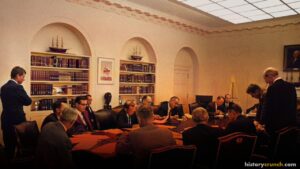
On June 25th, 1950, the UN Security Council voted 9 to 0 to pass Resolution 82, calling the North Korean attack a breach of the peace and demanding that North Korean forces pull back to the 38th parallel. The Soviet Union, which could have vetoed the resolution, was absent. It had been boycotting Security Council meetings since January 1950, protesting the Council's refusal to seat the People's Republic of China in place of the Nationalist Chinese government of Taiwan. With the Soviet seat empty, the remaining members passed the resolution without interference, marking the first time the Security Council used its authority on this scale to condemn an armed invasion.
What Was the Cold War?
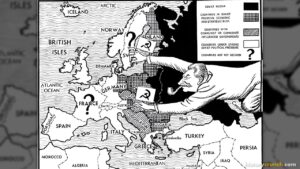
The Korean War belongs to a larger period of history known as the Cold War, a long rivalry between the United States and the Soviet Union that lasted from the late 1940s until the early 1990s. The two nations never fought each other directly in a full war. Instead, they competed for influence around the world through spying, propaganda, an arms race, and support for opposite sides in smaller regional conflicts.
At the heart of the Cold War was a clash between two ideologiesCompeting sets of beliefs about how government and the economy should be organized.. The United States and its allies supported capitalism and democracy, while the Soviet Union promoted communism, a system in which the government controls the economy and a single party holds power. Because each side feared the spread of the other’s system, small conflicts in distant places could quickly turn into major international crises. The Korean War was one of the first and most serious of these Cold War flashpoints.
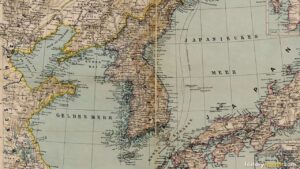
Korea itself had been divided at the end of World War II. At the end of World War II, the Soviet Union and the United States both occupied half of Korea and accepted the surrender of the Japanese in that region, effectively splitting the country into two along the 38th parallelThe line of latitude that divided Korea into a communist North and a capitalist South after World War II.. By 1948, the peninsula had become two rival states, a communist North Korea and a capitalist South Korea, each claiming the right to rule the whole country.
FactsthatCrunchHow Did the United Nations First Respond to the Invasion?
The war began suddenly and forced the United Nations to act within days. On June 25th, 1950, North Korean forces invaded South Korea by crossing over the 38th parallel with the support of the Soviet Union. The attack was well organized and struck at several points at once, and North Korean troops quickly pushed toward the South Korean capital of Seoul.
The United States viewed the invasion as an act of aggression that could not go unanswered. The United States immediately pressed for the United Nations to act, and on June 25th and June 27th, the United Nations passed directives urging a ceasefire and for all member nations to provide assistance to the South Koreans. In one of its earliest votes, the United Nations Security Council voted 9-0 to adopt a resolution condemning the invasion as a “breach of the peace.”
These resolutions passed for an unusual reason. The Soviet Union normally could have blocked any Security Council action against a communist ally, but it was absent at the crucial moment. The UN Security Council was able to pass these measures because the Soviet Union had recently boycottedRefused to participate in a meeting or organization as a form of protest. the Security Council and chose not to participate. The Soviets were protesting a separate issue involving communist China’s exclusion from the United Nations, and their absence gave the Western powers a rare chance to act without interference.
FactsthatCrunchWhy could the Soviet Union NOT veto the UN Security Council vote authorizing force in Korea in 1950?
Which Countries Fought Under the United Nations Flag?
Once the Security Council called for member nations to help, many countries responded. The United States provided by far the largest share of troops, ships, and aircraft, but it was joined by many partners in a truly international effort. Aside from South Korea, which as host nation provided the largest number of military forces, the United States deployed the lion’s share of forces among the 16 U.N. Sending States, and the other sending states included Australia, Belgium, Canada, Colombia, Ethiopia, France, Greece, Luxembourg, the Netherlands, New Zealand, the Philippines, South Africa, Thailand, Turkey, and the United Kingdom.
Other nations helped in ways that did not involve combat. Five additional states, Denmark, India, Italy, Norway, and Sweden, provided medical or humanitarian assistance to South Korea. This mix of fighting forces and support services made the Korean War a shared undertaking, and it demonstrated that the United Nations could bring together countries from around the world for a single military purpose.
The creation of this coalition was a milestone in world history. For the first time, soldiers from many different nations served together under a single United Nations command, fighting beneath the United Nations flag rather than only their own national banners. This new form of cooperation would later become a model for future peacekeeping and collective defense missions.
During the Korean War, did each of these nations send combat troops or provide non-combat support to help South Korea? Read the item in the dashed box, then tap the column where it belongs.
How Was the United Nations Force Organized and Led?
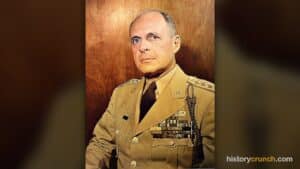
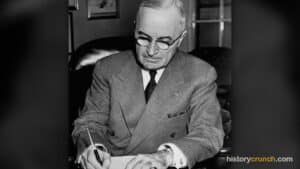
Although many nations contributed, the United States took the lead in directing the war. President Harry S. Truman committed American forces right away, and he committed United States air, ground, and naval forces to the combined United Nations forces assisting the Republic of Korea in its defense, and he designated General Douglas MacArthur as Commanding General of the United Nations Command. Placing all the allied troops under one general helped the international force fight as a single army.
Truman made an important choice about how to describe American involvement. President Harry S. Truman did not press for a Congressional declaration of war. Instead, he classified the Korean conflict as a UN-led “police actionA term used to describe military force authorized by the UN to stop aggression rather than conquer territory.,” operating under the authority of the Security Council. The phrase “police action” meant that the goal was to stop aggression and restore order rather than to conquer territory, and it reflected the idea that the fight was carried out on behalf of the United Nations.
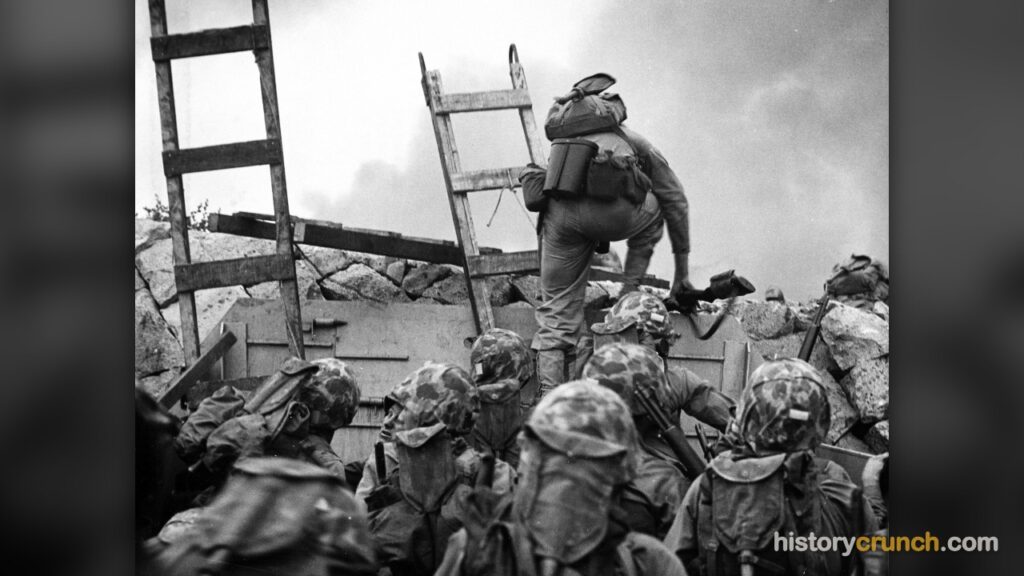
The United Nations Command turned the tide of the war after early defeats. The initial North Korean attack drove United Nations Command forces to a narrow perimeter around the port of Pusan in the southern tip of the peninsula, but in September 1950 General MacArthur surprised the North Koreans with an amphibious landingA military attack launched from the sea directly onto a shore, putting troops behind enemy lines. at Inchon behind North Korean lines, forcing the North Koreans to retreat behind the 38th parallel. The daring landing shifted the balance of the war in favor of the United Nations.
FactsthatCrunchHow Did the War Change After China Entered?
The victory at Inchon led the United Nations to expand its goals. In October, the United Nations, urged by the United States Government, approved the movement of UN forces across the 38th parallel into North Korea in an effort to unify the country under a non-communist government. This decision moved the war from simply defending South Korea to trying to defeat North Korea entirely.
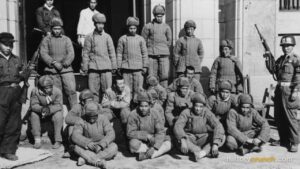
As United Nations troops advanced toward the Chinese border, communist China decided to enter the war. In late November the Chinese attacked in full strength, pushing the United Nations Command in disarray back south of the 38th parallel, with the communist forces seizing the South Korean capital, Seoul. The sudden arrival of huge Chinese armies turned the war into a much larger and more dangerous conflict.
Eventually the two sides fought to a standstill near where the war had begun. In early 1951 the Chinese offensive lost its momentum and the United Nations Command retook Seoul and advanced back to the 38th parallel, and from July 1951 until the end of hostilities the battle lines remained relatively stable and the conflict became a stalemateA deadlock in which neither side can win, and battle lines stop moving for a long period.. Neither side could win a clear victory, and the fighting settled into a long deadlock while negotiators searched for a way to end the war.
How did the Korean War change after China entered? Put these turning points in the correct order.
How Did the United Nations Role in the War End?
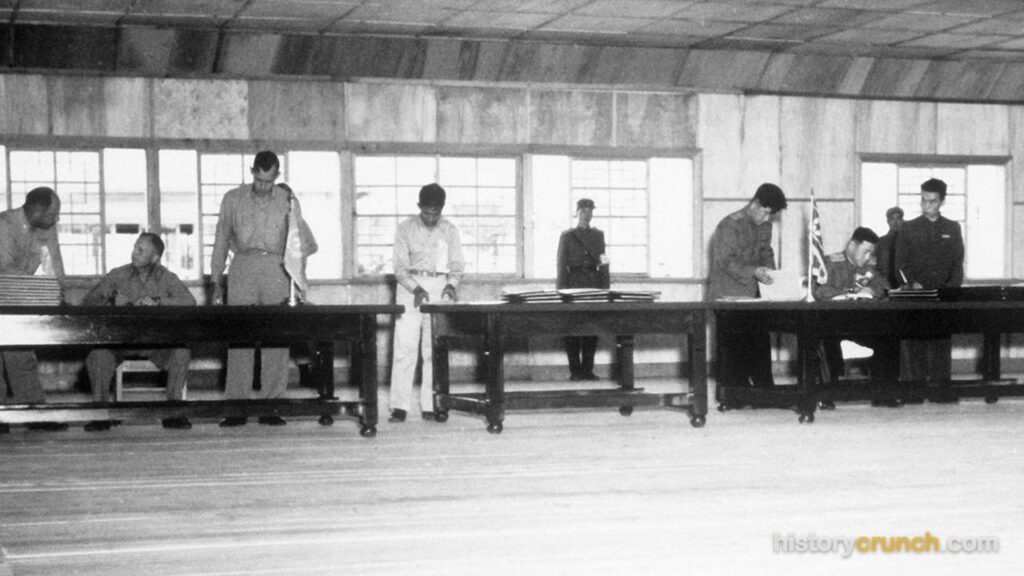
After two years of difficult talks, the fighting finally stopped. On July 27th, 1953, an armisticeAn agreement to stop fighting that is not the same as a formal peace treaty. was signed, ending organized combat operations and leaving the Korean Peninsula divided much as it had been since the close of World War II at the 38th parallel. An armistice is an agreement to stop fighting, but it is not the same as a formal peace treaty, so the two Koreas technically remained at war.
The United Nations Command represented the allied side when the agreement was signed. The armistice was signed by representatives of the United Nations Command, by North Korean army leaders, and by a representative of China’s People’s Volunteer Army. The agreement created a heavily guarded buffer zone between the two Koreas and arranged for the exchange of prisoners of war. Notably, South Korea’s own government never formally signed the armistice, which is one reason tensions on the peninsula have continued ever since.
Significance of Role of the United Nations in the Korean War
The role of the United Nations in the Korean War was significant because it was the first true test of whether the new organization could respond to armed aggression with real force. Founded only five years earlier to prevent another world war, the United Nations proved that it could condemn an invasion, gather an international army, and place many nations under a single command. In doing so, it showed that collective action against aggression was possible in the Cold War era.
At the same time, the war revealed the limits of what the United Nations could do. The organization succeeded largely because the Soviet Union happened to be boycotting the Security Council, and once the Soviets returned they could block further strong action. The war also depended heavily on American troops and American leadership, which meant the effort was as much an American mission as a United Nations one.
The lasting result was a war that ended in a stalemate rather than a clear victory, with Korea still divided at the 38th parallel. The conflict set important precedents, including the idea that a president could commit troops to a United Nations “police action” without a formal declaration of war. For the United Nations, Korea remained a powerful example of both the promise and the difficulty of keeping international peace.
FactsthatCrunchThe Korean War proved for the first time that United Nations collective security was more than a written promise, because the organization actually assembled and commanded an international military force to stop an armed invasion.
Sixteen nations sent combat troops under a single United Nations Command, showing that countries with very different histories could coordinate as one fighting force beneath the UN flag rather than only their own national banners.
The Security Council's June 1950 votes, first condemning the invasion and then calling on members to help defend South Korea, set a working precedent: the UN could authorize military force, not just issue statements, when one country attacked another.
Five additional nations, including India and Sweden, contributed medical and humanitarian support, demonstrating that the UN framework could organize non-combat contributions alongside combat ones, a model later used in peacekeeping missions worldwide.
The Korean experience established that a country bearing the main military burden, in this case the United States, could operate under UN authority rather than purely national command, giving future collective defense missions a political and legal structure to build on.
Korean War timeline · 1950 – 1953
Key Vocabulary
Security Council
Ideologies
38th parallel
Police action
Amphibious landing
Stalemate
Armistice
Frequently Asked Questions
Why was the United Nations able to intervene in the Korean War?
The United Nations was able to intervene mainly because the Soviet Union was absent from the Security Council when the key votes were held. Normally the Soviets could have vetoed any action against North Korea, but they were boycotting the council in protest over a separate issue. Their absence allowed the Western powers to pass resolutions calling on member nations to defend South Korea.
How many countries fought under the United Nations in Korea?
Sixteen nations sent combat troops to fight under the United Nations Command, and several more provided medical and humanitarian aid. The United States supplied by far the most soldiers, ships, and aircraft, while South Korea, as the host country, also contributed a very large force. Nations from Europe, Asia, Africa, and the Americas all took part, making it a truly global effort.
Who commanded the United Nations forces in Korea?
General Douglas MacArthur was the first commander of the United Nations Command in Korea. He planned the famous Inchon landing that reversed the early course of the war. He was later removed from command by President Truman after the two disagreed over how far to expand the war against China, and General Matthew Ridgway took over leadership of the effort.
Why is the Korean War called a police action instead of a war?
The Korean War was called a “police action” because President Truman never asked Congress for a formal declaration of war. He described the conflict as a United Nations effort to stop aggression and restore peace, carried out under the authority of the Security Council. This label set a precedent that later presidents followed when committing troops to conflicts without a declared war.
Did the United Nations win the Korean War?
The United Nations did not win a clear victory in the Korean War, since the conflict ended in a stalemate. The armistice signed in 1953 left Korea divided at roughly the same line where the war had begun. However, the United Nations did achieve its original goal of preventing North Korea from conquering South Korea, so South Korea survived as an independent country.
Cite This Article
To cite this article as a source, use one of the formats below.
MLA: Millar, B. “Role of the United Nations in the Korean War: A Detailed Summary.” HistoryCrunch, 15 August 2026, https://historycrunch.com/role-of-the-united-nations-in-the-korean-war/.
APA: Millar, B. (2026). Role of the United Nations in the Korean War: A Detailed Summary. HistoryCrunch. https://historycrunch.com/role-of-the-united-nations-in-the-korean-war/
Chicago: Millar, B. “Role of the United Nations in the Korean War: A Detailed Summary.” HistoryCrunch. August 15, 2026. https://historycrunch.com/role-of-the-united-nations-in-the-korean-war/
Sources
- William Stueck, The Korean War: An International History.
- Truman Presidential Library
- Sheila Miyoshi Jager, Brothers at War: The Unending Conflict in Korea.