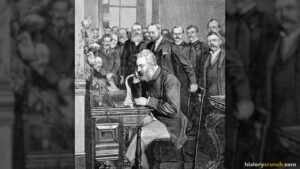
The Robber BaronsPowerful, wealthy businessmen of the late 1800s accused of using harsh and unfair tactics to build their fortunes. in the Gilded Age is a term that historians use to refer to wealthy businessmen of the late 19th century in America. The Gilded Age refers to the period in American history from the 1870s to about 1900. It was a time of economic growth and technological innovation. One of the most significant features of this era was the rise of the ‘robber barons’, which was a group of powerful and wealthy industrialists who played a crucial role in shaping the American economy during this period. These individuals were both admired for their business skills and criticized for their ruthless tactics. In fact, some have argued that these robber barons were really ‘captains of industryA more positive label for the same wealthy industrialists, crediting them with driving economic growth and benefiting society.’.
 FactsthatCrunch
WHO Were the Robber Barons?
Robber barons were the titans of industry and finance who amassed enormous fortunes during the Gilded Age. They were key figures in industries such as railroads, steel, oil, and banking. Some of the most notable robber barons included John D. Rockefeller, Andrew Carnegie, Cornelius Vanderbilt, and J.P. Morgan. Their business practices and personal wealth made them some of the most influential people of their time.
FactsthatCrunchFour Gilded Age robber barons each dominated a different industry during the late 1800s.
John D. Rockefeller and the Oil Industry
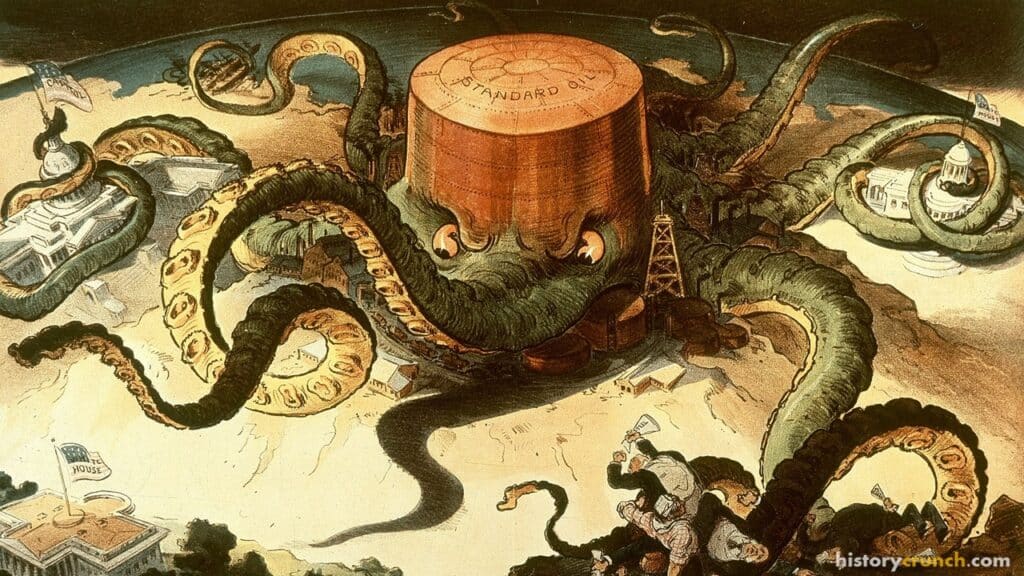
John D. Rockefeller, the founder of Standard Oil, is perhaps the most famous of the robber barons. He revolutionized the oil industry with his focus on efficiency and cost-cutting, creating a monopolyControl of nearly an entire market by one company, leaving little or no room for competitors. that controlled about 90% of the American oil market by the early 1880s. Rockefeller’s business practices, which included aggressive pricing and secret deals with railroads, were often criticized as unfair and anti-competitiveBusiness practices that prevent fair competition and give one company an unfair advantage over others.. However, he also contributed to the development of the modern corporate structure and philanthropyThe practice of donating large amounts of money to support public causes like education, science, or health., donating vast sums to education, science, and public health.
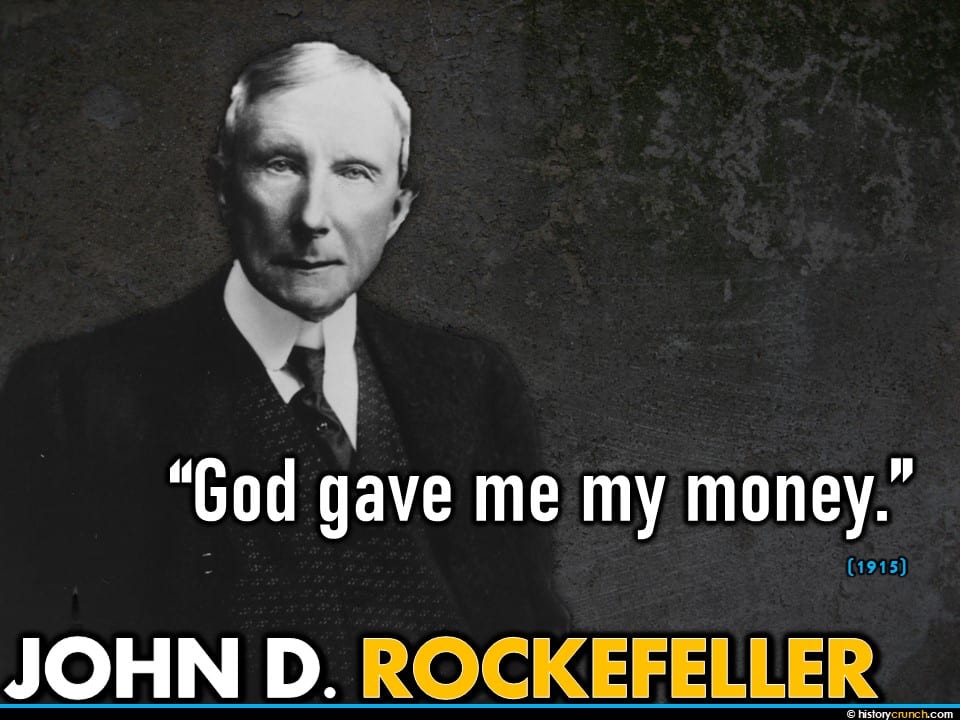 FactsthatCrunch
In 1911 the Supreme Court ordered Rockefeller's Standard Oil to be broken into 34 separate companies.
The Court ruled that Standard Oil had broken the Sherman Antitrust Act by crushing its rivals. Several of the new companies later grew into giant oil firms of their own. Because Rockefeller kept shares in all of them, the breakup actually made him even richer.
Andrew Carnegie and the Steel Empire
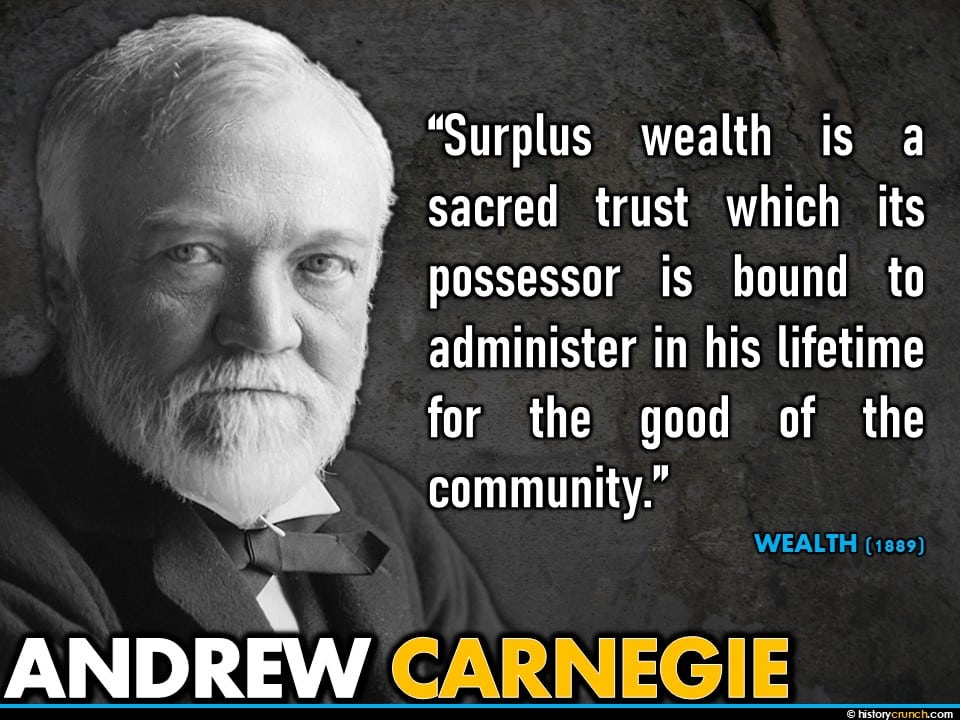
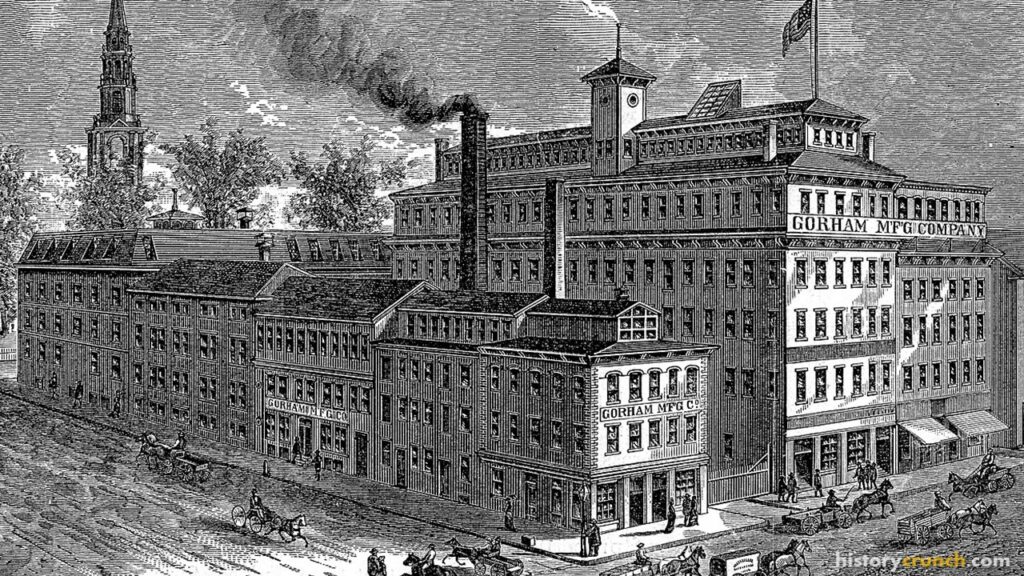
Andrew Carnegie, another prominent figure of the Gilded Age, made his fortune in the steel industry. Carnegie Steel Company, which he founded, became the largest and most profitable industrial enterprise in the world. Carnegie’s success was built on his innovative use of technology and controlling every aspect of production from raw materials to transportation. Like Rockefeller, Carnegie was a philanthropist, giving away much of his wealth to fund libraries, education, and scientific research. However, his labor practices, including the violent suppression of strikes, left a controversial legacy.
 FactsthatCrunch
Andrew Carnegie built a steel empire and gave away much of his fortune, but his treatment of workers remains deeply controversial.
Cornelius Vanderbilt and the Railroads
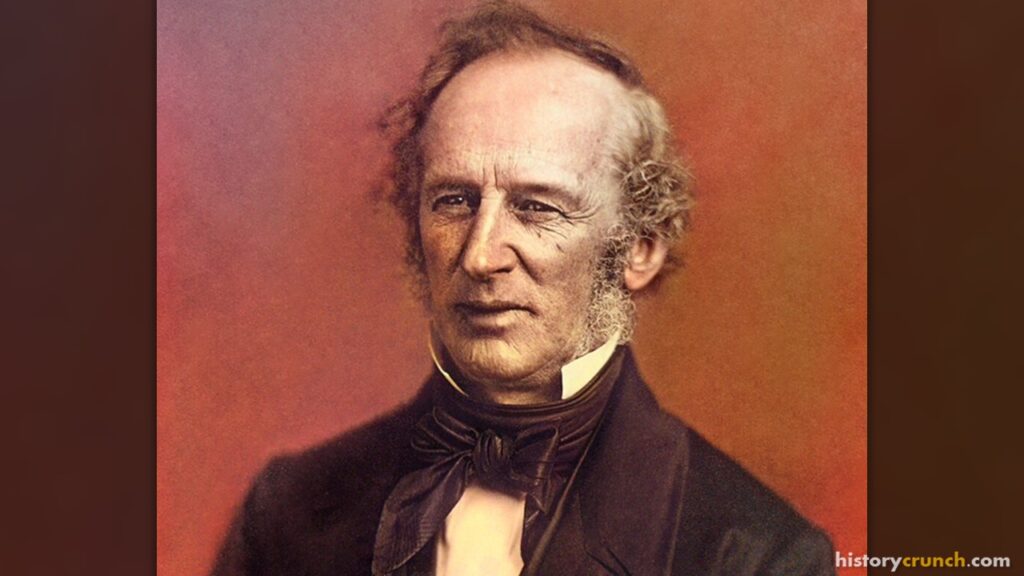
Cornelius Vanderbilt, known as the ‘Commodore’, was a key figure in the expansion of the American railroad system. Starting with steamboats, Vanderbilt eventually moved into railroads, where he built a vast network that connected the country and facilitated commerce and travel. His business tactics were often aggressive, involving hostile takeovers and price wars. Vanderbilt’s legacy is mixed; while he contributed significantly to the nation’s infrastructure, his methods and treatment of competitors were often ruthless. As such, historians consider him an influential figure in the Gilded Age.
 FactsthatCrunch
Why was Cornelius Vanderbilt called "the Commodore"?
As a teenager in the early 1800s, Vanderbilt started ferrying people and goods across New York Harbor in a small sailboat. He built that start into a large fleet of steamboats, and people began calling him "the Commodore," a title for a naval commander. Later in life he moved into railroads and gained control of the New York Central Railroad.
J.p. Morgan and Financial Power
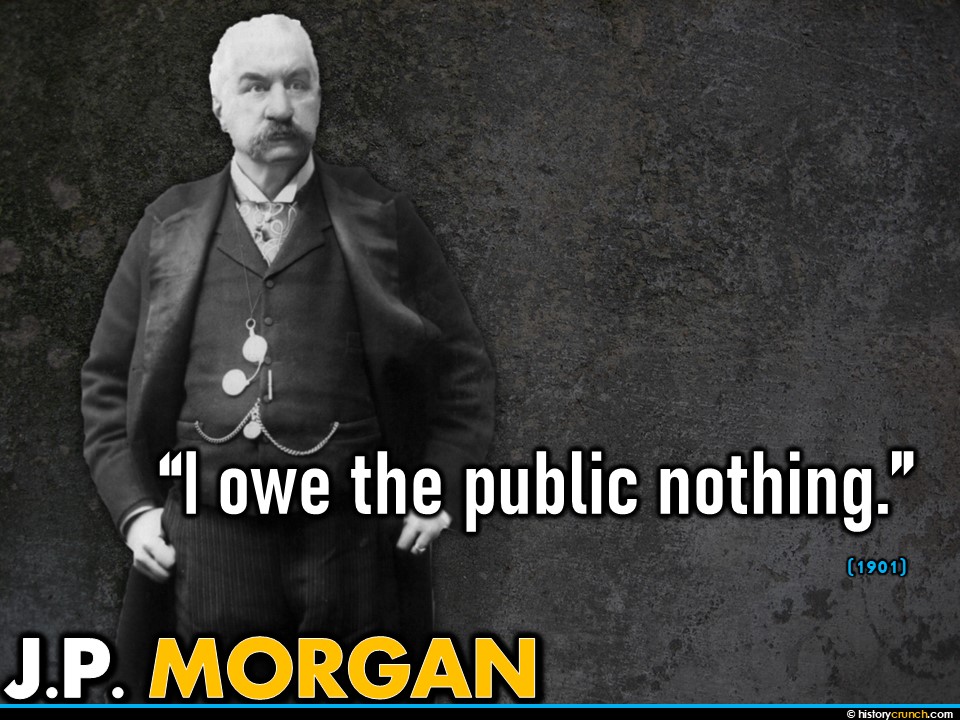
J.P. Morgan was the most powerful banker of his time, playing a crucial role in the consolidationThe process of merging or combining separate businesses into one larger, more powerful organization. of various industries, including railroads, steel, and electricity. Morgan’s ability to organize and restructure failing businesses made him a dominant force in American finance. Furthermore, he was instrumental in the creation of U.S. Steel, the world’s first billion-dollar corporation. Morgan’s influence extended to politics, where he helped stabilize the American economy during financial crises. Despite his contributions, Morgan’s control over many industries and his immense power raised concerns about his concentration of wealth and influence.
Robber Barons or Captains of Industry?
The robber barons had a profound impact on the American economy and society. On the positive side, they helped drive the country’s industrial growth, leading to innovations and infrastructure development that transformed the United States into a global economic power. This all occurred during the Industrial Revolution in the United States, and their success earned them the reputation of ‘captains of industry’. This means that they are generally viewed more positively than the term ‘robber barons’, since they are credited with contributing to the advancement of society through their business ventures and philanthropic efforts. As well, their businesses provided jobs for millions and their philanthropic efforts funded many public institutions and initiatives.
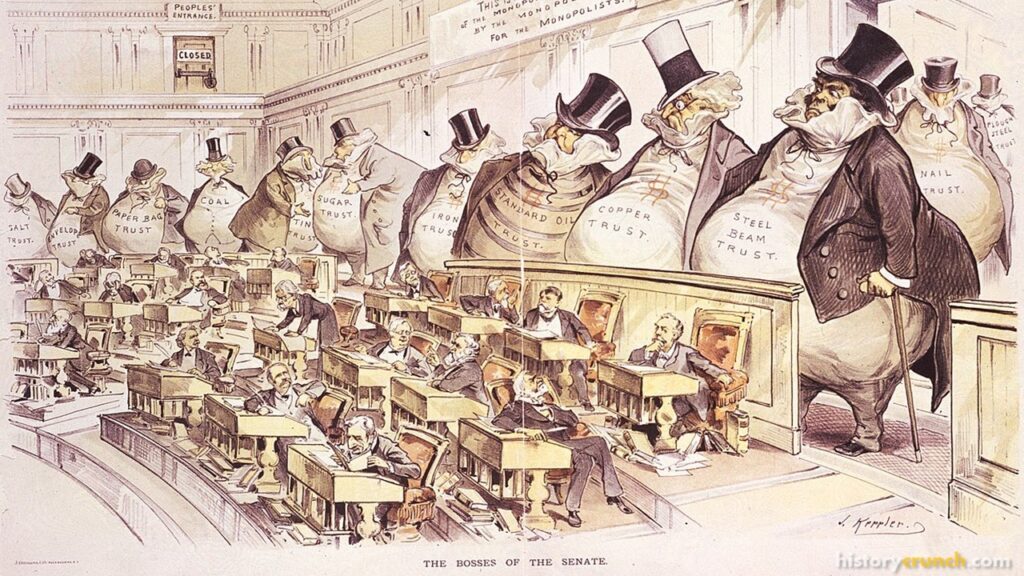
However, the methods used by robber barons to achieve their wealth often sparked significant controversy. Many engaged in unfair business practices, such as forming monopolies, exploiting workers, and manipulating markets. These tactics led to widespread public anger and eventually to government intervention. As well, working-class people of the Gilded Age were angered by the wealth gap that existed between the robber barons and the average worker.
 FactsthatCrunch
Both labels describe the same group of Gilded Age industrialists, including Rockefeller, Carnegie, Vanderbilt, and Morgan. Which label a person chose reflected whether they judged these men by the harm their methods caused or by the growth and institutions their wealth helped build.
Government Response to the Robber Barons
The excesses of the Gilded Age prompted a push for regulatory reforms and government intervention. For instance, the Sherman Antitrust Act of 1890 was one of the first significant steps taken by the American government to limit the power of monopolies and promote fair competition. This legislation aimed to break up large trustsLarge combinations of companies joined together to reduce competition and control an industry. and prevent anti-competitive practices. Over time, additional regulations were introduced to address labor rights, corporate governance, and financial practices.
FactsthatCrunchThe Sherman Antitrust Act of 1890, the first federal law against monopolies, passed Congress with only one vote against it.
Public anger at trusts like Standard Oil pushed lawmakers of both parties to act, and President Benjamin Harrison signed the law on July 2nd, 1890. At first the law was rarely enforced and was sometimes used against labor unions instead. Later presidents, especially Theodore Roosevelt, used it to break up big trusts.
Legacy of the Robber Barons
The legacy of the robber barons is complex. They were instrumental in shaping modern American capitalism, laying the foundation for the country’s economic dominance in the 20th century. Their contributions to industry, infrastructure, and philanthropy had lasting positive effects. This caused some to refer to them as ‘captains of industry’ for their successes.
However, their ruthless business practices and the extreme inequalities they helped create also led to a backlash against unchecked capitalism. The Progressive Era, which followed the Gilded Age, saw significant reforms aimed at reducing corruption, improving working conditions, and increasing government oversight of big business. As such, some view them in a more negative light and refer to them as the ‘robber barons’.
Industrial Revolution timeline · 1760 – 1840
Key Vocabulary
Robber barons
Monopoly
Anti-competitive
Philanthropy
Trusts
Consolidation
Captains of industry
Frequently Asked Questions
Who were the most famous robber barons?
The most famous robber barons were John D. Rockefeller, Andrew Carnegie, Cornelius Vanderbilt, and J.P. Morgan. Each led a major industry, such as oil, steel, railroads, or banking. Their wealth and power made them some of the most influential people in America during the late 1800s.
Why were they called robber barons?
The term robber barons described wealthy businessmen who used harsh and unfair tactics to build their fortunes. Critics accused them of forming monopolies, exploiting workers, and manipulating markets. The name suggested that they gained riches by cheating others rather than through honest competition.
What is the difference between robber barons and captains of industry?
Both terms describe the same wealthy industrialists, but they carry very different meanings. “Captains of industry” praises them for driving growth, creating jobs, and giving to charity. “Robber barons” criticizes them for greed and ruthless methods, so the choice of term reflects how a person judges their actions.
How did the government respond to the robber barons?
The government passed the Sherman Antitrust Act of 1890 to limit monopolies and promote fair competition. This law aimed to break up large trusts and stop anti-competitive practices. Over time, more rules were added to protect labor rights and control corporate and financial behavior.
Did John D. Rockefeller really control most of the oil industry?
John D. Rockefeller’s Standard Oil controlled about 90 percent of the American oil market by the early 1880s. He built this near-monopoly through efficiency, low prices, and secret deals with railroads. His methods were often criticized as unfair, though he later gave away large sums to education and public health.
What was the Gilded Age?
The Gilded Age was the period in American history from the 1870s to about 1900. It was marked by fast economic growth, new technology, and the rise of powerful industries. It was also a time of great inequality, with a wide wealth gap between the rich and average workers.
Cite This Article
To cite this article as a source, use one of the formats below.
MLA: Woida, K.L. “Robber Barons in the Gilded Age: A Detailed Summary.” HistoryCrunch, 27 September 2026, https://historycrunch.com/robber-barons-in-the-gilded-age/.
APA: Woida, K. L. (2026). Robber Barons in the Gilded Age: A Detailed Summary. HistoryCrunch. https://historycrunch.com/robber-barons-in-the-gilded-age/
Chicago: Woida, K.L. “Robber Barons in the Gilded Age: A Detailed Summary.” HistoryCrunch. September 27, 2026. https://historycrunch.com/robber-barons-in-the-gilded-age/
Sources
- Fordham Modern History Sourcebook
- The Science Museum Group