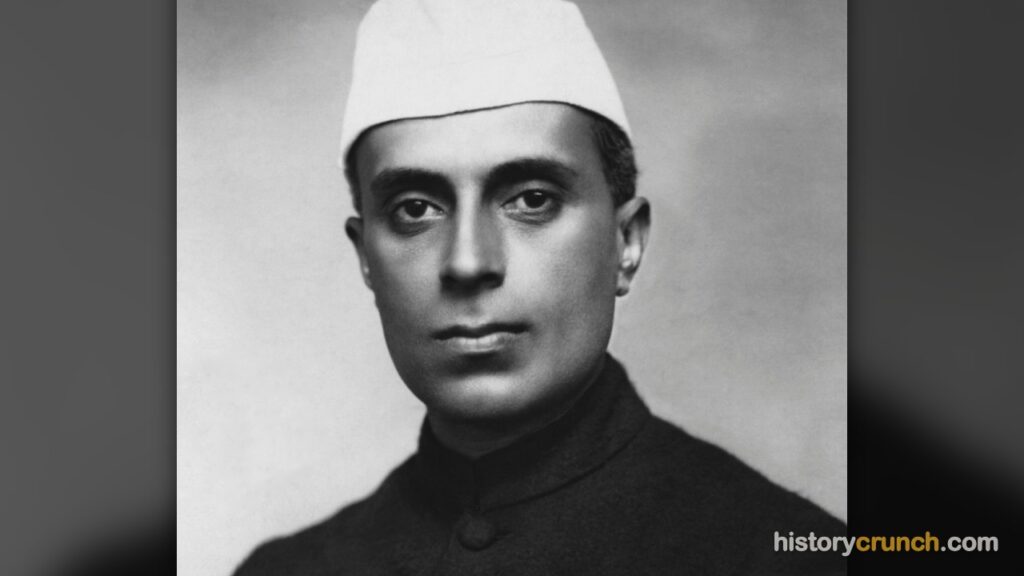
Jawaharlal Nehru is one of the most important figures in the history of modern India and played a central role in both the Indian Independence Movement and the building of India as an independent nation. He worked closely with Mahatma Gandhi during the long struggle against British imperial rule, and he became the first Prime Minister of India when the country gained its freedom in 1947. As Prime Minister, Nehru shaped India’s government, economy, and place in the world for more than a decade and a half, and his ideas about democracy and neutrality continued to guide the country long after his death.
In general, Nehru is best understood as a nationalist leader and statesman. A nationalist is a person who believes strongly in the independence and unity of their own nation, and a statesman is an experienced political leader who helps guide a country’s government. Nehru combined both roles, first as a campaigner for Indian independence and later as the head of the Indian government. The Indian National Congress was the political party through which he did most of this work.
Early Life and Background
Jawaharlal Nehru was born on November 14th, 1889 in the city of Allahabad in British India. He came from a wealthy and well-educated Kashmiri Brahmin family. In the Hindu social order of India, Brahmins were traditionally the priestly and scholarly group, and Nehru’s family was known for its learning and its skill in government service.
His father, Motilal Nehru, was a famous and successful lawyer in Allahabad who also became an important leader in the Indian Independence Movement. This meant that young Jawaharlal grew up in a home filled with political discussion and comfort. As a boy, he was educated at home by a series of private English tutors and governesses, which gave him a largely Western upbringing.
At the age of fifteen, Nehru traveled to England to continue his education. He studied at Harrow, a well-known English school, and then attended Trinity College at Cambridge University, where he studied natural science. He later trained in law in London before returning to India in 1912. Even as a student in England, he had taken a keen interest in the struggles of nations that lived under foreign control, and these ideas stayed with him for the rest of his life.
Rise to Power
After returning to India, Nehru was quickly drawn into politics and the growing movement for Indian independence. He joined the Indian National Congress, the political party that had been founded in 1885 to promote Indian nationalism and self-government. The Indian word for this idea of self-rule is swaraj, and it became a central goal for Nehru and the Congress.
A turning point in Nehru’s life came when he met Mahatma Gandhi in 1916. Gandhi had become the most important leader of the Indian Independence Movement, and he was famous for his method of non-cooperation based on civil disobedience. In general, civil disobedience is when people peacefully refuse to obey laws they believe are unjust. Nehru was deeply inspired by Gandhi, and the two men became close political allies for the next several decades.
Throughout the 1920s and 1930s, Nehru rose to the front rank of the Congress. He became General Secretary of the party in 1923, and in 1929 he was elected President of the Congress at its session in Lahore. At that meeting, the Congress adopted complete independence from Britain as its official goal. For his part in protests such as the Salt March and other campaigns, the British imprisoned Nehru many times during these years, and he spent long periods behind bars for his political activities.
Nehru’s time in prison was not wasted. In fact, he used it to write books and letters that were read around the world, including works about the history of India. His writing helped explain the goals of the independence movement and made him a respected voice both inside and outside the country. By the 1940s, he was seen as Gandhi’s political heir and the natural leader who would guide India after independence.
Major Achievements as Prime Minister
India finally gained its independence from Britain on August 15th, 1947, and Jawaharlal Nehru became the nation’s first Prime Minister. The moment of freedom was also a moment of great difficulty. The country was divided, or partitioned, into two separate nations, with Pakistan created for Muslims and India for Hindus and Sikhs. This partition caused terrible communal violence and forced millions of people to flee their homes, and it left behind a bitter dispute with Pakistan over the region of Kashmir.
As Prime Minister, Nehru worked to hold together a huge population that was diverse in language, religion, and culture. He built India as a democratic republic with a parliament, and he strongly supported secularism, which is the idea that the government should treat all religions equally and not favor any one faith. This was an important goal in a country with many different religious communities.
Nehru also tried to modernize India’s economy. He believed in a form of democratic socialism, in which the government plays a large role in guiding the economy for the good of the people. More specifically, he introduced a series of Five-Year Plans, beginning in 1951, which set national goals for development. These plans focused on increasing farm production and on building heavy industries such as steel, iron, and coal under government control.
In addition to economic planning, Nehru pushed for social reforms and the growth of science and education. He supported free public education and worked to expand India’s universities and technical schools. He also backed laws that gave women greater legal rights, including the ability to inherit property and to seek divorce, and laws meant to reduce discrimination based on caste, which was the traditional system of social groups in India.
On the world stage, Nehru became famous for his policy of non-alignment. This came during the Cold War, the long period of tension between the United States and the Soviet Union. Rather than joining either side, Nehru argued that newly independent nations should stay neutral, and he helped found the Non-Aligned Movement of countries that refused to formally join either bloc. Both the United States and the Soviet Union competed to win India’s friendship during these years.
Later Life
Nehru remained Prime Minister for the rest of his life, serving three terms in office. He was widely loved by the Indian people, and he was especially fond of children, who called him “Chacha Nehru,” meaning “Uncle Nehru.” In fact, his birthday on November 14th is still celebrated in India as Children’s Day.
The later years of his time in office, however, brought serious troubles. His foreign policy was tested in 1962, when a border dispute led to the outbreak of the Sino-Indian War between India and China. The war went badly for India and came as a heavy blow to Nehru, who had hoped for peaceful relations with China. The defeat damaged his reputation and weighed heavily on his health.
Nehru’s health declined in the years after the war with China. He died in office on May 27th, 1964, in New Delhi, after serving as Prime Minister for more than sixteen years. He remains India’s longest-serving Prime Minister. His family stayed at the center of Indian politics for decades, as his daughter, Indira Gandhi, and his grandson, Rajiv Gandhi, both later served as Prime Minister of India.
Significance of Jawaharlal Nehru
Jawaharlal Nehru is significant because he helped lead India to independence and then shaped it into a modern nation during its most fragile early years. As stated above, he was one of the principal leaders of the Indian Independence Movement, working alongside Mahatma Gandhi to end British imperial rule. His leadership gave the movement an educated and modern voice that appealed to India’s youth and intellectuals.
As India’s first Prime Minister, Nehru laid the foundations of the country’s parliamentary democracy and its commitment to secularism. His choices helped India remain a single, united, and democratic republic at a time when many feared it might fall apart. For this reason he is often called an architect of the modern Indian nation-state.
Finally, Nehru’s ideas reached far beyond India. His policy of non-alignment offered a model for other newly independent nations that did not wish to be controlled by either superpower during the Cold War. In this way, his influence shaped not only India but the overall history of the world after the age of empires.
Frequently Asked Questions
Who was Jawaharlal Nehru?
Jawaharlal Nehru was the first Prime Minister of India and a leading figure in the country’s independence movement. He worked with Mahatma Gandhi against British rule and then governed India from 1947 until his death in 1964. He is remembered as one of the founders of modern India.
When was Jawaharlal Nehru born and when did he die?
Nehru was born on November 14th, 1889 and died on May 27th, 1964. He was born in Allahabad in British India and died in New Delhi while still serving as Prime Minister. He lived to the age of 74.
What is Nehru famous for?
Nehru is famous for becoming independent India’s first Prime Minister and for leading the country for more than sixteen years. He set up India’s democratic government, promoted secularism, and launched the Five-Year Plans to develop the economy. He is also known worldwide for creating the policy of non-alignment during the Cold War.
What was Nehru’s relationship with Gandhi?
Nehru was a close ally and political follower of Mahatma Gandhi. The two men met in 1916, and Nehru was inspired by Gandhi’s method of peaceful protest. Over time Nehru came to be seen as Gandhi’s chosen political heir, though Nehru favored a more modern and secular outlook than Gandhi did.
Why is Children’s Day linked to Nehru?
Children’s Day is celebrated in India on November 14th because that was Nehru’s birthday. Nehru loved children and was affectionately called “Chacha Nehru,” meaning “Uncle Nehru.” After his death, India chose to honor his fondness for children by marking his birthday as a national day for them.
Cite This Article
To cite this article as a source, use one of the formats below.
MLA: Millar, B. “Jawaharlal Nehru: A Detailed Biography.” HistoryCrunch, 14 August 2026, https://historycrunch.com/jawaharlal-nehru/.
APA: Millar, B. (2026). Jawaharlal Nehru: A Detailed Biography. HistoryCrunch. https://historycrunch.com/jawaharlal-nehru/
Chicago: Millar, B. “Jawaharlal Nehru: A Detailed Biography.” HistoryCrunch. August 14, 2026. https://historycrunch.com/jawaharlal-nehru/
Sources
- J.M. Roberts & Odd Arne Westad, The Penguin History of the World.
- Jerry Bentley & Herbert Ziegler, Traditions & Encounters: A Global Perspective on the Past.