
The Age of Absolutism is the three centuries in which the kings of Europe gathered every power of the state into their own hands and claimed to hold it from God. This timeline runs from the marriage that made Spain in 1469 to the death of Catherine the Great in 1796: the Inquisition and the Reformation, Philip II governing an empire from a desk, Ivan the Terrible and his Oprichnina, the English king who lost his head and the French king who built Versailles, Peter the Great cutting off his nobles' beards, Frederick, Maria Theresa and Catherine reforming by decree, and the summer of 1789 when the strongest monarchy in Europe called a parliament for money and lost everything. Every card sits on a real date and links to the article behind it.
From Ferdinand and Isabella to the guillotine
The Age of Absolutism is the three centuries in which the kings of Europe gathered every power of the state into their own hands and claimed to hold it from God. This timeline runs from the marriage that made Spain in 1469 to the death of Catherine the Great in 1796: the Inquisition and the Reformation, Philip II governing an empire from a desk, Ivan the Terrible and his Oprichnina, the English king who lost his head and the French king who built Versailles, Peter the Great cutting off his nobles' beards, Frederick, Maria Theresa and Catherine reforming by decree, and the summer of 1789 when the strongest monarchy in Europe called a parliament for money and lost everything. Every card sits on a real date and links to the article behind it.
Law, taxes, courts, church and army, with no parliament able to say no. The model is Louis XIV after 1661.
He made himself his own prime minister.
From the Bible, the Roman emperors and the wars of religion. James I wrote it down; Charles I died for it.
James told Parliament that kings were gods on earth.
Hobbes said fear of chaos; Locke said they had not agreed at all, only lent the power, and could take it back.
The king's execution was the chaos Hobbes wrote against.
Because after Luther a second religion looked like a second loyalty. Augsburg, Nantes and its revocation are the same argument.
Luther split the faith of Europe.
A marriage, an Inquisition, a conquest and the silver of the Americas, all under one crown by 1516.
Two kingdoms joined by a wedding.
A fixed capital, a mountain of paper and a palace that was also a monastery.
He inherited Spain, Italy, the Netherlands and the Americas.
English guns, Dutch shallows, the weather, and a plan the king made against his admirals' advice.
The revolt of the Netherlands drained Spain for eighty years.
By marrying heiresses for a century. Charles V was the result, and he split it in two.
Charles held Spain, the Netherlands, Austria and the Empire.
Both, in that order. The first thirteen years built Russia; the last twenty terrorized it.
Crowned Tsar at sixteen, he called assemblies and reformed the law.
Crowned at ten beside a half-brother, ruled by his sister, he overthrew her at seventeen.
The Romanovs were elected after fifteen years of chaos.
The army, the navy, the capital, the Church, the nobility and the calendar. Almost everything except serfdom.
Narva showed the old army could not win.
She wrote like one until 1774. After Pugachev she governed for the nobility.
She took the throne from her husband with the Guards.
East down the Volga under Ivan, west to the Baltic under Peter, south to the Black Sea under Catherine.
Kazan gave Russia the Volga.
Because Henry VIII had made Parliament his partner, and Parliament controlled the money.
Henry took the Church through Parliament, not around it.
Step by step: no Parliament, then a Parliament that would not go home, then an army that would not obey it.
Charles came to the throne believing in divine right.
Very nearly. He refused the crown and ruled by major-generals instead.
His cavalry won the war.
That it happened without a battle, and that Parliament set the terms before it gave the crown.
James ruled by decree and had a Catholic son.
Henry IV rebuilt the treasury, Richelieu broke the nobles and the Huguenots, Mazarin beat the Fronde.
Nantes gave France peace.
He gave them Versailles instead of power, and made attendance on him the only way to rise.
He never forgot sleeping on straw at ten.
Some border towns, and a debt of two billion livres that his great-great-grandson could never pay.
The first war took Lille.
Because one family ruling France and Spain together would have ruled the world.
Charles II left everything to a French prince.
It went bankrupt, and an absolute king could not tax the nobles without an assembly the nobles controlled.
Louis XIV left the debt.
An army first, a state to pay for it, and a king willing to use both.
The Great Elector built a standing army from nothing.
Both. He abolished torture in his first week and invaded Silesia in his seventh month.
His father had his friend beheaded before him.
By persuading Hungary to fight for her, rebuilding the state and outlasting everyone.
Her father spent a reign collecting signatures.
British money, Frederick's battles, and a death in St. Petersburg.
Austria and France became allies for the first time in 250 years.
He did in ten years what needed fifty, and asked nobody.
He waited fifteen years under his mother.
In Austria, something; in Russia, the opposite. The crown protected them where it needed them and sold them where it did not.
Maria Theresa limited serf labor to three days a week.
Torture, censorship, schools, toleration and law codes. Not their own power, and mostly not serfdom.
Frederick abolished torture in his first week.
Because a palace was power made visible, and a court was a cage for the nobility.
The Escorial said God and duty.
Debt, ideas and a Paris crowd. The American and French revolutions did in fifteen years what no parliament had done in three hundred.
America founded a republic on Locke's sentence.
Both kings were tried by their own subjects for claiming to be above the law, and both died saying they were.
Charles said a subject and a sovereign were different things.
Absolutism did not arrive in a day. It was assembled, piece by piece, by rulers who found that a crown could do more than it used to. Ferdinand and Isabella joined two kingdoms by marriage in 1469 and gave the Spanish crown its own Inquisition, its own conquered Granada and, from 1492, the silver of a new world. Henry VIII took the Church of England away from the Pope by act of Parliament and kept a quarter of the kingdom's land. Ivan IV had himself crowned Tsar, Caesar, at sixteen. And in the middle of it Martin Luther split the faith of Europe in 1517, so that for the next century every ruler had to decide what his subjects would believe and be ready to fight over it. The Peace of Augsburg in 1555 gave the answer that would hold for a hundred years: whose realm, his religion.
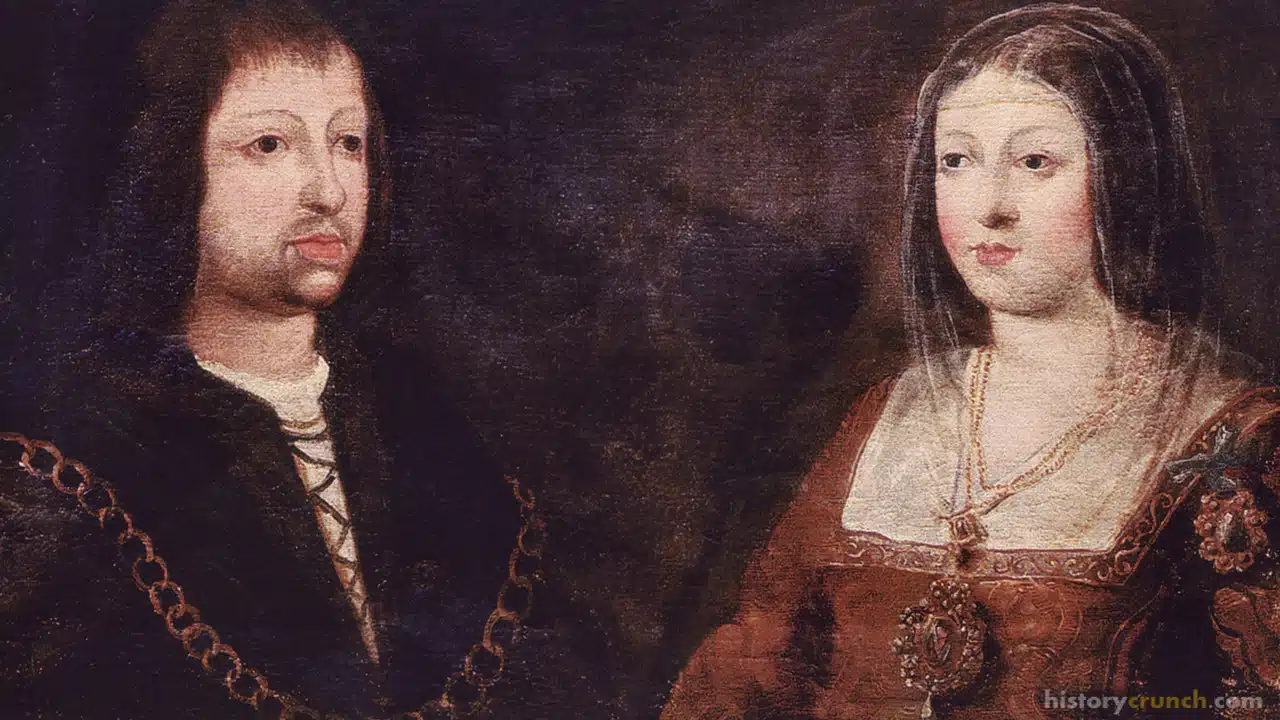
On October 19th, 1469 Ferdinand, the eighteen-year-old heir to Aragon, married his cousin Isabella, the eighteen-year-old heiress of Castile, in Valladolid, in secret and against the wishes of her half-brother the king. When each inherited a crown, Isabella in 1474 and Ferdinand in 1479, the two largest kingdoms in Spain came under one married pair. They kept separate laws and parliaments but ruled together, and their motto was 'as much the one as the other'.
LEARN MORESHOW LESSwhy it mattersMARRIAGESpain was made by a wedding. The two monarchs then spent thirty years bringing nobles, towns, church and courts under the crown, and that work is where absolutism in Spain begins.
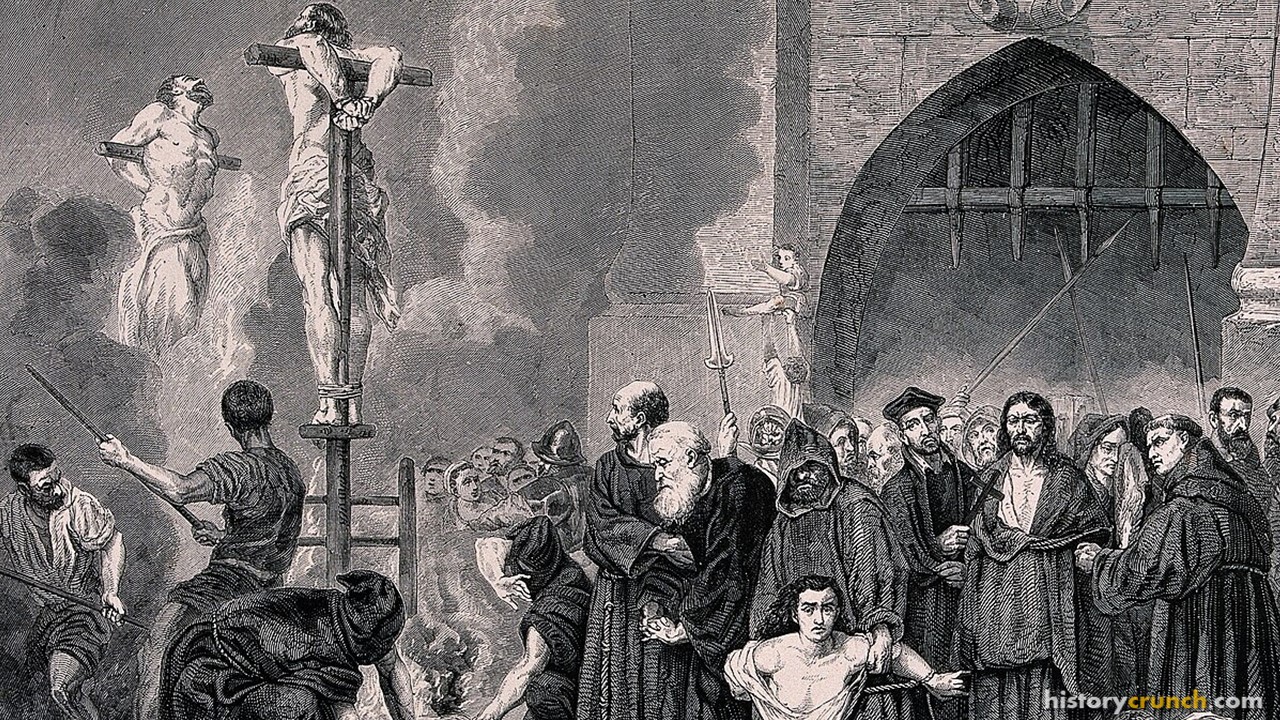
On November 1st, 1478 Pope Sixtus IV issued a bull allowing Ferdinand and Isabella to appoint their own inquisitors to hunt for heresy among converted Jews in Castile. Unlike earlier inquisitions run by the Church, this one answered to the crown: the monarchs named its judges, took its confiscations and used it in every kingdom they ruled. Its first tribunal opened in Seville in 1480 and its first burnings followed in 1481. It was not abolished until 1834.
LEARN MORESHOW LESSwhy it matters · key numbersRELIGIONThe Inquisition gave the Spanish crown something no other European monarch had: a police force for belief that worked across every province and answered to the king alone.
On January 2nd, 1492 Muhammad XII, the last Muslim ruler of Granada, handed the keys of the Alhambra to Ferdinand and Isabella after a ten-year war. It ended nearly eight centuries of Muslim rule in some part of Spain. In the same year the monarchs ordered every Jew in their kingdoms to convert or leave by the end of July, and in August they sent Christopher Columbus west across the Atlantic.
LEARN MORESHOW LESSwhy it matters · key numbersCONQUEST1492 gave the Spanish crown a united peninsula, a single faith and, within a generation, the silver of the Americas. That is the base on which Charles V and Philip II built the strongest monarchy in Europe.
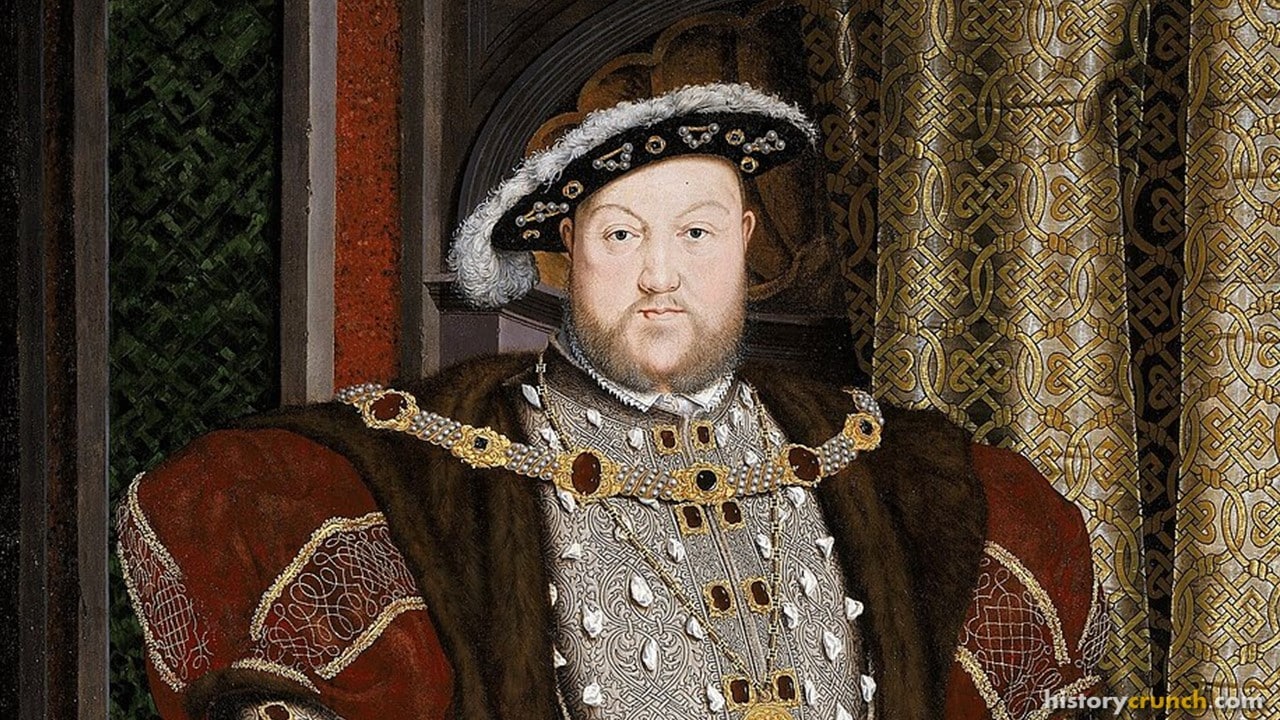
On April 22nd, 1509 Henry VIII, aged seventeen, inherited the English throne from his father Henry VII, who had won it in battle in 1485 and spent his reign filling the treasury and taming the nobles. The son was tall, athletic, educated and sure of himself. Over the next thirty-eight years he would break with Rome, take the Church's land, execute two of his six wives and two of his chief ministers, and leave the English crown stronger than any before it.
LEARN MORESHOW LESSwhy it matters · 1 key figureACCESSIONEnglish absolutism begins with Henry, not because he ruled without Parliament but because he used Parliament to make himself head of the Church.
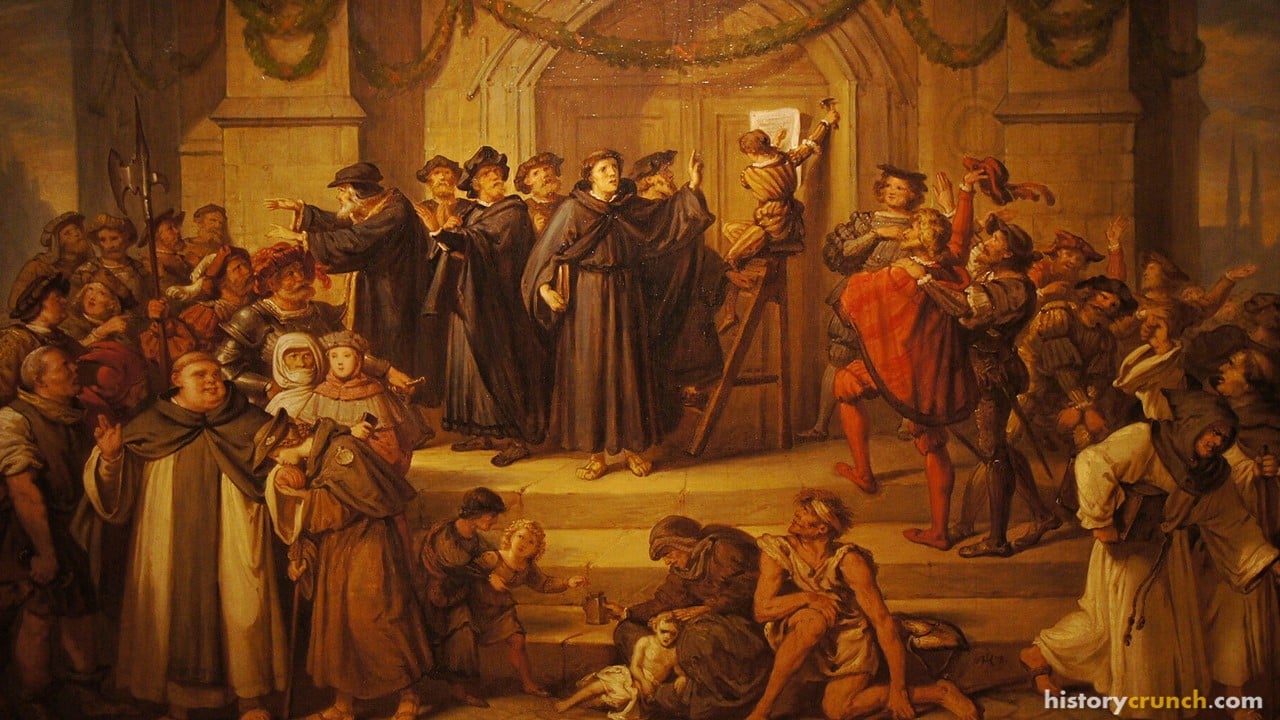
On October 31st, 1517 a German monk and professor named Martin Luther sent his bishop ninety-five arguments against the sale of indulgences, papers that promised release from punishment for sin, and, by tradition, nailed them to the church door in Wittenberg. Printed and reprinted, they set off the Protestant Reformation. Within a generation half of Germany, Scandinavia, England and parts of France, Switzerland and the Netherlands had left the Catholic Church.
LEARN MORESHOW LESSwhy it matters · 1 key figureRELIGIONThe Reformation is the first cause of absolutism. A century of religious war followed, and exhausted peoples came to accept that only a king with full power could keep the peace.
On June 28th, 1519 the seven electors of the Holy Roman Empire, persuaded by 850,000 florins in bribes borrowed from the Fugger bank, chose the nineteen-year-old Charles of Habsburg, already King of Spain, as Emperor Charles V. Through his four grandparents he held Spain and its new American empire, the Netherlands, Austria, Bohemia, Hungary, Naples and Sicily and the imperial crown. No ruler since Charlemagne had held so much of Europe.
LEARN MORESHOW LESSwhy it matters · key numbersELECTIONCharles spent forty years and the silver of Mexico and Peru trying to hold it all together against France, the Turks and Luther, and he failed. His son Philip inherited the lesson: rule from one place, with one faith.
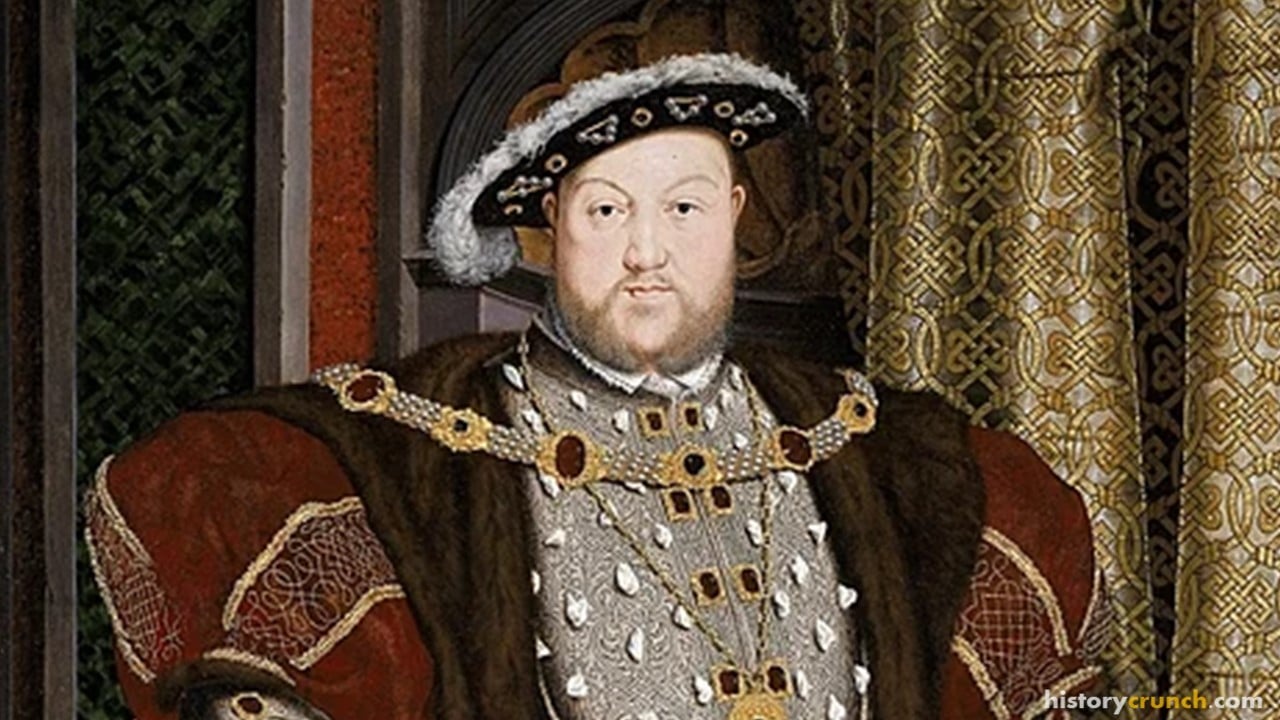
In November of 1534 Parliament passed the Act of Supremacy, declaring the king 'the only supreme head in earth of the Church of England'. Henry had broken with the Pope, who would not annul his marriage to Catherine of Aragon, married Anne Boleyn in 1533 and now took the Pope's powers for himself. Over the next six years he closed every monastery in England and took their land, about a quarter of the country, for the crown, and sold most of it.
LEARN MORESHOW LESSwhy it matters · key numbers · 1 key figureLAWNo English king had ever held both church and state. Henry did, and he did it through Parliament, which is why English absolutism later ran into Parliament rather than around it.
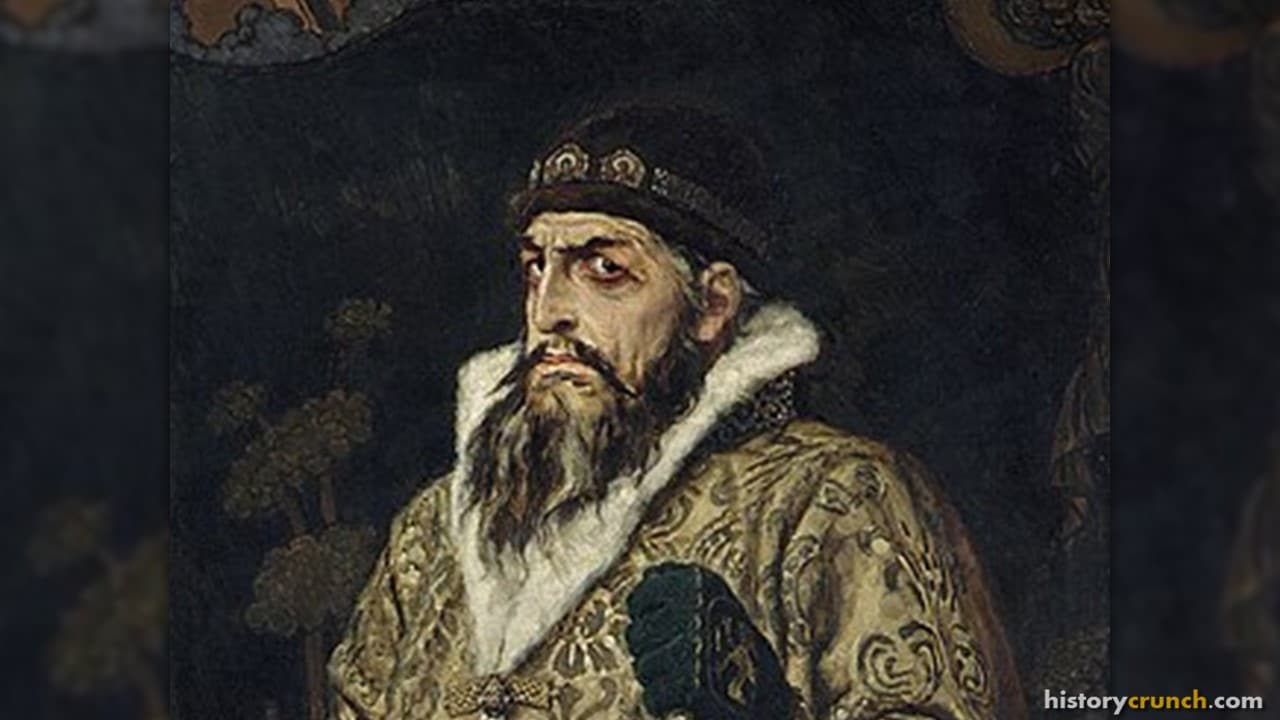
On January 16th, 1547 Ivan IV, aged sixteen, was crowned in the Dormition Cathedral in Moscow with the title Tsar, from Caesar, of all Russia. His grandfather Ivan III had thrown off the Mongols and called himself sovereign; Ivan IV was the first to take the imperial title at his coronation, claiming Moscow as the heir of Byzantium, the Christian Roman empire that had fallen to the Turks in 1453. In the next decade he called the first national assembly, reformed the law and the army, and took Kazan and Astrakhan on the Volga.
LEARN MORESHOW LESSwhy it matters · 1 key figureCORONATIONThe word tsar carried the claim that the ruler of Moscow answered to God alone. Every Russian ruler kept the claim until 1917.
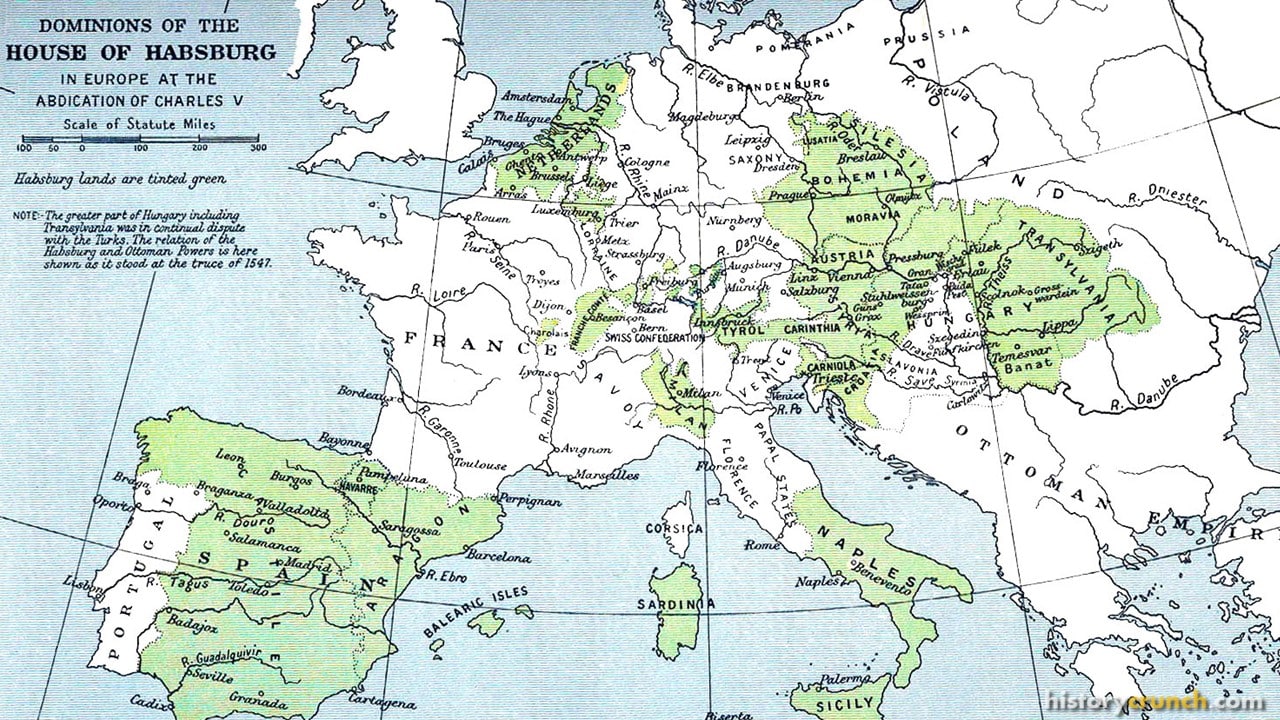
On April 24th, 1547 Charles V's army caught the forces of the Schmalkaldic League, the alliance of Protestant German princes, crossing the Elbe River at Muhlberg in Saxony and destroyed them in a few hours. The Elector of Saxony was captured; Charles, gout-ridden, watched from horseback, and Titian painted him that way. For a moment the Emperor had beaten Protestantism in Germany by force.
LEARN MORESHOW LESSwhy it mattersBATTLEThe victory did not hold. The princes rose again in 1552, Charles fled over the Alps, and three years later he had to accept that Germany would have two religions.
On October 2nd, 1552, after a siege of six weeks, Ivan's army stormed Kazan, the capital of the Tatar khanate on the upper Volga, after engineers blew up a section of the wall. Astrakhan at the river's mouth followed in 1556. The whole Volga, and with it the road to the Caspian Sea and Siberia, was Russian. Ivan built St. Basil's Cathedral on Red Square to mark the victory.
LEARN MORESHOW LESSwhy it matters · 1 key figureCONQUESTKazan was the first Muslim state conquered by Moscow. Russia's expansion east, which reached the Pacific within a century, started here.
On September 25th, 1555 the Imperial Diet at Augsburg agreed a peace between the Catholic and Lutheran states of the Holy Roman Empire. Each prince would decide whether his territory was Catholic or Lutheran, a rule later summed up as 'whose realm, his religion'; subjects who disagreed could move. Calvinists got nothing. Charles V, who had spent his life trying to keep one Church, refused to attend and let his brother Ferdinand sign.
LEARN MORESHOW LESSwhy it matters · key numbersTREATYAugsburg made religion a decision of the ruler. That principle, that the prince chooses the faith, is absolutism applied to the soul, and it kept the peace in Germany for sixty-three years.
Philip II of Spain is the first ruler who looks like the textbook absolute monarch. He inherited half the world from his father in 1556, moved his court to a fixed capital, built a palace that was also a monastery and governed an empire from Manila to Milan by reading and annotating every report himself. He won at Lepanto, took Portugal, lost the Netherlands and sent the Armada, and he did all of it in the name of one faith. In Russia Ivan the Terrible did with terror what Philip did with paper: the Oprichnina broke the old nobility and the sack of Novgorod closed the last alternative to the tsar. In France the Wars of Religion made people ready to trade their liberties for a king who could stop the killing, and Henry IV's Edict of Nantes in 1598 bought the peace. James I brought the theory of divine right to England in 1603 and announced it to a Parliament that had its own ideas.
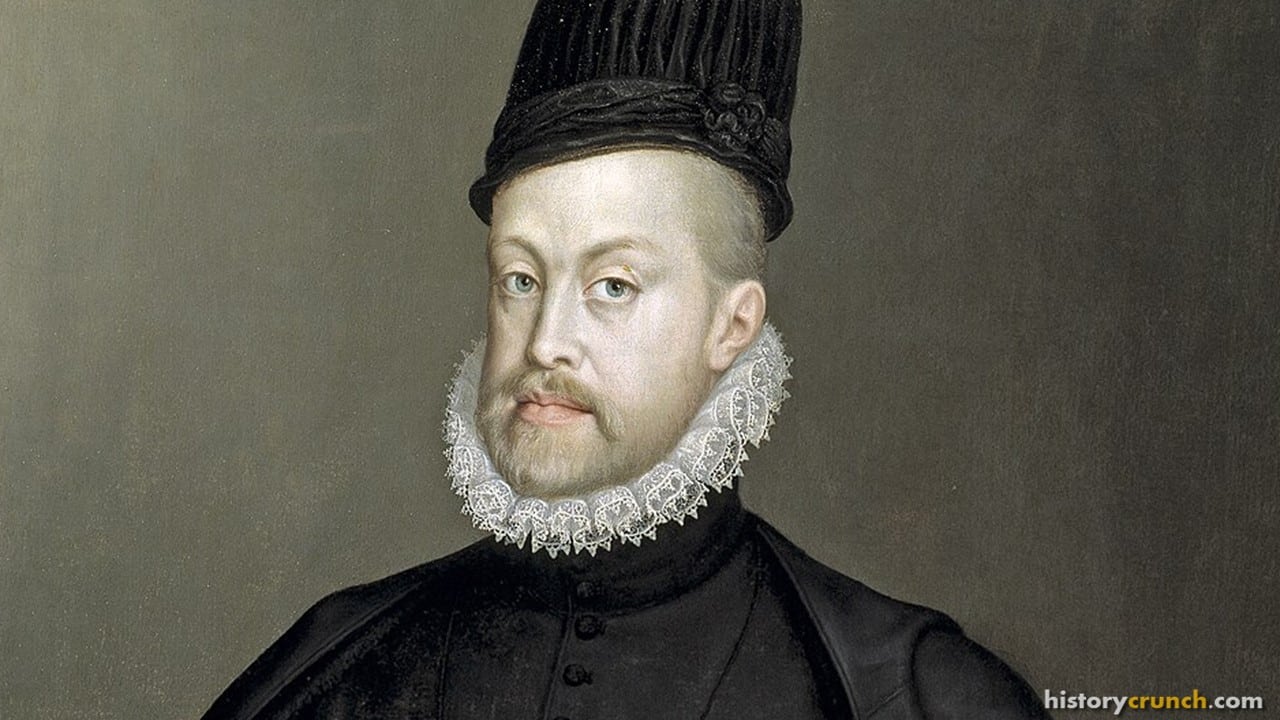
On January 16th, 1556 Charles V handed the crowns of Spain, its American empire, Naples, Sicily and the Netherlands to his son Philip; he had already given Philip Milan and would give the imperial title and the Austrian lands to his brother Ferdinand. Worn out at fifty-five, he retired to a house beside the monastery of Yuste in Spain, where he kept clocks and died in 1558. The Habsburgs were now two families, in Madrid and in Vienna, and would stay so for two centuries.
LEARN MORESHOW LESSwhy it matters · 1 key figureABDICATIONThe division put Spain's power in one man's hands. Philip II ruled it from a desk, and his reign is the first full model of an absolute monarch.
In May of 1561 Philip II moved his court to Madrid, a small town in the geographic center of Spain with no cathedral and no history as a capital. The medieval Spanish kings had traveled constantly; Philip meant to rule from one place, through paper. He read and annotated thousands of reports a year from every corner of an empire that stretched from Manila to Mexico to Milan, and courtiers said he governed the world from a chair.
LEARN MORESHOW LESSwhy it matters · 1 key figureGOVERNMENTAn absolute monarch needs a fixed center and a bureaucracy. Madrid and the mountain of paper are Philip's contribution to the model.
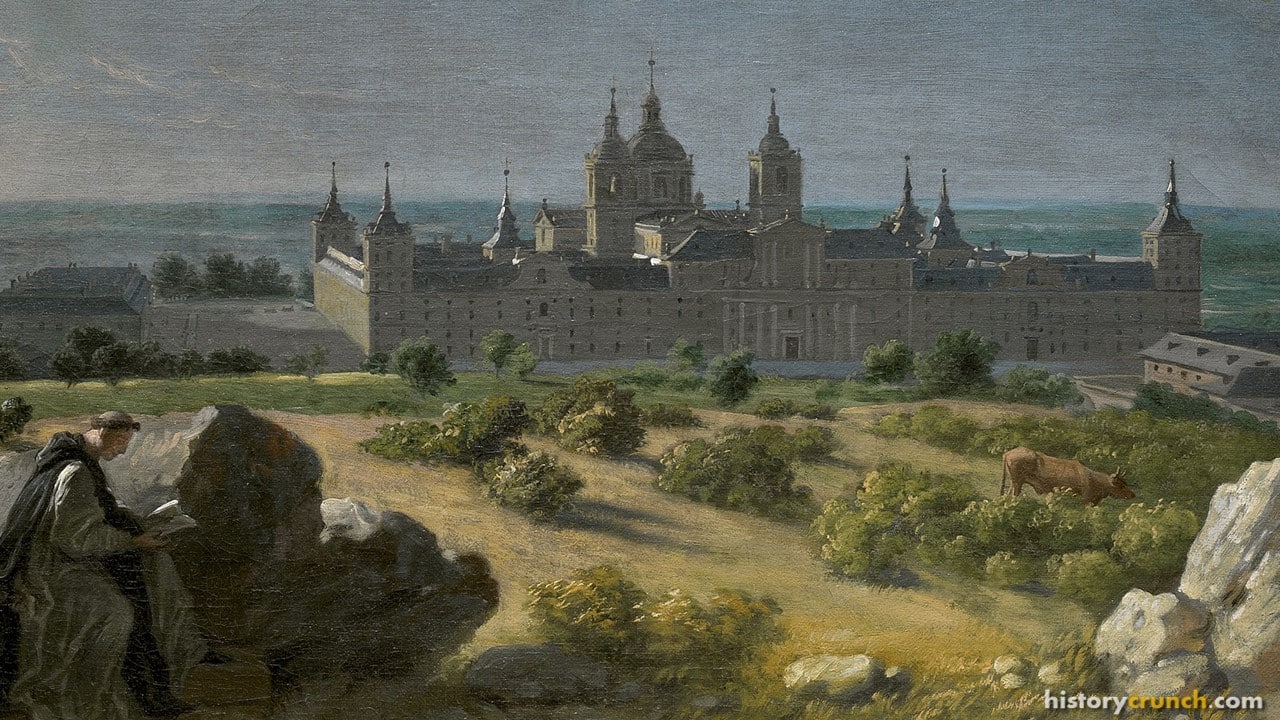
On April 23rd, 1563 building began on the Escorial, thirty miles from Madrid in the Guadarrama mountains: a palace, a monastery, a church, a library and a royal tomb in one gray granite block, laid out, it was said, on the plan of a gridiron because St. Lawrence had been martyred on one. It took twenty-one years. Philip spent his last years in a small suite there, with a window onto the high altar, and died in it in 1598.
LEARN MORESHOW LESSwhy it matters · key numbersBUILDINGEvery absolute monarch built a palace that said what he was. Louis XIV's Versailles said pleasure and power; Philip's Escorial said God and duty.
In December of 1564 Ivan IV left Moscow with his treasury and announced that he was abdicating because of the treason of the boyars, the great nobles. The frightened city begged him to return. On February 3rd, 1565 he came back on his own terms: a separate state within the state, the Oprichnina, with its own black-clad army of 6,000 who answered to him alone, and the right to execute anyone without trial. Over the next seven years thousands of boyars, officials and their families were killed and their lands given to Ivan's men.
LEARN MORESHOW LESSwhy it matters · key numbers · 1 key figureTERRORThe Oprichnina is absolutism as terror. It broke the old nobility of Russia and left the tsar with no rival, which is the state Peter the Great inherited.
In August of 1566 Calvinist crowds in the Netherlands had smashed the images in hundreds of Catholic churches. Philip II sent his best general, the Duke of Alba, with 10,000 Spanish troops. Alba entered Brussels on August 22nd, 1567 and set up a court the Dutch called the Council of Blood, which condemned more than a thousand people, including two of the highest nobles in the country, beheaded in the Grand Place in 1568. William of Orange fled and raised an army. The Eighty Years' War had begun.
LEARN MORESHOW LESSwhy it mattersREPRESSIONPhilip tried to rule the Netherlands as he ruled Castile and lost the richest provinces in Europe doing it. The Dutch Republic that emerged was the standing proof that a people could do without a king.
In January of 1570 Ivan IV, convinced that Novgorod, Russia's old trading city, was plotting to go over to Poland, marched on it with his Oprichnina army. For five weeks from January 2nd the city was systematically plundered and its people tortured and killed, drowned under the ice of the Volkhov River by the hundred each day. Estimates of the dead run from about 3,000 to many times that. Novgorod never recovered its place.
LEARN MORESHOW LESSwhy it matters · 1 key figureTERRORNovgorod had once been a republic with its own assembly. Ivan's destruction of it closed the last alternative to autocracy in Russia.
On October 7th, 1571 a fleet of about 200 galleys from Spain, Venice and the Papacy, commanded by Philip's half-brother Don John of Austria, met the Ottoman fleet in the Gulf of Patras off western Greece. In four hours of fighting at close range the Turks lost about 200 ships and 30,000 men and some 12,000 Christian galley slaves were freed. Miguel de Cervantes, who would write Don Quixote, lost the use of his left hand in the battle.
LEARN MORESHOW LESSwhy it matters · key numbersBATTLELepanto ended the fear that the Ottoman navy could take the western Mediterranean. It was the peak of Philip's reign as the champion of Catholic Europe.
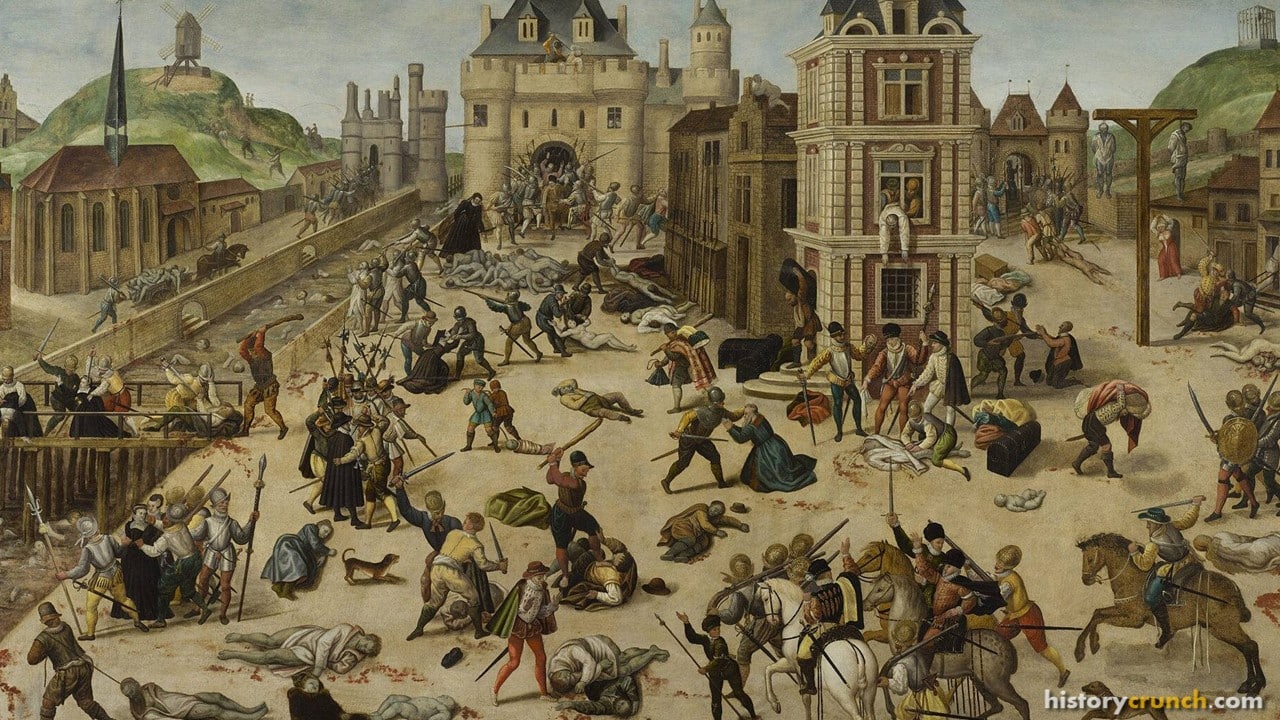
In the early hours of August 24th, 1572, six days after a royal wedding meant to reconcile Catholics and Protestants, the bells of Paris signaled the killing of the Huguenot, or French Protestant, leaders gathered in the city for it. The killing spread to the streets and to a dozen provincial cities over the following weeks. About 3,000 died in Paris and perhaps 10,000 in France. King Charles IX and his mother Catherine de Medici had ordered the first murders; nobody had ordered the rest.
LEARN MORESHOW LESSwhy it matters · key numbersMASSACREThe Wars of Religion made French people willing to trade their liberties for a king strong enough to stop the killing. That trade is the foundation of the Bourbon monarchy.
When the King of Portugal died without an heir in 1580 Philip II, whose mother was Portuguese, claimed the throne and sent the Duke of Alba to enforce it. Alba beat the rival claimant at Alcantara outside Lisbon on August 25th, 1580, and Philip was crowned in 1581. Spain now held Portugal's empire too: Brazil, the African forts, the spice ports of India and the East Indies. It was the first empire on which the sun never set.
LEARN MORESHOW LESSwhy it matters · key numbers · 1 key figureCONQUESTFor sixty years one king ruled every European possession in the Americas, Africa and Asia. Portugal broke away in 1640, and Spain never got it back.
On November 16th, 1581 Ivan IV struck his eldest son and heir, also named Ivan, on the head with his iron-tipped staff during a quarrel at Alexandrovskaya Sloboda, by some accounts over the tsar's treatment of the younger Ivan's pregnant wife. The prince died of the wound three days later. Ivan, wild with grief, sent money to monasteries to pray for the son he had killed. The throne would pass to his other son Feodor, who was feeble and childless.
LEARN MORESHOW LESSwhy it matters · 1 key figurePERSONOne blow ended the dynasty that had ruled Moscow for seven centuries. When Feodor died in 1598 Russia fell into fifteen years of civil war called the Time of Troubles.
Ivan IV died on March 28th, 1584 in Moscow, at fifty-three, sitting down to a game of chess. He had reigned for fifty-one years, longer than any Russian ruler before him, doubled the size of the country and lost the Livonian War for the Baltic after twenty-five years of fighting. His son Feodor succeeded him with the boyar Boris Godunov governing in his name.
LEARN MORESHOW LESSwhy it matters · key numbers · 1 key figureDEATHIvan left Russia bigger, poorer and entirely subject to the tsar. Peter the Great, a century later, inherited both the power and the wreckage.
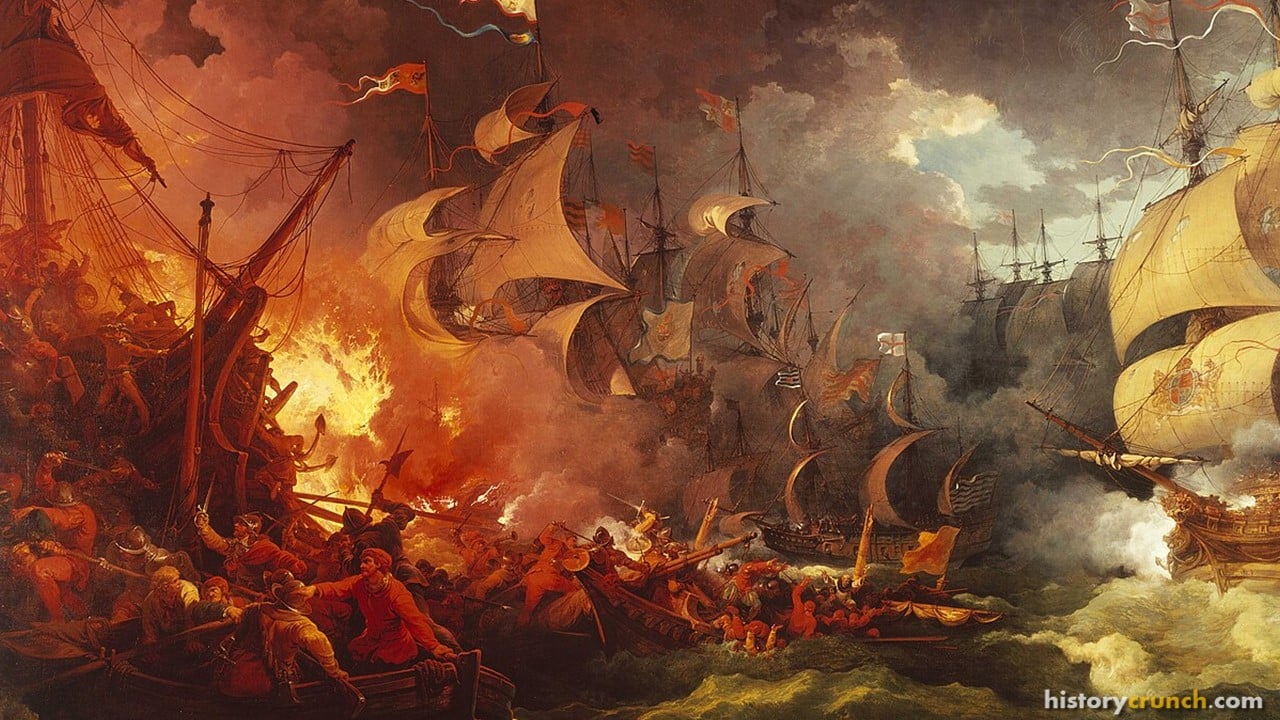
Philip II sent about 130 ships and 30,000 men up the Channel in the summer of 1588 to carry the Spanish army in the Netherlands across to England and depose Elizabeth I. The English fleet harried the Armada up the Channel, sent fireships into its anchorage off Calais on the night of August 7th, and on August 8th, 1588 fought it off Gravelines, where English guns at close range battered the Spanish ships. Storms then drove the Armada around Scotland and Ireland; about a third of it never came home.
LEARN MORESHOW LESSwhy it matters · key numbers · 1 key figureBATTLEThe Armada was absolutism at sea: one king's decision, enforced against the advice of his admirals. Its failure kept England Protestant and Parliament alive.
On April 13th, 1598 Henry IV, the Protestant prince who had become a Catholic to take the French throne in 1593, issued the Edict of Nantes. It let Huguenots worship in named towns, hold public office and keep about 150 fortified places at the crown's expense. After thirty-six years of civil war France had peace. Henry then set about restoring the treasury, building roads and bridges and putting a chicken, he said, in every peasant's pot on Sundays.
LEARN MORESHOW LESSwhy it matters · key numbersLAWNantes was a truce, not a principle. Richelieu took the Huguenot fortresses in 1629 and Louis XIV took the worship in 1685, because a state with two religions was not, to them, a state with one king.
Philip II died on September 13th, 1598 in his small room at the Escorial, aged seventy-one, after fifty-three days of illness during which he insisted on being carried to Mass and on reading state papers. He left the throne to his twenty-year-old son Philip III, who handed government to a favorite, the Duke of Lerma. Spain had beaten the Turks and taken Portugal but lost the northern Netherlands, failed against England and gone bankrupt four times.
LEARN MORESHOW LESSwhy it matters · key numbers · 1 key figureDEATHPhilip had shown that one man could govern a world empire from a desk. He had also shown what it cost: the silver of two continents spent on wars that did not end.
Elizabeth I died on March 24th, 1603 without an heir and the crown passed to her cousin James VI of Scotland, who became James I of England. He arrived with a theory of divine right already in print: in The True Law of Free Monarchies, published in 1598, he had written that kings were 'God's lieutenants upon earth', above the law and answerable only to God. He told Parliament in 1610 that to dispute what a king could do was blasphemy.
LEARN MORESHOW LESSwhy it matters · a sourceACCESSIONElizabeth had held the same powers and never explained them. James explained them, in public, to a Parliament that had its own ideas, and the argument ran straight to the civil war of 1642.
IN THEIR OWN WORDS“Kings are justly called gods, for that they exercise a manner or resemblance of divine power upon earth.”
James I to Parliament, March 21st, 1610WHAT TO NOTICEfrom the printed text of the speech
The two roads of the seventeenth century run through this chapter. In France Cardinal Richelieu built the machine that Louis XIV would drive, took the Huguenot fortresses, broke the nobles and sent the king's intendants into every province; the boy Louis XIV learned during the Fronde what it meant to sleep on straw while Paris rioted, and never forgot it. In England Charles I believed what his father had preached, ruled for eleven years without Parliament, and when he finally had to call one it took his powers, his minister and then his head. Oliver Cromwell, who signed the death warrant, ended up ruling without Parliament himself. In between, the Thirty Years' War killed a third of Germany and the Peace of Westphalia in 1648 left every ruler master in his own state. Thomas Hobbes, watching from Paris, wrote the book that explained why people would put up with it.
On May 14th, 1610 a Catholic fanatic named Francois Ravaillac jumped onto the running board of Henry IV's carriage, stuck in traffic in the Rue de la Ferronnerie in Paris, and stabbed the king twice. Henry died within minutes. His son Louis XIII was eight, and his widow Marie de Medici became regent, spent the treasury Henry had built and let the great nobles back into power.
LEARN MORESHOW LESSwhy it mattersASSASSINATIONHenry's murder showed how fragile a strong monarchy was when it rested on one man. Richelieu's answer, a state that did not depend on the king's person, was fourteen years away.
On February 21st, 1613 an Assembly of the Land, with delegates from towns, clergy, nobles and Cossacks, meeting in a Moscow half-burned by Polish occupation, chose the sixteen-year-old Michael Romanov as Tsar. Russia had spent fifteen years without a settled ruler: three false claimants to the throne, a Swedish and a Polish invasion, famine and civil war. Michael's family would rule for 304 years.
LEARN MORESHOW LESSwhy it matters · key numbersELECTIONAbsolutism in Russia was restored by election, and the assembly that elected the Romanovs was never allowed to matter again.
On May 23rd, 1618 Protestant nobles of Bohemia, angry that their Catholic Habsburg king was closing their churches, threw two of his governors and a secretary out of a window of Prague Castle seventy feet above the moat. All three survived, landing in a dung heap by the Protestant account and by the hands of angels by the Catholic one. Bohemia rose, chose a Protestant king and was crushed at the White Mountain in 1620. The war spread to Germany, Denmark, Sweden, Spain and France and lasted thirty years.
LEARN MORESHOW LESSwhy it matters · key numbersWARThe Thirty Years' War killed perhaps a third of the people of Germany. The peace that ended it in 1648 and the monarchies that grew out of it were built on the wish never to see such a war again.
On August 13th, 1624 Louis XIII made Armand du Plessis, Cardinal de Richelieu, head of his council. For the next eighteen years Richelieu ran France with two aims he set out himself: to destroy the political power of the Huguenots and to bring down the pride of the great nobles. He took the Huguenot fortress of La Rochelle after a fourteen-month siege in 1628, banned dueling, razed private castles, sent royal intendants to govern the provinces and executed nobles who conspired, whatever their rank.
LEARN MORESHOW LESSwhy it matters · a sourceGOVERNMENTRichelieu built the machine that Louis XIV would drive. The intendants, the standing army and the broken nobility were all his work.
IN THEIR OWN WORDS“My first goal was the majesty of the king; the second was the greatness of the realm.”
Cardinal Richelieu, Political TestamentWHAT TO NOTICEwritten for Louis XIII in the 1630s
On March 27th, 1625 Charles I succeeded his father James I. He was twenty-four, shy, stubborn, a connoisseur of painting, married within weeks to a French Catholic princess, and as convinced as his father that a king answered only to God. His first three Parliaments refused him the taxes he wanted for wars against Spain and France; he collected forced loans instead and imprisoned gentlemen who would not pay.
LEARN MORESHOW LESSwhy it matters · key numbersACCESSIONCharles believed what James had preached. The difference was that he acted on it, against a Parliament that had learned to say no.
On June 7th, 1628 Charles I, needing money, gave his assent to the Petition of Right, a statement by Parliament that the king could not tax without its consent, imprison anyone without cause shown, quarter soldiers in private houses or impose martial law in peacetime. Charles took the money and, within a year, ignored every clause.
LEARN MORESHOW LESSwhy it mattersLAWThe Petition of Right is Magna Carta's grandchild and the Bill of Rights' parent. Its four demands are the whole English argument against absolutism in one page.
On March 2nd, 1629 members of the House of Commons held the Speaker down in his chair while they passed resolutions against the king's taxes and religious policy. Charles dissolved Parliament on March 10th and did not call another for eleven years. He raised money by reviving forgotten feudal dues, selling monopolies and extending ship money, a tax on coastal towns, to the whole country. Opponents called the period the Eleven Years' Tyranny.
LEARN MORESHOW LESSwhy it matters · key numbersGOVERNMENTFor eleven years England had an absolute monarchy in practice. It worked until the king needed an army, and an army needed a Parliament.
Charles I's attempt to force an English prayer book on Scotland had produced a Scottish army in the north of England, and he had to call Parliament to pay for it. The Parliament that met on November 3rd, 1640 sat, in one form or another, for twenty years. Within months it had abolished the king's special courts, declared ship money illegal, required Parliaments every three years and impeached and executed the king's chief minister, the Earl of Strafford.
LEARN MORESHOW LESSwhy it mattersPOLITICSThe Long Parliament did not set out to fight the king. It set out to make sure he could never again rule without it, and he would not accept that.
On December 1st, 1640 Frederick William, aged twenty, became Elector of Brandenburg, a scattered set of poor lands in northern Germany that the Thirty Years' War had devastated and foreign armies still occupied. Over forty-eight years he built a standing army of 30,000, taxed the provinces without their estates' consent to pay for it, and made the nobles, the Junkers, officers of the state in exchange for total power over their peasants.
LEARN MORESHOW LESSwhy it matters · key numbersACCESSIONPrussia was made by the Great Elector out of an army and a bargain with the nobility. Everything Frederick the Great did rested on that bargain.
On January 4th, 1642 Charles I walked into the House of Commons with about 400 armed men to arrest five members he accused of treason. Warned in advance, the five had slipped away by boat; the king, looking around, said that he saw the birds had flown. No monarch had ever entered the Commons. A week later Charles left London, which had turned against him, and in August raised his standard at Nottingham. The civil war had begun.
LEARN MORESHOW LESSwhy it matters · a sourceCRISISThe scene is still remembered: the door of the Commons is slammed in the face of the monarch's messenger at every state opening of Parliament.
IN THEIR OWN WORDS“I see all the birds are flown.”
Charles I in the House of Commons, January 4th, 1642WHAT TO NOTICEas recorded in the Commons Journal
On May 14th, 1643 Louis XIII died and his son Louis XIV, aged four, became king, with his mother Anne of Austria as regent and Richelieu's chosen successor, Cardinal Mazarin, as chief minister. Five days later the French army beat the Spanish at Rocroi, the first major French victory over Spanish infantry in a century. The child would reign for seventy-two years.
LEARN MORESHOW LESSwhy it matters · key numbers · 1 key figureACCESSIONThe longest reign in European history began in a nursery. Its first ten years, under a foreign cardinal and a Spanish queen mother, taught the boy that nobles and judges could not be trusted.
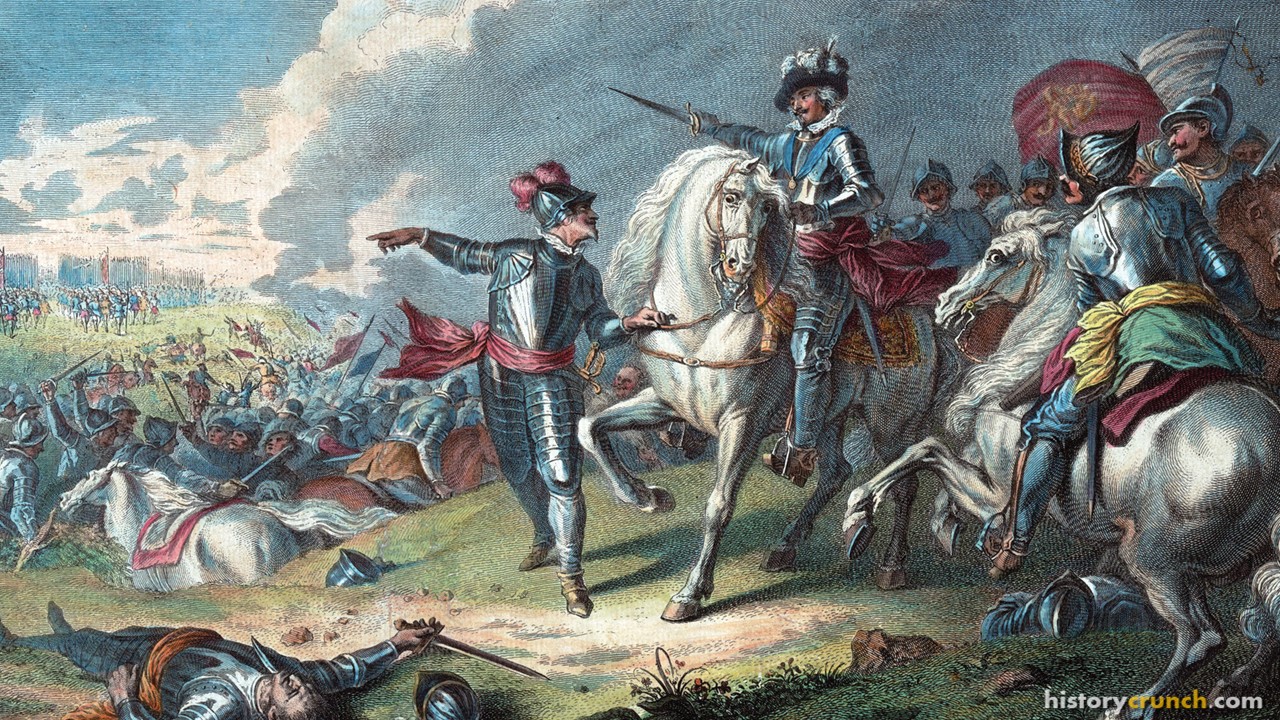
On June 14th, 1645 Parliament's New Model Army, a professional force of about 14,000 created that spring with regular pay and promotion by merit, met the king's main army of about 9,000 at Naseby in Northamptonshire. Oliver Cromwell's cavalry broke the royalist horse and then turned on the infantry, which was killed or captured almost to a man. The king's baggage, with his private letters asking for foreign Catholic troops, was taken and printed.
LEARN MORESHOW LESSwhy it matters · 1 key figureBATTLENaseby ended the king's chance of winning the war. The army that won it would go on to try him, execute him and rule England for eleven years.
On August 26th, 1648 the arrest of a popular judge of the Parlement of Paris, which had been resisting Mazarin's taxes, brought Paris out in barricades. In January of 1649 the royal family escaped the city at night, and the ten-year-old Louis XIV slept on straw at Saint-Germain. Five years of revolt by judges, nobles and princes followed, called the Fronde after a children's slingshot. Mazarin was twice driven into exile before the crown won in 1653.
LEARN MORESHOW LESSwhy it matters · 1 key figureUPRISINGLouis XIV never forgave the Fronde. Versailles, the tamed nobility and the personal rule of 1661 were all answers to the winter he spent on straw.
On October 24th, 1648 the treaties negotiated for five years in the Westphalian towns of Munster and Osnabruck were signed. Germany's three hundred states got the right to make their own alliances and to be Catholic, Lutheran or Calvinist as their rulers chose; the Dutch Republic and Switzerland were recognized as independent; France and Sweden took land on the Empire's edges. The Holy Roman Emperor was left with a title and little else.
LEARN MORESHOW LESSwhy it matters · key numbersTREATYWestphalia made the sovereign state, answering to no pope or emperor, the unit of Europe. Inside each state the ruler now had the field to himself.
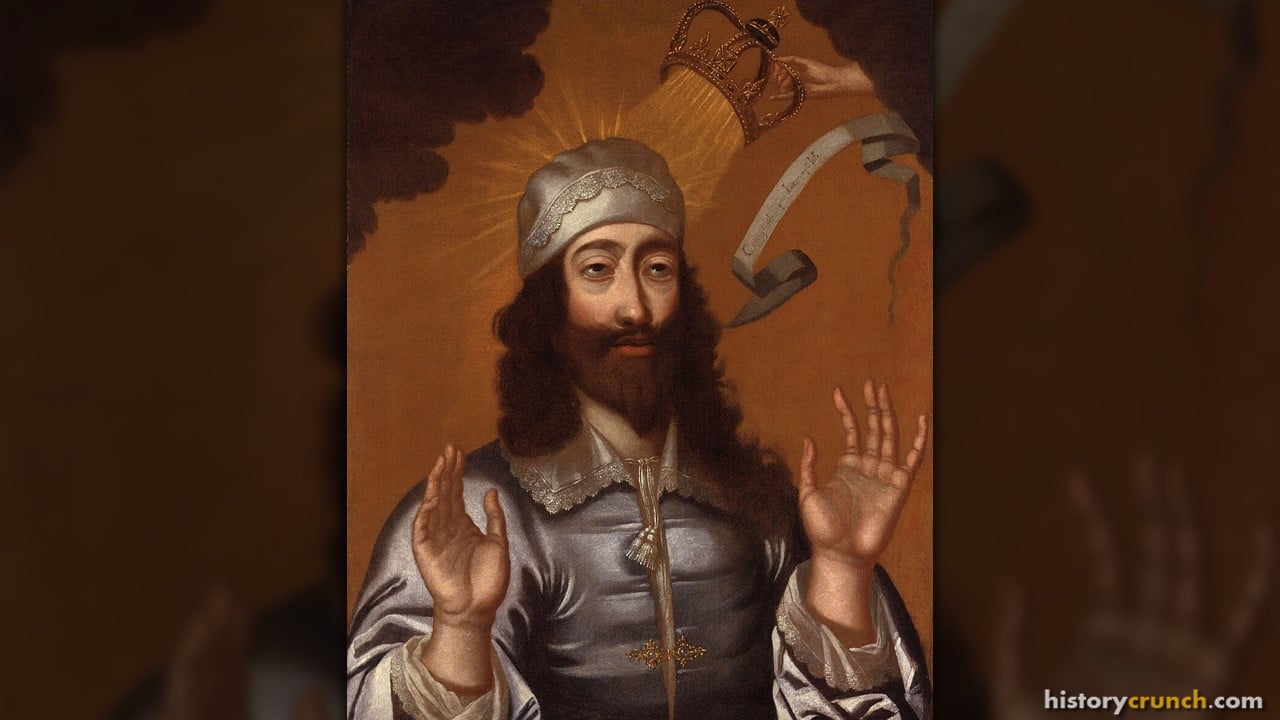
On January 30th, 1649 Charles I, condemned by a court of his own subjects as a tyrant, traitor and murderer, walked through the Banqueting House in Whitehall, under the ceiling Rubens had painted glorifying his father's divine kingship, onto a scaffold in the street. He wore two shirts so that he would not shiver and be thought afraid, told the crowd that a subject and a sovereign were clean different things, and was beheaded with one stroke. A groan went up from the crowd.
LEARN MORESHOW LESSwhy it matters · a source · 1 key figureEXECUTIONFor the first time a reigning king had been tried and executed by law, in public, by his own people. Every court in Europe understood what had been said.
IN THEIR OWN WORDS“A subject and a sovereign are clean different things.”
Charles I on the scaffold, January 30th, 1649WHAT TO NOTICEfrom the printed account of his last speech
In April of 1651 Thomas Hobbes, an English royalist living in exile in Paris, published Leviathan. He argued that without a ruler life was a war of all against all, 'solitary, poor, nasty, brutish and short', and that people escaped it only by handing all their power to one sovereign who could not be resisted. He did not say the king ruled by God's choice; he said the people had chosen, and could not take the choice back.
LEARN MORESHOW LESSwhy it matters · a source · 1 key figureIDEAHobbes gave absolutism a modern argument: not God, but fear. Locke answered him in 1689, and the two books frame the whole debate.
IN THEIR OWN WORDS“The life of man, solitary, poor, nasty, brutish, and short.”
Thomas Hobbes, Leviathan, 1651WHAT TO NOTICEchapter 13
On September 3rd, 1651 Cromwell's army of about 28,000 destroyed a Scottish royalist army of 16,000 under the young Charles II at Worcester. Charles escaped, hid in an oak tree at Boscobel and spent six weeks on the run before reaching France. It was the last battle of the civil wars. Cromwell called it a crowning mercy; exactly seven years later, to the day, he died.
LEARN MORESHOW LESSwhy it matters · 1 key figureBATTLEEngland, Scotland and Ireland were now one republic under an army. Nobody had planned it, and nobody could agree what to do with it.
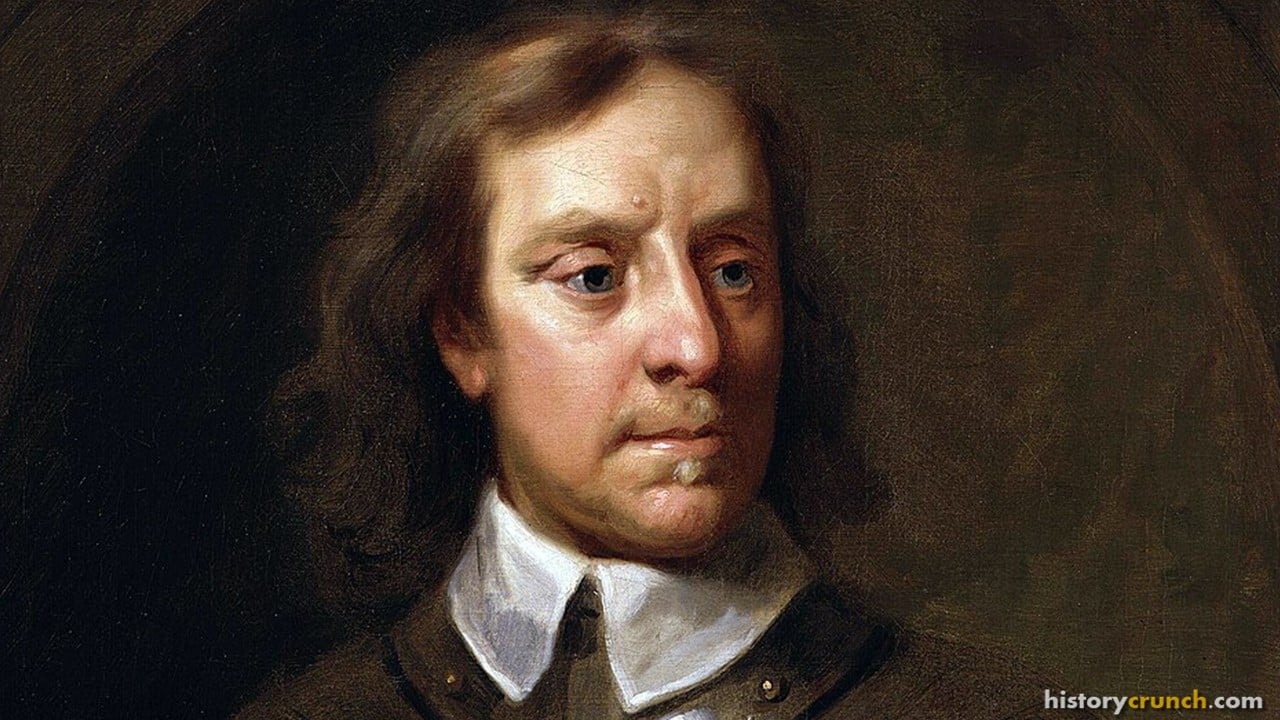
In April of 1653 Cromwell had marched soldiers into the Commons and dismissed the remnant of the Long Parliament, telling them they had sat too long for any good they had been doing. On December 16th, 1653 he was installed as Lord Protector of England, Scotland and Ireland under a written constitution, the Instrument of Government, the only one England has ever had. He ruled with a council and, when Parliaments would not cooperate, with major-generals over the counties.
LEARN MORESHOW LESSwhy it matters · 1 key figureGOVERNMENTThe man who had killed a king for ruling without Parliament ended up doing the same. It is the clearest lesson of the period: power did not depend on the title.
Cromwell died on September 3rd, 1658, aged fifty-nine, during a great storm, of an infection following malaria. He had refused the crown when Parliament offered it in 1657 and named his son Richard to succeed him. Richard, a country gentleman with no hold on the army, gave up within nine months. The generals quarreled, and General Monck marched south from Scotland to restore a free Parliament, which invited the king home.
LEARN MORESHOW LESSwhy it matters · 1 key figureDEATHThe republic died with the one man who could hold the army together. It proved to most English people that a king was easier to live with than a general.
On May 29th, 1660, his thirtieth birthday, Charles II rode into London through crowds, bells and flowers after eleven years of exile. He had promised, from Breda in Holland, a pardon for all but the men who had signed his father's death warrant; nine of those regicides were hanged, drawn and quartered, and Cromwell's body was dug up and hanged at Tyburn. Parliament, the Church of England and the House of Lords came back with the king. So did the theaters.
LEARN MORESHOW LESSwhy it matters · key numbersRESTORATIONThe Restoration settled nothing about who was sovereign. Charles II was careful never to find out; his brother James was not, and lost the throne in three years.
On the morning after Mazarin died in 1661 Louis XIV told his ministers he would govern himself, and did so for fifty-four years. He arrested the minister whose house was grander than his, put the economy under Colbert, moved the court to Versailles in 1682 where ten thousand nobles competed to hand him his shirt, revoked the Edict of Nantes in 1685 and fought four wars for the Rhine. He was the model every other court copied. The same years produced the two great exceptions. In England James II ruled by decree and lost the throne in 1688 without a battle; the Bill of Rights made his successors kings by act of Parliament, and John Locke explained why. In Russia a boy tsar who had watched his relatives murdered on the Kremlin steps overthrew his regent at seventeen, went to Holland to learn shipbuilding and came home to cut off his nobles' beards.
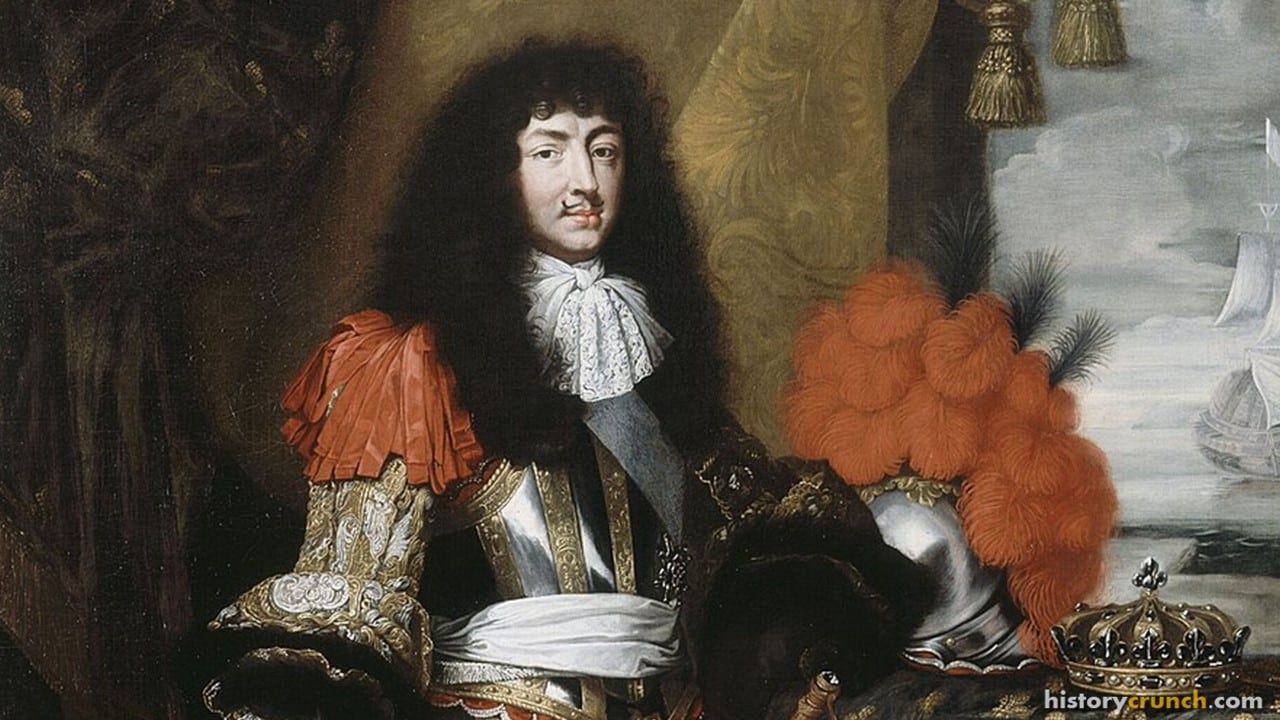
Cardinal Mazarin died on March 9th, 1661. The next morning Louis XIV, aged twenty-two, called his ministers together and told them that from now on he would govern himself and that every order, even a passport, would need his signature. Courtiers assumed the mood would pass. It lasted fifty-four years, during which the king worked six to eight hours a day at state business and never again allowed a first minister.
LEARN MORESHOW LESSwhy it matters · key numbers · 1 key figureGOVERNMENTThis is the moment historians point to as the start of absolutism proper: the king as his own prime minister, with every thread of the state in his hand.
On August 17th, 1661 Nicolas Fouquet, the superintendent of finances, entertained the king at his new chateau of Vaux-le-Vicomte with a feast, a play by Moliere and fireworks that cost more than the king could have afforded. On September 5th, Louis's twenty-third birthday, the musketeer d'Artagnan arrested Fouquet at Nantes. He was tried for three years, sentenced to exile and, by the king's personal order, imprisoned for life instead. Louis hired Fouquet's architect, painter and gardener to build Versailles.
LEARN MORESHOW LESSwhy it matters · 1 key figurePOLITICSThe lesson to every minister was plain: nobody would outshine the king. Colbert, who had gathered the evidence against Fouquet, got his job.
On December 12th, 1665 Jean-Baptiste Colbert, a draper's son from Reims, was made Controller-General of Finances. For eighteen years he ran the French economy on the theory that a nation's wealth was its stock of gold: he taxed imports, founded state factories for tapestry, glass and lace, built a navy and a merchant fleet, dug the Canal du Midi from the Atlantic to the Mediterranean and doubled the crown's income. He could not stop the king spending it on war.
LEARN MORESHOW LESSwhy it matters · key numbersECONOMYColbert's system, later called mercantilism, was absolutism applied to trade: the state decided what would be made, by whom and at what price.
On May 24th, 1667 French armies marched into the Spanish Netherlands, the part of modern Belgium ruled from Madrid. Louis claimed that under local inheritance law the provinces had 'devolved' on his wife, the Spanish king's daughter, whose dowry had never been paid. Turenne took a dozen fortified towns in a summer while the king watched. England, Holland and Sweden formed a Triple Alliance to stop him, and Louis settled in 1668 for Lille and eleven other towns.
LEARN MORESHOW LESSwhy it mattersWARIt was the first of four wars in forty-six years. Louis fought them all for the same thing, France's borders on the Rhine and the Alps, and left the country bankrupt for it.
On April 6th, 1672 France declared war on the Dutch Republic, whose merchants had led the alliance against Louis in 1668 and whose newspapers mocked him. A French army of 120,000 crossed the Rhine in June and took city after city; the Dutch, in what they still call the Disaster Year, cut the dikes and flooded the land in front of Amsterdam, lynched their chief minister and made the young William of Orange their captain-general. The war lasted six years and ended with France holding Franche-Comte.
LEARN MORESHOW LESSwhy it mattersWARWilliam of Orange spent the rest of his life organizing Europe against Louis XIV. Sixteen years later he did it from the English throne.
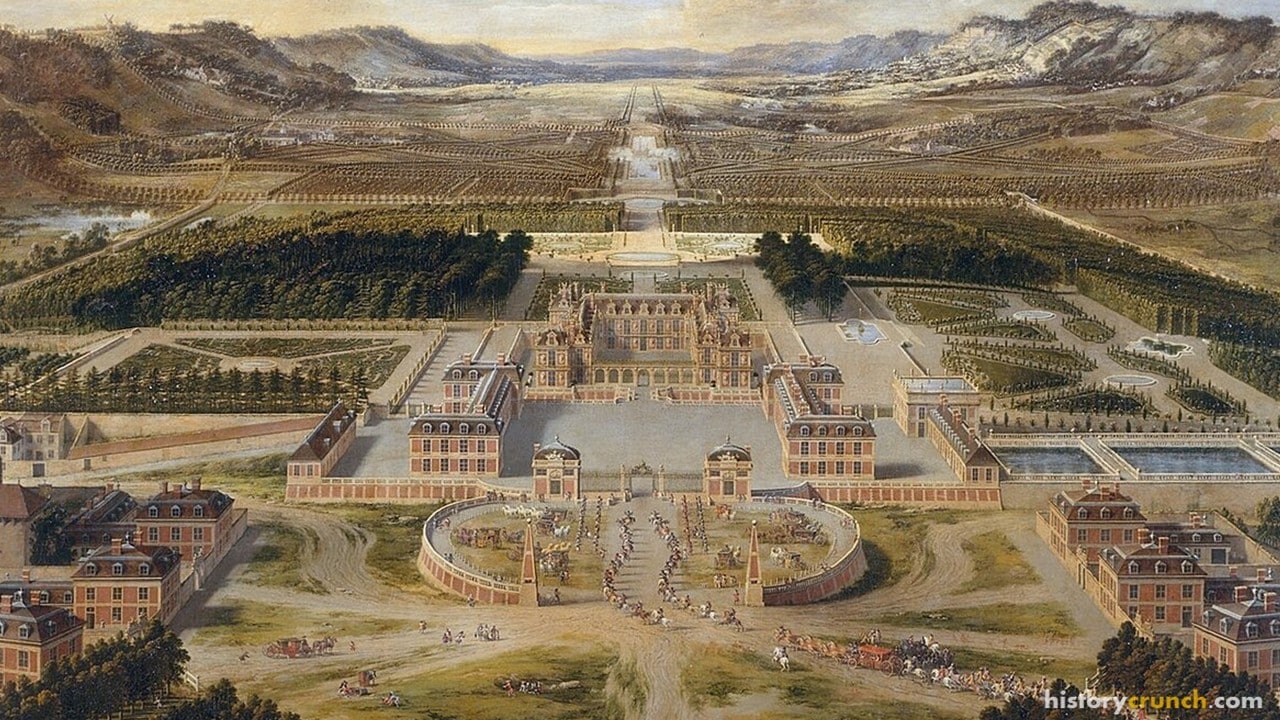
On May 6th, 1682 Louis XIV made Versailles, eleven miles from Paris, the permanent seat of the court and government, though building went on for another thirty years. About 10,000 people lived in or around the palace: ministers, guards, servants and thousands of nobles who competed to hand the king his shirt in the morning and hold his candle at night. A great noble who stayed on his own estates was, the king said, a man he did not know.
LEARN MORESHOW LESSwhy it matters · key numbers · 1 key figureCOURTVersailles was a machine for turning warlords into courtiers. The nobles who had fought the crown in the Fronde now fought each other for the right to watch it eat.
In the spring of 1682 the Streltsy, Moscow's musketeer regiments, rioted for three days in the Kremlin and murdered members of the Naryshkin family, relatives of the ten-year-old Peter, in front of him. On June 25th, 1682 Peter and his sickly half-brother Ivan V were crowned joint tsars, with Ivan's sister Sophia as regent and the real ruler. Peter grew up at a country palace outside Moscow drilling play regiments that later became the Guards.
LEARN MORESHOW LESSwhy it matters · 1 key figureCORONATIONPeter never forgot the Streltsy on the Kremlin steps. In 1698 he had more than a thousand of them executed and abolished the corps.
In July of 1683 an Ottoman army of perhaps 150,000 laid siege to Vienna, the Habsburg capital, and dug mines under its walls for two months. On September 12th, 1683 a relief army of Austrians, Germans and Poles under King John Sobieski of Poland came down from the Kahlenberg hills and broke the Turkish camp with a charge of 18,000 horsemen, the largest cavalry charge on record. The Ottomans never threatened central Europe again; over the next sixteen years Austria took Hungary from them.
LEARN MORESHOW LESSwhy it matters · key numbersBATTLEThe Habsburgs had been the shield of Christendom for two centuries. After 1683 they became a great power in their own right, and the state Maria Theresa inherited was built on the lands won from the Turks.
Charles II died on February 6th, 1685, receiving the last rites of the Catholic Church in secret, and his openly Catholic brother became James II. Parliament voted him a generous income and the army crushed a Protestant rising under the Duke of Monmouth that summer. James then began putting Catholics into the army, the universities and the government in defiance of the law, and suspended the laws against them by his own decree.
LEARN MORESHOW LESSwhy it mattersACCESSIONEngland would tolerate a Catholic king who was fifty-one and whose heirs were Protestant. It would not tolerate one who ruled by decree, and in June of 1688 he had a Catholic son.
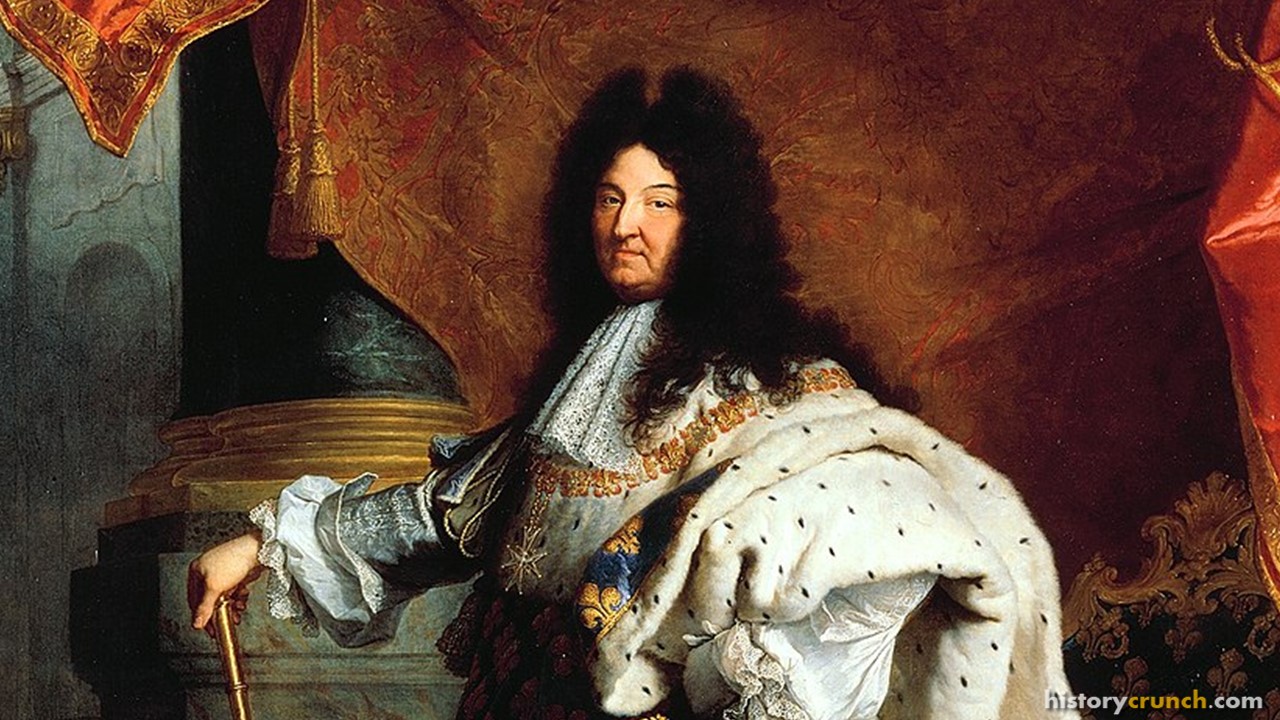
On October 18th, 1685 Louis XIV signed the Edict of Fontainebleau, which revoked his grandfather's Edict of Nantes. Protestant worship was banned, churches were demolished, pastors were given two weeks to leave France and everyone else was forbidden to leave at all. Soldiers had already been billeted on Huguenot families to force conversions. About 200,000 people fled anyway, to Holland, England, Prussia and America, taking their trades with them.
LEARN MORESHOW LESSwhy it matters · key numbers · 1 key figureLAWOne king, one law, one faith: the revocation was the logic of absolutism carried through. Prussia took in 20,000 of the refugees, and Berlin's industries were built by them.
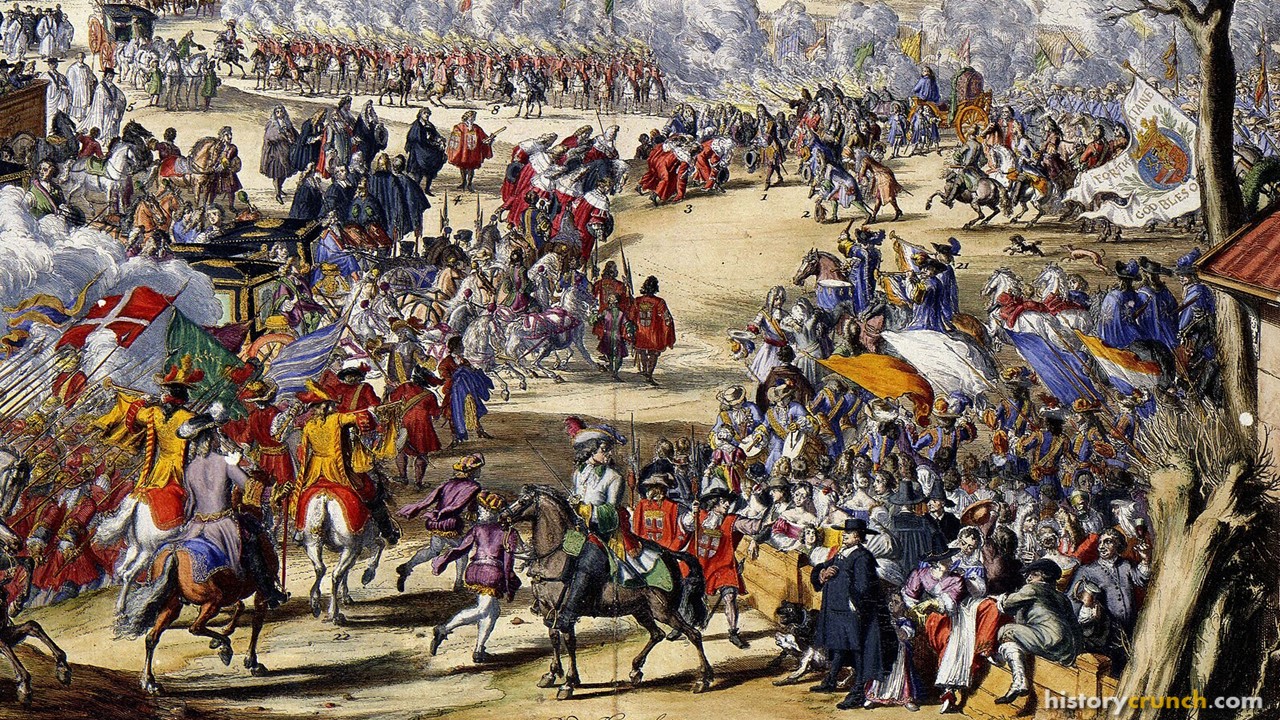
On June 30th, 1688 seven English lords wrote to William of Orange, the Dutch ruler married to James II's Protestant daughter Mary, inviting him to come with an army. He landed at Torbay in Devon on November 5th, 1688 with about 15,000 men, and marched on London as James's officers, his daughter Anne and finally his army went over to him. James fled to France in December, dropping the Great Seal in the Thames on the way. Almost nobody was killed.
LEARN MORESHOW LESSwhy it matters · key numbersREVOLUTIONEngland had removed a king who ruled by decree without a civil war. What Parliament did next turned a change of king into a change of constitution.
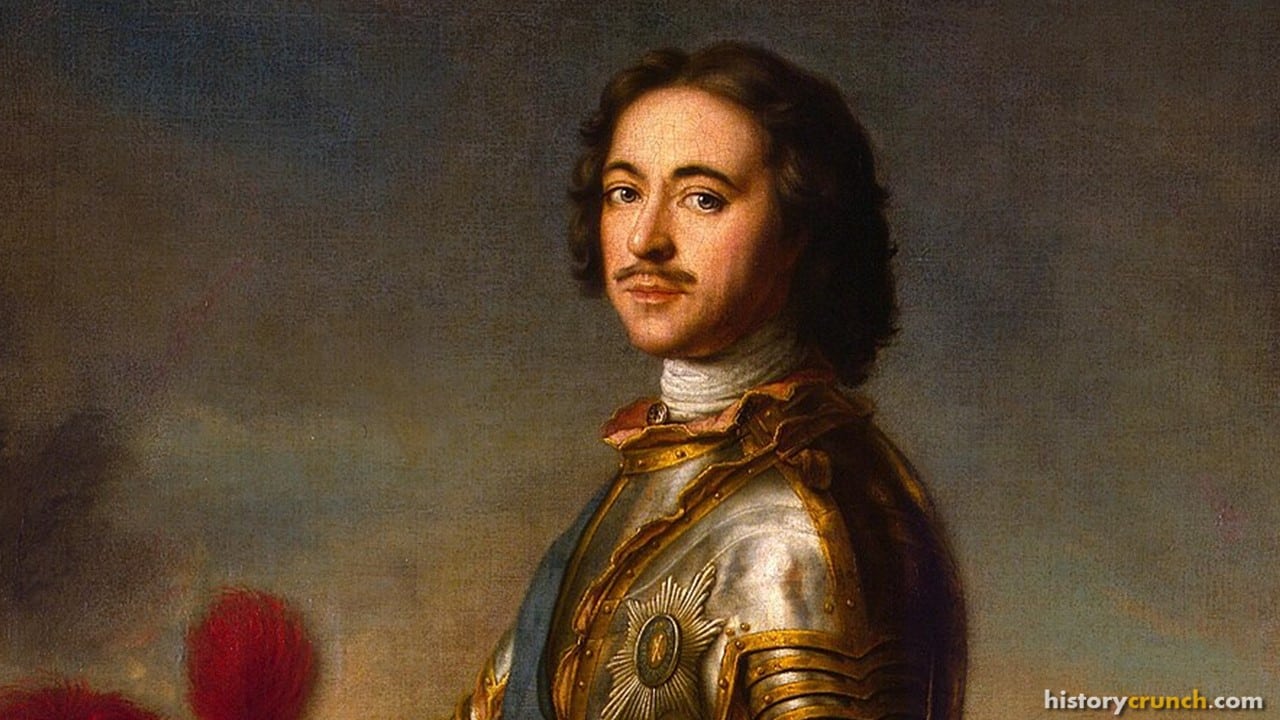
In August of 1689, warned that the regent Sophia meant to have him killed, the seventeen-year-old Peter fled at night to the Trinity Monastery north of Moscow. The Guards, the foreign officers and finally the patriarch came over to him, and in September Sophia was sent to a convent for life. Peter left government to his mother's family for five years, but from 1696, when Ivan V died, he ruled alone.
LEARN MORESHOW LESSwhy it matters · 1 key figureCOUPThe tsar who would drag Russia into Europe came to power the Russian way, by a palace coup at seventeen.
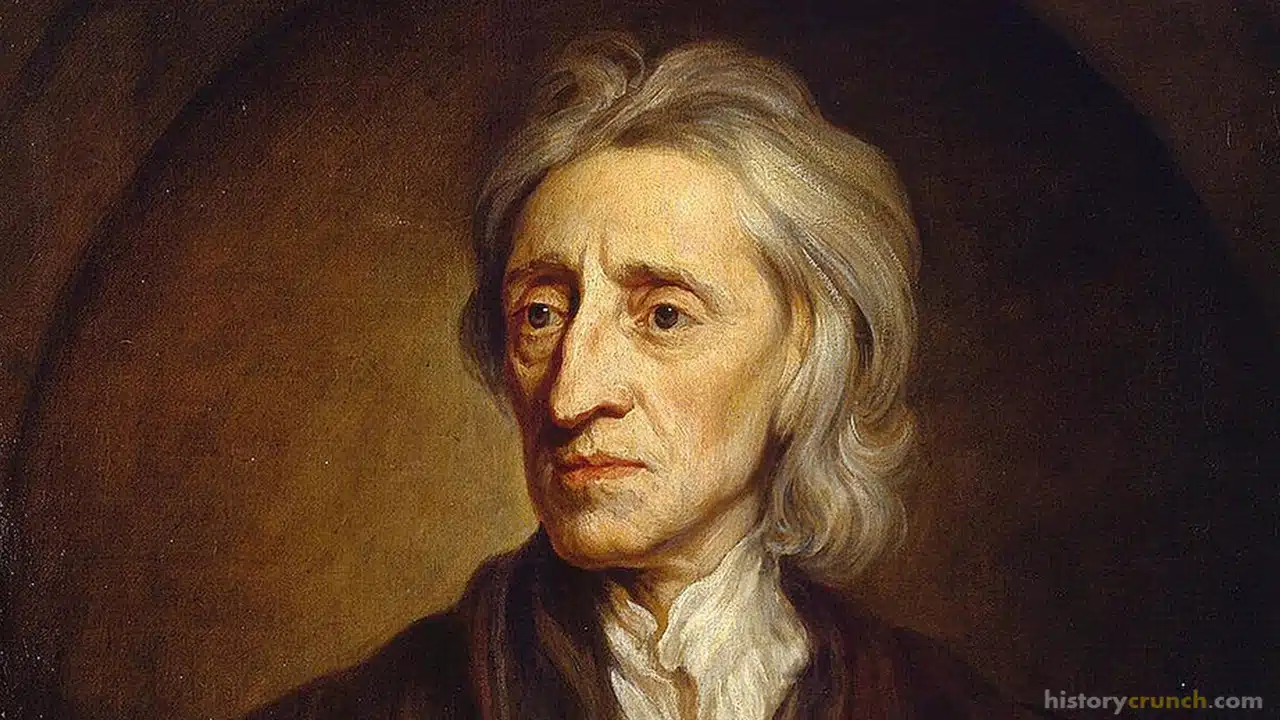
In December of 1689 John Locke published, anonymously, his Two Treatises of Government. The first demolished the argument that kings inherited Adam's authority from God; the second argued that government was a trust from the people to protect their lives, liberty and property, and that a ruler who broke the trust could be removed. Locke had written most of it before 1688 and had lived in exile in Holland; it read as the justification of what had just happened.
LEARN MORESHOW LESSwhy it matters · 1 key figureIDEAJefferson borrowed Locke's sentence about life, liberty and property in 1776, and the French Assembly borrowed it again in 1789.
In February of 1689 Parliament offered the crown jointly to William and Mary on condition that they accept a Declaration of Rights, enacted as the Bill of Rights on December 16th, 1689. The monarch could not suspend laws, levy taxes or keep a standing army in peacetime without Parliament; Parliaments were to be frequent, elections free and debate unpunished; no Catholic could sit on the throne. William took the crown and the conditions together.
LEARN MORESHOW LESSwhy it mattersLAWAfter 1689 England had a king who reigned by act of Parliament. Every other monarchy in Europe still claimed to reign by God, and the contrast was the argument of the next century.
James II landed in Ireland in March of 1689 with French troops to win his kingdoms back. On July 1st, 1690 William III, leading about 36,000 men in person, forced the crossing of the River Boyne north of Dublin against James's 25,000 and drove them off the field. James left for France the next day and never returned. The Irish war went on for another year, and its settlement stripped Irish Catholics of land, office and arms for a century.
LEARN MORESHOW LESSwhy it mattersBATTLEThe Boyne settled the Glorious Revolution by force where it had been settled by consent in England. It is still marched for every July in Northern Ireland.
On March 19th, 1697 a Russian embassy of about 250 people left Moscow for eighteen months in Western Europe. Among them, disguised as a common sailor named Peter Mikhailov and fooling nobody at six feet eight, was the tsar. He worked as a shipwright in the Dutch yards at Zaandam and the English yards at Deptford, watched the English Parliament, visited an anatomy theater and hired about 800 engineers, officers and craftsmen to come back with him.
LEARN MORESHOW LESSwhy it matters · key numbers · 1 key figureJOURNEYNo Russian ruler had ever left the country except to fight. Peter came home determined to make Russia a country that Europe would have to reckon with, by force if needed.
In the summer of 1698 four Streltsy regiments, ordered to the Polish border, marched on Moscow instead to restore Sophia. They were beaten before Peter got home, but he cut the Grand Embassy short, returned in August and spent the autumn interrogating them under torture. From October 10th, 1698 about 1,200 were hanged or beheaded, some of them by the tsar's own hand, and their bodies left on display through the winter. Days after his return Peter had also begun cutting off his nobles' beards with his own scissors.
LEARN MORESHOW LESSwhy it matters · key numbers · 1 key figureTERRORThe beards and the executions were the same policy: nothing old would be allowed to stand in the way of the new Russia.
When kingdoms pass by inheritance, a deathbed decides a war. Charles II of Spain died childless in 1700 and left everything to Louis XIV's grandson; Europe fought for thirteen years over it, Marlborough beat the French at Blenheim, and the Peace of Utrecht in 1713 wrote the balance of power into a treaty. Charles VI of Austria, with only a daughter, spent his reign buying signatures on the Pragmatic Sanction that promised her the throne, and Frederick II of Prussia, eight weeks after inheriting his father's army of 80,000, tore it up and marched into Silesia. Peter the Great, beaten at Narva in 1700, rebuilt Russia's army and state from the ground up, won at Poltava, built a capital on a swamp and died an emperor. The Soldier King of Prussia built the army and the civil service that made his son's wars possible, and beheaded his son's best friend to teach him obedience.
Charles II, the last Spanish Habsburg, physically and mentally broken by generations of cousin marriage, died on November 1st, 1700 at thirty-eight without an heir. His will left the entire Spanish empire to Louis XIV's grandson Philip of Anjou, on condition it never be joined to France. Louis accepted for his grandson and is supposed to have said, 'The Pyrenees are no more.' Austria, which had its own claimant, and England and Holland, which feared a French world empire, prepared for war.
LEARN MORESHOW LESSwhy it matters · key numbersDEATHOne deathbed will started a thirteen-year war across Europe and the Americas. It was the price of a system in which kingdoms passed by inheritance like farms.
Peter had joined Denmark and Poland in 1700 to attack Sweden, which held the whole eastern Baltic coast. On November 30th, 1700, in a snowstorm, the eighteen-year-old Charles XII of Sweden with about 10,000 men attacked the Russian army of some 37,000 besieging the fortress of Narva and destroyed it, taking its guns and generals. Peter was not there. He spent the next nine years rebuilding the army on Western lines while Charles fought in Poland.
LEARN MORESHOW LESSwhy it matters · 1 key figureBATTLENarva taught Peter that Russia could not beat Europe with a Russian army. Poltava in 1709 was the answer.
On January 18th, 1701 the Elector Frederick III of Brandenburg placed a crown on his own head in Konigsberg and became Frederick I, King in Prussia. The Holy Roman Emperor had sold him permission for the title in return for 8,000 soldiers in the coming war over Spain; the odd wording, 'in' not 'of', was because part of Prussia belonged to Poland. Frederick spent lavishly on the ceremony, on palaces and on an Academy of Sciences under Leibniz.
LEARN MORESHOW LESSwhy it matters · key numbersCORONATIONA crown bought for soldiers: the Prussian monarchy began exactly as it would go on.
On September 7th, 1701 England, the Dutch Republic and the Emperor signed the Grand Alliance at The Hague, William III's last act of statecraft before his death the next March. Louis XIV had helped by recognizing James II's son as King of England when James died in September, and by sending French troops into the Spanish Netherlands. War was declared in May of 1702. The Duke of Marlborough commanded for England and Prince Eugene of Savoy for Austria.
LEARN MORESHOW LESSwhy it mattersALLIANCEThe alliance existed to stop one family ruling France and Spain together. It fought for twelve years and, at Utrecht, got its way.
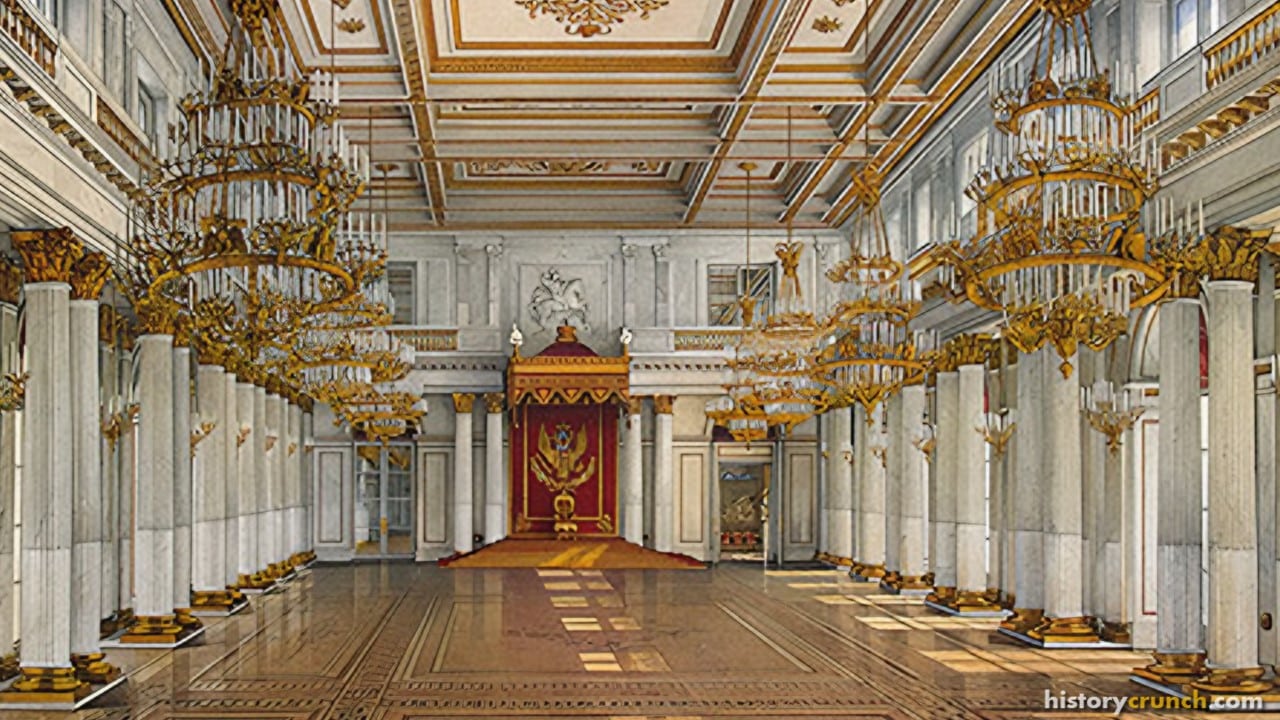
On May 27th, 1703, on marshy islands where the Neva River enters the Baltic on land just taken from Sweden, Peter began a fortress named for St. Peter and, around it, a city. Tens of thousands of conscripted peasants died draining and building it; nobles were ordered to build stone houses there and every ship entering the harbor had to bring stones. In 1712 it became the capital. Peter called it his window on Europe.
LEARN MORESHOW LESSwhy it matters · 1 key figureBUILDINGMoscow was the old Russia of boyars and church bells. Petersburg was the new one, with canals like Amsterdam and a court that spoke French, and the tsar had built it by decree.
In 1704 a French and Bavarian army was moving down the Danube to take Vienna. Marlborough marched 250 miles from the Netherlands to meet it, joined Eugene, and on August 13th, 1704 attacked at Blenheim on the Danube. The French center broke; the Duke of Tallard was captured and some 30,000 French and Bavarian soldiers were killed, wounded or taken. It was the first great defeat of Louis XIV's armies in forty years.
LEARN MORESHOW LESSwhy it matters · key numbersBATTLEBlenheim ended the belief that French armies could not lose. Marlborough won three more times, at Ramillies, Oudenarde and Malplaquet, and Louis was reduced to asking for terms.
Charles XII of Sweden had marched into Ukraine and spent a terrible winter there. On June 27th, 1709 he attacked Peter's fortified camp at Poltava with about 20,000 men against 45,000 Russians backed by more than a hundred guns. The Swedes were shot to pieces; Charles, wounded, escaped to Turkish territory with a few hundred men and the rest of the army surrendered three days later. Peter gave a dinner for the captured Swedish generals and toasted them as his teachers in war.
LEARN MORESHOW LESSwhy it matters · key numbers · 1 key figureBATTLEPoltava made Russia a great power and ended Sweden as one. The army that won it was the one Peter had built after Narva, and the state that paid for it was his creation too.
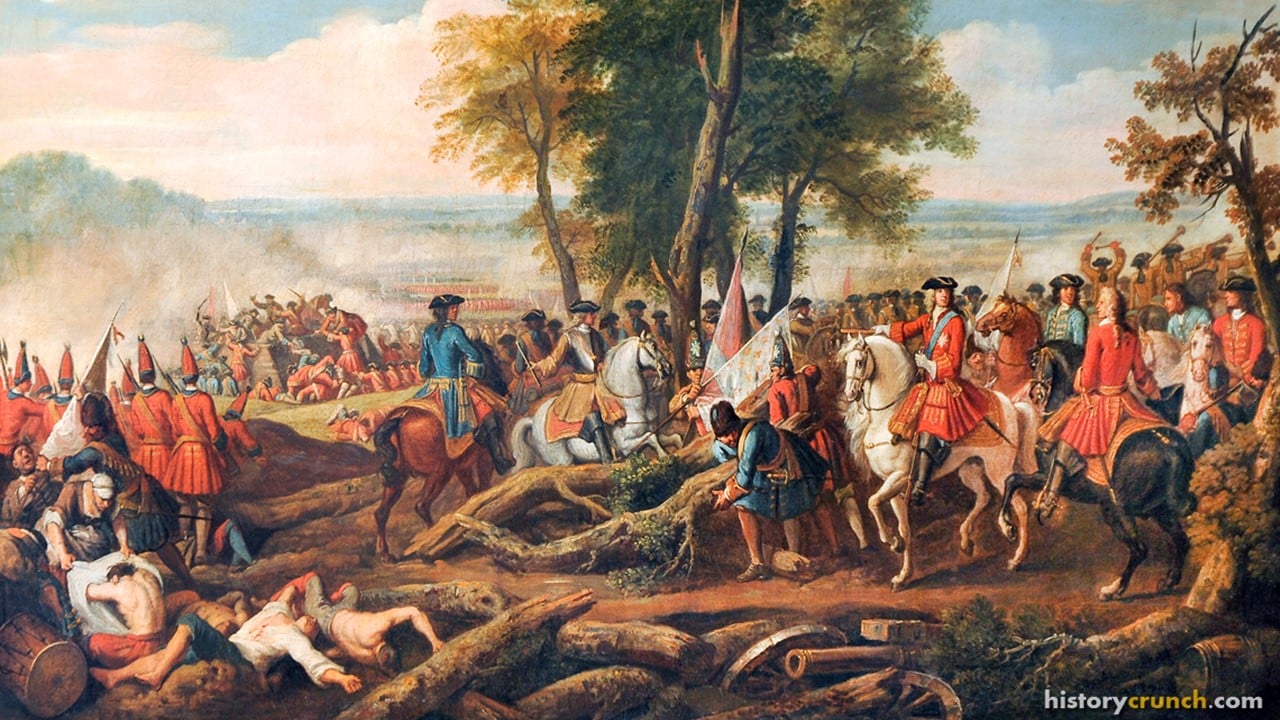
On September 11th, 1709 Marlborough and Eugene attacked the French army of Marshal Villars in the woods at Malplaquet on the French border. The allies won the field and lost about 21,000 men to the French 11,000; Villars wrote to Louis XIV that if God gave France another such defeat the enemy would be destroyed. In England the losses turned opinion against the war and against Marlborough, who was dismissed in 1711.
LEARN MORESHOW LESSwhy it matters · key numbersBATTLELouis XIV had offered peace in 1709 on almost any terms except sending his own army to remove his grandson from Spain. After Malplaquet the allies could not force even that.
On March 5th, 1711, leaving for war against Turkey, Peter created a Governing Senate of nine men to run the state in his absence, and kept it afterward as the highest body of administration and justice. It replaced the Boyar Duma, the council of the old nobility that had advised tsars for centuries. In 1718 he added 'colleges', ministries on the Swedish model, and in 1722 a Procurator-General, 'the eye of the tsar', to watch the Senate itself.
LEARN MORESHOW LESSwhy it matters · 1 key figureGOVERNMENTPeter did not consult the old nobility; he replaced it with officials who owed everything to him. That is the difference between a medieval monarchy and an absolute one.
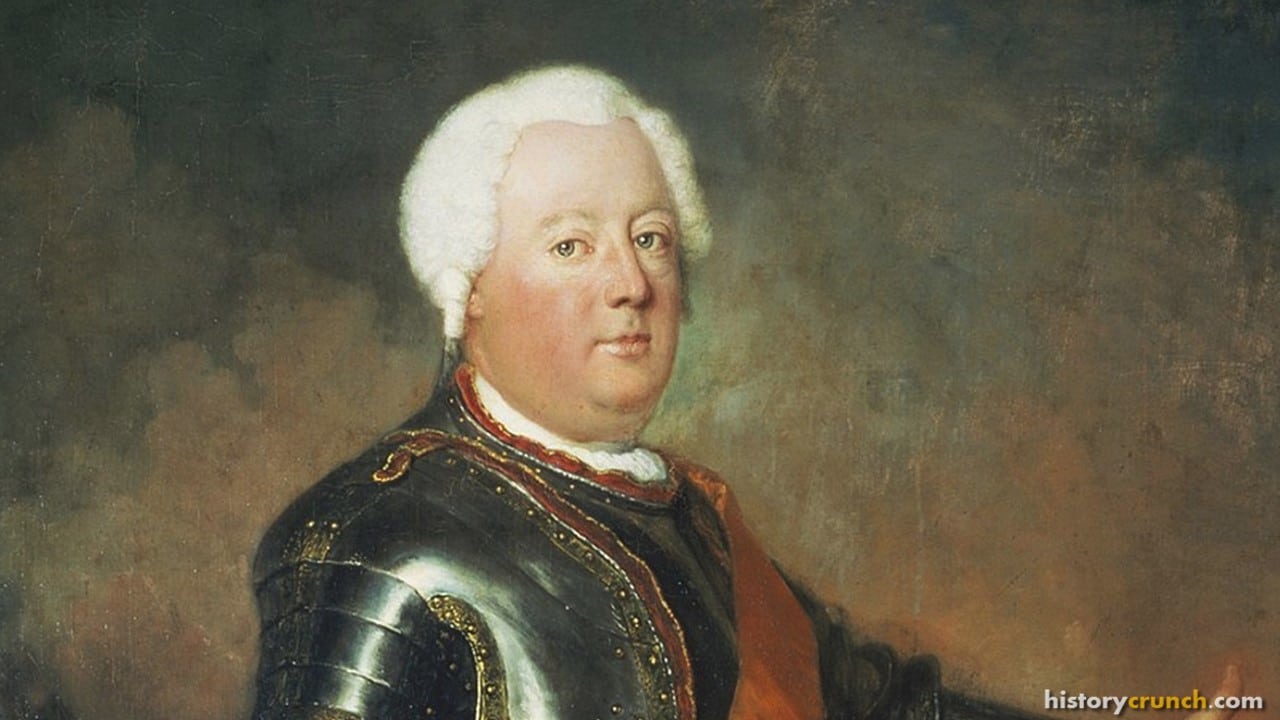
On February 25th, 1713 Frederick William I became King in Prussia and fired most of his father's court on the day of the funeral. He sold the crown jewels, cut the palace budget by three quarters, wore a plain blue uniform, beat officials with his cane in the street and built the army from 38,000 to 80,000 men, the fourth largest in Europe from the thirteenth most populous state. His pride was a regiment of giants recruited by kidnapping across Europe.
LEARN MORESHOW LESSwhy it matters · key numbers · 1 key figureACCESSIONThe Soldier King turned Prussia into an army with a country attached. His son inherited the best-drilled troops in Europe and a treasury to pay them.
On April 11th, 1713 the treaties signed at Utrecht let Philip V keep Spain and its American empire on condition that the French and Spanish crowns never be united. Austria took the Spanish Netherlands, Milan, Naples and Sardinia; Britain took Gibraltar, Minorca, Newfoundland, Nova Scotia and the right to sell slaves to Spanish America; Prussia and Savoy were confirmed as kingdoms. The Emperor made his own peace with France at Rastatt in 1714.
LEARN MORESHOW LESSwhy it mattersTREATYUtrecht was the first treaty to name the balance of power as its aim. Louis XIV's grandson got his throne, but nobody would ever rule Europe from one capital.
On April 19th, 1713 Emperor Charles VI, who had no children yet, issued the Pragmatic Sanction, declaring that all the Habsburg lands would pass undivided to his eldest child, even a daughter. When his only son died in infancy and his daughter Maria Theresa was born in 1717, he spent the rest of his reign getting every European power and every provincial diet to accept it, giving away land and trade to buy their signatures.
LEARN MORESHOW LESSwhy it mattersLAWPrince Eugene told Charles that a full treasury and an army of 200,000 would guarantee the Sanction better than any signature. Charles collected the signatures; in 1740 Prussia ignored them.
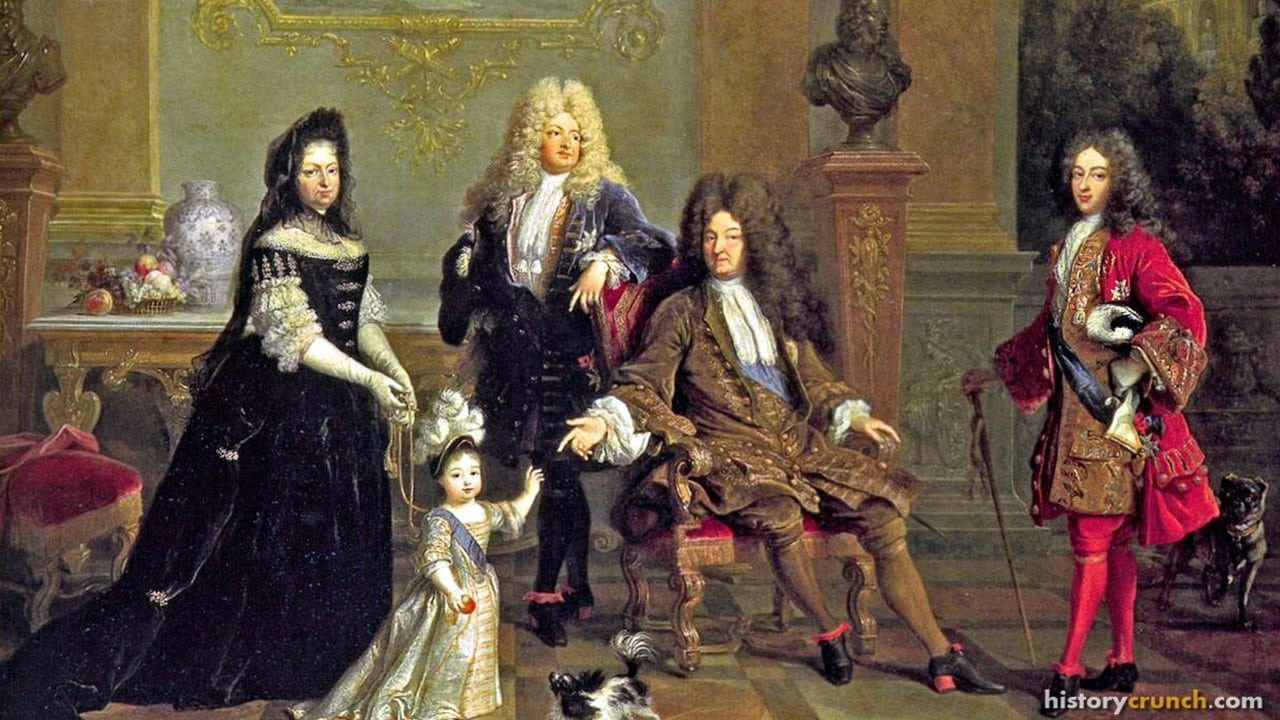
Louis XIV died at Versailles on September 1st, 1715, four days short of his seventy-seventh birthday, of gangrene in his leg. He had outlived his son and his eldest grandson; his heir was his five-year-old great-grandson, Louis XV. To the boy he said that he had loved war too much and should not copy him. He left France the largest army in Europe, the most imitated court, and a debt of about two billion livres.
LEARN MORESHOW LESSwhy it matters · key numbers · a sourceDEATHEverything that followed in France, the regency, the Enlightenment, the bankruptcy and the Revolution, was lived in the shadow of this reign.
IN THEIR OWN WORDS“I have loved war too much. Do not copy me in that, nor in the too great expenditure I have made.”
Louis XIV to his heir, August 1715WHAT TO NOTICEas recorded by the court
Tsarevich Alexei, Peter's son by his first wife, hated his father's reforms and in 1716 fled to Vienna. Lured home in 1718 with a promise of pardon, he was made to renounce the succession, then tried for treason and tortured. He died in the Peter and Paul fortress on June 26th, 1718, two days after the sentence of death, of the knout by most accounts. Peter attended a ship launch the next day.
LEARN MORESHOW LESSwhy it matters · 1 key figurePERSONIvan the Terrible killed his son in a rage. Peter killed his by process of law. Both left the Russian succession to be decided by whoever held the Guards.
The Treaty of Nystad on September 10th, 1721 ended the Great Northern War after twenty-one years and gave Russia the Baltic coast from Riga to Vyborg. On November 2nd, 1721 the Senate and the Synod offered Peter the titles Emperor, the Great and Father of the Fatherland, and he accepted them in Trinity Cathedral in Petersburg to a salute of guns. Earlier that year he had abolished the Patriarchate of Moscow and put the Church under a Holy Synod of officials.
LEARN MORESHOW LESSwhy it matters · key numbers · 1 key figureTITLEEmperor of a church-state that answered to him alone: Peter had made the tsar's claim to rule by God's will into a fact of administration.
On January 24th, 1722 Peter issued the Table of Ranks, a ladder of fourteen grades in the army, the navy, the civil service and the court. Every man started at the bottom and rose by merit and length of service; a commoner who reached the eighth civil grade or the lowest officer's rank became a hereditary noble. The old boyar families kept their land but not their automatic place.
LEARN MORESHOW LESSwhy it matters · key numbers · 1 key figureLAWPeter turned the Russian nobility into a service class that owed its status to the state. The Table lasted until 1917.
In January of 1723 Frederick William I merged the separate offices for war and for the royal domains into a single General Directory, which met under his own rules: ministers who arrived late were fined, sessions ran without breaks, and the king's marginal notes on their reports, blunt to the point of abuse, were law. He inspected the provinces himself every year and built up a treasury of eight million thalers in gold in the cellars of the palace.
LEARN MORESHOW LESSwhy it matters · 1 key figureGOVERNMENTPrussia's civil service, honest, hard-working and obedient, was the Soldier King's second army. Frederick the Great said his father had left him a state that ran itself.
Peter died in St. Petersburg on February 8th, 1725, aged fifty-two, of a bladder infection made worse, by one account, by plunging into freezing water to rescue drowning soldiers. He had decreed in 1722 that the tsar could name any successor he chose, and then died without doing so; the Guards regiments put his widow, a Lithuanian peasant girl he had married, on the throne as Catherine I. In the next thirty-seven years the Guards made or broke six more rulers.
LEARN MORESHOW LESSwhy it matters · 1 key figureDEATHPeter left Russia an empire, a navy, a capital and a nobility in state service. He also left it a succession decided by soldiers, which is how Catherine the Great came to the throne in 1762.
In August of 1730 the eighteen-year-old Crown Prince Frederick, who loved flutes, French books and his friend Lieutenant Hans Hermann von Katte more than drill, tried to escape from Prussia to England. He was caught, imprisoned in the fortress of Kustrin and threatened with a court-martial for desertion. On November 6th, 1730 Katte was beheaded beneath the window of Frederick's cell, on the king's order, after the prince had been made to watch him walk to the block.
LEARN MORESHOW LESSwhy it matters · 2 key figuresPERSONFrederick submitted, learned the business of the state in the provinces and never spoke of Katte again. The father who did it also left him the army that made him great.
In 1733 Frederick William I divided Prussia into cantons, each assigned to a regiment, from which the regiment drew its recruits. Every peasant boy was enrolled at birth, trained for a year or two and then sent home to farm, liable to recall each year for drill. Nobles served as the officers. It gave Prussia the largest army in Europe for its size at a cost the state could bear, because the soldiers fed themselves most of the year.
LEARN MORESHOW LESSwhy it matters · 1 key figureLAWThe canton system made Prussian society a reserve of the army. Frederick the Great's wars were fought by peasants who had been soldiers since they could walk.
Frederick William I died at Potsdam, the garrison town outside Berlin, on May 31st, 1740, and the twenty-eight-year-old Frederick II inherited 80,000 soldiers, a full treasury and a state that ran like clockwork. In his first weeks he abolished torture, opened the Academy of Sciences again, invited Voltaire to correspond, allowed newspapers to print what they liked and declared that in his kingdom everyone could get to heaven in his own way. Europe expected a philosopher king, the enlightened absolutism the philosophers had been asking for.
LEARN MORESHOW LESSwhy it matters · 1 key figureACCESSIONWithin seven months the philosopher king had invaded Austria. Frederick used Enlightenment ideas at home and his father's army abroad, and never saw the contradiction.
Emperor Charles VI died in Vienna on October 20th, 1740, of eating poisoned mushrooms by one story, and his twenty-three-year-old daughter Maria Theresa inherited Austria, Bohemia, Hungary and the Netherlands under the Pragmatic Sanction that every power in Europe had signed. She found the treasury empty, the army half its paper strength and her ministers old men who expected her to lose. Within two months the signatures were worthless.
LEARN MORESHOW LESSwhy it matters · 1 key figureDEATHThe Pragmatic Sanction was the test of whether a written promise could bind absolute monarchs. The answer, from the courts of Prussia, France and Bavaria, was no.
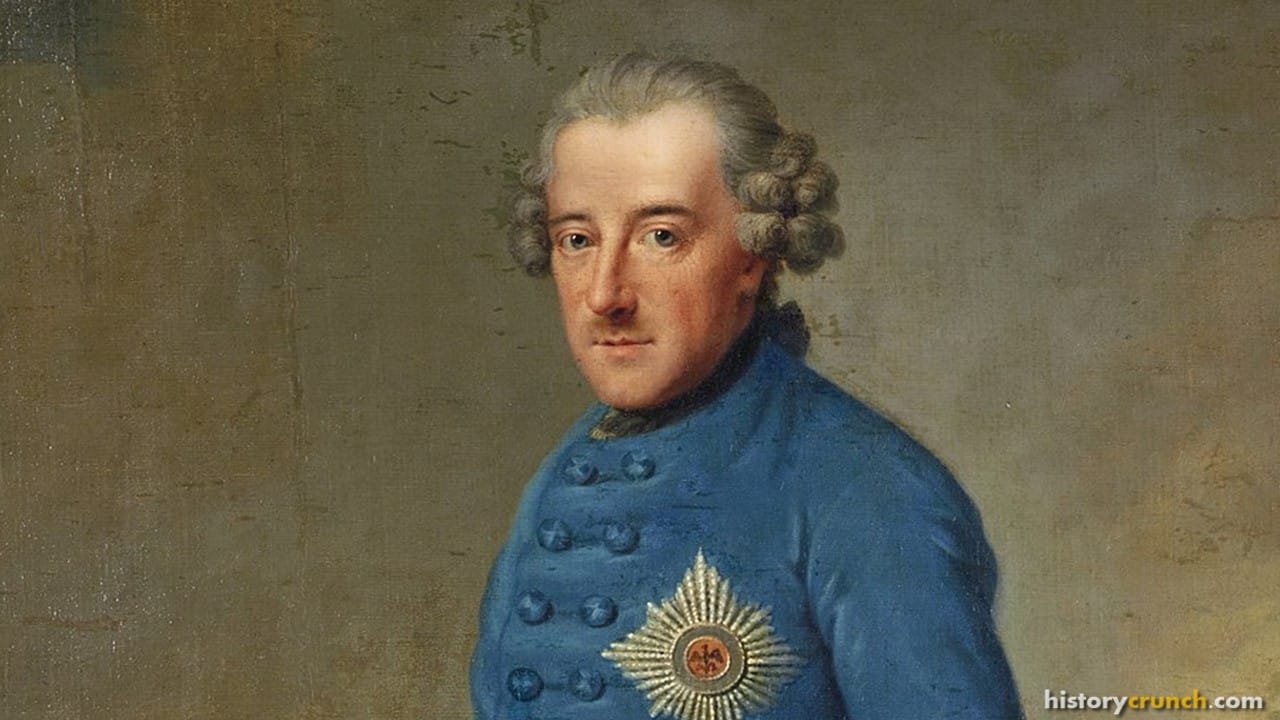
On December 16th, 1740 Frederick II led 27,000 Prussian troops into Silesia, the richest Habsburg province, on the strength of an old family claim he privately admitted was worthless. Maria Theresa had been on the throne eight weeks. France and Bavaria joined in to carve up the Habsburg inheritance, and the War of the Austrian Succession spread across Europe and into India and America for eight years. Frederick kept Silesia at the end of it.
LEARN MORESHOW LESSwhy it matters · key numbers · 2 key figuresINVASIONFrederick wrote that ambition and the wish to make a name had decided him. It is the plainest statement of what an absolute monarch could do because nobody could stop him.
The philosophers wanted a king who read them, and in the middle of the century they got three. Frederick the Great abolished torture, wrote thirty volumes in French and invited Voltaire to his palace in the garrison town of Potsdam outside Berlin; he also started two wars and took a third of Poland. Catherine the Great, a German princess who took the Russian throne in a coup, wrote a law code out of Montesquieu and called an assembly to discuss it; after Pugachev's rising she gave the nobles their serfs outright. Maria Theresa, who read no philosophers at all, rebuilt the Austrian state, made the nobles pay tax, limited serf labor and put a school in every parish, and her son Joseph waited fifteen years as co-ruler to go further. The Seven Years' War, the Diplomatic Revolution and the partition of Poland were the work of the same rulers, and the American Declaration of 1776 was the first sign of what was coming.
On April 10th, 1741 the Prussian and Austrian armies met in the snow at Mollwitz in Silesia. The Austrian cavalry scattered the Prussian horse, and Frederick's generals persuaded the king to ride from the field to avoid capture. While he was gone the Prussian infantry, drilled by his father to fire five volleys a minute, shot the Austrians to pieces and won. Frederick said afterward that Mollwitz was his school.
LEARN MORESHOW LESSwhy it matters · 1 key figureBATTLEFrederick had kept Silesia by the discipline of an army he had inherited. He spent the next twenty years learning to command it himself.
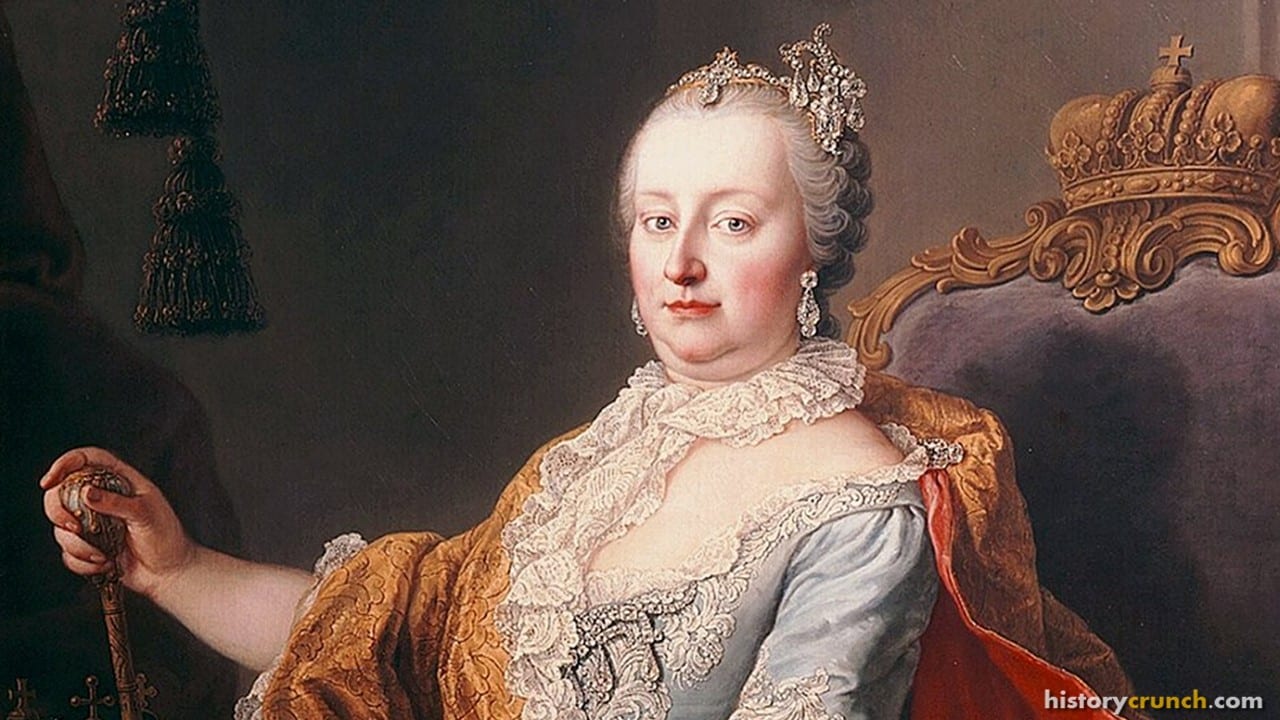
On September 11th, 1741, with French and Bavarian armies marching on Vienna and Prussia holding Silesia, Maria Theresa appeared before the Hungarian nobles at Pressburg, in mourning, and asked them in Latin to save her and her children. By the tradition she held up the six-month-old Joseph. The Hungarians, whom the Habsburgs had treated as rebels for a century, shouted that they would die for their king, meaning her, and voted an army.
LEARN MORESHOW LESSwhy it matters · 1 key figurePOLITICSThe Habsburg monarchy survived 1741 because a young woman persuaded a hostile parliament to fight for her. Her son Joseph, the baby in her arms, later tried to rule Hungary without asking and lost it.
On October 18th, 1748 the powers signed a peace at Aix-la-Chapelle after eight years of war in Europe, India and North America. Nearly everything conquered was given back; the exception was Silesia, which Austria confirmed as Prussia's. Maria Theresa had kept the rest of her inheritance, had her husband Francis elected Emperor in 1745 and was accepted, at last, as the ruler every power had promised in 1713 to accept.
LEARN MORESHOW LESSwhy it matters · 1 key figureTREATYMaria Theresa signed and began at once to plan the recovery of Silesia. The peace of 1748 was an eight-year truce before the Seven Years' War.
In May of 1749 Maria Theresa adopted the plan of her minister Count Haugwitz: the provincial diets of Austria and Bohemia, which had voted taxes year by year, were made to grant them for ten years at once, their administration was taken over by royal officials, and the nobility paid tax on its land for the first time. The money kept a standing army of 108,000 men. The old bargain between crown and estates was over.
LEARN MORESHOW LESSwhy it matters · key numbers · 1 key figureREFORMThe Habsburgs had been the least absolute of the great monarchies, ruling a dozen kingdoms each with its own parliament. Haugwitz's reforms are when Austria became an absolute state.
On May 1st, 1756 Austria and France signed the First Treaty of Versailles, a defensive alliance between the two powers that had fought each other since the days of Charles V. Maria Theresa's chancellor Kaunitz had engineered it; Frederick's own agreement with Britain at Westminster in January had pushed France into it. Russia joined the same year. Frederick was surrounded, and he knew it.
LEARN MORESHOW LESSwhy it matters · 1 key figureALLIANCEThe alliances of Europe were rearranged in a few months by three courts. It was diplomacy as absolute monarchs practiced it, without parliaments or publics, and it produced the Seven Years' War.
On August 29th, 1756, rather than wait to be attacked by Austria, France and Russia together, Frederick marched 60,000 men into neutral Saxony, occupied Dresden and forced the Saxon army to surrender and enlist in his own. It was the same move as Silesia in 1740, and it gave his enemies the excuse they wanted. For seven years Prussia, with only Britain's money behind it, fought the three largest powers of the Continent at once.
LEARN MORESHOW LESSwhy it matters · 1 key figureWARThe war was fought on four continents and made Britain a world power. In Europe it was fought to see whether Prussia would survive, and it very nearly did not.
On November 5th, 1757 Frederick's 22,000 men routed a French and Imperial army twice their size at Rossbach in ninety minutes, losing about 550 men. Exactly a month later, on December 5th, he beat an Austrian army of 65,000 with 36,000 at Leuthen in Silesia by marching his whole army behind a line of hills and striking its flank in echelon, the oblique order he had practiced for years. Napoleon called Leuthen a masterpiece.
LEARN MORESHOW LESSwhy it matters · key numbers · 1 key figureBATTLEThe autumn of 1757 is why Frederick is called the Great. It did not end the war; it meant Prussia would not be partitioned that year.
By the end of 1761 Russian and Austrian armies held Berlin's approaches, Frederick's treasury was empty and he carried poison in case of capture. On January 5th, 1762 the Empress Elizabeth of Russia died, and her nephew Peter III, who kept a portrait of Frederick in his study, took Russia out of the war within weeks and returned every conquest. Frederick called it the miracle of the House of Brandenburg.
LEARN MORESHOW LESSwhy it matters · 1 key figureDEATHThe fate of Prussia turned on one death in St. Petersburg. In an age of absolute rulers, a change of monarch was a change of everything.
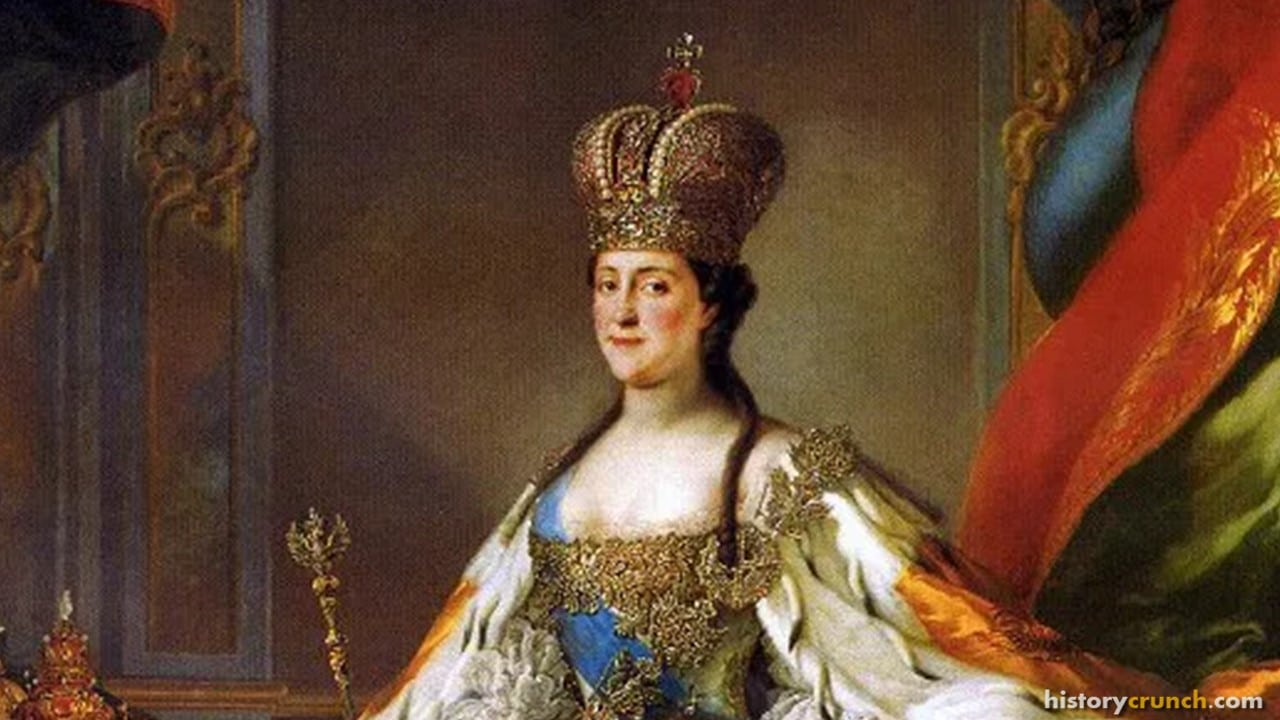
On July 9th, 1762 Catherine, a German princess married for seventeen years to the Russian heir, was driven from Peterhof to Petersburg at dawn by her lover Grigory Orlov and proclaimed Empress by the Guards regiments, who despised her husband for his Prussian uniforms and his surrender to Frederick. Peter III abdicated the next day and was dead within the week, strangled by Orlov's brother. Catherine announced he had died of colic.
LEARN MORESHOW LESSwhy it matters · 1 key figureCOUPCatherine had no Russian blood and no claim to the throne but the Guards. She kept it for thirty-four years by being the most able ruler in Europe.
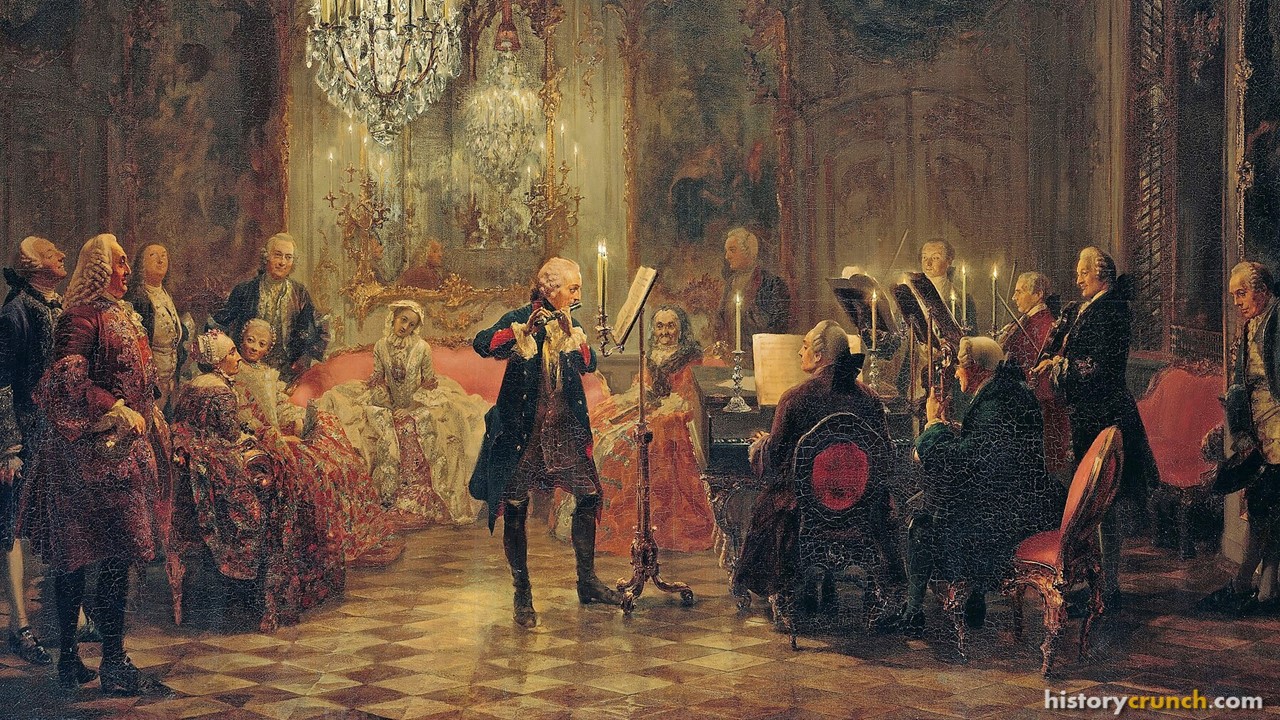
On February 15th, 1763 Prussia, Austria and Saxony signed peace at the hunting lodge of Hubertusburg. Not a single border changed: Silesia stayed Prussian, exactly as the Peace of Aix-la-Chapelle had left it in 1748. Prussia had lost about 180,000 soldiers and perhaps 400,000 civilians from a population of four million, and Frederick, at fifty-one, looked seventy. He spent the rest of his reign rebuilding the country, and never fought a major war again.
LEARN MORESHOW LESSwhy it matters · key numbers · 1 key figureTREATYPrussia had held off Austria, France and Russia together for seven years. From 1763 it was one of the five great powers, and the Germany of 1871 was implied.
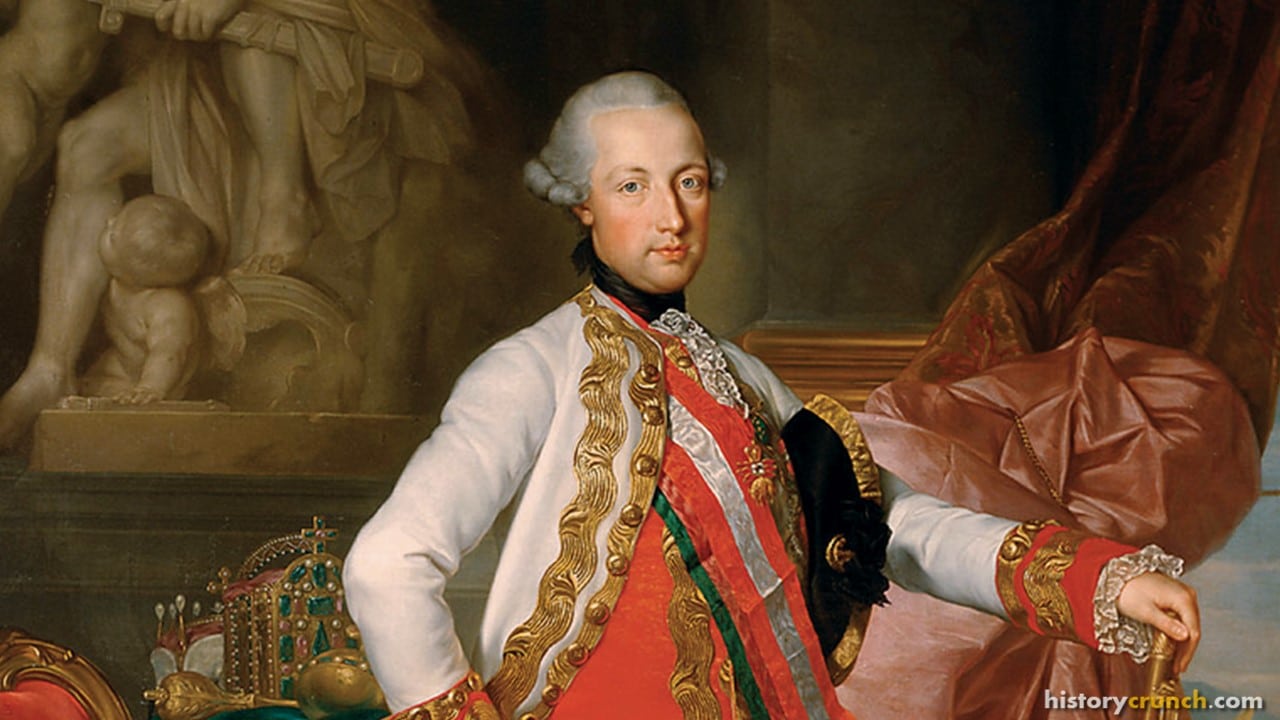
Emperor Francis I died at Innsbruck on August 18th, 1765 during the wedding celebrations of his son Leopold. His eldest son Joseph, twenty-four, became Holy Roman Emperor and Maria Theresa named him co-regent of the Habsburg lands. For fifteen years mother and son governed together and disagreed about nearly everything: she was pious and cautious, he had read Voltaire and wanted to remake the state at once. She kept the last word until she died.
LEARN MORESHOW LESSwhy it matters · 2 key figuresGOVERNMENTJoseph's decade as co-ruler was a decade of frustration, and it explains the speed with which he acted the moment she was gone.
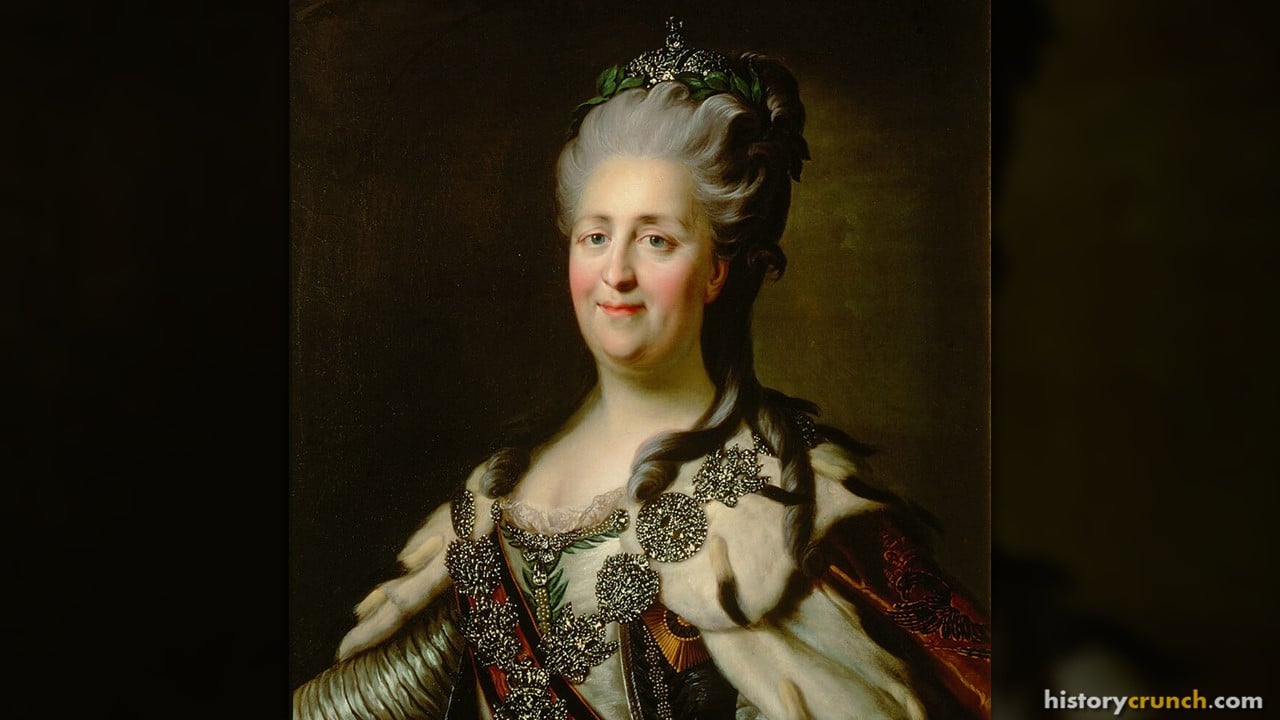
On July 30th, 1767 a Legislative Commission of 564 elected delegates from the nobility, the towns, the free peasants and the Cossacks, though not the serfs, met in the Kremlin to consider a new code of laws. Catherine had written its instructions herself, the Nakaz, a 526-article document lifted largely from Montesquieu and the Italian reformer Beccaria, arguing against torture and for equality before the law. The Commission talked for eighteen months and produced no code.
LEARN MORESHOW LESSwhy it matters · key numbers · 1 key figureREFORMThe Nakaz made Catherine famous in Paris as the philosopher on the throne. Her serfs, who were about half of Russia, were not in the room.
In 1771, after famine had killed about a tenth of Bohemia's people and peasants had begun to rise against their lords, Maria Theresa issued a Robot Patent for Silesia and then Bohemia, limiting the unpaid labor, called robot, that a serf owed his lord to three days a week. Officials were sent to enforce it against the nobles. Joseph wanted serfdom abolished outright; his mother would go no further than regulating it.
LEARN MORESHOW LESSwhy it matters · key numbers · 1 key figureREFORMAbsolutism could be the peasant's only friend. The crown limited the lords because it wanted the peasants alive, taxed and in the army.
On August 5th, 1772 Catherine, Frederick and Maria Theresa signed the First Partition of Poland, each taking a slice of a country whose elected king and paralyzed parliament could not stop them. Poland lost about a third of its land and half its people. Maria Theresa wept over it and took her share; Frederick said that the more she wept the more she took. Two further partitions in 1793 and 1795 removed Poland from the map.
LEARN MORESHOW LESSwhy it matters · key numbers · 3 key figuresPARTITIONThree absolute monarchs abolished a neighboring state by agreement among themselves. Nothing shows better what the system could do when the rulers agreed.
On September 17th, 1773 a Don Cossack named Emelian Pugachev, claiming to be Catherine's murdered husband Peter III, raised the Cossacks of the Ural River and promised freedom from serfdom, taxes and conscription. Within a year tens of thousands of serfs, factory workers, Bashkirs and Tatars had joined him, Kazan had been burned and about 1,500 nobles and officials had been killed. The army broke the rising in the summer of 1774; Pugachev was betrayed, caged and beheaded in Moscow in January of 1775.
LEARN MORESHOW LESSwhy it matters · key numbers · 1 key figureUPRISINGPugachev ended Catherine's flirtation with reform of serfdom. After 1774 she gave the nobles everything they asked for, and the serfs had to wait until 1861.
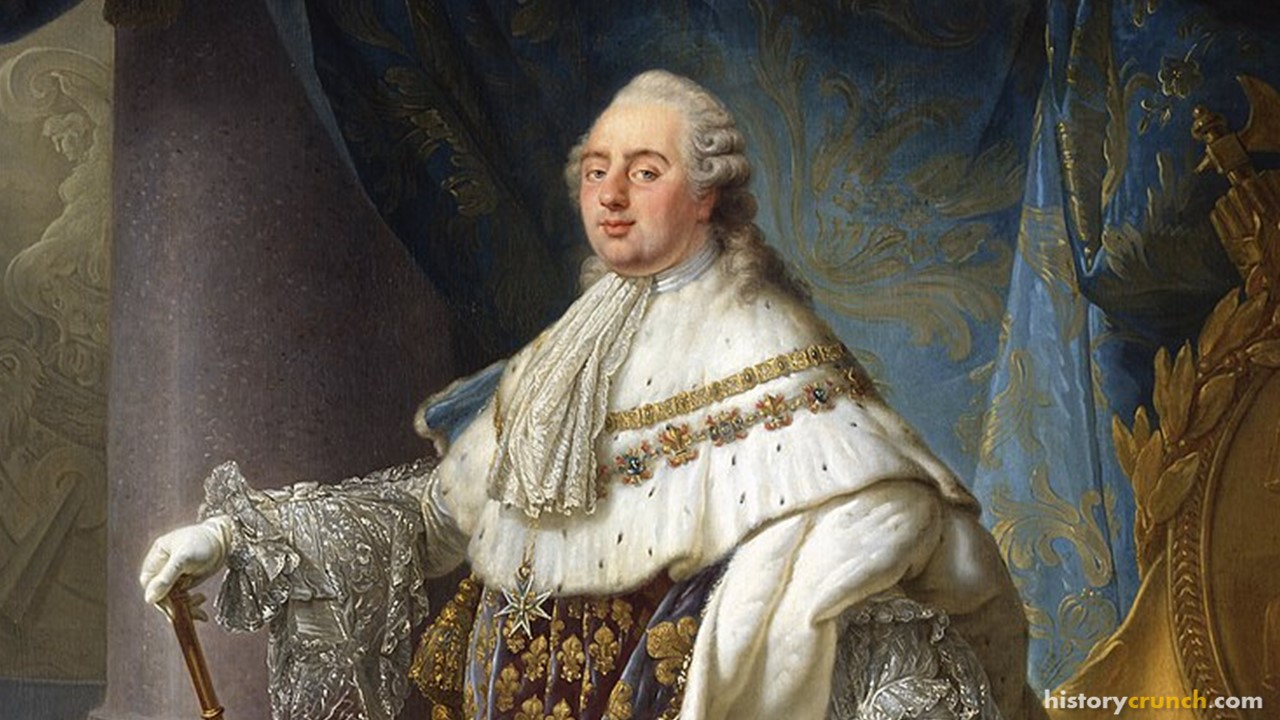
Louis XV died of smallpox on May 10th, 1774, unmourned after a reign of fifty-nine years, and his nineteen-year-old grandson became Louis XVI. The new king was shy, honest, fond of hunting and locksmithing, married to the Austrian archduchess Marie Antoinette, and inherited a debt that took half the state's income to service. He recalled the parlements, the law courts his grandfather had abolished for blocking reform, and lost the one weapon he had against them.
LEARN MORESHOW LESSwhy it matters · 1 key figureACCESSIONLouis XVI had all of Louis XIV's powers on paper and none of his will. The Revolution began because an absolute monarch could not make his own nobles pay tax.
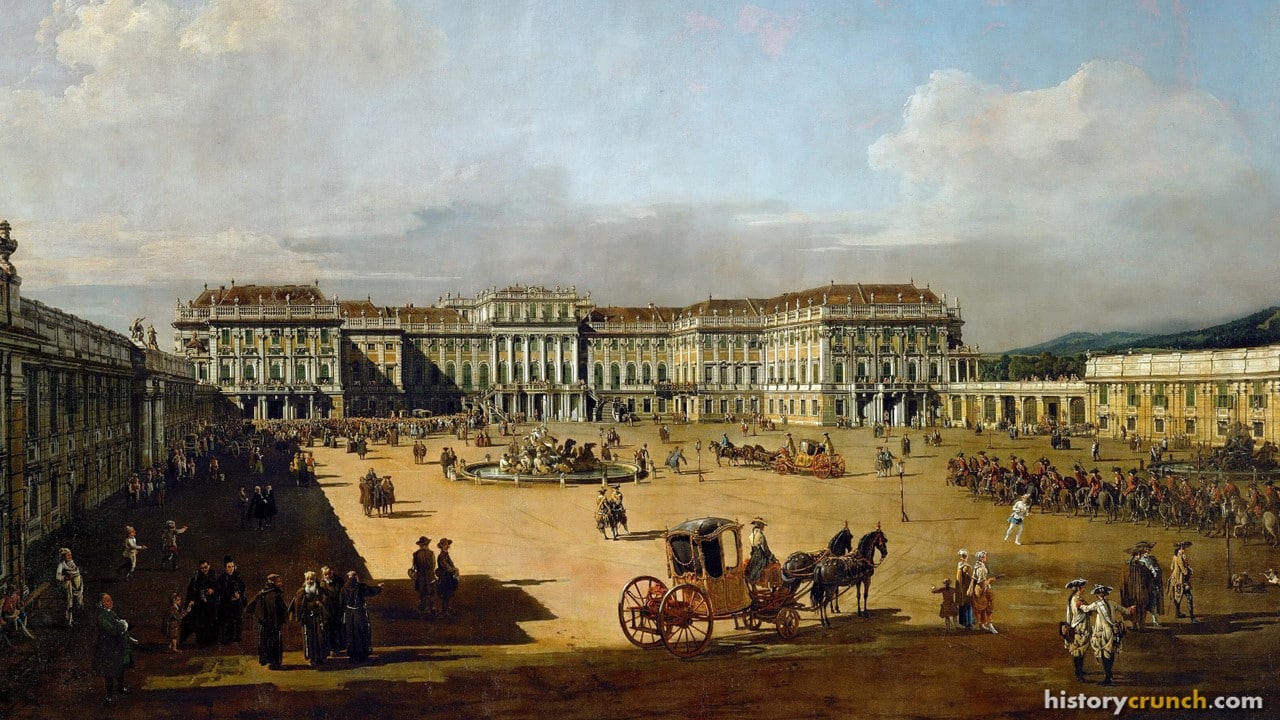
On December 6th, 1774 Maria Theresa signed the General School Ordinance, requiring every child between six and twelve in the Austrian and Bohemian lands to attend school. Each parish was to have a school, each district a higher school and each province a teacher-training college, with a standard curriculum and standard textbooks printed by the state. The Empress said the education of youth was and always would be a matter for the state.
LEARN MORESHOW LESSwhy it matters · key numbers · 1 key figureREFORMThe most Catholic ruler in Europe took education away from the Church and gave it to the state. Compulsory schooling is one of the things absolutism did that the Revolution kept.
On November 18th, 1775, with Pugachev dead ten months, Catherine issued the Statute on Provinces. Russia was divided into about fifty provinces of 300,000 to 400,000 people, each split into districts, each with a governor, courts, a treasury and police, and each staffed largely by the local nobles, who were given elected offices and a stake in keeping order. The number of officials in Russia roughly doubled.
LEARN MORESHOW LESSwhy it matters · key numbers · 1 key figureREFORMPugachev had shown that the state could not reach the countryside. Catherine's answer was to make the nobles the state's agents there, which secured them and their serfs for another eighty years.
On July 4th, 1776 the Continental Congress in Philadelphia adopted a Declaration of Independence from Britain, written mainly by Thomas Jefferson. It said that all men were created equal, that governments got their just powers from the consent of the governed and that a people could abolish a government that abused them, and it listed twenty-seven charges against George III. France, an absolute monarchy, spent about a billion livres helping the rebels win.
LEARN MORESHOW LESSwhy it matters · key numbersIDEALocke's argument of 1689 had become a state. The French officers who fought for it came home with ideas, and the money spent on it bankrupted the French crown.
In January of 1778 Joseph II tried to annex much of Bavaria when its ruling line died out, and on July 5th Frederick the Great invaded Bohemia to stop him. Neither side would risk a battle; the armies spent the autumn eating the Bohemian potato crop and starving each other, and the soldiers named the war for it. Maria Theresa wrote to Frederick behind her son's back, and the peace of Teschen in May of 1779 gave Joseph a strip of land and nothing more.
LEARN MORESHOW LESSwhy it matters · 2 key figuresWARIt was Frederick's last war and Maria Theresa's last quarrel with her son. Joseph learned nothing from it; he tried for Bavaria again in 1785.
Maria Theresa died in Vienna on November 29th, 1780, aged sixty-three, of a lung disease, with Joseph at her bedside. She had reigned for forty years, borne sixteen children, married them into the courts of France, Naples and Parma, lost Silesia, rebuilt the state and the army, and put a school in every parish. She had refused to the last to be called Empress in her own right, and everyone called her that anyway.
LEARN MORESHOW LESSwhy it matters · key numbers · 2 key figuresDEATHThe only woman to rule the Habsburg lands had held them together when every court in Europe expected them to be divided. Her son now had them to himself.
Joseph II freed the serfs of Bohemia and tolerated Protestants and Jews in the first year of his sole rule, closed a third of the monasteries and rewrote his empire's laws by decree; Belgium rose against him and Hungary refused, and he died in 1790 asking for an epitaph that said he had failed. Frederick died in his armchair in 1786 and left a state that ran on his attention alone. Catherine gave the nobility a charter and took the Crimea. And in France Louis XVI, who had every power Louis XIV had held, could not make his nobles pay tax, called the Estates-General in 1789 to ask for money and lost his kingdom in six weeks. The Bastille fell in July, the Rights of Man were declared in August, and in January of 1793 the king was guillotined in a square that had been named for his grandfather. Catherine banned the philosophers she had once written to, and the age that had begun with a wedding in Valladolid ended on a scaffold in Paris.
On October 13th, 1781 Joseph II issued the Patent of Toleration. Lutherans, Calvinists and Orthodox Christians in the Habsburg lands could now worship in private churches without spires or street doors, own property, enter the professions and hold office. Over the next years Joseph also closed about a third of the monasteries, put their wealth into a fund for parish priests and schools, ordered coffins made reusable to save wood, and put the Church under a state that decided how many candles it could light.
LEARN MORESHOW LESSwhy it matters · 1 key figureREFORMJoseph did in a decree what his mother would not do in forty years. He also did it without asking anyone, which is why so little of it survived him.
On November 1st, 1781 Joseph issued the Serfdom Patent for Bohemia, Moravia and the Austrian lands. A peasant could now marry, leave the estate, learn a trade and send his children to school without his lord's permission, and could not be bought or sold. He still owed the lord rent and labor for the land he worked. Joseph extended the patent to Hungary in 1785 and in 1789 tried to replace the labor service with a money tax, which the nobles refused to collect.
LEARN MORESHOW LESSwhy it matters · 1 key figureREFORMJoseph freed the person and not the land. Serfdom in the Habsburg lands was finally ended in 1848, by a revolution he would have understood.
On January 2nd, 1782 Joseph II extended a measure of toleration to the Jews of Vienna and Lower Austria. They could send their children to state schools and universities, learn any trade, set up factories and stop wearing the yellow badge; they were still barred from owning land, still paid special taxes and were still limited in number. Similar edicts followed for Bohemia, Moravia, Hungary and Galicia over the next years.
LEARN MORESHOW LESSwhy it matters · 1 key figureREFORMJoseph's Jewish edicts were the first in Europe to treat Jews as subjects with rights rather than a tolerated foreign community. The French National Assembly granted Jews full citizenship in September of 1791.
On April 19th, 1783 Catherine declared the Crimean Khanate, a Tatar state that had been a vassal of the Ottoman Turks for three centuries and had raided Russia for slaves for as long, annexed to Russia. Her favorite Potemkin built the naval base of Sevastopol on its coast and founded the Black Sea fleet. In 1787 he took the Empress on a six-month tour of the new lands, and the phrase 'Potemkin village' was born from the accusation that the prosperous villages along the route were painted fronts.
LEARN MORESHOW LESSwhy it matters · 1 key figureCONQUESTPeter had reached the Baltic; Catherine reached the Black Sea. Russia's expansion was the most lasting achievement of its absolutism, and the Crimea is still contested.
On April 21st, 1785, her birthday, Catherine issued a Charter to the Nobility and a Charter to the Towns. The nobles were freed from compulsory state service, from personal taxation and from corporal punishment, given full ownership of their estates and the serfs on them, and organized into provincial assemblies with the right to petition the throne. The towns got elected councils. The serfs got nothing.
LEARN MORESHOW LESSwhy it matters · 1 key figureLAWThe Charter was the price of the nobility's loyalty after Pugachev. Russia's nobles now had the rights of Western aristocrats and the serfs had the status of property.
Frederick II died in his armchair at Sanssouci, his small palace in the garrison town of Potsdam outside Berlin, on August 17th, 1786, aged seventy-four, with his greyhounds around him. He had reigned forty-six years, doubled Prussia's size and population, fought three wars for Silesia and kept it, written thirty volumes in French, played the flute, corresponded with Voltaire, ended torture and censorship of the press, and left an army of 200,000 and a treasury of fifty million thalers. He asked to be buried beside his dogs and was not, until 1991.
LEARN MORESHOW LESSwhy it matters · key numbers · a sourceDEATHFrederick was the model of the enlightened absolute monarch: the first servant of the state, as he called himself, who was also its only master. The state he left ran on his personal attention and began to rust the day he died.
IN THEIR OWN WORDS“I am the first servant of the state.”
Frederick the Great, Political Testament, 1752WHAT TO NOTICEthe phrase he used all his life
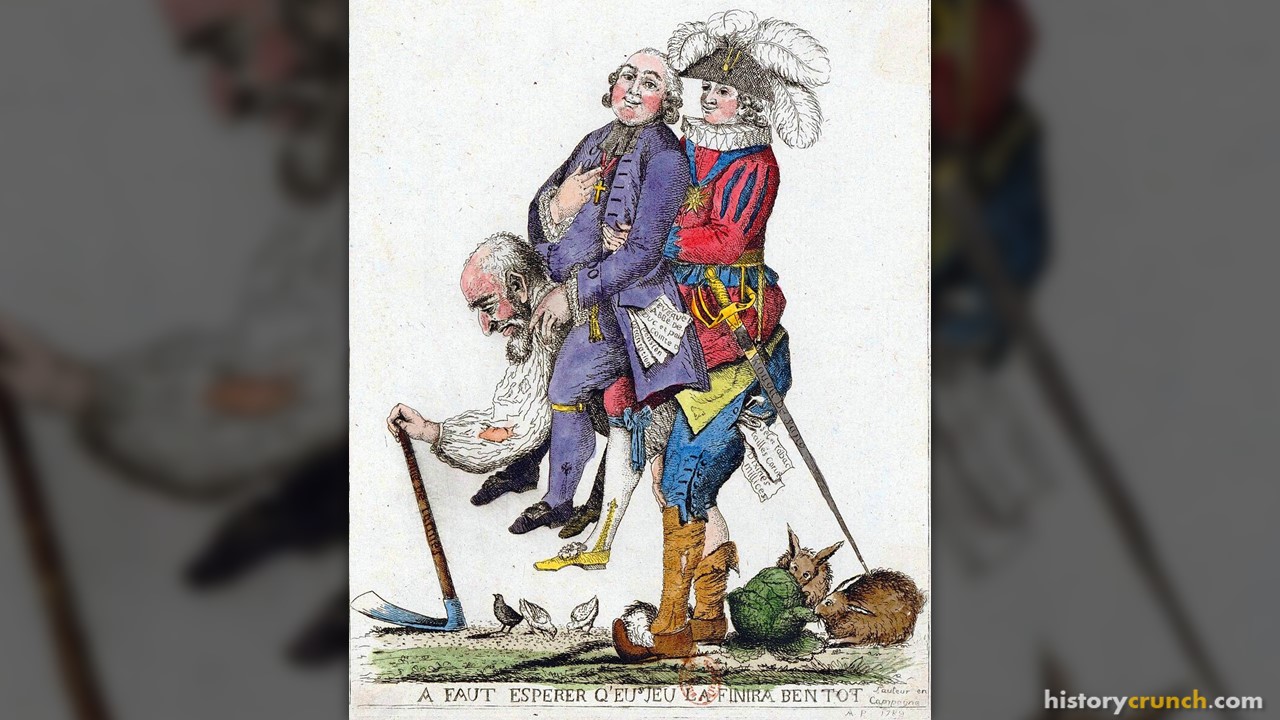
On May 5th, 1789 Louis XVI opened the Estates-General at Versailles, the first meeting of France's three estates since 1614, because the parlements and an assembly of notables had refused to let him tax the nobility to pay a debt that consumed half the state's revenue. The Third Estate, the commoners, arrived with 600 deputies and a list of grievances from every parish. On June 17th it declared itself the National Assembly, and on June 20th, locked out of its hall, it swore on a tennis court not to disband until France had a constitution.
LEARN MORESHOW LESSwhy it matters · key numbers · 1 key figureCRISISAn absolute monarch had called a parliament because he could not govern without one. From that day the question was not whether the king would share power but how much he would keep.
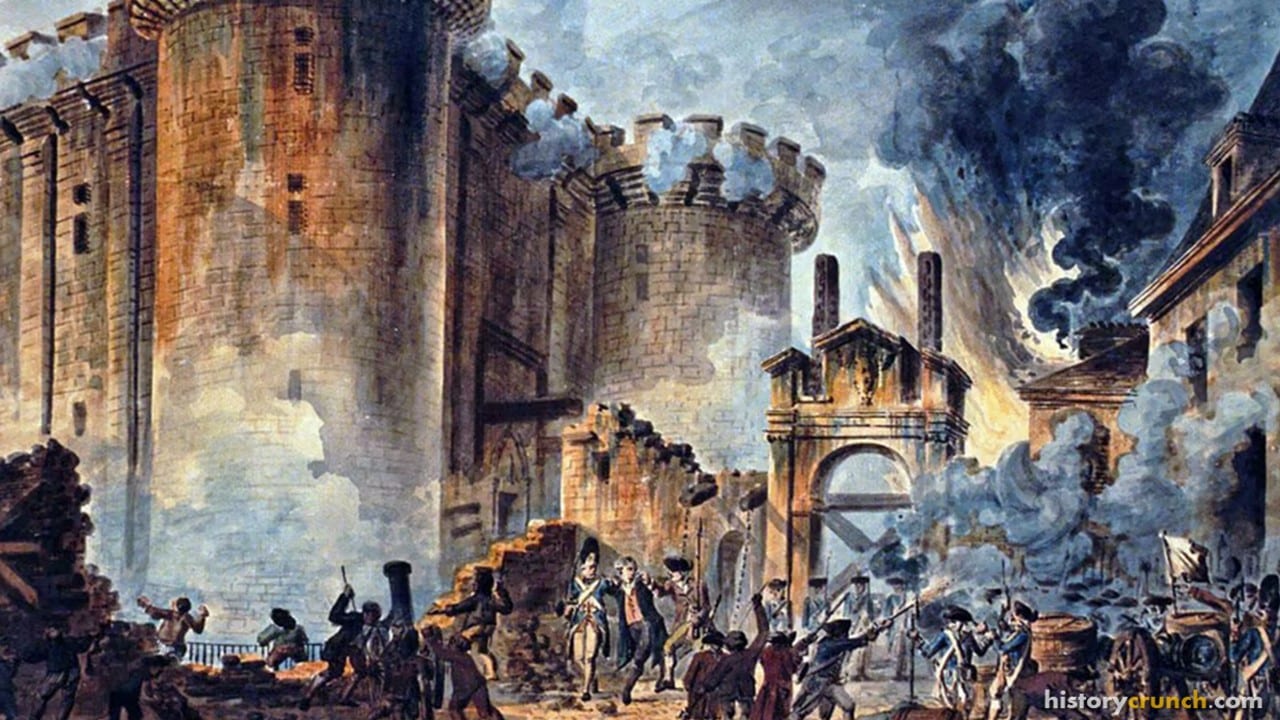
On July 14th, 1789, after the king had dismissed his popular finance minister Necker and gathered troops around Paris, a crowd seeking gunpowder attacked the Bastille, the royal fortress-prison in the east of the city. The garrison surrendered after four hours; the governor was killed and his head carried on a pike. The fortress held seven prisoners. Louis XVI, told the news, asked whether it was a revolt, and was told it was a revolution.
LEARN MORESHOW LESSwhy it matters · key numbers · a sourceREVOLUTIONThe Bastille had held prisoners on the king's signature alone, without trial. Its fall, and the crowd's, was the end of that kind of power in France.
IN THEIR OWN WORDS“Is it a revolt? No, Sire, it is a revolution.”
the Duc de La Rochefoucauld-Liancourt to Louis XVI, July 1789WHAT TO NOTICEas reported in his memoirs
On the night of August 4th, 1789 the National Assembly abolished feudal dues, noble privileges and the sale of offices in a single sitting. On August 26th it adopted the Declaration of the Rights of Man and of the Citizen: men were born free and equal in rights, sovereignty belonged to the nation, the law was the expression of the general will, and no one could be arrested except by law. Louis XVI refused to sign it until a Paris crowd marched on Versailles in October and brought him to the city.
LEARN MORESHOW LESSwhy it matters · key numbersLAWEvery claim of absolutism was answered in seventeen articles. Sovereignty was the nation's, not the king's, and the king now lived in Paris where the nation could watch him.
Joseph II's reforms had abolished the old constitutions, courts and church privileges of the Austrian Netherlands, now Belgium, without consulting anyone. On October 27th, 1789 a rebel army beat Austrian troops at Turnhout, and by December every province had thrown out the imperial garrisons and declared itself the United Belgian States. In Hungary the nobles were in near revolt as well, and Joseph, dying, revoked almost every reform he had made there.
LEARN MORESHOW LESSwhy it matters · 1 key figureUPRISINGThe most enlightened absolute monarch in Europe lost his richest provinces for reforming them without asking. Absolutism could not survive being right in a hurry.
Joseph II died in Vienna on February 20th, 1790, aged forty-eight, of tuberculosis caught on campaign against the Turks, with Belgium in revolt, Hungary refusing his laws and his brother Leopold already planning to undo most of what he had done. He is said to have asked for his epitaph to read that he had failed in everything he undertook. Leopold restored the old constitutions and kept the Patent of Toleration and the Serfdom Patent.
LEARN MORESHOW LESSwhy it matters · 1 key figureDEATHJoseph tried to make an absolute state do what a revolution was about to do in France, and his nobles stopped him. The two things he kept, toleration and the end of personal serfdom, were the ones no one could take back.
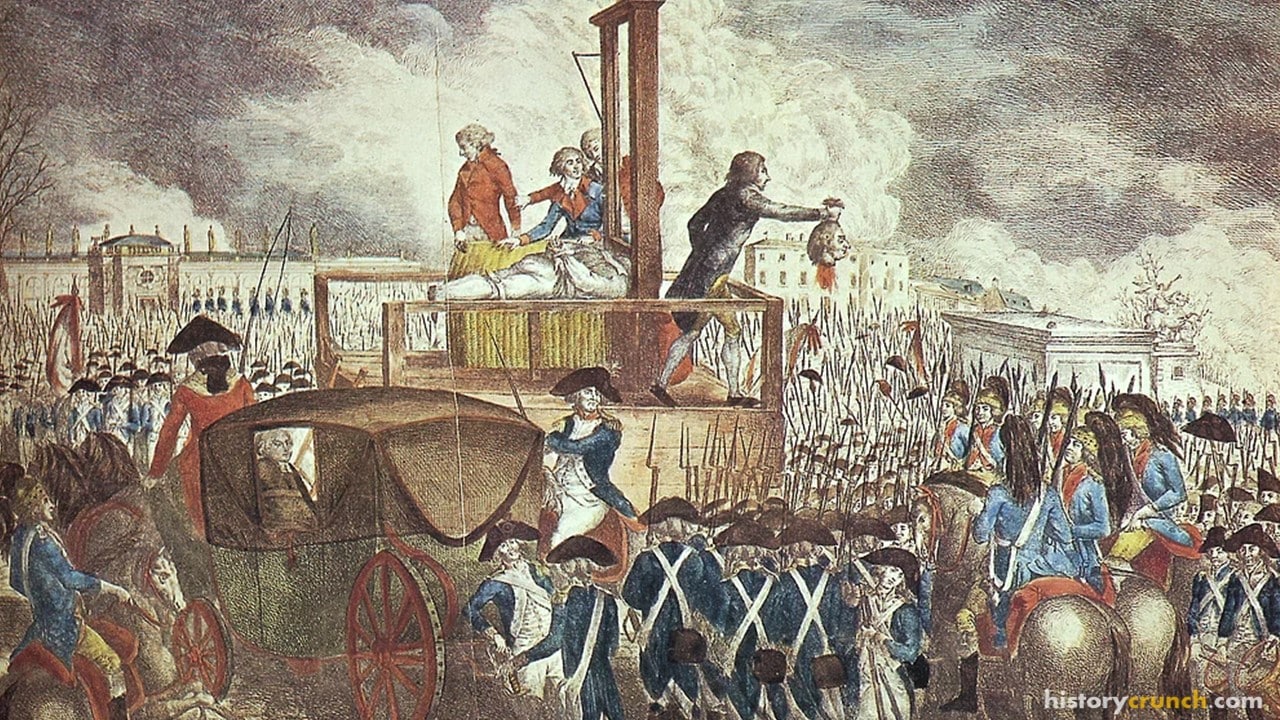
Tried by the National Convention for conspiracy against the liberty of the nation, Louis XVI was condemned by 387 votes to 334 and guillotined in the Place de la Revolution in Paris on January 21st, 1793, at about twenty past ten in the morning. He tried to speak to the crowd and was drowned out by drums. He was thirty-eight. His head was shown to the crowd, and a young man ran through it shouting that the tyrant was dead.
LEARN MORESHOW LESSwhy it matters · key numbers · 1 key figureEXECUTIONCharles I had been executed by a court his own people had set up in 1649; now Louis XVI was, in the country that had invented absolutism. The age that began with Ferdinand and Isabella ended on this scaffold.
Catherine died at Tsarskoye Selo on November 17th, 1796, aged sixty-seven, of a stroke. She had reigned thirty-four years, taken the Black Sea coast and half of Poland, written plays, built the Hermitage, corresponded with Voltaire and Diderot, and, after 1789, banned their books, imprisoned Russian writers who praised the French Revolution and ordered French emigres to swear an oath against it. Her son Paul, who hated her, succeeded her and was murdered by his own officers in 1801.
LEARN MORESHOW LESSwhy it matters · key numbers · 1 key figureDEATHCatherine was the last of the enlightened absolute monarchs and the first to see what the Enlightenment had led to in Paris. Her answer, censorship and police, was the answer of every crowned head in Europe for the next generation.

I'm the founder of History Crunch, which I first began in 2015 with a small team of like-minded professionals. I have an Education Degree with a focus in Social Studies education. I spent nearly 15 years teaching history, geography and economics in secondary classrooms to thousands of students. Now I use my time and passion researching, writing and thinking about history education for today's students and teachers.

K.L. is a content writer for History Crunch. She is a fantastic history and geography teacher that has been helping students learn about the past in new and meaningful ways since the mid-2000s. Her primary interest is Ancient History, but she is also driven by other topics, such as economics and political systems.

I'm a passionate history and geography teacher with over 15 years of experience working with students in the middle and high school years. I have an Education Degree with a focus in World History. I have been writing articles for History Crunch since 2015 and love the challenge of creating historical content for young learners!
To cite this timeline as a source, use one of the formats below.
MLA: Millar, B., et al. “Age of Absolutism Timeline.” HistoryCrunch, 21 September 2026, https://historycrunch.com/age-of-absolutism-timeline/.
APA: Millar, B., Woida, K.L., & Beck, E. (2026). Age of Absolutism Timeline. HistoryCrunch. https://historycrunch.com/age-of-absolutism-timeline/
Chicago: Millar, B., K.L Woida, and Elias Beck. “Age of Absolutism Timeline.” HistoryCrunch. September 21, 2026. https://historycrunch.com/age-of-absolutism-timeline/
© History Crunch
Law, taxes, courts, church and army, with no parliament able to say no. The model is Louis XIV after 1661.
From the Bible, the Roman emperors and the wars of religion. James I wrote it down; Charles I died for it.
Hobbes said fear of chaos; Locke said they had not agreed at all, only lent the power, and could take it back.
Because after Luther a second religion looked like a second loyalty. Augsburg, Nantes and its revocation are the same argument.
A marriage, an Inquisition, a conquest and the silver of the Americas, all under one crown by 1516.
A fixed capital, a mountain of paper and a palace that was also a monastery.
English guns, Dutch shallows, the weather, and a plan the king made against his admirals' advice.
By marrying heiresses for a century. Charles V was the result, and he split it in two.
Both, in that order. The first thirteen years built Russia; the last twenty terrorized it.
Crowned at ten beside a half-brother, ruled by his sister, he overthrew her at seventeen.
The army, the navy, the capital, the Church, the nobility and the calendar. Almost everything except serfdom.
She wrote like one until 1774. After Pugachev she governed for the nobility.
East down the Volga under Ivan, west to the Baltic under Peter, south to the Black Sea under Catherine.
Because Henry VIII had made Parliament his partner, and Parliament controlled the money.
Step by step: no Parliament, then a Parliament that would not go home, then an army that would not obey it.
Very nearly. He refused the crown and ruled by major-generals instead.
That it happened without a battle, and that Parliament set the terms before it gave the crown.
Henry IV rebuilt the treasury, Richelieu broke the nobles and the Huguenots, Mazarin beat the Fronde.
He gave them Versailles instead of power, and made attendance on him the only way to rise.
Some border towns, and a debt of two billion livres that his great-great-grandson could never pay.
Because one family ruling France and Spain together would have ruled the world.
It went bankrupt, and an absolute king could not tax the nobles without an assembly the nobles controlled.
An army first, a state to pay for it, and a king willing to use both.
Both. He abolished torture in his first week and invaded Silesia in his seventh month.
By persuading Hungary to fight for her, rebuilding the state and outlasting everyone.
British money, Frederick's battles, and a death in St. Petersburg.
He did in ten years what needed fifty, and asked nobody.
In Austria, something; in Russia, the opposite. The crown protected them where it needed them and sold them where it did not.
Torture, censorship, schools, toleration and law codes. Not their own power, and mostly not serfdom.
Because a palace was power made visible, and a court was a cage for the nobility.
Debt, ideas and a Paris crowd. The American and French revolutions did in fifteen years what no parliament had done in three hundred.
Both kings were tried by their own subjects for claiming to be above the law, and both died saying they were.
No question matches that word.
Research question 1Law, taxes, courts, church and army, with no parliament able to say no. The model is Louis XIV after 1661.
Research question 2From the Bible, the Roman emperors and the wars of religion. James I wrote it down; Charles I died for it.
Research question 3Hobbes said fear of chaos; Locke said they had not agreed at all, only lent the power, and could take it back.
Research question 4Because after Luther a second religion looked like a second loyalty. Augsburg, Nantes and its revocation are the same argument.
Research question 5A marriage, an Inquisition, a conquest and the silver of the Americas, all under one crown by 1516.
Research question 6A fixed capital, a mountain of paper and a palace that was also a monastery.
Research question 7English guns, Dutch shallows, the weather, and a plan the king made against his admirals' advice.
Research question 8By marrying heiresses for a century. Charles V was the result, and he split it in two.
Research question 9Both, in that order. The first thirteen years built Russia; the last twenty terrorized it.
Research question 10Crowned at ten beside a half-brother, ruled by his sister, he overthrew her at seventeen.
Research question 11The army, the navy, the capital, the Church, the nobility and the calendar. Almost everything except serfdom.
Research question 12She wrote like one until 1774. After Pugachev she governed for the nobility.
Research question 13East down the Volga under Ivan, west to the Baltic under Peter, south to the Black Sea under Catherine.
Research question 14Because Henry VIII had made Parliament his partner, and Parliament controlled the money.
Research question 15Step by step: no Parliament, then a Parliament that would not go home, then an army that would not obey it.
Research question 16Very nearly. He refused the crown and ruled by major-generals instead.
Research question 17That it happened without a battle, and that Parliament set the terms before it gave the crown.
Research question 18Henry IV rebuilt the treasury, Richelieu broke the nobles and the Huguenots, Mazarin beat the Fronde.
Research question 19He gave them Versailles instead of power, and made attendance on him the only way to rise.
Research question 20Some border towns, and a debt of two billion livres that his great-great-grandson could never pay.
Research question 21Because one family ruling France and Spain together would have ruled the world.
Research question 22It went bankrupt, and an absolute king could not tax the nobles without an assembly the nobles controlled.
Research question 23An army first, a state to pay for it, and a king willing to use both.
Research question 24Both. He abolished torture in his first week and invaded Silesia in his seventh month.
Research question 25By persuading Hungary to fight for her, rebuilding the state and outlasting everyone.
Research question 26British money, Frederick's battles, and a death in St. Petersburg.
Research question 27He did in ten years what needed fifty, and asked nobody.
Research question 28In Austria, something; in Russia, the opposite. The crown protected them where it needed them and sold them where it did not.
Research question 29Torture, censorship, schools, toleration and law codes. Not their own power, and mostly not serfdom.
Research question 30Because a palace was power made visible, and a court was a cage for the nobility.
Research question 31Debt, ideas and a Paris crowd. The American and French revolutions did in fifteen years what no parliament had done in three hundred.
Research question 32Both kings were tried by their own subjects for claiming to be above the law, and both died saying they were.