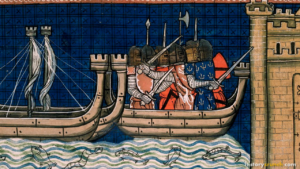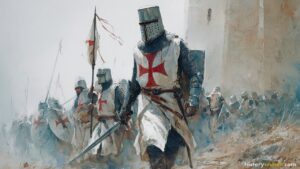
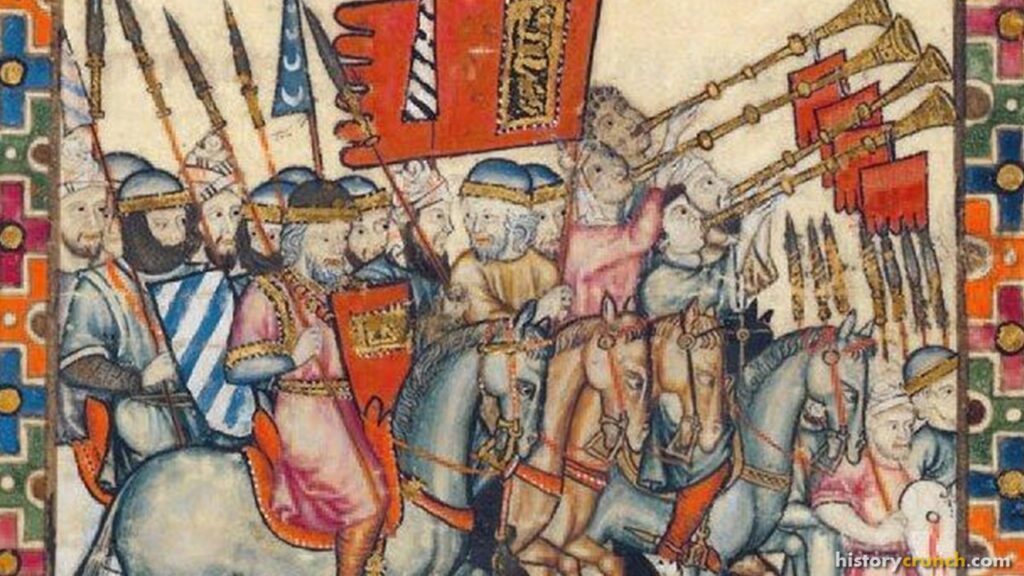
Spain in the Middle Ages was one of the most unique and significant regions in medieval Europe. Unlike most of western Europe, which was dominated by Christian kingdoms and the feudal system, the Iberian Peninsula was home to a complex mixture of Christian, Muslim and Jewish cultures throughout much of the medieval period. The history of Spain in the Middle Ages was shaped above all by the Reconquista, which was a centuries-long series of wars between Christian kingdoms and Muslim rulers for control of the Iberian Peninsula. In general, Spain in the Middle Ages was defined by religious conflict, cultural exchange and the gradual unification of the Christian kingdoms that would eventually become the modern nation of Spain.
 FactsthatCrunch
What were the major turning points of the Reconquista, the centuries-long struggle for the Iberian Peninsula from 711 CE to 1492 CE?
Tap a point to read its detail.
What Were the Middle Ages?
The Middle Ages, also known as the Medieval Period, refers to the period of European history that stretched from the 5th century to the 15th century. More specifically, historians generally place the beginning of the Middle Ages at 476 CE, with the fall of the Western Roman Empire, and its end at approximately 1500 CE, with the start of the Renaissance. Due to its length, the Middle Ages is divided into three smaller periods, including: the Early Middle Ages, the High Middle Ages and the Late Middle Ages. Spain was involved in many of the most significant events of the Middle Ages across all three of these periods and its history during the medieval period was shaped by a unique set of circumstances that set it apart from the rest of Europe.
The Muslim Conquest of Spain
To understand the history of Spain in the Middle Ages, it is important to understand how Muslim rulers came to control the Iberian Peninsula in the first place. Before the 8th century, the region was ruled by the VisigothsA Germanic Christian people who ruled the Iberian Peninsula before the Muslim conquest in 711 CE., a Germanic Christian people who had controlled the peninsula since the fall of the Western Roman Empire. In 711 CE, a Muslim army from North Africa, made up largely of Berbers and Arabs, crossed the Strait of Gibraltar and invaded the Iberian Peninsula. The Visigoth kingdom collapsed quickly and within a few years the Muslim forces, known as the MoorsThe name given to the Muslim forces who conquered most of the Iberian Peninsula after crossing from North Africa., had conquered most of the peninsula.
The Moors established a territory they called Al-AndalusThe territory established by the Moors on the Iberian Peninsula, which became one of the most advanced civilizations in the medieval world., which at its height covered the majority of the Iberian Peninsula and became one of the most advanced and prosperous civilizations in the medieval world. For instance, cities such as Cordoba, Seville and Toledo became major centers of learning, trade and culture during the period of Muslim rule. Cordoba in particular was one of the largest and most sophisticated cities in all of Europe during the 10th century, with a population far exceeding that of any city in Christian Europe at the time. As such, the Muslim conquest of the Iberian Peninsula created a very different kind of medieval society in Spain than existed in the rest of western Europe.
The Reconquista
The most significant event in the history of Spain in the Middle Ages was the Reconquista. The ReconquistaA centuries-long series of wars between Christian kingdoms and Muslim rulers for control of the Iberian Peninsula. was a centuries-long series of wars fought between the Christian kingdoms of the north of the Iberian Peninsula and the Muslim rulers who controlled much of the region. Beginning in the early 8th century and ending in 1492 CE, the Reconquista reshaped the political, religious and cultural landscape of what is now Spain and Portugal.
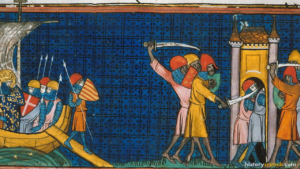
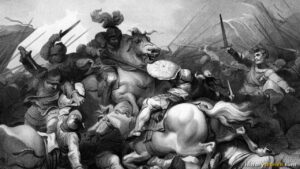
The Reconquista is traditionally said to have begun with the Battle of Covadonga in 718 CE, when a Christian nobleman named Pelayo led a small force against a Muslim army in the mountains of northern Spain and won a decisive victory. This battle is remembered as the symbolic starting point of the Christian resistance and Pelayo went on to establish the Kingdom of Asturias, the first Christian kingdom of the Reconquista era. Over the following centuries, the Christian kingdoms of the north grew slowly stronger and began to push southward. For instance, a major turning point came at the Battle of Las Navas de Tolosa in 1212 CE, when a coalition of Christian kingdoms joined forces and defeated a large Muslim army, which opened up the southern part of the peninsula to Christian conquest. In the decades that followed, the Christian kingdoms captured many of the major cities of Al-Andalus, including Cordoba in 1236 CE and Seville in 1248 CE. By the end of the 13th century, Muslim rule in the Iberian Peninsula had been reduced to the small southern kingdom of Granada.
FactsthatCrunchOn July 16th, 1212 CE, a coalition of Christian kingdoms from Castile, Aragon, and Navarre joined forces and defeated a large Almohad Muslim army in southern Spain, breaking open a defended mountain pass and pushing deep into Al-Andalus.
Muslim rulers controlled most of the southern Iberian Peninsula; Christian kingdoms remained mostly in the north
Christian forces captured Cordoba in 1236 CE and Seville in 1248 CE; Muslim rule shrank to the small kingdom of Granada
Cultural Exchange in Medieval Spain
One of the most remarkable features of Spain in the Middle Ages was the degree of cultural exchange that took place between its Christian, Muslim and Jewish communities. During much of the medieval period, the Iberian Peninsula was home to all three of these groups, who lived alongside one another in many cities and towns. This situation, which historians sometimes refer to as ‘convivenciaA Spanish word meaning coexistence, describing how Christians, Muslims and Jews lived alongside one another in medieval Spain.‘, meaning coexistence in Spanish, was unusual in the medieval world and produced a remarkable flowering of art, scholarship and intellectual life.
For instance, Muslim scholars in Al-Andalus preserved and built upon the knowledge of ancient Greek and Roman thinkers, making the Iberian Peninsula one of the most important centers of learning in the medieval world. Jewish scholars also played a significant role in this intellectual culture, acting as translators and scholars who helped transmit knowledge between the Arabic-speaking Muslim world and the Latin-speaking Christian world. For example, many of the ancient Greek philosophical texts that would eventually spark the Renaissance in Europe first reached Christian scholars through Latin translations made in Spain from Arabic versions preserved by Muslim and Jewish scholars. As such, the cultural exchange of medieval Spain had a profound and lasting impact on the intellectual history of Europe.
FactsthatCrunchMany people believe medieval Christian Europe had no way to read the great works of ancient Greek thinkers until the Renaissance.
In medieval Spain, Muslim scholars preserved Greek knowledge in Arabic, and Jewish scholars helped translate it. Many ancient Greek texts first reached Christian scholars through Latin translations made in Spain, and they later helped spark the Renaissance.
Christian Kingdoms of Medieval Spain
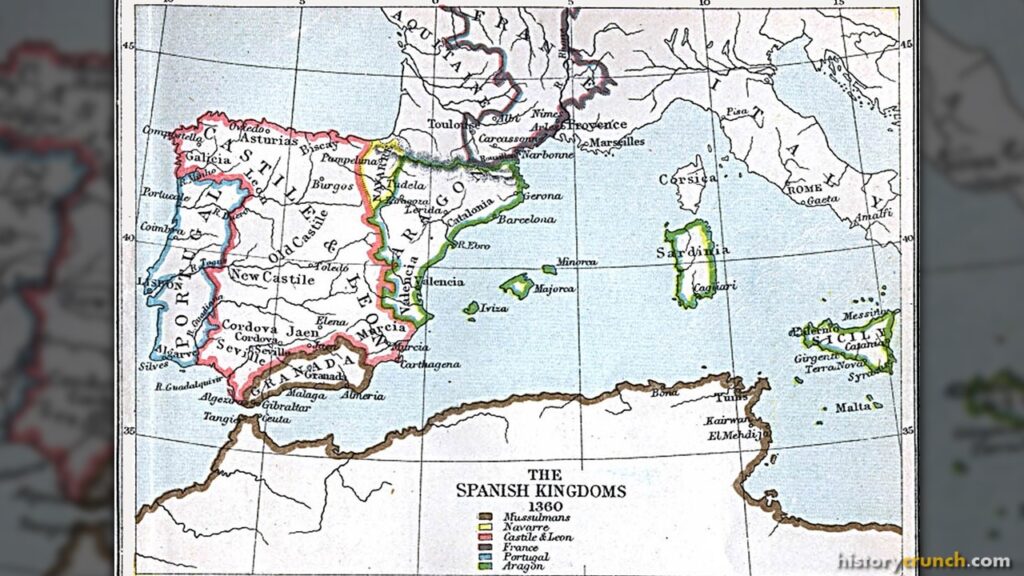
Throughout the Middle Ages, the Christian north of the Iberian Peninsula was divided into several different kingdoms that competed with one another as well as with the Muslim rulers of the south. The most important of these kingdoms were: Castile, Aragon, Navarre, Leon and Portugal. Each of these kingdoms had its own rulers, laws and traditions, and the relationships between them were often complicated by rivalry, war and dynastic marriages.
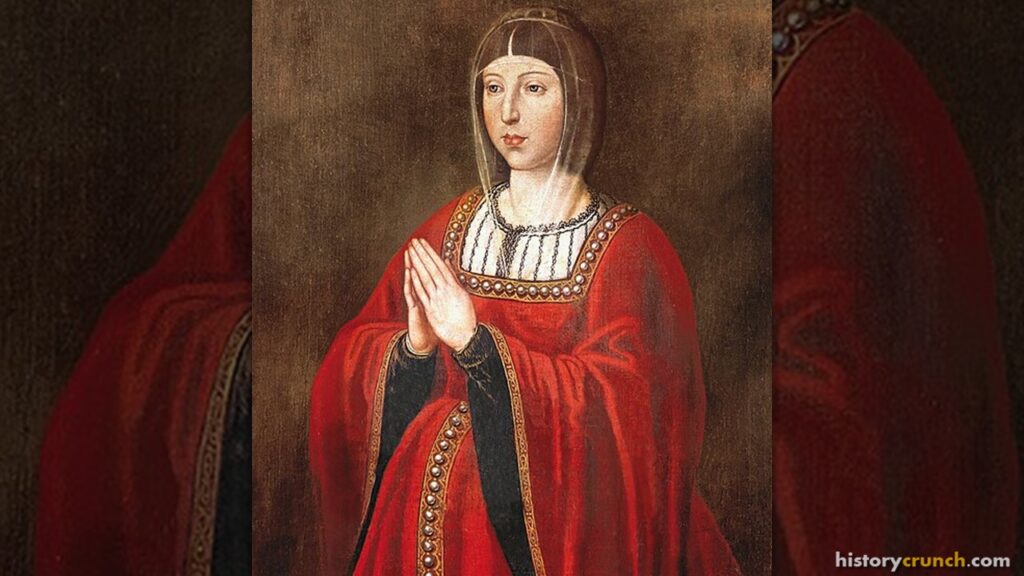
Over time, the Christian kingdoms of the north gradually consolidated through a series of unions and conquests. For instance, the kingdoms of Castile and Leon were united for much of the medieval period, and the kingdom of Aragon expanded to include Catalonia and later Sicily and other Mediterranean territories. The most significant unification of the medieval period came in 1469 CE when King Ferdinand II of Aragon married Queen Isabella I of Castile, uniting the two most powerful Christian kingdoms on the peninsula. Ferdinand and Isabella, known together as the Catholic Monarchs, used their combined power to complete the Reconquista by launching a final military campaign against the last Muslim kingdom of Granada. Granada fell in 1492 CE, bringing the Reconquista to an end and uniting most of the Iberian Peninsula under a single Christian monarchy for the first time.
During the Middle Ages in the Iberian Peninsula, did each of these kingdoms belong to the Christian north or was it the last Muslim-ruled territory in Spain?
The Spanish Inquisition
Another important event in the history of Spain in the Middle Ages was the establishment of the Spanish Inquisition in 1478 CE. The Spanish Inquisition was a religious institution established by Ferdinand and Isabella with the approval of the Pope to enforce Catholic orthodoxy in Spain. It was primarily directed against Jewish and Muslim converts to Christianity who were suspected of secretly continuing to practice their old faiths. The Spanish Inquisition used harsh methods, including torture and execution, to investigate and punish those it considered to be hereticsPeople judged by the Church to hold beliefs that went against official Catholic teaching. or false converts.
The Spanish Inquisition had a profound impact on the religious and cultural life of Spain in the final years of the Middle Ages. For instance, in 1492 CE, the same year that Granada fell and Christopher Columbus set sail for the Americas, Ferdinand and Isabella issued the Alhambra DecreeA 1492 CE order issued by Ferdinand and Isabella requiring all Jewish people in Spain to convert to Christianity or leave., which ordered all Jewish people in Spain to either convert to Christianity or leave the country. This expulsion of the Jews, known as the Sephardic Jews, was one of the most significant forced migrations in the history of the Middle Ages and had lasting consequences for Jewish communities across Europe and the Middle East.
FactsthatCrunchFollow the chain from top to bottom. Tap any step to read what happened.
Spain and the End of the Middle Ages
The end of the Middle Ages was a particularly significant moment for Spain. In 1492 CE, the same year that the Reconquista was completed, Ferdinand and Isabella agreed to fund Christopher Columbus’ voyage westward across the Atlantic Ocean in search of a new route to Asia. Columbus’ voyage led to the European discovery of the Americas, which had profound consequences for the history of the world. As such, Spain’s completion of the Reconquista and its sponsorship of Columbus’ voyage in 1492 CE marked a dramatic transition from the medieval period to the modern era. The wealth and power that Spain gained from its conquests in the Americas in the 16th century made it one of the most powerful nations in the world and transformed the global balance of power in ways that continue to be felt today.
Significance of Spain in the Middle Ages
In conclusion, Spain in the Middle Ages was one of the most dynamic and significant regions in medieval Europe. The Muslim conquest of the Iberian Peninsula, the centuries-long Reconquista, the remarkable cultural exchange between Christian, Muslim and Jewish communities and the unification of the Christian kingdoms under Ferdinand and Isabella all made Spain a uniquely important part of the history of the Middle Ages. As such, understanding Spain in the Middle Ages is important for gaining a complete picture of medieval European society and for understanding the major developments of the modern world, including the Age of Exploration and the European encounter with the Americas.
Key Vocabulary
Visigoths
Moors
Al-Andalus
Reconquista
Convivencia
Heretics
Alhambra Decree
Frequently Asked Questions
What was the Reconquista?
The Reconquista was a long series of wars between Christian kingdoms and Muslim rulers for control of the Iberian Peninsula. It lasted from the early 8th century until 1492 CE, when the kingdom of Granada fell. These wars slowly pushed Muslim rule out of the peninsula and reshaped the map of modern Spain and Portugal.
When did Muslim armies conquer Spain?
A Muslim army from North Africa crossed the Strait of Gibraltar and invaded the Iberian Peninsula in 711 CE. The Visigoth kingdom that ruled the region collapsed quickly. Within a few years the Moors controlled most of the peninsula and created a territory they called Al-Andalus.
What was convivencia in medieval Spain?
Convivencia is a Spanish word meaning coexistence, and it describes how Christians, Muslims and Jews often lived side by side. This mix of cultures produced a rich flowering of art, scholarship and learning. Jewish and Muslim scholars helped pass ancient Greek and Roman knowledge to the rest of Europe.
Who were Ferdinand and Isabella?
Ferdinand II of Aragon and Isabella I of Castile were rulers who married in 1469 CE and joined their two kingdoms. Known as the Catholic Monarchs, they united the most powerful Christian lands on the peninsula. Their combined power let them finish the Reconquista by capturing Granada in 1492 CE.
Why was 1492 so important for Spain?
The year 1492 CE marked both the end of the Reconquista and the start of Spain’s overseas empire. Granada fell, and Ferdinand and Isabella funded Christopher Columbus’ voyage across the Atlantic Ocean. That same year the Alhambra Decree ordered Jewish people to convert to Christianity or leave the country.
What was the Spanish Inquisition?
The Spanish Inquisition was a religious court set up by Ferdinand and Isabella in 1478 CE with the Pope’s approval. It was meant to enforce Catholic belief across Spain. It mainly targeted Jewish and Muslim converts suspected of secretly keeping their old faiths, and it used torture and execution.
Cite This Article
To cite this article as a source, use one of the formats below.
MLA: Millar, B. “Spain in the Middle Ages: A Detailed Summary.” HistoryCrunch, 14 October 2026, https://historycrunch.com/spain-in-the-middle-ages/.
APA: Millar, B. (2026). Spain in the Middle Ages: A Detailed Summary. HistoryCrunch. https://historycrunch.com/spain-in-the-middle-ages/
Chicago: Millar, B. “Spain in the Middle Ages: A Detailed Summary.” HistoryCrunch. October 14, 2026. https://historycrunch.com/spain-in-the-middle-ages/
Sources
- The Met (Heilbrunn Timeline): medieval art
- Fordham Medieval Sourcebook