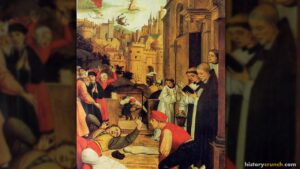
Symptoms of the bubonic plague included influenza-like symptoms, including: sudden fever, chills, and headaches. However, these symptoms were generally followed by painful, swollen lymph nodesSmall glands in the body that swell painfully when attacked by bubonic plague bacteria. in the groin, armpit, or neck. Other symptoms could include fatigue, muscle aches, and sometimes vomiting or blackened skin.
 FactsthatCrunch
What Was the Black Death?
The Black Death is one of the most important events in Western history and is the most famous pandemicAn infectious disease that spreads across a very wide area, including the entire planet, in all of history.&nbsp; A <span class="hc-term" tabindex="0">pandemic<span class="hc-term__pop">An infectious disease that spreads across a very wide area, including the entire planet. in history. A pandemic is the term used to describe the spread of an infectious disease over a wide area including the entire planet. The Black Death occurred during the 14th century and ravagedCaused severe and widespread destruction or damage to a population or area. human populations throughout Asia and Europe as it spread along trade routes and through trading ports. Throughout history it has also been referred to as the ‘Great Mortality’ and ‘Great Pestilence’.
The Black Death is the term that historians use to describe the spread of the bubonic plague. It is believed that the plague first began in Central Asia and spread to Europe through vast trade routes such as the Silk Road. Historians studying the spread of the plague discovered that the disease was spread by fleas that are commonly found on rodents such as rats and mice.

The lack of medical understanding during the time is evidenced by the remedies or cures that people believed would work. For instance, some believed that the plague was spread by “bad air” and thought that they could cleanse the air with the burning of incenseA substance burned to produce scented smoke, which medieval people wrongly believed could cleanse bad air and stop plague.. In later outbreaks of the plague, in the 1600s, this belief led to some doctors wearing strange outfits with masks that looked like the beak of a bird; the doctors of the 1340s did not yet have this costume. Believing that the plague was spread through the air, the doctors would fill the nose area of the mask with incense in order to overpower the “bad air”. However, it also served to mask the smell of death, which was a common reality due to the large number of dead.
Symptoms of the Bubonic Plague
In reality, the bubonic plague was spread when infected fleas from rodents bit human beings and the disease entered their bodies. As stated earlier, the plague had several main symptoms. The primary symptom was the black lumps that grew in the infected person’s armpits and groin. This was caused when the bacteria of the disease inflamed lymph nodes in the body. The lumps would become large and after a period of time would often ooze pus and blood. Another common symptom of the plague was gangreneWhen disease kills body tissue, causing fingers or toes to effectively die and rot. fingers and toes. This meant that the disease killed the area around the fingers and toes and effectively caused them to die. As the disease took hold, several other symptoms were common including: fever, cramps, seizuresSudden, uncontrolled bursts of electrical activity in the brain that cause shaking or convulsions., vomiting, extreme pain and difficulty breathing. Often, those that were infected died soon after in just a matter of days.
FactsthatCrunchWhat were the main symptoms of bubonic plague that people in medieval Europe experienced?
Black Death timeline · 1347 – 1351 CE
Key Vocabulary
Pandemic
Ravaged
Lymph nodes
Gangrene
Incense
Seizures
Frequently Asked Questions
What were the first symptoms of the bubonic plague?
The first symptoms looked a lot like the flu, with sudden fever, chills, and headaches. These early signs made the illness hard to spot right away. Within a short time, the more serious symptoms would begin to appear.
What are buboes and why did they form?
Buboes were painful, swollen lumps that grew in the armpits, groin, or neck. They formed when the bacteria inflamed the body’s lymph nodes. The lumps often turned black and could ooze pus and blood, and they gave the disease its name.
How quickly did the bubonic plague kill people?
Many infected people died within just a few days of showing symptoms. The disease moved fast and doctors of the time had no real cure. This speed was one reason the Black Death was so deadly and frightening.
How did people catch the bubonic plague?
People caught the plague when infected fleas from rodents like rats and mice bit them. The fleas carried the bacteria that entered the body through the bite. The disease then spread along trade routes such as the Silk Road.
What did people in the Middle Ages think caused the plague?
Many people believed the plague was spread by “bad air” rather than by fleas. To fight it, some burned incense to try to clean the air. In later outbreaks, in the 1600s, some doctors even wore bird beak masks filled with incense, since medical knowledge was still very limited.
Cite This Article
To cite this article as a source, use one of the formats below.
MLA: Beck, Elias. “Symptoms of the Bubonic Plague: A Detailed Summary.” HistoryCrunch, 15 September 2026, https://historycrunch.com/symptoms-of-the-bubonic-plague/.
APA: Beck, E. (2026). Symptoms of the Bubonic Plague: A Detailed Summary. HistoryCrunch. https://historycrunch.com/symptoms-of-the-bubonic-plague/
Chicago: Beck, Elias. “Symptoms of the Bubonic Plague: A Detailed Summary.” HistoryCrunch. September 15, 2026. https://historycrunch.com/symptoms-of-the-bubonic-plague/
Sources
- J.M. Roberts & Odd Arne Westad, The Penguin History of the World.
- Jerry Bentley & Herbert Ziegler, Traditions & Encounters: A Global Perspective on the Past.