The Wars of the Roses were a series of civil warsArmed conflicts fought between groups within the same country rather than against a foreign enemy. fought in England between 1455 and 1487 for control of the English throne. The conflict was fought between two rival branches of the royal House of PlantagenetThe royal family that ruled England for centuries, from which both Lancaster and York were rival branches., known as the House of Lancaster and the House of York. The Lancastrians used a red rose as their emblem and the Yorkists used a white rose, which is where the wars got their famous name. The Wars of the Roses were one of the most dramatic and violent episodes in the history of the Middle Ages and resulted in the end of medieval rule in England and the beginning of the Tudor dynastyThe royal family founded by Henry VII that ruled England from 1485 until 1603..
 FactsthatCrunch
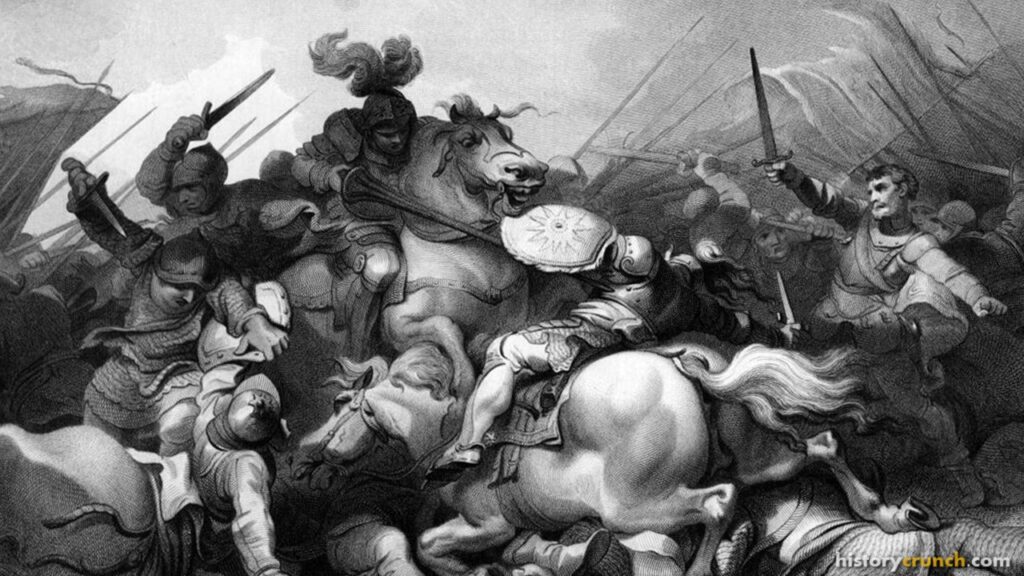
The Battle of Towton, fought on March 29th, 1461, in Yorkshire during the Wars of the Roses, is considered the largest and bloodiest battle ever fought on English soil.
Yorkist forces led by Edward IV defeated a Lancastrian army in a snowstorm on Palm Sunday. Historians estimate that up to 28,000 men died on the field that day, out of a combined force believed to number in the tens of thousands. The Yorkist victory was so complete that it put Edward IV on the throne and left the Lancastrians unable to field another army for years.
What Were the Middle Ages?
The Middle Ages, also known as the Medieval Period, lasted for approximately 1000 years from the 5th century to the 15th century. Due to its timeframe, the Middle Ages in Europe is divided into three smaller periods referred to as the Early, High, and Late Middle Ages. The Wars of the Roses took place during the Late Middle Ages and were one of the defining events of that period in England. In general, the Late Middle Ages was a time of significant difficulty and change across Europe, including the devastating Black Death, the Hundred Years War between England and France, and the gradual decline of the feudal system. As such, the Wars of the Roses took place at a time when England was already weakened by decades of costly warfare and political instability, which helps explain why the conflict was able to develop in the way that it did.
Causes of the Wars of the Roses
There were several main causes of the Wars of the Roses, most of which centered on a long-running dispute over who had the right to rule England. Both the House of Lancaster and the House of York were descended from King Edward III, who had ruled England from 1327 to 1377. Edward III had several sons, and the rival claims of the two houses came from different lines of descent from these sons. In reality, the Yorkists had a stronger hereditary claim to the throne than the Lancastrians, as they were descended from Edward III’s second and fourth sons, while the Lancastrians were descended from his third son. With that said, the Lancastrians had held the throne since 1399 and their claim had gone unchallenged for decades.
The main trigger for the outbreak of the wars was the weak and troubled reign of the Lancastrian king Henry VI. Henry VI had come to the throne as an infant in 1422 following the death of his father, the celebrated Henry V. In fact, Henry VI was only nine months old when he became king, which meant that England was governed by a council of nobles during his long childhood. By the time Henry was old enough to rule for himself, the situation in England had deteriorated significantly. Henry was a gentle and deeply religious man but was considered an ineffective and indecisive king. As well, he suffered from serious bouts of mental illness throughout his reign, during which he was completely unable to govern. For example, in 1453 Henry fell into a state of complete mental collapse that lasted for more than a year, during which the Duke of York was appointed protector of the realmA person appointed to govern England on behalf of a king who is unable to rule. in his place.
Furthermore, England had just suffered a humiliating defeat in the Hundred Years War with France, which ended in 1453 with England losing almost all of its French territories. This loss had a major impact on English morale and political stability and left many powerful nobles angry and dissatisfied with the Lancastrian government. As such, the combination of a weak king, military failure in France, and the unresolved question of the royal succession created the conditions for the outbreak of civil war.
FactsthatCrunchHenry VI became king at nine months old in 1422, and his long minority, deep indecisiveness, and serious bouts of mental illness left England without effective royal leadership for decades.
Henry VI's inability to govern created a crisis of royal authority that neither his council nor his queen could fully resolve. That crisis gave rival nobles both the motive and the opportunity to take the throne by force.
Wars of the Roses – First Phase
The Wars of the Roses began in earnest in 1455 when Richard, Duke of York, gathered his forces and marched to confront the king. The two sides met at the First Battle of St. Albans on May 22nd, 1455, which resulted in a Yorkist victory. The Duke of York captured King Henry VI and took control of the government, becoming the most powerful man in England. With that said, the conflict continued as Henry recovered from his illness and Queen Margaret of Anjou, Henry’s fierce and determined wife, worked tirelessly to restore Lancastrian power. In reality, it was Margaret rather than Henry who led the Lancastrian cause for much of the wars, as she had far more energy and determination than her troubled husband.
Fighting continued on and off for several years. For instance, the Duke of York was killed at the Battle of Wakefield in December of 1460 when Lancastrian forces surprised and defeated his army. With that said, his son Edward took up the Yorkist cause and proved to be a far more effective military leader than his father. Edward won a decisive victory at the Battle of Towton in March of 1461, which is considered to be one of the largest and bloodiest battles ever fought on English soil. Following this victory, Edward was crowned King Edward IV, becoming the first Yorkist king of England. Henry VI was captured and imprisoned in the Tower of London, and Queen Margaret fled into exile in France.
FactsthatCrunch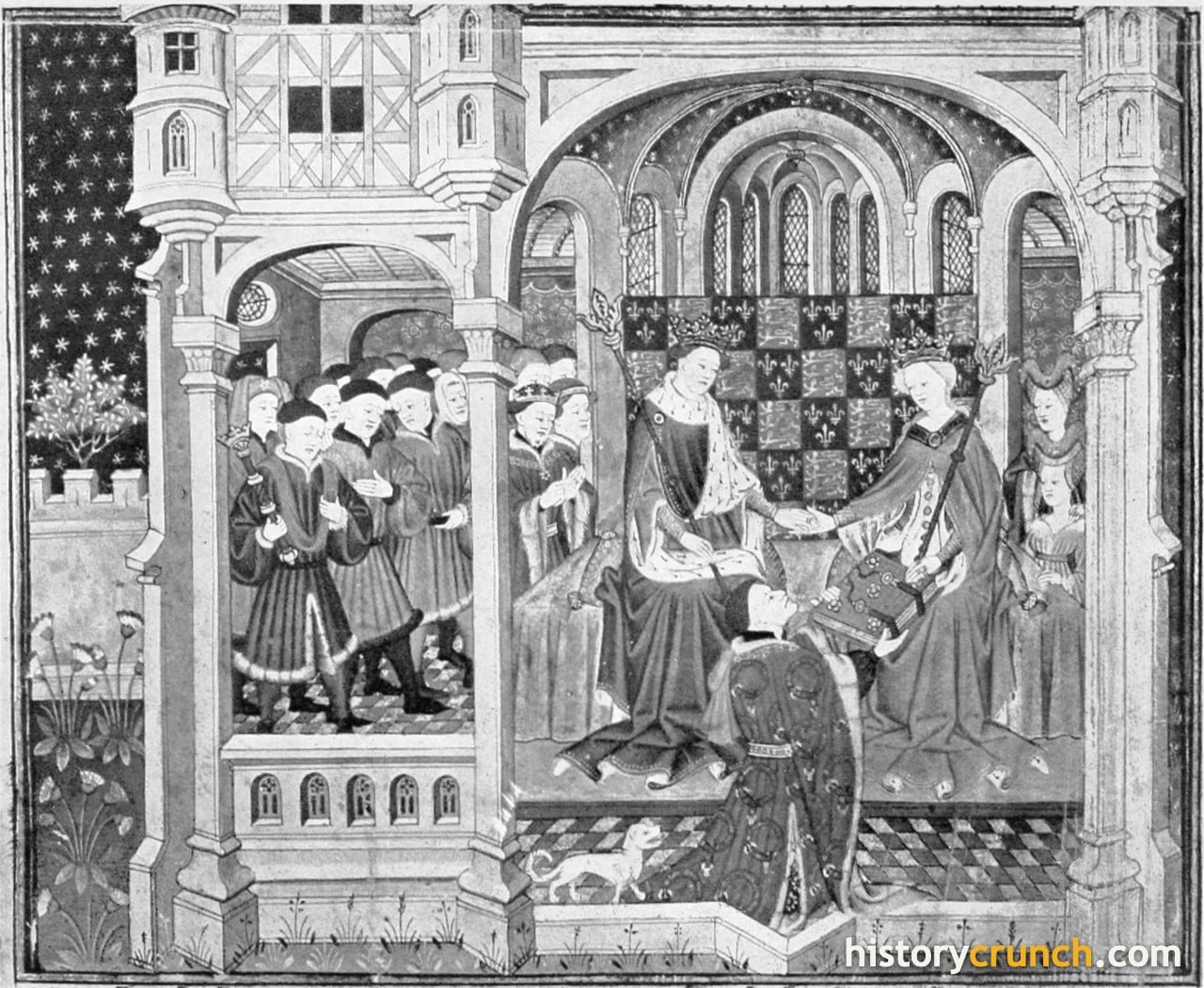
Wars of the Roses – Second Phase
The second phase of the Wars of the Roses grew out of disagreements within the Yorkist camp itself. The most powerful supporter of the Yorkist cause had been Richard Neville, the Earl of Warwick, who was so influential that he became known as the KingmakerA nickname for Richard Neville, the Earl of Warwick, reflecting his power to decide who sat on the throne. due to the central role he had played in putting Edward IV on the throne. For example, Warwick had been the wealthiest and most influential man in England during the early years of the wars and had used his enormous resources to support the Yorkist cause. With that said, Warwick fell out with Edward IV over political and personal disagreements and eventually switched sides to support the Lancastrians.
In 1470, with Warwick’s support, Henry VI was briefly restored to the throne and Edward IV was forced to flee to Burgundy in Europe. This period is sometimes referred to as the ReadeptionThe brief restoration of Henry VI to the English throne in 1470 after Edward IV was forced to flee. of Henry VI. It did not last long, however. Edward returned to England in 1471 with a new army and defeated Warwick at the Battle of Barnet, where Warwick was killed. Shortly after, Edward crushed the remaining Lancastrian forces at the Battle of Tewkesbury, where Henry VI’s son and heir, Prince Edward, was killed. Henry VI himself was murdered in the Tower of London shortly after. As such, by 1471 the male line of the House of Lancaster had been completely extinguished and Edward IV was firmly established as king.
FactsthatCrunchWars of the Roses – Third Phase
The third and final phase of the Wars of the Roses began after the sudden death of Edward IV in 1483. Edward left behind two young sons, the eldest of whom was due to become King Edward V. With that said, Edward IV’s brother Richard, Duke of Gloucester, seized the two boys and had them imprisoned in the Tower of London. The young princes were never seen again and are believed by many historians to have been murdered on Richard’s orders, though the full truth of what happened to them has never been established. Richard then declared himself King Richard III in 1483.
Richard III’s seizure of the throne alienated many former Yorkist supporters and gave fresh hope to the remaining Lancastrians. The last Lancastrian claimant was Henry Tudor, a Welsh nobleman with a distant claim to the throne through the female line of descent. Henry had been living in exile in France for many years. In August of 1485, Henry landed in Wales with a small army and marched into England. The two forces met at the Battle of Bosworth Field on August 22nd, 1485, which proved to be the decisive battle of the entire Wars of the Roses. Richard III was killed during the fighting and Henry Tudor was crowned King Henry VII on the battlefield, becoming the first king of the new Tudor dynasty.
Significance of the Wars of the Roses
The Wars of the Roses were one of the most significant events in the history of England and the Middle Ages. The conflict lasted for approximately thirty years and involved enormous violence, political upheaval, and loss of life among the English nobility. For example, historians estimate that the wars resulted in the deaths of approximately 105,000 people and led to the extinction of the male lines of both the House of Lancaster and the House of York.
The wars came to a final end when Henry VII married Elizabeth of York, the daughter of Edward IV, in 1486, uniting the two rival houses and creating the Tudor dynasty that would rule England until 1603. In fact, the Tudor rose, which combined the red rose of Lancaster and the white rose of York, became the famous symbol of this new royal family and of the reunification of England after decades of civil war. Furthermore, the Wars of the Roses effectively brought the Middle Ages to a close in England by destroying much of the old feudal nobility and strengthening the power of the monarchy under the Tudors. As such, the Wars of the Roses are seen by many historians as the event that marks the end of the medieval period in English history and the beginning of the early modern era.
FactsthatCrunchTap each impact to read what it led to.
Explore Middle Ages · 476 – 1500 CE
Keep exploring Middle Ages with these History Crunch resources.
Key Vocabulary
Civil wars
House of Plantagenet
Hereditary claim
Protector of the realm
Readeption
Kingmaker
Tudor dynasty
Frequently Asked Questions
When were the Wars of the Roses fought?
The Wars of the Roses were fought in England between 1455 and 1487. The fighting did not happen without pause, as it came in several phases spread over about thirty years. The conflict took place during the Late Middle Ages, a time of hardship and change across Europe.
Why were they called the Wars of the Roses?
The wars were named after the rose emblems used by the two rival houses. The House of Lancaster used a red rose, while the House of York used a white rose. Both houses were branches of the royal House of Plantagenet, and both were descended from King Edward III.
Who fought in the Wars of the Roses?
The wars were fought between the House of Lancaster and the House of York for control of the English throne. Key figures included King Henry VI, Queen Margaret of Anjou, and the Duke of York for one side. The other side later produced Edward IV, Richard III, and finally Henry Tudor.
What happened to the Princes in the Tower?
The two young sons of Edward IV were imprisoned in the Tower of London in 1483 and never seen again. Their uncle, Richard, Duke of Gloucester, had seized them before declaring himself King Richard III. Many historians believe the boys were murdered on Richard’s orders, though the truth has never been proven.
How did the Wars of the Roses end?
The wars effectively ended at the Battle of Bosworth Field on August 22nd, 1485, where Richard III was killed. Henry Tudor was crowned King Henry VII and founded the Tudor dynasty. He then married Elizabeth of York in 1486, uniting the two rival houses under the Tudor rose.
Cite This Article
To cite this article as a source, use one of the formats below.
MLA: Millar, B. “Wars of the Roses: A Detailed Summary.” HistoryCrunch, 15 October 2026, https://historycrunch.com/wars-of-the-roses/.
APA: Millar, B. (2026). Wars of the Roses: A Detailed Summary. HistoryCrunch. https://historycrunch.com/wars-of-the-roses/
Chicago: Millar, B. “Wars of the Roses: A Detailed Summary.” HistoryCrunch. October 15, 2026. https://historycrunch.com/wars-of-the-roses/
Sources
- Fordham Medieval Sourcebook
- Barbara Rosenwein, A Short History of the Middle Ages.
- Jacques Le Goff, Medieval Civilization 400-1500.
- Chris Wickham, Medieval Europe.