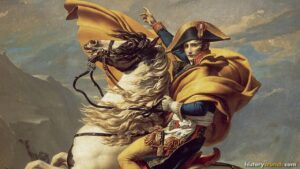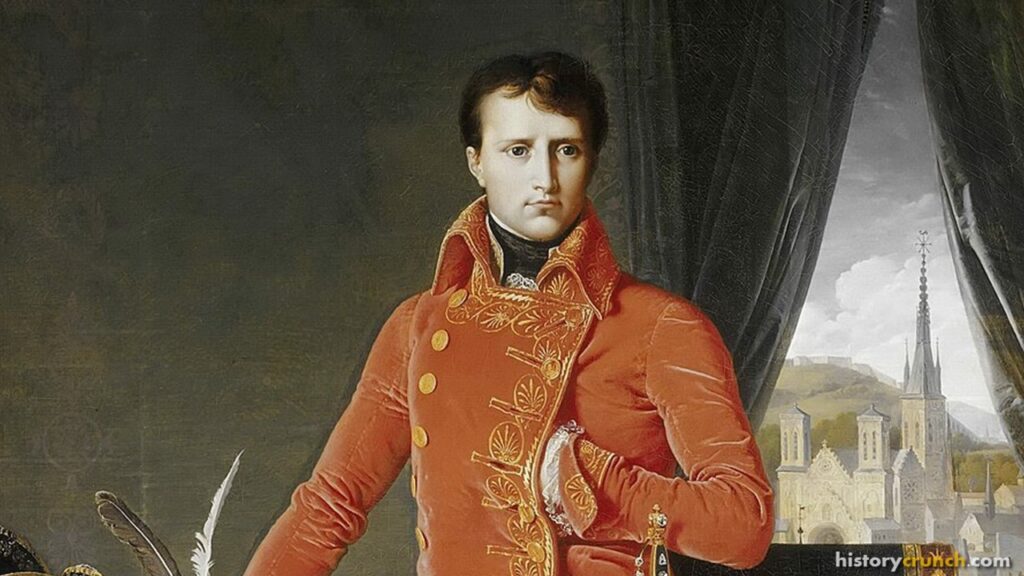
Napoleon Bonaparte’s rise to power was one of the most remarkable developments to come out of the French Revolution. Beginning as a young military officer from the island of Corsica, Napoleon built his reputation through a series of stunning military victories and used the instability of the revolution to advance his career and eventually seize control of France. By 1799, he had overthrown the government and appointed himself First Consul, bringing the French Revolution to an end and beginning one of the most influential periods in European history.
What Was the French Revolution?
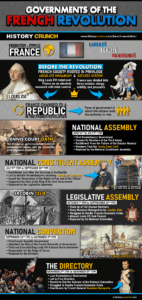
Napoleon Bonaparte’s rise to power took place against the backdrop of the French Revolution, which began in 1789 and lasted until 1799. The revolution saw the people of France overthrow the absolute monarchy of King Louis XVI and establish a republic based on the principles of liberty, equality, and fraternity. However, the years that followed were marked by extreme violence, political instability, and war. The Reign of Terror saw tens of thousands of people executed by guillotine, and France fought a series of costly wars against other European powers. By the late 1790s, the government of France, known as the Directory, had lost the confidence of the French people and was struggling to maintain control of the country. It was in this environment of chaos and uncertainty that Napoleon Bonaparte was able to rise to power.
Napoleon Bonaparte’s Rise to Power – Early Military Career
Napoleon Bonaparte was born on August 15th, 1769, on the French island of Corsica. He showed an early talent for military strategy and attended the military college at Brienne before graduating from the prestigious École Militaire in Paris in 1785. He began his career as a second lieutenant in the French army and joined the Jacobins, a radical group of revolutionaries, at the outbreak of the French Revolution in 1789. His first major opportunity came in 1793 when he commanded the French artillery at the siege of Toulon, a port city that had been occupied by British forces. Napoleon’s tactics were decisive in driving the British out, and the victory earned him a promotion to brigadier general at just 24 years old. The siege of Toulon was the moment that first brought Napoleon to the attention of the revolutionary government and established his reputation as an exceptionally talented military commander.
Napoleon Bonaparte’s Rise to Power – Italian Campaign
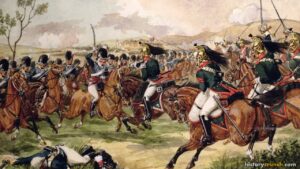
Napoleon’s reputation grew even further through his campaigns in Italy between 1796 and 1797. Appointed commander of the French Army of Italy, he led his troops on a rapid and aggressive campaign that caught his enemies off guard and produced a series of decisive victories. He forced Sardinia to sign a peace treaty in May of 1796 and then turned his attention to the Austrians, defeating them at the Battle of Rivoli in 1797. The campaign ended with the Treaty of Campo Formio, in which Austria was forced to give up significant territory to France. The Italian campaign transformed Napoleon from a promising general into a national hero in France. His ability to inspire his soldiers, outmaneuver larger enemy forces, and achieve swift victories made him enormously popular with both the army and the French public. By the time he returned to France, Napoleon was one of the most celebrated figures in the country.
Napoleon Bonaparte’s Rise to Power – Egyptian Campaign
Following his success in Italy, Napoleon led an expedition to Egypt in 1798. The campaign was intended to threaten British trade routes and expand French influence in the region. Napoleon won several battles on land, including the famous Battle of the Pyramids, but his fleet was destroyed by British Admiral Horatio Nelson at the Battle of the Nile, leaving his army stranded in Egypt. Despite the military setback, Napoleon managed the situation carefully in terms of his public image back in France. He returned to France in 1799 leaving his army behind and was received as a hero rather than a defeated general. The Egyptian campaign added to his reputation as a bold and visionary leader, and his return to France came at a critical moment when the country was desperate for strong leadership.
Napoleon Bonaparte’s Rise to Power – Overthrow of the Directory
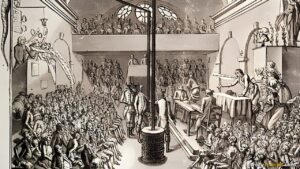
By the time Napoleon returned to France in the autumn of 1799, the Directory was deeply unpopular and struggling to govern the country effectively. France was facing continued military pressure from foreign enemies, economic hardship, and widespread political corruption. Many people in France, including powerful political figures, believed that a strong leader was needed to stabilize the country. Napoleon recognized the opportunity and worked with a group of political allies to plan the overthrow of the Directory. On November 9th, 1799, a date known in the French revolutionary calendar as 18 Brumaire, Napoleon and his supporters carried out a coup. Loyal troops surrounded the legislative councils and Napoleon confronted the members of the government directly, dissolving the Directory and replacing it with a new government called the Consulate. Napoleon appointed himself First Consul, the most powerful position in the new government, giving him effective control over France. The French Revolution was over and Napoleon’s rule had begun.
Significance of Napoleon Bonaparte’s Rise to Power
Napoleon Bonaparte’s rise to power was significant for several reasons. It brought an end to the decade of instability and violence that had defined the French Revolution and gave France the strong, centralized leadership that many of its citizens had been desperate for. At the same time, Napoleon’s rise showed how the chaos of the revolution had created the conditions for a single ambitious individual to seize power. While Napoleon preserved many of the revolution’s most important achievements, including equality before the law and the abolition of feudalism, his rise also ended the democratic experiment that the revolution had begun. His appointment as First Consul was only the beginning. By 1804, Napoleon had crowned himself Emperor of France, completing his transformation from a young military officer from Corsica into one of the most powerful rulers in European history.