Charlotte Corday was a supporter of the Girondins, the more moderateFavoring cautious, less extreme political positions rather than drastic or radical change. republican factionA group within a larger political movement that shares its own specific beliefs or goals. of the French Revolution, and she killed Jean-Paul Marat in July of 1793 because she believed his death would stop the revolution from becoming even more violent.
 FactsthatCrunch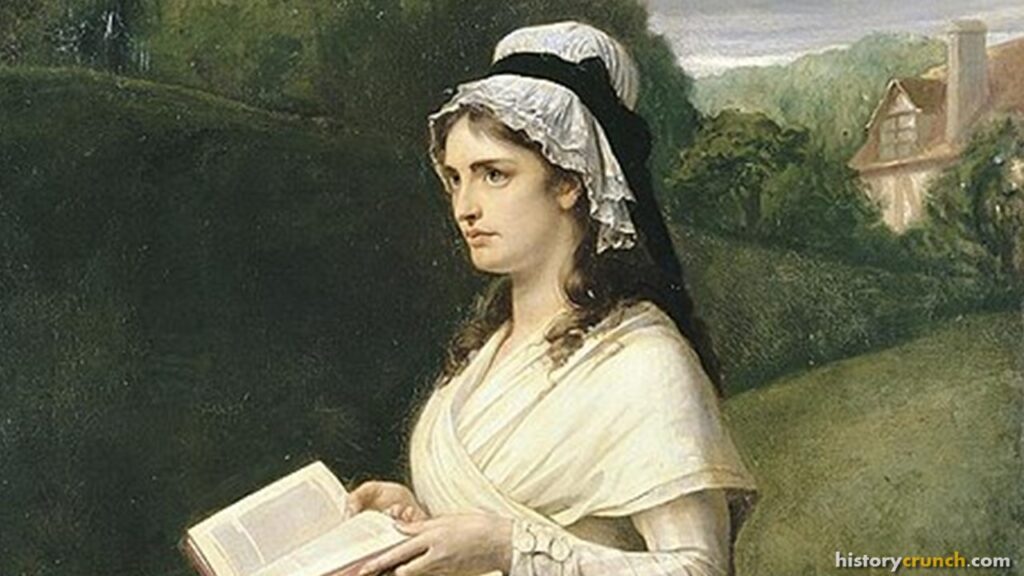
Charlotte Corday – Early Life
Marie-Anne Charlotte de Corday d’Armont was born on July 27th, 1768, in Saint-Saturnin-des-Ligneries, Normandy, France. She came from a minor noble family that had status but not great wealth. After family losses in her childhood, she was educated at the Abbaye aux Dames convent in Caen, Normandy, France, where she had access to books and ideas from the EnlightenmentAn 18th-century intellectual movement that promoted reason, individual rights, and questioning traditional authority.. Therefore, before she ever entered politics directly, Corday had already been shaped by reading, religion, and serious intellectual interests.
Her early education mattered because it exposed her to writers who emphasized reason, virtue, and public duty. Later in life, she was especially drawn to classical republican ideas and to the belief that individuals sometimes had to act for the good of the nation. As such, Corday did not enter the French Revolution as a random bystander. She entered it as someone who believed politics and morality were deeply connected.
FactsthatCrunchCharlotte Corday – Rise During the French Revolution
When the French Revolution began in 1789, it first aimed to limit royal power and reform France. However, by 1792 and 1793, events had grown much more extreme. The monarchy had fallen, Louis XVI had been executed on January 21st, 1793, France was at war with foreign monarchies, and civil unrest was spreading inside the country. At the same time, revolutionary politics split more sharply between the Girondins and the Jacobins. The GirondinsThe more moderate republican faction during the French Revolution, opposed to the radical Jacobins. were generally more moderate republicans, while the Jacobins and their allies pushed a more radical response to threats against the Revolution.
Corday came to sympathize with the Girondins while living with her aunt in Caen, Normandy, France. That city became an important center of opposition after leading Girondin deputies were pushed out of power in May and June of 1793. Corday was horrified by the growing violence of the Revolution, especially the September Massacres of 1792, when crowds in Paris killed prisoners out of fear that enemies of the Revolution were everywhere. She came to believe that Jean-Paul Marat represented the bloodiest and most dangerous side of the Revolution.
FactsthatCrunchThe Girondins and Jacobins both wanted a republic, but they disagreed sharply over how much force the Revolution should use and who should hold power. That split is what led Charlotte Corday, a Girondin supporter, to target Marat as the face of Jacobin radicalism.
Charlotte Corday – Jean-Paul Marat
Jean-Paul Marat was one of the best-known radical figures of the Revolution. Through his newspaper L’Ami du peuple, which means “The Friend of the People,” he attacked enemies of the Revolution and encouraged severe action against them. By the summer of 1793, many people on the moderate side believed that Marat and the Jacobins were helping drive France toward terror and civil war. Corday accepted that view and decided that killing Marat might save the republic.
On July 9th, 1793, Corday left Caen, Normandy, France, for Paris, France. In the days that followed, she prepared for the assassination and wrote Adresse aux Français amis des lois et de la paix, which means “Address to the French, friends of Law and Peace,” to explain her motives. On July 13th, 1793, she bought a kitchen knife and went to Marat’s home. After first being turned away, she returned and claimed that she had important information about Girondins in Caen. Marat admitted her while he was working in a medicinal bath because of a painful skin condition, and Corday stabbed him in the chest. He died almost at once.
This event became one of the most famous murders of the French Revolution. Corday believed she had killed one man to save France from wider bloodshed. However, the result was the opposite of what she hoped. Marat was turned into a revolutionary martyrSomeone whose death is celebrated by a cause, making them a powerful symbol that strengthens the movement., and his death strengthened radical feeling in Paris rather than weakening it. This is significant because Corday’s act shows how deeply divided the Revolution had become by 1793. People on different sides no longer just argued over policy. They increasingly saw one another as mortal threats.
FactsthatCrunchIn what order did Charlotte Corday take these steps to assassinate Jean-Paul Marat?
Charlotte Corday – Trial and Death
Corday was arrested immediately after the assassination. She admitted what she had done and insisted that she had acted alone. During questioning, she made clear that she believed Marat was responsible for bringing disaster and civil war to France. The authorities wanted to know whether she was part of a larger Girondin conspiracy, but she refused to give them that answer and maintained personal responsibility for the act.
Her trial opened on July 17th, 1793, before the Revolutionary TribunalA special court set up during the French Revolution to try people accused of crimes against the revolution.. Because the lawyer she first wanted was unavailable, Claude François Chauveau-Lagarde was appointed to defend her. The outcome was never really in doubt. She was found guilty of premeditatedPlanned in advance rather than done on impulse or in the moment. assassination and sentenced to death. Later that same day, she was guillotined in Paris, France. She was only 24 years old.
Charlotte Corday – Significance
Charlotte Corday was significant because her assassination of Marat became one of the defining moments of the French Revolution. Her action captured the tension between moderate and radical revolutionaries at a time when France was already facing war, rebellion, and political fear. In that sense, her life helps students understand that the Revolution was not one united movement. It was a struggle between different groups that wanted very different futures for France.
At the same time, Corday remains a debated historical figure. Some people remember her as a murderer who attacked the Revolution. Others see her as a political idealist who believed she was stopping greater violence. Regardless, her act did not prevent the Reign of Terror. Instead, the Terror intensified in the months after Marat’s death, which makes Corday’s story especially important for understanding how the Revolution continued to move toward fear, repression, and execution in 1793 and 1794.
Corday's assassination of Marat stopped the Reign of Terror from getting worse.
French Revolution timeline · 1789 – 1799
Key Vocabulary
Girondins
Enlightenment
L’Ami du peuple
Martyr
Premeditated
Revolutionary Tribunal
Reign of Terror
Frequently Asked Questions
Why did Charlotte Corday kill Jean-Paul Marat?
Corday killed Marat because she believed his death would stop the Revolution from growing more violent. She saw him as one of the bloodiest radical voices in France. Through his newspaper, he had called for harsh action against enemies of the Revolution. She hoped that killing one man would save the country from wider bloodshed.
How did Charlotte Corday kill Marat?
Corday stabbed Marat in the chest with a kitchen knife on July 13th, 1793. She gained entry by claiming to have information about Girondins in Caen. Marat let her in while he sat in a medicinal bath for a painful skin condition. He died almost at once.
Which political group did Charlotte Corday support?
Corday supported the Girondins, the more moderate republican faction of the French Revolution. She came to sympathize with them while living with her aunt in Caen, Normandy. The Girondins opposed the more radical Jacobins, who pushed for harsher measures. She blamed the Jacobins and Marat for the growing terror in France.
What happened to Charlotte Corday after the murder?
Corday was arrested right after the assassination and put on trial on July 17th, 1793. She admitted the killing and insisted that she had acted alone. The Revolutionary Tribunal found her guilty of premeditated murder and sentenced her to death. She was guillotined in Paris that same day at only 24 years old.
Did killing Marat stop the violence of the Revolution?
No, killing Marat did the opposite of what Corday hoped. His death turned him into a revolutionary martyr and strengthened radical feeling in Paris. The Reign of Terror grew worse in the months that followed. Her act shows how deeply divided the Revolution had become by 1793.
Cite This Article
To cite this article as a source, use one of the formats below.
MLA: Millar, B. “Charlotte Corday: A Detailed Biography.” HistoryCrunch, 22 September 2026, https://historycrunch.com/charlotte-corday/.
APA: Millar, B. (2026). Charlotte Corday: A Detailed Biography. HistoryCrunch. https://historycrunch.com/charlotte-corday/
Chicago: Millar, B. “Charlotte Corday: A Detailed Biography.” HistoryCrunch. September 22, 2026. https://historycrunch.com/charlotte-corday/
Sources
- Peter McPhee, Liberty or Death: The French Revolution.
- William Doyle, The Oxford History of the French Revolution.
- Jeremy D. Popkin, A New World Begins: The History of the French Revolution.