
Economic Spectrum: A Detailed Summary

Economic Spectrum
The economic spectrum refers to the different types of economics systems that exist around the world.

Table of Contents

Economics on the spectrum shows that societies choose different balances between freedom and control. This article details the differences between different economic systems on the economic spectrum.

The economic spectrum refers to the different types of economics systems that exist around the world. In fact, the three main types of economic systems are: command economy, free market economy and mixed economy. Instead of being just one type, economies exist on a spectrum – from pure free-market capitalism on one end to complete government-controlled communism on the other. Most modern countries fall somewhere in between, combining aspects of both, which is referred to as a mixed economy.

WHAT IS ECONOMICS?

Economics is the study of how societies handle the distribution of money (wealth) and the production of goods and services.  There are several different types of economic systems that historians and economists have identified throughout history, but the study of economics is usually centered around two main concepts, which include microeconomics and macroeconomics.  Some key elements of any economic system which are important to understand are supply and demand, the boom and bust cycle, employment and government intervention.

In general, most economic theories are based on the degree of control the government should have in the economy.  Some left-wing economic ideologies such as socialism, communism and Marxism favor a high level of government intervention in the economy.  Whereas, right-wing economic ideologies such as Laissez-faire capitalism and free market capitalism favor a low level of government intervention in the economy.  Finally, more modern liberal ideologies (which are positioned in the center of the economic spectrum) favor a mixed approach and include elements from both the right and left sides of the spectrum.  As such, economists have identified three basic economic systems on the spectrum, which are command economy, mixed economy and free market economy.

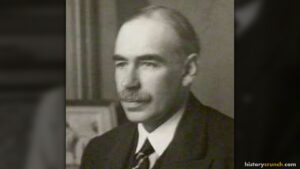
Economists are people that research and study different aspects of a country’s economy and sometimes make recommendations on how to change the economy to meet new conditions.  Some famous people who developed economic theories throughout history include: Adam Smith, Karl Marx, Friedrich Engels, Friedrich Hayek, John Maynard Keynes, and Milton Friedman.  Understanding where each of these people falls on the economic spectrum shows their differences in opinion as it relates to economic systems.

Facebook
X
Reddit
Pinterest
LinkedIn

We strive to produce educational content that is accurate, engaging and appropriate for all learners. If you notice any issues with our content, please contact us and let us know!

AUTHOR INFORMATION
Picture of B. Millar

B. Millar

I'm the founder of History Crunch, which I first began in 2015 with a small team of like-minded professionals. I have an Education Degree with a focus in Social Studies education. I spent nearly 15 years teaching history, geography and economics in secondary classrooms to thousands of students. Now I use my time and passion researching, writing and thinking about history education for today's students and teachers.
Microeconomics
Economics

Microeconomics: A Detailed Summary

The main principles of microeconomics focus on how individuals and businesses make choices in a world of limited resources. This article details the main principles of microeconomics in the larger economy.

Collectivism
Political Systems

Collectivism: A Detailed Summary

Collectivism has several main principles, including: economic equality, public ownership, cooperation, collective-interest, economic equality and government regulation. This article details the history and main principles of collectivism in terms of its impact on government and economics.

Consumerism
Economics

Consumerism: A Detailed Overview

Today, consumerism continues to intensify with influential marketing campaigns, outsourcing, and a cheap and steady supply of both resources and goods. This article details the history, significance, negatives and positives of consumerism.

Macroeconomics
Economics

Macroeconomics: A Detailed Summary

The main principles of macroeconomics focus on how an entire economy works. This article details the main principles of macroeconomics.

Welfare State
Economics

Welfare State: A Detailed Summary

The welfare state includes principles from both sides of the economic spectrum, and is based on both capitalism and socialism. This article details the history, principles, positives and negatives of the welfare state.

Marxism
Political Systems

Marxism: A Detailed Summary

In the early 20th century, Marxism inspired revolutions, most notably the Russian Revolution of 1917, which established the world’s first communist state under Vladimir Lenin. This article details the history, main principles and significance of Marxism.