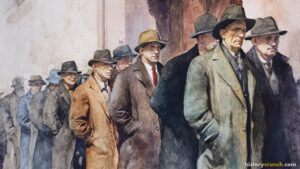
Macroeconomics is the part of economics that studies the overall aspects of an economy as a whole, rather than focusing on individual people or businesses. For instance, macroeconomics looks at the ‘big picture’ of an economy. This could include the total amount of goods and services a country produces, the number of people who have jobs, the level of prices for goods and services and how money circulates through the economy.
WHAT IS MACROECONOMICS?
The study of economics is usually broken into two basic concepts which are microeconomics and macroeconomics. Macroeconomics focuses on the larger aspects of the economy that are usually carried out by governments. For example, macroeconomics usually centers on large issues that impact entire industries or economies and not just individual businesses. The boom and bust cycle and larger issues such as employment and taxation are considered to be areas of macroeconomics. Modern macroeconomic theory is considered to have emerged from the ideas of the famous economist John Maynard Keynes. Keynes’ ideas had a profound impact on the 20th century and specifically the Great Depression, when American President Franklin D. Roosevelt developed his New Deal based on the macroeconomic ideas of Keynes.
MACROECONOMICS – MAIN PRINCIPLES
The main principles of macroeconomics focus on how an entire economy works. One key principle is that of Gross Domestic Product (GDP), which is a measure of the total goods and services that a country produces. Economists often use GDP as an indicator of the health or productivity of an economy, since it provides a snapshot of the larger economic trends in a country’s economy. As such, the concept of GDP is considered important when studying the macroeconomics of an economy.
Another important principle of macroeconomics is the rates of employment and unemployment in a given economy. Since economists study how to create jobs and reduce joblessness, understanding the unemployment rate and different employment trends is vital to understanding the macroeconomic conditions of a country.
Inflation is also central to macroeconomics, since it tracks changes in prices and helps maintain purchasing power for businesses and individuals. In short, inflation is when the money of an economy or country is devalued over time. Inflation is one of the most significant factors of an economy and is one of the most important parts that economists study of macroeconomics. In fact, governments use fiscal policies that focus on spending and taxation and monetary policy, which focuses on interest rates and money supply, to manage macroeconomic trends.
Together, these principles help economists understand economic cycles, control inflation, reduce unemployment, and encourage steady, long-term growth. As such, they are vital principles in understanding the macroeconomic conditions of a given economy.
MACROECONOMICS – HOW DOES IT COMPARE TO MICROECONOMICS?
In contrast to microeconomics, macroeconomics focuses on the larger aspects of the economy that are usually carried out by governments. Microeconomics is centered on parts of the economy that relates to individual people and businesses. It focuses on the decisions that individuals and businesses make in relation to the dynamic nature of the economy. For example, a business may decide to alter the price of a product or the wages of its workers based on the conditions in the economy. This is referred to as the idea of supply and demand, meaning that businesses change aspects of their operation to meet the levels of supply and demand for their product or service in the larger economy. The study of these individual and smaller decisions are called microeconomics by economists.
While microeconomics and macroeconomics have many differences it is important to understand that there are also several key ways in which the two are connected. More specifically, there is a great deal of overlap between the concepts of microeconomics and macroeconomics. For example, a business owner may decide the adjust the price of a product (which is a microeconomic decision) due to an increase in taxation brought about by the government (which is a macroeconomic decision). As well, the overall condition of an economy of a country or industry is based upon the many smaller decisions made by individuals and businesses within that economy. Therefore, microeconomics and macroeconomics are constantly impacting each other and causing changes in both.