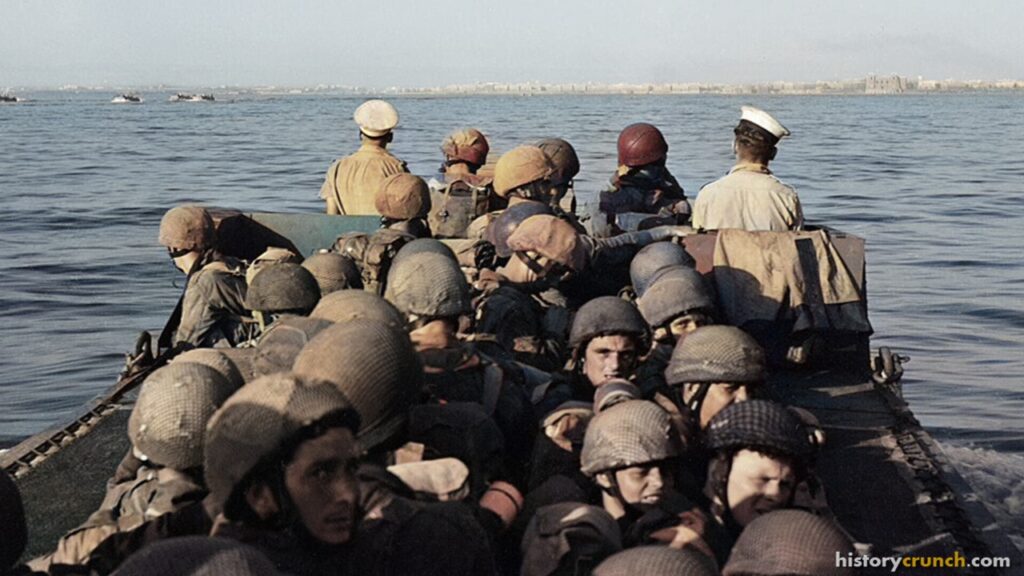
The Allied Invasion of Italy, which began in 1943, was an important aspect of World War II that aimed to open another front in Europe alongside the Eastern Front between the Soviet Union and Nazi Germany. Following victories in North Africa, the Allies turned their attention to Europe and launched a campaign that would see some of the most grueling and prolonged fighting of the Second World War.

Allied Invasion of Italy in World War II – Background
By 1943 of World War II, Nazi Germany controlled most of Europe, including France, and huge sections of the Soviet Union. Both the Soviet Union and Germany were engaged in a massive series of battles on the Eastern Front following the failure of Nazi Germany’s Operation Barbarossa. However, the Allied powers of Britain and the United States did not yet have a foothold in mainland Europe. As a result, the Allies sought to open another front, while also putting pressure on fascistRelating to a far-right political system led by a dictator who demands total loyalty and suppresses opposition. Italy. In fact, Italy was allied with Nazi Germany, as part of the Axis Powers of World War II. The Allies aimed to knock Italy out of the war and remove its fascist leader, Benito Mussolini. As such, this led to the Allied invasion of Sicily and Italy, which began on July 9th, 1943.
The Allied powers planned its invasion of Sicily, code-named Operation Husky, such that it could open a second front in Europe and begin the process of liberating European countries from Nazi control. Before the operation could begin, the Allied powers devised a plan to distract and confuse the Germans on the intentions of the Allies. The plan to deceive the Nazis was called Operation Mincemeat, and involved confusing or misleading the Germans as to where the Allies would carry out their invasion of Europe. To achieve this the British dressed a corpse as a British officer and had it released into the Atlantic Ocean such that it would wash ashore in neutral Spain, where German agents were active. The corpse had a briefcase with fake “top secret” documents handcuffed to it and when washed ashore, the Nazis believed they had gained access to the true plans of the Allied powers. However, the fake documents stated that the Allied landings would take place in Greece and Sardinia instead of Sicily. This caused the Nazis to turn their attention away from Italy and Sicily and towards Greece, which allowed the Allies more ease in gaining a foothold in Europe.
 FactsthatCrunch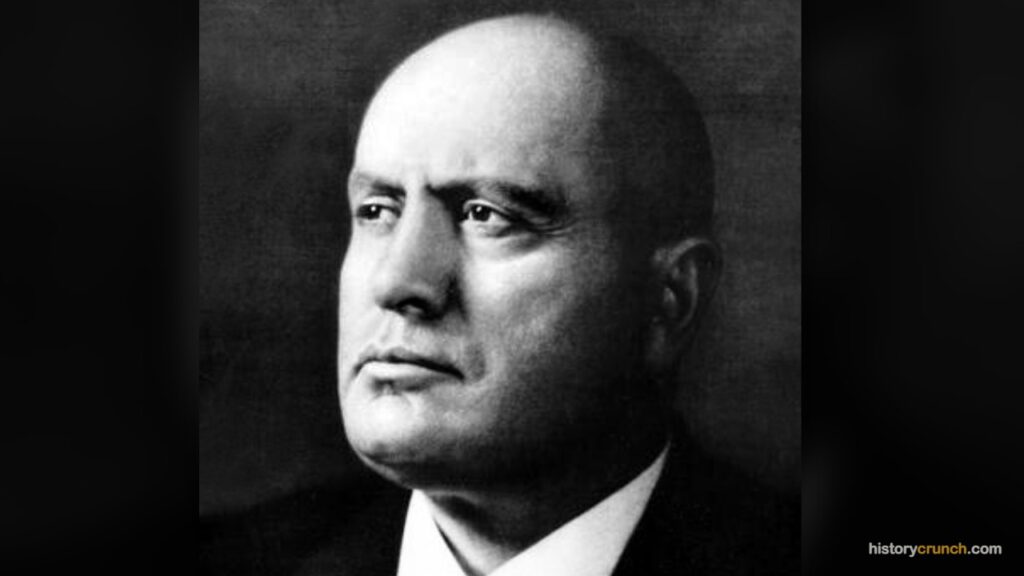
Allied Invasion of Italy in World War II – Summary
The Allied invasion of Sicily occurred from July 9th to August 17th in 1943, during the events of World War II. As mentioned above, the campaign began with ‘Operation Husky’, which was a massive amphibiousAn attack launched from the sea using both naval ships and land forces moving onto shore together. and airborneTroops delivered into battle by parachute or glider aircraft rather than by land or sea. assault on Sicily. Forces led by American General Dwight D. Eisenhower, with commanders Bernard Montgomery (Britain) and George S. Patton (USA), rapidly overran Axis defenses in Sicily. The speed and efficiency of the Allied invasion was so successful that it was directly responsible for the fall of Benito Mussolini. For instance, Mussolini was replaced as leader of Italy on July 25th, 1943 by Pietro Badoglio.
The mainland invasion of Italy continued following the Allied success in Sicily. For example, the Invasion at Salerno on September 9th, 1943 was an important conflict. The Allies landed at Salerno, near Naples, with the goal of quickly advancing north. On September 8th, the newly formed government of Italy announced its armisticeA formal agreement between warring sides to stop fighting, though not a full peace treaty. with the Allies. However, Nazi German forces swiftly moved to disarm Italian troops and occupy the peninsula, turning Italy into a Nazi German battleground. What followed were the main events of the Italian Campaign, which stretched from 1943 to 1945.
The Allies advanced slowly up the Italian peninsula, facing difficult mountainous terrain, harsh weather, and determined Nazi German resistance fortified along defensive lines like the Gustav LineA heavily fortified Nazi German defensive barrier across Italy that slowed the Allied advance northward. and the Gothic LineA second major Nazi German defensive line in northern Italy that Allied forces had to break through.. Key battles included the bloody fight at Monte Cassino and the amphibious landing at Anzio. Rome was finally liberated in June of 1944, but the Italian Campaign dragged on until the final Nazi German surrender in Italy on May 2nd of 1945. However, it is also worth noting that the former dictator of fascist Italy, Benito Mussolini, was captured and executed on April 28th of 1945.
FactsthatCrunchAllied Invasion of Italy in World War II – Significance
The Allied Invasion of Italy in World War II was a significant event in the history of the war. It was an important Allied operation and led to significant casualtiesSoldiers killed, wounded, captured, or missing as a result of military combat.. For example, it is estimated that the Allied nations suffered over 320,000 casualties, while the Nazi Germans suffered over 430,000.
In general, the Allied invasion of Sicily and Italy was incredibly successful and achieved what it set out to. The Allied armies were able to force Axis naval, air and land divisions out of the area and allowed Allied merchant ships into the Mediterranean for the first time since 1941. As well, it led to the end of Benito Mussolini in Italy and forced Nazi Germany to divert troops from its battles against the Soviet Union as it had to grapple with a two front war.
Explore World War II · 1939 – 1945
Keep exploring World War II with these History Crunch resources.
Key Vocabulary
Amphibious
Airborne
Armistice
Gustav Line
Gothic Line
Fascist
Casualties
Frequently Asked Questions
When did the Allied invasion of Italy begin?
The Allied invasion began on July 9th, 1943, with the assault on Sicily. This operation came after Allied victories in North Africa. The goal was to open a new front in Europe and put pressure on fascist Italy.
What was Operation Husky?
Operation Husky was the code name for the Allied invasion of Sicily in July 1943. It was a large amphibious and airborne assault led by General Dwight D. Eisenhower. Commanders Bernard Montgomery and George S. Patton quickly overran Axis defenses on the island.
What was Operation Mincemeat?
Operation Mincemeat was a British plan to trick the Germans before the invasion of Sicily. The British dressed a corpse as an officer and let it wash ashore in neutral Spain. Fake documents said the attack would hit Greece, which pulled German attention away from Sicily.
What happened to Benito Mussolini?
Mussolini was removed as leader of Italy on July 25th, 1943, soon after the invasion of Sicily. Pietro Badoglio replaced him and later signed an armistice with the Allies. Mussolini was captured and executed on April 28th, 1945.
Why did the Italian Campaign last so long?
The campaign dragged on because German forces fortified strong defensive lines across Italy. The Gustav Line and Gothic Line forced the Allies into slow, costly fighting. Mountains, harsh weather, and battles like Monte Cassino and Anzio also slowed the advance until May 1945.
When was Rome liberated?
Rome was liberated in June of 1944, nearly a year after the invasion began. The fighting did not end there, as German forces kept resisting in the north. The final German surrender in Italy came on May 2nd, 1945.
Cite This Article
To cite this article as a source, use one of the formats below.
MLA: Woida, K.L. “Allied Invasion of Italy in World War II: A Detailed Summary.” HistoryCrunch, 4 October 2026, https://historycrunch.com/allied-invasion-of-italy-in-world-war-ii/.
APA: Woida, K. L. (2026). Allied Invasion of Italy in World War II: A Detailed Summary. HistoryCrunch. https://historycrunch.com/allied-invasion-of-italy-in-world-war-ii/
Chicago: Woida, K.L. “Allied Invasion of Italy in World War II: A Detailed Summary.” HistoryCrunch. October 4, 2026. https://historycrunch.com/allied-invasion-of-italy-in-world-war-ii/
Sources
- Antony Beevor, The Second World War.
- The National WWII Museum
- Gerhard L. Weinberg, A World at Arms.