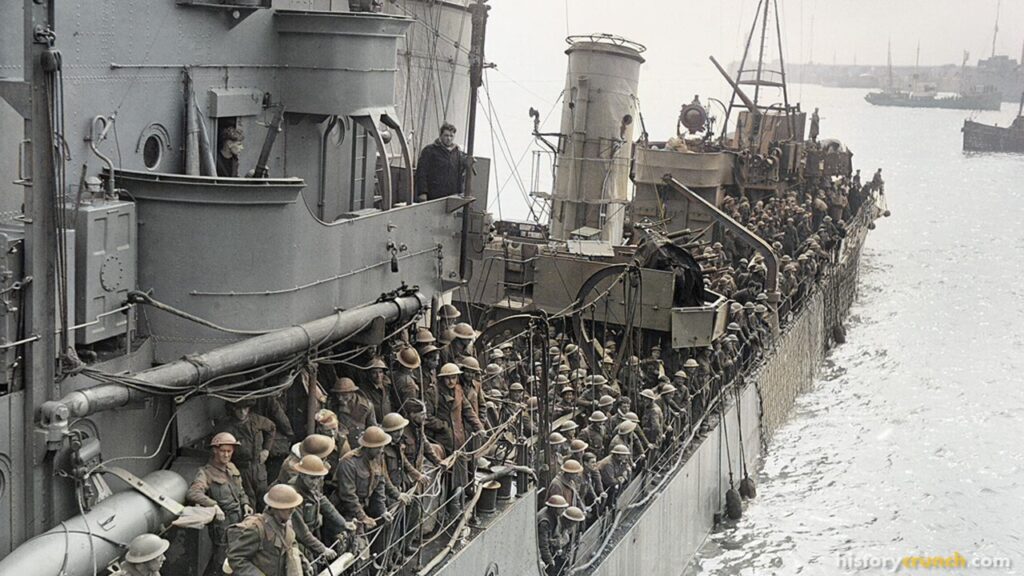
The Dunkirk Evacuation, which was also known as ‘Operation DynamoThe code name for the emergency plan to evacuate Allied soldiers from the beaches of Dunkirk.‘, was a dramatic Allied military retreat that occurred during the early stages of World War II. It occurred between May 26th and June 4th, 1940, and saw 335,000 Allied soldiers (British and French) rescued from the beaches of Dunkirk, which is a port town in northern France. At the time, Nazi German forces were advancing and surrounding the Allied forces in Dunkirk. Though it was a retreat, the Dunkirk Evacuation is often remembered in Britain as an example of resilienceThe ability to recover and keep going in the face of serious difficulty or disaster., resourcefulness, and national unity.
 FactsthatCrunch
Over 335,000 British and French soldiers were evacuated from the beaches of Dunkirk between May 26th and June 4th, 1940, even as German air and artillery attacks killed soldiers on the beaches and in the water throughout the operation.
The evacuation, codenamed Operation Dynamo, was carried out under constant German bombardment, meaning soldiers died while waiting on open beaches and during the crossing of the English Channel. From May 28th to the 31st, approximately 40,000 French soldiers held back the German advance on the Dunkirk perimeter, and many of those troops were killed, wounded, or captured covering the retreat. The 335,000 who reached Britain were survivors of an operation that Prime Minister Winston Churchill had already called a colossal military disaster, and their rescue came at a steep cost in lives on both sides.
Dunkirk Evacuation – Background
As stated above, the Dunkirk Evacuation was a significant event at the beginning of World War II. As such, it’s important to understand the outbreak of the war. World War II began when Nazi Germany invaded Poland on September 1st, 1939. In fact, Britain and France declared war on Nazi Germany just two days later, on September 3rd.
Next, Britain sent the British Expeditionary Force (BEF) to France to help defend the country from a potential Nazi Germany attack. In fact, much of the trench warfare of World War I had occurred along the eastern regions of France, and military leaders in the late 1930s, were expecting a very similar conflict. After a brief period where little actual fighting occurred, known as the ‘Phoney War‘, Germany began its attack against France and Belgium through the Ardennes Forest.
France was not anticipating a German attack through the Ardennes, believing that the forest was too thick for tanks, and other heavy machinery, to mobilizeTo organize and move military troops and equipment into position for action. through. Instead, French authorities believed that Germany would attack along the France-Germany border where France had built the defensive Maginot Line. Or, they believed that Nazi Germany would advance through Belgium to the north, which would allow time for British and French forces to mobilize in that area. Instead, German tank divisions were able to push through the Ardennes Forest with relative ease and surprised the British and French. This surprise maneuver and the speed with which the Nazi German forces advanced was the primary cause of the need for the Dunkirk Evacuation.
In fact, the Nazi German army moved with incredible speed, which is referred to as ‘blitzkrieg‘. The term ‘blitzkriegA military tactic using extreme speed and overwhelming force, described by historians as ‘lightning war’.’ refers to the speed and overwhelming force of the Nazi Germany Army, and historians have used the phrase ‘lightning war’ in reference to the Nazi German blitzkrieg tactics.
 FactsthatCrunch
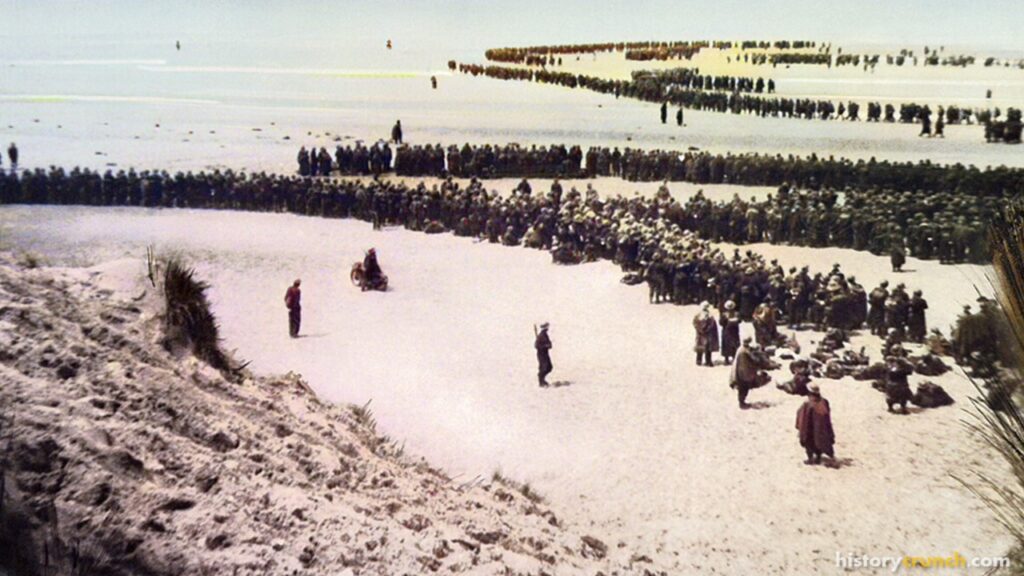
Why did Allied forces end up trapped on the beaches of Dunkirk, making the Dunkirk evacuation necessary?
Dunkirk Evacuation – Summary
As stated previously, the retreat at Dunkirk took place between May 26th and June 4th, 1940, as German forces were attacking Belgium and France as part of the Battle of France. The retreat at Dunkirk involved large numbers of British and French soldiers retreating from mainland Europe to the British Isles after Nazi German forces overwhelmed them and cut them off from the rest of the Allied forces in France.
As the German tank divisions pushed through into France, they circled north and raced to the English Channel. This maneuver cut off the British Expeditionary Force and other French soldiers from the rest of the army and they were threatened with losing hundreds of thousands of soldiers to the successful and rapid Nazi German assault. In fact, by late May, hundreds of thousands of Allied soldiers were trapped near Dunkirk, with their backs to the sea and the German army closing in. British Prime Minister Winston Churchill referred to the crisis as “a colossal military disaster” and that Britain was in danger of losing a substantial portion of its forces.
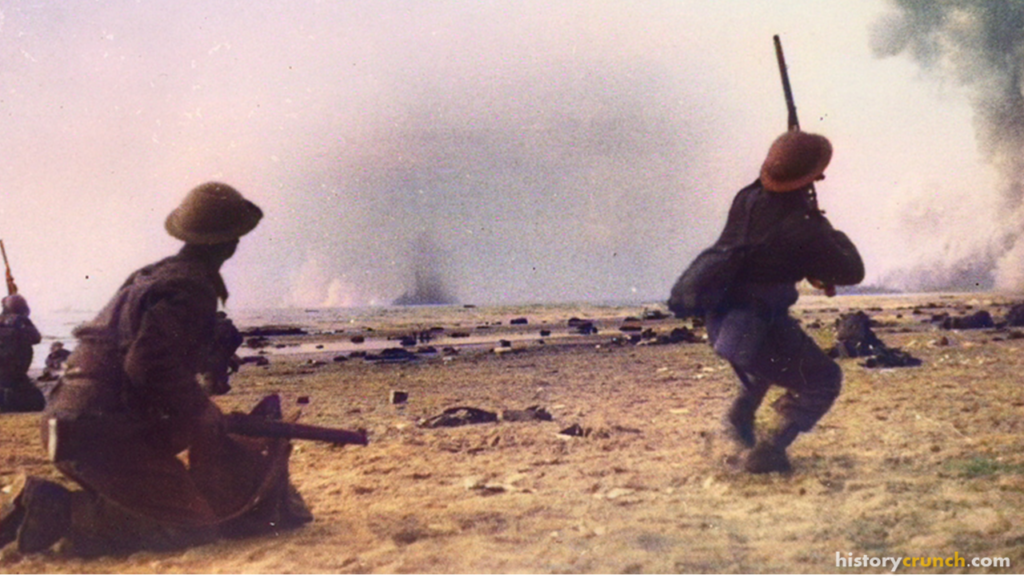
In response, the British scrambled to evacuate the British Expeditionary Force from the harbor city of Dunkirk, France. The plan, codenamed ‘Operation Dynamo’, was an emergency evacuation plan created by Vice Admiral Bertram Ramsay. From May 28th to the 31st, approximately 40,000 French soldiers stood up against the Nazi German assault, delaying the German advance and allowing the British Expeditionary Force to build defensive structures and form a plan of retreat across the English Channel, back to Britain. Over the course of the next 8 days over 335,000 British and French soldiers were able to flee France and return to Britain. They made the retreat aboard over 800 boats, including military vessels and a fleet of small merchant ships, such as: fishing boats, shipping boats and pleasure ships. Many smaller British ships made the journey across the English Channel to help rescue the trapped British forces and to flee the German push through Belgium and France. The evacuation was carried out under intense pressure from German air and artillery attacks.
 FactsthatCrunch
Operation Dynamo was planned to save far fewer men than it actually did, and the precise breakdown by nationality, rescue point, and loss tells a fuller story.
Dunkirk Evacuation – Significance
In the end, the retreat at Dunkirk was vital to the eventual success of the Allied armies. Saving these soldiers meant Britain still had an army to defend itself during the Battle of Britain, and many of the rescued troops later fought in the Normandy Invasion, both important Allied victories of World War II. If the British had lost their entire British Expeditionary Force at Dunkirk, they may not have had the ability to help liberate France and bring an end to Nazi Germany. It led directly to the Battle of Britain, where the Royal Air Force successfully defended Britain against Nazi German air attacks.
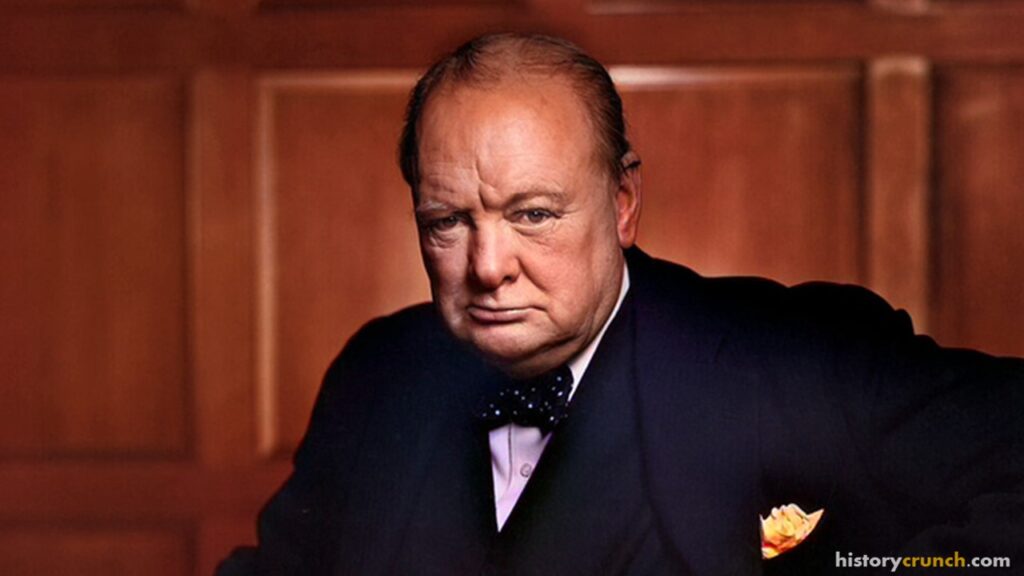
The Dunkirk Evacuation was also an important moral victory for the Allies and brought a source of pride to the British public in a time of fear and uncertainty. For instance, British Prime Minister Winston Churchill, in his famous June 4th speech, cautioned that “wars are not won by evacuations” but nonetheless praised the operation as a symbol of courage. In fact, the event became known as the ‘Miracle of Dunkirk’ in British media, and was a source of national unity for Britain.

Explore World War II · 1939 – 1945
Keep exploring World War II with these History Crunch resources.
Key Vocabulary
Phoney War
Maginot Line
Blitzkrieg
Operation Dynamo
Mobilize
Resilience
Frequently Asked Questions
What was the Dunkirk Evacuation?
The Dunkirk Evacuation was an Allied military retreat from the beaches of Dunkirk, France, early in World War II. It took place between May 26th and June 4th, 1940, and rescued about 335,000 British and French soldiers. These troops had been trapped by advancing Nazi German forces with their backs to the sea.
Why did the Allied soldiers need to be evacuated from Dunkirk?
German tank divisions pushed through the Ardennes Forest and raced to the English Channel, cutting off the Allied forces. France had not expected an attack through the thick forest, so the move came as a surprise. This trapped the British Expeditionary Force and many French soldiers near Dunkirk with the sea behind them.
What was Operation Dynamo?
Operation Dynamo was the code name for the emergency plan to evacuate soldiers from Dunkirk. It was created by Vice Admiral Bertram Ramsay as German forces closed in. The rescue used more than 800 boats, including military vessels and small civilian craft like fishing boats and pleasure ships.
Why was the Dunkirk Evacuation important?
The evacuation saved an army that Britain needed to defend itself during the Battle of Britain, and many of the rescued soldiers later fought in the Normandy Invasion. Losing the entire British Expeditionary Force might have left Britain unable to help free France. It also gave the British public a boost in morale during a frightening time.
Why is Dunkirk called the “Miracle of Dunkirk”?
British media called the rescue the “Miracle of Dunkirk” because so many soldiers escaped against the odds. Many people had feared the loss of hundreds of thousands of troops to the German attack. Though it was a retreat, it became a symbol of resilience and national unity for Britain.
Cite This Article
To cite this article as a source, use one of the formats below.
MLA: Beck, Elias. “Dunkirk Evacuation: A Detailed Summary.” HistoryCrunch, 2 October 2026, https://historycrunch.com/dunkirk-evacuation/.
APA: Beck, E. (2026). Dunkirk Evacuation: A Detailed Summary. HistoryCrunch. https://historycrunch.com/dunkirk-evacuation/
Chicago: Beck, Elias. “Dunkirk Evacuation: A Detailed Summary.” HistoryCrunch. October 2, 2026. https://historycrunch.com/dunkirk-evacuation/
Sources
- Max Hastings, Inferno / All Hell Let Loose.
- Antony Beevor, The Second World War.
- Imperial War Museum
- Gerhard L. Weinberg, A World at Arms.